Last chance to submit…
The Conference Committee welcome all PGRs in HSS to submit an abstract to present at the 2nd annual department conference, which will be held on Tuesday 4th June.
Latest research and knowledge exchange news at Bournemouth University
Last chance to submit…
The Conference Committee welcome all PGRs in HSS to submit an abstract to present at the 2nd annual department conference, which will be held on Tuesday 4th June.
NEW Virtual Reality RESEARCH ARTICLE JUST PUBLISHED
The study examines the relationship between virtual reality (VR)-facilitated mental imagery and travellers’ intention to visit a destination. A serial mediation process through travel inspiration (inspired-by and inspired-to) is proposed as a psychological mechanism able to explain the positive relationship of elaboration and quality of mental imagery with visit intentions. VR users were recruited through Prolific Academic. The findings demonstrate that VR-facilitated elaboration of mental imagery increases travel inspiration and consequently visit intention. However, the importance of mental imagery quality is much lower. The paper contributes to the literature of pre-travel VR experience by exploring the role of travel inspiration.
The RKEDF and BU ECRN are delighted to offer funding (up to £500) to organise an event, roundtable, meeting, training, or workshop in support of research at BU.
This funding supports BU Early Career Researcher Network members to organise and facilitate an event that can be thematic, subject/discipline based, foster community engagement, knowledge exchange or networking and does the following;
– Brings ECRs and others together to share ideas, knowledge and learning.
– Provides a space for intellectual discussion.
– Helps to facilitate collaboration and future opportunities.
– Enables an opportunity for networking.
– Please note all requests are subject to approval by the RKDEF Team and must be made at least 3 weeks in advance of the event date. No reimbursements for payments will be made without prior authorisation from the team.
– All expenses must be paid by the end of the BU financial year (July 2024)
– You will need to receive written confirmation from RKDEF that your request has been successful before you can proceed with organising the event.
– The event cannot have taken place prior to submitting your application.
Eligible costs
Ineligible Costs
How to apply:
Please download and complete all sections of the EOI for BU ECRN Funding (500 words max per section) and email your completed application to: RKEDF@bournemouth.ac.uk by 26th April 2024. Successful applicants will be notified by 1st May 2024.
If you have any questions or queries, please contact BU ECRN Academic Leads Ann Hemingway (aheming@bournemouth.ac.uk) and Sam Goodman (sgoodman@bournemouth.ac.uk) or RKDEF Advisor Joelle Fallows (jfallows@bournem
Are you an academic, researcher or PhD candidate who would like to build a media profile and take your research to a global public audience by writing for The Conversation?
The Conversation is a news analysis and opinion website with content written by academics working with professional journalists. It is an open access, independent media charity funded by more than 80 UK and European universities.
In this interactive session we’ll take you through what The Conversation is – our origins and aims; what we do and why.
We’ll look at why you should communicate your research to the public and take you through The Conversation’s unique, collaborative editorial process.
We’ll give you tips on style, tone and structure (with examples), look at how to pitch (with examples) and look at different approaches and article types.
You will have the opportunity to discuss your research with a Conversation editor and pitch potential story ideas.
*Note the session takes place on Zoom and we expect you to turn your camera on.
Benefits of attending
To get the most out of your time with the editor, come prepared:
There are a limited number of places for this session. If you sign up and then are no longer able to attend, please cancel your registration so that your place can be re-allocated to a colleague on the waiting list.
Since the introduction of workstreams in October 2022, the Transformation team and the Research Development and Support (RDS) team have been working collaboratively on three workstreams to improve BU’s Research & Knowledge Exchange (RKE) service provision. Feedback from the academic community at BU suggested there is a need to reduce bureaucracy and to streamline processes. As part of these efforts, and with the support of IT Services, we have reviewed and improved the Intention to Bid (ItB) form. The form has been developed and tested with input from the academic community and the Business and Knowledge Exchange Managers.
The new Intention to Bid (ItB) form launched on 8 April and is available to access
Key improvements include:
There are only 6 very simple questions needed to notify RDS of the intention to bid. This will trigger notifications to RDS and to the Faculty (DDRPP, HoDs, DHoDs or Exec Deans). Following this early notification process, further information can be continually developed on the form in stages. This includes information about the research team, project requirements, project goals and aims, as well as confirmation on how the mandatory Faculty Quality Approval requirements will be fulfilled. Once RDS are notified through the early notification, a member from the Funding Development Team will be in touch to work collaboratively with the PI on developing the project for submission.
Short notice application route We recognise that some projects and calls are open for short periods of time, and that other circumstances may dictate when the intention to bid form is completed. If the submission deadline is in less than 4 weeks, the form will first seek approval from RDS (in collaboration with the DDRPP) through the short notice application route. As part of the process, you will be required to submit a draft application or a 2-page concept note (excluding tenders).
All submissions with a deadline over 4 weeks will automatically be processed.
We have developed some user guides on the RKE SharePoint site and will also offer drop-in sessions on MS teams.
The next scheduled session is Wednesday 24th April 12:30pm
Click here to join the meeting
Thank you to everyone who attended our ESRC Festival of Social Science 2024 Information Session, in collaboration with the University of Southampton.
The slides from the session are available here, and if you weren’t able to attend, you can watch the recording here.
The 22nd annual Festival of Social Science will take place this year Saturday 19 October – Saturday 9 November, with the theme ‘Our Digital Lives’
This national festival offers the chance to create an inspiring event which enables you to connect your research in a creative and engaging way with a broad public audience.
For the second year, BU is partnering with the University of Southampton (UoS) and we are particularly keen to hear from researchers who have already established collaborations with UoS colleagues and may wish to run a joint event. This collaboration enables us to run an extended programme of events, broadening our impact reach and expanding our networks across Dorset and Hampshire.
Funding of up to £1,000 per event is available, and BU’s Public Engagement with Research team offers continuing advice and support on all areas of event development, planning, delivery and evaluation.
What is the ESRC Festival of Social Science?The ESRC Festival of Social Science is an annual, UK-wide, free celebration of the social sciences. The festival consists of a series of events run each autumn, delivered by ESRC’s ‘festival partners’, higher education institutions from across the UK. Events range from exhibitions, lectures, panel debates, performances, and workshops. Bournemouth University has been involved in the Festival for over a decade.
Everyone has to start somewhere, and this is the ideal place. You’ll have access to support, advice and training throughout. If you’re unsure, seek out a more experienced colleague to collaborate with.
The ESRC says that events must “feature social science (ideally with a social scientist involved in the event)”. If this doesn’t clearly apply to you, consider these options;
Being part of this festival means a higher level of support and reach than we usually provide.
Before applying, you’ll have access to:
When your application is successful, you’ll get:
Apply to take part in the ESRC Festival of Social Science 2024 by completing the online application form by midnight at the end of Thursday 16 May 2024.
Should you require any more information, please contact the team: publicengagement@bournemouth.ac.uk.
At BU we promote and celebrate the work done to engage public audiences with our research.
The Public Engagement with Research team in Research Development and Support can help promote your event to relevant audiences through our monthly newsletters and via our social media channels.

Event descriptions may be edited for consistency in style with other content.
Share your upcoming public event or activity
If you have any questions, please contact the team publicengagement@bournemouth.ac.uk
Dr Svetla Stoyanova-Bozhkova was invited to speak at the SCoT Webinar Volume 57 this week, organised and moderated by Prof. Jafar Jafari and Prof. Kazem Vafadari.
The SCoT Webinar
series is a joint initiative of APU Ritsumeikan Asia Pacific University (Japan), t-FORUM The Tourism Intelligence Forum, NC State University and iCAPt International Center for Asia Pacific Tourism.
The topic of the webinar was PROMOTING TRANSFORMATIONAL TOURISM THROUGH NARRATIVE ART: Destination Brand Stories. The art of storytelling is inextricably linked with tourism development and management. Significantly, every place or destination tells its own story. Storytellers make space into place and places into stories. Tourism research focuses on tourists’ stories to understand their experiences, and this is highly important in the digital age built on social media, immersive technologies,AI, User-generated content, and conversational marketing supported by Web 2.0. Nonetheless, this modernity has also leveraged the capacity of destination brands to make promotional videos embedding the principles of storytelling.
The discussion focused on the link between tourism destinations and storytelling and how the latter helps destination brands promote transformational and responsible tourism, enriching tourist experiences and contributing to the UN SDGs.
The recording of the webinar is accessible at https://www.youtube.com/watch?v=fCG4B74ti8k.
Thank you for your interest in our new Seed Fund for public engagement with research. We’ve received a considerable number of applications for the funding so far.
We’re pleased to announce that we still have funding available for up to six projects. The latest we can accept applications for this academic year is 28th June and the application form will no longer be accessible after that date.
We want to provide small amounts of funding (up to £500) to help researchers develop and incorporate meaningful, two-way engagement with beneficiaries and research users. The aim is to help support a more engaged research culture across BU and accelerate the impact arising from research.
The scheme is open to researchers at all career stages, whether they have previous public engagement experience.
We would like to fund engagement activity that addresses any/all the following:
The relevant staff in the Research Excellence Team will provide support to deliver activities and will manage funds centrally. All activity and spend will need to be completed before 31 July 2024.
(Please note that this funding will not be awarded for attending conferences or networking events where the engagement with stakeholders is speculative.)
For all queries, please contact publicengagement@bournemouth.ac.uk.
Congratulation to Dr. Orlanda Harvey (Social Work), Dr. Terri Cole (Psychology) and Dr. Jane Healy (Criminology) who in collaboration with Jade Levell, a colleague at the University of Bristol, had their article ‘Explorations of attitudes towards accessibility and accessing domestic violence and abuse (DVA) perpetrator support programmes by victim-survivors and perpetrators across five European countries’ accepted by the journal Abuse: An International Impact Journal [1]. This paper reports on an international mixed-methods study exploring victim-survivors and perpetrators’ attitudes towards perpetrator support programmes. The study includes a questionnaire survey of victim-survivors and interviews with male perpetrators conducted in five European countries.
Results showed that of the 93 victim-survivors of domestic violence and abuse, half stated they would have stayed in their relationship with perpetrators if the abuse had stopped, and a similar number reported that they believed their relationships would have been different had there been help for the perpetrator. Analysis of perpetrator interviews showed that they faced barriers to obtaining support, such as being labelled a ‘perpetrator’ which, had they been addressed, may have enhanced their engagement with services. Whilst acknowledging the need for safeguarding and justice, this paper demonstrates the importance of reflecting both victim-survivor and perpetrator needs in order for perpetrators to fully engage with support services. Moreover, it highlighted the need to address the underlying societal issues related to hegemonic masculinity, which can lead to the abuse of women being normalised and the vulnerability of men being stigmatised, through education for young people around healthy relationships.
Congratulations
Prof. Edwin van Teijlingen
Centre for Midwifery & Women’s Health
Reference:
Harvey H., Cole T., Levell, J., Healy J. (2024) ‘Explorations of attitudes towards accessibility and accessing domestic violence and abuse (DVA) perpetrator support programmes by victim-survivors and perpetrators across five European countries’, Abuse: An International Impact Journal 5(1): 26-45 https://doi.org/10.37576/abuse.2024.055

Day 1 – Writing for Publication Workshop – 18 June 2024, 10am-4pm
This workshop covers a range of strategies: targeting a journal, writing to prompts, types of prompt for academic writing, ‘snack’ writing, goal-setting for writing, freewriting, generative writing, analysing academic writing in your field, criteria, writing an abstract, using prompts in series, outlining, dealing with reviewers’ feedback, writing groups, micro-groups and retreats. Many of these can be used to prepare for a concentrated spell of writing at a writing retreat – which follows tomorrow. This is a practical workshop. The aim of the writing activities in this workshop is to let you try these strategies and consider how/if/where/when they could fit into your writing practice. You can use these to write for your article during the workshop, and you have a day’s writing to develop it tomorrow.
Day 2 – Writing Retreat – 19 June, 9am-4pm
Aims – To provide dedicated writing time and develop productive writing practices.
Format
This structured retreat uses the ‘typing pool’ model. We all write at the same time, for fixed time slots, using goal-setting and peer and self-monitoring for our individual writing projects. Because we all write together, we can discuss our goals at the start and end of the day (10-15 minutes). Almost all the retreat time is writing time, with regular breaks.
Learning objectives
1. Understand the Structured Writing Retreat model.
2. Structure a writing day.
3. Maintain well-being during intensive periods of writing.
Day 3 – Free Writing Day
An in-person writing day. Lunch will be provided.
Looking forward to speaking at the University of Aberdeen this week, unfortunately not in person. This one-hour session coming Wednesday lunchtime will focus on the ‘medical/social model of childbirth‘. Please contact Kelly Gray at the University of Aberdeen (kelly.gray@abdn.ac.uk) for the Teams link to join!
Prof. Edwin van Teijlingen
Centre for Midwifery & Women’s Health

Have your say
The Advance HE Postgraduate Research Experience Survey (PRES) is now open
We are keen to make sure our PGRs have the best possible experience while studying with us. To do this, we need to know what you think works well and what as a University we could do better. This is your chance to tell us about your experience as a PGR at Bournemouth University. We also kindly ask that all supervisors encourage their PGRs to participate in the survey.
Thank you to all PGRs who completed the 2023 PRES survey – we listened to you and your feedback has helped us to enhance your PGR experience in a range of areas.
The survey is now open and will close on Thursday 16 May 2024. Upon completing the survey, PGRs will automatically entered into a free prize draw. Four winners will be able to claim a £50 shopping voucher. Terms and conditions apply.
In addition, we will be making a £1 donation for every survey completed to the student mental health wellbeing charity, Student Minds.
Once you have completed the survey, you are entitled to claim a coffee voucher worth £3.20, from the Doctoral College to use at any BU Chartwells outlet. Please come to the Doctoral College (DLG08, Talbot Campus) to collect your voucher. You will need to show a screen shot of the final page of the survey in order to claim your voucher.
How do I take part?
PGRs will receive an email to your student account from the University on Monday 15 April 2024 containing a unique link which will allow you to access and complete the survey. If you can’t find this email, contact PRES@bournemouth.ac.uk and we’ll help you to get access.
What will I be asked?
The survey will take around 15 minutes to complete. Your response is confidential, and any reporting will be entirely anonymous. The survey is your chance to tell us about your experience as a PGR at BU. It will ask you to share your views on supervision, resources, research community, progress and assessment, skills and professional development and wellbeing.
Why should I take part?
Your feedback is important. The Postgraduate Research Experience Survey is the only national survey of PGRs and so is the only way for us to compare how we are doing with other institutions and to make changes that will improve your experience in the future.
More information
If you would like to know more about the survey, please visit: PRES 2024.
We hope you take the opportunity to get involved this year and help us make improvements to your experience.
Best wishes,
The Doctoral College
For any PRES related queries, please email: PRES@bournemouth.ac.uk
We are looking to recruit an impact champion in UOA 20 (the Unit of Assessment for Social Work and Social Policy) to help support preparations for our submission to REF2029. The deadline for expressions of interest is the Tuesday 30th April 2024.
This role is recruited through an open and transparent process, which gives all academic staff the opportunity to put themselves forward. Applications from underrepresented groups (e.g. minority ethnic, declared disability) are particularly welcome.
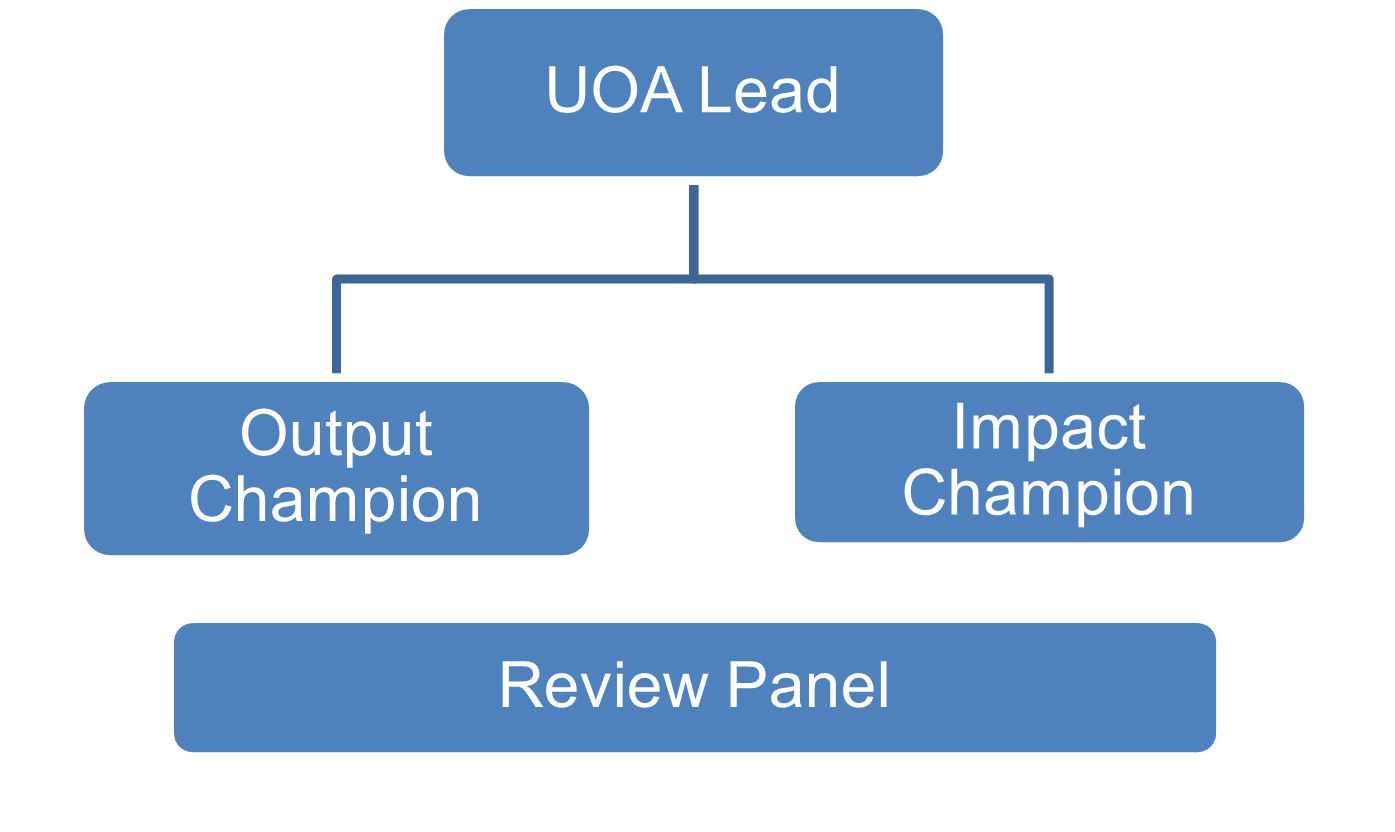
We are currently preparing submissions to thirteen units (otherwise known as UOAs). Each unit has a leadership team with at least one leader, an output and impact champion. The leadership team is supported by a panel of reviewers who assess the research from the unit. This includes research outputs (journal articles, book chapters, digital artefacts and conference proceedings) and impact case studies.

All roles require a level of commitment which is recognised accordingly, with time to review, attend meetings, and take responsibility for tasks.
This vacancy is for a joint impact champion for UOA 20 Social Work and Social Policy. This role exists as a job share with an existing impact champion, on the basis of a combined total of 0.2 FTE (split to be decided in discussion with the successful applicant).
Undertaking a UOA role can be enjoyable and rewarding, as one of our current impact champions can testify:
“As a UoA 17 impact champion, I work closely with the UoA 17 impact team to encourage the development of a culture of impact across BUBS. I try to pop into Department / research group meetings when I can to discuss impact, and I’ve enjoyed meeting people with a whole range of research interests. Sometimes it can be tough to engage people with impact – understandably; everyone is busy – so it’s important to be enthusiastic about the need for our BU research to reach the public. Overall, the role is about planting the seeds to get researchers thinking about the impact their work might have in the future (as well as the impact they have already had, sometimes without realising!)”
Dr Rafaelle Nicholson – UOA 17 Impact Champion
All those interested should put forward a short case (suggested length of one paragraph), explaining why they are interested in the role and what they believe they could bring to it. These should be clearly marked with the relevant role and unit and emailed to ref@bournemouth.ac.uk by Tuesday 30th April 2024.
Further details on the impact champion role, the process of recruitment and selection criteria can be found here:
Process and criteria for selection
For more information, please contact ref@bournemouth.ac.uk, or the UoA Leaders Stephanie Schwandner-Sievers and Mel Hughes with queries.
We cordially invite you to the 3rd Symposium of the BU Interdisciplinary Neuroscience Research Centre on Wednesday, the 12th of June 2024, from 9:30-13:00 at the Inspire Lecture Theatre, Fusion Building (1st floor).
The symposium is entitled: “Interdisciplinary Computational and Clinical Approaches at the Edge of Brain Research”.
This third symposium revolves around contrasting computational and translational methodologies from a cross-disciplinary standpoint, leveraging synergies between BU and our collaborators in other universities and at the NHS. It is an opportunity for informal discussions on grant proposals and to explore shared interests with our external guests. The general schedule is as follows:
9:15. Welcome and coffee.
9:30. Keynote talk: Prof. Miguel Maravall, Sussex University.
10.20-10:40. Coffee and grants discussion.
10:40-11:40. Session I. Integrating Cognitive and Computational Neuroscience.
11.40 -12.00. Coffee and grants discussion.
12.00-13:00. Session II. Interdisciplinary Clinical Approaches & Concluding Remarks.
If you have any queries, please do not hesitate to contact Ellen Seiss, eseiss@bournemouth.ac.uk or Emili Balaguer-Ballester, eb-ballester@bournemouth.ac.uk.
Thank you very much, and we are looking forward to seeing you there.
Kind regards,
Ellen and Emili, on behalf of all of us.
Disseminating research in different mediums can be an effective way to reach wider audiences. Using video, illustrations and other types of graphic design and creative media can also bring research to life.
This new video summarises the paper in the Journal Encyclopedia titled “Developing the socio-emotional intelligence of doctoral students” by Principal academic at BU Dr Camila Devis-Rozental
It explores socio-emotional intelligence (SEI) within the context of doctoral supervision in the UK and it presents a variety of interventions that can be implemented throughout the doctoral journey to make a positive impact on the doctoral students’ SEI development and in supporting them to flourish and thrive in academia and beyond.
You can access the video Here
You can read the article Here
There has been a lot of attention given to open access for longform research outputs so far this year, following the implementation of UKRI’s open access policy for monographs, edited collections and book chapters as well as the proposal for longform outputs to be in scope for the REF2029 open access policy.
To help authors and institutions comply with open access requirements, Jisc have launched a new ‘OA for books’ tool, to give a simple overview of a number of publisher open access policies regarding longform outputs.
The tool launched initially with 20 publishers in February 2024, so whilst the list is not exhaustive, there are plans for more publishers to be added in the near future following user feedback and further refinement.
If you are interested in publishing a longform output open access, this tool could be a useful starting point when identifying and selecting a publisher.
For UKRI funded authors
UKRI has introduced a dedicated fund to support open access costs for long-form publications within scope of their open access policy.
If you are funded by UKRI or any of its councils (or have held an award in recent years), and are planning to publish an in-scope longform output, please contact openaccess@bournemouth.ac.uk as early as possible, if you wish to apply to the UKRI fund.
The Inequalities in Nutrition & Healthy Ageing for Older African Adults project (www.bournemouth.ac.uk/african-food) is funded by the funded UKRI/BBSRC Food4Years. The aims were to use innovative methods to understand the nutrition landscape and to gain insights to co-create interventions to address inequalities in nutrition and healthy ageing for older African adults. A dissemination event was held on the 25th of March 2024, at Bournemouth University, to share findings from the project with participants, community members and stakeholders. There was also an exhibition of outputs from the Photovoice study showcasing participants photos around their thoughts and opinions on inequalities and healthy ageing in older African adults. The event featured a culturally-tailored dinner and a showcase of healthy produce including fruits, vegetables mostly consumed in African countries to highlight their value in contributing to healthy, balanced culturally-tailored diets.

Project overview:
The United Kingdom is home to a diverse population, including a significant number of older African adults who often face unique challenges related to health and nutrition. Individuals from Black African communities within the UK often experience a complex nutrition landscape where they sometimes maintain their traditional diets, but also adapt to some key features of western diet and food culture, presenting a complex mix of nutrition and health outcomes. This project set out to explore the determinants of inequalities in nutrition and healthy ageing in Africans over 55 years living in the UK using Photovoice. Through rigorous research and extensive community engagement, our project has shed light on critical issues and paved the way for actionable solutions to promote healthy ageing in older adults from the African community.
The research used community-based participatory research methods including photography (Photovoice) and roundtable discussions to explore and identify factors that drive food choices & behaviour and nutritional needs as identified by the participants themselves. Collectively with key stakeholders, the research team identified solutions, recommendations and key research priority areas to promote nutrition and improve health outcomes for older Africans.
Key Insights:
1. Tradition: The need to pass on authentic traditional recipes to children and grandchildren is one particularly important determinant of food choice as food is often associated with one’s identity.
2. Nutritional Challenges: Many older African adults face barriers to accessing culturally appropriate and nutritious food options, leading to inadequate diets and increased risk of chronic diseases.
3. Socioeconomic Factors: Economic instability and social exclusion exacerbate health and nutrition inequalities, creating additional challenges for older African adults in the UK.
4. Health Awareness and Education: Limited access to health information and education exacerbates nutrition inequalities, leading to higher rates of diet-related diseases and poor health outcomes.
Actionable Recommendations:
Based on findings of this research and through stakeholder engagement, the following recommendations are given to address health and nutrition inequalities among older African adults in the UK:
1. Culturally-tailored Interventions: Develop culturally sensitive nutrition programs and healthcare services tailored to the needs of older African adults.
2. Food Accessibility Programs: Increase access to culturally appropriate and affordable food options through community gardens and farmers’ markets.
3. Nutrition Education Initiatives: Implement targeted nutrition education programs that prioritise cultural relevance, focusing on traditional foods, cooking methods, and dietary practices.
Outputs:
Photobook: https://photobook.onelink.me/QDvH/ephotobook?file=aJGrD
Looking Ahead:
We acknowledge that our work has only just started. It is a call to action—a rallying cry for continued collaboration, advocacy, and innovation. Together, we can develop innovative solutions that address health inequalities, improve quality of life and secure healthy ageing in individuals of African heritage in the UK.
Conclusion:
In conclusion, we extend our heartfelt gratitude to all who contributed to this project—funder, participants, research team and community members. Together we have laid the foundation for future research on healthy ageing. The conversations and actions aimed at driving change towards healthy ageing among Black African people living in the UK continue.
Project team:
Dr Sophia Amenyah – Lead researcher, Bournemouth University
Professor Jane Murphy – Professor of Nutrition, Bournemouth University
Professor Lee-Ann Fenge – Professor of Social Care, Bournemouth University
Dr Hibbah Osei-Kwasi – Lecturer, Loughborough University
Mrs Janet Adjei, Research assistant – Bournemouth University