This session is aimed at any researcher who is, who plans to be, a Principal Investigator for an externally funded research or knowledge exchange project.
This is an open session for all BU ECRs and PGRs, to discuss any issues around career development, or the ECR experience with the peer network, and receive advice and guidance from the network’s academic leads. This month’s session will also include tips and advice as highlighted at the recent ECR and Interdisciplinarity in Medical Humanities BA ECRN event.
Monday 18th March 2024, 13:00 – 16:00 at Talbot Campus
This workshop will guide you through the best evaluation processes showing you When, Why, and crucially How to use evaluation to give you reliable and clear data.
Tuesday 19th March 2024, 09:00 – 12:00 Lansdowne Campus
This course is aimed at academics of all levels that are interested in gaining an overview of health economics and how this can be applied to research projects.
This event provides an overview of all the practical information staff need to begin developing their research plans at BU, using both internal and external networks; developing and disseminating research outcomes; and maximising the available funding opportunities.
RDS is continuing with RCDS with the next round due to start in March 2024
The RCDS is a coordinated, targeted set of activities designed to inspire and equip BU researchers to achieve greater success with Research Council funding. Attendees have been nominated by their Head of Department
Higher Education Innovation Fund (HEIF) February 2024 Open Call
HEIF funding is now available for innovative Knowledge Exchange projects.
Research England provide universities with funding for knowledge exchange (Higher Education Innovation Fund (HEIF)) to enable them to support and develop a broad range of knowledge-based interactions and work with business, public and third sector organisations, community bodies and the wider public, to exchange knowledge and increase the economic and societal benefit from their work.
The primary purpose of the funding is to support a small number of projects which can include:
significant projects that are underway and require a further injection of funds;
existing knowledge exchange projects to develop these ideas to the next stage of development;
projects with ambition that require a seed funding, capacity building, proof-of-concept or launchpad (please note that follow-up funding to support further development of your successfully funded HEIF-projects will be available to apply for in the 2024-25 academic cycle; we encourage applications for this call as an opportunity to kick-start your work).
The HEIF FEBRUARY 2024 OPEN CALL fund supports the ambition of the UK Government’s Plan for Growth to support and incentivise creative ideas and technologies that will shape the UK’s future. Further developing BU’s work in this area will also enable us to support UKRI’s aims to support cooperation and collaboration, as well as developing our academic talent. The aim is to provide a platform for academics to take their knowledge exchange ideas to the next stage of development or to completion.
If you would like to discuss your application or your project’s eligibility, there will be a drop in session on Thursday 29th between 1pm – 2.30pm in the Reception Area of Dorset House (BUBS). Or you can contact the Knowledge Exchange Manager by email wsmorrison@bournemouth.ac.uk
Key details
Amount: This year, £50000 of BU’s HEIF grant will be allocated through this open call, to support up to 6 knowledge exchange and innovation projects.
Timeframe: Projects should span a maximum of 4 months. The funds awarded must be spent by 31 July 2024.
Closing date: Friday, 8 March 2024
The link to the Guidance and Application form is below – please ensure you DOWNLOAD a copy to your own computer and do not edit directly on the SharePoint: HEIF February 2024 Open Call.docx
Are you a Postgraduate Researcher at Bournemouth University? Do you want to share your research with a public audience and improve your communication skills? If so, we have an exciting opportunity for you.
We are looking for 3-4 post-graduate researchers to take part in a special edition of our Café Scientifique public event series to deliver a short talk about your research to a friendly public audience. The event will take place from 6:30-8:00pm on Tuesday 7 May 2024 at The Black Cherry in Boscombe.
Café Scientifique is a fun and informal way to engage the public with your research and get feedback from different perspectives. You will receive training and support from our experienced Café Scientifique organisers in the Public Engagement Team, who will help you prepare and deliver your talk with confidence.
Please complete a short form to let us know why you are interested in getting involved, and include a bit about your research.
If selected, we will send you guidance on how to develop and deliver an engaging talk to a public audience. We will ask you to produce and practice a ‘draft’ version of your talk.
You will be invited to attend a training session on Tuesday 9 April to deliver your talk in front of the organisers and other speakers involved with the event. We will provide you with supportive feedback and ask you to do the same to the other selected speakers.
The Public Engagement Team will organise the event and promote it to local public audiences. The team will support you every step of the way. From developing your ideas to engage with a public audience, to setting up and promoting your event. We will also be on hand on the day to help your event run smoothly
If you are interested, please complete this form. The deadline for applying is Friday 8 March, 5pm.
Please note: Completing this form does not guarantee you a space. We will be in touch with you to discuss your interest.
If you have any questions about getting involved with Café Sci, please get in touch with the Public Engagement with Research Team: publicengagement@bournemouth.ac.uk.
We are currently recruiting for Review Panel members to help support preparation for our next REF. The deadline for expressions of interest is 15 March 2024.
This is for new members who wish to join Review Panels – existing Review Panel members do not need to re-apply.
The roles are recruited through an open and transparent process, which gives all academic staff the opportunity to put themselves forward. Applications from underrepresented groups (e.g. minority ethnic, declared disability) are particularly welcome.
We are currently preparing submissions to thirteen units (otherwise known as UOAs). Each unit has a leadership team with at least one leader, an output and impact champion. The leadership team are supported by a panel of reviewers who assess the research from the unit. This includes research outputs (journal articles, book chapters, digital artefacts and conference proceedings) and impact case studies.
We currently have Review Panel member vacancies in the following units:
All roles require a level of commitment which is recognised accordingly with time to review, attend meetings, and take responsibility for tasks.
Undertaking a UOA role can be enjoyable and rewarding as two of our current champions testify:
“As UOA Outputs Champion you develop a detailed knowledge of all the great work that colleagues are doing related to the subject, and the different outlets used for disseminating their work. As an outputs committee member, you also get to know what research is going on across BU, and it’s interesting to see the differences between disciplines. It’s a good way develop your knowledge of the bigger picture of BU’s research, and also to understand the importance of REF and how it works in practice. You do spend quite a bit of time chasing colleagues to put their outputs on BRIAN for REF compliance but hopefully they forgive you!”
Professor Adele Ladkin – UOA 24 Output Champion
“As a UoA 17 impact champion, I work closely with the UoA 17 impact team to encourage the development of a culture of impact across BUBS. I try to pop into Department / research group meetings when I can to discuss impact, and I’ve enjoyed meeting people with a whole range of research interests. Sometimes it can be tough to engage people with impact – understandably; everyone is busy – so it’s important to be enthusiastic about the need for our BU research to reach the public. Overall, the role is about planting the seeds to get researchers thinking about the impact their work might have in the future (as well as the impact they have already had, sometimes without realising!)”
Dr Rafaelle Nicholson – UOA 17 Impact Champion
How to apply
All those interested should put forward a short case (suggested length of one paragraph) as to why they are interested in the role and what they think they could bring to it. These should be clearly marked with the relevant role and unit and emailed to ref@bournemouth.ac.uk by 5pm on 15 March 2024
Further detail on the role and the process of recruitment and selection criteria can be found here:
The Doctoral College is delighted to offer a second round of funding of the PGR Research Culture and Community Grant. This grant is intended to support PGR-led activity across researcher development, research culture and research community building initiatives.
We are committed to fostering a cohesive and collaborative community of PGRs and we have dedicated grants aimed at supporting PGR-led social and/or academic events: this may be a social event, training activity or other initiatives to enhance the PGR student experience. In addition to community building, the purpose of the funding is to enable PGRs to gain transferable skills and experience in planning, organising, promoting and implementing PGR engagement activities.
Stream 1: PGR Researcher Development
Supports the organisation of skills focused workshops, events, or initiatives.
Grants of up to £500 per activity are available.
Examples: analysis workshops, guest speakers, digital skills sessions, writing sessions.
Stream 2: PGR Research Culture and Community
Supports the delivery of PGR research culture and community building, well-being or social activities.
Grants of up to £300 per activity are available.
Examples: cultural events, get togethers, wellbeing enhancing activities.
This event provides an overview of all the practical information staff need to begin developing their research plans at BU, using both internal and external networks; to develop and disseminate research outcomes; and maximising the available funding opportunities.
Objectives
The primary aim of this event is to raise participants’ awareness of how to get started in research at BU or, for more established staff, how to take their research to the next level
To provide participants with essential, practical information and orientation in key stages and processes of research and knowledge exchange at BU
Indicative content
The induction day will be interactive and give you the opportunity to meet your faculty-facing RDS support, as well as those responsible for strategy, outputs, ethics, impact, public engagement and knowledge exchange. The videos will provide:
An overview of research at BU and how RDS can help/support academic staff
The importance of horizon-scanning, signposting relevant internal and external funding opportunities and clarifying the applications process
How to manage an awarded project and the BU processes
How to develop internal and external research networks
Key points on research ethics and developing research outputs
Book your place here under ‘RDS Academic & Researcher Induction 27/03/2024’ in the drop-down menu.
This is an open session for all BU ECRs and PGRs, to discuss any issues around career development, or the ECR experience with the peer network, and receive advice and guidance from the network’s academic leads.
This month’s session will also include tips and advice as highlighted at the recent ECR and Interdisciplinarity in Medical Humanities BA ECRN event.
ECRN: Surgeries – 13/03/2024, hybrid session
Book your placehere– under “ECRN: Surgeries – 13/03/2024 ” in the drop-down menu
For any queries regarding this workshop, please contact RKE Dev Framework
The Doctoral College is excited to bring you our first 3C event! This social event is a catch-up opportunity for all PGRs to meet informally with the PGR community, share your research and make new connections.
This is also a great opportunity to ask any questions you may have, particularly for any new starters. This is an informal session and it would be great to see you there.
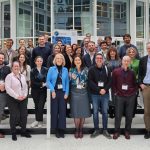
BU hosted the British Academy’s Early Career Researcher Network for an event exploring medical and health humanities, addressing some of the challenges and opportunities of working within this varied and interdisciplinary field.
Early career researchers from across the South West came together to network and discuss topics including publishing, funding opportunities, and finding their research identity.
The event took place on BU’s Talbot Campus and was opened by Interim Associate Pro Vice-Chancellor Research and Knowledge Exchange Professor Sarah Bate, who spoke about the importance of supporting the next generation of researchers to grow and develop.
BU Professors shared their experiences and advice
Professor Sam Goodman (Professor of English & Communication), Professor Ann Hemingway (Professor of Public Health), Professor Chris Chapleo (Professor of Societal Marketing), Professor Ann Luce (Professor of Journalism and Health Communication) and Professor Edwin van Teijlingen (Professor of Reproductive Health Research) took part in a panel discussion, sharing their experiences of working across medical and health humanities and taking questions from the audience.
Advice included how to manage multiple stakeholders who may have different interests, publishing widely across different disciplines, how to deal with rejection, and the importance of building networks and contacts.
While the panel were honest about some of the difficulties and challenges of being an interdisciplinary researcher, they also spoke about the opportunities for applied interdisciplinary research and exploring different passions and interests. As Prof. Goodman put it: ‘Where’s the fun in colouring between the lines?’
Roundtable discussions took place as part of the event
Following a networking lunch, attendees moved into breakout groups to discuss opportunities and challenges around publishing, grant capture and bidding, and developing a research identity as an interdisciplinary researcher.
The event was organised by the British Academy Early Career Researcher Network (BA ECRN) and Joelle Fallows and Katerina Kakaounaki of RDS, supported by Professor Sam Goodman and Professor Ann Hemingway who lead the ECR Network at BU.
The BA ECRN brings together ECRs across the humanities and social sciences disciplines, supporting their development through events and workshops. BU is a member of the BA ECRN’s South West Hub.
There are growing calls for young people under the age of 16 to be banned from having smartphones or access to social media. The Smartphone Free Childhood WhatsApp group aims to normalise young people not having smartphones until “at least” 14 years old. Esther Ghey, mother of the murdered teenager Brianna Ghey, is campaigning for a ban on social media apps for under-16s.
The concerns centre on the sort of content that young people can access (which can be harmful and illegal) and how interactions on these devices could lead to upsetting experiences.
However, as an expert in young people’s use of digital media, I am not convinced that bans at an arbitrary age will make young people safer or happier – or that they are supported by evidence around young people’s use of digital technology.
In general, most young people have a positive relationship with digital technology. I worked with South West Grid for Learning, a charity specialising in education around online harm, to produce a report in 2018 based upon a survey of over 8,000 young people. The results showed that just over two thirds of the respondents had never experienced anything upsetting online.
Large-scale research on the relationship between social media and emotional wellbeing concluded there is little evidence that social media leads to psychological harm.
Sadly, there are times when young people do experience upsetting digital content or harm as a result of interactions online. However, they may also experience upsetting or harmful experiences on the football pitch, at a birthday party or playing Pokémon card games with their peers.
It would be more unusual (although not entirely unheard of) for adults to be making calls to ban children from activities like these. Instead, our default position is “if you are upset by something that has happened, talk to an adult”. Yet when it comes to digital technology, there seems to be a constant return to calls for bans.
We know from attempts at prevention of other areas of social harms, such as underage sex or access to drugs or alcohol, that bans do not eliminate these behaviours. However, we do know that bans will mean young people will not trust adults’ reactions if they are upset by something and want to seek help.
I recall delivering an assembly to a group of year six children (aged ten and 11) one Safer Internet Day a few years ago. A boy in the audience told me he had a YouTube channel where he shared video game walkthroughs with his friends.
I asked if he’d ever received nasty comments on his platform and if he’d talked to any staff about it at his school. He said he had, but he would never tell a teacher because “they’ll tell me off for having a YouTube channel”.
This was confirmed after the assembly by the headteacher, who said they told young people not to do things on YouTube because it was dangerous. I suggested that empowering what was generally a positive experience might result in the young man being more confident to talk about negative comments – but was met with confusion and repetition of “they shouldn’t be on there”.
Need for trust
Young people tell us that two particularly important things they need in tackling upsetting experiences online are effective education and adults they can trust to talk to and be confident of receiving support from. A 15 year old experiencing abuse as a result of social media interactions would likely not be confident to disclose if they knew the first response would be, “You shouldn’t be on there, it’s your own fault.”
There is sufficient research to suggest that banning under-16s having mobile phones and using social media would not be successful. Research into widespread youth access to pornography from the Children’s Commissioner for England, for instance, illustrates the failures of years of attempts to stop children accessing this content, despite the legal age to view pornography being 18.
The prevalence of hand-me-down phones and the second hand market makes it extremely difficult to be confident that every mobile phone contract accurately reflects the age of the user. It is a significant enough challenge for retailers selling alcohol to verify age face to face.
The Online Safety Act is bringing in online age verification systems for access to adult content. But it would seem, from the guidance by communications regulator Ofcom, that the goal is to show that platforms have demonstrated a duty of care, rather than being a perfect solution. And we know that age assurance (using algorithms to estimate someone’s age) is less accurate for under-13s than older ages.
By putting up barriers and bans, we erode trust between those who could be harmed and those who can help them. While these suggestions come with the best of intentions, sadly they are doomed to fail. What we should be calling for is better understanding from adults, and better education for young people instead.
Calling early career researchers (including practice-led) for two days of sparking ideas, discovering new project partners, and developing interdisciplinary funding bids!
30 April – 1 May 2024
Bournemouth
Day 1 begins at 1230, Day 2 finishes at 1630, to enable travel from external universities.
Participate in dynamic and interactive sessions to develop innovative research concepts addressing any of the United Nations Sustainable Development Goals (UNSDGs), leading to funding bids across institutions and disciplines. Your goal is to form an interdisciplinary project team and build a funding proposal in only two days.
This two-day sandpit will be supplemented with two online follow-up sessions (summer and autumn 2024) to share your project progress and experiences.
We welcome any South West-based early career (as you choose to define it) researcher, artist, practitioner or anyone with a general interest in sustainability and emerging interdisciplinary projects. You must be based at one of the South West Cluster Universities. You should be keen to work in a multidisciplinary team, and willing to commit to attending the full sandpit, on both days. No prior experience of research funding is required.
To secure your spot in the Sandpit, please complete and submit the following application – note that all participants must commit to attending both full days:
The event is facilitated by Dr. Catalin Brylla and Dr. Lyle Skains, with advisors to be drawn from senior Bournemouth University staff based on participant disciplines and interests.
If you have any queries, please don’t hesitate to contact us.
The BU Research Staff Association (RSA) is a forum to promote research culture at BU. Research staff from across BU are encouraged to attend, to network with others researchers, disseminate their work, discuss career opportunities, hear updates on how BU is implementing the Research Concordat, and give feedback or raise concerns that will help to develop and support the research community at BU.
Recruiting FST and BUBS Faculty RSA Representatives
The Faculty RSA reps role is to support the Institutional reps with the running of the BU RSA, attending the Research Concordat Steering Group, and Faculty Research and Professional Practice Committee Meetings, to provide an update on the BU RSA and feedback any comments or concerns.
Eligible research staff are those on research-only contracts – fixed-term or open-ended employment (not PTHP/casual contracts) who have at least one year remaining on their contract at the time of recruitment.
If you are interested in the FST RSA rep or BUBS RSA rep role, please supply a few words to demonstrate your interest and availability in relation to the position. These should be submitted to the RDS Researchdev@bournemouth.ac.uk by 5pm on Thursday 14 March 2024.
Please contact your RSA reps to chat about it if you have any queries.
As a forum for the knowledge-sharing of cutting-edge advances and developments in Virtual Reality (VR) and related fields, ICVR 2024 will bring together an international community of experts to present the latest research results, future development outlooks, and innovative applications, encompassing not only VR, but also augmented reality (AR), mixed reality (MR), 3D user interfaces (3DUIs), and their cross-cutting areas.
The sponsors and organisers of ICVR 2024 are inviting submissions of high-quality research papers describing original research and innovation, covering a wide array of topics, including but not limited to the following:
Topic Area #1 – Technologies and Applications(e.g. VR, AR, MR and XR applications; computer graphics techniques, immersive video streaming, analytics and data visualisations; software architectures, toolkits and engineering)
Topic Area #2 – Multi-sensory Experiences and Techniques (e.g audio interfaces; virtual humans and avatars; haptics and tactile interfaces; teleoperation and telepresence)
Topic Area #3 – Interaction (e.g. affective computing and design; ethical and moral issues; usage research, evaluation methods and empirical studies)
The closing date for submission of full papers is Friday 1st March 2024.
If you’re looking to have an impact on local, national and international policy with your research, you may find the BU policy influence digest email useful.
The policy influence digest highlights policy influencing opportunities and tips. The digests are usually circulated weekly and contain information on expert calls, specialist or committee advisor opportunities, areas of research interest issued by the Government departments, fellowship opportunities, the notable sector reports and Government announcements from the week, events and training as well as a range of other opportunities to share your expertise (including responding to consultations or select committee inquiries).
The next round of the Leverhulme Research Centres Competition is now open with a deadline of 7th June 2024. As BU is permitted to submit only one application as an institution, we are holding an internal competition for Expressions of Interest (EoI).
Those who are interested in making an application to the Leverhulme Research Centres Competition, are invited to submit an Expression of Interest to preawardenquiries@bournemouth.ac.uk , by Wednesday 20th March 2024. Application and guidance can be found here (I:\RDS\Public\Leverhulme Research Centres Competition 2024\EOI Documents). If you have further questions or queries please contact Eva Papadopoulou (epapadopoulou@bournemouth.ac.uk) or Kate Percival (kpercival@bournemouth.ac.uk).
Scope of call
The Leverhulme Trust invites applications for Research Centres that will not only conduct research of outstanding originality but also aspire to achieve a significant step-change in scholarship. The Trust’s aim is to encourage new approaches that may establish or reshape a field of study and so transform our understanding of a significant contemporary topic. Applicants are therefore invited to be bold in compiling their bids. The centres should have the capacity to become recognised internationally for excellence in their chosen area.
The Trust has a reputation for encouraging higher-risk research, which is therefore often fundamental or curiosity-driven – so-called ‘blue skies’ – and multi-disciplinary. The expectation is that centres will draw upon a range of disciplinary perspectives and expertise, perhaps bringing new disciplinary mixes to bear on a particular topic.
In this 2024 call, the Trust Board is looking for applications strongly led by the Arts, Humanities and Social Sciences. Within this framework, the choice of topic is left open, in line with the Trust’s responsive mode of working. Please look at the Trust’s guidelines for areas of research, such as medical and clinical research, which are ineligible: https://www.leverhulme.ac.uk/research-we-do-not-fund.
The chosen topic should be sufficiently large-scale to support an ambitious but realistic research agenda for up to ten years.
Leverhulme Research Centres should not duplicate existing activity at a comparable scale, whether in UKRI-funded or university research centres. The Trust wishes to support research activity where it can be confident that the work will have substantial added value compared to smaller initiatives in the same area of research.
Value and Duration
£10 million for up to 10 years is available.
Further information is available from the Leverhulme Trust website, and interested applicants are advised to consider the eligibility criteria carefully.
Timeline
An indicative timeline is below for the submission of the EOI. A more detailed timeline can be found (I:\RDS\Public\Leverhulme Research Centres Competition 2024\EOI Documents).
Leverhulme Research Centres – Internal Expressions of Interest full timeline 2024.
20-02-2024
RDS advertise Expression of Interest (EoI)competition for call
20-03-2024
EoI deadline (EoIs to be sent to RDS)
20-03-2024
Papers (applications) sent to DDRs and Doctoral College (RDS to administer)
w/c 01-04-2024
DDRs panel meeting (virtual)
By 05-04-2024
DDRs panel meeting decision and feedback disseminated to applicants
05-04-2024
RDS to contact Leverhulme to provide the Trust with the principal applicant’s name, departmental affiliation and email address. Access will then be granted to the Leverhulme Trust Grants Management System
Apr-May
Applicants develop proposals with the support of RDS
We are pleased to announce that BU’s new seed funding scheme for public engagement with research is now open for applications
What’s it for?
We want to provide small amounts of funding (up to £500) to help researchers develop and incorporate meaningful, two-way engagement with beneficiaries and research users. The aim is to help support a more engaged research culture across BU and accelerate the impact arising from research.
Who can apply?
The scheme is open to researchers at all career stages, whether or not they have previous public engagement experience.
What are we looking for?
We would like to fund engagement activity that addresses any/all of the following:
reaches a new audience or community, or
tests a pilot activity to evaluate what works, with the aim of developing impact from existing research or securing further external funding, or
develops your own engagement skills and understanding of the value of public engagement with research.
The reviewing panel will assess applications on a rolling basis and aims to respond within one week.
Support & information
The relevant staff in the Research Excellence Team will provide support to deliver activities, and funds will be managed by the PI’s faculty finance and resources team. All activity and spend will need to be completed before 31 July 2024.
(Please note that this funding will not be awarded for attending conferences or networking events where the engagement with stakeholders is speculative.)
You may also be interested in the following training sessions, as you will need to demonstrate evaluation planning in the application form: