The Leisure and Recreation session at the Fusion Event in December went well. There was plenty of interest and plenty of discussion and for those of you who would like to follow the Atlantic Rowers (one of the featured areas of research) go to www.atlanticcalling.com , at 7 last night they tweeted, “Over 1510miles done. Nearly half way! Big storm brewing.” And yes they have seen their first shark!
In terms of the theme a number of questions arose in the discussion which we need to address. I have outlined these below; please feel free to add comments.
1. Given the title Leisure and recreation how do we demonstrate the real breadth of what we do?
2. How do we promote ourselves to internal and external audiences in a coordinated way and maintain the spontaneity and authenticity of what we do?
3. How do we achieve a balance between research, education and professional practice?
4. How is it going to work in terms of boundaries and synergies? Much of the work that we do could come under more than one heading? This isn’t a problem , but how do we handle this?
5. How do we catch and collect a record of all the work that we are doing, because much is going on that we don’t know about?
6. How will this help clarify our identity?
7. Is there going to be some funding to address some of these questions?
/ Full archive
People at Bournemouth University Clinical Research Unit (BUCRU)
In yesterday’s posting we gave a brief introduction to BUCRU. Today we introduce you to the members of the team.
Louise Ward
Louise is one of the administrators for the unit and has been with the team since 2008. She has worked in various NHS settings and has an interest in marketing. Both her undergraduate and Masters degrees were studied here at Bournemouth University.
Professor Paul Thompson
Paul is Consultant Rheumatologist at Poole Hospitaland Visiting Professor at BU. He was appointed Director of the Centre of Postgraduate Medical Research and Education (CoPMRE) in 2007, where he has been leading developments between research and education active doctors in NHS Trusts and the academic community at the University. He is Co-director of BUCRU, Lead for the musculoskeletal local priority group for the Western Comprehensive Local Research Network (CLRN) and Fellow of the NHS Improvement Faculty. He is interested in clinical research and service development in the rheumatic diseases. He supervises PhD students and is an External Examiner at other Universities.
Dr Sarah Thomas
Sarah is Deputy Director (methodology). She has a background in psychology and since 2000 has worked in the NHS in Dorset. As well as supporting other researchers in a Research Design Service capacity, she also conducts research. Her main research interests are in the field of multiple sclerosis (MS) and she is currently Chief Investigator for a pilot study funded by the UK MS Society exploring the use of the Nintendo Wii™ in people with MS.
Professor Peter Thomas
Peter is Co-Director and leads on research methodology. He has a background in epidemiology and statistics, and has been with Bournemouth University since 1996. He has a special research interest in psychosocial aspects of chronic disease and much of his recent work has focussed on multiple sclerosis.
Dr Zoe Sheppard
Zoe is a demographer with particular experience investigating socio-economic status. She joined Bournemouth University in October 2009 as a Research Fellow in Research Methods. She provides research methods support for people doing health research and support writing grant applications in her National Institute for Health Research (NIHR) Research Design Service (RDS) capacity.
Suzanne Sheppard
Suzanne is a Clinical Researcher recently recruited from the pharmaceutical industry to help manage the unit’s clinical trials. She has experience in setting-up and monitoring clinical trials across phases 1 to 3 in a variety of therapeutic areas.
Annabel Kenny
Annabel is a Clinical Research Administrator who joined Bournemouth University in October 2009. She provides support to Dr. Tamas Hickish, Consultant Medical Oncologist, Royal Bournemouth Hospital/Poole Hospital and the rest of the research team on various ongoing research projects within the Bournemouth University Clinical Research Unit.
Liz Griffiths
Liz works for the Royal Bournemouth Hospital as a research facilitator. She has been working in research within the NHS since 2003 in a variety of roles. Currently focusing on supporting researchers to develop proposals and prepare submissions to regulatory authorities.
Louise Fazakarley
Louise is a Physiotherapy lecturer with experience in neurological rehabilitation, the management of chronic disability and rehabilitation research. She joined Bournemouth University in 2006 to establish and teach on the BSc (Hons) Physiotherapy course. Louise is currently working on the MS Society funded pilot study to look at the Nintendo Wii™ as a method of helping people with MS increase their physical activity.
Audrey Dixon
Audrey is the Centre of Postgraduate Medical Research and Education (CoPMRE) co-ordinator and co-administrator for BUCRU. She has worked for the NHS since 1988. She first joined Professor Paul Thompson in 2001 to assist him with his academic work, following his secondment to the university. Audrey was seconded to BU in 2003. She now looks after a growing Visiting Faculty of 41 members and the education arm of CoPMRE. She is very proud to see the little acorn grow into a Centre of Postgraduate Medical Research and Education and BUCRU.
Roger Baker
Roger is Professor of Clinical Psychology and runs the MSc course Foundations in Clinical Psychology at BU. He is also a Consultant Clinical Psychologist at Dorset Healthcare University NHS Foundation Trust. He has expertise in the design of assessments and questionnaires, research design and clinical evaluation of services and has worked in a dual role as researcher and clinical psychologist at Leeds, Aberdeen & Bournemouth Universities and in NHS Trusts specialising in Mental Health.
Helen Allen
Helen is a health psychologist with a nursing and midwifery background. She has a qualitative background with a particular interest in the mind:body interface and chronic disease, including patient empowerment. She is the Unit lead on Public Patient Involvement.
Contact us: In the first instance please contact:
Louise Ward (administrator):
Bournemouth University Clinical Research Unit
R505 Royal London House
Christchurch Road
Bournemouth BH1 3LT
Tel: 01202 961939
Share posts from the Blog!
If you’d like to share any of the posts on the Blog with colleagues, friends, the public, you can do this quickly and easily via Twitter, Facebook, LinkedIn, email (plus many more!) using the Share This function at the end of each Blog post.
Simply:
- Click on ‘Click here to share this blog post’ at the end of the post you wish to share
- This will open the post in your browser, giving you the option to share the post via Twitter, Email or Facebook (as per the picture below)
- To share via Twitter or Facebook simply click on the icon and the post will be added to your Twitter feed / Facebook profile
- To share via any other media (such as email, LinkedIn, Yahoo, Delicious, etc) simply hover the cursor over the Email icon and a new window will open displaying all of the ways you can share the post. Clicking on LinkedIn, for example, will share it via LinkedIn! Easy 🙂
Sharing posts this way helps to promote the excellent work going on at BU and can also help you to establish networks with likeminded people.
EC Work Programme 2012 is unleashed!
The European Commission’s Work Programme for 2012 has been adopted! This document outlines political priorities and actions to be delivered. The 2012 programme is focussed on fostering a sustainable and job-rich economic recovery, reflecting the Europe 2020 strategy and its flagship initiatives and is built on three overarching priorities:
- Building a Europe of stability and responsibility;
- Building a Union of growth and solidarity; and
- Giving the EU an effective voice in the wider world.
Engaging Undergraduates with Research
BournemouthUniversity’s Associate Professor,Heather Hartwell, took part in a lively online debate on Friday, discussing how to engage undergraduates in research.
Hosted by the Guardian Higher Education network, Dr Hartwell joined panellists from the Universities of Leeds,Central Lancashire,East LondonandLincolnamong others, to provide expertise and advice on how to develop undergraduate research programmes and ensure they are successful.
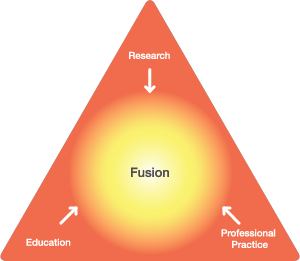
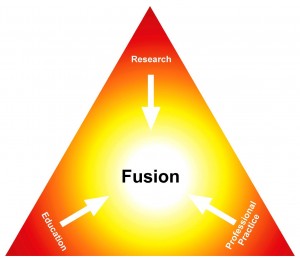
Dr Hartwell explained BU’s ‘fusion’ concept, describing ‘a community where research is part of core business and where both undergraduates and post graduates are engaged in that activity so becomes part of the ‘daily’ business’.
The British Conference for Undergraduate Research was widely considered by panel members to be an excellent initiative. This takes place at theUniversityofWarwickin March, with ten BU students from theSchoolofTourismpresenting posters.
Fellow panellists and participants in the web chat were also impressed by
Dr Hartwell’s own experiences engaging undergraduates with research; notably her work with theUSarmy. “We were awarded a contract by theUSarmy to study food and emotions,” she said. “This was with the demographic of their ‘war fighters’, so young adults. During a first year lecture I asked for volunteers to help me, and the sea of hands was amazing. In fact recruiting students to help was beneficial because they were the same age group as the sample.”
But it’s not only the students who benefit from engaging with research. Dr Hartwell commented that sometimes dissertation data is of such high quality that she has been known to use it to form the basis of a short co-authored paper.
Inevitably the issue of peer ‘snobbery’ was raised, questioning the status of published undergraduate research. Dr Hartwell suggested that if ‘published work was blind peer reviewed and therefore the ‘process’ did not know where the work had come from – it was accepted on its merit’.
The full debate can be viewed via the Guardian Higher Education Network.
Bournemouth University Clinical Research Unit (BUCRU)
This week the Bournemouth University Clinical Research Unit (BUCRU) will be posting daily blogs. In these blogs we will tell you a little about the Unit, what we do, who we are, and how we might be able to help in your research endeavours.
What is BUCRU?
BUCRU is a new model for supporting and conducting health related research in Dorset. It supports researchers in improving the quality, quantity and efficiency of research across the University and local National Health Service (NHS) Trusts. It does this by:
- helping researchers with developing high quality applications for external research funding (including small grants)
- ongoing involvement in funded research projects
- a “pay-as-you-go” consultation service for other work
How can BUCRU help?
BUCRU can provide help in the following areas:
- Study design
- Quantitative and qualitative research methods
- Statistics, data management and data analysis
- Patient and public involvement in research
- Trial management
- Ethics, governance and other regulatory issues
- Linking University and NHS researchers
BUCRU focuses on health research that has relevance to the NHS. The Unit is available to Bournemouth University staff and people working locally in the NHS. There are no general restrictions on topic area or professional background of the researcher. However we do have special interests in areas such as chronic disease and complex interventions (interventions in nursing, physiotherapy, occupational therapy, psychology and so on).
How is it funded?
BUCRU is partly funded by the National Institute for Health Research (NIHR) and incorporates the Dorset office of the NIHR Research Design Service (http://www.rds-sw.nihr.ac.uk). Further funding comes from a variety of research grants and contracts.
Contact us: In the first instance please contact
Louise Ward (administrator):
Bournemouth University Clinical Research Unit
R505 Royal London House
Christchurch Road
Bournemouth BH1 3LT
Tel: 01202 961939
BU research feeds into copyright theories
Watch this excellent short video from BU’s Dr Sukhpreet Singh who explains how BU’s strong relationships with UK media organisations have fed into copyright theories.
To see other BU videos on YouTube go to the BU YouTube page.
httpv://www.youtube.com/watch?v=IMRtV2GX_WU
Come along to the next Fusion Seminar on 18 January!
Following hot on the heels of the event on 14 December, the second event in the Fusion Seminar and Conference Series is on Wednesday 18 January and will focus on the Creating aspect of the BU2018 strategy.
The January Seminar will take place between 12:00-1:30pm. Registration will open at 11:45 and the sessions will begin at 12:00. There will be one hour of short and focused presentations followed by 30 minutes of networking opportunities over lunch. The Seminar will be hosted by a member of UET who will open the seminar with a 10 minute presentation. This will be followed by five brief and succinct presentations by invited speakers, with each presentation lasting no more than ten minutes including questions.
The programme is available here: Fusion event – Creating – programme
The Seminar will be held in the EBC (7th floor) and will start promptly at 12pm. Please arrive for registration from 11:45am, ready for the 12pm start.
You can use the form below to register your place.
For an excellent summary of BU’s Fusion strategy, watch this short video from Professor John Vinney:
httpv://www.youtube.com/watch?v=ZrUxINNWzjQ&
Engaging Undergraduates in Research: Live web chat today
The Guardian Higher Education network hosts a live web chat today entitled ‘Engaging Undergraduates in Research’.
Dr Heather Hartwell from Bournemouth University will join the panel between 12:00-14:00.
You can view and contribute to the discussion here or follow it on Twitter via #HElivechat.
We have a Draft Copy of the FP7 Nanotechnologies Work Programme!
I’ve managed to obtain a draft version of the FP7 NMP Work Programme which features the calls for proposals to be released in 2012. This is just a draft and therefore subject to change but it gives you a great idea as to what the European Commission are looking to fund. The Work Programme is a tedious read so I’ve summarised the info on funding in there for you; the aim of the call etc. I have bookmarked the document so you can jump straight to the call that interests you from the front page.
As this document is highly confidential I have placed it on our I drive; it is strictly forbidden to circulate this outside of BU! I:\R&KEO\Public\RDU\Draft Work Programmes for 2012-13
There are also the drafts for Environment, Health, ICT and Food, Agriculture, Fisheries & Biotechnology in there too which I’ve blogged about previously.
The final official version of the Work Programmes aren’t released until July 2012 so this gives you a fantastic head start to preparing a submission.
I will summarise the other themes as soon as I get the drafts through so keep your eyes peeled on this blog for them!
BU research shows the UK to be one of the top countries for child protection laws
Watch this excellent short video from BU’s Richard Williams describes research highlighting the UK as one of the top three countries in the world for child protection laws.
To see other BU videos on YouTube go to the BU YouTube page.
Congratulations to our EUNF successful applicants & a reminder to apply!
Well done to John Oliver (MS), Darren Lilleker (MS) and Hanna Janta (ST) who have all been awarded grants through the EU Networking Fund (EUNF) to help them gain collaborators for EU research projects. The EUNF is still open for applications, but with one-third of our budget for this scheme already gone, if you want to apply you better act fast!
More details on the EUNF can be found on my previous blogpost, along with details of the EU Academic Development Scheme which closes on 23.01.12. More details on both schemes will also be presented at the EU Showcase Event THIS FRIDAY so why not sign up?
What is Erasmus Mundus?
Erasmus Mundus is a European Commission funded programme which provides support to organisations (such as BU) as a whole in order to establish partnerships and to individual researchers, students or professional support staff in order to study/ research/ teach. The programme is based on the following principles:
- To promote mobility at all level of studies for students (undergraduates and masters),doctoral candidates, researchers, academic and administrative staff
- To enhance the quality of European higher education
- To promote dialogue and understanding between people and cultures through cooperation with other countries
- To contribute to the development of human resources and the international cooperation capacity of Higher education institutions in Third Countries (such as the USA, Zambia, South Africa, India and Chile) by increasing mobility between the European Union and these countries
What type of funding is available?
There are 3 different strands of funding:
Action 1: Joint Programmes (including scholarships)
This Action will foster cooperation between higher education institutions and academic staff in Europe and Third Countries with a view to creating poles of excellence and providing highly trained human resources. Joint programmes of outstanding academic quality are designed and implemented by a consortium of European universities from at least 3 different countries. Consortia may also include universities from other parts of the world. Scholarships / fellowships are open to higher education students and academics from all over the world. Programmes include obligatory study and research periods, in at least two universities, and award recognised double, multiple or joint degrees. Action 1 provides:
• Support for high-quality joint masters courses and doctoral programmes offered by a consortium of European, and possibly Third Country, higher education institutions. Other types of organisations concerned by the content and outcomes of the joint programme can participate in the consortium.
• Scholarships/fellowships for Third Country and European students/doctoral candidates to follow these Erasmus Mundus joint masters’ courses and doctoral programmes.
• Short-term scholarships for Third Country and European academics to carry out research or teaching assignments as part of the joint masters programmes.
Action 2: Partnerships with Third Country higher education institutions and scholarships for mobility
Partnerships in the framework of Erasmus Mundus 2009-2013 are the basis for enhancing academic cooperation and exchanges of students and academics, contributing to the socio-economic development of non-EU countries targeted by EU external cooperation policy. Consortia must include a minimum of 5 higher education institutions from at least 3 European countries and a number of higher education institutions from targeted non European regions. Special attention is given to disadvantaged groups and populations in vulnerable situations. Action 2 provides:
1. Support for the establishment of cooperation partnerships between European higher education institutions and higher education institutions from targeted Third Countries with the objective of organising and implementing structured individual mobility arrangements between the European and Third Country partners.
2. Scholarships of various lengths – depending on the priorities defined for the Third Country concerned, the level of studies or the particular arrangements agreed within the partnership – for European and Third-Country individuals (students, scholars, researchers, professionals).
Action 2 activities are funded by different financial instruments available in the context of the External Relations activities of the Union (i.e. the European Neighbourhood and Partnership Instrument, the Instrument for Pre-Accession Assistance, the Development Cooperation and Economic Cooperation Policy Instrument, the European Development Fund and the Industrialised Countries Instrument). Because of the diversity in the policy objectives covered by these financial instruments, and the different needs and priorities of the Third Countries concerned, Action 2 implementation rules may vary considerably from one year to another and from one partner country to another.
Action 3: Promotion of European higher education
Action 3 promotes European higher education through measures enhancing the attractiveness of Europe as an educational destination and a centre of excellence at world level. Action 3 projects should contribute to:
1. the promotion and awareness raising of the European higher education sector as well as the relevant cooperation programmes and funding schemes;
2. the dissemination of the programme’s results and examples of good practice;
3. the exploitation of these results at institutional and individual level.
This Action provides support to activities related to the international dimension of all aspects of higher education, such as promotion, accessibility, quality assurance, credit recognition, mutual recognition of qualifications, curriculum development and mobility.
Activities can be implemented by mixed networks of organisations active in the field of higher education composed of at least 3 participating organisations from European countries and 1 from Third Countries.
What kind of activities are included?
Funding can be used for a range of activities, depending on the applicant, as the following table illustrates:
| Higher education institutions organised into consortia/partnerships
|
Higher education institutions can participate in:
|
| Other bodies
|
Other bodies active in the field of higher education and research:
• Other public or private bodies active in the field of education and research can participate in: • Enterprises and other employers can participate in: • Erasmus Mundus National Structures can participate in: Other bodies which could be particularly relevant for the objectives and activities of the programme: • Associates partners from the eligible countries can be involved in the Partnerships (Action 2). They play an active role in the action but they are not beneficiaries and may not receive funding from the grant. |
| Students and academics
|
• Students in higher education can receive scholarships for: – Undergraduate studies (Action 2); – Masters studies (Actions 1 and 2); • Doctoral candidates can receive fellowships for: – Doctoral studies (Actions 1 and 2); – Post-doctoral studies (Action 2);• Teachers and researchers can receive fellowships for: – Teaching and research periods (Actions 1 and 2);• Other academic staff can receive scholarships / fellowships under Actions 1 and 2 |
What is the application process?
The Education, Audiovisual and Culture Executive Agency (EACEA) is responsible for the management of all three actions of Erasmus Mundus, under the supervision of the Directorate-General for Education and Culture (DG EAC of the European Commission) and EuropeAid Development and Cooperation (DG DEVCO). This means applications must be made to them directly. The process of application is dependent on who is submitting the proposal.
Institutions organised into consortia/partnerships: Higher education institutions and organisations active in the field of higher education have to apply centrally to the Education, Audiovisual and Culture Executive Agency in accordance with the application conditions and timetable defined in the Programme Guide and the relevant Call for Proposals. There must be one co-ordinating/applicant institution that submits the application on behalf of the consortium/partnership/network of participating organisations Applicants must be located in an eligible applicant country as defined in the Programme Guide.
Scholarships and fellowships: Students, doctoral candidates, teachers, researchers and other academic staff should address their applications directly to the selected Erasmus Mundus Masters and doctoral programmes (Action 1) and to the selected Erasmus Mundus partnerships (Action 2), in accordance with the application conditions defined by the selected consortium/partnership.
What costs are covered?
Institutions organised into consortia/partnerships: Consortia/partnerships selected under Actions 1 and 2 receive lump-sum amounts for the implementation of their activities and a number of scholarships to award to the best applicants. Proposals selected under Action 3 are co-funded up to a maximum of 75% of their costs.
Scholarships and fellowships: Scholarship amounts can vary according to the level of studies/teaching/research, their duration (3 months to 3 years) and the grantee’s nationality (scholarships for non-EU individuals are higher than for EU individuals).
The Programme Guide provides all the necessary information on the application conditions and criteria corresponding to each of the 3 Programme Actions. Regular Calls for Proposals are published to specify the activities, the application criteria and the budgetary allocations relevant to the call concerned.
New EU Energy Roadmap 2050 – essential to read for FP7 Energy submissions!
The European Commission has adopted the ‘Energy Roadmap 2050’ which is intended to be the basis for developing a long-term EU framework for energy. If you’re interested in applying for calls under the FP7 Energy theme, then you should familiarise yourself with the overarching principles to strengthen your application.
The Energy Roadmap 2050 sets out the challenges posed by delivering the EU’s decarbonisation objective, while at the same time ensuring security of energy supply and competitiveness, by analysing a set of scenarios to describe the consequences of a carbon free energy system and the resulting necessary policy framework. Key points from the Roadmap include:
- Decarbonisation of the energy system is technically and economically feasible
- Energy efficiency and renewable energy are critical
- Early investments cost less
- Contain the increase of prices
- Economies of scale are needed
If you’re thinking of applying for Energy FP7, read the Energy Roadmap 2050 Communication and FAQs on the Roadmap.
The BU Challenges: the way forward
The BU Challenges (previously the Research Themes) were launched in December at the first of the BU-wide Fusion events. The Challenges are societally-led, encourage cross-School working and collaboration, and will be the main vehicle through which our research is presented externally in future.
To discuss how to take the Challenges forward and foster collaborative working, Matthew Bennett would like to talk to all staff interested in the Challenges. Matthew will spend an hour per Challenge either in the Costa in the Atrium or in the Costa in Studland House and invites you to join him to talk about the way forward for each theme.
The session times are listed below:
|
Research Theme |
Date and Venue |
| Creative and Digital Economy | 11 January – 2.00 pm to 3.00 pmCosta Coffee Shop, Poole House
|
| Culture and Society | 12 January – 2.30 pm to 3.30 pmCosta Coffee Shop, Poole House
|
| Environmental Change and Biodiversity | 16 January – 2.00 pm to 3.00 pmCosta Coffee Shop, Poole House
|
| Entrepreneurship and Economic Growth | 18 January – 11.00 am to 12.00 pmCosta Coffee Shop, Studland House
|
| Green Economy and Sustainability | 18 January – 4.00 pm to 5.00 pmCosta Coffee Shop, Poole House
|
| Recreation and Leisure | 19 January – 10.00 am to 11.00 amCosta Coffee Shop, Poole House
|
| Health, Wellbeing and Aging | 25 January – 1.30 pm to 2.30 pmCosta Coffee Shop, Studland House
|
| Technology and Design | 23 January – 4.00 pm to 5.00 pmCosta Coffee Shop, Poole House
|
2 EU events: Clean Sky Info Day and Social Innovation conference (covering social media) – registration open!
Clean Sky JTI Workshop and Information Day: The Clean Sky Joint Technology Initiative (JTI) will be holding a workshop on selected topics of the Clean Sky Call for Proposals 11 on 19 January and an information day on the Clean Sky Call for Proposals 11 on 20 January. Both events are in Brussels, with free participation, but registration is compulsory. The workshop on selected topics of the Call will focus on those topics which are critical to the progress of the programme or are complex. Applicants will have the opportunity to seek clarification on the list of selected topics. The information day on the Clean Sky Call for Proposals will include presentations on the topics included in the calls; discussions on the evaluation procedure and contractual agreements; and advice and tips on submitting a successful proposal. There will also be the opportunity to have a short meeting with Clean Sky Joint Undertaking staff during the information day.
2012 EU Research Forum Stakeholders’ Conference on Research and Social Innovation : The European Foundation Centre (EFC)’s Research Forum will hold its next Stakeholder’s Conference in Barcelona on 9-10 February 2012.The theme for the conference will be ‘Research and social innovation: the potential for European foundations to pave the way’. The conference will include sessions on:
- The potential for foundations to spearhead socially innovative research;
- The impact of social media and networks on research and social innovation;
- Open Access and the challenge of quality assurance; and
- Public participation in science: new modes of interaction.
Registration is on the European Foundation Centre’s website.
The benefits of academic blogging – should you enter the blogosphere?!
The blogosphere sounds like a strange galaxy in another dimension, but is the term used to refer to all blogs (such as this one!) and their interconnections. Readers of blogs share their thoughts and views in a collected community. Academic blogs tend to focus on professional topics, showing explicit connections between blog content, research issues and academic life, and more academics than ever are now engaging with the blogosphere to share their work, establish networks and connections, and to develop their careers. But are the benefits really that great?
Academics who blog regularly report positive outcomes, such as networking and collaborating, finding new audiences and opportunities, disseminating research more widely, and building reputation. Bloggers argue that far from diluting scholarly success (as has been suggested by some academics), online writing can be a serious tool for academic practice. Blogging should be seen as part of a programme of dissemination and collaboration, and is best used alongside traditional academic outlets (such as journals) as a means of amplifying the reach and potentially the significance and future direction of the research.
Blogs are usually accessed by a different audience to traditional forms of academic dissemination. They are freely accessible to a global audience, and their public, collaborative nature has helped many academics to develop new relationships with students, peers and other audiences (such as schools, charities, the general public, etc) and to develop cross-disciplinary partnerships. The accessibility and exposure to different audiences tends to broaden reputations, which opens up new professional possibilities. Blogging can lead to further research and knowledge exchange work, public presentations and interviews, as well as invitations to write for academic publications.
Academic blogging is a method of public engagement, allowing academics to connect and share their work with the public, generating mutual benefit for both blog authors and readers. This can help to build trust and understanding of universities, and can increase our relevance to, and impact, on society.
Academic bloggers at BU include:
- Christos Gatzidis – Dr Christos Gatzidis’ Scientific Diary
- Dimitrios Buhalis – Dimitrios Journeys
- Darren Lilleker – Politics, PR and Marketing
- Media School blog
- School of Tourism blog
If you’d like access to add posts about your research to the Research Blog or would like your own blog then let me know.
The benefits of involving students in research with small businesses
Watch this excellent short video from BU’s Dr Phillip Alford who talks about undergraduate involvement in a real Ad-words campaign and the successes it brings to students and the small businesses involved.
To see other BU videos on YouTube go to the BU YouTube page.


REF Code of Practice consultation is open!
BU Leads AI-Driven Work Package in EU Horizon SUSHEAS Project
Evidence Synthesis Centre open at Kathmandu University
Expand Your Impact: Collaboration and Networking Workshops for Researchers
ECR Funding Open Call: Research Culture & Community Grant – Apply now

ECR Funding Open Call: Research Culture & Community Grant – Application Deadline Friday 12 December
MSCA Postdoctoral Fellowships 2025 Call
ERC Advanced Grant 2025 Webinar
Update on UKRO services
European research project exploring use of ‘virtual twins’ to better manage metabolic associated fatty liver disease