The Science and Technology Facilities Council (STFC) Public Engagement Early-Career Researcher Forum (the ‘PEER Forum’) will support talented scientists and engineers in the early stages of their career to develop their public engagement and outreach goals, to ensure the next generation of STFC scientists and engineers continue to deliver the highest quality of purposeful, audience-driven public engagement.
To foster peer learning and support between early career scientists and engineers with similar passion for public engagement and outreach, thus developing a peer support network that goes beyond an individual’s term in the forum
To foster a better knowledge and understanding of the support mechanisms available from STFC and other organisations, including funding mechanisms, evaluation, and reporting. As well as how to successfully access and utilise this support
To explore the realities of delivering and leading public engagement as an early career professional and build an evidence base to inform and influence STFC and by extension UKRI’s approaches to public engagement, giving an effective voice to early career researchers
What will participation in the Forum involve?
Participants in the PEER Forum will meet face-to-face at least twice per year to share learning and to participate in session that will strengthen the depth and breadth of their understanding of public engagement and outreach.
Who can apply to join the Forum?
The PEER Forum is for practising early-career scientists and engineers who have passion and ambition for carrying out excellent public engagement alongside, and complementary to, their career in science or engineering. Forum members from across the breadth of STFC’s pure and applied science and technology remit.
The personal requirements of PEER Forum membership are that members:
Have completed (or currently studying for – including apprentices and PhD students) their highest level of academic qualification within the last ten years (not including any career breaks)
Are employed at a Higher Education Institute, or a research-intensive Public Sector Research Organisation or Research Laboratory (including STFC’s own national laboratories)
Work within a science and technology field in STFC’s remit, or with a strong inter-disciplinary connection to STFC’s remit, or use an STFC facility to enable their own research
Clearly describe their track record of experience in their field, corresponding to the length of their career to date
Clearly describe their track record of delivering and leading, or seeking the opportunity to lead, public engagement and/or outreach
Are keen communicators with a willingness to contribute to the success of a UK-wide network
Can provide insight into their experiences in public engagement and/or outreach and also evidence one or more of the following;
Alternatively, if you would like advice on developing ideas or submitting your application, please contact Adam Morris (Engagement Officer) publicengagement@bournemouth.ac.uk
Book your place early to attend these popular bespoke supervisory development sessions coming up in the next month, facilitated by the Doctoral College and key academic colleagues. Bookings are arranged by Organisational Development.
The sessions are aimed at all staff who are new to, or experienced at, research degree supervision and are interested in expanding their knowledge of a specific aspect or process. Staff will benefit from discussions aimed at sharing best practice from across BU.
In summer 2015, we launched the BU Bridging Fund Scheme which aims to provide additional stability to fixed-term researchers who are often employed on short term contacts linked to external funding. This situation may impact on continuity of employment due to breaks in employment, job security and can result in a costly loss of researcher talent for the institution.
The Scheme aims to mitigate these circumstances through early career planning, forward research project planning, redeployment where possible, or where feasible, by providing ‘bridging funding’ for the continuation of employment for a short-term (usually up to three months, but up to six months can be considered in exceptional situations) between research grants. BU’s Bridging Fund Scheme is intended to permit the temporary employment, in certain circumstances, of researchers between fixed-term contracts at BU, for whom no other source of funding is available, in order to:
(a) encourage the retention of experienced and skilled staff, and sustain research teams and expertise;
(b) avoid the break in employment and career which might otherwise be faced by such staff;
(c) maximise the opportunity for such staff to produce high-quality outputs and/or research impact at the end of funded contracts/grants.
To find out more about the scheme, including how to apply for bridging funding, see the scheme guidelines.
The Bridging Fund Scheme is an action from our Athena Swan action plan (which aims to create a more gender inclusive culture at BU) and our HR Excellence in Research Award (which aims to increase BU’s alignment with the national Concordat to Support the Career Development of Researchers).
Yesterday FHSS graduate Dr. Shaqaieq Ashrafi Dost heard from Razi International Medical Journal the the paper from her Ph.D. study had been accepted for publication. Her paper ‘Management capacity in the Ministry of Public Health (MoPH) Afghanistan: Political and socio-cultural issues’ is based on a mixed-methods case-study was conducted with staff at the Afghan Ministry of Public Health. The Ph.D. study explores MoPH’s management capacity. Interviews were conducted with 12 senior staff and qualitative data were analysed thematically. A quantitative survey, covering directors of 30 departments, was analysed using descriptive statistics.
The paper reports that management capacity was generally weak. Key appointments including directors were subject to political interference and many directors appointed by politicians lacked the skills to manage well. Consequently, those directors were not able to support employees appropriately or to create a healthy work environment. The respondents reported that there were strong socio-cultural influences such as nepotism and favouritism. Often employees believed they were not treated consistently or fairly. This was compounded by overly complex administrative systems. The authors concluded that the Afghan government needs to appoint competent and committed staff who can recognize/address the gaps in the functioning of the Ministry, especially the negative political and socio-cultural practices that undermine effectiveness.The reader needs to bear in mind that this Ph.D. study was conducted prior to the 2021 takeover by the Taliban. Putting the paper’s conclusion in perspective.
Razi International Medical Journal founded in 2021 is a peer-reviewed scholarly journal from Afghanistan that aims to impact public health and global health and distributed internationally. The journal is Open Access and published in electronic and paper-based format twice a year, and there is no article publishing charge (APCs).
At BU we promote and celebrate the work done to engage public audiences with our research.
The public engagement with research team in Research Development and Support can help promote your event to relevant audiences through regular newsletters and via social media channels.
Based in Cumbria, the International Labour and Birth Research Conference, previously known as the Normal Birth Conference, has been a highlight in the midwifery calendar for over two decades. Hosted by Research in Childbirth and Health (REACH) Group at the University of Central Lancashire, speakers and delegates travel from around the world to attend this prestigious event. The theme for this year’s interdisciplinary conference was ‘evidence knowledge and creativity; optimising safety and personalisation in maternity care’.
Several midwives from the Centre for Midwifery, Maternal & Perinatal Health (CMMPH) at Bournemouth University presented their work. Dr Laura Iannuzzi presented under the title ‘Co-designing respectful maternity care in a slum area: methodological considerations from an international multidisciplinary research in Nairobi’.
Dr Juliet Wood & Dr Jane Fry shared their work, ‘Understanding concepts of normal/physiological labour and birth – evidence from a thematic analysis of the views of student midwives across the globe’. Prof Vanora Hundley and Anna Marsh, clinical academic midwife, hosted a workshop called ‘Dissemination and impact: policy makers and the media’. The team also participated as members of the International Early Labour Research Group in a workshop and symposium.
The conference is a great opportunity for emerging researchers. Two of CMMPH postgraduate researchers had the opportunity to share their work with midwives from across the globe. Anna Marsh presented her recently completed MRes work titled ‘How do midwives portray birth on Instagram? A content analysis of posts from the USA, UK, New Zealand and Australia’.
Vanessa Bartholomew, clinical academic doctoral midwife, presented ‘The RETHINK Study: A study to determine if pregnant women who pain catastrophise are more likely to attend hospital during the latent phase of labour’. We are very proud to say that Vanessa’s poster won the conference competition for ‘Best Scientific Poster’!
This has been a busy few months for the International Early Labour Research Group (IELRG), which comprises members from across the globe. We had the opportunity to get together at the International Labour and Birth Research Conference in Grange over Sands this month, where early labour was a strong theme.
The IELRG held a workshop looking at how latent phase labour is defined. This was followed by a symposium on early labour with presentations from the USA and Europe.
Vanessa Bartholomew, clinical academic doctoral midwife, presented her doctoral work on pain catastrophisation. Congratulations to Vanessa for winning both the daily and overall prize for Best Scientific Poster!
Vanora Hundley, Professor of Midwifery, presented a study looking at how perceptions of pain established prior to pregnancy can influence decisions about labour and birth.
The International Early Labour Research Group with be launching a special issue of Women and Birth later this year.
The metaverse sounds like it could be a scary place. Recent headlines have highlighted the dangers to children of the metaverse – a generic term for the range of online virtual worlds, developed by different tech companies, in which users can interact. Children’s charities have raised concerns about its potential for harm.
Recently, Meta – Facebook’s parent company – announced that teenagers would be able to use its VR Horizon Worlds app in North America. In this online environment, users are represented by avatars and spend time in virtual worlds, making use of virtual reality (VR) headsets. Some politicians in the US have already voiced their unease. It is certainly possible that Meta could extend this access to teens elsewhere in the world.
It would be no surprise if parents were concerned about this technology and how it might affect their children. In fact, children are already online in the metaverse – and there are steps parents can take to understand this technology, the risks it may pose, and what they can do.
Avatars and online games
Perhaps the most famous current interactive world aimed at children is Roblox, an online platform that allows users to create avatars, play games, make their own games, and interact with others. Young people play games developed by other users – the most popular is currently Adopt Me!, in which players adopt animals and live with them in a virtual world.
This mix of gameplay, interaction with others, and opportunity for creativity are all reasons Roblox is so popular. While it can be played using VR headsets, the vast majority of interaction takes place using more traditional devices such as phones, tablets and laptops.
Another emerging platform, Zepeto, has a similar model of allowing users to create environments, access “worlds” developed by others, and chat with others within these environments. Some young people will interact solely with their own group of friends in a specific world; other worlds will allow interaction with people they don’t know.
However, there is a rich history of platforms that could be considered, in modern terminology, to be “metaverses”. One is Minecraft, perhaps the most popular platform before Roblox. Launched in 2011, Minecraft is a block-building game which also allows for interaction with other users.
Before Minecraft, there were other platforms such as multiplayer online games Club Penguin (launched 2005) and Moshi Monsters (launched 2008) which, while smaller in scope, still allowed young people to engage with others on online platforms with avatars they created. These games also attracted moral panics at the time.
While new terms such as the metaverse and unfamiliar technology like VR headsets might make us fear these things are new, as with most things in the digital world, they are simply progressions of what has come before.
And on the whole, the risks remain similar. Headsets in VR-based worlds do present new challenges in terms of how immersive the experience is, and how we might monitor what a young person is doing. But otherwise, there is little new in the risks associated with these platforms, which are still based around interactions with others. Children may be exposed to upsetting or harmful language, or they may find themselves interacting with someone who is not who they claim to be.
Parental knowledge
In my work with colleagues on online harms, we often talk about mitigating risk through knowledge. It is important for parents to have conversations with their children, understand the platforms they are using, and research the tools these platforms provide to help reduce the potential risks.
Most provide parental controls and tools to block and report abusive users. Roblox offers a wide range of tools for parents, ranging from being able to restrict who their children play with to monitoring a child’s interactions in a game. Zepeto has similar services.
As a parent, understanding these tools, how to set them up and how to use them is one of the best ways of reducing the risk of upset or harm to your child in these environments.
However, perhaps the most important thing is for parents to make sure their children are comfortable telling them about issues they may have online. If your child is worried or upset by what has happened on one of these platforms, they need to know they can tell you about it without fear of being told off, and that you can help.
It is also best to have regular conversations rather than confrontations. Ask your child’s opinion or thoughts on news stories about the metaverse. If they know you are approachable and understanding about their online lives, they are more likely to talk about them.
The 2023 version of BCUR (British Conference for Undergraduate Research) returned to a face to face gathering at University of Warwick in April and held in conjunction with the first WorldCUR based in UK. Nine BU undergrads took part across all four faculties. Their research presentations spanned the full spectrum from eg Conservation Efforts to Overall Human Health (Mary-Jane Shirley-Sadler – FST), Investigation into ankle dorsiflexion range of movement in healthy adults (Charlie Sendrowski – HSS), and Microexpressions in Animation (Emma Moisuc – FMC).
Andria Theocharus a film and television studies student in FMC a SURE 2022 winner took part, “Before I went to the event I was very excited, but a bit scared because I did not know if anyone would be interested in my topic. After the event, I felt very rewarded because I learned so much from the presentations but I was also glad it was successful and many people showed interest in it”. Becky McKay a mental health nursing student in HSS presented shared her critical analysis of links between medication, therapy and borderline personality disorder. “I really enjoyed attending the BCUR event. It is a brilliant opportunity to meet other students and learn about topics from different areas of study. Taking part enabled me to become more confident as a presenter and to raise awareness of my own speciality as an undergraduate mental health nurse”.
FST Ecology and Wildlife Conservation Student Maisie Broughton was pleased to be able to gain both networking skills and confidence in public speaking, and audience engagement. “It was very exciting presenting and I felt confident in my research having been working on it for such a long time. I had never attended a conference before so was unsure what to expect. Afterwards I felt confident in my research and felt I had made some valuable connections”. Other students presenting included Christine O’Hara of BUBS (An investigation of value of hard and soft skills for project management post pandemic), Nath LeBlanq of HSS (Challenges of Caring for genderqueer patient in a mental health crisis) and Zac Hanlon of FST (Activity levels of captive Humboldt penguins: a comparison of the efficacy of environmental enrichment methods).
BU undergrad participation at BCUR was supported by each of the faculties and coordinated by BCUR Exec member Dr Mary Beth Gouthro. As part of the themed streams in the programme, Mary Beth was also invited by conference organisers to facilitate a workshop on Sustainability with a broad background of academic delegates from eg Kenya, USA, Malawi, and Germany taking part. The session produced cross cultural ideas for sustainability management in some areas. Among the outcomes were the potential for linking up sustainable practice between eg farming practice and customs regulations in other nations/continents.
BCUR and WorldCUR 2023 at Warwick welcomed over 600 students from all over the UK and internationally. Keynote speaker Cambridge Professor Sir David Spiegelhalter proved popular among the audience with an informative session on ‘Communicating Research to Different Audiences’. The annual BCUR gathering provides students an opportunity to showcase their academic work to a broader audience allowing for collaboration and further research pursuits. Any questions on future involvement do contact Dr. Mary Beth Gouthro mgouthro@bournemouth.ac.uk.
We are collecting details of all events for external audiences taking place between 1 August 2022 – 31 July 2023
Thank you to everyone who has already provided information via the SharePoint site. The form will stay open for you to add your activities until Friday 29 September 2023. We encourage you to add your new data regularly throughout the year, while the details are easily recalled.
This data forms part of BU’s annual Higher Education – Business & Community Interaction (HE-BCI) survey and is used to calculate our Higher Education Innovation Funding grant. It also feeds into our submission to the Knowledge Exchange Framework so it is really important for us to provide a full and accurate picture of all our public engagement.
Which events do I need to report?
Public lectures & talks
Performance arts (music, dance, drama etc)
Exhibitions (galleries, museums etc)
Museum education
Media engagement (TV/radio interviews, podcasts etc)
If you’re not sure if your event is eligible for inclusion, the SharePoint site includes further details and guidance.
All events that were part of the ESRC Festival of Social Science 2022, Online Public Lecture Series and Café Scientifique have/will be collated on your behalf centrally, so there is no need to add these.
What data is collected?
We collect a wider range of data than is required for HE-BCI, for additional external and internal reporting, e.g. HEIF Annual Monitoring Statement and Athena Swan. For the purposes of the HE-BCI survey, you must record the following:
Event dates – to ensure eligibility
Whether the event or activity was free or chargeable
Number of attendees (or views/visitors)
Amount of staff time in hours needed for delivery.
Without this specific data, we will not be able to include your event in the survey.
‘Bodies of Industry’ – electroacoustic music by Louise Rossiter
You are warmly invited to our next BU Sonic Arts concert on Wednesday 3rd May at 1730. Come and experience the magic of immersive, spatial sonic art!
We are delighted to welcome composer and researcher Dr Louise Rossiter, who will present a selection of her award-winning electroacoustic music on the theme ‘Bodies of Industry’. This is a rare opportunity to hear Louise’s work projected (= spatialised live) on a multichannel loudspeaker system, here in Bournemouth University’s Sound Stage in the Poole Gateway Building.
Louise’s methods involve visual media as a means of guiding and directing both the choices of sound materials and the approach to form. For example, she is currently using images from the infographics pioneer Fritz Kahn as a visual stimulus, leading her to examine ways in which we read visual images, map images into sound, perceptual modalities, and notions of expectation within electroacoustic music.
Louise Rossiter (1986), is an electroacoustic music composer based in Leicester, UK. Her work has been performed and broadcast internationally at festivals including L’Espace du Sons (Belgium), NYCEMF (New York), Toronto Electroacoustic Symposium, and Bologna Conservatory of Music, and has been awarded in international competitions including Destellos International Composition Competition (Argentina), Musica Nova (Prague), and the internationally renowned electronic music competition Prix Russolo.
May’s webinar welcomes Gregory White from Drop The Mask Productions. Drop the Mask Productions is a Community Interest Company – a passionate bunch, with heaps of creativity & great stories to tell, working with digital technologies and thriving on supporting like-minded organisations to make a difference and to change the face of the business community for the better. Drop The Mask productions creates safe, inclusive employment opportunities by removing the barriers for those with physical and mental health disabilities, creating space for everyone to reach their full potential.
Community voices is a collaboration between BU PIER partnership and Centre for Seldom Heard Voices to provide a platform and a voice to local community activists.
Congratulations to Dr Sally Lee and Dr Lou Oliver on the publication of their important edited collection Social Work Practice with Adultspublished by SAGE. This excellent book brings together practitioners, academics and, innovatively and most importantly, people who use social work services. The book includes chapters by several BU social work authors in addition to the editors, notably, Jenny Bigmore, Ros Dray, Orlanda Harvey, Stefan Kleipoedszus, Mike Lyne, and Jonathan Parker, and congratulations go to all involved.
The book places people who avail themselves of social work at the centre, demonstrating the commitment of the editors and authors to changing lives for the better. It also represents a phenomenal teaching text for students learning to practise.
Nestled within the beautiful Brecon Beacons, the Green Man Festival 2023 is taking place 17-20 August.
Einstein’s Garden is the area for creative engagement with science, nature and technology.
Every year the Green Man Festival curate a line up which fuses performance, art, music and research to bring the world around us and our questions about it to life in the most wonderful ways.
Organisers are looking for research groups and any other science/nature/technology-minded people that would like to bring a stall to Einstein’s Garden with the aim of engaging festival audiences with their work.
Deadline for applications: midnight on Friday 28 April 2023
Any questions regarding the application process, please contact Elli at elli@greenman.net
If you would like advice on developing ideas or submitting your application, please contact Adam Morris (Engagement Officer) publicengagement@bournemouth.ac.uk
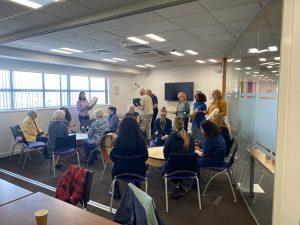
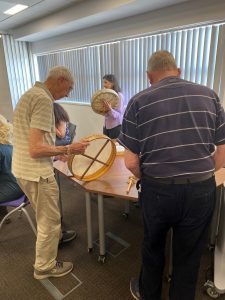
Please join us at our next ADRC coffee morning on May 10th from 11-12:30 (arrival at 10:45 in reception).This is an in-person coffee morning which will be taking place at our Executive Business Centre at Lansdowne Campus.
In this session Caroline, Lyndsey, Michelle and Kim will join us to share their work on the impact of drumming on health and wellbeing. During the session they will share the findings of their research focused on drumming with people with dementia, before inviting you to take part in a drumming session.
Places are free but if you would like to attend please email adrc@bournemouth.ac.uk to book your place.
The Centre for Seldom Heard Voices is delighted to invite you to a special international guest lecture featuring social anthropological research on ‘pacing adult womanhood’ in precarious situations, here through the case study of young women’s situation in Kosovo. Dr Rozafa Berisha (Manchester/ Prishtina), currently visiting the social anthropology sister programme in the Social Science and Social Work department through our Erasmus+ K107 programme in partnership with University of Prishtina, Kosovo, will present her research on Thursday, 27th April, 15:00 to 17:00 in EB-206. All interested staff and students welcome! More details are available in this poster: Rozafa Berisha poster
When I told my family and friends I intended to pursue a PhD researching HIV awareness among married women in Libya, my home country, the reaction was not encouraging: “You’d be lucky to even get members of your family to respond,” said one.
They weren’t being unnecessarily pessimistic but rather managing my expectations, considering I was not only researching HIV awareness in a conservative country often perceived oppressive, but I was also looking to recruit women.
Historically, Libyan women have been placed under severe social and cultural constraints that rendered them difficult to reach. Libya is shaped by and works within a patriarchal society where simply approaching women on such a taboo topic as HIV/Aids – which in Libya is often associated with immoral practices such as pre or extra-marital sex, substance abuse and homosexuality – made the research even more complex.
I knew that the lack of confidentiality and the fear of being stigmatised were going to be a problem. So I needed a method that would provide a platform whereby the women can respond to the survey without prying eyes.
This is where the power of online surveys comes in. Using an anonymous, self-completed questionnaire reduces the effect of the topic’s sensitivity and helps reduce people’s fear of the possible social stigma attached to those self-disclosures.
But online surveys have their limitations. In Libya, these include poor telecommunication infrastructure, especially away from the large cities, as well as the high cost of internet access and the relatively poor service there. But the fast-growing smartphone market is encouraging and facilitating internet use in the country. According to the most recent available figures there were 3.14 million internet users in Libya in 2023 – approximately 45.9% of the population.
My questionnaire included five main sections. I asked for some limited demographic information (age, city, educational level, employment status). There were also sections on HIV/Aids related knowledge, responsents’ perceptions of HIV risk, their attitude toward HIV and where they sourced healthcare information. I took particular care to ensure that I was gathering the maximum amount of information while remaining sensitive to Libya’s religious and social contexts.
Armed with approval from the university’s research ethics committee, I sent out a recruitment post with the questionnaire, mainly to family and friends in the Libyan diaspora in the UK and the US. The principle aim of this pilot study was to ensure that the wording, language and questions were understandable and that the mechanics of the survey functioned correctly. Within a month I’d received more than 168 complete questionnaires, which reassured me that sharing the survey with family and friends and asking them to forward the link to their various social and family networks would be the ideal approach for my main research on Libyan women in Libya.
What is ‘wasta’?
Libya has a population of around 7.1 million which is heavily skewed towards large networked tribes and well-established families, meaning the degree of separation across the whole of society is quite small. This has traditionally meant that the best way to get things done is by using these big family or tribal networks. This is known as “wasta”.
Wasta is a common practice of calling on personal connections for assistance. It’s a social norm in most Arab countries, defined by one academic as “a personal exchange system between members of society that is entrenched in the tribal structure of the country”. The concept has been tied to a tribal tradition which obliges those within the group to provide assistance in the same network.
I have a large family in Libya which straddles two different tribes, as well as family friends, so I was confident that wasta was the best approach to take. I sent the link to all the members of my wasta network through WhatsApp and asked them to forward it onto their friends and extended family. I also posted on Twitter and reached out to various Facebook pages. I only needed 323 complete questionnaires and I was confident that method would yield the best response.
Days went by and I only had a handful of responses. Much of the feedback I received from family members was worrying. People said they had exhausted their networks without much success. Clearly, recruitment using wasta wasn’t working. So I decided to fall back on my experiences of working in marketing and created a targeted post, aimed at “women, ages 18-65+ living in Libya, married, divorced, separated and widowed”. In direct contrast to wasta, this didn’t rely on who I know.
Social media has grown massively in popularity as a research tool in recent years. So, bearing in mind that Facebook is the most popular social media platform in Libya, with more than 6 million users, I created a Facebook page with the title, in Arabic: دراسة النساء الليبيات المتزوجات (Research on Libyan married women). I linked in papers I had published in the past (also in Arabic) and the recruitment poster below.
The recruitment poster used by the author in her Facebook recruitment campaign. Abier Hamidi, Author provided
I launched the post and the response was immediate, with replies and completed questionnaires and supportive comments coming in fairly rapidly to start with. But within a few days the response rate slowed down and still I wasn’t anywhere near my response target. Then I realised my mistake. The initial post targeting women who are married, divorced, separated or widowed hadn’t taken into account that the majority of women didn’t tend to include their marital status on Facebook. This meant I was only reaching a small percentage of my target audience.
I removed the status and the reach shot up. In six months, my post reached 446,906 women in Libya. The stats were impressive: 59,422 engagements, 1,549 reactions and 703 comments. I received more than 1,000 completed questionnaires.
In the end, this showed me that while for certain things, wasta can yield results, for an issue such as this, Libyan women wanted to ensure their anonymity and the confidentiality of their responses. Social media, which doesn’t mandate use of real names or photographs, was able to offer this in a way that extended family and friends, naturally, never could.
Congratulations the Abier Hamidi, PhD student in the Faculty of Health & Social Sciences (FHSS) whose PhD work was published in The Conversation this week (24 April) under the title Social media now trumps traditional family networks in Libya – my Facebook survey reached 446,000 women. Her piece in The Conversation on the recruitment of female participants for a PhD study in a rather patriarchal society brings together issues of anonymity, gender, and wider social culture.
This is Abier’s PhD research is supervised by Dr. Pramod Regmi, Senior Lecturer in International Health and the Global Engagement Lead in the Department of Nursing Sciences, and Prof. Edwin van Teijlingen in the Centre for Midwifery, Maternal & Perinatal Health (CMMPH).
Congratulations!
Prof. Edwin van Teijlingen
BU staff can login below:
Other services
Don’t miss a post!
Subscribe for the BU Research Digest, delivered freshly every day.