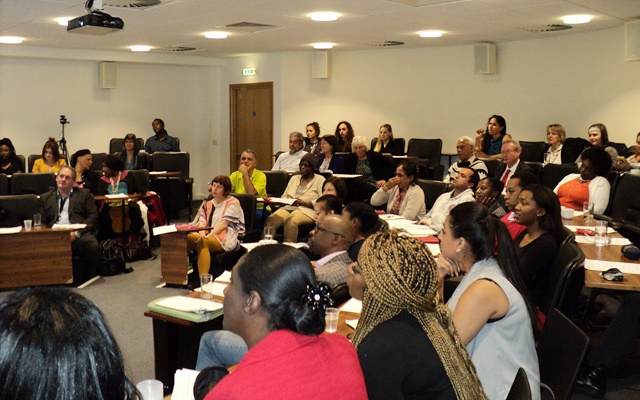
On October 14, local organisations, residents, staff and students from BU and other universities gathered at the Executive Business Centre for the Black History Month Soiree on Racial and Ethnic Diversity and Equality in Sport and Classical Music. The event was co-hosted by BU Equality and Diversity and Black British Academics, an independent organisation working to enhance race equality in the higher education sector.
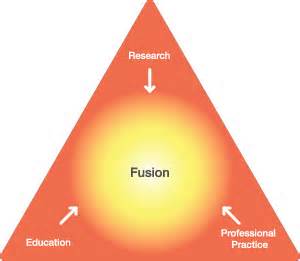
Its founder and Chief Executive, Dr Deborah Gabriel, is a lecturer in the faculty of Media and Communication and she designed the programme to highlight the contribution Black academics make to the global knowledge economy, to showcase the fusion of practice and research for social change and to promote collaboration among staff, students and local organisations.
Dr Gabriel said: “My aim was to unite staff and students with local organisations to build engagement, promote co-creation in research and practice and collaboration on equality initiatives. I also think it’s important to acknowledge how Black academics are pushing the boundaries of knowledge while helping to build a fairer and more just society.”
Explaining why she chose sport and classical music as the theme for the event, Dr Gabriel said: “Football is the number one sport in Britain and issues around race and racism have been long-standing. Given that Bournemouth AFC have recently joined the Premier League, I think the focus is timely.”
Vincent Edwards from Bournemouth’s Kick-It-Out campaign spoke movingly about his 10-year campaign against racism in football and was joined by two teenage volunteers, who deliver anti-racism events in Bournemouth.

Kevin Hylton, Professor of Equality and Diversity in Sport from Leeds Beckett University (pictured left) shared narratives from Black and Asian football coaches extracted from his recent research on how humour is used to mediate against racial microaggressions.
Dr Gabriel delivered a presentation on pedagogies of social justice and cultural democracy, based on an evaluation of teaching materials and tailored workshops developed for a higher education institution to enhance race equality and inclusive teaching practice.
Dr Shirley Thompson, a reader in Music at Westminster University is a classical violinist and world famous classical composer, who in 2004 became the first woman in Europe to compose and conduct a symphony in the last 40 years.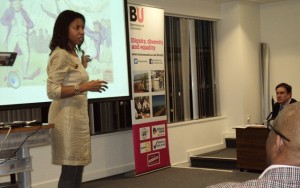
In her presentation, Heroines of the Opera: Democratizing the Art of Opera Writing and performance, Dr Thompson (pictured right) spoke about her creation of leading roles for females and developing stories around African Caribbean historical figures.
Carolyn Solomon-Pryce, Head of Equity, Diversity and Inclusion at the London School of Economics and Political Science said: “I am so pleased that I made the effort to attend what proved to be an insightful and thought provoking event.”
After the presentation, guests were treated to a Caribbean buffet while networking. Dr Gabriel used the occasion to discuss her upcoming research project on engagement with digital technologies by Black elders with local organisations, who expressed a keen interest in being involved.
David Corbin, Equality and Diversity Manager at Dorset Healthcare said the BHM Soiree was “an excellent and informative evening. There is still so much work to do in this field to get full recognition of the contribution Black people have made; not just to the UK but the world. There is still a lot to learn and by coming together in celebration, recognition and challenge – we can make a difference.”

 of his participation in the event, Dr. Jackson – who also convenes the



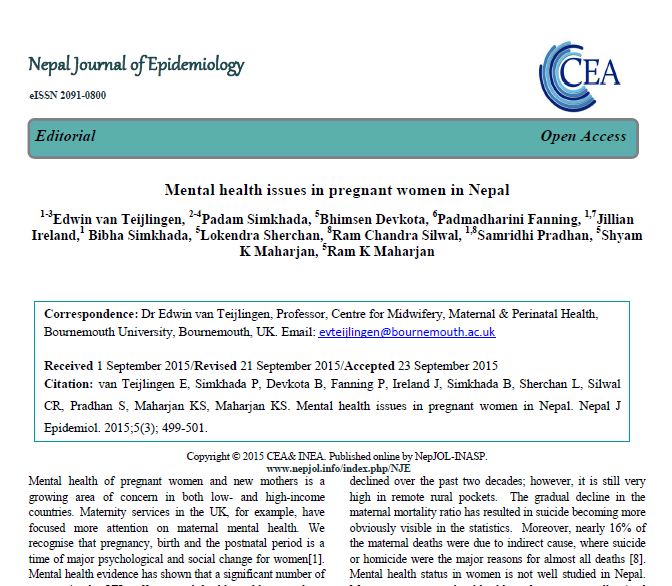





 Today I attended a contract-signing meeting at the Department of Health, Physical and Population Education at Nepal’s oldest university, Tribhuvan University (TU).
 Midwives (ANMs) about the key mental health issues in pregnancy and in the months after birth. A local charity Green Tara Nepal (GTN) will support the work through some of the curriculum design, sensitising UK volunteers to live in rural Nepal, assisting in translating, as well as helping to recruit the local health workers. The two UK universities have a long history of working with GTN as well as its sister organisation Green Tara Trust (GTT), a Buddhist charity based in London. The new project will be based in Nawalparasi in the sub-tropical part of the country bordering India. The target population consists of grassroot health care practitioners since there are no doctors in these rural villages.
 Everyday, around the world, law enforcement officers use tear gas, stun grenades, rubber bullets and other riot control weapons on civilians. While these devices are marketed as safe and humane ‘less lethal’ weapons, they regularly cause injuries and even deaths.
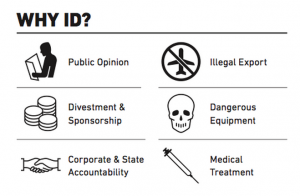 riot control weapons is largely predicated on their appropriate use, following strict, clinically trailed guidelines. Last week marked the 25th anniversary of the
 abuses, and identify the manufacturer and country of origin of these devices. It aims to help close the gap between how police are advised to use these weapons and how they are used in reality in ways that cause danger to civilians.
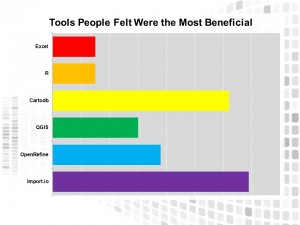 Feedback from our survey of Datalabs participants showed that most people’s familiarity with the tools and concepts taught during the workshops increased substantially, with most participants leaving the workshops feeling ‘familiar’ or ‘experienced’ with the basic tools and techniques of Data Storytelling.












 Fourth INRC Symposium: From Clinical Applications to Neuro-Inspired Computation
 Writing policy briefs
 Upholding Excellence: The Concordat to Support Research Integrity
 Today’s Documentation Will Serve Tomorrow’s Justice
 Up2U: New BU academic publication
 ECR Funding Open Call: Research Culture & Community Grant – Application Deadline Friday 12 December
 MSCA Postdoctoral Fellowships 2025 Call
 ERC Advanced Grant 2025 Webinar
 Horizon Europe Work Programme 2025 Published
 Horizon Europe 2025 Work Programme pre-Published
 Update on UKRO services
 European research project exploring use of ‘virtual twins’ to better manage metabolic associated fatty liver disease