We are recruiting to a number of roles to help support preparation for our next REF submission. The roles are recruited through an open and transparent process, which gives all academic staff the opportunity to put themselves forward. Applications from underrepresented groups (e.g. minority ethnic, declared disability) are particularly welcome.
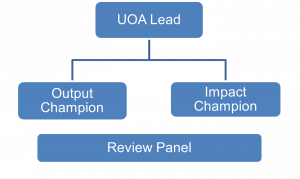
We are currently preparing submissions to thirteen units (otherwise known as UOAs). Each unit has a leadership team with at least one leader, an output and impact champion. The leadership team are supported by a panel of reviewers who assess the research from the unit. This includes research outputs (journal articles, book chapters, digital artefacts and conference proceedings) and impact case studies.
We currently have vacancies in the following roles:
All roles require a level of commitment which is recognised accordingly with time to review, attend meetings, and take responsibility for tasks.
Undertaking a UOA role can be enjoyable and rewarding as two of our current champions testify:
“As UOA Outputs Champion you develop a detailed knowledge of all the great work that colleagues are doing related to the subject, and the different outlets used for disseminating their work. As an outputs committee member, you also get to know what research is going on across BU, and it’s interesting to see the differences between disciplines. It’s a good way develop your knowledge of the bigger picture of BU’s research, and also to understand the importance of REF and how it works in practice. You do spend quite a bit of time chasing colleagues to put their outputs on BRIAN for REF compliance but hopefully they forgive you!”
Professor Adele Ladkin – UOA 24 Output Champion
“As a UoA 17 impact champion, I work closely with the UoA 17 impact team to encourage the development of a culture of impact across BUBS. I try to pop into Department / research group meetings when I can to discuss impact, and I’ve enjoyed meeting people with a whole range of research interests. Sometimes it can be tough to engage people with impact – understandably; everyone is busy – so it’s important to be enthusiastic about the need for our BU research to reach the public. Overall, the role is about planting the seeds to get researchers thinking about the impact their work might have in the future (as well as the impact they have already had, sometimes without realising!)”
Dr Rafaelle Nicholson – UOA 17 Impact Champion
How to apply
All those interested should put forward a short case (suggested length of one paragraph) as to why they are interested in the role and what they think they could bring to it. These should be clearly marked with the relevant role and unit and emailed to ref@bournemouth.ac.uk by 11th October 2022.
Further detail on the roles, the process of recruitment and selection criteria can be found here:
Some of you might be interested in this workshop, titled ‘Sensitive Pasts and Difficult Presents: working with young people through participatory arts‘, taking place this upcoming Monday, 27th June 2022, at BU (Talbot Campus). The workshop aims to bring together colleagues from across BU’s research centres, exploring how working with and for young people in sensitive contexts, both, locally and across the world, can be informed by interdisciplinary approaches (including Social Sciences, the Arts, and arts-based technologies).
Several colleagues will provide short presentations and thought pieces based on their research and experiences in the application of participatory arts-based methods in such contexts. Including a ‘world café’, the workshop aims to provide a forum to compare and exchange our experiences, learning and research outcomes rather than a classic, entirely lecture-based format.
This event is organised by the Centre for Seldom Heard Voices (Stephanie Schwandner-Sievers; RA Emily Fisher). The workshop includes colleagues from CEMP, CESJ, EMERGE, and further members are warmly invited to attend. We hope this event will be of particular interest to colleagues working in and through the participatory arts, specifically with vulnerable or marginalised groups, internationally or closer to home.
All relevant info, including a link to the Eventbrite registration (places are limited!), is available in the attached document.
Looking forward to seeing some of you there,
Stephanie Schwandner-Sievers
(Associate Professor in Applied Anthropology)
sssievers@bournemouth.ac.uk
For admin matters, contact Emily Fisher at: s5315494@bournemouth.ac.uk
Sexual Violence Student Conference: Legislation, Policy and Opinion
On 27 April staff and students from across BU came together in the new Bournemouth Gateway Building to share research and ideas on the topic of sexual violence. The event was organised by Jane Healy, a criminologist in the Department of Social Sciences and Social Work in FHSS, in collaboration with Jamie Fletcher from Law, FMC, and Kari Davies from Psychology, FST. The combination of social sciences, social work, psychology and law created a dynamic and exciting environment as students from all four disciplines were exposed to intriguing and engaging presentations on this broad topic.
From Law, second year student Teodora Nizirova, alongside lecturers Jamie Fletcher and Karolina Szopa, presented a fascinating paper on the Sexual Offences Act 2003, which at present distinguishes rape (as penile penetration) from sexual assault (which includes penetration from other sources). They proposed a gender-neutral definition of rape as an alternative to the current non-penile sexual assault charge, as a method of recognising the extent of the harm caused to those individuals who identify as non-binary or who are not in heteronormative relationships. Their presentation sparked a flourish of comments and debate from students and staff in attendance, and more about their proposal can be read here
Jamie followed up by leading a discussion on R v Lawrence [2020] EWCA Crim 971, a recent case in the Court of Appeal, which held that lying about having a vasectomy did not negate consent in sexual intercourse, something which again produced much thought and debate from those in attendance.
Not to be outdone by the stimulating presentations from our Law Department, Psychology colleagues were quick to showcase the breadth of research they are currently undertaking on sexual violence. This included papers from Rachel Skinner, Psychology lecturer, on the relationships between rape myths and sexism/misogyny and an appeal from Rachel for those interested in this topic to collaborate with her on future work. Two online papers swiftly followed: Ioana Crivatu, postdoctoral research assistant, presented on her qualitative study on group participation in sexual offences, and Ellie Reid, research assistant, shared findings on consistency and coincidence factors in sexual offences cases. Kari Davies, lecturer in Psychology, concluded Psychology’s input by providing a whistle-stop tour of the variety of different work she and her colleagues are collaborating on, including BU’s contribution to “Project Bluestone” (which is a large project exploring rape and serious sexual offence investigations alongside colleagues from other institutions across the UK – more info here) as well as collaborative work on crime and policing in Switzerland with Maggie Hardiman.
Arguably saving the best for last (in my opinion), the Social Sciences and Social Work team finished off the afternoon with two and a bit papers from HSS. BA Sociology student Sam Cheshire provided a confident and theoretically informed paper on his final year dissertation study, which involved interviewing survivors of domestic abuse and social services professionals. He emphasised the interlocations of power, violence and agency in his interpretation of the data, positioned within Foucauldian and neoliberalist concepts and structures. Orlanda Harvey, Lecturer in Social Work, then presented on her own project working with women survivors of domestic violence and highlighted the continuing taboo of disclosing sexual violence within relationships, providing strategies that she and Louise Oliver are using to engage with participants in a safe and supportive environment.
Finally, with only minutes remaining, Jane Healy concluded the afternoon with a very brief overview of her research into disabled women’s experiences of sexual violence, and shamelessly plugged her contribution to a book on “Misogyny as Hate Crime” which is available here (and will soon be available in the library collection).
The afternoon drew to a close with a rallying cry for more cross-faculty events for students and greater collaboration for staff on this topic. The combination of distinct yet intersecting disciplinary work created an eclectic and refreshing mix of papers that provided much food for thought for staff and students alike. Students Teodora and Sam are to be particularly applauded for presenting for the first time to an audience of peers and academic staff.
Kari is keen to expand on collaborative expertise across BU in the fields of criminal justice, policing and sexual violence and is putting together a Sexual Violence working group. Please get in touch with her if you’d like to join.
Many thanks also to Kari for funding the tea and biscuits that kept us going through the afternoon! We are already looking forward to the next event.
Dr Alison Cronin and Prof Christopher Harding’s new book on corporate crime has now been published. This cutting-edge book critically reviews the field of attempted legal control and regulation of delinquent conduct by business actors in the form of exploitative, collusive and corrupt behaviour. It explores key topics including victimhood, accountability, theories of trading and shared responsibility.
The authors reflect on the attempts that have been made globally to use criminal law and other methods of formal legal control, as well as more flexible and innovative approaches under the heading of ‘regulation’, to address the problem of bad business practice. The book argues for a return to first principles and that the possibility of a reconfiguration of economic ordering and market and trading culture should be considered; as business malpractice is largely inherent in the dominant capitalist model, that model is in need of repurposing and reform.
Designing Innovative Pedagogy for Complex Accounting Topics (Project-DIPCAT) is coming to a successful end in December 2021. BU has led eleven other European Universities in this three-year, Erasmus+ funded project. Its objects were to design, develop and deliver four integrated accountancy case studies with contemporary content and innovative methods for wider dissemination in higher education. While the project partners were challenged by the COVID-19 Pandemic, the resulting intellectual outputs have exceeded expectations and are now suitable for F2F, hybrid and online deliveries.
Intensive Study Programmes
The cases were first tested in an Intensive Study Programme (ISP) at BU in September 2019. The second and third ISPs were originally planned to be delivered in Innsbruck and Budapest in 2020 and 2021. When it became apparent international travel would not be possible, the project partners redesigned the cases and delivery modes for two international hybrid events. The teams were challenged to deliver something truly innovative and engaging that participating students would enjoy remotely.
As ISPs are extra-curricular, they need to achieve something extra and engaging. That X-factor has always been fun, cultural enrichment and opportunities to develop friendships with students from other countries. The partners were delighted these very attributes were recognised and appreciated in feedback from more than 70 participating students in last month’s ISP, virtually hosted by Innsbruck partners. The third and final ISP will be virtually hosted by the Budapest partners next week, 25th-29th October 2021.
The Cases
The four cases are on the most contentious and fast-changing areas that challenge the accounting profession:
International Taxation – during the era of reform (post-BEPS 1.0 and pre-BEPS 2.0);
IFRS 9 – modeling for the changing requirements in accounting for financial instruments;
Digitalization in Auditing (with data mining skill development);
Corporate governance mechanisms fostering socially responsible behavior of companies in tax compliance.
The case studies and the supplemental materials are designed to address all the competencies that are needed for emerging accountancy professionals (e.g. subject-specific knowledge, problem solving ability, interdisciplinary thinking, soft skills and the ability to recognise ethical issues in accountancy). While adaptable to short courses (e.g. ISPs or CPD), taken in their entirety, each case provides the scaffolding, content and assessment for 20-credit modules.
The cases and their rich supplemental learning materials, tasks and pedagogical innovations will be freely available through the European Union Repository in December 2021. The finished International Tax and CSR cases were successfully showcased at the Tax Research Network’s Education Day last month and have already been adopted at other HEIs. A recording of the event will soon be available on the TRN website. The IFRS and Auditing cases will be showcased at an International Accounting Conference in Budapest on 26th November.
The Team at BU and Beyond
The BUBS academics leading Project-DIPCAT are Dr Phyllis Alexander (PI), Dr Suranjita Mukherjee, Dr Hany Elbardan and Dr Tuan Vu. Mr Robert Day and Judge Anne Fairpo were special appointments to the project given their expertise in corporate governance and international taxation, respectively.
While Project-DIPCAT comes to a successful end, the partners continue to collaborate in research, professional practice and education, as they have done for over 25 years (partner details and their history is on the AFECA webpage). BU was one for four founding partners of AFECA in 1993, thanks to the inspiration and dedication of Mr Day.
The consortium have another Erasmus+ project currently underway – Smart Teaching in Accounting – Meeting Place Online, with its first ISP next month (November 2021). DICPAT and STAMP-Online follow the success story of Project-ILPA, which was shortlisted for best project in 2018 and was classified as a ‘good practice example’ by the European Union. AFECA truly is a winning strategic partnership in accountancy that continues to thrive and innovate!
Follow DIPCAT’s finale on Facebook and Instagram : #dipcatisp and #dipcat2021
Dr Melanie Stockton-Brown and Amy Tatum, Doctoral Researcher, in the FMC have created a short-film and zine to share their research on Mary Shelley’s Frankenstein, copyright, voice, and attribution for women authors. As Mary Shelley is buried in Bournemouth and the Shelley family lived here and have many links to the area, it is wonderful to be able to celebrate the extensive feminist, copyright, and cultural legacy of such an influential author and person.
Melanie and Amy with the leading ladies.
Beloved is a short-film retelling Mary Shelley’s Frankenstein, and celebrating her feminist, literary and copyright legacy. This is a queer feminist retelling using puppets, and emphasises how important it is to be acknowledged as the creator and copyright owner of your creative works. Look out for the beautiful seaside shots of Bournemouth beach and cliffs!
FrankenZine: Voice, Copyright, and Women Authors is a zine is about women authors, and the importance of the proper legal and cultural recognition of their voices, and their right to be acknowledged as the author of their creative works. These are four women authors who have fought to keep their copyright, to be attributed as the author, and who have experienced gender and racial discrimination in having their voices heard equally. Our voices and stories are very important, and so is having our name spoken and remembered with those stories.
The short-film and zine were kindly funded by CIPPM, and the Department of Humanities and Law QR funding.
Following the discovery of the unmarked graves of 215 children in Kamloops (British Columbia, Canada) sees BU expertise on mass grave policies published:Overarching principles ought to be applied in Kamloops for a careful, considerate, culturally appropriate investigation into the unmarked graves of 215 children
Mass graves are a worldwide phenomenon that exists on a shocking scale, but they are usually identified with conflict and gross human rights violations, typically in countries ravaged by poverty and inequality. Yet the discovery of the unmarked graves of 215 children in Kamloops, British Columbia has made global headlines, triggering a variety of emotions, reactions and questions.
Amidst the outpouring of grief and mourning, there are calls for prompt and thorough investigations into the shocking legacy of government-funded residential schools that operated for more than a century and were designed to systematically assimilate Indigenous children and destroy Indigenous cultures and languages.
But there is also the immediate question of how best to protect and deal with the discovered graves and the human remains at the site of the former Kamloops Indian Residential School. Mass graves contain evidence that is essential to the realization of truth, justice and accountability goals for victims and their families, the affected communities – in the present case represented by Tk’emlúps te Secwépemc First Nation – but also the National Centre for Truth and Reconciliation and, generally, the government of Canada.
Overarching principles for protection and investigation efforts
Although mass graves vary enormously, the consequences of not protecting and investigating mass graves are significant. Relatives continue to suffer because they do not know what happened to their loved ones (in itself a form of inhumane and degrading treatment), and evidence essential to identification, documentation and, where relevant, prosecution efforts may be contaminated, disturbed or lost. The careful, considerate, culturally appropriate yet legally compliant and scientifically robust protection and investigation of mass graves is therefore paramount, and has been the subject of significant research and deliberation, as evidenced by the 2020 publication of the Bournemouth Protocol on Mass Grave Protection and Investigation (also available in French).
As further details and information emerge on the discovery in Kamloops, it seems apt to reflect on the overarching principles that ought to apply during grave protection and investigation efforts in this particular context.
From the outset, the complexity of mass grave investigations should not be underestimated. Such investigations are lengthy and expensive processes, requiring significant planning, co-ordination, resources, official authorization and, at times, political will. All this means that there will be a wide range of individual, collective and societal interests and needs that must be considered but may not all be compatible or readily reconcilable. In addition – and this may sound distressing – in situations of significant scale or absence of the relevant data from relatives, it may not be possible to identify and return all victims from a mass grave. It is therefore vital that, despite the inevitable pressure of a highly charged emotional context, expectations are carefully managed.
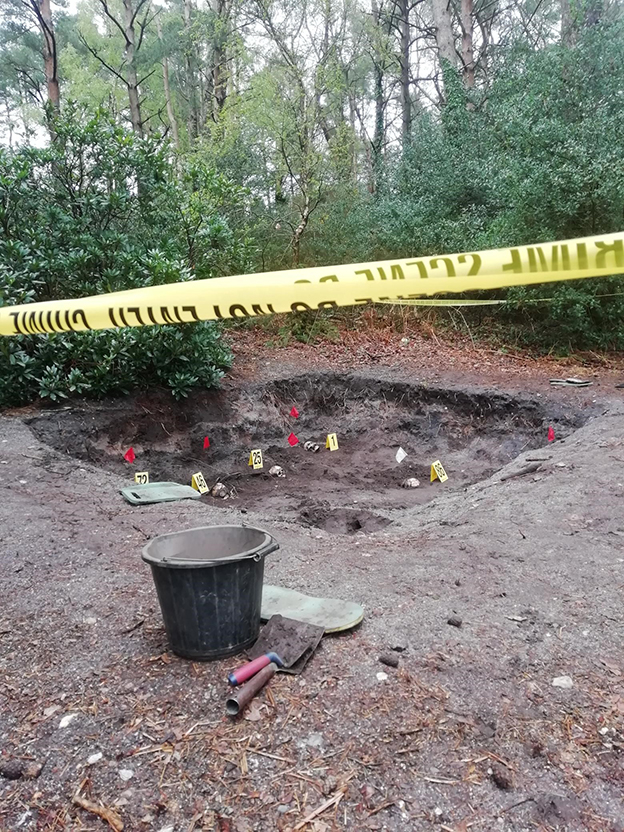
A simulated mass grave, May 13, 2021, at Trigon Estate in rural Dorset, England, where forensic excavations are performed by Bournemouth University MSc Forensic Anthropology and Archaeology students of the Faculty of Science and Technology. Photo courtesy of the author.
A do no harm approach in these circumstances will actively seek to avoid undermining existing structures and relationships that are essential for community cohesion. It is important to avoid creating inequalities or perceptions of bias or to entrench existing inequalities. It will include a clear respect for and, where possible, adherence to cultural sensitivities, beliefs and norms of victims and/or their families to the extent they do not adversely affect the achievement of an effective investigation.
The physical and emotional safety of all involved, the relatives and the investigation team alike, are paramount. In the context of mass graves, safety, dignity, privacy and well-being of victims and their families should be a key concern for all actors without distinction. While the actual grave may have been created decades ago when the Kamloops Indian Residential School was in operation, initiatives to support physical and psychological safety should be in place.
Investigations must be independent and impartial
That an investigation should be independent and impartial is a rather obvious point to make. And yet, since the investigation will relate to an era of systematic state-instigated discrimination, it is poignant and relevant: without a non-discriminatory and impartial approach to the grave protection and investigation process, the legitimacy of the work may be questioned by the affected community. To enhance public trust, investigations must be independent and impartial and must be seen to be so.
For mass grave investigations to result in identification, it will be critical to acquire personal details and other identifying data, and confidentiality, consistent with national legislation, has to be assured. Investigative processes often entail the need for data sharing but any data sharing should be limited only to those individuals and bodies necessary to ensure the achievement of the objectives of the exhumation process and to the extent agreed by the individuals concerned. Similarly, at all stages of the process (the preliminary investigation, the actual excavation, identification and return of human remains) transparency of processes is key.
Clear and ongoing communication will help provide the platform for transparency. Communication strategies should ideally envisage and accommodate a two-way flow of information between the investigative team and the families, and incorporate regular updates.
Commitments to families must be kept
Finally, all parties involved in the protection and investigation of the mass grave should avoid making commitments to families that they may be unable to keep.
In addition to these overarching principles that ought to apply to all phases of mass grave protection and investigation, careful planning for the actual physical investigation is essential. Meticulous planning, particularly in relation to the actual excavation is critical for all subsequent phases of the process, including identification efforts, return of human remains and continued community liaison.
But in the long term beyond the investigative phase, there are also justice and commemorative aspects to consider from a policy perspective. Alongside potential accountability processes and claims for remedies, a further question arises: What will happen to the original site at the school? An excavated mass grave may become a memorial site in its own right, deserving of that recognition and potentially long-term legal protection. Conversely, a newly created burial site or place for commemoration will hold great significance for individual and/or collective commemoration and may also constitute a form of reparation.
Mass graves are a stark reminder of recent history and memory; they may form part of educational materials and national discourse on the past; they may also become a site for community support. These graves in particular may symbolize the start of more searches into unknown graves and resting places. As reported in the media, many more children died in residential schools with few bodies returned home.
Co-ordination and collaboration required
Since it is predicted that more such graves are to be found, their resolution and investigation will require the co-ordination and collaboration of a multitude of experts to implement early protection measures, facilitate, where possible, the investigation and exhumation of the grave for identification purposes and the return of human remains to family members. All this, in turn, must be overseen by relevant authorities, with due regard for the applicable law.
If there is suspicion of more such graves, the establishment of a mass grave management role or office that assumes overall responsibility for the operational management of mass graves including adherence to standard operating procedures; maintenance of community liaison, health, safety and well-being on-site; implementation of reporting structures and communication strategy; and co-ordination of the identification and return of human remains process might be beneficial.
In short, mass graves are incredibly complex features placing investigative duties on the state. This in turn requires extensive practitioner engagement, resources and careful consideration of individual and societal needs to ultimately advance their rights to truth and justice.
“Mass graves are not lone incidents in human history; they exist across the globe and as a journalist I have witnessed and reported on them. But despite their diverse nature, mass graves are likely to have something in common: a family anxious to know what happened, next of kin needing to offer a dignified burial to their loved one, survivors longing to mourn the dead and a community wishing to pay respect.”
The Chancellor recognises the importance of meeting those needs and with it the aim of the Bournemouth Protocol.
“Mass graves from their discovery through to commemoration efforts deserve protection and investigation. Such efforts involve extensive engagement: From the legal, investigative and scientific disciplines to community liaison and family support, each with their own rules and standards of professional practice, they all have to come together for respectful, indiscriminate and dignified handling of mass graves and human remains.”
Bournemouth University has been instrumental in collaborative research to shape mass grave investigative practice and has been training the next generation of Forensic Archaeologists and Anthropologists, through simulation exercises at Trigon Estate, Wareham for many years. The Bournemouth Protocol, led by Dr Melanie Klinkner, are another important milestone through providing clarity on international norms and standards.
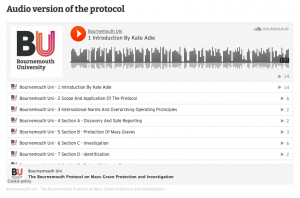
It is a great honour and privilege to have Kate Adie voice the introduction of the audio version of the Bournemouth Protocol. Special thanks go to Alastair Danson, radio and screen actor, for voicing the remainig text of the Protocol; Alex Wegman, demonstrator in film and television at Bournemouth University for his expert recording; and Rudy Noriega, freelance radio producer and Lecturer in Journalism at Bournemouth University for producing the audio version of the Bournemouth Protocol. The Audio and Protocol can be found here.
Associate Professor Donald Nordberg has published a new book, The Cadbury Code and Recurrent Crisis: A Model for Corporate Governance? (Palgrave Macmillan). It’s a critical examination of the origins of the UK code of corporate governance and how the code developed – and failed to develop – through repeated crises in corporate governance.
The 1992 Cadbury Code was a watershed in corporate governance, and not just in the UK. It influenced practice in many countries around the world, as well as the practices of many types of organisation outside the sphere of corporations listed on stock markets.
Reviewing the book, Andrew Johnstone, professor of company law at the University of Warwick, said: “This is a fascinating book, tracing the development of the UK Corporate Governance Code and highlighting its continuity through successive crises. At the same time, it identifies areas of controversy and challenge, intriguingly suggesting that ‘defeated logics’ are merely suspended, perhaps poised to return. Essential interdisciplinary reading for all those interested in the UK’s corporate governance system.”
A new article by Prof. Dinusha Mendis (Department of Humanities and Law, FMC), co-authored with Dr. Ana Santos-Rutschman (St Louis University, USA) and Dr. Rosa Ballardini (University of Lapland, Finland) explores the way in which the Covid-19 pandemic has accelerated the use of 3D printing in healthcare. In particular, the article considers the use of 3D printing in the fight against this pandemic and the implications which have arisen in the legal field – as a result of intellectual property laws.
These implications first became apparent in March 2020 in the Lombardy region in Northern Italy, one of the areas which was hit hardest by the Covid-19 pandemic. As the outbreak progressed, a hospital of Chiari (a town in the province of Brescia) came close to running out of valves to connect patients to ventilators. The hospital reached out to the local manufacturers for more, but they could not deliver replacement valves in time – due to their supply chain and restrictions arising from intellectual property laws. However, a local engineering startup heard about the situation and developed three different versions of the valve prototype in a few hours. Within 24 hours, they had used a series of 3D printers to produce 100 valves, by reverse engineering and 3D printing the replacement valves. Furthermore, while a valve from the original manufacturers cost over 10.000 euros, the 3D-printed valves produced by Fracassi and Romaioli were significantly cheaper at around 1 euro.
One of the main reasons for the price disparity between the original valves and the 3D-printed ones, stemmed from the legal framework around technology use. There were also questions raised about the breach of intellectual property laws, by the local engineers.
However, at a time in which there is great legal uncertainty about how 3D printing in general will be regulated worldwide, it is important to think ahead to future scenarios of infectious disease outbreaks, particularly pandemics – where intellectual property laws may appear to stand in the way of critical health issues. In concluding the article, the authors make recommendations for the future and in this context, suggests a carve-out which would become applicable when there is a declaration of emergency by local or national authorities.
>> Read the full article here: https://iprinfo.fi/artikkeli/3d-printing-how-an-emerging-technology-may-help-fight-a-pandemic/
In April 2020, Prof. Mendis, together with partners from UK, Germany, Austria and Finland completed a large scale empirical and legal study on the Intellectual Property Implications of the Development of Industrial 3D Printing. The project was commissioned by the European Commission to Bournemouth University in 2018.
>> Download the full report and executive summary here.
Dr Jeffrey Wale (FMC) and Professor Sam Rowlands (FHSS) have been fortunate enough to have three papers accepted for publication during the lockdown period. First, they have an article ‘A constructivist vision of the first-trimester abortion experience‘ being published by the Health and Human Rights Journal in June 2020. Second, they have a paper ‘Incentivised Sterilisation: Lessons from India and for the Future‘ being published by The European Journal of Contraception and Reproductive Health Care. Finally, the BMJ Sexual & Reproductive Health Journal will be publishing their paper ‘The ethics of State-sponsored and clinical promotion of long-acting reversible contraception‘.
A large scale empirical and legal study on the Intellectual Property Implications of the Development of Industrial 3D Printing, funded by the European Commission and led by Professor Dinusha Mendis (FMC, Law and Co-Director CIPPM) has been published.
Ahead of the completion of the project and publication of the report, a final workshop was hosted in Brussels on 14 October 2019. The presentations from the workshop as well as the panel discussion, can be accessed here.
The project provides an overview of the past and current industrial applications of Additive Manufacturing (AM) and 3D printing in seven selected sectors (health, aerospace, automotive, consumer, energy, construction and tooling) whilst identifying potential challenges and opportunities in need of clarification. With the aim of enhancing the competitiveness of the AM sector in Europe, the Study makes policy recommendations in the field of intellectual property for businesses engaged in the AM and 3D printing field, and in the present context, is highly relevant for businesses and consumers working with 3D printers, in the fight against Covid-19.
Martine Hardwick, Lecturer in Law and PhD Candidate in the Department of Humanities and Law, has published a timely commentary in the Bournemouth University Law Review looking ahead to a change in the law on 31 December 2019. On this date, opposite sex couples will finally be able to register their civil partnerships – which until now has been reserved for same sex couples.
However, this change in the law raises important questions for cohabiting couples. Despite longing for more protection and fairness from the law, co-habiting couples will not be presented with the opportunity as heterosexual couples to celebrate on New Year’s Eve. Instead, they will still be bound by the strict rules of formation and dissolution which mirror those of marriage.
Questioning whether the UK has missed an opportunity to provide more rights for cohabiting couples and highlighting a solution drawn from France in the form of Pacte Civil de Solidarité (PACS), Martine argues that learning lessons from the French legal system has to be the way forward in giving cohabitants protection while respecting their autonomy.
On 3rd December 2019, Prof. Dinusha Mendis was an invited speaker at the International Copyright Law Conference 2019 held at the Millennium Hotel London. Labelled as the ‘ultimate guide to the operation of copyright’, this event brings together a range of international speakers from different sectors.
The 2019 edition focused on Copyright and AI, Brexit, legal tech and copyright, funding of copyright claims as well as legal case law and legal updates.
Prof. Dinusha Mendis from the Department of Humanities and Law at Bournemouth University, explored the copyright issues surrounding technologies such as 3D printing and 3D scanning and offered a number of insights from her recent research including insights from her recently published co-edited book, 3D Printing and Beyond: Intellectual Property and Regulation.
The event held over two days included speakers from practice, academia and policy.
Yesterday CoPMRE welcomed 30 colleagues to our Visiting Faculty bi-annual event showcasing the exciting medical developments at BU from the new Bournemouth Gateway Building to the Institute of Medical Imaging and Visualisation. The key priorities to support delivery of BU2025 were presented by Dr Clare Wedderburn, Interim Head of Department of Medicine & Public Health presented. Juan Campos-Perez, Clinical Research Co-ordinator, BUCRU spoke about Biobanks which were highlighted in Professor Emma King’s research presentation on immunotherapy. Professor Jeffrey Wale, Lecturer in Law encouraged innovative medical cross faculty collaboration demonstrated by his recent research collaboration with Professor Sam Rowlands, Visiting Professor resulting in four co-authored papers. The main focus of the meeting centred around Visiting Faculty engagement in research and education to help us achieve our aims. The audience reported that they were ‘very excited’ about these new developments at BU and were keen to support this vision.
On 14th October 2019, Prof. Dinusha Mendis hosted the final workshop of the European Commission funded project, ‘The Intellectual Property Implications of the Development of Industrial 3D Printing’ in Brussels.
The project aims to formulate a clear picture of the Intellectual Property (IP) framework that could enhance the competitiveness of the Additive Manufacturing (AM) sector in Europe. As such, the workshop was attended by academics, practitioners, businesses and policy makers thereby bringing together key stakeholders in the field of 3D printing and IP laws.
The workshop commenced with a welcome from Amaryllis Verhoeven, Head of the Intellectual Property Unit at the European Commission. Thereafter, Dinusha Mendis (Project Lead) presented the main results, which was complemented by presentations from invited speakers and a panel discussion consisting of members of the project team and industry partners.
Ben Redwood (Hubs), Phil Reeves (Reeves Insight Ltd) and Phill Dickens (Added Scientific Ltd) considered the future of manufacturing and its different applications and uses for industry as well as consumers.
Thereafter, various issues from the Study were explored in a panel discussion. Panelists consisting of Lieven Claerhout / Bram Smits (Materialise NV), Ann Marie Shillito (Anarkik3D), and members of the project team (see below), considered IP issues in light of the views from industry, obtained as part of the Study. In bringing the workshop to its conclusion, Jean-Francois Romainville (IDEA Consult) spoke about next steps, in taking this project and other similar projects forward. Virginie Fossoul, (Legal and Policy Officer, European Commission), closed the workshop with some concluding remarks.
The presentations as well as the panel discussion can be accessed/watched here:
The project which was awarded to Bournemouth University in 2018, by the European Commission’s Directorate-General for Internal Market, Industry, Entrepreneurship and SMEs has been led by Prof. Dinusha Mendis (Principal Investigator) from the Department of Humanities and Law at Bournemouth University.
On the 13 November 2019, BU hosted a one day interdisciplinary conference addressing a range of perspectives and concerns relating to human fertility control. The event was opened with a keynote presentation from Clare Murphy, Director of External Affairs at the British Pregnancy Advisory Service on ‘Compelling choices: decision-making around contraception in the UK today’. This was followed by a series of contributions – including presentations from charitable, medical and academic stakeholders – with coverage of emergency and long-acting reversible contribution; population control through nudging behaviours; recognition of a legal right to family planning and discussion of abortion care and regulation. The conference was organised by Jeffrey Wale, Senior Lecturer in the Department of Humanities and Law and was funded by an ACORN award aimed at supporting Early Career Researchers. One of the central aims of the event was to start up conversations, generate new links and to establish a network of interested parties.
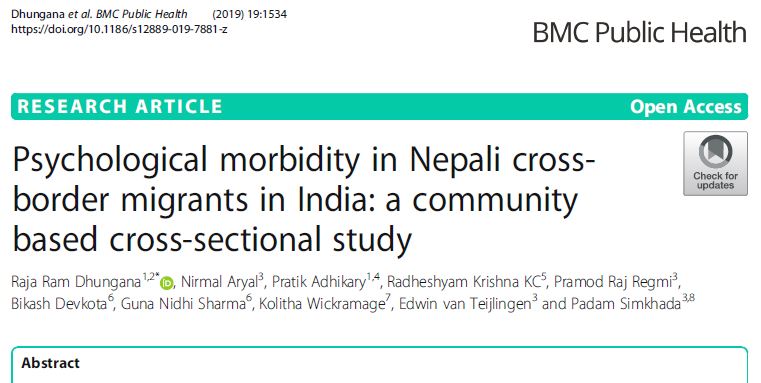
Yesterday saw the latest publication based on Bournemouth University (BU) migration research. The international journal BMC Public Health published our quantitative paper ‘Psychological morbidity in Nepali cross-border migrants in India: a community based cross-sectional study’ [1]. This scientific article highlights that since Nepali migrants can freely cross the border with India and hence work and stay there, they are largely undocumented. The majority of these Nepali migrant workers is involved in semi-skilled or unskilled jobs with limited labour rights and social security, which predisposes them to psychological distress. The paper assessed the prevalence of and factors associated with psychological morbidity among Nepali migrants upon their return from India.
Just a few days ago the UN Migration Agency in Nepal IOM (International Organization for Migration) published ‘Research on the Health Vulnerabilities of the Cross-Border Migrants from Nepal‘, an online report to which BU academics (Aryal, Regmi & van Teijlingen) had contributed [2]. Just recently we had published the qualitative sister paper on Nepali migrants working and living in India. [3]. Whilst Dr. Nirmal Aryal was the lead author on a paper highlighting the need for more research specifically focusing on adolescents left behind by migrant workers [4]. Earlier this year BU PhD graduate Dr. Pratik Adhikary published his latest paper from his thesis, the paper is called ‘Workplace accidents among Nepali male workers in the Middle East and Malaysia: A qualitative study’ and was published in the Journal of Immigrant & Minority Health [5].
Last year was also a very good year for BU migration research, including a systematic review on sex trafficking (perhaps the worst kind of migrant workers) [6], an earlier research paper by Dr. Adhikary with his PhD supervisors [7], and one paper on Nepali female migrants workers in the Middle-East & Malaysia [8]. Earlier BU academics published on general health issues and accidents among Nepali migrant workers in Malaysia, Qatar & Saudi Arabia [9-10], Nepali migrants in the UK [11-12] , other papers included: a call for action on Public Health [13]; a systematic review [14]; a paper on migrant workers’ spouses [15]; migrant health workers in the UK [16-17]; migration and tourism industry [18-20]; migrants and space in Italy [21-22]; an anthropological perspective on migration [23]; a media studies’ perspective [24]; and archaeological perspective [25]; and a socio-economic perspective [26]. No doubt there are several other publications I have forgotten or I am simply unaware missed in this list.
Regmi, P., van Teijlingen, E., Mahato, P., Aryal, N., Jadhav, N., Simkhada, P., Syed Zahiruddin, Q., Gaidhane, A., (2019) The health of Nepali migrants in India: A qualitative study of lifestyles and risks, Journal of Environmental Research & Public Health16(19), 3655; doi:10.3390/ijerph16193655.
Aryal, N., Regmi, P.R., van Teijlingen, E., Simkhada, P., Mahat, P. (2019) Adolescents left behind by migrant workers: a call for community-based mental health interventions in Nepal. WHO South East Asia Journal of Public Health 8(1): 38-41.
Adhikary P, van Teijlingen E., Keen S. (2019) Workplace accidents among Nepali male workers in the Middle East and Malaysia: A qualitative study, Journal of Immigrant & Minority Health 21(5): 1115–1122. https://link.springer.com/article/10.1007/s10903-018-0801-y
Simkhada, P., van Teijlingen, E., Sharma, A., Bissell, P., Poobalan, A., Wasti, S.P. (2018) Health consequences of sex trafficking: A systematic review, Journal of Manmohan Memorial Institute of Health Sciences, 4(1): 130-149.
Adhikary P, Sheppard, Z., Keen S., van Teijlingen E. (2018) Health and well-being of Nepalese migrant workers abroad, International Journal of Migration, Health & Social Care 14(1): 96-105. https://doi.org/10.1108/IJMHSC-12-2015-0052
Simkhada, P.P., van Teijlingen, E.R., Gurung, M., Wasti, S. (2018) A survey of health problems of Nepalese female migrants workers in the Middle-East & Malaysia, BMC International Health & Human Rights 18(4): 1-7. http://rdcu.be/E3Ro
Adhikary, P, Sheppard, Z., Keen, S., van Teijlingen, E. (2017) Risky work: accidents among Nepalese migrant workers in Malaysia, Qatar & Saudi Arabia, Health Prospect 16(2): 3-10.
Adhikary P., Keen S., van Teijlingen E (2011) Health Issues among Nepalese migrant workers in Middle East. Health Science Journal 5: 169-75. www.hsj.gr/volume5/issue3/532.pdf
Adhikary, P., Simkhada, P.P., van Teijlingen E., Raja, AE. (2008) Health & Lifestyle of Nepalese Migrants in the UK BMC International Health & Human Rights8(6). Web address: www.biomedcentral.com/1472-698X/8/6
Aryal, N., Regmi, PR., van Teijlingen, E., Simkhada, P., Adhikary, P., Bhatta, YKD., Mann, S. (2016) Injury and Mortality in Young Nepalese Migrant Workers: A Call for Public Health Action. Asian-Pacific Journal of Public Health28(8): 703-705.
Simkhada, PP., Regmi, PR., van Teijlingen, E., Aryal, N. (2017) Identifying the gaps in Nepalese migrant workers’ health & well-being: A review of the literature, Journal of Travel Medicine24 (4): 1-9.
Aryal, N., Regmi, PR., van Teijlingen, E., Dhungel, D., Ghale, G., Bhatta, GK. (2016) Knowing is not enough: Migrant workers’ spouses vulnerability to HIV SAARC Journal of Tuberculosis, Lung Diseases & HIV/AIDS 8(1):9-15.
Scammell, J., 2016. Nurse migration and the EU: how are UK nurses prepared? British Journal of Nursing, 25 (13), p. 764.
Sapkota, T., Simkhada, P., van Teijlingen, E. (2014) Nepalese health workers’ migration to United Kingdom: A qualitative study. Health Science Journal8(1):57-74.
Janta, H., Ladkin, A., Brown, L., Lugosi, P., 2011. Employment experiences of Polish migrant workers in the UK hospitality sector. Tourism Management, 32 (5): 1006-1019.
Dwyer, L., Seetaram, N., Forsyth, P., Brian, K. (2014) Is the Migration-Tourism Relationship only about VFR? Annals of Tourism Research, 46: 130-143.
Filimonau, V., Mika, M. (2017) Return labour migration: an exploratory study of Polish migrant workers from the UK hospitality industry. Current Issues in Tourism, 1-22.
De Martini Ugolotti, N., 2016. ‘If I climb a wall of ten meters’: capoeira, parkour and the politics of public space among (post)migrant youth in Turin, Italy. Patterns of Prejudice, 50 (2), 188-206.
De Martini Ugolotti, N., 2015. Climbing walls, making bridges: children of immigrants’ identity negotiations through capoeira and parkour in Turin. Leisure Studies, 34 (1), 19-33.
Mai, N., Schwandner-Sievers, S. (2003) Albanian migration and new transnationalisms, Journal of Ethnic & Migration Studies 29(6): 939-948.
Parker Pearson, M., Richards, C., Allen, M., Payne, A. & Welham, K. (2004) The Stonehenge Riverside project Research design and initial results Journal of Nordic Archaeological Science 14: 45–60.
Chowdhury, M., 2014. Migration, Human Capital Formation and the Beneficial Brain Drain Hypothesis: A Note. Migration & Development, 3 (2), 174-180.
BU staff can login below:
Other services
Don’t miss a post!
Subscribe for the BU Research Digest, delivered freshly every day.
 We are recruiting to a number of roles to help support preparation for our next REF submission. The roles are recruited through an open and transparent process, which gives all academic staff the opportunity to put themselves forward. Applications from underrepresented groups (e.g. minority ethnic, declared disability) are particularly welcome.
 We are currently preparing submissions to thirteen units (otherwise known as UOAs). Each unit has a leadership team with at least one leader, an output and impact champion. The leadership team are supported by a panel of reviewers who assess the research from the unit. This includes research outputs (journal articles, book chapters, digital artefacts and conference proceedings) and impact case studies.




 Kate Adie, broadcaster, author and the University’s fifth Chancellor is familiar with sites of conflict and destruction. In her introduction to the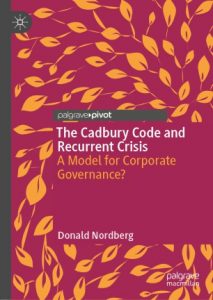








 International Open Access Week: open access and the REF
 Food Price Research Shortlisted for Civil Service Prize
 3C Event: Research Culture, Community & Connections – Wednesday 11 November 3-4pm
 ECR Opportunities: New Development Programme, Researcher Grants & Upcoming Events
 Horizon Europe Cluster 3 (Civil Security for Society) 2026 Calls Now Open
 MSCA Doctoral Networks 2026 Call Information Webinar
 ESRC Festival of Social Science 2026: Application Deadline Extended to Thursday 25 June 2026
 Reminder: Register for the ESRC Festival of Social Science 2026 Information Session
 ECR Funding Open Call: Research Culture & Community Grant – Apply now
 ERC Advanced Grant 2025 Webinar
 Update on UKRO services
 European research project exploring use of ‘virtual twins’ to better manage metabolic associated fatty liver disease