Call for Papers for the 15th Nepal Study Days
12-13 April 2017 hosted by Bournemouth University, UK
The Britain Nepal Academic Council (BNAC) invites scholars and practitioners from all disciplines to participate in the 15th BNAC Nepal Study Days. All presentations should focus on Nepal, its diaspora and/or the Nepali cultural world. We invite presentations that share research findings, preferably of work that has reached an advanced stage or has been completed. The 2017 event will be held in Bournemouth House at Bournemouth University. Details of previous study days can be accessed online here! We also invite proposals for research posters.
If you are interested in participating, please send a 300-word abstract of your proposed presentation to bnacstudyday@gmail.com by 28th February 2017. The Study Days organizing committee will review the proposals received on time and make a selection. Selected abstracts will be circulated to registered participants in advance and posted to the BNAC website.
Members of BNAC may attend the Nepal Study Days for free, though we will ask for a contribution towards the costs of the lunches. For non-members there will be a registration fee of £25, which will include lunch on both days.
We would like to encourage prospective participants to apply for or renew their membership for 2017 in time to be eligible for free registration. To download membership application form and for other details about BNAC membership, please visit www.bnac.ac.uk/membership/.
We hope to be in a position to offer small bursaries towards the travel costs of students from outside Bournemouth whose abstracts are accepted.
Deadline to submit abstracts: 28th February 2016.
Deadline to register for those who are not presenting a paper but who wish to attend: 4th April 2017.
For more information and registration, please contact the Nepal Study Days organizing team (Pramo Regmi, Jib Acharya, Preeti Mahato and Edwin van Teijlingen) at bnacstudyday@gmail.com.
The application form can be found here!
We suggest you book your accommodation in Bournemouth well in advance. To download the list of hotels close to the programme venue, click here.
For details about new membership application (and to download forms) or renewal, click here
Prof. Edwin van Teijlingen
Dr. Pramod Regmi
Mr. Jib Acharya
Mrs. Preeti Mahato
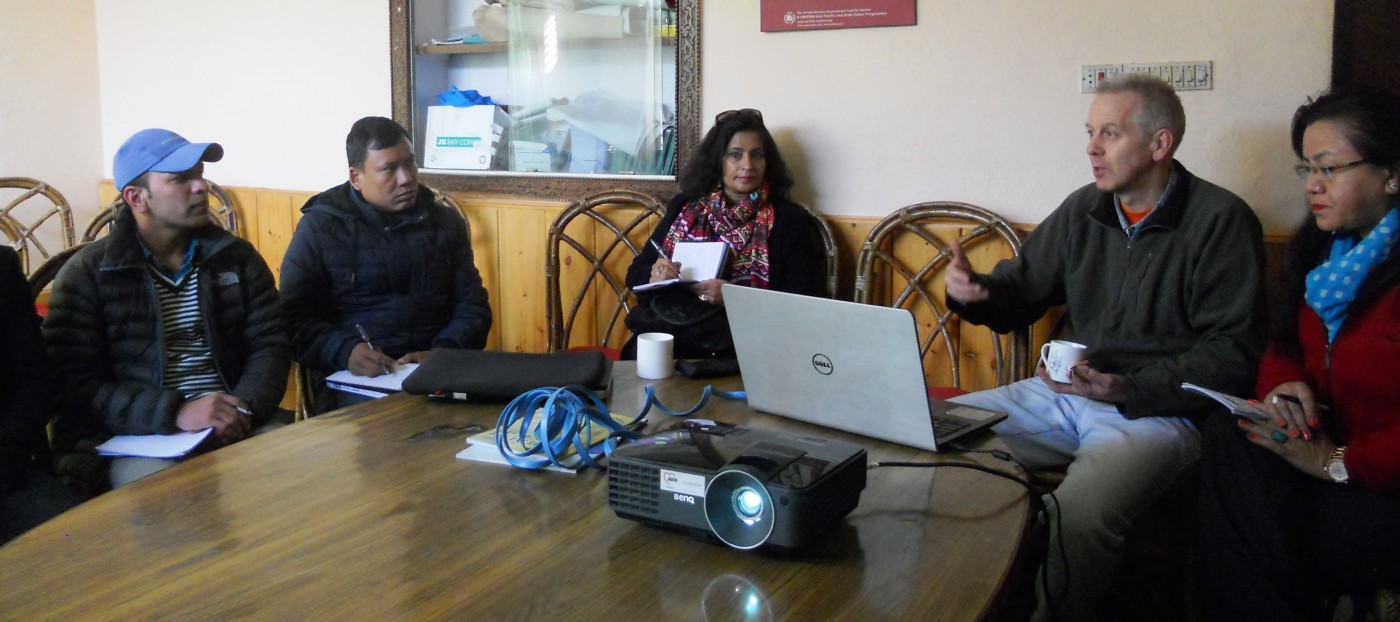

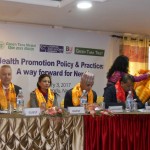
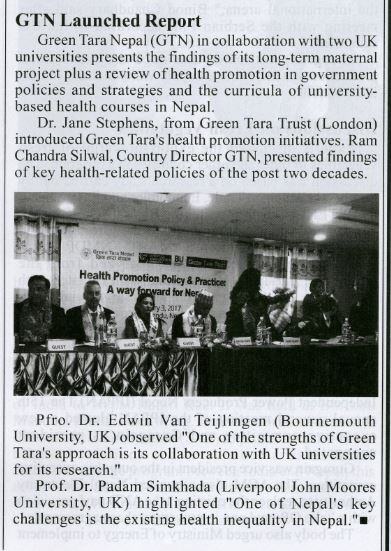
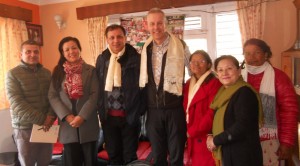

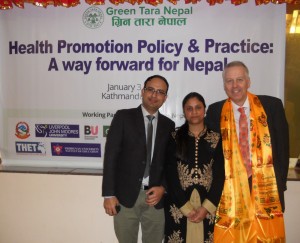
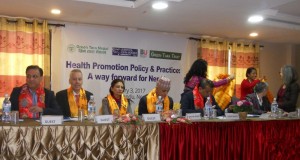
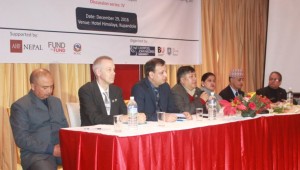
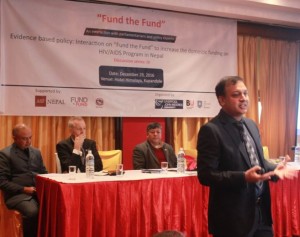
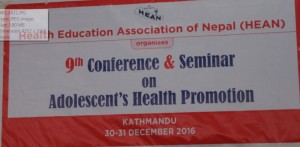 Yesterday Prof. Edwin van Teijlingen from BU’s Centre for Midwifery, Maternal & Perinatal Health (CMMPH) spoke at the 9th Conference and Seminar on Adolescent’s Health Promotion in Kathmandu. This event was organised by the Health Education Association of Nepal (HEAN). The first keynote speech ‘Adolescent’s Health Promotion: Global Perspectives‘ was presented by BU Visiting Faculty Prof. Padam Simkhada (based at Liverpool John Moores University) on behalf of his BU co-authors Dr. Pramod Regmi and Prof. Edwin van Teijlingen. The second keynote speech ‘Global Health Promotion Approach‘ was presented jointly by Prof. van Teijlingen and Green Tara Nepal country director Mr. Ram Chandra Silwal on behalf of their collaborators Prof. Simkhada and Green Tara Trust, UK (Dr. Jane Stephens and Ms. Colette Fanning).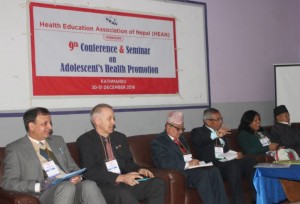







 Three CMWH presentations at Berlin conference
 New interdisciplinary paper on Nepal
 National Postdoc Appreciation Week 2026: The Changing Landscape of Postdoc Careers
 NIHR Insight South West Central Conference 2026 at Bournemouth University
 Horizon Europe Cluster 3 (Civil Security for Society) 2026 Calls Now Open
 MSCA Doctoral Networks 2026 Call Information Webinar
 ESRC Festival of Social Science 2026: Application Deadline Extended to Thursday 25 June 2026
 Reminder: Register for the ESRC Festival of Social Science 2026 Information Session
 ECR Funding Open Call: Research Culture & Community Grant – Apply now
 ERC Advanced Grant 2025 Webinar
 Update on UKRO services
 European research project exploring use of ‘virtual twins’ to better manage metabolic associated fatty liver disease