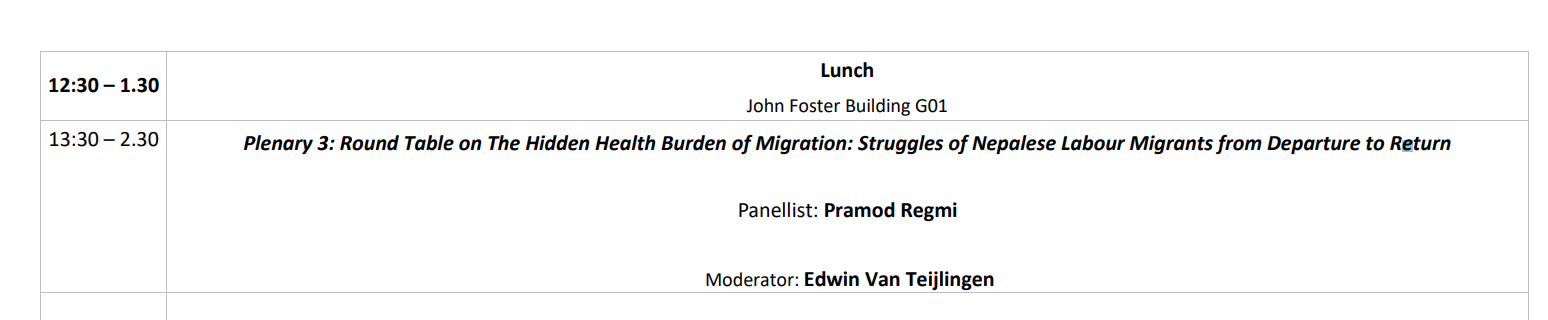
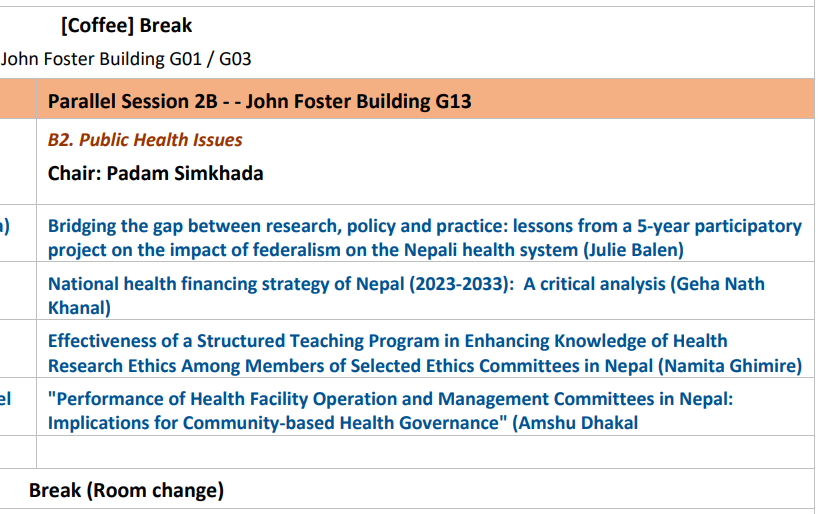
Conference: International Technology, Education and Development Conference 2025
Dates: 3-5 March 2025

Latest research and knowledge exchange news at Bournemouth University

The Postgraduate Research Experience Survey (PRES) 2025 has launched!
Check your email to access your link to complete the survey.
We’re keen to make sure our postgraduate research students (PGRs) have the best possible experience while studying with us. To do this, we need to know what you think works well and what we could do better.
The Postgraduate Research Experience Survey (PRES 2025) is your chance to tell us about your experience as a PGR at Bournemouth University. The more specific your feedback is, the more targeted and effective our actions can be. This includes both positive feedback and what we as a university could do better. Your voice truly makes a difference and helps shape your experience.
This year the survey opened on Monday 17 March 2025 and will close on Wednesday 30 April 2025. Upon completing the survey, PGRs will automatically be entered into a free prize draw. Four winners will be able to claim a £50 shopping voucher. Terms and conditions apply.
In addition, we will be making a £1 donation for every survey completed to the student mental health wellbeing charity, Student Minds.
Once you have completed the survey, you are entitled to claim a Chartwells voucher with a value of £3.95. This covers the cost of a meal from the “Savour menu” but can be used to purchase any items from Chartwells outlets. Please come to the Doctoral College (DLG08, Talbot Campus) to collect your voucher.
How do I take part?
PGRs have now received an email containing a unique link which will allow you to access and complete the survey. If you can’t find this email, contact PRES@bournemouth.ac.uk and we’ll help you to get access.
What will I be asked?
The survey will take around 15 minutes to complete. Your response is confidential, and any reporting will be entirely anonymous. The survey is your chance to tell us about your experience as a PGR at BU. It will ask you to share your views on supervision, resources, research community, progress and assessment, skills and professional development and wellbeing.
Why should I take part?
Your feedback is important. The Postgraduate Research Experience Survey is the only national survey of PGRs and so is the only way for us to compare how we are doing with other institutions and to make changes that will improve your experience in the future.
More information
If you would like to know more about the survey, please visit: PRES 2025.
If you would like to know more about the surveys at Bournemouth University, please visit: Your feedback | Bournemouth University.
Please click here to see actions that we have taken based on feedback from previous surveys.
We hope you take the opportunity to get involved this year and help us make improvements to your experience.
Best wishes,
The Doctoral College
For any PRES related queries, please email: PRES@bournemouth.ac.uk
Application to the fund is highly competitive and we have now committed all of the budget for 24/25. We will continue to review the status of fund-supported publications which are under consideration at journals, and release funds which are no longer required back into the budget as we can.
Authors are reminded that BU is signed up to a number of transformative deals with major publishers. These enable authors to publish gold open access for free, or at a reduced cost, in thousands of journals. Authors are encouraged to review the journals which are covered by these agreements which considering where to publish.
UKRI funded authors can still apply for support from the UKRI Open Access block grant to cover eligible costs associated with publishing in fully open access journals and platforms that are not covered by our transformative deals.
Please contact openaccess@bournemouth.ac.uk with any queries.
Your involvement matters – Please share details of BU’s social, community, and cultural events for the annual Higher Education Business & Community Interaction (HE-BCI) survey
Bournemouth University reports on a range of knowledge exchange activities for the HE-BCI survey, collected by the Higher Education Statistics Agency (HESA).
Providing a comprehensive view of these activities is crucial, as Research England uses HE-BCI data to allocate the Higher Education Innovation Fund (HEIF) annually. For 2024-25, BU received £549,064.
Data collection period
The SharePoint site collects information on all social, community, and cultural engagement events delivered by BU between 1 August 2024 and 31 July 2025.
Please ensure all event details are uploaded by Friday 17 October 2025.
Find your faculty table
Complete all the columns in your faculty’s table, paying particular attention to the Number of attendees and Academic staff time for delivery.
Please note that this year, we cannot include data solely uploaded to the public engagement records on BRIAN, as they do not capture all the information required by HESA. If you have already added data to BRIAN, you must also upload full details to the SharePoint site to ensure your event is included in the survey.
Further support
For detailed guidance on what to include, please refer to the FAQ’s
Please contact the Public Engagement Team should you have any additional questions publicengagement@bournemouth.ac.uk
Our new Research Café series launched last week at the BGB Café with a thought-provoking discussion on smart cities and cybersecurity. The event brought together members of the public, researchers, and local businesses to exchange ideas, ask questions, and connect with BU’s research community.

Professor Vasilis Katos speaking at Research Café
Leading the conversation was BU’s Professor Vasilis Katos, who explored how residents, businesses, and policymakers can work together to protect smart city infrastructure from growing cyber threats. Professor Katos highlighted the increasing reliance on digital systems in urban environments and the need for proactive security measures to prevent attacks that could disrupt essential services.
Joining the conversation was Emily Rosenorn-Lanng, PhD student and CEO of BU pre-spin-out Cyber Innovations Ltd, who shed light on the often-overlooked psychological impact of cyberattacks. Emily emphasised how cyber incidents can leave individuals and small businesses feeling vulnerable, highlighting the need for greater awareness, resilience, and support systems.

Professor Vasilis Katos & Emily Rosenorn-Lanng with Research Café attendees
The session sparked a lively discussion, with audience members including local business owners sharing their concerns and experiences. Attendees described the event as “exceptionally engaging,” “eye-opening,” and “a fantastic opportunity to learn from experts.”
Emily Rosenorn-Lanng reflected on the event “Cybersecurity isn’t just about technology – it’s about people. When attacks happen, they don’t just affect data; they impact lives, trust, and livelihoods. Protecting our digital world means understanding the human side of cybersecurity too.”
Next up in our Research Café series
Showcasing Tomorrow’s Researchers – Tuesday 6 May, 6:30-8pm at BGB Café
We are excited to announce the next event in our Research Café series will feature postgraduate researchers from Bournemouth University, who will share insights into their innovative research.
Come along to hear about their work, ask questions, and gain a glimpse into the future of research.
More details coming soon
Contact
If you have any questions about this event or the Research Café series, please contact the Public Engagement with Research Team at publicengagement@bournemouth.ac.uk
The ESRC Festival of Social Science (FoSS) returns from 18 October to 8 November 2025. This is a fantastic opportunity for researchers to showcase their work in the UK’s largest celebration of social science research.
Partnership with the University of Southampton
For the third consecutive year, Bournemouth University is partnering with the University of Southampton (UoS) to deliver a programme of social science events across Dorset and Hampshire. This collaboration enables BU researchers to organise joint events with UoS colleagues and share impactful research with a broader community.
Why get involved?
Online information session
BU’s Public Engagement Team will co-host an online information session with the Impact Funding Team (Research and Innovation Services, UoS). During the session, you will learn about past FoSS events at both universities and hear first-hand experiences from previous participants. The session will also explain the application process and guide you on how to get involved in this year’s festival.
Wednesday 2 April 2025
11am – 12pm
Online (via Teams)
To attend, please register and we will be in touch with further information.
Thinking about applying?
The call for applications will open soon. In the meantime, if you are considering applying, we recommend reviewing the 2024 festival open call to gain a clear understanding of the expectations and festival criteria. Understanding the ESRC’s guidelines and expectations is key to submitting a strong application.
If you have colleagues at the University of Southampton who might be interested in running a joint event, consider reaching out to explore collaboration opportunities. Joint events can strengthen your application and broaden your impact, so they are strongly encouraged.
Get inspired by past festival events. For ideas and inspiration, take a look at:
These resources can help you better understand the types of events that resonate with public audiences and align with the festival’s goals.
Helpful guides
These guides from last year’s open call are valuable resources to help you understand and support event planning and audience engagement.
Funding and Support
Funding of up to £1,000 per event is available to support your event. BU’s Public Engagement team will offer ongoing advice and guidance at every stage – from application and event development to planning, delivery, and evaluation.
New drop-in surgery for application support
In addition to the information session, the Public Engagement Team will be hosting a drop-in surgery on campus, providing you with the opportunity to meet the team and receive additional support for your application.
This will:
Take advantage of this support to enhance your proposal and perfect your event plans.
If you would like to start discussing your ideas, please get in touch with the team at publicengagement@bournemouth.ac.uk

All BU staff and students are invited to attend the Three Minute Thesis (3MT®) Competition! This is an internationally recognised research communication competition developed by the University of Queensland in 2008. It challenges doctoral researchers to condense their thesis into a compelling three-minute presentation, communicating its originality and significance to a non-specialist audience.
Date: Wednesday 26 March, 10:30-14:30
The National competition is run by the research organisation Vitae. More information about the history of 3MT® can be found on the Vitae and 3MT® websites.
There will be four parallel presentation sessions, one for each Faculty, to select the 2 finalists to advance to the final round, which will take place in the afternoon. The winner will be able to take part in the national competition run by Vitae.
Lunch will be provided.
See below for the tentative programme of the day:
10:30-12:00: First round (4 parallel sessions, Fusion Building)
12:00-13:00: Lunch (Share Lecture Theatre)
13:00-14:00: Final round (Share Lecture Theatre)
14:00-14:20: Break
14:20-14:30: Winners Announcement and Closing
Come along and support BU doctoral researchers at this exciting event. Let’s share knowledge, foster collaboration, and build connections with the research community!
Further information available on Brightspace.
Please do contact us if you have any questions: pgrskillsdevelopment@bournemouth.ac.uk
Best wishes,
The Doctoral College RDP Team
The Sonamoni Project is working with communities in rural Bangladesh utilizing human-centered design (HCD) techniques. These design principles have been applied for many years in designing consumer products and, more recently, in the fields of health and social systems. The research project is identifying solutions to reduce the number of drowning deaths in newly mobile children (6-24 months), developing prototype, and assessing the acceptability and usability of potential interventions. This interdisciplinary project is coordinated by Bournemouth University in collaboration with the Centre for Injury Prevention and Research, Bangladesh (CIPRB), the University of the West of England, the Royal National Lifeboat Institution (RNLI), the University of Southampton, and Design without Borders Africa (DwB) from Uganda. Our Sonamoni project has been made possible thanks to a grant from the National Institute for Health and Care Research (NIHR) through their Research and Innovation for Global Health Transformation programme.
As part of the Sonamoni project we arranged some serious South-South learning by facilitating a visit to DwB in Uganda in early march by two of our Bangladesh-based team, namely Notan Chandra Dutta, Research Manager and Mirza Shibat Rowshan, HCD Specialist. DwB applies HCD approaches to complex challenges faced by communities in low and middle-income countries. To gain greater insights into HCD activities the researchers from Bangladesh visited one site near Lake Victoria to observe data collection with fishermen, transporters, and local leaders. Notan and Shibat co-facilitated a four-day long Design Community Advisory Board (DCAB) workshop on the “Enhancing Fisherfolk Safety” project where fishermen, boat owners, transporters, traditional weather forecasters, health workers were the participants. To prevent drowning, HCD was applied in the workshop to generate ideas and share solutions of the lake site community from Lake Victoria of Mayuge district. Lessons learnt from the visit by two staff of CIPRB can further enrich the Sonamoni Project implementation in Bangladesh. The NIHR really values research capacity building and South-South learning in its funded projects, as well as North-South leaning, of course.
Prof. Edwin van Teijlingen

The primary aim of this event is to raise participants’ awareness of how to get started in research at BU or, for more established staff, how to take their research to the next level. It will provide participants with essential, practical information and orientation in key stages and processes of research and knowledge exchange at BU
You’ll be made aware of the support available at each stage of the research lifecycle and get an introduction to the Research, Development & Support Team, who are here to help! It will be hosted by our experts who are responsible for strategy, outputs, ethics, public engagement, knowledge exchange, project management & training. It will include:
Come along, join in, get some important insights – hopefully see you there! Book your place HERE
If you are new to academia, it may be helpful for you to meet with your faculty mentor to guide your familiarisation of research at BU and expectations of an early career researcher before attending this induction. You can also join the Early Career researcher (ECR) Network.
For some background and more immediate information on RDS, please head to the RKE SharePoint
For further information on this event or joining the ECRN, please contact RKEDF@bournemouth.ac.uk
At Bournemouth University, we are committed to making our research accessible beyond the university.
If you are organising an event that connects members of the public with BU’s research, we can help promote it to relevant audiences through our monthly newsletters and social media channels.
To be considered for inclusion, your event or activity must be;
Event descriptions may be edited for consistency in style with other content.
Share your upcoming public event or activity
If you have any questions, please contact the team publicengagement@bournemouth.ac.uk
The forensic science team at BU has been commissioned by the Home Office to evaluate an emerging threat to the U.K: ultra potent synthetic opioids. Our research has delivered a comprehensive chemical assessment of these dangerous drug compounds, evaluating differences between illicit drugs seized at borders versus inland, purity assessment, composition and variability, and headspace profiling to provide intelligence towards better detection of these drugs at borders. The work is led by Richard Paul, with co-investigators Ramin Boroujerdi, Sarah Upson, Santanu Majumder and Sam Rennie, all from the Life and Environmental Sciences department.
The illicit drug market has been dominated by the rise of fentanyl in North America in recent years, with a surge in drug related fatalities. The situation has now evolved with the emergence of non-fentanyl derived synthetic opioids, such as nitazenes, which are several times more potent than fentanyl, and can be as much as 500 times stronger than heroin. Urgent research is required to understand the nature of these drugs, and to provide intelligence to help detect these drugs when smuggled across borders.
Our analysis has shown that the purity of some of the nitazene compounds seized at borders is extremely high, with metonitazene and protonitazene at >98% pure. We’ve also developed a headspace analysis technique which examines the volatile molecules which comprise the odour profile of these drugs. This information is used to provide intelligence to the Home Office on which to base drug detection policy aimed at stopping the influx of these drugs into the U.K. Our headspace technique revealed a complex array of aromatic organic compounds in the headspace above illicit nitazenes, and there is evidence that these compounds are used as precursors during illicit synthesis routes for these drugs.
This work is on-going and where possible we’ll post updates in the future. To find out more about the capabilities of our group, and other research we’re involved in, please see our group page here.
Our new Research Café series is underway, and we are looking for 3-4 postgraduate researchers to take part in the first PGR showcase of the series in May. These events are designed to showcase research from across BU—including arts, humanities, science, health, technology, business, and more.
Event Details:
📅 Date: Tuesday, 6 May
🕡 Time: 6:30–8:00 pm
📍 Venue: Bournemouth University Gateway Building (BGB) Café
Shifting away from traditional slide-based presentations, this event encourages engagement and interaction. You’ll deliver a short talk about your research, followed by an interactive discussion where you can engage with the audience and answer their questions.
If you’re interested in taking part, please complete this form.
🕔 Application deadline: Friday, 14 March, 5:00 pm.
Please note: Completing this form does not guarantee a place in the event. We will be in touch to discuss your interest further.
For any questions, please contact the Public Engagement with Research Team at publicengagement@bournemouth.ac.uk.
PGRs who took part in last year’s Café Scientifique event found the experience immensely rewarding:
“It was so helpful and improved my presentation. The feedback helped to make it better.”
“I realised that not only scientists, but the public also are extremely interested in the research we are doing. It is a major motivation I have taken from doing this event.”
“I thoroughly enjoyed presenting my research during the Café Scientifique. To be honest, I was nervous before and didn’t expect the community here to be so welcoming and passionate about research.”
For any questions, please reach out to the Public Engagement with Research Team at publicengagement@bournemouth.ac.uk.
We look forward to your participation in making our First Research Café PGR Session a memorable and successful event!
The Postgraduate Research Experience Survey (PRES) 2025 will launch on Monday 17 March 2025 for postgraduate research (PGR) students to complete.
Look out for an email from the University containing your unique link to the survey.
We’re keen to make sure our postgraduate research students (PGRs) have the best possible experience while studying with us. To do this, we need to know what you think works well and what we could do better.
We will be emailing you soon to invite you to complete this year’s Postgraduate Research Experience Survey (PRES 2025). Please take a few minutes to take part.
The survey is your chance to tell us about your experience as a PGRs at Bournemouth University.
Your feedback is important. PRES 2025 is the only national survey of PGRs and so is the only way for us to compare how we are doing with other institutions and to make changes that will improve your experience in the future.
The more PGRs that take part the better we can do that. The more specific your feedback is, the more targeted and effective our actions can be.
The survey will open on 17 March 2025. It will take around 15 minutes to complete. Your feedback is confidential, and any reporting will be entirely anonymous.
As a thank you for your time, we will give you a Chartwells Voucher (worth £3.95) which will pay for a meal from the “Savour Menu” or can be used towards other items from Chartwells outlets. You will also automatically be entered into a prize draw where four winners will receive a £50 shopping voucher.
The Doctoral College will also make a £1 donation to Student Minds, which is the UK’s student mental health charity, for every completed survey.
If you would like to know more about the survey at Bournemouth University, please visit: Your feedback | Bournemouth University.
Please click here to see actions that we have taken based on feedback from previous surveys
I hope you take the opportunity to get involved this year and help us make improvements to your experience.
Best wishes,
The Doctoral College
Email: PRES@bournemouth.ac.uk
Do you have a question about BRIAN or your staff profile page? Then come along to the next BRIAN drop-in surgery!
Come along to this informal 2-hour drop-in surgery with questions or issues relating to BRIAN, or if you need a refresher on how to update your profile.
No booking is required, just bring your laptop and questions!
The call for applications for Being Human Festival 2025 is now open
Being Human is the UK’s national festival of the humanities. Each year researchers and staff from universities and research organisations are invited to take part in the national festival by organising a public engagement event or activity, rooted in humanities research.
This year’s festival will take place 6-15 November with the theme ‘Between the Lines’.
Being Human is a place-based festival that emphasises interaction, collaboration and engaging with communities outside higher education. The festival supports innovative, participatory and creative activities that foster genuine, two-way connections with communities.
You can get an idea of what the festival looks like, and the types of activities they support, in the 2024 highlights film, and by reading the 2024 highlights blog.
There are various ways to participate in the festival:
Funded pathway
Festival Event Grants: up to £4,000 to organise a single event or multiple events. Deadline: Thursday 10 April Being Human 2025 – Festival Event Grant – Further Information.pdf
Please note: only applicants from UK Higher Education Institutions and AHRC-recognised IROs are eligible to receive grants.
Unfunded pathway
Festival Event: organise a festival event that does not require funding from Being Human. Deadline: Friday 4 July
Funding details and support available
Further details about how to apply, and answers to some frequently asked questions, are available here.
Training Programme 2025
The full training programme for 2025, has sessions running from February to October. This year’s programme includes new events on engagement and inclusion and creative engagement, alongside sessions on audiences, partnerships, promoting events and delivering events.
The sessions are led by expert facilitators, alongside members of the Being Human Festival team. Training is primarily aimed at those taking part, or thinking of taking part, in Being Human Festival, but will be of interest to those working in public engagement more broadly.
All sessions are free and take place online, but booking is required. Find out more and book individual sessions.
Toolkits
The Public Engagement Toolkits have recently been updated. These downloadable PDF resources cover subjects including working with partners, delivering inclusive activities and finding the right format. Browse the toolkits
Contact
Should you require advice on public engagement activities or support with your application, please contact BU’s Public Engagement with Research Team: publicengagement@bournemouth.ac.uk
Today, Saturday morning, BU Visiting Professor Padam Simkhada from the University of Huddersfield was guest speaker at the third Nepal Dialogue UK webinar series of the Centre for Nepal Studies UK (CNSIK). His presentation was titled Is Nepal’s Health System fit for Purpose? Reflections on Transformations, Maladies and Future Needs. He outlined the state of health (epidemiology) as well as that of the health system. He presented a lot of change in the health of the population, in the health system, as well as issues around human resources, including the high rate of migration of health workers. He highlight that there is in Nepal insufficient investment in health, unethical practices,
He introduced some the key findings from our recently completed study on the effects of the federalisation process on Nepal’s health system. Padam was one of the co-applications on this study together with academics from the University of Sheffield, Canterbury Christ Church University and Bournemouth University in the UK, and colleagues in Nepal from Manmohan Memorial Institute of Health Sciences (MMIHS) and PHASE Nepal. The project was funded by the UK Health Systems Research Initiative (Grant ref MR/T023554/1). For more information on the Nepal Federal Health System Team, see: https://www.nepalfederalhealthsystem.com/. This interdisciplinary study has been disseminated in the form of eight published papers [1-8].
Prof. Edwin van Teijlingen
CMWH
References:
BU is a key partner in Dorchester’s annual celebration of science during the British Science Week (7-16 March 2025), significantly contributing to its success and educational impact. The Dorchester Science Festival features diverse scientific events, culminating in the Family Science Day on Sunday, March 16th, at the Dorset Museum & Art Gallery.
The university’s involvement brings valuable research expertise and hands-on learning experiences to attendees of the Family Science Day, contributing to the 24 science stalls on offer. BU staff and students actively share their research with children and families, representing various fields including Neuroscience and virtual reality (MINE Research Cluster, Xun He, Fred Charles Charles and Damla Kuleli); Forensic Sciences (Richard Paul and Nikky Jones); Biomedical Sciences (Anna Mantzouratou and Sarah Upson); Biological Sciences (Demetra Andreou); Marine Conservation (Jocelyn Elson-Riggins); Microbial Ecology (Genoveva Esteban).
These presentations offer hands-on activities for visitors of all ages, increasing BU’s visibility in the local community while promoting understanding of scientific issues and encouraging interest in STEM fields. BU’s involvement demonstrates its commitment to widening participation in science and creating positive impact in the community, helping to make the Dorchester Science Festival an engaging and educational event that inspires future generations of scientists and fosters connections between academia and the public.
Professor Genoveva Esteban from the Department of Life and Environmental Sciences (SciTech) co-organises the Dorchester Science Festival and the Family Science Day in collaboration with the Town Council and others. The Dorchester Science Festival has been funded by the Royal Society of Biology, the Institute of Physics, Dorchester Town Council, Market Cross UK LTD and the Dorset Museum & Art Gallery.
Full programme of events can be found on the Festival’s facebook page. For more info, please contact Genoveva Esteban gesteban@bournemouth.ac.uk