Category / Digital and technological futures

HE Policy Update for the w/e 5th October 2018

Conservative Party Conference

The Conference ended with the PM’s speech, in which she declared the end of austerity and tried to fight back on Brexit.  This came after a predictably colourful speech from Boris Johnson calling for the party to be more positive – and #chuckchequers.  Neither talked about HE.

Education was on the agenda at the conference, though.  Damien Hinds gave a speech mainly focusing on schools.  He listed three key imperatives (all Ps):

  • Progress – “each generation should have better opportunities than the last and every year we need to raise our sights higher and we need to reach wider”
  • The prospects and prosperity of the country – productivity depends on education of this generation
  • Preparedness – being ready for an uncertain world. He mentioned global trade and technological change

And to deal with these challenges, he said that the plan was to focus on:

  • Academic standards (and there is an ongoing row about his statistics)
  • Basic essential skills (32 primary schools and 21 colleges to be centres of excellence for early literacy and post 16 Maths)
  • Behaviour management (£10m to support best practice in this area)
  • And of course, vocational and technical education (and announced a £38m capital pot for investment in colleges delivering T-levels)
  • Careers advice – doubling the number of trained careers leaders in schools
  • Reviewing level 4 and level 5 qualifications that are the direct alternative to university (this is not new, see below)

He also talked about character, workplace skills and extra-curricular activities.

  • “..we need to move forwards with our reforms. We need to ensure that the vocational and the technical, are absolutely on a par with the academic. We need to make sure that we extend our reforms in all regions, in all parts of the country. That all parts of our society have equal opportunity, that everywhere we see raised expectations and raised aspirations, and when that happens, then we will be able to say, this is a world class education for everyone.”

Level 4 and 5 qualifications have been discussed a lot recently  – see the August report  by Professor Dave Phoenix, VC of South Bank University has written for HEPI “Filling in the biggest skills gap: Increasing learning at Levels 4 and 5”.

The DfE are conducting a review of classroom-based, level 4 & 5 technical education launched in October 2017 (interim findings here) which will inform the ongoing Review of Post-18 Education.

Industrial Strategy – Creative Industries

A new £8 million funding competition will enable virtual, augmented and mixed reality experiences – also known as immersive content – to be created faster and more efficiently by UK content creators.  The competition is part of the Industrial Strategy Challenge Fund’s audience of the future programme. Up to £33 million is available to develop new products and services that exploit immersive technologies.  Funding is provided by UK Research and Innovation through Innovate UK.

Immigration

Also while the Conservative Party Conference was going on, announcements were made about future immigration rules post Brexit.

From Dods:  a White Paper outlining how the system will work to be published in the autumn, ahead of legislation next year. The proposals largely mirror the recommendations of the Migration Advisory Committee from September, and offer no preferential treatment for EEA citizens coming to the country. Notably, there is a commitment under the new system not to cap the number of student visas. (there is currently no such cap)

Under the proposals:

  • The passports of short-stay tourists and business people from all “low-risk” countries would be scanned at e-gates – currently only EU citizens can do this
  • Security and criminal records checks would be carried out before visits, similar to the system of prior authorisation in the US
  • Workers wanting to stay for longer periods would need a minimum salary, to “ensure they are not competing with people already in the UK”
  • Successful applicants for high-skilled work would be able to bring their immediate family, but only if sponsored by their future employers
  • The new system will not cap the number of student visas

Theresa May said:

  • “The new skills-based system will make sure low-skilled immigration is brought down and set the UK on the path to reduce immigration to sustainable levels, as we promised. At the same time we are training up British people for the skilled jobs of the future.”
  • “Two years ago, the British public voted to leave the European Union and take back control of our borders. When we leave we will bring in a new immigration system that ends freedom of movement once and for all. It will be a system that looks across the globe and attracts the people with the skills we need. Crucially it will be fair to ordinary working people. For too long people have felt they have been ignored on immigration and that politicians have not taken their concerns seriously enough.”

And meanwhile, at the conference, the Home Secretary announced a new “British values” test for those applying for UK citizenship, which will be “significantly tougher” than the current test, which he said was like a pub quiz, and would be accompanied by strengthened English language tests.

Degree apprenticeships

The Office for Students (OfS) has published new analysis of degree apprenticeships.

  • Compared with other levels of apprenticeships and higher education generally there were relatively few degree apprentices in 2016-17, but the number of starts are growing. In 2016-17 there were 2,580 degree apprentices registered in higher education, of which 1,750 started their apprenticeship that year.
  • The two most popular degree apprenticeships are:
    • Chartered Manager – 34 per cent of entrants
    • Digital and Technology Solutions Professional – 29 per cent of entrants.
  • Most of the degree apprenticeships currently available are within the science, technology, engineering and mathematics (STEM) subject grouping. Within the arts, humanities and social sciences subject areas, the majority of degree apprentices are taking chartered management courses.
  • There was a roughly equal number of young and mature entrants undertaking degree apprenticeships, with young students (entrants under 21) more likely to be going into science, technology, engineering and mathematics (STEM) apprenticeships.
  • There were more males entering degree apprenticeships than females, but relative to similar higher education courses there is a slightly lower proportion of males.
  • Apprenticeships at all levels had lower proportions of entrants from minority ethnic groups, than entrants to similar higher education courses.
  • Apprenticeships have a lower proportion of entrants with a declared disability than entrants to higher education.
  • The North West and North East of England have the highest proportion of the working age population entering degree apprenticeships, with London having the lowest density.

30 per cent of degree apprenticeship entrants come from areas underrepresented in higher education, slightly higher than the proportion entering similar full-time higher education courses (26 per cent).

Graduate Outcomes and Employability

The Office for Students (OfS), has launched its first Challenge Competition, inviting providers to develop and implement projects to identify ways of supporting the transition to highly skilled employment and improving outcomes for graduates who seek employment in their home region.

The OfS intends to support a range of projects that will deliver innovative approaches for graduates and particular student groups, to contribute to improved outcomes and local prosperity. Through this process we want to identify:

  • what interventions work best in a variety of different regional and local contexts to support progression into highly skilled employment
  • what interventions work best for different types of students and graduates
  • findings that can continue to shape sector-wide debate and inform interventions to capitalise on graduate skills and knowledge for the benefit of individuals and for economic prosperity.

Providers with successful bids will be expected to form a network to share, discuss and disseminate key information among themselves and with the OfS, strategic partners, and the wider sector as required.

Metrics and ratings – graduate salaries

From Wonkhe: ONS has released its annual estimates of the value of the UK’s “human capital” – and if you like to promote higher education on the basis of pay premia, it’s not great news for the sector. The headline news is that back in 2004 the average premium for “first and other degrees” was 41%, but by 2017, it had reduced to 24%. The same has happened for “masters and doctorates” – where the pay premia has declined from 69% in 2004 to 48% in 2017. Although the premia for graduates is still significant, the downward trend will provide ammo to those who argue that “too many people are going to university”, ONS says that “one explanation for this could be a large increase in the proportion of the population with a university degree”.

Metrics and ratings – Learning gain

On Wonhke, David Kernohan wrote on 30th September about learning gain “Plenty ventured, but what was gained?”.

  • David notes: Some projects have held final conferences and events. Others (notably two large scale national projects) either concluded early or have never been publicly spoken of.  It’s a far from glorious end to an initiative that set out with a great deal of ambition – to measure “the distance travelled: the improvement in knowledge, skills, work-readiness and personal development demonstrated by students at two points in time” – a goal that would probably represent the most significant finding in the history of educational research.

The learning gain projects were expected to lead to discussions about a new TEF metric for learning gain – or at least to a set of tools and methodologies that providers would over time start to adopt to support their TEF submissions –because learning gain is an important element of the TEF, but one that it is not currently reflected in the metrics.

  • So the article continues: Project after project reported issues with lack of engagement from students and staff. Why would a student complete a test or exercise that had no bearing on their degree, and that was of uncertain benefit? And why would an academic recommend such a course of action to their students while unsure of the underpinning motivation?
  • And David concludes: …learning gain is measurable. But it is measurable only in terms of the way an individual student understands their own learning. Interventions like learning diaries and reflective writing can prove very useful to students making sense of their own progress. What learning gain may not be is comparable – which on the face of it makes perfect sense. In what world could we say that a student of economics has learned the same quanta of learning as a student of the piano?

And so on 2nd October, Yvonne Hawkins of the OfS responded, also on Wonkhe:

  • he’s wrong to say that the programme is coming to an end – the first phase has concluded, and planning for a second phase that draws on the learning from phase one is already underway. I must also take issue with his rather eeyorish view of the wider learning gain endeavour.

So what are the next steps as set out by the OfS? They are “committed to developing a proxy measure for learning gain”. And it “will form part of a set of seven key performance measures to help us demonstrate progress against our student experience objective”.  And how will they get there?  There will be evaluations of the projects that did go ahead, and then there will be a conference, and recommendations to the OfS board in March 2019 about the next phase of work.

So watch this space….

Freedom of speech

Another week another article on free speech by the Minister– this time on Research Professional to coincide with the Conservative Party Conference.

  • He starts with some context: a cultural shift is taking place, and diversity of thought is becoming harder to find as societal views become highly polarised between the left and the right. A culture of censorship has gradually been creeping in, and a monoculture is now emerging where some views are ‘in’ and others are clearly ‘out’. Social media has exacerbated this trend by giving rise to echo chambers that restrict opposing points of view and legitimise threatening and abusive behaviour.
  • So what is the problem? In universities and colleges, we are witnessing the rise of no-platforming, safe spaces, trigger warnings and protests. These may all be well intended and have their place in fostering free speech, but they are also all too easy to be appropriated as tools to deny a voice to those who hold opinions that go against the sanctioned view.
  • It’s perhaps put in rather strong terms: This is catastrophic for democratic debate and puts at risk the fundamental right to be heard that many have fought and died for.
  • And the example – from 2015: I am increasingly alarmed by reports of individuals and groups preferring to support those who seek to restrict others’ right to speak than to protect the fundamental right for all to be heard. This was the case at Goldsmiths, University of London, in 2015 when the university’s Feminist Society came out in support of the university’s Islamic Society after its members aggressively disrupted a talk by Maryam Namazie, a feminist campaigner and human rights activist.
  • So what next? That is why I am supporting an initiative coordinated by the Equality and Human Rights Commission to create new free speech guidance to ensure future generations are exposed, without hindrance, to the stimulating debates that lie at the very core of the university experience.

Subscribe!

To subscribe to the weekly policy update simply email policy@bournemouth.ac.uk

JANE FORSTER                                            |                       SARAH CARTER

Policy Advisor                                                                     Policy & Public Affairs Officer

66724                                                                                 65070

Follow: @PolicyBU on Twitter                   |                       policy@bournemouth.ac.uk

EU FIRST Project

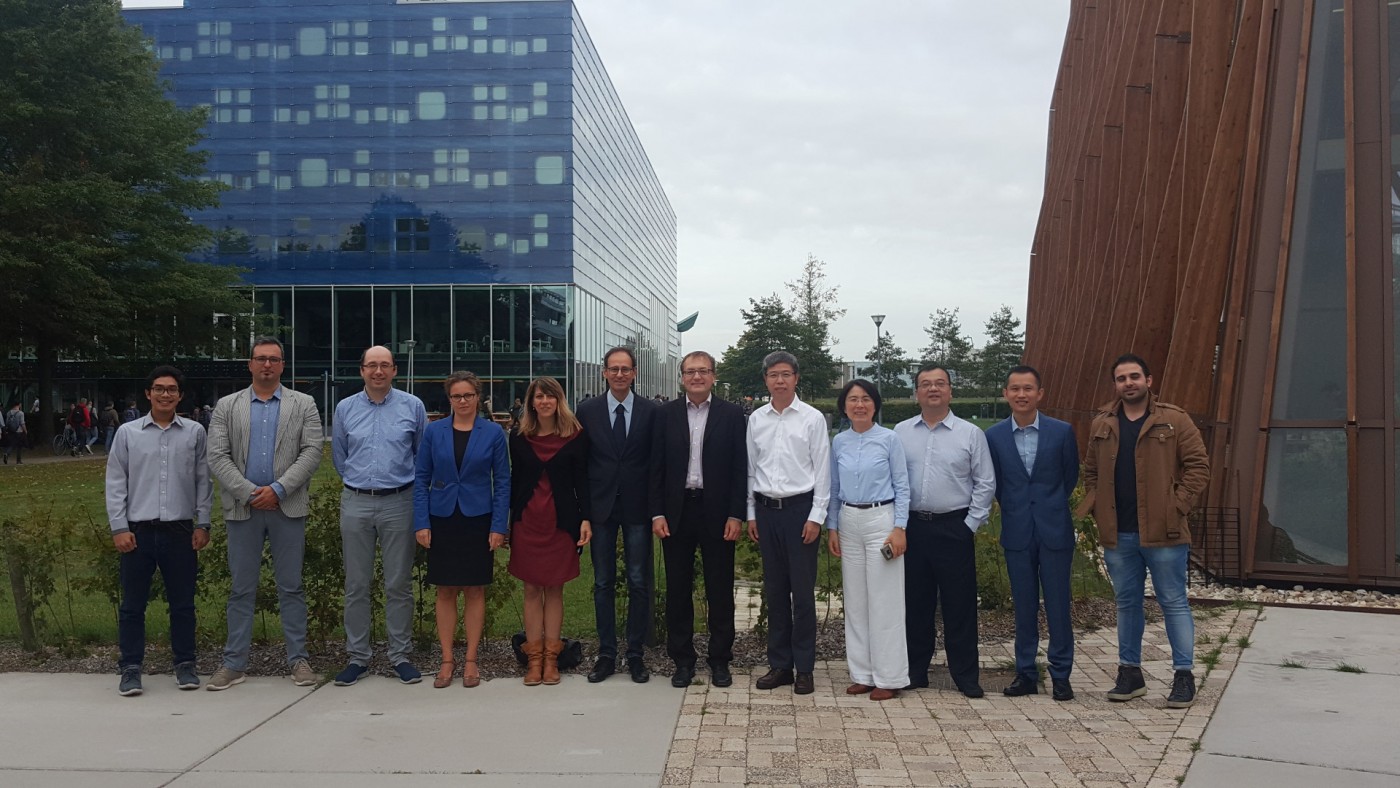
A Bournemouth University team from the Faculty of Science and Technology visited University of Groningen for FIRST mid-term review. It was a very productive meeting with a lot of effective outcomes for research and knowledge exchange. Dr. Lai Xu and Dr. Paul de Vrieze are FIRST coordinators representing Bournemouth University and the team is pleased to announce that FIRST will continue to move towards a factory of the future for European Union.

If you want to know more about the project and get involved, please contact Dr. Lai Xu or Dr. Paul de Vrieze. You can also follow our social medial links on Facebook, Twitter, Instagram and YouTube Channel.

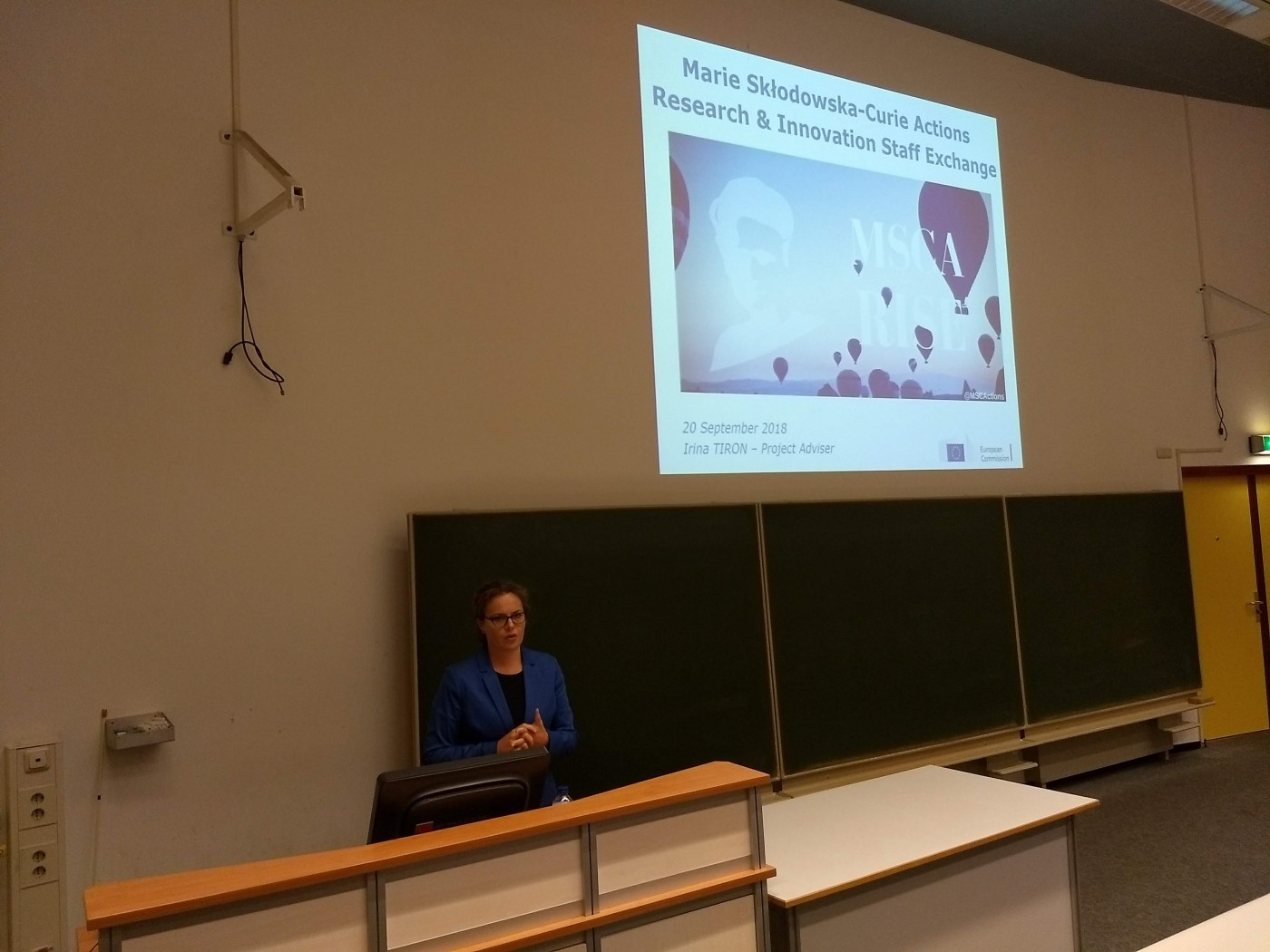
During the mid-term review meeting, the FIRST EU project advisor Irina Elena Tiron giving a talk on RISE projects. A useful instrument for researchers in EU (and beyond).

Publishing systematic and scoping reviews to improve your research profile

With the forthcoming REF 2021 in mind we would like to encourage both staff and postgraduate students to consider writing up their literature reviews as journal articles. Systematic and scoping reviews are a great way of publishing quality publications. They are highly valued as REF submissions, especially, but not only, in the health field.

There is plenty of support at Bournemouth University: from academic colleagues, with vast experience in writing reviews, to the library team, who can advise on, for example, developing your systematic search strategy and which databases to search.


You can start with publishing your review question and research strategy on PROSPERO, international prospective register of systematic reviews. We would like to highlight just one BU example in the field of the social sciences.  FHSS PhD student Orlanda Harvey published her proposed review ‘Support for people who use anabolic androgenic steroids: an investigation into what they want and what they currently access’ late last year on PROSPERO [1].

You might like to have a look at reviews published by Bournemouth University staff, which can be found by searching BURO, our institutional repository of research outputs. Moreover, BU academics have published several methods papers on the doing and writing systematic reviews [2-4].


Information about searching the literature for systematic reviews is available on this guide by the library team.


Other pages with useful information include:


Hopefully we have encouraged you to think about publishing your literature reviews as separate articles, and to seek help early in that process!


José López Blanco & Edwin van Teijlingen


For further information, please contact:

José López Blanco, Faculty Librarian (Health and Social Sciences), Library & Learning Support, Academic Services at tel 67350 or email:  hsslibteam@bournemouth.ac.uk


References:

  1. Harvey, O., Parrish, M., van Teijlingen, E., Keen., S. (2017) Support for people who use anabolic androgenic steroids: an investigation into what they want and what they currently access. PROSPERO 2017 CRD42017075199 Available from: http://www.crd.york.ac.uk/PROSPERO/display_record.php?ID=CRD42017075199
  2. van Teijlingen E., Napper, M., Bruce, J., Ireland. J. (2006) Systematic reviews in midwifery, RCM Midwives Journal 9(5): 186-188.
  3. van Teijlingen, ER, Simkhada, B., Ireland J., Simkhada P., Bruce J. (2012) Evidence-based health care in Nepal: The importance of systematic reviews, Nepal Journal of Epidemiology 1(4): 114-118.
  4. Stewart, F., Fraser, C., Robertson, C., Avenell, A., Archibald, D., Douglas, F., Hoddinott, P., van Teijlingen, E., Boyers, D. (2014) Are men difficult to find? Identifying male-specific studies in MEDLINE and Embase, Systematics Reviews 3,78.

HE policy update for the w/e 21st September 2018

Tuition Fees – means testing?

The Higher Education Policy Institute and Canadian Higher Education Strategy Associates have published a joint research paper on means-tested tuition fees for higher education – Targeted Tuition Fees – Is means-testing the answer? It explores the different funding approaches around the world considering the three major approaches to subsiding students in HE:

  • Equal subsidisation, resulting in a system of free tuition
  • Post-hoc subsidy (eg. England) in which those with smaller financial returns pay less
  • Pre-hoc subsidy, in which reductions in net price are given to poorer students, usually through a system of grants

Targeted free tuition starts from the notion that income-contingent fee loans do improve access but don’t do enough to help those from the poorest households, many of which are extremely debt adverse, and it leads to these families ruling out attending HE. Targeted free tuition suggests means testing and offering those on lowest income partial or full exemption from tuition fees.

The report concludes that “targeted free tuition has both an attractive political and economic logic: it provides benefits to those who need it without providing windfall gains to those who do not. Evidence from several countries over many years tells us that students from poorer backgrounds have a higher elasticity of demand than students from wealthier ones. Put simply, there is far more value for money in reducing or eliminating net tuition for low income students than there is in doing so for wealthier ones”.

Nick Hillman (HEPI) spoke on the report during the Today programme on Radio 4 on Thursday.

Means testing tuition fees is another interesting contribution to the Post-18 Review discussion.  It would of course, increase costs, just at the time when the accounting treatment is about to change and the existing costs become more visible.  You’ll remember we reported last week that the Post-18 Review report is delayed awaiting outcomes on the decision of how to account for student loans, but will Phillip Augar use the delay to cogitate further on tuition fees?

There is an interesting debate, though, about the tension between means testing families at one level (as already happens for maintenance loans) and then basing everything on the graduate premium – i.e. the income of the graduate not the family.  The government will say that the current position is fairer because the amount repaid is all based on graduate income, whereas under this system the merchant banker children of WP families would repay nothing.  The opposing side was expressed on Radio 4 by Polly Mackenzie of Demos. She said that technocratic solutions developed by policy wonks would not solve the problem of student finance. That the public were emotionally opposed to debt and the system is too broken to survive, regardless of the merits of rebranding, renaming or tweaking it.

Alex Usher, the Canadian author of the paper writes for Wonkhe in A case for means-tested fees.

While Becca Bland from Stand Alone highlights that students with complex family situations which approach but don’t quite meet categorisation as an independent student fall through the means testing cracks and all too often can’t access sufficient funding to access or complete HE study. See Family means-testing for student loans is not working.

Education Spending

The Institute for Fiscal Studies (IFS) released its annual report on England’s education spend. On HE it summarises:

  • Reforms to higher education funding have increased university resources and made little difference to the long-run cost to the public purse. Universities currently receive just over £9,000 per full-time undergraduate student per year to fund their teaching. This is 22% higher than it was in 2011, and nearly 60% more than in 1997. Reforms since 2011 have cut the impact on the headline measure of the government’s deficit by about £6 billion per cohort entering higher education, but the expected long-run cost to the taxpayer has fallen by less than £1 billion.

The report hit the headlines for the decline in FE spending; this heightened the current speculation that FE spend may be addressed through the post-18 tertiary education funding review. Research Professional report that the IFS write a

  •  “key challenge” facing the higher-education system in England is “ensuring the quality of education provided in a market where students lack good information about the return to their degrees”.
  • “The challenge for the government is to define and produce the metrics on which it wants universities to perform, and incentivise universities to take these metrics seriously.”

The article notes that the TEF, which originally planned to link higher tuition fees to outcomes, would have incentivised HE providers to focus more on their performance metrics. However, a respondent from Exeter University challenged the IFS’ statement, saying:

  • All of this is out of touch with the reality of UK universities. In fact we are awash with metrics and we study them obsessively. Even when the TEF was decoupled from financial incentive, we took it no less seriously. Just look at how the results are received – and celebrated, or challenged.”

The key points from the IFS report:

  • 16-18 education has been a big loser from education spending changes over the last 25 years. In 1990-91, spending per student in further education was 50% higher than spending per student in secondary schools. It is now 8% lower in real terms.
  • FE also suffers from dwindling mature student numbers – the total number of adult learners fell from 4 million in 2005 to 2.2 million by 2016, with total funding falling by 45% in real terms over that period. However, spending per learner has remained relatively constant at £1,000 per year
  • 19+ FE is now sharply focussed on apprenticeships – making up almost half of all Level 2 qualifications undertaken by adults, compared to less than 10% in 2005. They also make up about two-thirds of all Level 3 adult learners
  • At the event launching the report panellists debated T-levels concluding that the new qualifications wouldn’t raise per student funding levels for sixth forms and FE colleges. Any additional funding would only cover the increased number of teaching hours required. The panel also debated whether a focus on occupational and technical skills would leave people vulnerable to economic and trade shocks.

Higher Education

  • Universities receive £28,200 per student to fund the cost of teaching their degrees, with 60% rise since 97/98 largely attributable to tuition fee reforms [Note: this is likely the average tuition fee value across the full duration of a degree, it doesn’t divide perfectly to the £9,250 fee level because fee levels vary for longer four year degrees and placement years.]
  • The expected long run taxpayer cost of providing HE is £8.5bn per cohort. Since 2011 the £6bn reduction in the teaching grant only translates into £800m of savings per cohort, because:
  • The lowest earning 40% of graduates repay £3,000 less student loan over their lifetime than had they started in 2011 (owing to the higher repayment threshold).

Responding to the IFS report Geoff Barton, Association of School and College Leaders, played on the gulf between FE and HE funding levels:

  • “Parents will be horrified to learn of the damage that has been done to sixth forms and colleges by severe real-terms cuts in government funding. They may also wonder why the basic rate of funding for each of these students is just £4,000 compared to tuition fees at university which can be as high as £9,250. [Is Geoff touching on dangerous ground here? Few people want to take out loans to access FE provision!]
  • There is no rhyme or reason for the extremely low level of funding for 16-18 year-olds, and without the additional investment that is desperately needed more courses and student support services will have to be cut in addition to those which have already been lost. It is a crucial phase of education in which young people take qualifications which are vital to their life chances and they deserve better from a government which constantly talks about social mobility.
  • The government’s under-investment in 16-18 education is part of a wider picture of real-terms cuts to school funding which is putting hard-won standards at risk.”

Other fees and funding news

Mis-sold and overhyped: The Guardian ran a provocative article Mis-sold, expensive and overhyped: why our universities are a con claiming universities haven’t delivered on the social mobility and graduate wage premium that politicians promised. If you read to the end you’ll see the author is actually in favour of scrapping tuition fees and increasing levels of vocational provision.

Transparent Value?: Advance HE blogs How does HE create and demonstrate value? Arguing there is

  • too little focus, for example, on the value created for the economy and society, for research, and for collaborations with business. If value is always reduced to short-term financial value this creates a degree of inequality between different stakeholder groups….. we live in a world where there is no collective understanding of value… The nature of value is changing, and it’s changing higher education’s direction. The blog also tackles what it means to be transparent.

Graduate Employability

The OfS have blogged on improving graduate employability.  They say:

  •  more than a quarter of English graduates say they are over qualified for the jobs they are doing. Yet we know that many businesses also say they struggle to find graduates with the skills necessary to the job. This apparent mismatch between what a university education may deliver and what employers say they need underlines the importance of keeping employability in sharp focus throughout students’ experience of higher education.

The blog goes on to highlight the OfS consultation which sets out tough targets for improving employment gaps.  The OfS call for more work placement opportunities:

  • Many employers are now offering degree apprenticeships and this is important and welcome. But we also need more work placement opportunities. It cannot be right that so many students, especially those on courses with little vocational element and those without the right networks, have no access to good work placements or holiday internships while they are studying. This means they are more likely to face a cycle of internships, too often unpaid, after they graduate before they are able to get lasting graduate employment.

Apart from calling for more work-based time the blog’s advice for improving graduate employability is limited to stating:

  • Students need to take up every opportunity available to them during their time in higher education to help improve their employability and get a rewarding job.

The blog also announced that the OfS will launch a competition in October for projects testing ways of improving progression outcomes for commuter graduates (who remain in their home town during study and after graduation).

Pre-degree technical internship – Research Professional writes about a Danish trial scheme which gives students work experience in technical subjects before they commence at university. The scheme consists of a four-week internship undertaken before the degree start date which provides insight into how the learning and knowledge will be applied in practice The trial aims to reduce high dropout rates of 20% on Danish technical courses, with dropout soaring to 30% for students with lower graded prior academic qualifications.

Gender Pay Gap – The Telegraph highlighted how the gender pay gap is apparent even at lower levels of qualification. In women choose lower-wage apprenticeships than men the Telegraph describes how the professions with a dominant female workforce are lower paid, for example women tend towards lower paid child development careers whereas engineering and construction receive higher remuneration.

Admissions

UCAS have published their latest 2018 cycle acceptance figures which sum up the confirmation and clearing period, key points:

  • In England, a record 33.5 per cent of the 18 year old population have now been accepted through UCAS.
  • 60,100 people have been accepted through Clearing in total so far, 150 more than the equivalent point last year, and a new record. Of those, 45,690 people were placed after applying through the main scheme (compared to 46,310 in 2017), and a record 14,410 applied directly to Clearing (compared to 13,640 at the same point last year).
  • A total of 30,350 EU students have been accepted (up 2 per cent on 2017), alongside a record 38,330 (up 4 per cent) from outside the EU.
  • The total number of UK applicants now placed is 426,730, down 3 per cent on 2017, although this comes alongside a 2.5 per cent drop in the number of 18 year olds in the UK population.
  • 495,410 people are now placed in full-time UK higher education through UCAS so far, a decrease of 2 per cent on the same point last year.

Explore the data more through interactive charts here.

Clare Marchant, UCAS’ Chief Executive, said: The highest ever proportions of young people from England, Scotland, and Wales have been accepted, and record numbers of people have a place after applying through Clearing, with their exam results in hand. [Interesting given continued calls for a post-qualification admissions process.]

She continues: The enduring global appeal of studying an undergraduate degree in the UK is clear from the growth in international students with a confirmed place, both from within and outside of the EU. The overall fall in acceptances reflects the ongoing decline in the total number of 18 year olds in the UK’s population, which will continue for the next few years, and follows similar patterns to application trends seen earlier in the year.

Wonkhe describes the data in Drama Backstage? Clearing statistics in 2018 and the Independent’s article says Universities feeling the pinch will have taken generous view of entry qualifications to full places.

Nursing recruitment continues to fall, the UCAS figures for England show a further drop of 570 less students for 2018/19. Last week the NHS figures highlighted a crisis with record levels of vacant nursing posts – just in England the NHS is short of 40,000 registered nurses. Lara Carmona, Royal College of Nursing, said:

  • “When there are tens of thousands of vacant nursing jobs, the Government’s own policy is driving down the number of trainees year after year. These figures are a harsh reminder for ministers of the need to properly address the staffing crisis that is putting safe and effective treatment patient care at risk.
  • This piecemeal approach to policy-making is futile. We urgently need comprehensive workforce plans that should safeguard recruitment and retention and that responds to patients needs in each country. This should include incentives to attract more nursing students.
  • The Government must bring forward legislation in England, building on law in Wales and the current draft bill in Scotland, that ensures accountability for safe staffing levels across health and care services.
  • And where is the review of the impact that those 2015 reforms had? [The removal of the nursing bursary and introduction of tuition fees.] The Department of Health and Social Care promised this two years ago and it is high time it was published.”

However, the response to a parliamentary question on Monday saw the Government remain steadfast to the funding changes:

Q – Caroline Lucas: To ask the Secretary of State for Health and Social Care, if he will make it his policy to reintroduce bursaries for nursing degrees; and if he will make a statement. [172541]

A – Stephen Barclay: The removal of bursaries and introduction of student loans for nursing degrees has increased the number of nursing degree places that are available. Latest Universities and Colleges Admissions Service data for September 2018 show that there are still more applicants than places available for nursing courses.

As such we have no plans to reinstate a bursary cap on places, which would limit the number of places available.

Electoral Registration

The Office for Students published Regulatory Advice 11: Guidance for providers about facilitating electoral registration. It requires Universities to work with all geographically relevant Electoral Registrations Officers to provide sufficient student information to maintain the electoral register. Good practice case studies for electoral registration are included at Annex A (pages 7-12).

The Office for Students (OfS) has published Regulatory Advice 11: Guidance for providers about facilitating electoral registration, for registered providers in England. Any provider may be randomly selected for scrutiny, but attention will be focused on those where issues have been raised, in particular from electoral registration officers. Good practice and case studies show how universities should take a risk-based approach on the issue, and also raise awareness of democratic engagement and electoral registration.

Staff Migration

The Migration Advisory Committee (MAC) published their final report on European Economic Area migration within the UK this week. Here are the key points:

Labour Market Impacts:

  • Migrants have no or little impact on the overall employment and unemployment outcomes of the UK born workforce
  • Migration is not a major determinate of the wages of UK born workers

Productivity, innovation, investment and training impacts

  • Studies commissioned point towards immigration having a positive impact on productivity but the results are subject to significant uncertainty.
  • High-skilled immigrants make a positive contribution to the levels of innovation in the receiving country.
  • There is no evidence that migration has had a negative impact on the training of the UK-born workforce. Moreover, there is some evidence to suggest that skilled migrants have a positive impact on the quantity of training available to the UK-born workforce.

Public finance and public fund impacts

  • EEA migrants pay more in taxes than they receive in benefits. The positive net contribution to the public finances is larger for EU13+ migrants than for NMS migrants.
  • However, net fiscal contribution is strongly related to age and, more importantly, earnings so that a migration policy that selected on those characteristics could produce even higher gains.

Public service impacts

  • EEA migrants contribute much more to the health service and the provision of social care in financial resources and through work than they consume in services.
  • In education, we find no evidence that migration has reduced parental choice in schools or the educational attainment of UK-born children. On average, children with English as an additional language outperform native English speakers.

Summary of recommendations for work migration post-Brexit:

  1. General principle behind migration policy changes should be to make it easier for higher-skilled workers to migrate to the UK than lower-skilled workers.
  2. No preference for EU citizens, on the assumption UK immigration policy not included in agreement with EU.
  3. Abolish the cap on the number of migrants under Tier 2 (General).
  4. Tier 2 (General) to be open to all jobs at RQF3 and above. Shortage Occupation List to be fully reviewed.
  5. Maintain existing salary thresholds for all migrants in Tier 2.
  6. Retain but review the Immigration Skills Charge.
  7. Consider abolition of the Resident Labour Market Test. If not abolished, extend the numbers of migrants who are exempt through lowering the salary required for exemption.
  8. Review how the current sponsor licensing system works for small and medium-sized businesses.
  9. Consult more systematically with users of the visa system to ensure it works as smoothly as possible.
  10. For lower-skilled workers avoid Sector-Based Schemes (with the potential exception of a Seasonal Agricultural Workers scheme)
  11. If an Agricultural Workers scheme is reintroduced, ensure upward pressure on wages via an agricultural minimum wage to encourage increases in productivity.
  12. If a “backstop” is considered necessary to fill low-skilled roles extend the Tier 5 Youth Mobility Scheme.
  13. Monitor and evaluate the impact of migration policies.
  14. Pay more attention to managing the consequences of migration at a local level.

Following last week’s MAC report on international students the sector has speculated that the above recommendations have been influenced by the Home Office and so are likely to be acted upon. Furthermore, during her interview with Nick Robinson this week the Prime Minister said that an immigration policy will be published later in the Autumn. This may be published as an Immigration white paper (a Government statement of intent in relation to immigration, white papers sometimes invite sector response on some small details or call for public support). The PM has also hinted that EU nationals won’t receive special treatment (which is one of the report’s recommendations) and Sajid Javid has been reported saying that EU nationals will face visas and caps. However, immigration is one of the key Brexit bargaining points, one which David Davis, speaking on Radio 4’s Today programme this week, declared wouldn’t be resolved until late on in the negotiation stages.

With the report’s recommendations to support high skilled migration, and previous Governmental assurances towards university academics, the recommendations haven’t sounded any alarms within the HE staff sector. However, universities that rely on EU talent to bolster medium skilled professional roles could face difficulty.

  • Wonkhe report that: An unlikely coalition of 11 right-of-centre think tanks from both sides of the Atlantic has published a joint report – reported in the Sun – calling for the free movement of people between the USA and the UK for anyone with a job offer.
  • The Sun names it an ‘ideal post-Brexit free-trade agreement’. However, the model US trade deal was vehemently opposed by Global Justice Now who state that: trade deals are not the place to negotiate free movement provisions.
  • Universities UK said: “It is good to see the MAC acknowledging many of the positive impacts that skilled European workers have on life in the UK.”
  • The Russell Group was less enthralled stating: “This was a real opportunity to steer the UK towards a more modern and intelligent immigration system, but the recommendations are unimaginative”.

Meanwhile British Future’s National Conversation on Immigration (which Wonkhe says is the biggest ever public immigration consultation – 19,951 respondents) was published this week finding:

  • Only 15% of people feel the Government has managed immigration competently and fairly;
  • Only 13% of people think MPs tell the truth about immigration;
  • Just 17% trust the Government to tell the truth about immigration.

Wonkhe report that: The research concludes that the public wants to hold the government to account for delivering on immigration policy promises, as well as more transparency and democratic engagement on the issue.

The survey also calls for:

  • 3 year plan for migration including measures to increase international student migration
  • Clarity on the status of EU students after Brexit transition
  • Review Tier 4 visa processes
  • Post-study work visa for STEM graduates
  • All universities should produce a community plan, involving university staff and local residents
  • And, a new wave of universities to “spread the benefits that HE brings more widely across the UK”

On the new universities it continues:

  • These institutions should focus on local needs and account for the diverse nature of the places  in which they are established. We recommend that these new institutions specialise in regional economic and cultural strengths and have strong business and community links. They should also be part of a strengthened life-long learning system with clear routes from apprenticeships, through further education and into higher level studies. But these new universities must be new and not repurposed further education colleges.
  • There are a number of ways that a new wave of university building could be financed, so that the burden does not fall on the taxpayer. While students and research grants provide everyday revenue, the capital costs of a new university could be raised through capital markets.
  • There should be clear obligations placed on these new universities to deliver additional courses below degree level, to support lifelong learning, promote good links with employers and to boost the skills of the local population.

International Students

A Research Professional article revisits the MAC Commission’s failure to challenge Theresa May’s refusal to remove international students from the net migration figures. However, it believes Britain’s declining share of the international student market can be saved by the following seven actions:

  • The Home Office should establish a “friendly environment policy” for international students, with improved post-study work options and streamlined visa processes to match our competitors such as Australia.
  • The Department for Education, supported by the Home Office, should roll out an improved Tier 4 pilot based on recruiting from target growth countries such as India and Nigeria.
  • The Home Office must simplify visa procedures and reduce burdens on Tier 4 university sponsors.
  • The Department for International Trade must reinvigorate the “Education is GREAT” campaign, working with universities to maximise impact.
  • The Department for International Development should allocate a proportion of foreign aid spending to providing scholarships and pathway programmes, match-funded by universities.
  • The Home Office and the British Council should review the number and location of English language test centres to attract the brightest and best students, not the richest.
  • The government should immediately announce a continuation of home fee status for EU students in 2020 and beyond.

It concludes: A whole-of-government approach must be adopted and a firm national target for education exports should be set. Education policy and migration policy should support each other in a common commitment to that target. Only then can the UK stay ahead of its competitors in attracting international students and strengthening education exports.

There was also a parliamentary question on last week’s MAC international student’s report:

Q – Steve Double: To ask the Secretary of State for the Home Department, with reference to the Migration Advisory Committee report entitled International Students in the UK, published on 11 September 2018, what assessment he has made of the potential merits of the recommendations in that report; and if he will make statement.

A- Caroline Nokes: We are grateful to the Migrant Advisory Committee for their balanced and comprehensive review into International Students in the UK. We will be carefully considering the recommendations made in the report and will be responding in due course.

Artificial Intelligence

Advent of AI leads to job refocus

The World Economic Forum report The Future of Jobs 2018 believes AI and automation technologies will replace 75 million jobs leading companies to change the human role resulting in 133 million new roles by 2022. The WEF report suggests that full time permanent employment may fall and there would be ‘significant shifts’ in the quality, location and format of new roles. The report highlights skills and the need for companies to invest in upskilling their workforce. Saadia Zahidi, Head of the Centre for the New Economy and Society at the World Economic Forum, said: While automation could give companies a productivity boost, they need to invest in their employees in order to stay competitive. Meanwhile this CNBC article which describes the WEF report claims that AI and robotics will create 60 million more jobs than they destroy.

A parliamentary question on AI was responded to this week:

Q – Lord Taylor Of Warwick: What assessment they have made of public perceptions of artificial intelligence ; and what measures they will put in place to ensure that the uptake of this technology is done so in a transparent, accountable and ethical manner.

A – Lord Henley: The Government is aware of a broad range of views on the potential of artificial intelligence . The independent review on artificial intelligence in the UK stressed the importance of industry and experts working together to secure and deserve public trust, address public perceptions, gain public confidence, and model how to deliver and demonstrate fair treatment.

The new Centre for Data Ethics and Innovation (CDEI), AI Council and Office for Artificial Intelligence (OAI) were set up to deliver the recommendations of the review, and therefore have a crucial role to play.

Ethical AI safeguards, including transparency and accountability mechanisms, will be scrutinised and improved through the new Centre for Data Ethics and Innovation – the first of its kind anywhere in the world. The £9m Centre will advise on the safe, ethical and innovative use of data driven tech and help negotiate the potential risks and opportunities for the benefit of consumers.

The UK already has a strong and well respected regulatory environment, which is an integral part of building customer confidence and trust in new innovations. The Government is committed to ensuring that the public continues to be protected as more artificial intelligence applications come into use across different sectors. We believe creating an environment of responsible innovation is the right approach for gaining the public’s trust, and is ultimately good for UK businesses.

Technological Change

Vince Cable, Leader of the Liberal Democrats, spoke on technological change at the autumn party conference:

In the face of relentlessly advancing new technologies, it is easy for people to feel powerless and threatened.  So we have to understand and regulate some of the technologies coming down the track.
Jo Swinson and I are setting up a commission to look at how to turn emerging technologies from a threat into an opportunity.

And if we embrace these technologies, imagine the potential. The potential for robotics in care homes; for machine learning which can detect the first signs of malignant tumour or detect fraud for blockchain which can enable massive, secure, clinical trials and quantum computing which can out-compute computers.  Britain could and should be a leader, investing massively in our science and technology base.

Research

After eight months working together, the UK Parliament and the Devolved Administrations have co-authored a four-page briefing on Research Impact and Legislatures. The work has fed into the Research Excellence Framework (REF) 2021 draft guidelines on submissions and panel criteria. It is also noted that Parliament features in 20% of REF 2014 impact case studies.

Three former Higher Education Academy directors have launched OneHE, a global membership network and collaboration platform focused on effective learning and teaching. It will award innovation grants selected by community vote. UK membership fees start at £3 a month.

Other news

  • Student Accommodation: A Government press release: Savvy students know their renting rights aims to educate students not to put up with dodgy landlords and poor accommodation when the new laws come into force on 1 October. It sets out a checklist of items that students should be aware of and links to the Government’s ‘How to’ guides on renting safely.
  • UCU have published Investigating HE institutions and their views on the Race Equality Charter calling for UKRI to increase the level of an institution’s research funding in recognition of their achievement of the Race Equality Charter. They also recommend an annual audit of the university’s progress in addressing BME attainment gaps. The Mail Online cover the story leading with University professors should be taught about ‘white privilege’ to make campuses more inclusive, union says.
  • And Chris Husbands strikes back in the Guardian article: Other countries are proud of their universities. The UK must be too stating: there’s never been a time when universities have been more important to more people than they are now. Our futures depend on them.
  • Free Speech: Andrew McRae (Exeter University) pushes back to Sam Gyimah highlighting the Conservatives’ failure to uphold free speech in his personal blog – Free speech: whose problem is it really?
  • Mental Health: Sam Gyimah has written to all Vice-Chancellors to urge them to lead the pathway to good student mental health within their institution. However, a Research Professional article criticises the call asking where the research base is to inform such strategic decisions. The writer goes on to state that the UK degree classification system may create stress and replacement with a US grade point average system might be better. She continues there is not a one-size-fits-all approach to tackling student mental health as each institution is different, but universities could help by improving students’ sense of belonging to combat feelings of loneliness.
  • UKRI: Tim Wheeler has been appointed as Director for International within UKRI. Previously Tim was Director for Research and Innovation at NERC, and his role before was Deputy Chief Scientific Adviser (UK Dept for International Development) which included providing science advice to Ministers. Tim remains a visiting professor at the University of Reading.

Subscribe!

To subscribe to the weekly policy update simply email policy@bournemouth.ac.uk

JANE FORSTER                                            |                       SARAH CARTER

Policy Advisor                                                                     Policy & Public Affairs Officer

66724                                                                                 65070

Follow: @PolicyBU on Twitter                   |                       policy@bournemouth.ac.uk

 

It was like an asteroid strike!

Alan Rusbridger, the former Editor of The Guardian, recently gave an insightful talk to Fellows at the Reuters Institute for the Study of Journalism (University of Oxford). He described the impact of digitalisation and new media technologies on the Publishing Industry as “an asteroid strike” that had decimated organisational business models, value chains, profitability and employment levels.

Dr John Oliver (FMC) attended the event and commented that whilst the UK Publishing Industry continues to adapt and undergo structural change, the industry had in fact outperformed all other UK Creative Industries between 1997-2014.

Whilst the industry had seen the workforce contract from 308,500 in 1997 to 225,000 in 2014, the structural adaption of human resources has produced a positive effect on industry performance, with the Gross Value Added per employee by increasing from £20,554 to £45,244 (+120%) over the same period.

A copy of the paper can be found on BRIAN.

(https://brian.bournemouth.ac.uk/viewobject.html?cid=1&id=212682)
Oliver JJ. (2017). Exploring industry level capabilities in the UK Creative Industries. Creative Industries Journal, 10(1):75-88

Artificial Intelligence for Tourism and Hospitality workshop -IFITTtalk- Wednesday 28 November

BU Artificial Intelligence for Tourism and Hospitality – IFITTtalk
Wednesday 28 November 2018 – 09:00-17:00 FG06, Fusion, Bournemouth University, BH12 5BB, UK
Chairs: Professor Dimitrios Buhalis and Dr Nigel Williams eTourismLab, Department of Tourism and Hospitality, Bournemouth University – Supported by IFITT talks #BUeTourism #IFITT  https://tinyurl.com/BU-IFITT-AI


The (re) emergence of Artificial Intelligence (AI) as a service automation approach leveraging low cost computing and large datasets is impacting consumer experiences and is set to revolutionize tourism experiences. The ubiquitous and prevailing use of mobile devices for communication assures that stakeholders of such ‘consumer experiences’ are required to provide rapid responses to contextual queries made at any time, including within an experience encounter or activity at a destination level. AI tools that can make sense of real-time questions posed by consumers in context can provide significant value and increase engagement as well as reducing costs to destination organizations. The use of AI by tourism organizations is still low and this workshop will explore the opportunities and challenges of engaging AI as a customer co-creation toolset for industry and economic benefits. It will conclude with a scenario development exercise to identify possible futures for AI and Tourism along with a roadmap for the next 3 years of AI/Tourism development.

09:00 –09:30 Arrival and networking FG06

09:30-11:00 Artificial Intelligence for Tourism and Hospitality – theoretical perspectives 

© Professor Dimitrios Buhalis and Dr Nigel Williams : Artificial Intelligence for Tourism and Hospitality: From individuals to clusters
© Dr Iis Tussyadiah University of Surrey, Robotics and Artificial Intelligence
© Dr Luiz Mendes Filho, Universidade Federal do Rio Grande do Norte, Brazil, Smart Tourism developments
Dr Chulmo Koo, Kyung Hee University, Korea, Smart Tourism and Artificial Intelligence
Professor Hannes Werthner Vienna University of Technology, Austria – The future of Artificial Intelligence

11:00-11:30 Coffee and networking

11:30-13:00 Artifilcial Intelligence for Tourism and Hospitality – best practice 

Gergana Halatcheva, GHS Global Hospitality
Lee Mallon, Rarely Impossible
Jamie Sergeant This is Crown
Rowena (Copestake) Revill
Nikos Maniatis The Cato Bot
Rob Monster  DigitalTown
Tom Keeping Keeping Studio
Manolis Varouhas imonline

13:00 -14:00 Networking Lunch

14:00-15:30 Workshops Designing the future of Articial Intelligence in Tourism

15:30-16:00 Break and Networking

16:00-17:00 Conclusions  Research and Innovation agendas for the future
Chairs: Professor Dimitrios Buhalis and Dr Nigel Williams
AI Fusion: Future research – Projects  –  Publications  –  Best Practice Excellence  –  Education Innovations

_________________________________________________________________________________________

The Bournemouth University eTourism Lab Bournemouth University Department of Tourism and Hospitality  explores cutting edge information and communication technologies, alongside e-based strategic management and marketing for the tourism and hospitality industries. The eTourism Lab resides within the International Centre for Tourism and Hospitality Research (ICTHR) in the Department of Tourism and Hospitality, Faculty of Management at Bournemouth University.  The eTourism Lab offers global excellence in the field of eTourism in the widest possible sense which includes eTravel, eTransport, eHospitality and eCatering/Food. In addition it researches how social media is becoming critical for organisations to communicate effectively and compete globally. Latest research themes include online reputation and managing brands online; real time business management and marketing social media engagement, co-creation and interaction; augmented reality and gamification. Led by world expert Professor Dimitrios Buhalis the Lab is a research centre of global excellence.

For more information please contact Professor Dimitrios Buhalis  eTourism Lab Bournemouth University

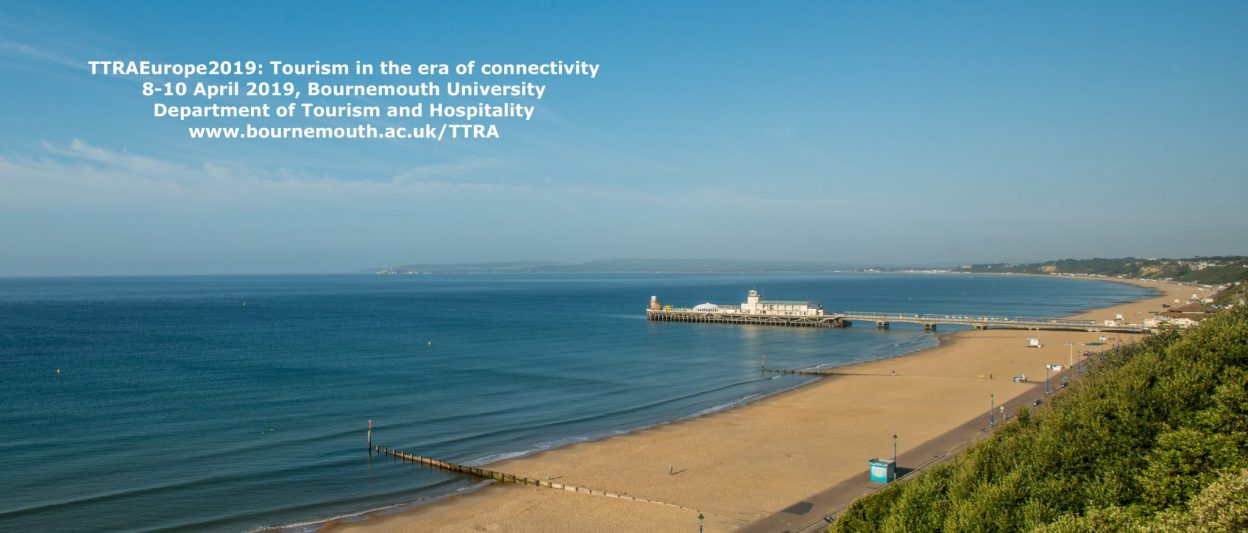
join TTRAEurope2019, Tourism in the era of connectivity, Bournemouth University Department of Tourism and Hospitality www.bournemouth.ac.uk/ttra 8-10 April 2019

join us for the TTRAEurope2019, Tourism in the era of connectivity, Bournemouth University Department of Tourism and Hospitality www.bournemouth.ac.uk/ttra 8-10 April 2019


Conference website http://www.bournemouth.ac.uk/ttra
Submission link https://easychair.org/conferences/?conf=ttraeurope2019

The Travel and Tourism Research Association’s 2019 European Chapter Conference will be hosted by Bournemouth University Department of Tourism and Hospitality in Bournemouth from Monday 8th to Wednesday 10th April 2019. This is a three-day conference that will include a doctoral colloquium day and industry best practice thread. The theme of the conference is Tourism in the Era of Connectivity, which covers a broad range of themes to ensure that we are inclusive of the widest range of tourism research.


People-to-people connectivity is an essential aspect of tourism; bringing people from all aspects of life together to meet, share moments and explore cultures, resources and experiences. Connectivity brings us together through shared routes, accessibility, communication, and experiences in different environments and destinations. Increasingly, global society is becoming more connected, facilitating opportunities for exchange and interaction, bringing both opportunities and challenges. Tourism is changing dramatically in the era of connectivity.

Advanced technology enables users to amalgamate information and big data from various sources on their mobile devices, personalise their profile through applications and social networks, and interact dynamically with their surroundings and context. Tourism professionals increasingly use technologies and networking to bring different stakeholders together to co-create value for all. The conference will connect the different concepts of connectivity, personalisation, tourism development and marketing towards co-creation of the tourism experience. It will explore how these experiences can support the co-creation of value for all stakeholders and address a range of components of connectivity.

Examples of the conference themes include but not limited to:

Coastal Tourism; Tourism Marketing; Economics and Planning; Culture and Heritage; Hospitality Innovations; Digital Tourism; Sustainability and Wildlife; Gender, Accessibility and Inclusion; Tourism Management; Overtourism; Tourism and Philosophy; Special Interest and Niche Tourism; Spiritual, Religious and Pilgrimage Tourism; Events and Leisure; Experience and Co-creation; Small Business and Entrepreneurship.

Submission Guidelines

All papers must be original and not simultaneously submitted to another journal or conference. The following paper categories are welcome:

  • Research papers and case studies (5,000 word paper or 1,000 word extended abstract)
  • Doctoral research papers (5,000 word paper or 1,000 word extended abstract)
  • Applied (industry and sector) papers (1,000 word extended abstract)
  • Student papers, including Masters theses (1000 word extended abstract)

Instructions to Authors

Please adhere to the following for your submission:

  • Word limit of 1,000 words for extended abstracts; word limit of 5,000 words for full papers.
  • Word limit includes references, tables, figures, etc.
  • Please use Arial font size 12 throughout.
  • Must be presented in MS Word Format, on size A4 (210 by 297 mm) paper, with margins of: left 3 cm, right, top and bottom 2.5 cm.
  • Any illustrations should be of high resolution, preferably in JPEG or TIFF format.
  • The page composition should be as follows:
    • TITLE: In uppercase, bold, and centered.
    • AUTHOR/ AUTHORS: in lowercase and the surname(s) in uppercase.
    • AFFILIATION AND CONTACT DETAILS: in uppercase.
    • CATEGORY: please indicate the paper category of the submissions (Research paper and case study; Doctoral research paper; Applied (industry/sector) paper; Student paper (for all students other than doctoral researchers)).
    • TEXT: Arial 12, full justification and single spacing. Paragraphs will begin without tabulation and with single spacing with regard to the title or the prior paragraph.
    • FIGURES AND TABLES: will be incorporated into the text in the corresponding place. They will be numbered separately (figures and tables) by order of appearance (Arabic numerals). The title, in bold and centered, will be located at the top and will be separated from the figure or table by space.
    • FOOTNOTES: Please keep to a minimum. Where used they should be consecutive, with full justification and Arial 8 font.
    • REFERENCE STYLE: please use the referencing style of the American Psychological Association (APA) Sixth Edition.

Important Dates

Deadline for submission: 5th January 2019

Notification for acceptance: 5th February 2019

Final submission: 1st March 2019

Early Bird Deadline: 1st March 2019

Conference: 8th-10th April 2019 **TTRA CONFERENCE IN BOURNEMOUTH**

Conference themes and call for papers

Submit papers for the conference

Contributions by academics, practitioners and phd students are welcome in the following categories:

Categories Requirements
Research papers and Case studies Papers 5000 words or 1000 word extended abstract
Doctoral Research papers Papers 5000 words or 1000 word extended abstract
Applied (industry and sector) papers 1000 words extended abstract
Student papers (including master theses) 1000 words extended abstract

Confirmed Invited speakers so far

Travel and Tourism Research Association 2019

Associate Professor Luisa Andreu Department of Marketing, Faculty of Economics, University of Valencia, Spain

Professor Carlos Costa University of Aveiro, Portugal and Editor of the Journal of Tourism & Development

Professor Alan Fyall, University of Central Florida, USA and coEditor of Elsevier’s Journal of Destination Marketing & Management

Professor Scott McCabe Nottingham University and co-Editor of Annals of Tourism Research

Assistant Professor Luiz Mendes-Filho, Tourism Department, Universidade Federal do Rio Grande do Norte, Brazil

Professor Tanja Mihalic University of Ljubljana, Slovenia

Associate Professor Ana María Munar Copenhagen Business School, Denmark

Professor Nigel Morgan, Swansea University, UK

Professor Mike Peter (University of Innsbruck, Austria) The Relevance of Family businesses in Tourism and Hospitality

Professor Cleopatra Veloutsou University of Glasgow UK and co-Editor in Chief of the Journal of Product and Brand Management.

From spin doctors to social media: The evolution of political communication

New media, particularly social media, have become instrumental in political elections and campaigns today. Politics has changed dramatically over the past couple of decades, partly due to the continuously emerging forms of communication. The field of political communications combines different elements of political science, communication, cultural studies, media, and psychology, and has been established at Bournemouth University since 2002.


The Centre for Politics and Media Research at BU focuses upon the soft power exerted through political campaign communication and its impact upon society and the citizen, the social and cultural frameworks which shape ideology and the collective psychology of publics, and the psychology of political violence. BU academics Professor Barry Richards, Professor Candida Yates and the Director of the Centre, Dr Darren Lilleker, have different research backgrounds within media, advertising, cultural and communication studies and psychology.

“I’ve always been interested in the relationships between politics, emotion, culture and society” explains Professor Yates, “my Doctoral research focused in particular on the cultural politics of emotion, film and masculinity in crisis. From there, I began to look more widely at the ways in which different emotions are shaped, experienced and communicated in politics, culture and society.”

Throughout the 1990s, political communication in Britain and elsewhere underwent a huge change which is often associated with Tony Blair’s New Labour government with its use of spin doctors and mediatised news management. There was also a significant increase in news media competition and advances in technology that seemed to provide citizens with a sense of choice and control over media consumption, although this sense of empowerment with regards to social media is now often questioned and problematized.

“I turned my attention away from the study of masculinity in film and instead turned to the analysis of political communication and the culture of politics more widely; I analysed the fantasies and feelings that emerged in relation to some key political figures at the time and how those psycho-political formations relate to the ways in which we engage with and emotionally invest in politics,” says Professor Yates.

“People thought of spin as this manipulative, domineering process that was all about bringing the techniques of marketing into politics in a bad way,” says Professor Richards. “However, I thought that there was something potentially more positive in this shift in political communication, and so the arrival of spin and political marketing increased my interest in electoral politics.”

Throughout this time, mainland Britain was also facing political violence and terrorism.

“In the 1970s and 1980s, it was almost exclusively Irish Republican terrorism, and then in the late 1990s and early 2000s we had the arrival of Islamist terrorism across the world,” explains Professor Richards. “I had always been interested in terrorism: the impact it has on the British public and the psychology of how people could come to carry out attacks.”

These years showed a huge shift in global politics. With this, political communication started to become more and more promotional, and celebrity culture began to infiltrate politics.

“There was a dominant set of ideas by the government at the time and then there were other marginal ideas that didn’t get voiced,” explains Dr Lilleker. “When I started doing my research, what interested me was how politicians developed ideologies, how they were sold and then understood by citizens.”

With the introduction of social media in the early 2000s, the hegemony of the mass media was challenged and political communication changed dramatically. The prevalence of social media in politics has made parties and officials more accessible and accountable to citizens. “Now, citizens can react immediately to an event and they can even influence what’s being said by using social media to come together to form a mass,” explains Dr Lilleker.

With evolutionary changes such as new media and globalisation shaping politics, political communication is clearly evolving rapidly and becoming increasingly important. Future research within the Centre for Politics and Media Research will include looking further into the psycho-dynamics of contemporary political culture, the marketization of political discourse and campaigning, and comparative politics.

“I am now looking at the role of empathy in relation to the current political, social and cultural landscape of Brexit and its aftermath, which is very polarised” says Professor Yates. “I’m interested in how empathy can emerge in groups and whether there is a way that we can actually help to facilitate it as a way to encourage constructive rather than destructive debate.”

“I’m embarking on some research into national identity and its relationship to the needs for safety and for dignity, which I think are major drivers of our experience and action as citizens. The starting point is how much do people think of themselves as having a national identity these days. This is a very rich psychological area as well as an important political issue,” says Professor Richards.

Meanwhile, Dr Lilleker is concerned with the dangers of social media and the misleading and fake news that is shared and consumed by millions. In the light of recent revelations about the use of data from social media sites, such as Facebook, this has perhaps never been so important.

“Media literacy has never really been taught but I think now it’s crucial to understand what’s happening on social media, especially for young people who should be educated on this issue.”

“At BU, there are a few of us now who look into the structures of feeling and emotions that underpin politics as it represented, communicated and experienced ,” says Professor Yates. “We want to develop that field to become a centre of excellence.”

To keep up with the latest news from the Centre for Politics and Media Research, visit www.bournemouth.ac.uk/pmg

This article was featured in the 2018 Bournemouth Research Chronicle. To see the magazine in full, click here or pick up a copy in Poole House or Studland House reception.

Researching with students: The challenges and opportunities of BU2025 for students and staff

A first year BA Television Production student, Rowan Prosser and Lecturer, Annie East share their thoughts on a pilot research project using 360-degree filming technology.

Fusion BU2025 looks to ensure that students are informed in the ‘latest thinking in practice and research’ it also looks to ensure graduates are ‘innovative’ and ‘have research skills’. The doctoral research that Annie East is engaged with seeks to discover the ways in which students are working with health and safety risk management processes on their location film shoots. The pilot study looked to test the use of a 360-degree camera on a student shoot as a Virtual Reality (VR) elicitation tool for data gathering . Here Annie East and first year student, Rowan Prosser, reflect on his role as student research assistant, working with the 360 degree camera on a second year student film shoot.

Thoughts on student/lecturer collaboration.

Rowan Prosser: As a first year student the opportunity to work on academic research was both intriguing and a great opportunity to learn. The project gave me a chance to see how research is carried out in an academic way, seeing the correct processes of it all. It was all carefully considered and planned accordingly, my needs and any questions I had were answered immediately; something you don’t get when working with other students. When planning for the pilot project, the meetings that took place were well informed. In contrast, when I work with fellow students, there is sometimes difficulty in getting to the point of the discussion or the heart of the problem.

Annie East: Finding a student keen to work on research that was testing relatively new technology was key for this pilot. Meeting with Rowan for the first time as a researcher rather than as lecturer was a turning point. The power dynamics of student/lecturer dissolved with Rowan becoming more of an equal in our journey to master the technology and workflow of the camera. I chose to work with a student to lessen the power dynamic on the student film shoot; taking myself physically away from their shoot and allowing a student to operate the 360-degree camera.

360-degree camera

Reflections on the approach.

Rowan Prosser: It was an interesting scenario to be surrounded by second year BA Television Production students. Due to the role I had (responsibility for the 360-degree camera) they all tried to adhere to my needs and requests throughout the shoot. This allowed me to make sure that my camera work was achieved. If I was in the way, they would politely ask me to move the camera. The kit used really interested me; 360-degree video is something that is slowly coming into the fold – people (including the 2ndyear students I was working with) are very interested in the camera and how it works. This allowed me to educate and show them.

Annie East: Interestingly it is not just the power dynamics of lecturer/student that are changing with this work but also student-to-student interactions. The collaboration gave Rowan a new perspective and a window into the world of a second year student film shoot, levelling the inter-year dynamics somewhat. Silently it also afforded him institutional power; he became the educator and sage.

Reports from the field.

Rowan Prosser: Observing second-year students on their film shoots gave me the ability to blend in since I was a fellow student.  We were able to talk about the course, topics we enjoyed thus allowing the presence of a camera filming their every movement less uncomfortable. It was interesting to observe the similarities of 2nd-year students to 1st years on the shoot. The classic way in which clear leaders can sometimes emerge and take over other people’s role was seen, this being an issue with student filmmaking, when someone isn’t happy with how someone else is conducting their role.

Annie East: Rowan’s reflections display some of the key tensions in setting up this research project; how do we observe students in the field and in what ways does that change the way they behave. This pilot confirmed going forward that the data to be captured is not the footage itself but the conversation about the footage when each crew member put on their VR visor to re-immerse themselves back into their field. This shifts the research focus away from behaviour and towards reflections on action and reflections in action.

Moving forward

Rowan Prosser: I really enjoyed the experience, as the opportunity to carry out research for an academic is not something that happens a lot. It gave me a clear insight into the future on how I can carry out future research and also taught me a lot about 360 cameras which I have not previously used. The group of second year students responded very well to me being around, and in the group, so it would be interesting to see how other groups would react to my involvement.

Annie East: These reflections suggest a shift in student identity and changing power dynamics between researcher and student and between student-to-student. The confidence that this work appears to have afforded Rowan sets him on the path of the lifelong learner; someone thirsty for new challenges. The challenge for BU2025 is the possible perception that working on academic research is a rare experience. Going forward Rowan can choose to be part of the full study and be more experienced for it; a scaffolded approach to collaborative research rather than a siloed one. The vision of fusion in BU2025 features a strong sense of inclusivity which we can promote to our students creating not only rounded academics but also fully rounded students, confident to take on ‘intriguing’ research projects.

References 

Bournemouth University BU2025 Strategic Plan 2018 (online). Available from: https://www1.bournemouth.ac.uk/sites/default/files/asset/document/bu2025-strategic-plan.pdf (Accessed 10 August 2018)

Foucault, M., 1991. Discipline and punish. The birth of the prison. London: Penguin.

Schön, D. A., 1983. The reflective practitioner. [online] : how professionals think in action. New York : Basic Books.

Vygotsky, L. S. and Cole, M., 1978. Mind in society : the development of higher psychological processes / L. S. Vygotsky ; edited by Michael Cole … [et al.] Cambridge : Harvard University Press.

Understanding the origins of modern-day broadcasting

Over the last twenty-five years, Bournemouth University (BU) has built up a wealth of expertise in the area of media history. Not only has this knowledge helped to better understand the development of radio programmes of the time, but it is also helping to inform the teaching and education of future broadcasters.

Professor Hugh Chignell, Head of BU’s Centre for Media History, is a well-known media historian who specialises in radio broadcasting – covering both news and drama programmes. His research in the area began in the late 1990s when Bournemouth University began to host an archive of radio programmes produced by the BBC.

“At the time that we began hosting these archives, there were a number of researchers at BU who were keen to learn more about the history of radio and TV broadcasting. They felt it would be useful knowledge for our students, who would hopefully go on to produce future broadcast content,” explains Professor Chignell, “It was an approach to teaching pioneered by Bournemouth and became a really useful resource for our undergraduates, as it gave them a sense of where our contemporary radio and TV broadcasts come from. It’s also what sparked my own PhD research.”

For his doctoral research, Professor Chignell explored BBC Radio 4’s longstanding current affairs programme, Analysis. His research spanned a wide range of topics, including the political nature of current affairs programmes, the evolution of news and current affairs at the BBC and a better understanding of how to interpret old radio content.

“Current affairs programmes are reasonably unique to British media culture,” says Professor Chignell, “The BBC chose to keep its news broadcasts purely factual, in order to maintain their impartiality, but its current affairs programmes were very different. Their focus on explaining the context of the news and what was going on around it made them quite political.”

“For example, the Analysis programmes of the 1980s were partially responsible for introducing listeners to the neoliberal policies and ideas of Margaret Thatcher’s government. Although the programme itself didn’t have a political agenda, its role in making policies more accessible did end up giving it a political stance.”

Through his research, Professor Chignell also developed a better understanding of how to listen to and interpret old radio programmes, as outside of their temporal context, some broadcasts can be difficult to fully appreciate. Often their creators and producers are no longer around to ask questions of, which means that understanding the context in which they were made, can be a challenge.

“Older radio programmes can sound quite strange to us now. It’s not the same experience as watching an old Hollywood film, for example,” explains Professor Chignell, “My current research interests are around radio dramas of the 1950s. To fully appreciate them, an understanding of 1950s theatre is needed, as radio productions were heavily influenced by trends in the theatre. For that era in particular, French theatre dramas were extremely influential.”

“The first step for any media historian is to understand the context – what happened, the programmes that were made and what was said. Only then can you move onto the analysis, which enables us in the present to learn from the past. By exploring older radio dramas, for example, you can gain quite a fascinating insight into the culture of the time, often in quite a surreal way.”

“Not only does it give us a window into the past, but it can help to spark ideas for the creation of new programmes and broadcasts.”

Bournemouth University’s Centre for Media History was established in 1998 and compromises over 20 academics and post-graduate researchers from across the university. While it takes its origins from an interest in radio history, the Centre now specialises in media history across all forms of broadcast media.

For more information, see:

www.bournemouth.ac.uk/cmh

This article was featured in the 2018 Bournemouth Research Chronicle. To see the magazine in full, click here or pick up a copy in Poole House or Studland House reception.