Category / Digital and technological futures

Interdisciplinary research: Not straightforward?

Worldwide there is a growing interest in interdisciplinary research, especially to help deal with large questions in life, the so-called wicked problems.  These wicked problems (or questions) include climate disasters and global warming, globalisation, the drop in biodiversity, inequalities and international conflicts.  Interdisciplinary research increasingly popular and widely promoted by grant-giving bodies, the UK REF (Research Excellence Framework), research councils and universities, to name but a few stakeholders.

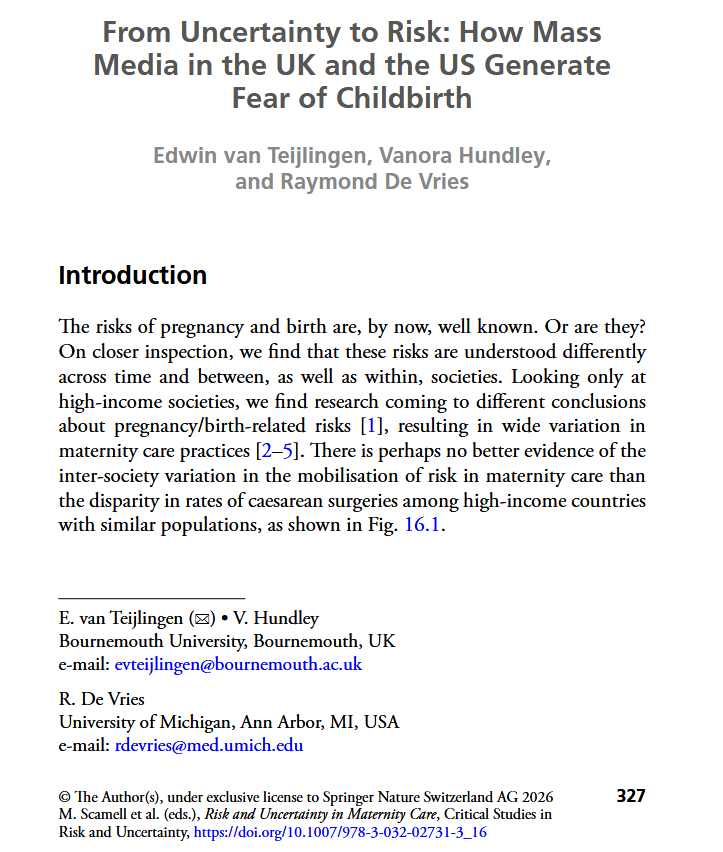
However, it is often ignored, that interdisciplinary research presents significant challenges for discipline-specific experts.  Doing interdisciplinary research requires specialised skills, team-player personality traits, and the ability to transcend one’s own academic boundaries.  We have highlighted in the past that common barriers include managing conflicting research philosophies, navigating, and overcoming, methodological, and communication differences [1].  Those who have been involved in interdisciplinary research will agree that is not an easy option for the individual discipline expert. It requires individual skills, ability to see beyond one’s discipline and perhaps personality characteristics such as a great team player. Interdisciplinary research may involve a mixed-methods approach underpinned by conflicting, and according to some incommensurable, research philosophies.

It is also the case that some disciplines are perhaps more familiar with interdisciplinary working, disciplines such as Public Health [2] are traditionally less theory focused and more solution driven.  But even in Public Health as a broad-ranging discipline covering sub-disciplines such as epidemiology, health education, law, management, health psychology, medical statistics, sociology of health & illness and a wide-range of research methods, conducting interdisciplinary research is not necessarily easy [3].


Prof. Edwin van Teijlingen & Dr. Pramod Regmi both are in the School of Health & Care, and Dr. Shanti Farrington, who is based in the School of Psychology.


References:

  1. Shanker S, Wasti SP, Ireland J, Regmi PR, Simkhada PP, van Teijlingen E. (2021) The Interdisciplinary Research Team not the Interdisciplinarist. Europasian Journal of Medical Science. 3(2):111-5.
  2. Wasti, S. P., van Teijlingen, E., Simkhada, P. (2020) Public Health is truly interdisciplinary. Journal of Manmohan Memorial Institute of Health Sciences, 6(1):21-22.
  3. van Teijlingen, E., Regmi, P., Adhikary, P., Aryal, N., Simkhada, P. (2019). Interdisciplinary Research in Public Health: Not quite straightforward. Health Prospect, 18(1), 4-7. https://doi.org/10.3126/hprospect.v18i1.19337

Building Your Own Ecosystem: Why Entrepreneurial Self-Efficacy Might Matter More Than the Perfect Network

Entrepreneurship often begins with a deceptively simple act: reaching out to someone you do not know.

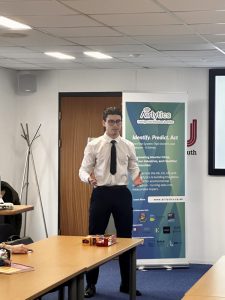
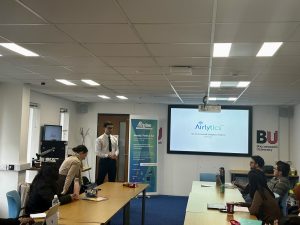
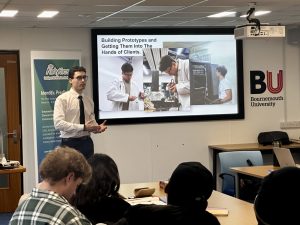
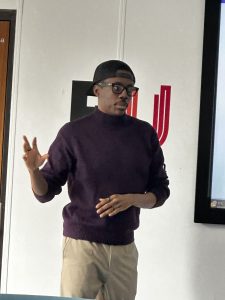
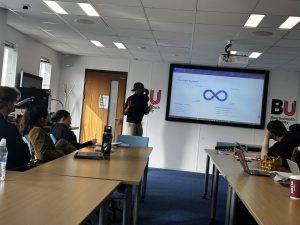
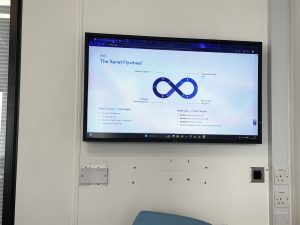
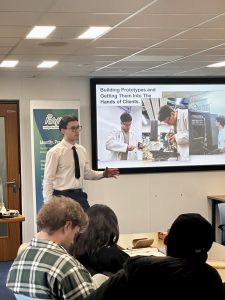
During the first week of our MBA Technology Entrepreneurship unit at Bournemouth University, a final year engineering student entrepreneur, Atanas Burmov, spoke to the class about building his venture from scratch. He arrived in Bournemouth at 18 to study software engineering. Within months he had established a mathematics and programming society to create peer support for students navigating the demands of their degree. Soon afterwards, he began contacting academics, technologists and organisations—sometimes completely cold—seeking advice and collaboration for a technology idea he was developing.

At that stage he had no venture capital, no established network, and no formal ecosystem behind him. What he had instead was something more fundamental: the belief that he could learn, build, and navigate uncertainty. He simply started reaching out to people. Those early emails and conversations eventually became the foundations of the collaborations that now support the growth of his venture. But at the beginning, it was not about partnerships or strategic alliances. It was about initiative.

His story is simply an illustration which shows a much larger phenomenon in entrepreneurship research: the role of entrepreneurial self-efficacy in enabling individuals to act under conditions of uncertainty and constraint ( McGee et al., 2009; Zhao et al., 2005).

The concept of self-efficacy originates in Albert Bandura’s social cognitive theory. Bandura defines self-efficacy as an individual’s belief in their capability to organise and execute the actions required to manage prospective situations (Bandura, 1977; Bandura, 1997). In other words, it is not simply about possessing knowledge or skills. It is about believing that those capabilities can be applied effectively in uncertain circumstances. Entrepreneurship is inherently uncertain. New ventures rarely begin with stable structures, predictable markets or guaranteed resources. In such environments, internal judgements of capability become critically important. A substantial body of research shows that entrepreneurial self-efficacy is strongly associated with entrepreneurial intention, persistence and opportunity pursuit (Chen et al., 1998; Zhao et al., 2005; McGee et al., 2009).

Individuals who believe they can navigate uncertainty are more likely to act despite incomplete information. They are more willing to experiment, to approach new contacts, to persist after rejection and to mobilise resources creatively when conventional pathways are unavailable. This becomes particularly relevant when entrepreneurs begin under conditions of constraint. Many founders start without financial capital, established networks or institutional legitimacy. Research on entrepreneurial bricolage shows how entrepreneurs often respond by recombining the resources already available to them in creative ways (Baker & Nelson, 2005). Similarly, the theory of effectuation highlights how entrepreneurs begin with the means they already possess—who they are, what they know and whom they know—and gradually build ventures through partnerships and experimentation (Sarasvathy, 2001).

Technical expertise can reinforce this process. Founders with deep domain knowledge, particularly in technology-based ventures, often possess greater confidence in their ability to solve problems. This confidence can strengthen entrepreneurial self-efficacy and increase the likelihood that individuals will attempt to translate ideas into ventures (Marvel et al., 2016). Yet confidence does not emerge in isolation. Bandura himself emphasised that self-efficacy develops through interaction with social environments. Mastery experiences, encouragement from others, observing peers succeed and working within supportive communities all contribute to the strengthening of self-efficacy beliefs (Bandura, 1997).

This is one reason why institutional environments such as universities can play such an important role in the entrepreneurial journey. Universities increasingly operate as entrepreneurial institutions, supporting venture creation alongside their traditional roles in research and teaching (Etzkowitz, 2003; Guerrero et al., 2016). For students, universities offer more than academic instruction. They provide access to laboratories, intellectual property expertise, mentoring networks, entrepreneurship societies, careers services and communities of peers who are also experimenting with ideas. These infrastructures matter because they help transform tentative initiative into sustained entrepreneurial action. When students know that expertise, resources and encouragement exist around them, their willingness to act increases.

The role of place also deserves attention. Entrepreneurship discourse often focuses heavily on global innovation hubs such as London or Silicon Valley, where capital and talent are highly concentrated. These ecosystems undoubtedly provide significant advantages. Yet they also involve intense competition and high barriers to visibility for early-stage founders.

Research on entrepreneurial ecosystems suggests that smaller regions can offer different but equally important advantages. In regional contexts, social networks are often more visible and accessible, and relationships between ecosystem actors may form more quickly (Stam, 2015; Spigel, 2017). Studies of regional entrepreneurial networks show that such environments frequently display dense relational ties and higher levels of trust, which can lower barriers for new entrepreneurs seeking advice, introductions or collaboration (Granovetter, 1985; Feldman & Zoller, 2012). In these ecosystems, universities frequently function as anchor institutions. They concentrate knowledge, talent, infrastructure and legitimacy within a particular place, often acting as catalysts for regional innovation and venture creation (Goddard & Kempton, 2016).

For student entrepreneurs, this combination of place-based networks and institutional support can be powerful. Access to mentors, academics, laboratories and peer communities can enable ideas to move more quickly from concept to experimentation.

Returning to the story that opened this article, the venture did not begin with a fully formed ecosystem. It began with initiative: sending emails, asking questions and seeking conversations. Over time those conversations developed into collaborations that now support the growth of the business.

What began as individual initiative gradually evolved into a network. Entrepreneurship research often focuses on funding, scaling and investment. Yet the earliest stages of venture creation frequently occur long before these elements appear. They occur in moments that are almost invisible: an email written, a conversation initiated, a question asked despite uncertainty.

Self-efficacy plays a critical role in these moments. It allows individuals to act before legitimacy, capital or networks are fully in place. But sustaining entrepreneurial action requires more than individual belief. It requires environments that recognise initiative and respond to it. Universities, mentors, regional ecosystems and institutional infrastructures all contribute to creating contexts where entrepreneurial action becomes possible.

Sometimes the most important entrepreneurial resource is not capital or connections. It is the quiet confidence to begin.
References

Baker, T., & Nelson, R. (2005). Creating something from nothing: Resource construction through entrepreneurial bricolage. Administrative Science Quarterly, 50(3), 329–366. https://doi.org/10.2189/asqu.2005.50.3.329

Bandura, A. (1977). Self-efficacy: Toward a unifying theory of behavioural change. Psychological Review, 84(2), 191–215. https://doi.org/10.1037/0033-295X.84.2.191

Bandura, A. (1997). Self-efficacy: The exercise of control. New York: W.H. Freeman.

Chen, C., Greene, P., & Crick, A. (1998). Does entrepreneurial self-efficacy distinguish entrepreneurs from managers? Journal of Business Venturing, 13(4), 295–316. https://doi.org/10.1016/S0883-9026(97)00029-3

Etzkowitz, H. (2003). Research groups as ‘quasi-firms’: The invention of the entrepreneurial university. Research Policy, 32(1), 109–121. https://doi.org/10.1016/S0048-7333(02)00009-4

Feldman, M., & Zoller, T. D. (2012). Dealmakers in Place: Social Capital Connections in Regional Entrepreneurial Economies. Regional Studies, 46(1), 23–37. https://doi.org/10.1080/00343404.2011.607808

Goddard, J., & Kempton, L. (2016). The civic university: Universities in leadership and management of place. Available from https://www.ncl.ac.uk/mediav8/centre-for-urban-and-regional-development-studies/files/the-Civic-University.pdf

Granovetter, M. (1985). Economic action and social structure: The problem of embeddedness. American Journal of Sociology, 91(3), 481–510. https://doi.org/10.1086/228311

Guerrero, M., Urbano, D., & Fayolle, A. (2016). Entrepreneurial activity and regional competitiveness: Evidence from European entrepreneurial universities. Journal of Technology Transfer, 41, 105–131. https://doi.org/10.1007/s10961-014-9377-4

Marvel, M., Davis, J., & Sproul, C. (2016). Human capital and entrepreneurship research: A critical review. Entrepreneurship Theory and Practice, 40(3), 599–626. https://doi.org/10.1111/etap.12136

McGee, J., Peterson, M., Mueller, S., & Sequeira, J. (2009). Entrepreneurial self-efficacy: Refining the measure. Entrepreneurship Theory and Practice, 33(4), 965–988. https://doi.org/10.1111/j.1540-6520.2009.00304.x

Sarasvathy, S. (2001). Causation and effectuation: Toward a theoretical shift from economic inevitability to entrepreneurial contingency. Academy of Management Review, 26(2), 243–263. https://doi.org/10.5465/amr.2001.4378020

Spigel, B. (2017). The relational organization of entrepreneurial ecosystems. Entrepreneurship Theory and Practice, 41(1), 49–72. https://doi.org/10.1111/etap.12167

Stam, E. (2015). Entrepreneurial ecosystems and regional policy: A sympathetic critique. European Planning Studies, 23(9), 1759–1769. https://doi.org/10.1080/09654313.2015.1061484

Zhao, H., Seibert, S., & Hills, G. (2005). The mediating role of self-efficacy in the development of entrepreneurial intentions. Journal of Applied Psychology, 90(6), 1265–1272. https://doi.org/10.1037/0021-9010.90.6.1265

Bournemouth University Cyber Security Researcher Wins Best Poster Award at HISC 2025
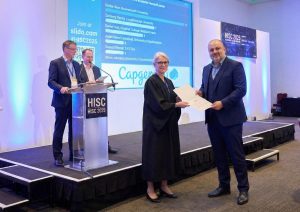
Bournemouth University (BU) is proud to announce that PhD Cyber Security researcher Serdar Akar, has been awarded Best Poster Winner at this year’s High Integrity Software Conference (HISC) 2025, held in Newport, Wales.

HISC is a leading international forum that brings together software engineers and industry practitioners to exchange knowledge, address critical challenges, and strengthen the foundations of a trustworthy software ecosystem.

Serdar’s winning poster, titled Towards Productive Cyber Resilience and Safety Analysis in Model-Based Systems Engineering (MBSE), was showcased in the conference’s Future Zone, which highlights innovative research shaping the future of high-integrity software.

Serdar was also recently named the Winner of our BU’s ‘Business Idea Challenge’, organised by the Students’ Union (SUBU). This award recognises a student-led venture that is not only highly feasible but also carries a strong social impact, aligns with the university’s sustainability priorities, and demonstrates impressive potential for future growth.

Serdar said, “To have my work recognised in both academic and entrepreneurial spheres in such a short time is immensely encouraging. It is a great privilege to be able to contribute to the research and innovation environment here at Bournemouth University.

Dr Duncan Ki-Aries at Bournemouth University, commented, “These awards reflect the high calibre of research being undertaken at BU. Serdar’s work contributes to advancing cyber resilience and safety in complex systems, and we are delighted to see it recognised on an international stage.”

Prof Huseyin Dogan mentioned, “There are challenges centred on Model Based Systems Engineering in industry, and we are bridging theoretical benefits with practical applications. Serdar’s PhD will contribute to this domain by integrating cyber resilience and safety analysis through software tool support.”

The recognition underscores Bournemouth University’s commitment to pioneering research towards safer, secure, and more resilient digital infrastructures.

If you’re interested in learning more about these impactful projects, please don’t hesitate to get in contact with Prof. Huseyin Dogan and Dr. Duncan Ki-Aries, and others.

New Cyber Security Advisory Highlights Integration of Safety, Security, and Human Factors in Defence Systems

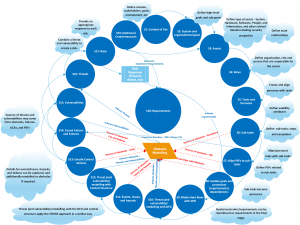
Following collaborative research on Secure by Design (SbD) conducted by Bournemouth University (BU) and Mima, with the Defence Science and Technology Laboratory (Dstl), a new Cyber Security Advisory has been released. This guidance addresses the complex challenge of balancing security, safety, and human factors in requirements practices.

The project, led by Dr Duncan Ki-Aries and Prof Huseyin Dogan centred on developing and evaluating a Minimum Viable Product (MVP) that demonstrates how these critical domains can be effectively integrated into SbD practices. The goal: to enhance the design of secure, resilient, and user-aware systems for defence applications.

Figure 1. The Secure by Design Process Framework

The advisory outlines key findings from the research, explores the challenges of merging safety and human factors into SbD processes, and offers insights into potential improvements. It also signals directions for future projects aimed at advancing this integration.

Ongoing research at BU will continue to build on this foundation, drawing on the combined expertise of BU and Mima in Human Factors, Security, Systems of Systems Engineering, Safety, and Risk Assessment. This work remains committed to strengthening future defence capabilities through a robust Secure by Design approach.

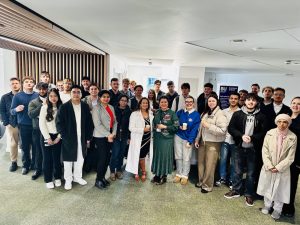
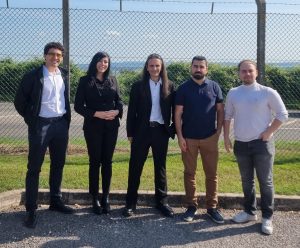
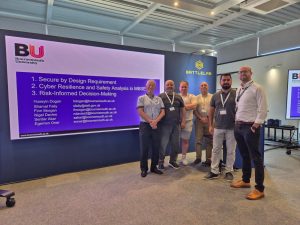
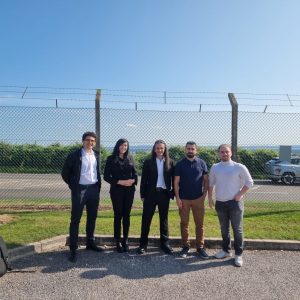
Figure 2. The project team

Bournemouth University Showcases Defence Innovation at BattleLab’s South West Regional Defence & Security Cluster Event

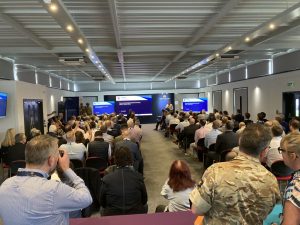
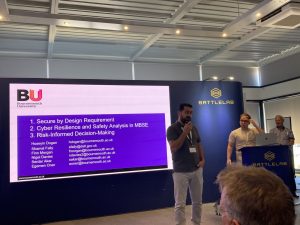
What a brilliant and absolutely packed South West Regional Defence & Security Cluster showcase event at the BattleLab on July 2nd, 2025! The team, led by Professor Huseyin Dogan, proudly showcased Bournemouth University’s capabilities in the defence sector.

The Bournemouth University team included Finn Morgan, Nigel Davies, Serdar Akar, and Egemen Oner, alongside their client, Dr. Shamal Faily from the Defence Science and Technology Laboratory (Dstl). Among the 180 guests and exhibitors, the BU team presented three Dstl-funded projects covering critical areas such as human factors, risk-informed decision-making, and cyber resilience.


Featured Dstl-Funded Projects:

  • Tool-support for embedding safety, security, and human factors analysis into Secure by Design requirements.
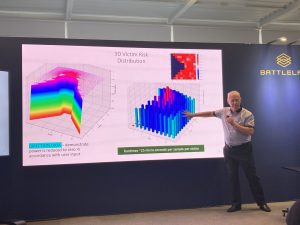
  • Risk-Informed Decision-Making (RIDM) in Intentional Electromagnetic Interference (IEMI).
  • Towards Productive Cyber Resilience and Safety Analysis in Model-Based System Engineering (MBSE).

Collaboration for Secure by Design Practices

In addition to the BattleLab showcase, Dr. Duncan Ki-Aries and Prof. Huseyin Dogan also partnered with Mima, a human-centred design consultancy. Their collaboration focused on developing and evaluating a Minimum Viable Product (MVP). This MVP demonstrates how safety, security, and human factors analysis can be seamlessly integrated into Secure by Design requirements practices. The tool was successfully demonstrated at the Dstl Portsdown West site in June 2025, further highlighting Bournemouth University’s expertise in developing secure and effective systems for defence applications.

If you’re interested in learning more about these impactful projects, please don’t hesitate to get in touch with Prof. Huseyin Dogan and Dr. Duncan Ki-Aries.


World Drowning Prevention Day at BU

Next month on July 25th  Bournemouth University will join in with the world-wide celebrations of World Drowning Prevention Day 2025.  The first achievement to highlight is Dr. Jill Nash interesting piece recently published in The Conversation, in which she highlights Five ways to keep teenagers safe by the water [1]. It is also worthwhile to read last year’s contribution to World Drowning Prevention Day by Jill on the dangers of being near water and the role emotions play in making safer decisions [2].

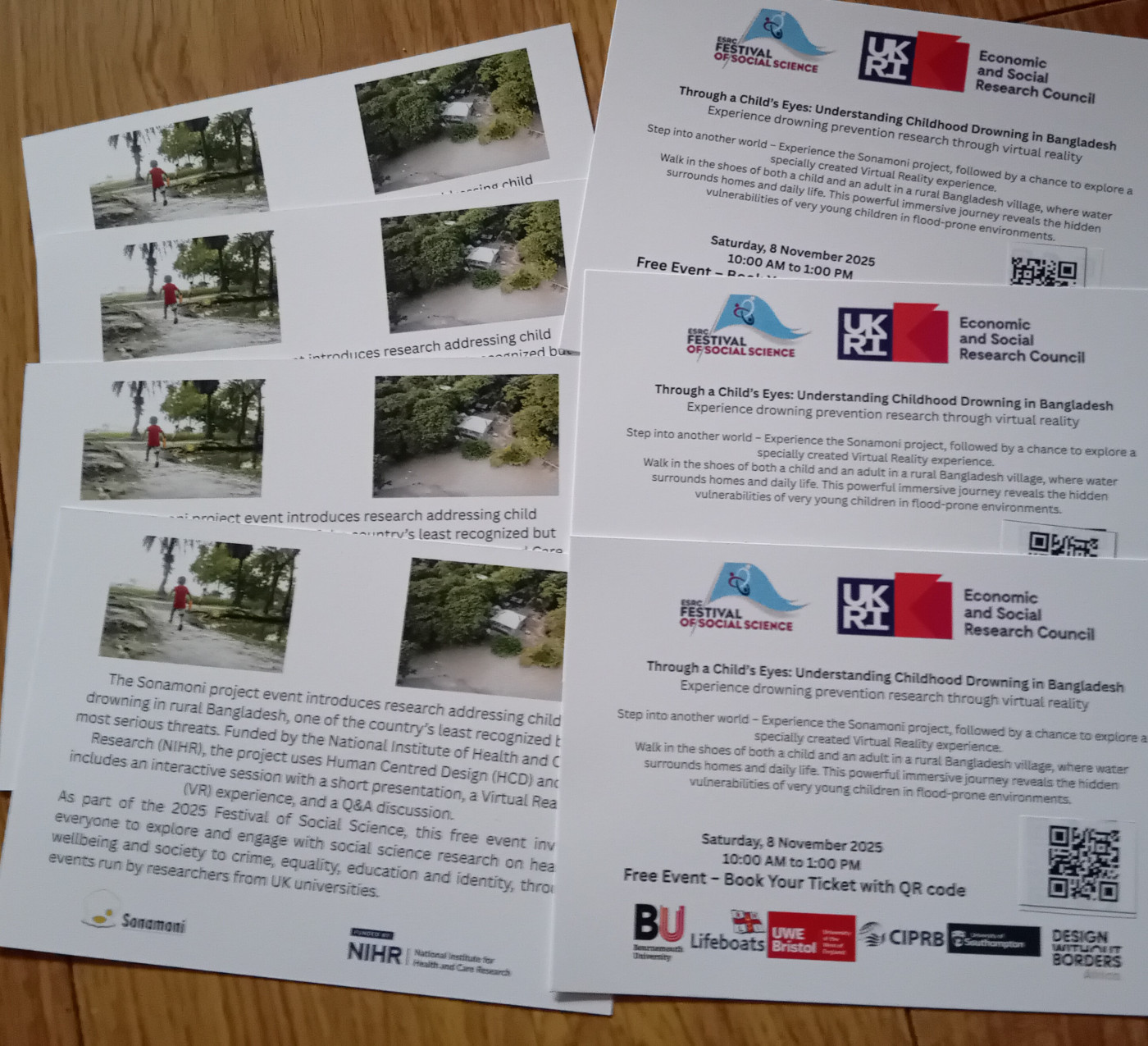
The second major piece of research related to drowning prevention at Bournemouth University is the Sonamoni Project. The Sonamoni Project is working with communities in rural Bangladesh utilizing human-centered design (HCD) techniques.  The research project is identifying solutions to reduce the number of drowning deaths in newly mobile children (6-24 months), developing prototype, and assessing the acceptability and usability of potential  interventions. Sonamoni is coordinated by Bournemouth University in collaboration with the University of the West of England (Bristol), the University of Southampton, and the Royal National Lifeboat Institution (RNLI), Design Without Border (DWB) in Uganda and Centre for Injury Prevention and Research, Bangladesh (CIPRB). The interdisciplinary team at Bournemouth University covers three faculties and six academics: Dr. Mavis Bengtsson, Dr. Kyungjoo Cha, Dr. Mehdi Chowdhury, Dr. Yong Hun Lim, Mr. John Powell, and Prof. Edwin van Teijlingen.

This international project funded by the National Institute for Health and Care Research (NIHR) through its Research and Innovation for Global Health Transformation programme, also includes a BU-based PhD student, Mr. Md. Shafkat Hossein.  He recently published the first article related to drowning prevention in Nepal [3].

References:

  1. Nash, J. (2025) Five ways to keep teenagers safe by the waterThe Conversation June 20th.
  2. Nash, J. (2024) Why so many people drown at the water’s edge The Conversation July 25th.
  3. Hossain, M. S., Pant, P. R., van Teijlingen, E., Sedain, B., & Rahman, A. (2024). Drowning Prevention should be a Public Health Issue in Nepal. International Journal of Social Sciences and Management, 11(4): 83–87.

Bournemouth University Recognised at IEEE Artificial Intelligence Conference for Work in Human-Centred AI

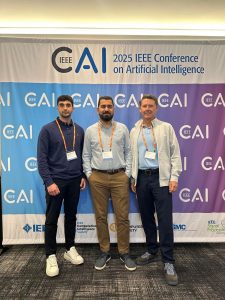
Professor Huseyin Dogan was honoured with both the Best Service Award and the Best Paper Award at the 2025 IEEE International Conference on Artificial Intelligence held in Silicon Valley, USA. This recognition highlights the importance of Human-Centred AI and Professor Dogan’s valuable contributions to the area.

Professor Dogan travelled to Silicon Valley in May 2025, supported by funding from Google, USA, to lead a special track focused on Human-Centred AI. The track included 24 paper presentations and addressed the crucial need for ethical considerations in the development and application of both autonomous and collaborative Human Centred AI systems.

The conference organisers stated that “these honours are a testament to Prof Dogan’s outstanding contributions and dedication to the field.”

IEEE International Conference on Artificial Intelligence

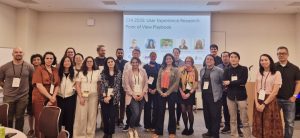
Bournemouth University’s commitment to shaping the future of User Experience (UX) and Human-Centred AI extends beyond this prestigious conference. Professor Dogan also recently led a highly anticipated workshop at CHI 2025 in Yokohama, Japan, on “Defining a User Experience Research Point of View” also funded by Google. The ACM Conference on Human Factors in Computing Systems (CHI) is globally recognised as the premier international forum for research in human-computer interaction.

This influential CHI workshop was a collaborative effort, organised alongside leading experts in the field: Stephen Giff (Google, USA), Renée Barsoum (Admiral, UK), Elizabeth Churchill (MBZUAI, formerly of Google and the ACM), and Alan Dix (Swansea University, Wales, UK). The participation of such prominent figures highlights the significance of the topic and BU’s contribution to the international research community.

CHI Conference Photo

These recent successes highlight Bournemouth University’s growing influence in the critical field of Human-Centred AI and User Experience research. Through international collaborations and impactful engagement at leading conferences like IEEE AI and CHI, the university is actively contributing to the discussion around developing AI systems that are both effective and aligned with human values.


Pioneering Research to Tackle Maternity Disparities: BU Academics Lead Major NIHR Initiative

We’re thrilled to announce that Bournemouth University (BU) is at the forefront of a significant national effort to address inequalities in maternity outcomes. Two distinguished professors from across our faculties, Professor Huseyin Dogan and Professor Vanora Hundley, have been appointed to lead crucial workstreams within the prestigious National Institute for Health and Care Research (NIHR) Maternity Disparities project over the next five years.

This vital initiative aims to make a tangible difference in the lives of mothers and babies by tackling the complex factors that contribute to disparities in maternity care and outcomes.

Professor Huseyin Dogan will co-lead the Digital, data, monitoring, evaluation and implementation science workstream. His expertise will be instrumental in leveraging innovative digital tools and robust data analysis to better understand and address existing inequalities. This workstream will focus on developing effective strategies for monitoring progress and ensuring that evidence-based interventions are successfully implemented in practice. Prof Dogan has also played a pivotal role in curriculum innovation at BU, co-founding several innovative MSc programs, including the UK’s first MSc Digital Health.

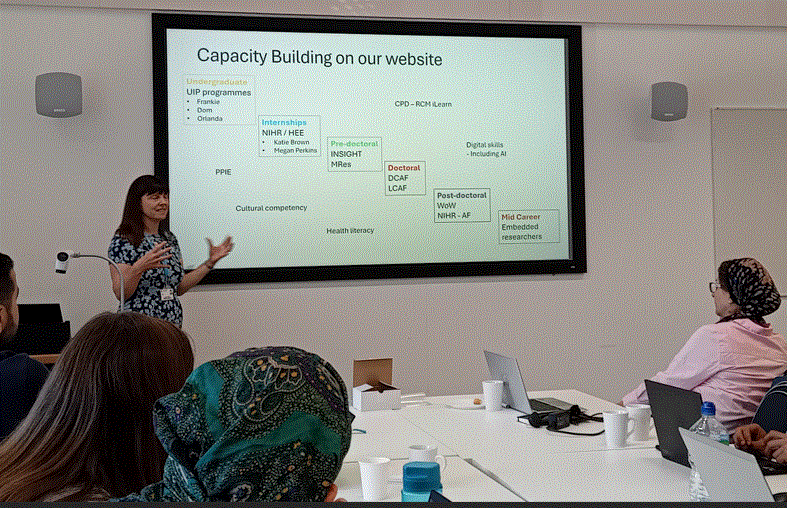
Professor Vanora Hundley has been appointed as a Capacity Training and Development Lead. As part of the Capacity Development Group, she will be responsible for developing an ambitious programme to inspire, develop and support the next generation of maternity disparities researchers. Vanora will also oversee the capacity development programme within the MIHERC collaboration. She is an experienced mentor for career young researchers and has received international recognition for her work in mentoring clinical academics: Sigma Nurse Researcher Hall of Fame (2020) and a European Recognition award (2023).

Adding further strength to this ambitious project, Professor Edwin van Teijlingen and Dr Deniz Cetinkaya will also be integral members of the team, providing their expertise and support over the next five years.

This significant involvement in the NIHR Maternity Disparities project is also anticipated to bring substantial research funding to BU, with projections estimating over one million pounds will be secured over the next five years through their respective roles and internal consortium project proposals. This investment will further fuel their research and impact in this critical area.

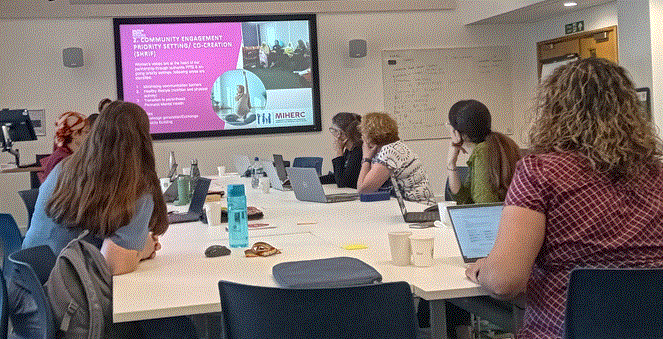
In a proactive move to lay the groundwork for the NIHR project, the BU team has collaborated with Sheffield Hallam University to establish the Maternal & Infant Health Equity Research Centre (MIHERC). This dedicated centre will serve as a hub for cutting-edge research, collaboration, and knowledge sharing in maternal and infant health equity. We encourage you to explore the centre’s website for more information: https://miherc.org/.

MIHERC is already actively engaged in shaping the discourse around these critical issues. The team has commenced the organisation and chairing of impactful events, including the upcoming Artificial Intelligence for Maternity and Women’s Health and Wellbeing session at the International Conference on Artificial Intelligence in Healthcare (AIiH 2025). Further details about this exciting session can be found here: https://aiih.cc/maternity-and-women-health-wellbeing/.

Locally, the project will benefit from strong collaborations within Dorset. The team is working closely with NHS Dorset and Dorset Women CIC to address inequalities in women’s health.

This collaborative effort has already seen the launch of a valuable Women’s Health resource this month, demonstrating the immediate impact of this work.

The BU team is deeply committed to this crucial research and will continue to keep the wider community informed of their progress and key milestones over the next five years. This initiative represents a significant step forward in our collective efforts to ensure equitable and positive maternity experiences for all. Stay tuned for further updates!

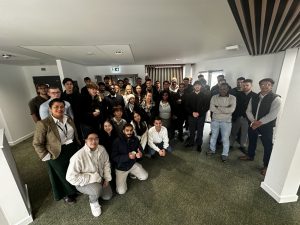
The whole team at Bournemouth University 08.01.25

The whole team at Bournemouth University 08.01.25

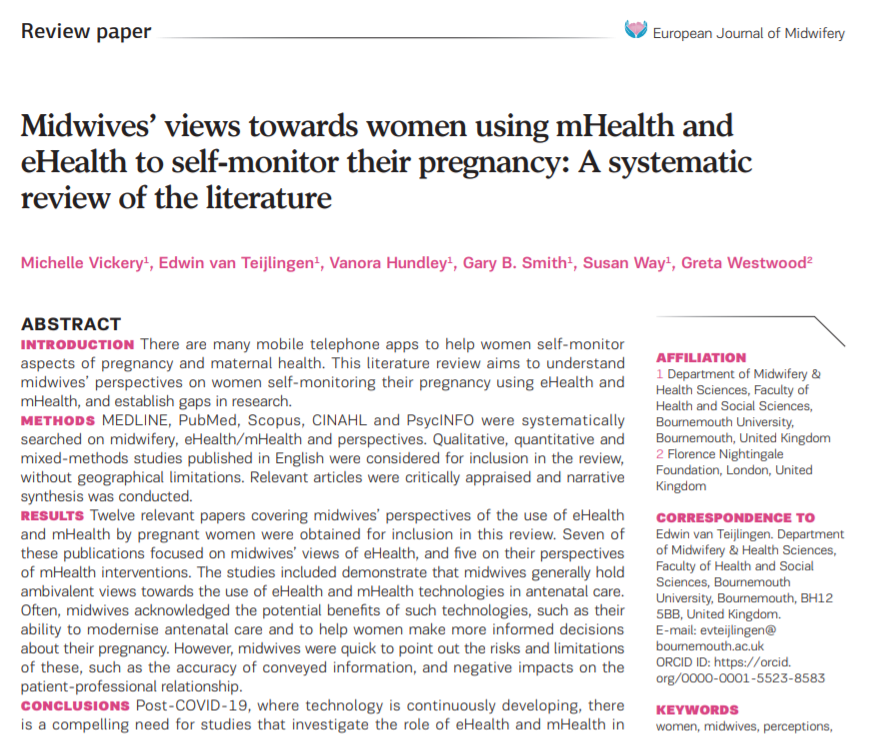
Bournemouth University eHealth paper cited 40 times!

Yesterday, ResearchGate alerted us that the paper ‘Midwives’ views towards women using mHealth and eHealth to self-monitor their pregnancy: A systematic review of the literature’ [1] had reached 40 citations!  This paper has four Bournemouth University (BU) authors and one author, Prof. Gary Smith, who was FHSS Visiting Professor at the time of publication.  This literature review, published in 2020, sought midwives’ perspectives on women self-monitoring their pregnancy using eHealth and mHealth.

The paper fund that  midwives generally held ambivalent views towards the use of eHealth and mHealth technologies in antenatal care. They acknowledged the potential benefits of such technologies, such as their ability to modernise antenatal care and to help women make more informed decisions about their pregnancy. However, midwives were quick to point out the risks and limitations of these, such as the accuracy of conveyed information, and negative impacts on the patient-professional relationship.

This paper will contribute to our recently awarded NIHR funding to tackle inequalities in UK maternal healthcare as part of the NIHR Challenge Call: Maternity Disparities Consortium.  Profs Vanora Hundley and Edwin van Teijlingen from the Centre for Midwifery and Women’s Health, and Prof. Huseyin Dogan and Dr. Deniz Cetinkaya from the Department of Computing and Informatics collaborate in MIHERC (Maternal & Infant Health Equity Research Centre).   MIHERC is led by Prof. Hora Soltani at Sheffield Hallam University, and it is a partnership with Bournemouth University, the City of Doncaster Council and South Yorkshire Digital Health Hub as well as several charities and voluntary organisations.  Prof. Dogan has recently been appointed  the co-lead for the “Digital, data, monitoring, evaluation and implementation science” work stream of the NIHR Maternity Disparities consortium.


Reference:

  1. Vickery, M., van Teijlingen, E., Hundley, V., Smith, G. B., Way, S., Westwood, G. (2020). Midwives’ views towards women using mHealth and eHealth to self-monitor their pregnancy: A systematic review of the literatureEuropean Journal of Midwifery4(Sept.), 1-11. https://doi.org/10.18332/ejm/126625


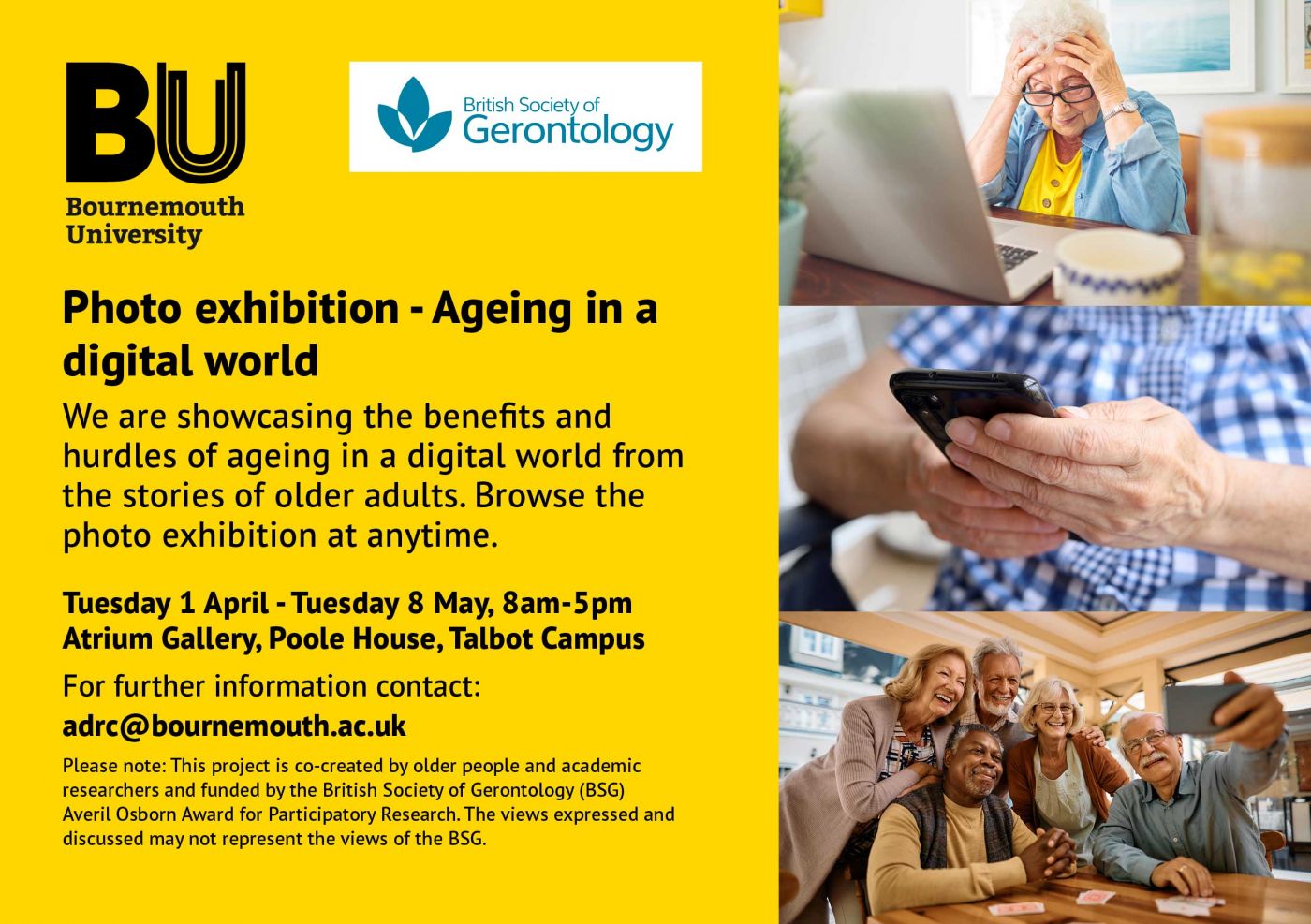
Photo exhibition happening now at Talbot Campus – Ageing in a digital world

The photo exhibtion currently running in the Atrium Gallery space at Talbot Campus showcases the benefits and hurdles of ageing in a digital world from the stories of older adults.

This research project uses a method called Photovoice to capture images and stories on this topic
www.bournemouth.ac.uk/research/projects/perceptions-ageing-digital-world Photo exhibition – Ageing in a digital world

The project is co-created by academic researchers and local older adults, who are co-researchers and members of the ADRC Research Participation Group, after discussing the challenges they face with the digitalisation of society www.bournemouth.ac.uk/research/centres-institutes/ageing-dementia-research-centre/adrc-research-participation-group

The exhibition is on until 8th May.


For more information please contact Michelle mheward@bournemouth.ac.uk

A compassionate approach to Simulation: new national blog post published

The Association for Learning Developers in Higher Education (ALDinHE) have a national blog focussing on pedagogic practice and the student experience. Una Brosnan (Paramedic Science) and Debbie Holley (Nursing Sciences) collaborated to create the blog (extracts below) and the full blog is available here https://aldinhe.ac.uk/take5-122-from-accidents-to-aquariums-a-compassionate-approach-to-simulation/

#Take5 #122 From accidents to aquariums: a compassionate approach to simulation
“The world of simulation and immersive learning technologies is developing rapidly and in parallel to the existing and predicted future requirements of health and care on a global scale”.
[Enhancing education, clinical practice and staff wellbeing. A national vision for the role of simulation and immersive learning technologies in health and care HEE, 2020]
This #Take 5 reflects upon ways in which paramedic students responded to a compassionate pedagogical approach to debriefing groups after a high intensity simulation experience. Their experience through changing the ambience of the debrief transformed their session from one where students reported anxiety, insecurity where lecturing staff noticed students showing signs of stress to relaxed bodies, a calm atmosphere and a readiness for self and peer reflections. This was now a space where individual voices could be heard, and deep learning took place.
Studies have shown that students can find clinical simulation to be extremely stressful and anxiety provoking (Jowesy et al. 2020 and Mills et al. 2016). Could a potential solution to controlling the amount of stressor added by the educator be to embed compassionate pedagogies in clinical simulation training? Compassionate pedagogy is a teaching approach that emphasizes empathy, care, and understanding in the educational process by focusing on and creating a respectful and understanding learning environment. Here the students’ emotional, personal, and academic needs are recognised, fostering both their professional competence and well-being. This method enhances the development of compassionate, patient-centered care by modelling empathy in the educational process.
This short illustrative video clip shows the contrast between a high stress, high intensity environment (a rail crash scenario where students were expected to triage and the treat mannequins with different injuries) to their low stress environment (a virtual aquarium of tropical fish swimming and soothing water ripple sounds) enabled by using the resources available in an immersive classroom – a Blended Learning Interactive Simulation Suite (BLIS). The ‘classroom’ is a mixed reality platform, comprising three fully interactive walls, with any imaginable scenario projected onto them, with video, audio and tactile capabilities.
Creating an atmosphere of quiet and calm is enabled through transforming the immersive classroom into an ‘aquarium’, with rippling water and fish swimming. This dramatically different space offers the student an atmosphere reducing stress and anxiety caused by the simulation and a place to consolidate their learning.
https://youtu.be/ygFshwj-kSQ?si=fk2Jog11IspjvqQ7

Unlocking the data dungeons of higher education

Unlocking the data dungeons of higher education
Authors: Kitchenham, A., Holley, D. and Biggins, D.

Conference: International Technology, Education and Development Conference 2025

Dates: 3-5 March 2025

Abstract:
Higher Education in the UK operates under a regulatory framework, the Office for Students (OfS). The university sector needd to report on a series of data metrics, where education has been quantified into measurable outcomes. These are focused on continuation and completion of studies, as well as readiness and ability to secure professional work. However, recent literature has documented the complexity of computing metrics in an environment in which universities are in constant transition and adaptation, and how these adaptive processes impact student transitions, including from university to graduate work. Thus collecting data with precision and fair statistical assessment of outcomes across the sector remain a challenge for the government and the sector alike.
Learning analytics is a highly contested field which is implemented and used in very different ways across the sector. In some cases, the collection of data places greater emphasis on institutional compliance for reputational protection and as a tool for data driven narrative creation. At its most effective, it places the learner at the centre of the process and as the primary audience for its output. Emerging trends point to how it is increasingly embedded within day-to-day activities that encompass learners, educators and the institution. Our research indicates that it is most impactful when it supports data-informed pedagogic interventions.
Our research suggests three broad responses to data collection, collation and interpretations, where the institutional data gathered is actioned through very different strategic lenses. Best practice seeks to use this data to inform strategic and operational decisions; and to focus on the student experience, with a clear pedagogic rationale underpinning the sharing of data, that genuinely moves the student learning journey forward. The use and role of data can be characterised as a tool to defend the institution from external scrutiny; an intrinsic tool to inform course development or as instigator for dialogue (including self dialogue) by the learner. The learning design that frames and encompasses learning analytics impacts significantly on the user. It can be cold, dehumanising and context free with the data stored in what we terms as a ‘data dungeon’. It can be interpreted as a ‘data engine room’ driving forward the curricula and learning agenda; it can, we argue, at its cutting edge frame ‘data dialogue’; shining the light into the data dungeon. This paper will draw upon these themes and suggest a maturity model to ensure the data collected has meaning, use and value and contributes to a greater understanding of the measurement and understanding of learning gain.
https://staffprofiles.bournemouth.ac.uk/display/conference/402814