Category / Open Access

Sources of Government Open Data as potential research material

During yesterday’s Fusion Curriculum meeting there was a brief discussion about sources of open data.

There are an increasing number of open data sets offering an almost unlimited scope for data analysis and data mash-up.  Data is downloadable in common formats and in some cases it is possible to create visualisations on the fly from the host website.

Here are three sites that you might like to explore:

Country URL Datasets Jan 16
UK Government Open Data https://data.gov.uk/data/search                      26,122
US Data.gov http://catalog.data.gov/dataset                   191,487
EU Open Data Portal https://open-data.europa.eu/en/data/                        7,894

There are many more data sets available to BU both under subscription and as open access.  To discuss in more detail please contact your LLS Faculty Liaison Team.

Open Access publishing discussion at EU

EU Open Access 2015The European Commission held a workshop in October about alternatives to Green and Gold Open Access publishing.  The presentations held at this workshop are freely available online, click here.  Discussions included questions such as: how might these alternatives work, how they have evolved, whether they work well, and what challenges they don’t manage to tackle. This report synthesises the presentations and discussions from the workshop.   For more details see: https://ec.europa.eu/digital-agenda/en/news/report-workshop-alternative-open-access-publishing-models

Open-Access-logo

Prof. Edwin van Teijlingen

CMMPH

Open Access publishing does not have to be expensive!

Nepal J Epid Open AccessAs it is Open Access Week I would like to clarify one of the Open Access publishing myths.  One of the common replies I receive from academics colleagues when raising Open Access publishing is that it is (too) expensive. This is, of course, true for many academic journals, but not all are expensive.  Some don’t even charge a processing fee at all.  Infamously, The Lancet Global Health charges an article processing fee of US $4750 upon acceptance of submitted research articles.  More moderately priced scientific journals still charge anything up to about £1,500 per article.

Open-Access-logoAcademic publishing has been big business for decades, and Open Access has rapidly become part of that business.  While traditional book and magazine publishers struggle to stay afloat, research publishing houses have typical profit margins of nearly 40%, according CBCNEWS who quote Vincent Larivière from the University of Montreal’s School of Library & Information Science.

At the same time we see a sharp increase in so-called Predatory Publishers who have set up business for the sole reason to make money from Open Access publishing.  They have not established or taken over academic journal for the greater good of the discipline or the dissemination of research findings to the widest possible audience.  Unscrupulous publishers jump on the Open-Access bandwagon BU librarian Jean Harris recently shared an interesting article about Predatory Publishers (click here to read this!).

J Asian MidwHowever, there are other format of Open Access. One of our more recent papers on research ethics was published in the Nepal Journal of Epidemiology which is an online Open Access journal that does not charge authors for publishing!  Also the Journal of Asian Midwives, where FHSS PhD student Preeti Mahato recently had her article accepted, is hosted in Pakistan by Aga Khan University through its institutional repository eCommons.  Publishing in this Open Access online journal is also free of charge.  In other words, Open Access publishing does not have to be expensive!


Prof. Edwin van Teijlingen

CMMPH


New BU Guide: Open Access and Depositing your Research

To support academic colleagues in depositing their research open access the BURO Team in Library and Learning Support have produced a brand new guide – Open Access and Depositing your Research.  Colleagues will find this guide particularly useful if you are…

  1. New to depositing your full text research in BURO via BRIAN
  2. Depositing your work as part of the Mock REF/internal review exercise

Guidance is provided in the following key areas:Open access and depositing your research

Please note: this guide is in development and more sections will soon be added. The guide will shortly appear on the deposit page in BRIAN.  The BURO Team welcome any feedback.

Please note: during this short period around the Mock REF/internal review exercise increased levels of deposit mean the BURO Editorial Team may take a little longer than usual to make your research open access and respond to any queries about your outputs. In recognition of this the online nomination form provides an option to indicate that you have submitted the your full text to BURO via BRIAN even if you are unable to provide a BURO web link for each of your outputs at the time of form completion.

Mock REF – depositing your research outputs: BURO UPDATE

The first internal Research Excellence Framework (REF) preparation exercise invites academic colleagues to submit one to four outputs (published since 1 January 2014), which will be reviewed by a panel of internal expert reviewers.  You can find the Individual Outputs Nomination Form here.

Where possible all nominated outputs (specifically journal articles and conference contribution with ISSN) should be made available Open Access, by uploading them to the institutional repository Bournemouth University Research Online (BURO) via BRIAN.  The SHERPA RoMEO website will help you to upload the correct open access version of your work.  You will need to provide the BURO web link (e.g. http://eprints.bournemouth.ac.uk/xxxxx) for each output in the nomination form.

Please note: during this short period of increased levels of deposit the BURO Editorial Team may take a little longer than usual to make your research open access and respond to any queries about your outputs. In recognition of this the online nomination form provides an option to indicate that you have submitted the your full text to BURO via BRIAN even if you are unable to provide a BURO web link for each of your outputs at the time of form completion.

Looking ahead you should aim to make your research outputs open access as an integral part of you publication process and deposit your full text within 3 months of acceptance.

For more guidance about the mock REF:

http://blogs.bournemouth.ac.uk/research/ref/mock-ref-internal-light-touch-review-exercise-autumn-2015/

Congratulations to CMMPH Professor Edwin van Teijlingen on his publication !

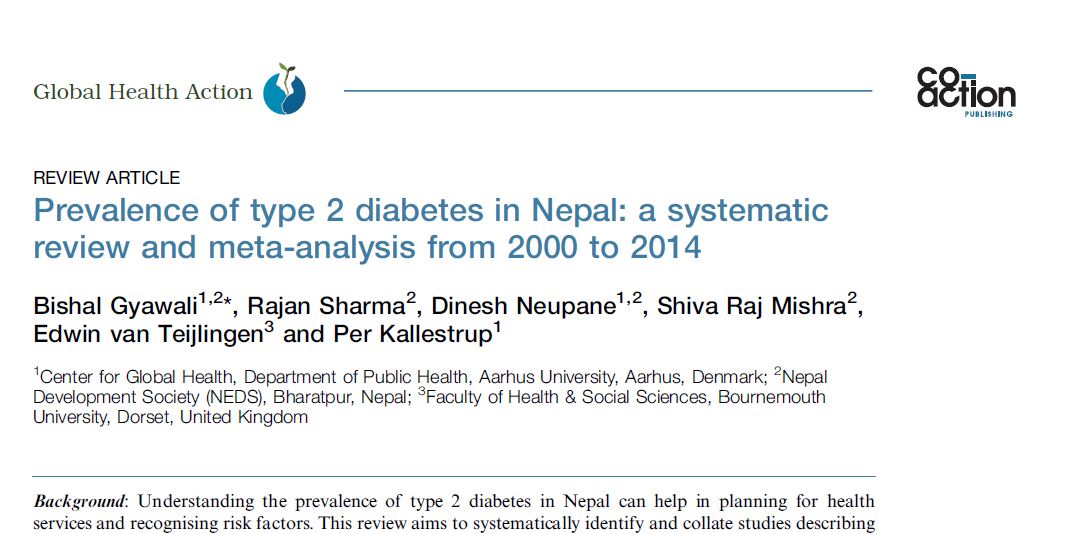
Congratulations to CMMPH Professor Edwin van Teijlingen on his latest publication about why researchers do not always seek ethical permission for health research conducted in low income countries. The authors in this paper have identified and explained five possible reasons; a) approval not needed: b) not familiar with the ethics committee: c) applying the wrethicsong committee; d) resource constraints; and e) assumption that non-clinical research are exempted, which are of course overlap and interact each other, for not applying ethical approval in low income countries. They have also provided examples of ethical approval taken from other countries than the host countries and further go on to stress that junior researchers and students should be encouraged to be familiar with research ethical approval. In their paper, they encourage journal editors and peer reviewers to ensure ethical approval beinProfessor Edwin and Professor Padamg granted for manuscripts based on empirical studies. This paper was co-authored by BU visiting faculty Professor Padam Simkhada and recently published in  Nepal Journal of Epidemiology. The paper is freely available through the journal’s website http://nepjol.info/index.php/NJE/issue/view/919

Reference:

van Teijlingen E, Simkhada P. Failure to apply for ethical approval for health studies in low-income countries. Nepal J Epidemiol. 2015;5(3); 511-515


Pramod R Regmi, PhD

Post Doctoral Research Fellow, Faculty of Health and Social Science

Uploading your full text to BRIAN – 3 easy steps!

If you are unsure of how to upload the full text of your publication onto BRIAN to be deposited in BURO, these are the three easy steps you can follow!

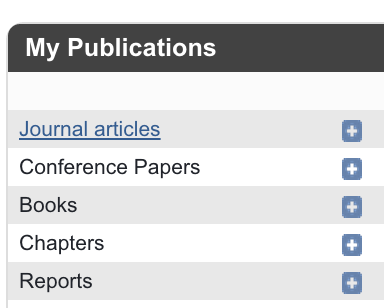
Step 1 – Ensure publication record already exists in your BRIAN account. If it does not, click on the ‘+’ sign next to it –

Screen Shot 2015-09-19 at 21.46.29

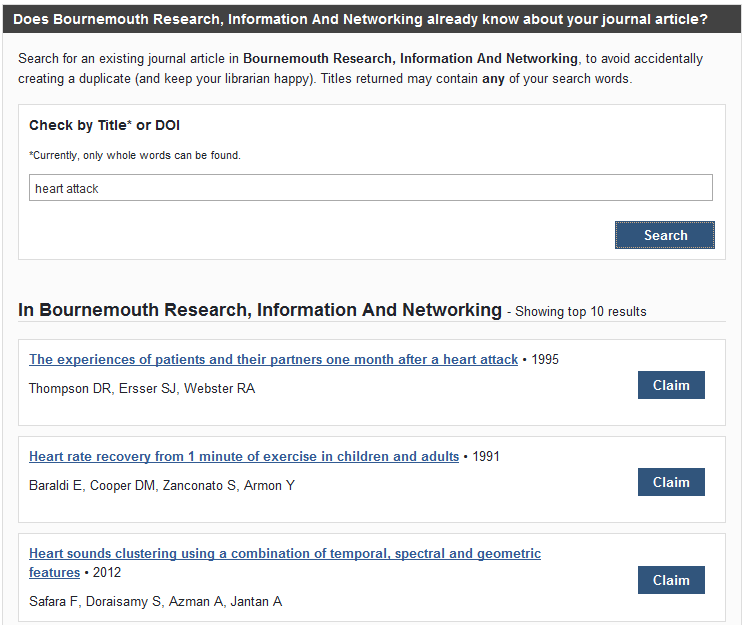
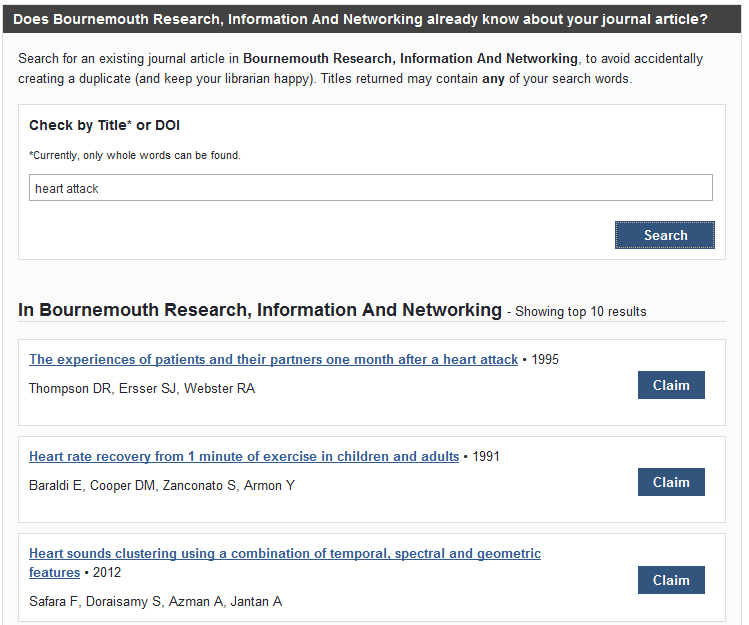
You will see a search box on the following page. Enter the title of your publication in the search box. If the record of your publication already exists within BRIAN, you simply need to scroll to it and ‘claim’ it. Otherwise, scroll to the bottom of the page and click on ‘create manual entry’. You can then populate all relevant information of your publication on the following page. Don’t forget to scroll to the bottom to ‘save’ your record!

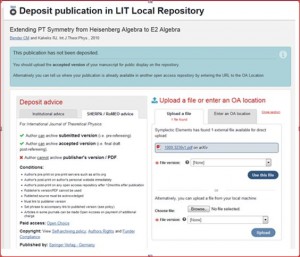
Step 2 – Once the publication record exists within BRIAN, click on the the blue arrow up icon, and you will be taken to the deposit page

Screen Shot 2015-09-19 at 21.50.50

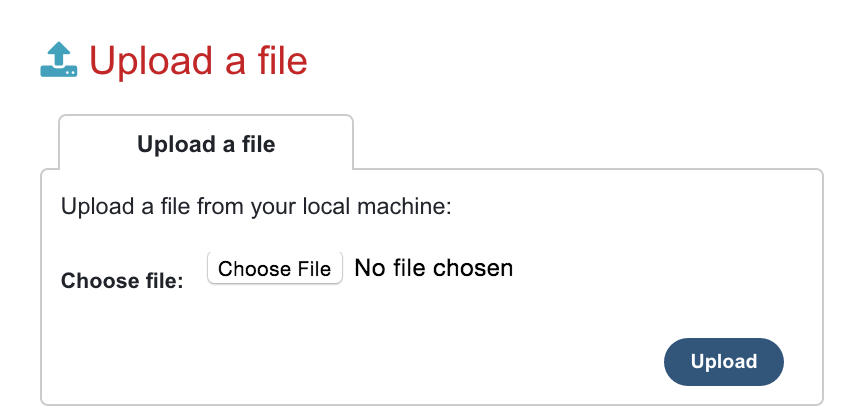
Step 3 – Locate the correct version of your full text in accordance with the policy advice from Sherpa romeo; and then click ‘upload’.

Screen Shot 2015-09-19 at 21.53.49

When the upload is complete, you will be notified on the screen that your full text is under review by the BURO team. Once approved by the BURO team of its legality, the link to the full text in BURO will be created and the link will also appear on your Staff Profile Page. If at any point you are unsure of this process, please send an email either to BRIAN@bournemouth.ac.uk or BURO@bournemouth.ac.uk for assistance and advice.


OpenAIRE2020 National Open Access Desk

jisclogoBack in July, Mafalda Picarra from JISC wrote a blog post on the Jisc Scholarly Communications about OpenAIRE2020 National Open Access Desk. If you are involved in or are interested in an EC Horizon 2020 project, this blog post will be of interest to you.

Since the start of the OpenAIRE2020 project in January, Jisc became the UK National Open Access Desk (NOAD). This means that Jisc is now providing support and information to help UK HEIs and researchers to comply with the EC’s Horizon 2020 programme OA policy, the Open Research Data Pilot and the FP7 Post-Grant Open Access Pilot.

Jisc has been working closely with UK national associations – SCONUL, ARMA, RLUK and UKCoRR – to ensure that information about the EC’s Horizon 2020 OA policy and the Pilots is disseminated through the most appropriate channels to multiple stakeholders. Back in June, the national associations sent a first communication to their members. Today, we will disseminate more detailed information to HEIs research librarians, research managers, open access contact points and EU research, policy and funding teams on the EC’s OA policy and the two pilots.

In a nutshell, the Horizon 2020 OA policy requires that all peer reviewed publications resultant from Horizon 2020 and European Research Council funded projects be made open access. In addition, a Pilot on Open Research Data is being run in some core areas of Horizon 2020 which aims to improve and maximise access to and re-use of research data generated by projects. Finally, OpenAIRE is running a Pilot on FP7 Post-Grant Open Access where eligible FP7 projects can apply for funding to publish their research outputs on open access.

OpenAIRE has developed relevant resources (factsheets, guides and webinars) that can be accessed online (https://www.openaire.eu/) and provides helpdesk support to those that require more information on compliance with the EC’s OA policy or on how to participate in the pilots.logo_openaire

For more information contact the National Open Access Desk (NOAD), Mafalda Picarra, on info.openaire@jisc.ac.uk


HEFCE Open Access Policy – Adjustments and Qualifications

hefce-logoOn Friday (24 July 2015), HEFCE announced a number of adjustments and qualifications to its policy for open access (OA) in the next REF following consultation with HEIs. The key adjustment is that:


  • From 1st April 2016, authors will have until 3 months after publication to deposit outputs in our Institutional Repository (BURO) via BRIAN.  This is a temporary measure for the first year of the policy, to allow time to transition to a new way of working.


  • From 1st April 2017, the transition period will end, and in order to comply with the Open Access policy, authors will be expected to deposit outputs in (BURO) via BRIAN within 3 months of acceptance.


In light of these adjustments, it is recommended that authors still deposit outputs as soon as possible after acceptance to ensure continued compliance with all OA policies.

The circular and updated policy are available through the links below, if you have any queries or require further information on Open Access at BU including the Open Access Publication Fund, please contact Peng Peng Hatch at pphatch@bournemouth.ac.uk.

View this circular letter on the HEFCE website at: http://www.hefce.ac.uk/pubs/year/2015/CL,202015/

View the full updated HEFCE policy at:  http://www.hefce.ac.uk/pubs/Year/2014/201407/

Understanding Open Access workshop

Open-Access-logo


Following the Finch Report, the Open Access movement has gained significant momentum in the UK. Most major funders now have open access policies and mandates. HEFCE’s post-REF2014 policy states – ‘To be eligible for submission in the post-REF2014, journal articles and conference proceedings (with ISSN) accepted for publication after 1 April 2016 must be made open access.

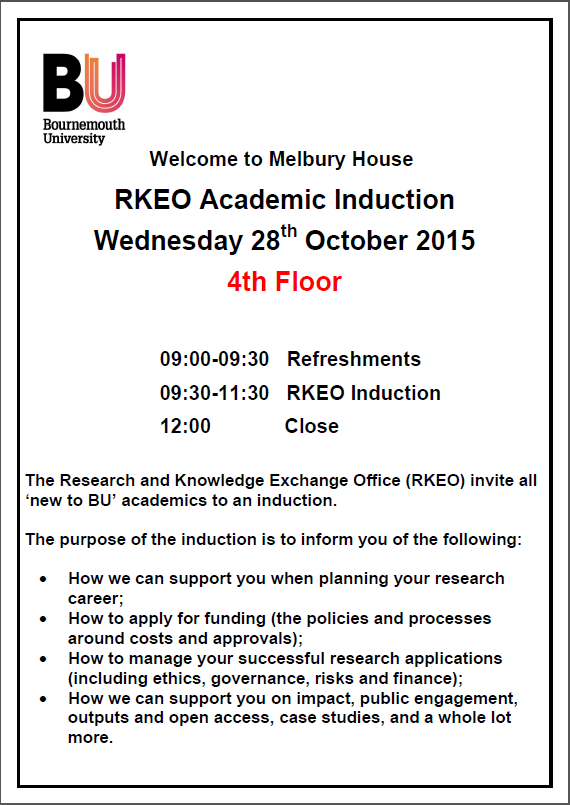
RKEO currently provides a series of Open Access and BRIAN development workshop to help academics understand Open Access and what needs to be done to comply. In this ‘Understanding Open Access’ workshop, you will:
– Gain a background and understanding of Open Access
– Understand what it means for Bournemouth University
– Know how to comply with the Open Access Policies (via BRIAN)

The next workshop will take place on 4th August, from 10am to 11am, at EB202, Lansdowne.

To book a place, please send an email to Organisational Development.

For queries about the workshop, please direct them to Pengpeng Hatch at RKEO.

Implementation of the HEFCE Open Access policy for the post-2014 REF: a progress report to JISC

Original post by Neil Jacobs on this JISC website.

Background

Over the past month, Research Consulting has been undertaking a review of UK higher education institutions’ progress towards implementation of the open access policy for a post-2014 Research Excellence Framework (REF). Based on the six institutional workshops, completed with the support of the Jisc Open Access Good Practice Pathfinder projects, as well as interviews with Jisc and HEFCE staff, the study has identified how much progress has been made across the sector to implement the policy and distinguished where there may be further opportunities to support institutions in this area.

Summary Findings

The Collaborative Institutional Assessment of Open access (CIAO) tool was used to gauge institutions’ current level of readiness of the REF policy. Based on responses from 37 participating institutions, summarised below, the study found that, whilst all institutions were actively pursuing implementation of the REF open access policy, research-intensive institutions were generally found to have more developed open access capabilities than teaching-led institutions.
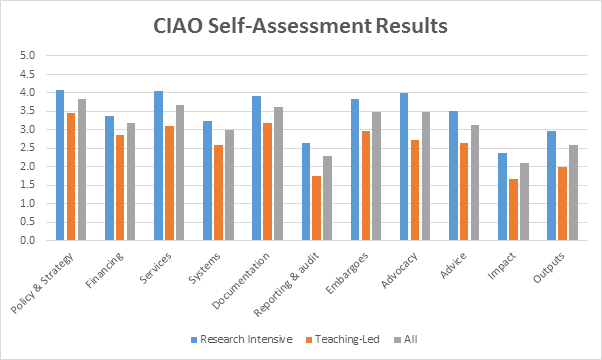
CAIO-results-May-2015Key Challenges

Across all institution-types, however, the following key challenges were given high priority as potentially critically affecting the institution’s ability to comply with the policy:
• Difficulties in identifying accepted articles
• Difficulties in monitoring and benchmarking compliance
• Difficulties in tracking deposits in subject repositories
• Uncertainty over audit requirements, particularly in relation to exceptions
• Systems deficiencies which may result in significant compliance issues.

Other significant issues of note

• A tendency towards ‘gold-plating’ of processes and uncertainty over audit requirements which could be alleviated through reliance on institutional internal audit functions.
• The added value of self-archiving where articles are made OA through the gold route appears limited relative to the effort involved.
• The SHERPA/REF tool, in development, could save time and promote greater author engagement with the policy, if the results delivered were formally endorsed by HEFCE.

Resourcing also presented a further challenge for institutions, due to a rapid rise in deposits and potential inefficiencies in current processes. A large number of less significant issues were also raised, including difficulties in securing and identifying the AAM, uncertainties over dates of acceptance and publication, and concerns over staff recruitment and retention.

This PDF provides a full breakdown of the implementation challenges

Projects services directly/ indirectly supporting REF compliance

There are a range of existing Jisc projects and services with the potential to address some of the issues identified. The most important are considered to be the SHERPA services, Publications Router and the RIOXX/CASRAI projects, but institutions also see scope for ORCID, IRUS-UK, Jisc Collections and CORE to support REF compliance.

This PDF provides a full list of the Jisc projects and services seen by respondents to be useful for the REF

Recommendations

The recommendations to Jisc arising from this work are as follows:

1. Jisc should review its arrangements for supporting institutional repositories, in view of the concerns identified over usability, required levels of technical support and uncertainty over how some specialist institutions can achieve compliance with the REF OA policy.
2. A comprehensive picture of the current research information system (CRIS) and repository solutions in use by UK HEIs, and the interactions between them, should be developed in order to effectively inform planning of Jisc projects and services.
3. Jisc should actively develop relationships with the major CRIS vendors, to ensure the sector’s requirements in respect of the REF OA policy are clearly understood and reflected in supplier roadmaps.
4. A working group should be convened to explore the role of subject repositories, and consider what opportunities exist to enable REF-compliant deposit in these repositories, with metadata subsequently shared with institutions.
5. Jisc should explore opportunities to collect and share relevant data on compliance with the REF OA policy, for example through further development of the CORE service.
6. The OA Pathfinder programme should take these recommendations into account, and seek to develop and disseminate good practice in the management of exceptions, among other areas.

Next steps

Jisc is committed to supporting the sector in their implementation of the policy and to focus its efforts and resource on those areas recommended by this study. Over the coming weeks, therefore, Jisc will be considering how its projects/ services can potentially be refocused/ reallocated to address the most urgent issues faced by institutions and will release details of these plans as soon as they become available.

BRIAN Announcement to Faculty and Staff

We are happy to inform you that Bournemouth Research Information and Networking System (BRIAN) will be upgrading to a new version. The system will be offline from 8.30am, 20th May 2015 on Wednesday, and will hopefully be restored and functioning fully on the 26th May 2015, 8.30am.

Some of the benefits of this upgrade are:

  • Re-designed Deposit Page

The page shown when you deposit a publication to BURO has been completely redesigned to improve the flow through the page, to allow entry of an Open access location and to provide more visible guidance.

  • Assistance when adding publications, including duplicate prevention

This is a completely new mechanism designed to assist you and your co-authors when manually adding new works to BRIAN. The first step in this process is to perform a search using the title, partial title or identifier (ISBN or DOI). Using this information, records that already exist in BRIAN may then be claimed by you or your co-author, thereby avoiding the creation of unnecessary manual records.

The new mechanism applies to all publication types. In addition, for Books and Journal articles, searches are also performed against a number of external data sources (including Google Books).

  • Harvest publications using Scopus Author Identifier


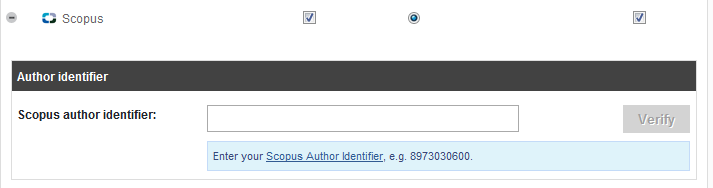
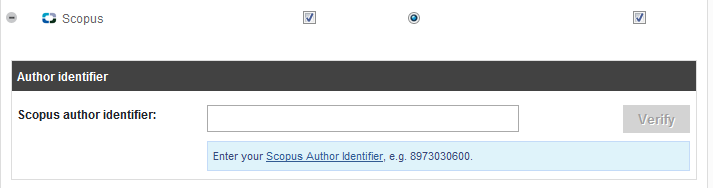
We are happy to announce that in the new version of BRIAN, it is now possible to add a verified Scopus Author Identifier to your account (through ‘search settings’) which will result in all publications linked to the Scopus ID being automatically imported to BRIAN in a claimed state.

  • Improved Photo Cropping Mechanism

This new photo crop mechanism allows you to drag and drop photos in for use and it will also allow you to crop the pictures to the desired style.

We do apologise for the inconvenience but we hope that these exciting new features will be up and running for you to use on the 26th May.

All relevant guidance notes on the Staff Intranet will be updated in due course. If you need any help using the new system or if you encounter any problems after the upgrade, please do send an email to BRIAN@bournemouth.ac.uk and a member of staff will be able to assist you.

Monthly BRIAN training sessions will also start taking place beginning June 2015. Please watch out for announcement on future dates on the RKEO Research blog.

In the meantime, if you do have queries relating to the upgrade, please feel free to get in touch with Pengpeng Hatch at pphatch@bournemouth.ac.uk (01202 961354).

BRIAN Announcement to Faculty and Staff

We are happy to inform you that Bournemouth Research Information and Networking System (BRIAN) will be upgrading to a new version. The system will be offline from 8.30am, 20th May 2015 on Wednesday, and will hopefully be restored and functioning fully on the 26th May 2015, 8.30am.

Some of the benefits of this upgrade are:

  • Re-designed Deposit Page


The page shown when you deposit a publication to BURO has been completely redesigned to improve the flow through the page, to allow entry of an Open access location and to provide more visible guidance.

  • Assistance when adding publications, including duplicate prevention


This is a completely new mechanism designed to assist you and your co-authors when manually adding new works to BRIAN. The first step in this process is to perform a search using the title, partial title or identifier (ISBN or DOI). Using this information, records that already exist in BRIAN may then be claimed by you or your co-author, thereby avoiding the creation of unnecessary manual records.

The new mechanism applies to all publication types. In addition, for Books and Journal articles, searches are also performed against a number of external data sources (including Google Books).

  • Harvest publications using Scopus Author Identifier


We are happy to announce that in the new version of BRIAN, it is now possible to add a verified Scopus Author Identifier to your account (through ‘search settings’) which will result in all publications linked to the Scopus ID being automatically imported to BRIAN in a claimed state.

  • Improved Photo Cropping Mechanism


This new photo crop mechanism allows you to drag and drop photos in for use and it will also allow you to crop the pictures to the desired style.

We do apologise for the inconvenience but we hope that these exciting new features will be up and running for you to use on the 26th May.

All relevant guidance notes on the Staff Intranet will be updated in due course. If you need any help using the new system or if you encounter any problems after the upgrade, please do send an email to BRIAN@bournemouth.ac.uk and a member of staff will be able to assist you.

Monthly BRIAN training sessions will also start taking place beginning June 2015. Please watch out for announcement on future dates on the RKEO Research blog.

In the meantime, if you do have queries relating to the upgrade, please feel free to get in touch with Pengpeng Hatch at pphatch@bournemouth.ac.uk (01202 961354).

ResearchGate – An Overview

Picture by bschwehnLast year I wrote a post titled ‘ResearchGate Reviewed’ which outlined the pros and cons for BU researchers using ResearchGate. Here again I thought I’d summarise here what ResearchGate is and more importantly what it isn’t…

ResearchGate in a nutshell…..

ResearchGate is a social networking site for researchers (particularly those engaged in broadly scientific research) to share papers, ask questions and find collaborators.

What is it?

ResearchGate’s mission is “to connect researchers and make it easy for them to share and access scientific output, knowledge, and expertise”. It has similar features to networking sites such as Facebook, Twitter and LinkedIn where users can create profiles, like and follow researchers and their publications, ask questions, feedback and share news items and updates.

It is free to join and currently has about 6 million members across the world. Once you have a profile, ResearchGate will email you with publication updates from those researchers you are following and developments in your skilled areas of research. On your home page it will include a live feed of activity from your connected researchers, display jobs you may be interested in and suggest connections to related researchers.

What isn’t it?

Accessing documents usually requires an account so ResearchGate is not considered to be Open Access.

(Why) should I use it?

ResearchGate is growing fast and is a useful tool for researchers to promote their work. However, if a researcher’s sole aim is promote their work then ResearchGate alone will probably not be sufficient and they should also consider using ResearchGate in conjunction with other sites such as Academia.edu, Mendeley, Google Scholar, figshare and others. Activity and membership varies from one site to another and from one discipline to another, so researchers will need to investigate for themselves in order to evaluate potential value.

Uploading research outputs to ResearchGate will not meet funder policy requirements for Open Access or Research Data Management; on the contrary you may be in breach of the publisher policy.

ResearchGate was built by scientists for scientists in 2008 and has received more than $35 million in investment capital over its lifetime from investors such as Bill Gates and Tenaya Capital.

(How) Does it fit with all the others?

You can add links in your profile to Facebook, Twitter, LinkedIn, Skype, your website and include your ORCID ID.

 Our verdict:

A great networking tool but has limitations which researchers should be wary of . The more effort you put into maintaining and regularly updating your profile, the more you will get out of ResearchGate.

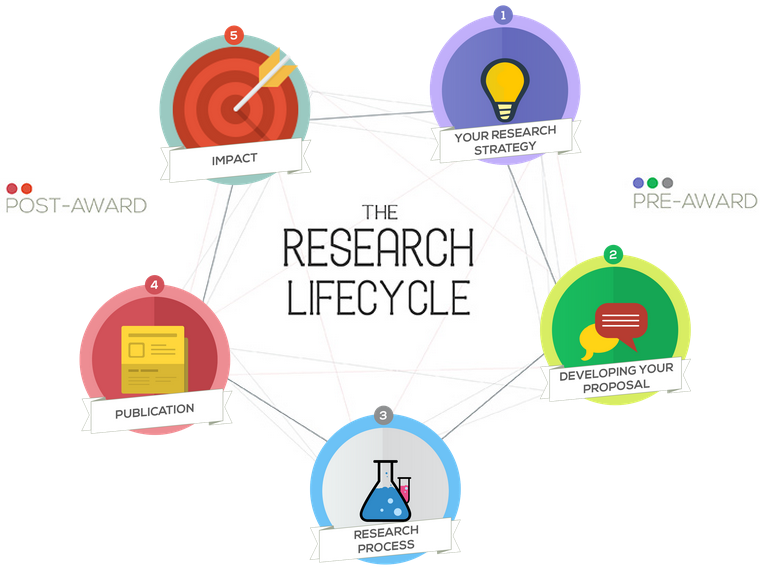
Open Access and the research lifecycle: a guide for researchers


With recent requirements imposed by major research funders, researchers are presented with both opportunities and challenges – opportunities to re-use and re-purpose published outputs and datasets, and challenges in making one’s own work legally and ethically available to others.

Last year, thirty Northampton researchers contributed to focus groups looking at open access publications and data, with a particular focus on compliance with funder requirements. From the outcome of the focus groups, University of Northampton developed an Open Access and the research lifecyle guidance, which has been adapted to fit in with BU’s institutional policies.   

This guide, which is part of a JISC-funded Open to Open Access project, is intended for researchers who wish to engage with the open access agenda, but aren’t entirely sure how best to achieve this. This short guide highlights some of the issues to consider at each stage of the research lifecycle and the tools that are available to support you.

Please click here –  Open Access and the research lifecyle guidance to access a printable version of the guidance. For further queries, please get in touch with Pengpeng Hatch (pphatch@bournemouth.ac.uk) at RKEO.