Category / Open Access

REF2021: the importance of Open Access compliance


Introduction

The four main HE funding bodies in the UK believe that ‘the outputs of publicly funded research should be freely accessible and widely available.’ The REF2021 Open Access Policy was introduced as a requirement for the next REF and it states that – all journal articles and conference contributions (with ISSN) accepted for publication from 1 April 2016 and published on or before 31 December 2020 must comply with the policy to be eligible for submission to the REF.

What does this mean?

Any non-compliant outputs that do not satisfy the policy requirements will NOT be eligible for the next REF.

What are the policy requirements?

  • The outputs must be available open access (via the gold or green open access routes), three months after their acceptance date;
  • The outputs must be discoverable through search engines on the internet, and free to download
  • The outputs must also be in a format where they allow anyone with internet access to search electronically within the texts, to read and to download them

What does this mean to you at BU?

Once you’ve received an official notification from your publisher that your manuscript has been accepted, you should take action right away!

First of all, you should ensure that the publication record is created in BRIAN – Bournemouth Research Information and Networking, clearly specifying the acceptance date. Once you’ve created a record, following instructions on the screen, click on the BURO deposit page as shown below –
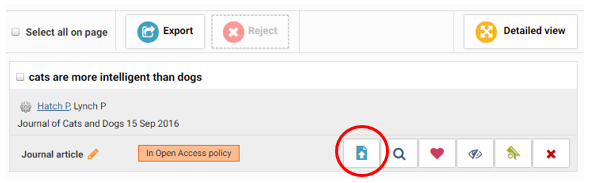
To comply with the REF Open Access Policy, you only need to upload/deposit the final accepted peer-reviewed manuscript (and not the final published version). However, depending on individual publisher copyright and policies, this is not always the case. To verify the publisher copyright policies and to decide which version of your manuscript you should use, you can do so through the SHERPA RoMEO online resource, which is a reliable source of information recommended by Research England.

Some of these deposited manuscripts may also be subjected to a period of embargo before they can be made available. Again, this would depend on the publisher copyright policies, which you can also check out on SHERPA RoMEO.

On the ‘Deposit’ page in BRIAN, you will see this message –

BURO, which stands for Bournemouth University Research Online is the University’s Institutional Repository. All manuscripts uploaded on BRIAN will be deposited in BURO and are available to anyone in the world with internet access (subject to embargo).

BURO is supported by a team of colleagues from the Faculty Library Team. The BURO team is available to support and advise you through the open access compliance process and to ensure that you are compliant with all publisher copyright and policies.

Do remember, this process has to be done within three months of your publication acceptance date! Please see this video for more guidance.

What do embargo periods mean for compliance?

As mentioned above, use SHERPA RoMEO to find out more about deposit policies and embargo periods.  As long as your manuscript is deposited within 3 months of the acceptance date, the REF2021 Open Access Policy allows for an embargo period of up to 12 months for the REF Panels A & B and 24 months for the REF Panels C & D.

What if the output doesn’t meet the compliance requirements?

In some circumstances, some outputs cannot meet the open access policy requirements due to deposit, access, technical or other issues (for more information see here). If these circumstances fall under the permitted exceptions in accordance with the REF Open Access policy, these outputs may still be submitted to the REF. If you are unsure, please seek advice and guidance from ref@bournemouth.ac.uk as early as possible.

If you have questions regarding REF2021 or Open Access compliance, please feel free to contact ref@bournemouth.ac.uk or if you have questions specific to uploading of your manuscript, please contact BURO@bournemouth.ac.uk.


Open Access Week – Fabulous Friday!!

Photo by Clay Banks on Unsplash

Lot’s of fabulous things have been going on across the sector to celebrate Open Access Week 2019. Here are a small selection…


The publishers have also been getting involved with numerous events, one of note is Royal Society Publishing who made all their content free to access this week. You can browse journals here.

Southampton University hosted a A Very Short Introduction to Open Access using Biscuits

Edge Hill University hosted as a webinar with Open Book Publishers. This non-profit organisation publishes academic books on an OA basis and doesn’t charge authors fees to use the service.

Open Access Week has been truly international with events across the globe:

To end, here is a lovely quote posted by University of Tennessee which reminds us why open access matters…

Royal Society Content for Free!!

For Open Access week, all of the The Royals Society’s content is free to access. Browse their journals: http://bit.ly/2W1pIac 

It’s INTERNATIONAL OPEN ACCESS WEEK!!

Yes it’s here again that joyful time of the year when we highlight and discuss all things open access. First up is a quick reminder…


What is Open Access?

Open access is about making the products of research freely accessible to all. It allows research to be disseminated quickly and widely, the research process to operate more efficiently, and increased use and understanding of research by business, government, charities and the wider public.

There are two complementary mechanisms for achieving open access to research.

The first mechanism is for authors to publish in open-access journals that do not receive income through reader subscriptions.

The second is for authors to deposit their refereed journal article in an open electronic archive.

These two mechanisms are often called the ‘gold’ and ‘green’ routes to open access:

  • Gold – This means publishing in a way that allows immediate access to everyone electronically and free of charge. Publishers can recoup their costs through a number of mechanisms, including through payments from authors called article processing charges (APCs), or through advertising, donations or other subsidies.
  • Green – This means depositing the final peer-reviewed research output in an electronic archive called a repository. Repositories can be run by the researcher’s institution, but shared or subject repositories are also commonly used. Access to the research output can be granted either immediately or after an agreed embargo period.

Article first published – http://www.hefce.ac.uk/rsrch/oa/whatis/

To encourage all academic communities to consider open access publishing, Authors Alliance has produced a comprehensive ‘Understanding Open Access‘ guide which addresses common open access related questions and concerns and provides real-life strategies and tools that authors can use to work with publishers, institutions, and funders to make their works more widely accessible to all.

To access and download the guide, please follow this link – http://authorsalliance.org/wp-content/uploads/Documents/Guides/Authors%20Alliance%20-%20Understanding%20Open%20Access.pdf

More information on Open Access Week and activities happening across the world can be found here – http://www.openaccessweek.org/ 

Key role of volunteers in the health system

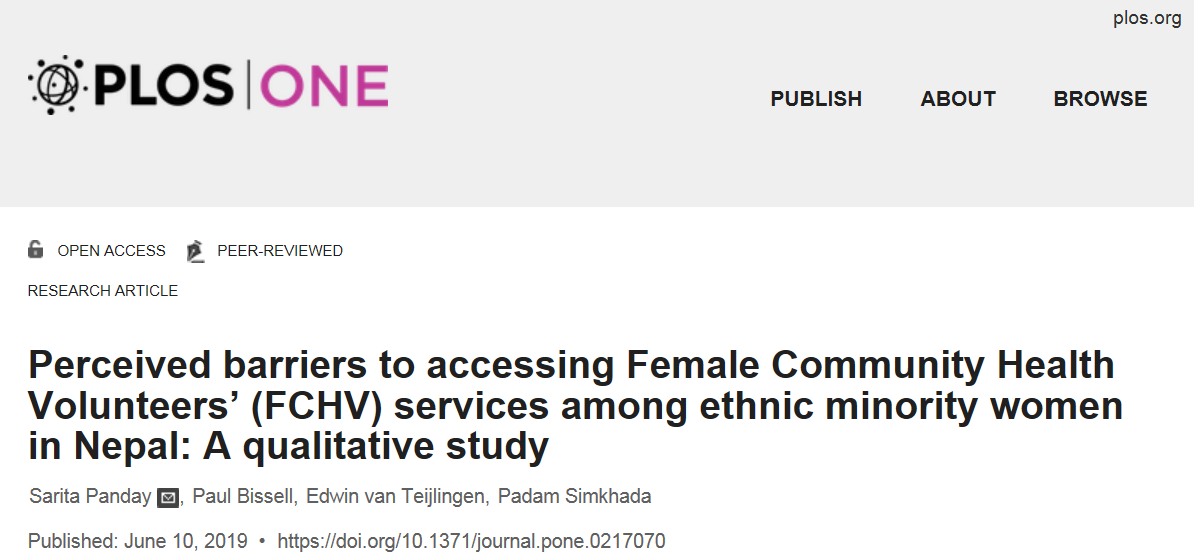
This week saw the publication of ‘Perceived barriers to accessing Female Community Health Volunteers’ (FCHV) services among ethnic minority women in Nepal: A qualitative study’ [1].  This article in the Open Access journal PLoS ONE highlights the key role volunteers play in delivering health services to minorities/the poorest people, especially in low-income countries like Nepal.

This paper studies community health workers in Nepal, who are known as Female Community Health Volunteers (FCHVs). To address this issue, we conducted a qualitative study to explore perceived barriers to accessing maternal and child healthcare services among ethnic minority groups in two different parts of Nepal with varying degrees of access to local healthcare centres. Semi-structured interviews were conducted with twenty FCHVs, 26 women service users and 11 paid local health workers. In addition, 15 FCHVs participated in four focus group discussions.

A thematic analysis of the data identified five major themes underlying barriers to accessing available maternal and child healthcare services by ethnic minority groups. These themes include: a) lack of knowledge among service users; b) lack of trust in volunteers; c) traditional beliefs and healthcare practices; d) low decision-making power of women; and e) perceived indignities experienced when using health centres.  The paper concluded that community health programmes should focus on increasing awareness of healthcare services among ethnic minority groups, and the programmes should involve family members (husband and mothers-in-law) and traditional health practitioners. Both the FCHVs and local healthcare providers should be trained to communicate effectively in order to deliver respectful care among ethnic minorities if we want to achieve universal healthcare coverage for maternal and child health in low- and -middle income countries.

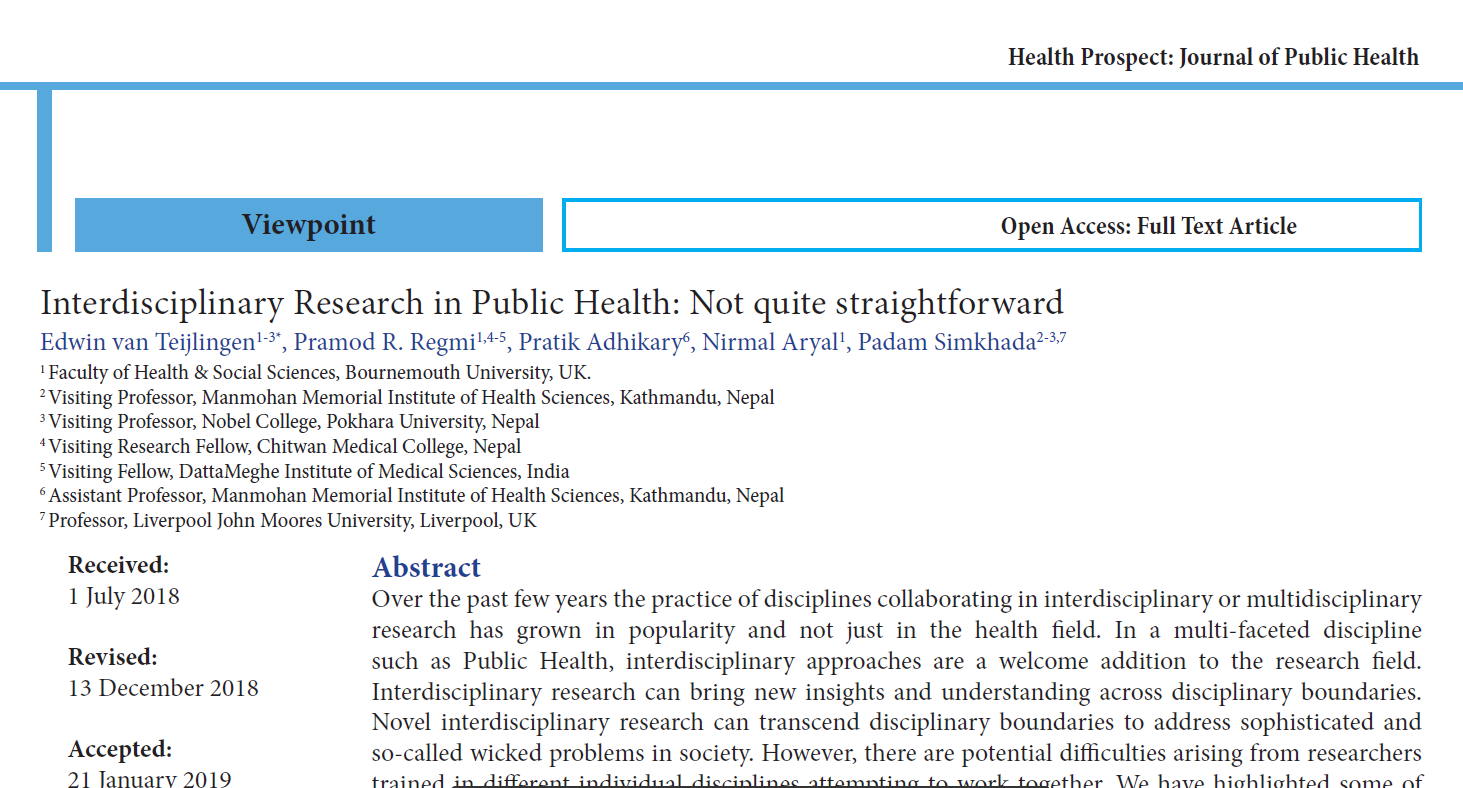
The paper is based on the PhD research conducted by Dr. Sarita Panday in ScHARR at the University of Sheffield.  Dr. Panday is currently affiliated with the Walter H. Shorenstein Asia-Pacific Research Centre (APARC) at Stanford University in the USA.  Her co-authors are Prof. Paul Bissell at the University of Huddersfield, FHSS’s Visiting Prof. Padam Simkhada at the Liverpool John Moores University and BU Prof. Edwin van Teijlingen.  This is the second paper from Dr. Panday’s excellent thesis, the first paper was also published in an Open Access journal BMC Health Services Research [2].


References:

  1. Panday S, Bissell P, van Teijlingen E, Simkhada P (2019) Perceived barriers to accessing Female Community Health Volunteers’ (FCHV) services among ethnic minority women in Nepal: A qualitative study. PLoS ONE 14(6): e0217070.
  2. Panday S, Bissell P, van Teijlingen E, Simkhada P (2017) The contribution of female community health volunteers (FCHVs) to maternity care in Nepal: a qualitative study. BMC Health Services Research 17(1):623.

Article published in Physiological Reports


The article titled “The effects of 8 weeks of inspiratory muscle training on the balance of healthy older adults: a randomized, double-blind, placebo-controlled study” has been published by Physiological Reports.

 

It is the first research to describe the effects of inspiratory muscle training (i.e. breathing exercises that improve the strength of inspiratory muscles) on static and dynamic balance (measured with the clinical tool mini-BEST) and functional mobility (such as Timed Up and Go and 5 sit to stand tasks) with community dwellers older adults (aged 65+).

The research is part of Francesco Ferraro PhD journey. Journey guided with the supervision of Professor Alison McConnell, Dr James Gavin and Tom Wainwright

The article is now fully available as open access here

https://doi.org/10.14814/phy2.14076

Abstract

To examine the effects of 8‐week unsupervised, home‐based inspiratory muscle training (IMT) on the balance and physical performance of healthy older adults. Fifty‐nine participants (74 ± 6 years) were assigned randomly in a double‐blinded fashion to either IMT or sham‐IMT, using a pressure threshold loading device. The IMT group performed 30‐breath twice daily at ~50% of maximal inspiratory pressure (MIP). The sham‐IMT group performed 60‐breaths once daily at ~15% MIP; training was home‐based and unsupervised, with adherence self‐reported through training diaries. Respiratory outcomes were assessed pre‐ and postintervention, including forced vital capacity, forced expiratory volume, peak inspiratory flow rate (PIFR), MIP, and inspiratory peak power. Balance and physical performance outcomes were measured using the shortened version of the Balance Evaluation System test (mini‐BEST), Biodex® postural stability test, timed up and go, five sit‐to‐stand, isometric “sit‐up” and Biering–Sørensen tests. Between‐group effects were examined using two‐way repeated measures ANOVA, with Bonferroni correction. After 8‐week, the IMT group demonstrated greater improvements (P ≤ 0.05) in: PIFR (IMT = 0.9 ± 0.3 L sec−1; sham‐IMT = 0.3 L sec−1); mini‐BEST (IMT = 3.7 ± 1.3; sham‐IMT = 0.5 ± 0.9) and Biering–Sørensen (IMT = 62.9 ± 6.4 sec; sham‐IMT = 24.3 ± 1.4 sec) tests. The authors concluded that twice daily unsupervised, home‐based IMT is feasible and enhances inspiratory muscle function and balance for community‐dwelling older adults.

Floods and PTSD in India

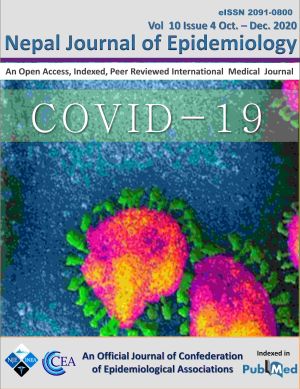
Cover of NJE Yesterday the Nepal Journal of Epidemiology published its latest issue which included the paper on ‘Post-Traumatic Stress Disorder among the Flood Affected Population in Indian Subcontinent’ [1].  This Short Communication is co-authored by Prof. Edwin van Teijlingen and two members of the Visiting Faculty in our Faculty of Health & Social Sciences, namely: Prof. Padam Simkhada and Dr. Brijesh Sathian.  The Nepal Journal of Epidemiology is an Open Access journal hence this paper is freely available for anybody with internet access to read.

  Reference:

  1. Asim, M., Mekkodathil, A., Sathian, B., Elayedath, R., N, R., Simkhada, P., & van Teijlingen, E. (2019). Post-Traumatic Stress Disorder among the Flood Affected Population in Indian Subcontinent. Nepal Journal of Epidemiology, 9(1), 755-758. https://doi.org/10.3126/nje.v9i1.24003

Understanding Creative Commons licences and copyright for your research outputs

Copyright and licensing are becoming more complex in the world of academic publishing.

Creative Commons licences are becoming increasingly more popular for Open Access works and are a requirement by several funding bodies. These licences allow authors to decide how their work (articles, conferences, monographs, data, artwork, for example) may be shared.

Many publishers, such as Elsevier, request a specific type of licence in their copyright paperwork (when a paper gets submitted), so it is important to be aware of the differences.

The good news is that your librarians can help. We have put together guidance on Creative Commons. In doubt, you can also contact your library team.

You might also like to have a look at these articles (1 and 2) about the complexities of copyright and self-archiving (i.e. submitting articles to BURO or other repositories). The author, Elizabeth Gadd, is an expert in this field. The conclusions from these studies are that most academics are happy to share their work and that copyright legislation and restrictions imposed by publishers are sometimes in excess of what researchers need.

REF 2021 – Final Guidance Published!

Research England have this morning published the final guidance for REF 2021 submission. The following documents:
  • Guidance on submissions
  • Panel criteria and working methods
  • Guidance on codes of practice

Are available under the publications page of the REF 2021 website: https://www.ref.ac.uk/publications/

For further information, and to read the official announcement, please visit the REF news page

Failing to publish data from clinical trials presents risk to human health

A recent inquiry into research integrity was made earlier this year by the Science and Technology Committee, which revealed that nearly half of clinical trials fail to publish their results.

This lack of publishing has been deemed a risk to human health and a contributory factor in research wastage.

The article gives examples of a number of studies that are yet to be published, and how this activity ‘threaten(s) research integrity, and in some cases, endanger(s) human life’. The full article can be found here.

The University has administrative access to the ClinicalTrials.gov system – get in touch with us  if you are conducting clinical research, to ensure that you have access.

EU FIRST Project

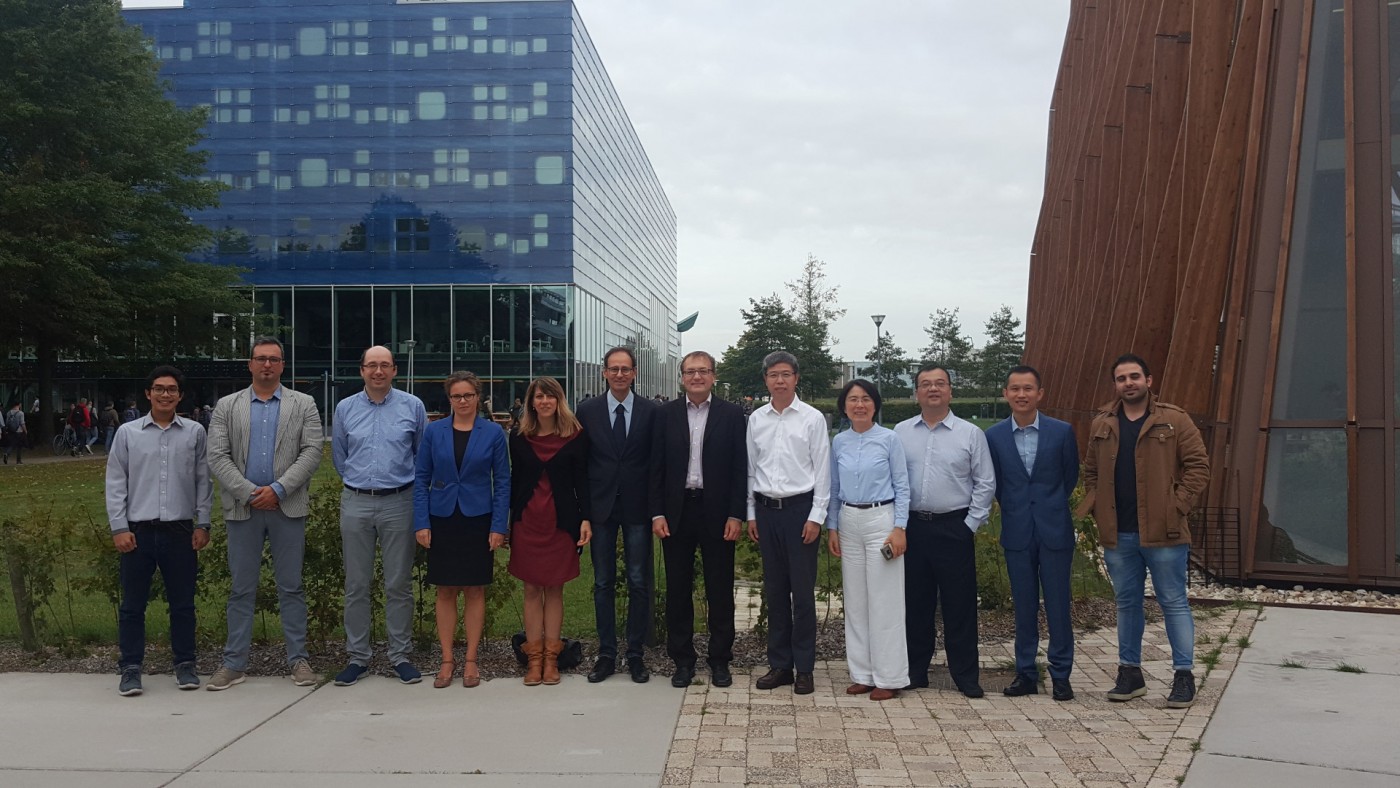
A Bournemouth University team from the Faculty of Science and Technology visited University of Groningen for FIRST mid-term review. It was a very productive meeting with a lot of effective outcomes for research and knowledge exchange. Dr. Lai Xu and Dr. Paul de Vrieze are FIRST coordinators representing Bournemouth University and the team is pleased to announce that FIRST will continue to move towards a factory of the future for European Union.

If you want to know more about the project and get involved, please contact Dr. Lai Xu or Dr. Paul de Vrieze. You can also follow our social medial links on Facebook, Twitter, Instagram and YouTube Channel.

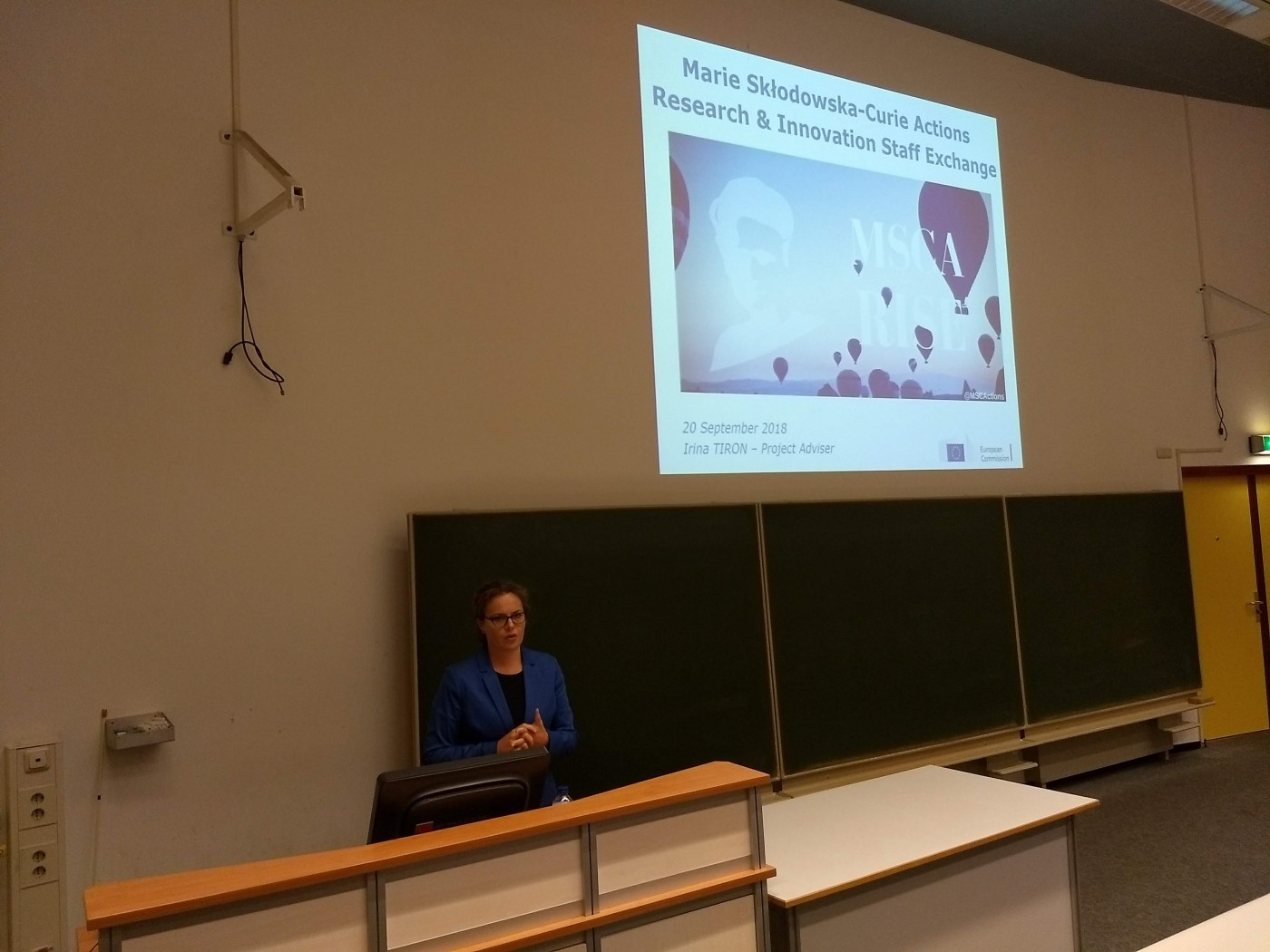
During the mid-term review meeting, the FIRST EU project advisor Irina Elena Tiron giving a talk on RISE projects. A useful instrument for researchers in EU (and beyond).

Publish Open Access in Springer Journals for Free!

BU has an agreement with Springer which enables its authors to publish articles open access in one of the Springer Open Choice journals at no additional cost.

There are hundreds of titles included in this agreement, some of which are – Hydrobiologia, European Journal of Nutrition, Annals of Biomedical Engineering, Climatic Change, Marine Biology and the Journal of Business Ethics. A full list of the journals included can be found here

To make sure that your article is covered by this new agreement, when your article has been accepted for publication, Springer will ask you to confirm the following:

  • My article has been accepted by an Open Choice eligible journal
  • I am the corresponding author (please use your institutional email address not your personal one)
  • I am affiliated with an eligible UK institution (select your institutions name)
  • My article matches one of these types: OriginalPaper, ReviewPaper, BriefCommunication or ContinuingEducation

Springer will then verify these details with us and then your article will be made available in open access with a CC BY licence.

Please note that 30 Open Choice journals are not included in this agreement as they do not offer CC BY licensing.

If you have any questions about the agreement or the process, please contact OpenAccess@bournemouth.ac.uk

Plan S – Making Open Access a reality by 2020

On 4 September 2018, 11 national research funding organisations, with the support of the European Commission including the European Research Council (ERC), announced the launch of cOAlition S, an initiative to make full and immediate Open Access to research publications a reality. It is built around Plan S, which consists of one target and 10 principles.

cOAlition S signals the commitment to implement, by 1 January 2020, the necessary measures to fulfil its main principle: “By 2020 scientific publications that result from research funded by public grants provided by participating national and European research councils and funding bodies, must be published in compliant Open Access Journals or on compliant Open Access Platforms.”

Further information on cOAlition S can be found here – https://www.scienceeurope.org/coalition-s/

Some reactions can be found here –

LERU

Nature

Science

STM

Open Research Day – Today!!

Today colleagues will be available on both campuses to answer all your queries in regards to Open Research.

We’ll be in BG11 on Lansdowne between 9 and 12pm and FG04 on Talbot between 1 and 4pm.

Pop on down… there is cake! 🙂


What is Open Access?

Open access is about making the products of research freely accessible to all. It allows research to be disseminated quickly and widely, the research process to operate more efficiently, and increased use and understanding of research by business, government, charities and the wider public.

There are two complementary mechanisms for achieving open access to research.

The first mechanism is for authors to publish in open-access journals that do not receive income through reader subscriptions.

The second is for authors to deposit their refereed journal article in an open electronic archive.

These two mechanisms are often called the ‘gold’ and ‘green’ routes to open access:

  • Gold – This means publishing in a way that allows immediate access to everyone electronically and free of charge. Publishers can recoup their costs through a number of mechanisms, including through payments from authors called article processing charges (APCs), or through advertising, donations or other subsidies.
  • Green – This means depositing the final peer-reviewed research output in an electronic archive called a repository. Repositories can be run by the researcher’s institution, but shared or subject repositories are also commonly used. Access to the research output can be granted either immediately or after an agreed embargo period.

Article first published – http://www.hefce.ac.uk/rsrch/oa/whatis/

To encourage all academic communities to consider open access publishing, Authors Alliance has produced a comprehensive ‘Understanding Open Access‘ guide which addresses common open access related questions and concerns and provides real-life strategies and tools that authors can use to work with publishers, institutions, and funders to make their works more widely accessible to all.

To access and download the guide, please follow this link – http://authorsalliance.org/wp-content/uploads/Documents/Guides/Authors%20Alliance%20-%20Understanding%20Open%20Access.pdf

For any other open access related queries, please do get in touch with Shelly Anne Stringer in RKEO.