Women Academics Centre Stage in Presidential Roles in Major International Professional Bodies and Conference Organisation
3rd International Sociological Association Forum of Sociology
10-14 July2016, University of Vienna, Austria

Professor Ann Brooks
Bournemouth University
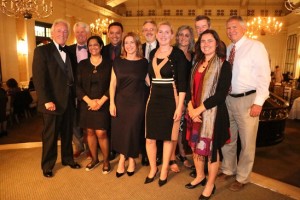
This year’s Third ISA was held at the University of Vienna and shortly after Brexit, so I braced myself to face a barrage of jokes and recriminations about the UK vote. Well there was some gentle humour in the plenaries but the response was mainly one of pity. The conference was based in the opulence of the University of Vienna… . With its historical and contemporary position in relation to both European and global sociology this conference attracted 4,000 sociologists from across the globe. I usually find the ISA a somewhat unwieldy conference compared to the BSA and ASA but Research Committtee (RC) 32 Women in Society, has a wonderfully inclusive feel and gave coherence to the entire conference for me (see below). Increasingly some of the best conferences have women centre stage, including the ASA 2015 Conference in Chicago, with the then ASA President, Paula England, and the current ASA President and Chair of the 2016 Program Committee, Ruth Milkman (CUNY –Graduate Centre). The ASA Conference was held in Seattle in August 2016. The current ISA President is Margaret Abraham (Hofstra University, USA) who together with a team at the University of Vienna delivered a conference which did not disappoint.

A series of important and thoughtful plenaries addressed the global dimensions of the conference with the University of Vienna organising team providing an interesting European dimension addressing the Brexit issue. A generally favourable balance was achieved between global and European dimensions. The Opening Plenary featured a number of academics from the University of Vienna and they were clearly delighted at attracting over 5,000 sociologists to this impressive university as the conference base. The Dean of the Faculty of Social Sciences at the University of Vienna, Ulrike Felt, provided an uplifting and impressive summary of the social sciences at the University Vienna and I can see the number of applicants for positions there escalating as a result. It was also great to see governmental support for the social sciences, with Barbara Weitgruber, Director General, Austrian Ministry of Science delivering a very positive statement in support of the social sciences. Margaret Abraham’s ISA Presidential Address, found here:
http://www.isa-sociology.org/forum-2016/
https://www.youtube.com/watch?v=LW44_sW4Jmc
was an important statement in equity and intersectionality and made an important contribution to this lively opening Plenary. Margaret is also an important contributor to the ASA Conference, particularly in terms of the International aspects of both conferences.
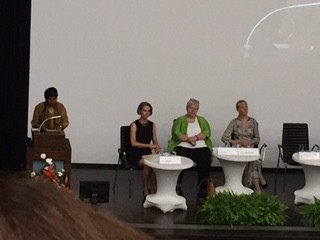
While the conference lacked the celebrity appeal of the ASA, it certainly did not lack in the seriousness of the debates. One of the most interesting debates came from the closing plenary chaired by Marcus Schultz (New School for Social Research, New York), with Asef Bayat (University of Illinois) ‘Imagining a Post-Islamist Democracy’, Akosua Adomako Ampofo (University of Ghana) ‘Black Lives Matter and the Status of the African World’, Todd Gatlin (Columbia) ‘What Kind of a World Can Weather Climate Change?’ and Alain Touraine (Ecole des Hautes Etudes en Science Sociales, France), as discussant.
Research Committee (RC) 32 Women in Society
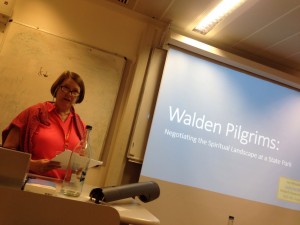
The size of the conference meant that affiliation to specific programs proved a favoured response. I am a member of RC32 Women in Society and the program was widely regarded as one of the best at the conference. The Program Coordinators for RC32, Akosua Adomako Ampofo and Josephine Beoku-Betts (Florida Atlantic) had worked to organise an extensive range of panels and roundtables including: ‘Human Trafficking: The Labour and Sexual Exploitation of Women and Children’; ‘Twenty Years after Beijing: A Cross-National Approach to Feminist Movements and the Implementation of the Platform for Action’; ‘Global Sociology and Feminist Perspectives on Care, Care Work and the Struggle for a Careful World’; ‘Knowledge Production: Feminist Perspectives in the 21st Century’; ‘Gender, Law and the Courts: Local and Global Struggles Against Violence’; ‘ Intersectionalities of Power in Research: Strategies for Action and Justice’; ‘Gender, Culture and Technologies in the Knowledge Economy’; ‘Muslim Women’s Struggles for a Better World through Promoting Gender Equality’; and ‘The Cities We Want: Using Visionary Methodologies to Create Feminist Alternatives to Urban Planning’. My paper was in the ‘Precarity and Gender in the Era of Neoliberal Globalization’ and I focused on relational precarity as highlighted in the work of Lauren Berlant entitled: ‘Gender, Precarity and Sexuality: The Intersection of Gender, Ethnicity, Sexuality and Class in Relational Precarity in Neoliberal Society–the Influence of Lauren Berlant’. .
The double badging of sessions with RC32 with other RCs was a really valuable dimension of the conference, this was particularly the case for the RC02 Economy and Society led by the Program Coordinator, Heidi Gottfried, which included some excellent sessions including: ‘Gender Regimes or Gendered Institutions’ organised by Sylvia Walby. A particularly interesting session was the ‘Author Meets Critics: Crisis by Sylvia Walby’. Chaired by Heidi Gottfried and with discussants Stephanie Woehl (Vienna) and Christopher Chase-Dunn (California-Riverside). This proved to be one of the most coherent and intense social and political analyses including the focus on the EU and had anticipated Brexit. Sylvia’s response to criticism was powerful and wide-ranging and pointed to the next political crisis being in the EU not the UK. She also calls for a ‘regendering of the political project’.
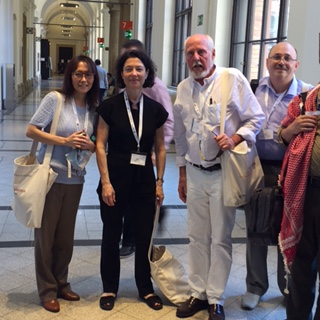
This was a really fascinating conference, serious in its debates and commemorating the work and loss of John Urry.
Professor Ann Brooks
August 2016
 aths and many hundreds cases of injuries among Nepalese workers in these countries excluding India. For example, the Foreign Employment Promotion Board of Nepal recently reported that 1002 Nepalese migrant workers died in the 6 GCC countries and Malaysia in the last Nepalese calendar year, of which 357 (36%) were documented as cardiac related. However, in a quarter of deaths, the cause was unknown. Postmortem examination of migrant workers in many destination countries is not carried out and official records of the destination countries tend to record these deaths as being ‘from natural causes’. Information on underlying causes, such as heat stress on construction sites, is often not available.




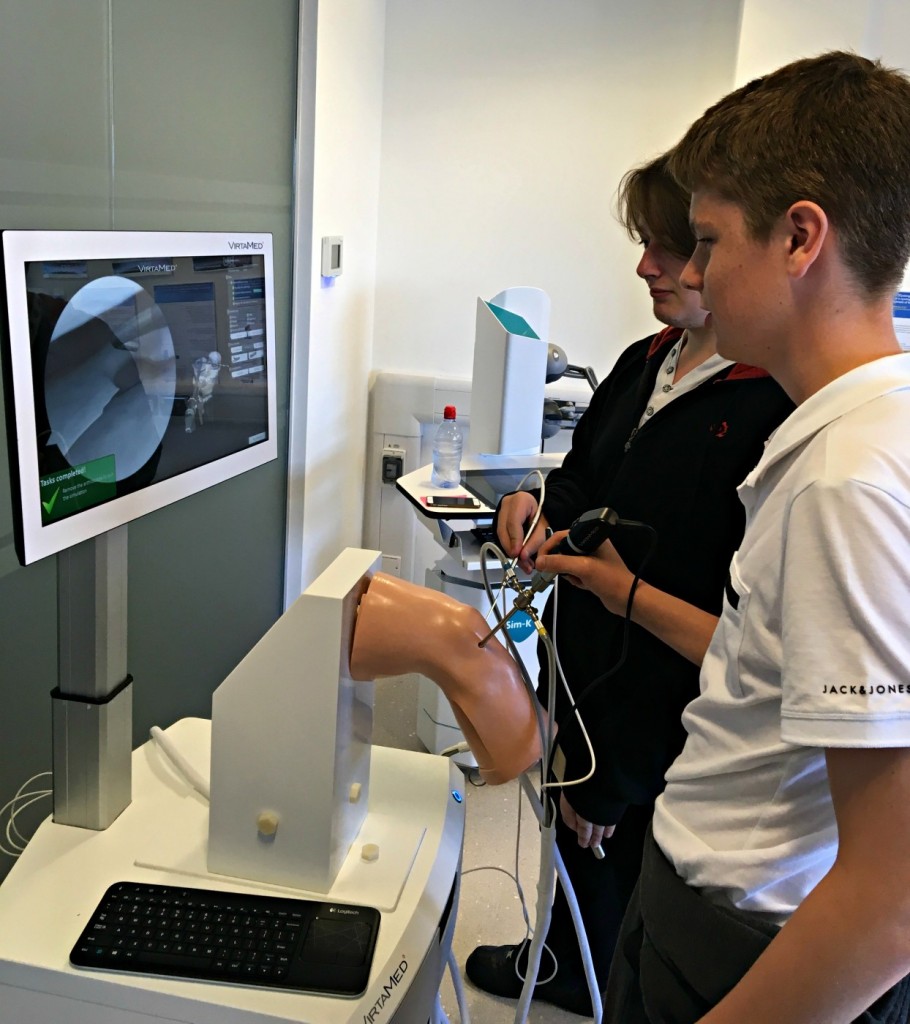 ary tests to be carried out for different aspects associated with balance, these include: anticipatory tests (when preparing for something to happen), reactive postural control (how you react to a change in motion), sensory orientation, and dynamic gait speeds (walking speeds and how they change in different circumstances). This was necessary in order to see how the effects of inspiratory muscle training effects balance over the course of 8 weeks.
 Congratulations to Dr. Pramod Regmi as the lead author of the paper ‘







 Verbal autopsy paper published two days ago
 ESRC Studentships for 2027 Entry: Opportunity Now Open
 SONAMONI contributions to Safety Conference 2026 in South Africa
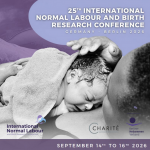 Three CMWH presentations at Berlin conference
 Horizon Europe Cluster 3 (Civil Security for Society) 2026 Calls Now Open
 MSCA Doctoral Networks 2026 Call Information Webinar
 ESRC Festival of Social Science 2026: Application Deadline Extended to Thursday 25 June 2026
 Reminder: Register for the ESRC Festival of Social Science 2026 Information Session
 ECR Funding Open Call: Research Culture & Community Grant – Apply now
 ERC Advanced Grant 2025 Webinar
 Update on UKRO services
 European research project exploring use of ‘virtual twins’ to better manage metabolic associated fatty liver disease