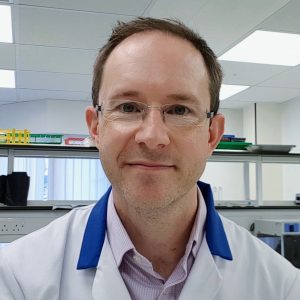
Matthew Armstrong is starting a recruitment process for a research study looking at the promotion of physical activity in individuals with long term symptoms of COVID-19.
Please see the attached poster for further information.
Latest research and knowledge exchange news at Bournemouth University
Matthew Armstrong is starting a recruitment process for a research study looking at the promotion of physical activity in individuals with long term symptoms of COVID-19.
Please see the attached poster for further information.
At 3pm on Wednesday this week (23 February), Prof Klaus Gramann will give a talk in Psychology’s research seminar series. Klaus is based in Berling Institute of Technology and is a world-leading expert in mobile brain/body imaging. In this talk, Klaus will inspire us with his recent research using mobile EEG in virtual reality (VR) to study naturalistic human behaviour and neural processing. Klaus was invited by Dr Xun He (Head of Bournemouth EEG Lab, Psychology). Klaus’s expertise and research are perfectly aligned with the work we are doing at BU’s strategic research cluster Multimodal Immersive NEuro-sensing (MINE). If you are interested in mobile brain/body imaging and our MINE initiative, please do come along and join us in hearing Klaus’s talk by following this link.
Note: Earlier I said 23 March. It should be February. How could I fast forward the time by a month! Sorry about this mistake.
At Café Scientifique, you can explore the latest ideas in science and technology in a relaxed online setting. Enjoy listening to a short talk before engaging in debate and discussion with our guest speaker and audience.
We’ll be joined by Malika Felton on Tuesday 1 March from 7.00pm until 8.30pm.
Deep breathing to lower blood pressure
High blood pressure affects around 1 in 3 adults in the UK and is a major risk factor for conditions such as heart failure and stroke. There are many treatments available, but deep and slow breathing could also help, with research suggesting that just ten minutes a day could reduce blood pressure with lasting effects.
Join us to discover more and try out slow and deep breathing for yourself.
Attendance is free but booking is required
The Doctoral College Newsletter provides termly information and updates to all those involved with postgraduate research at BU. The latest edition is now available to download here. Click on the web-links provided to learn more about the news, events and opportunities that may interest you.
If you would like to make a contribution to future newsletters, please contact the Doctoral College.
This week, we’ll be running a series of blog posts on managing rejection. These will include experience from academics, advice on what to do next, tips of understanding EU evaluation reports, and what support is available for you to take the next steps. Leading on from this, next week, we will run a series of posts on institutional learning from funder feedback, and so make sure you’re glued to the research blog for the next couple of weeks. The first and second posts are about managing rejection.
Unfortunately, rejection is part and parcel of academic life. If you watch the TV series ‘Ozark’, rejection can feel like Darlene Snell offering to get the lemonade. You need to try not to take it personally, no matter how hard that is given the weekends and evenings you may have given up to craft your bid. There may be many factors as to why you didn’t get funded, and hopefully, you’ve been provided with feedback from the funding panel (not all do, sadly). The most frustrating feedback is when you were deemed fundable, but there wasn’t sufficient budget.
When a funder doesn’t provide panel feedback, you should at least receive the reviewers’ comments (note that research councils will send these to you in advance of the panel so that you have a right to reply). These can be a mixed bag, and so don’t focus on the odd sentence that stands out (there is always one), but look collectively at what the reviewers’ are saying.
All is not lost! A huge amount of work goes into the development of a proposal. It is a great shame to park your idea, when it could be re-worked, and submitted to an alternative funder. Alternatively, it might be time to develop a new project idea. Before you decide, you need to take time to reflect on the failed application.
After you’ve given yourself a couple of days to get over the shock, grab a cuppa and revisit the feedback, together with your application, and the funder guidance. This will give you an opportunity to reflect on what you would do differently. This might involve having the right networks in place; did you really meet the call criteria or did you crowbar your research to fit; did you articulate well enough in the sections of the application; did you use the right research methods, was your research really state of the art? Ultimately, did you leave enough time to plan out the application and submit a high-quality bid?
Once you’ve digested all of this, it’s time to think about what to do next. Tomorrow’s post will explore this in more detail.

Every year, the Research & Knowledge Exchange Office, along with internal and external delivery partners, runs over 150 events to support researcher development through the Research & Knowledge Exchange Development Framework (RKEDF).
Responding to your feedback and by popular request, below are the main events coming up over the next six months – please click on the ‘details and booking information’ link to find out more and reserve your place as soon as possible:
| Date | Start and End Time | Event Title | Details and booking information link |
| 28/02/2022 | 09:30-12:30 | Fellowships: Being Strategic | Fellowships: Being Strategic – Bournemouth University Intranet. |
| 07/03/2022 | 9:30-11:30 | Unsuccessful Applications Repurposing workshops | Repurposing Your Unsuccessful Grant Applications – Bournemouth University Intranet. |
| 24/03/2022 | 09:30-12:30 | Refining your research idea | Fellowships: Refining your Research Ideas – Bournemouth University Intranet. |
| 13/04/2022 | 11:00-13:00 | British Academy Mid-career Fellowship and British Academy/Leverhulme Senior Fellowship – (Mid-career Fellowships outline stage will likely open in July 2022; Senior Fellowships in October 2022) | British Academy Mid-career Fellowship – Bournemouth University Intranet. |
| 27/04/2022 | 11:00-13:00 | British Academy Postdoctoral Fellowship (BAPDF) and Leverhulme Trust Early Career Fellowship (LECF) (BAPDF will likely open for outline stage in July 2022; LECF in January 2023) | British Academy Postdoctoral Fellowship – Bournemouth University Intranet. |
| 05/05/2022 | 09:30-12:30 | Fellowship Interviews Techniques | Fellowships: Interviews – Bournemouth University Intranet. |
| 11/05/2022 | 11:00-13:00 | Leverhulme Research Project – Outline – | Leverhulme Research Project Outline Stage – Bournemouth University Intranet. |
| 20/05/2022 | 09:30-11:30 | Unsuccessful Applications Repurposing workshops | Repurposing Your Unsuccessful Grant Applications – Bournemouth University Intranet. |
| 25/05/2022 | 11:00-13:00 | AHRC Research Development and Engagement fellowships workshop (ECR and Standard) – | AHRC Leadership Fellowship – Bournemouth University Intranet. |
| 08/06/2022 | 11:00-13:00 | ESRC New investigator | ESRC New investigator – Bournemouth University Intranet. |
| 04/07/2022 | 09:30-11:30 | Unsuccessful Applications Repurposing workshops | Repurposing Your Unsuccessful Grant Applications – Bournemouth University Intranet. |
Welcome to our new series, The Friday Prof-ile – a chance to get to know some of our recently appointed Professors and Associate Professors a little better. Every Friday, we’ll be asking a different person the same set of questions to get an insight into their life, work and what makes them tick.
This week, we’re chatting with Associate Professor in Social Work, Mel Hughes.

Mel Hughes
What are your research interests? What made you want to study these areas?
As a social worker, I am interested in marginalised groups and communities currently under-served by health and social care research. My main interests in both education and research are in valuing the expertise of people with lived experience and using my platform as an educator and researcher to amplify these voices through co-produced and participatory methods.
What has been your career highlight to date?
There are two that immediately come to mind. The first was seeing a copy in print (and on Amazon!) of the book I co-authored and edited with people with lived experience and social work colleagues on Statutory Social Work Interventions: The lived experience. It was a genuine collaboration, and it was exciting hearing from all the contributors as they received their copy in the post.
The second was receiving a phone call (whilst walking on the beach) from Advance HE to say I had been awarded a National Teaching Fellowship. As an Associate Professor I am as passionate about education and the student experience as I am about professional practice and research. It felt like acknowledgment of my value as an educator.
What are you working on at the moment?
I am co-authoring and editing a textbook on Social Exclusion in the UK: the lived experience and leading on a special issue of the British Journal of Social Work written by people with lived experience rather than about people with lived experience. I am also leading on an ESRC research bid on democratising public involvement in research, where we are seeking to build capacity of researchers to work alongside marginalised communities currently under-served by health and social care research.
If you weren’t an academic, what would you be doing?
I started my career as a social worker in substance use and mental health services. I would like to think I would still be in practice. I secretly crave the idea of being in the great outdoors on some sort of community project or farm.
What do you do to unwind?
Walking, walking and walking (usually with a dog pulling me along)
What’s the best thing about Bournemouth?
The BU Social Work and PIER Partnership teams. I can honestly say I have never worked with a more supportive group of people.
If you could pick any superpower, what would it be and why?
Invisibility. The quality that best combines the social work and academic role is curiosity (or being nosey). Oh to be a fly on the wall!
If you were stranded on a desert island, what one luxury item would you take with you?
A comfy bed.
What advice would you give to your younger self?
Stay true to your values.
If you’re a recently appointed Professor or Associate Professor and you’d like to be featured in the series, please contact research@bournemouth.ac.uk to find out more and get involved.
Are you, your company, or not-for-profit organisation looking to grow with a wider network?
This event is a chance for industry of all sizes to meet BU/BCP colleagues that may have access to information and expertise that can bring impactful changes to your organisation.
The session is an open networking event with attendees invited to speak around a theme, for around two minutes.
Theme slots. – To aid collaboration, those speaking will be asked to say who they are, what they do, and what they are looking for in collaborators. Don’t worry if you are feeling a little shy, there will be plenty of time for networking.
The programme will be as follows:
Why attend?
This networking is open to all looking to meet new people from different sectors. Attendees will include a mixture of academics from universities, as well as representatives from industry and other sectors.
There will be a short expert talk, and a quick highlight made of the many types of collaborations that can occur from the relationships that can be formed (e.g. collaborative research, to knowledge exchanges and student placements).
If you have ever been curious about working with a University, this is a relaxed opportunity to find out more. The majority of government funding for R&D goes to collaborations.
There is limited availability, but if you have any queries, please contact Ehren Milner, (emilner@bournemouth.ac.uk) Research Facilitator, for Bournemouth University.
As it is Parliamentary recess, we thought we would do a general policy round up this week
We’ve updated our separate paper on fees, funding and finance for BU readers while we wait for the final response to the Augar review.
Post-Brexit there is still a great deal of uncertainty about whether we will be able to join Horizon Europe and what happens if we don’t. Science Minister George Freeman has started talking about Plan B domestic funding (£6 billion) to replace it, although that doesn’t deal with issue about collaboration on EU projects.
Linked to productivity and regional economic success, there is a big focus on the “right sort” of research. We will continue to see a focus on industry led rather than university led projects and a downturn in funding for humanities and social sciences research, with priority given to projects that lead directly to improvements in productivity and economic gain, as well as medical or health benefits – rather than “pure” or theoretical research. The other focus is on “place” – linking research and funding to local and regional needs.
We don’t yet have a letter to the OfS from the Secretary of State, Nadhim Zahawi setting out his priorities – in contrast to his predecessor, who wrote many such letters. We do have a letter about access and participation from November 2021, announcing the new Director of Fair Access and Participation and directing a change in approach. He has also engaged in the ongoing discussions about antisemitism on campus.
The Universities Minister has taken a much higher profile role now that she is a member of cabinet, writing directly to universities, and even phoning them, apparently. According to a speech at a UCAS event in February 2022, her priorities include quality, fair access and transparency. She is actively campaigning on a range of issues including mental health support, the use of non-disclosure agreements in cases of bullying and harassment, advertising in HE and the use of personal statements in admissions. And unconditional offers. Just a side note on admissions – speaking to UCAS and not mentioning the DfE consultation on post qualifications admissions really does suggest that it has been kicked into the very long grass. This was Gavin Williamson’s thing…and once again the complexity of the change required seems to have stopped it progressing.
In his November 2021 letter, Nadhim Zahawi said:
And
The OfS has shared more than a hint of what is to come under the new Director for Fair Access and Participation (read more here).
The big thing in 2022. We did a detailed review of all of the current proposals in our policy update on 21st January 2022. It’s all there – absolute numbers for baseline standards on student outcomes metrics (continuation, completion and progression to highly skilled employment or further study), to be published split by subject and a wide range of other criteria including student characteristics, to support the access and participation agenda noted above. But also a whole load of other licence conditions about keeping courses up to date and coherent, to ensure that they develop relevant skills, that students are supported to achieve high quality outcomes, that students are engaged with course development and that courses are properly resourced.
Building on these “baselines”, we also have a new TEF! With a new category of “requires improvement”, still using the NSS, and with a new “aspect” of educational gain. While not a subject level TEF, again, all the data will be published using similar splits to the regulatory data referred to above (including subject and student characteristics) and the way that the ratings are awarded means that problems in subject areas or for particular groups of students could pull down institutional ratings. The 20 page submission will be expected in mid-November 2022.
And the OfS are still reviewing the NSS.
This is still a thing, although the white paper that is supposed to define how it will be implemented is still not available so no-one really knows what it all means. We hear a lot about the lifelong loan entitlement and modular learning. The Skills Bill itself is at report stage in the House of Commons in February 2022, having been though all stages in the Lords.
We were hoping for more information in the Levelling-Up white paper. We covered this extensively on 7th February 2022. As we said, more than a third of the 300 pages is data analysis, and even in the policy sections there’s a lot of waffle and reviewing of previous initiatives to justify the new approach – 12 big “missions for 2030”. A lot of the policy stuff is in the “things we are already doing or have announced before” box. There is very little in here for Dorset either. And there are thin pickings in terms of HE policy.
One thing that is in the bill – a clause aimed at outlawing essay mills.
After a big focus on this through the pandemic, worries seem to have subsided. The last report is from the OfS in June 2021:
The Higher Education (Freedom of Speech) Bill has made fairly slow progress, at the report stage in the House of Commons as at February 2022, with the whole Lords process still to go. The culture wars rage around this. Was xx no platformed or simply not invited? Did a protest mean someone was “cancelled” or was it a legitimate protest? Does it depend on the subject matter and whether those opining agree or disagree with the position of those protesting? Where is the line between legal, but controversial, speech, and speech that breaks the (existing) law. Which speakers will be protected for their controversial, but legal speech, and which won’t because, although legal, their speech was in some other way deemed to be unacceptable. Hmm. There’s a neat summary from February 2022 here.
To subscribe to the weekly policy update simply email policy@bournemouth.ac.uk. A BU email address is required to subscribe.
External readers: Thank you to our external readers who enjoy our policy updates. Not all our content is accessible to external readers, but you can continue to read our updates which omit the restricted content on the policy pages of the BU Research Blog – here’s the link.
Did you know? You can catch up on previous versions of the policy update on BU’s intranet pages here. Some links require access to a BU account- BU staff not able to click through to an external link should contact eresourceshelp@bournemouth.ac.uk for further assistance.
JANE FORSTER | SARAH CARTER
VC’s Policy Advisor Policy & Public Affairs Officer
Follow: @PolicyBU on Twitter | policy@bournemouth.ac.uk
Following the launch of Round 2 of the IMIV MRI Pump-Priming Research Scheme, the window for applications for innovative MRI research projects has re-opened.
The aim of the scheme is to support projects that will lead to competitive external funding applications for MR imaging studies. Applications are therefore required to demonstrate a clear plan for progressing preliminary studies to grant applications and larger studies.
The second window for applications is now open, and closes on Friday 22nd April 2022. Subject to availability, there will be further application windows during the year.
To receive the application form, please email imiv@bournemouth.ac.uk.
Following the announcement of the new electronic ITB form on 24 January 2022, these are some updates since the launch.
The new ITB form and Enquiry service will provide a better user experience and create a more efficient administrative control process for Research Development and Support (RDS).
New ITB form: The new Intention to Bid (ITB) form and the updated Research Costings Request Sheet are both available now in the Policies & Procedures/Research/Pre-award section of the intranet under Research > Pre-award. Please complete the Research Costings Request Sheet and attach it to the e-ITB form for completion. PDF copies of all submissions can be printed or saved but there are limitations to editing a form once it has been submitted.
Bid Enquiry Process: If you have more than 4 weeks to the submission deadline and need advice or support regarding a bid, please access the same form link and select ‘Enquiry/Advice on Bidding’. This ensures that the pre-award team will see your Enquiry, rather than emailing a sole officer who may not be available at the time.
As a service, RDS is committed to delivering service excellence to enable BU’s academic community to deliver and grow world-leading research for societal benefit. The program of work continues to look at processes to enhance the user experience.
Changes include improvements to the pre- and post-award support being offered. Building on the delivery of a new Principal Investigator report which is currently in the final stages of being rolled out, and continuing our collaboration with the Transformation Team.
For any queries about the transformation of pre-award services at BU, please contact Jo Garrad or Brian Kaliczynskyj to discuss further.
For any technical issues in relation to the form, please contact Roy Harvey directly.
The Public Engagement Innovation Grant Scheme provides financial support for the delivery of pathology-related activities and events in the UK.
Grants of up to £1,000 are available for individuals or organisations who wish to develop pathology-related public engagement activities or events.
The Innovation Grant Scheme aims to:
The Public Engagement Innovation Grant Scheme 2022 is now open.
If you would like to apply for funding for an eligible project, please download the documents and return the completed application form to publicengagement@rcpath.org by 23:59 on Wednesday 1 June 2022.
Should you require any further information, please contact publicengagement@rcpath.org
Alternatively, please contact Adam Morris (BU Engagement Officer) if you would like advice on planning or submitting your application publicengagement@bournemouth.ac.uk
RESEARCH CAPACITY TRANSFORMATION SCHEME – Call for expressions of interest
Apply now for a cluster of postgraduate researchers and postdoctoral research fellows – closing date for EoIs on 7th March
Bournemouth University’s (BU) recognises that postgraduate researchers (PGRs) and postdoctoral research fellows (PDRFs) are critical to a high performing research environment. Working under the direction of academic research leadership, they provide academic staff with research capacity, which enables the production of research outputs, strengthens research impact, and increases grant bidding.
Key information
The Research Capacity Transformation Investment Scheme is focused on building capacity to undertake cutting-edge research securing external research funding. A cluster hiring approach will be used to appoint inter- and/or multi-disciplinary teams of PDRFs and PGRs that focus on a common theme to create “clusters” undertaking strategically important and targeted research. The scheme will invest in:
The clusters need to build critical mass in areas of research strength and provide a team-based, fused experience for PDRFs and PGRs that is anchored in one or more existing high performing entities, such as Research Centres or Institutes. Applications must include external match-fund partners for the PGR studentships.
Full details of the scheme, including the policy document, can be found on BU’s staff intranet.
Application Process
The application process will be in two stages:
To ensure there is timely progress, Research Development & Support and the Doctoral College will manage the funding application process 2022, with oversight of the recruitment process.
The indicative timetable for the 2022 allocation and recruitment is as follows:
| Date | Action |
| Monday 7th March 2022 | Closing date for submission of EoIs (see Appendix 1) at 12 noon |
| Monday 21st March 2022 | Successful applicants invited to provide a full application form (see Appendix 2)
Unsuccessful applicants notified |
| Monday 25th April 2022 | Closing date for submission of full applications at 12 noon |
| w/c Monday 16th May 2022 | Successful outcomes announced and recruitment to commence
Unsuccessful applicants notified |
| June 2022 | Adverts for positions to close |
| July 2022 | Interviews and selection |
| From 1st September 2022 | Successful PDRFs to start (funding available from 1 September 2022) |
| From 26 September 2022 or 23 January 2022 | Successful PGRs to start (funding available from 26 September 2022 with an alternative start date of 23 January 2023) |
Submission Deadline:
Before completing the EoI or full application form, please ensure that you have read all the relevant guidance (including the policy document) and information available on the Staff Intranet.
Applications should be emailed to researchcapacitytransformation@bournemouth.ac.uk before the following deadlines:
Monday 7th March 2022 Closing date for submission of EoIs at 12 noon
Monday 25th April 2022 Closing date for submission of full applications at 12 noon
Supporting Documentation
Recruitment of PGRs will be in line with the BU Match-Funded Studentship Allocative Process .
For additional queries, please email researchcapacitytransformation@bournemouth.ac.uk
FAQs
Our student nurses had a change of tutor this week, with James King, author of ‘Accelerating Excellence: the Principles that drive elite performance’ coming in to offer a keynote to set up their day. James outlined, through numerous examples, how to drive up our performance, whether we are studying, working, or trying to move to that healthier lifestyle! His main message was that it is elite performers do not simply add more and more hours to improve, but they change their mindset, and train in the ‘sweet spot’. He followed through with some clear principles about moving from ambition to follow through. Media student Sam Pickle came along to film the session, and kindly took the photos of James.
One student said afterwards: ‘I wish we had James talk to us in the first year, his messages are so clear, and it would have really helped me get into the mindset‘
and with the film on its way, we can share James’ work more widely.

About the book:
In Accelerating Excellence James King draws on his fifteen years of experience as a trusted advisor to some of the worlds most elite and exclusive organisations combined with cutting edge scientific research to reveal the foundational principles that are proven to drive elite performance. This inspiring book is bursting with highly actionable strategies you can apply today that will make you better tomorrow.
You will learn how to:- Align with the principles all outlier performers have leveraged in order to obtain and sustain elite performance- Ignite your psychological firepower and unleash the inner confidence, motivation and resilience that we all know drive success. – Apply a methodology that will channel your ambition, talent and effort so allowing you to get better faster.- Rapidly acquire skills that stick blowing the 10,000-hour rule out the water. – Win the head game mastering your emotions so you can access your best when it matters most – Generate breakthrough solutions to innovate and stay ahead of the rest. Accelerating Excellence will revolutionise the way you perceive excellence, potential and talent, crushing some of the most entrenched assumptions along the way. You will emerge inspired about the possibility that exists before you, enriched with purpose, structure and direction along with a biological and psychological edge over the competition.
Sharon Holland and Debbie Holley
Evidencing impact from research remains a huge challenge.
This workshop from Fast Track Impact will build on the paper by Mark Reed et al, “Evaluating impact from research: A methodological framework” (recommended reading prior to the workshop) to consider methods for evidencing impact in three particularly challenging areas: capacity building, policy and cultural impacts.
The three speakers will provide a variety of insights, case studies, methods and tips from their specialisms in evaluating impact.
The session includes significant time for group interaction, and participants are encouraged to bring their own evaluation challenges to the group for discussion.
Do you have a great idea for a project that will help make the chemical sciences community more inclusive and diverse?
About the fund
The Inclusion & Diversity Fund provides financial support for innovative products, activities and research projects.
Previous recipients of funding have included projects related to gender, disability, socio-economic background, language, race and ethnicity, the LGBT+ community and more. These have been delivered via initiatives such as data collection and analysis, workshops, conferences and hackathons.
Who can apply
The grant scheme is open to everyone (individuals and organisations). This includes, but is not limited to, members of the Royal Society of Chemistry, member-led groups, researchers in academia or industry, museums, community groups, not-for-profit organisations, arts groups and libraries.
Previous recipients of any of our grants are welcome to apply for funding. This can be to scale-up a project that already exists or to fund the development of an original project. Applicants should not resubmit an unsuccessful application unless invited to do so.
How to apply
You can use this preview of the application form to help you prepare your answers, but applications must be submitted through the online SmartSurvey form using the button below.
Application deadlines
The Inclusion & Diversity Fund accepts applications throughout the year, which are reviewed in two rounds per year.
| Deadlines | Round 1 | Round 2 |
| Application submissions due by: | Monday, 25 April 2022 | Monday, 19 September 2022 |
| Funding decisions returned by: | Friday, 10 June 2022 | Friday, 4 November 2022 |
For more information, please contact the Inclusion and diversity team: diversity@rsc.org
Alternatively, please contact Adam Morris (BU Engagement Officer) if you would like advice on planning or submitting your application publicengagement@bournemouth.ac.uk
We have five RKEDF Impact-related workshops coming up over the next month; please use the links below to book onto them via OD:
Impact and Funding Applications: 16th February at 15:00
Influencing Policy – with Professor Mark Reed: 1st March at 13:00
Getting started with research Impact: what is it?: 8th March at 14:00
Inspirational Impact – a lunchtime seminar with Professor Zulfiqar Khan: 24th March at 13:00
Evidencing Impact – with Saskia Gent: 29th March at 9:30
We’d be delighted to see you there!
If you have any questions, please contact the Impact Advisors – Amanda Lazar or Beth Steiner
Hi all, Parliament are in recess but there is plenty going on. We start with last week’s reshuffle and research, but there are strong hints about new plans for access and participation
Last week there was a mini reshuffle of the parliamentarians holding Government. The appointments effectively draw his loyal staff ever closer and bolster up support for Boris personally within the Cabinet.
In addition, last week these appointments were made:
Research Spend: Andy Westwood reminds us of some key research spend points in Research Professional’s Sunday Reading Balancing the Books: The R&D mission
Horizon Europe: the prospect of the UK joining Horizon Europe appears to be slipping away. Last week in the Commons Science and Technology Select Committee Science Minister, George Freeman, stated:, It’s clear to me we can’t go into a financial year with ongoing uncertainty. So, internally, our thinking is that we need to be ready in the new financial year to start to release some of the funding that we’ve put aside for Horizon into programmes so that the science community isn’t left sitting on the bench, as it were, rather than on the pitch. What I’m keen to do is make sure that those could seamlessly—like a motorway’s slipway—segue back into Horizon association, were that to materialise after the French election [in April].
Research Professional suggest that 31 March will be make or break decision time. Research Professional report: Freeman spoke to the Financial Times about the UK’s ‘Plan B’, describing a £6bn global science fund to run over three years. The science minister is quoted as wanting a “coherent and ambitious plan for international science…based on the elements of Horizon that researchers find most valuable: global fellowships, strong industrial challenge funding [and] innovation missions around tomorrow’s technologies”. He added: “Outside Horizon, we have the freedom to be more global.” … The UK is not alone in feeling excluded from Horizon, with Switzerland similarly feeling its membership is being held up over debates around the wider political relations between the country and the EU…The FT story is not so much news as a periodic reminder that making a decision on association seems as difficult as ever.
Here’s the latest from the European Affairs Committee on Horizon Europe.
The ongoing campaigning to remain part of Horizon Europe has been a regular news feature this week. Wonkhe: Organisations across Europe are calling for science to be put above politics as the UK and Switzerland’s association with Horizon Europe remains in limbo. Universities UK has partnered with the Royal Society, Wellcome, EPFL, ETH Zurich, and the ETH Board to launch the Stick to Science campaign, which argues that the UK and Switzerland’s inclusion in the scheme will bring an estimated €18billion in additional funding, and are inviting signatures for the initiative. The PIE News and the Financial Times cover the story.
UKRI Chair: Business Secretary, Kwasi Kwarteng, was reported as vetoing the appointment of Jonathan Michie for UKRI’s Executive Chair role for party political reasons. The Guardian also run the story.
Global Talent: Wonkhe – The government’s new Global Talent website has launched with the aim of attracting research experts to come and innovate in Britain. The site, which is a collaboration between UKRI and several government departments, will provide information on working in and with UK universities, innovation, and business.
Destination Australia: The Russell Group call for closer research and mobility ties with Australia. In a joint letter sent to the Australian and British foreign and trade ministers, the Chairs of the Group of Eight (Go8) and the Russell Group, their countries’ key representative bodies for world-class research-intensive universities, said they would establish a new committee to look at ways to increase two-way research collaboration and explore how this could be used to boost trade and investment and support economic growth.
Parliamentary Questions:
France took up the rotating six-month Presidency of the Council of the European Union in January with the motto Recovery, strength and a sense of belonging. The agreed priorities for the next 18 months are:
Pages 4-5 of this briefing indicate more on the above themes and is an interesting short read. Also in the document is analysis of what the French premiership means. While the above listed items are the EU priorities France intends a particular focus on climate change, digital transformation, and security. The priorities have connotations for both research priorities and budgets as well as economic competition between the UK and EU.
Proposed amendments to the Skills and Post-16 Education Bill tabled by the Government aims to change the way the Office for Students (OfS) publicises investigations with HE providers and protect it from defamation claims. The OfS will be able to state publicly if it intends to investigate, or already is investigating, a provider or individual and will be protected from defamation claims. Where it publicises an upcoming investigation it must also publish the findings, even if no decision is reached or no further action is taken. The provisions would allow the OfS to publish notices, decisions and reports given or made in the performance of its functions, while considering:
Publications relating to a decision to conduct an investigation are to be protected from defamation claims if they include information on:
Wonkhe: …new clause 67C. In publishing details of a decision to conduct an investigation, summarising the matter that is being investigated, and naming the provider (or other body) under investigation the OfS is protected from defamation claims. This doesn’t apply to other information that the OfS may publish, and – wonderfully – it doesn’t apply if the publication “is shown to have been made with malice”.
The clause is controversial as this sort of disclosure risks damaging the reputation of HE providers even when the OfS decides not to take further action or implement sanctions. It also came up in the context of the consultation on student protection directions in 2020. In that context, there were concerns about the impact on an institution that was in difficulty if the OfS published their market exit plans. In that context the guidance now says that they will consider the public interest when considering publication.
The DfE has published an updated assessment of how the Skills Bill interacts with human rights legislation, to account for the new provisions. There are also questions over how the Skills Bill will interact with the Freedom of Speech Bill.
Here’s the short Wonkhe blog on the topic.
In other OfS news last week Susan Lapworth was appointed as the OfS Interim Chief Executive from 1 May until the end of 2022. This covers the recruitment period for a permanent OfS chief executive. Susan takes over from Nicola Dandridge’s planned departure as her tenure in the chief role ended.
Lord Wharton, chair of the OfS, said: This is an excellent appointment to see the OfS through an important phase of our work, including the delivery of our reforms to quality and student outcomes. Susan has worked closely with the board since the OfS was established and is perfectly placed to lead the team through this period. Her experience and expertise has been invaluable to the OfS, and I am looking forward to working closely with her in this new role.
The OfS has shared more than a hint of what is to come under the new Director for Fair Access and Participation.
In a presentation, there was the following advice:
We even get a mention in the speech!
Wonkhe blogs:
Research Professional (writing before the well-trailed speech was delivered)
The English exam boards published information on the 2022 GCSE, AS and A level exam adaptations which adjust for Covid related learning disruption. Plans for grading will be more generous for summer 2022, with boundaries likely to be lower than in previous years. Ofqual is planning on returning to pre-pandemic grading over a two-year period, meaning this year there will be a ‘mid-point’ set between 2019 boundaries and the grade levels used in teacher assessments last year. Also:
Education Secretary Nadhim Zahawi said:
EPI have published Covid-19 and Disadvantage gaps in England 2020. It considers the national disadvantage gap (the gap in grades between disadvantaged students and their peers) in 2020 at key stages 4 and 5. Highlighting the impact of the 2020 (teacher assessed) grades on different students. Dods have provided a summary of the report and the recommendations here. Or these are the high-level points:
Also this week Teach First have published Rethinking pupil premium – a costed proposal for levelling up.
The Civic University Network and partners published Going further and higher: How collaboration between colleges and universities can transform lives and places. It calls for greater collaboration between colleges and universities and setting out recommendations for governments and sector leaders to support regional priorities and deliver UK-wide economic recovery.
Recommendations for sector leaders, which focus on creating strong local networks:
Recommendations to governments across the four nations to build better education and skills systems:
The report fits well with the Government’s cohesive approach to sharing learners such as emphasising the technical education route as an equal status to HE academic study. Planning education from schools to postgraduate with interaction of industry and the education providers at each level has long been a Conservative ideal and was apparent in this week’s speech from the newly-appointed OfS Director for Fair Access and Participation (more here).
Research Professional analyse the report and weave it together with the Government’s current intent on Levelling Up, the Skills and Post-16 Education Bill, Augar, the OfS and vocational education.
Careers 2032: Wonkhe report on a new Careers report –A new research report on the future of careers support from Handshake, in partnership with AGCAS, the Institute of Student Employers and Wonkhe, finds that 32% of students worry they aren’t good enough or ready for a graduate job, rising to 39% of students from less privileged backgrounds. Employers are primarily worried about retaining the graduates they hire, with 71% concerned about rising to this challenge in the decade ahead. For careers professionals, dealing with the fallout from Covid-19 and responding to students’ knocked confidence will be a major priority in the coming years. The Careers 2032 report brings together insight from student representatives and SU professional staff, employers, and careers professionals to explore how careers support is changing – concluding that deeper collaborations within and outside universities will be needed to support a more personalised journey towards graduate employment for a greater diversity of students. For further analysis have a look at Wonkhe’s blog.
Wonkhe also published their report with UPP and the Student Futures Commission “A Student Futures Manifesto”. This calls all institutions to work with students to develop actions and commitments to securing successful student futures by the end of the 2022/23 academic year. It also calls for better IT, a “what works” review of online teaching and assessment and a “challenge fund” for mental health and wellbeing.
Wonkhe blog by Mary Curnock Cook here.
Student Drug Use: Wonkhe report that a major new taskforce has been established to tackle student drug use, investigate how a common approach to reducing harm might be developed, and determine how collective action might tackle the supply of drugs on campus. It follows concerns about the impact of student drug use, with the associated risks of learning and mental health problems, damage to future job prospects, addiction and avoidable deaths. The group, chaired by Middlesex University vice chancellor Nic Beech, has been established by a partnership between Universities UK, Unite Students, GuildHE and Independent HE, and will include input from a range of government departments, sector agencies, charities and law enforcement.
This week the Times also ran an article on why county lines gangs are targeting students.
Mental Health: Student Space has been extended to July 2022. Wonkhe review the underpinning evidence.
Gambling: Parliamentary Question on supporting students with gambling addictions.
Cost of living: The Institute for Fiscal Studies (IFS) has published Government uses high inflation as cover for hitting students, graduates and universities. The article begins: The government is quietly tightening the financial screws on students, graduates and universities. Students will see substantial cuts to the value of their maintenance loans, as parental earnings thresholds will stay frozen in cash terms and the uplift in the level of loans will fall far short of inflation. This continues a long-run decline in the value of maintenance entitlements… Separately, the student loan repayment threshold will also be frozen in cash terms. This is effectively a tax rise on middle-earning graduates. A graduate earning £30,000 will need to pay £113 more towards their student loan in the next tax year than the government had previously said. Finally, tuition fees will remain frozen in cash terms for another year, which hits universities and mainly benefits the taxpayer. On the whole, as our updated student finance calculator shows, the government is saving £2.3 billion on student loans under the cover of high inflation. More here.
Research Professional report on the IFS article and include opposing comment by Nick Hillman, Director of HEPI.
We talked in a recent update about the new TEF and the requirements to explain what we are doing about learning gain – there is a Wonkhe blog here calling this out as “virtue signalling!.
Apprenticeships: Education Secretary Nadhim Zahawi announced a new flexible apprenticeship scheme.
AI & Data Converts: DCMS has announced that up to £23 million in government funding will create more AI and data conversion courses, helping young people from underrepresented groups including women, black people and people with disabilities join the UK’s Artificial Intelligence (AI) industry. Up to two thousand scholarships for masters AI conversion courses, which enable graduates to do further study courses in the field even if their undergraduate course is not directly related, will be available. The Government is calling on companies to play their part in creating a future pipeline of AI talent by match-funding the AI scholarships for the conversion courses. They highlight that industry support would get more people into the AI and data science job market quicker and strengthen their businesses.
To subscribe to the weekly policy update simply email policy@bournemouth.ac.uk. A BU email address is required to subscribe.
External readers: Thank you to our external readers who enjoy our policy updates. Not all our content is accessible to external readers, but you can continue to read our updates which omit the restricted content on the policy pages of the BU Research Blog – here’s the link.
Did you know? You can catch up on previous versions of the policy update on BU’s intranet pages here. Some links require access to a BU account- BU staff not able to click through to an external link should contact eresourceshelp@bournemouth.ac.uk for further assistance.
JANE FORSTER | SARAH CARTER
VC’s Policy Advisor Policy & Public Affairs Officer
Follow: @PolicyBU on Twitter | policy@bournemouth.ac.uk