/ Full archive
Amsterdam is European Capital of Innovation 2016

Following the announcement of a shortlist of nine cities (including Glasgow and Oxford in the UK) in January, Amsterdam has emerged as the winner of the 2016 European Capital of Innovation Award.
The city was chosen for its “holistic vision of innovation related to four areas of urban life: governance, economics, social inclusion, and quality of life” by a panel of independent experts – “for embracing a bottom-up approach based on smart growth, startups, livability and digital social innovation.”
An interesting read and some interesting videos and presentations from the winners and runners up and those short listed.
Useful information for those following research into such topics as smart cities, innovation , ecosystems.
Focus Group session run at BNAC
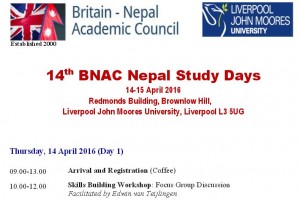
Professor Edwin van Teijlingen will be running a Skills Building Workshop at the 14th national Nepal Study Days of the Britain-Nepal Academic Council (BNAC) in Liverpool. FHSS Professor van Teijlingen is a long-standing member of BNAC. Registration for this year’s Nepal Study Days is open now, if you are interested click here! Edwin van Teijlingen has conducted many qualitative studies and supervised many postgraduate students doing focus group research. He has published widely on qualitative methods, including research papers on Focus Group Research.1-3
Anybody interested in learning more about Focus Group Discussions as a research method should consider signing up for up for Bournemouth University’s two-day Masterclass ‘Focus Group Research‘ to be held next week Monday 18th and Tuesday 19th April in Bournemouth. Over a two-day period this Masterclass will cover the journey for a research project on focus group research. Basic previous knowledge on qualitative research will be assumed.
References:
- van Teijlingen, E.R., Pitchforth, E. (2006) Focus Group Research in Family Planning and Reproductive Health Care, J Fam Plan Reprod Health Care 32 (1): 30-32.
- Pitchforth, E., Teijlingen van, E., Ireland, J. (2007) Focusing the group, RCM Midwives J 10(2): 78-80.
- van Teijlingen, E., Simkhada, P., Stephen, J. (2013) Doing focus groups in the health field: Some lessons from Nepal, Health Prospect 12(1): 15-17. http://www.nepjol.info/index.php/HPROSPECT/article/view/8722/7111
Sustainable Development Goals (SDGs) in Nepal
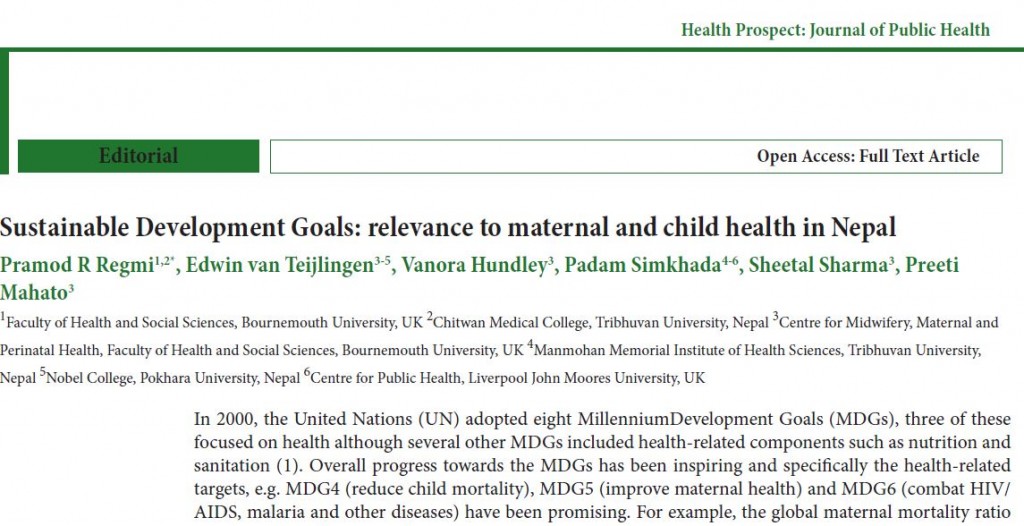
This month a team of FHSS staff published their editorial in the latest issue of the academic journal Health Prospect [1]. The lead author is Dr. Pramod Regmi working in collaboration with CMMPH’s Professor Vanora Hundley, FHSS PhD students Preeti Mahato and Sheetal Sharma, and Professor Padam Simkhada from Liverpool John Moores University who is also Visiting Faculty at BU. The Sustainable Development Goals (SDGs) are the new guidance for nations and international organisations worldwide following the completion of the Millennium Development Goals (MDGs) which run from 2000 to 2015. We wrote about the MDGs and their relevance to midwifery and maternity care in a previous article [2].
Edwin van Teijlingen
CMMPH
References:
- Regmi, P.R., van Teijlingen, E., Hundley, V., Simkhada, P., Sharma, S., Mahato, P. Sustainable Development Goals: relevance to maternal and child health in Nepal Health Prospect 2016; 15(1): 9-10.
- van Teijlingen, E., Hundley, V., Matthews, Z., Lewis, G., Graham, W.J., Campbell, J., ten Hoope-Bender, P., Sheppard, Z.A., Hulton, L. Millennium Development Goals: All good things must come to an end, so what next? Midwifery 2014; 30: 1-2.
What does Innovate UK’s latest delivery plan mean to industry ?
![InnovateUK_LogoA_Interim_RGBx320govuk[1]](http://blogs.bournemouth.ac.uk/research/files/2014/12/InnovateUK_LogoA_Interim_RGBx320govuk11-300x90.jpg)
Innovate UK have just published the 2016/17 Delivery Plan. In it, you will discover some important changes in the way they intend to support business innovation.
Key areas of the delivery plan include:
- a new sector focus – that is easier for industry, investors and government to work with
- changing the frequency and nature of our sector funding competitions – so that they are broader in scope than previously and form a single stream of innovation funding
- forming a single ‘open’ funding programme – for applications from any technology or sector
- enhancing the role of our innovation networks – in providing guidance and support to innovative businesses both nationally and regionally
To find out more read more on their blog: A whistle-stop tour of our delivery plan or check out the website
Festival of Learning 2016: grassroots responses to educational disadvantage

GRASSROOTS RESPONSES TO REGIONAL EDUCATION CHALLENGES: a workshop
Members of the Fair Access Research project will be facilitating a workshop as part of the Festival of Learning in June.
The workshop will be held on Monday 27 June 2016 between 14:00-16:00 in the new FUSION BUILDING, TALBOT CAMPUS [F107].
We are inviting experts working in the field of education and equality to come together and share experiences and skills to find sustainable solutions to the region’s major education challenges.
We want grassroots solutions to grassroots challenges facing the region. This approach will enable targeted and tailored responses that work with the unique challenges of education and social justice in a diverse rural and coastal region.

In this innovative two-hour workshop, led by our Fair Access Researchers, we will work together to find sustainable solutions to the question:
“What are the challenges and opportunities for disadvantaged students to access education in the region?”
This workshop is about active participation by all those involved and collectively growing grassroots solutions. By taking part, you will be helping to build a community to turn challenges and barriers into opportunities and bridges.
We want you to be involved and to shape how our responses! So, please share with your colleagues and networks so that we can have a broad range of participants.
It is through working together and learning with each other that we can help make regional education opportunities more accessible and more sustainable.
To express an interest in participating in the workshop or find out more about the session or BU’s unique Fair Access Research project email Julie Atherton on athertonj@bournemouth.ac.uk
You can now publish open access for free with Springer Open Choice journals!

RKEO and the library have signed a new Jisc agreement with Springer that covers all Article Processing Charges (APCs) for articles published in Springer Open Choice (hybrid) journals (see http://www.springer.com/gp/open-access/springer-open-choice/for-uk-authors-intro/731990). This means that with effect from 15th October 2015 you do not need to pay Springer an APC to make your article open access in a Springer Open Choice journal as we have already paid for it as part of this new agreement.
To make sure that your article is covered by this new agreement, when your article has been accepted for publication, Springer will ask you to confirm the following:
- My article has been accepted by an Open Choice eligible journal
- I am the corresponding author (please use your institutional email address not your personal one)
- I am affiliated with an eligible UK institution (select your institutions name)
- My article matches one of these types: OriginalPaper, ReviewPaper, BriefCommunication or ContinuingEducation
Springer will then verify these details with us and then your article will be made available in open access with a CC BY licence.
Please click here, for a list of all eligible journal titles. Please note that 30 Open Choice journals are not included in this agreement as they do not offer CC BY licensing.
In addition to covering the costs of all APCs, the new agreement we have entered into will also mean you will continue to have ongoing access to all subscription content in Springer journals.
This new agreement means that you can publish articles with Springer and automatically comply with funder mandates. In should also make things more efficient for you, for us and for the publisher.
If you have any questions about the agreement or the process, please contact Pengpeng Hatch.
Anti-lobbying clause

 There is a proposal from Government to include an anti-lobbying clause in Government grants, which will include research grants. There is a petition by Bob Ward to gain an exemption for academic research. If you are interested in finding out more and/or signing the petition then please see the link here: https://petition.parliament.uk/petitions/122957
BRIAN Byte – Existing publications awaiting deposit
When you log onto BRIAN and see this message, it means that you currently have publications which are not compliant with the HEFCE post-REF2014 Open Access policy.
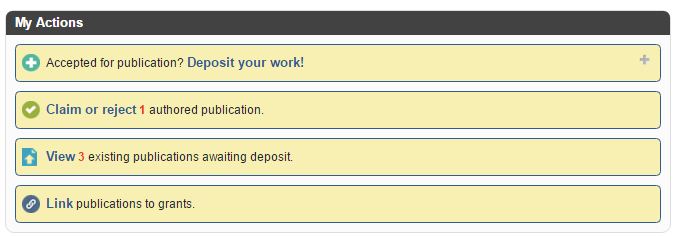
To ensure that these publications become eligible for the next REF, you will need to upload the final accepted manuscript (post peer review) against these publication records.
Click on ‘view’ and you will be taken to the page listing all publications awaiting full text upload.
Click on the ‘deposit’ button and you will be taken to this page.

Locate your final accepted manuscript (post peer review) and click upload. The article will then go through review by the BURO team and you have complied!
For further queries, please email BRIAN@bournemouth.ac.uk and a member of the team will get in touch as soon as they are able to.
Public engagement event at the Rotary Club of Boscombe and Southbourne
BALI
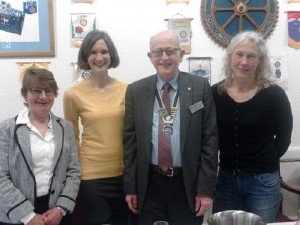
Last week saw two BU staff and a PhD student present research around the topic of ‘Physical Activity and Social Engagement’. Professor Janet Dickinson, Associate Professor Carol Clark and Clare Killingback were privileged to attend the lunchtime meeting at the Rotary Club of Boscombe and Southbourne on Thursday 7th April. This provided a great opportunity for Clare to present the results of three years of doctoral research around older peoples’ adherence to community based group exercise programmes.
After a brief presentation of the research findings a small group discussion was opened up to gain feedback from the Rotary Club members around how BU could work with their organisation in connecting with those at risk of social isolation. This was a valuable meeting and it is hoped there may be opportunities for BU to partner with the Rotary Club in the future.
For more information please feel free to contact Professor Janet Dickinson, Associate Professor Carol Clark and Clare Killingback.
Research Blog Survey
Here at RKEO we are always trying to improve the services and information we provide to our audience and the research blog has been our main tool for communicating news to our audience. The research blog has been running since its first post back in March 2011, which makes it a strong 5 years old!
With this historic achievement of age it doesn’t mean that there isn’t room for improvement. If you have the time it would be greatly appreciated if you could fill out this quick survey about the research blog. This will allow us to improve the site and in turn provide a better service for you!

Latest Funding Opportunities
The following funding opportunities have been announced. Please follow the links for more information.
Economic and Social Research Council
The Centre for Climate Change Economics and Policy (CCCEP), part of the ESRC, has announced an Innovation Fund to encourage innovative ideas on climate policy from practitioner and researcher communities. Applications may address climate change mitigation or adaption within any stage of the policy process. Up to £50k is available and the CCCEP is looking to make five awards. Closing Date 30/6/16
Innovate UK
Innovate UK has announced round 4 early stage (technical feasibility), mid stage (technology development) and late stage (pre-commercial technology validation) Energy Catalyst awards. The aim is to develop and prove techologies that will help to solve elements of issues related to low carbon, security of supply and affordability. The deadline for registration is noon 8/6/16; expressions of interest must be submitted by noon 15/6/16.
Natural Environment Research Council
As part of the Ecosystem Services for Poverty Alleviation (ESPA) Regional Opportunities Fund (ROF), applications are invited for up to £50k to help ESPA projects enhance the impact of their research. Closing Date 13/5/16
CASE studentships (Collaborative awards in science and engineering) have been announced. These studentships can be conducted in collaboration with non-academic partners. Closing Date 7/7/16
Wellcome Trust
The Wellcome Trust has made available Research Awards for Health Professionals who wish to transition to a period of research in any area of human or animal health. The scheme can also be used to enrol onto a PhD for those who have little or no social science experience. Awards will not normally exceed £250k. Individuals holding permanent academic posts are not eligible for these fellowships. Preliminary application Closing Dates 6/7/16
There are also Research Fellowships lasting up to three years for humanities and social science scholars not in an established post who wish to undertake research in human and animal health. The fellowships provide research and salary expenses. Preliminary application Closing Date 6/7/16
University Awards are available to recruit and support humanities and social science research staff working in any area of human and animal health for up to five years. Preliminary application Closing Date 6/7/16
Investigator Awards in the Humanities and Social Science are available to exceptional researchers exploring any aspect of human and animal health. Awards are for up to five years with ranged funds available for £100k-£200k per annum. Preliminary application Closing Date 8/7/16
Development Awards (Broadcast, Games and Film) awards up to £10k for one year support the development of TV, radio games or film projects that engage with biomedical science and its impact on our lives. Closing Date Open
If you are interested in submitting to any of the above calls you must contact RKEO with adequate notice before the deadline.
Please note that some funding bodies specify a time for submission as well as a date. Please confirm this with your RKEO Funding Development Officer
You can set up your own personalised alerts on Research Professional. If you need help setting these up, just ask your School’s/Faculty’s Funding Development Officer in RKEO or view the recent blog post here.
If thinking of applying, why not add notification of your interest on Research Professional’s record of the bid so that BU colleagues can see your intention to bid and contact you to collaborate.
RKEO Drop-in session – 20th April
 A couple of months ago, RKEO introduced monthly drop-in sessions for academics to turn up and ask us anything, knowing that members of RKEO would be on hand to help. Unfortunately, despite lots of advertising, no one has taken up the opportunity to attend the first two drop-in sessions. Therefore, operating a three strikes and we’re out policy, if no one attends the next drop-in session then we will cancel those organised for the rest of this year.
The next drop-in session is scheduled for 20th April, between 2-4pm in the Talbot Atrium cafe.
The following RKEO staff will be available for the session:
Ehren Milner – Funding Development Officer for Management
Eva Papadopoulou – Funding Development Officer for Media and Communication
Kerri Jones – Funding Development Officer for SciTech
Philip Leahy-Harland – Project Delivery Officer for Management
Nimisha Prajapati and Sara Mundy – Project Delivery Officers for SciTech
Jenny Roddis – Research Facilitator for HSS and SciTech
You don’t need to be from these faculties as staff will help with any queries you have and if they’re not able to answer your query then and there, they’ll ensure you receive a timely response from RKEO. Basically, come along and have a chat. These are also great opportunities for us to gather feedback from you on the service that we deliver to you. Come and find out about upcoming calls such as the British Academy’s small grants scheme, Marie Skłodowska-Curie Individual Fellowships, and how we can support you in your research career.
RKEO look forward to seeing you.
Kip Jones Publishes “Fiction” in the Sociological Review

In the eighth part of its special section on Sociology and Fiction in the Sociological Review, Kip Jones reflects on the pleasures of physical books and our emerging culture of analogue nostalgia.
“You wake up and suddenly, a story is right in front of you”
Horizon 2020 Secure Societies Societal Challenge (SEREN3), Brussels

My journey to the Horizon 2020 event in Brussels (secure society) started when my colleague Ehren brought the event to my attention and suggested it is one I should attend. In between doing other things I committed to go and decided to take one of my research students who works in a related area to mine. The earlier Brussels attacks didn’t change my mind, or her’s, and in fact made it so more important that we should attend the event given its nature – secure society. Despite all her best efforts, including taking an 18 hour bus journey to Manchester and back to apply for her visa, her visa didn’t arrive on time, and here it I was on my way to Brussels, taking the 3.00 am bus to Waterloo and then the Eurostar from St Pancras to Brussels. Quiet streets of London early at 5 am meant I met a couple of unwanted friendly rats who accompanied me from Victoria coach station to Victoria underground station, where I saw some more of them fighting on the rail. Travel to Brussels was quick and I got in to the city centre at 11.00 am and headed for the meeting venue where it started at 1.30 pm.
The meeting in the afternoon was excellent, they had a number of speakers from the Deputy Head of Horizon, to the call coordinator, legal, finance, ethic support etc. Each one went to into great detail and explained all one needs to know about applying for the Horizon bids in general. The meeting was extremely well organised and it was disappointing to see such a large number of participants failing to attend, ironic that the strand was for a secure society and yet we are failing to take our part. I left the meeting at 6.00 pm and managed to look around ‘military Brussels’, witnessing some of the lost freedom in the capital of Europe, taken by those who used the liberal democracy of Europe to attack it from within.
The Wednesday morning sessions could not have been better, the EU Horizon 2020 professionals, went through each bid call, one by one, and explained all the criteria and the do’s and don’ts when bidding. There were a number of opportunities to ask questions regarding the bids and the time available for the presentations for attendees to pitch to secure suitable partners. They laid on a wonderful lunch which was served to us and in the afternoon there were further opportunities for one-to-one speed dating with other attendees.
Attendance at the meeting in the Sheraton hotel was free, and one of the best organised meetings I have ever attended. I left Brussels having learned a great a deal in terms of EU bidding activities, details regarding my selected bids and a number of business cards from colleagues across Europe and beyond. It was a brilliant opportunity to put faces to names and more importantly to listen to professionals talk – all in all it was an absolute eye opener and invaluable training for bidding! Thank you Ehren and Jacqui for making this happen, Thank you Seren3brussels2016 for such a wonderful training sessions and great hospitality!
I will go again…
Please like our Facebook page: https://www.facebook.com/FHcommunity
Committee inquiries: open calls for evidence
Below is a list of committee inquiries with current open calls for evidence. Please contact Emma Bambury-Whitton if you would like to discuss submitting evidence.
Commons Select Committee inquiries
- Scrutiny of the Government’s Supply Estimates | Procedure Committee | Deadline: Friday 25 March 2016 (extended to Friday 29 April 2016)
- Support for ex-offenders | Work and Pensions Committee | Deadline: Friday 8 April 2016 (extended to Friday 22 April 2016)
- Recent pensions policy developments | Work and Pensions Committee | Deadline: Sunday 10 April 2016
- Short Money | Public Administration and Constitutional Affairs Committee | Deadline: Tuesday 12 April 2016
- Business views on EU referendum | Business, Innovation and Skills Committee | Deadline: Friday 15 April 2016
- Environmental impact of microplastics | Environmental Audit Committee | Deadline: Friday 15 April 2016
- 2020 renewable heat and transport targets | Energy and Climate Change Committee | Deadline: Monday 18 April 2016
- Pregnancy and Maternity Discrimination | Women and Equalities Committee | Deadline: Monday 18 April 2016
- Graphene | Science and Technology Committee | Deadline: Monday 18 April 2016
- Smart meters | Science and Technology Committee | Deadline: Wednesday 20 April 2016
- The future of Jobcentre Plus | Work and Pensions Committee | Deadline: Friday 22 April 2016
- Countries of Culture | Culture, Media and Sport Committee | Deadline: Friday 22 April 2016
- The future of the Severn River crossings | Welsh Affairs Committee | Deadline: Friday 22 April 2016
- Multi-academy trusts | Education Committee | Deadline: Monday 25 April 2016
- Inquiry into Government accounts | Public Administration and Constitutional Affairs Committee | Deadline: Friday 29 April 2016
- Science communication | Science and Technology Committee | Deadline: Friday 29 April 2016
- Robotics and artificial intelligence | Science and Technology Committee | Deadline: Friday 29 April 2016
- Homophobia in Sport | Culture, Media and Sport Committee | Deadline: Friday 29 April 2016
- Energy revolution | Energy and Climate Change Committee | Deadline: Tuesday 3 May 2016
- Powerhouses and engines: Government policy and regional growth | Business, Innovation and Skills Committee | Deadline: Friday 6 May 2016
- Disability employment gap | Work and Pensions Committee | Deadline: Monday 9 May 2016
- Science in emergencies: chemical, biological, radiological or nuclear incidents | Science and Technology Committee | Deadline: Friday 20 May 2016
- Regenerative medicine | Science and Technology Committee | Deadline: Tuesday 31 May 2016
Lords Select Committee inquiries
- The sustainability of Channel 4 | Communications Committee | Deadline: Wednesday 20 April
HE Policy Update
Monday
Tier 2 visas
The government has responded to the Migration Advisory Committee review of Tier 2 migration. The government has announced it will exempt PhD positions and those switching from a Tier 4 student visa to a Tier 2 visa from the immigration skills charge. You can view the response to a written question by The Minister of State for Immigration here.
UK universities overseas
Universities that deliver transnational programmes in countries with dubious human rights records have been warned that they are putting more than their reputations at risk. Human rights warning for universities operating overseas. Human rights warning for universities operating overseas. (THE).
Tuesday
University cooperation
A report by the Leadership Foundation for Higher Education has revealed that negative views of universities based on their perceived “lower prestige” might also be harming efforts to bring together universities, business and government to boost local economic growth. Status anxiety ‘harms university cooperation’. (THE).
Wednesday
Prevent
Research Professional reports that universities risk ignoring laws about protecting freedom of speech in their attempt to protect students against being radicalised. Cultural cold wars (Research Professional).
Thursday
REF
The extent to which the next REF should focus on overall university performance has emerged as a key battleground between the Russell Group and University Alliance. The Russell Group have argued for more emphasis on critical mass at the institutional level, whereas University Alliance have argued that aggregation of assessment at institutional level would destroy dynamism. Universities clash over future of REF. (THE).
Friday
Student Loans
The private company that took over 250,000 loans from the Student Loan Company has left graduates in turmoil after it wrongly sent letters demanding early repayments. Student loans firm Erudio leaves graduates fuming over latest error (The Guardian).
EU Students
Students from other European Union countries attending UK universities generate £3.7 billion for the UK economy and support more than 34,000 jobs across the country, according to analysis from Universities UK. You can view the report here.
Innovate UK
Innovate UK is to reorganise its funding programmes to address concerns that they are too complex and to make it easier for the agency to work with universities, businesses and the research councils. Innovate UK embraces simplification. (Research Professional).
HRA Approval for NHS Research
HRA Approval is the new process for the NHS in England that simplifies the approvals process for research, making it easier for research studies to be set up. It replaces the need for local checks of legal compliance and related matters by each participating organisation in England. This allows participating organisations to focus their resources on assessing, arranging and confirming their capacity and capability to deliver the study.
Laura Purandare, Research Monitor RBCH, has kindly agreed to run a seminar on 4th May at 2pm in BG14 to explain the changes.
The session will cover:
- What HRA approval is
- The implementation of changes
- The difference it proposes to make to health research in England
- What it means for our researchers
- Key resources
The session will last approximately an hour, and Laura will be available for questions following the session. We hope to see you there.
BU staff can login below:
Other services







Recent posts
BU research Funding opportunities EU
 REF mock exercise 2026 – nominate your research outputs on BRIAN
 ESRC Festival of Social Science 2026: Application Deadline Extended to Thursday 25 June 2026
 First publication for two CMWH PhD students
- Another CMWH publication
- Opportunities to support our REF preparations
 SPROUT Returns: Designing Sustainability in Research Practice – Wednesday 20 May 12-2pm
- ESRC Festival of Social Science 2026: Application Deadline Extended to Thursday 25 June 2026
- Apply now to take part in the 2026 ESRC Festival of Social Science
 Reminder: Register for the ESRC Festival of Social Science 2026 Information Session
 ECR Funding Open Call: Research Culture & Community Grant – Apply now
- FLF UKRI round 11- internal launch and timelines
 ECR Funding Open Call: Research Culture & Community Grant – Application Deadline Friday 12 December
 MSCA Postdoctoral Fellowships 2025 Call
 ERC Advanced Grant 2025 Webinar
- European Migration Research and Impact – Invitation to a Roundtable Discussion
- MSCA Postdoctoral Fellowships 2025
 Update on UKRO services
 European research project exploring use of ‘virtual twins’ to better manage metabolic associated fatty liver disease
 Research Information Network
- Physical Sciences Case studies: information use and discovery
- Information handling in collaborative research: an exploration of five case studies
- Information literacy monitoring and evaluation
- Data centres: their use, value and impact
- Heading for the open road: costs and benefits of transitions in scholarly communications