Tagged / BU research
British Academy Small Grant Call – Now Open
The call for the next round of BA/Leverhulme Small Research Grants will open 10th April 2019 and close 5pm on Wednesday 5th June 2019 and is aimed at Early Career Researcher and/or pump priming purposes.
If you can’t attend this session, then we ask you to submit your intention to bid form to your Funding Development Officer by 17th April 2019, after this date applications will be moved to the Autumn round.
The British Academy have provided updated guidance on the small grants – BA scheme notes for applicants and BA FAQs . They have asked that all applicants read the documentation carefully before starting their application.
Timeline
The call closes at 5pm on Wednesday 5th June 2019.
| 20th March 2019
|
RDS British Academy Guidance session
|
| 10th April 2019 | Call Opens – start reading guidance |
| 17th April 2019 | Intention to bid forms to be submitted to your faculty Funding
Development Officer. |
| 27th May 2019 | Nominated referee supporting statement to be completed via FlexiGrant |
| 28th May 2019 | Your final application must be submitted on FlexiGrant by this date at the latest. |
| 28th May -5th June 2019 | Institutional checks to take place by RDS |
Any queries please contact Alexandra Pekalski
Cafe Scientifique – Journalism for Science democratisation in the post-truth era
Without proper mechanisms for citizens of democratic societies to be meaningfully informed and to voice concerns over scientific advancements, they may find themselves stripped of the right to shape the science that shapes their lives, as well as losing voice in the larger public debate in which scientific rationality and expertise is needed
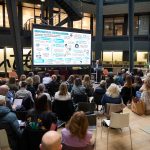
Associate Professor An Nguyen, from the Centre for the Study of Journalism, Culture and Community at BU, introduced his research into science journalism to the BU Cafe Scientifique audience last week, highlighting that ironically, the pace of science is too fast for citizens to follow, let alone have a voice.

Examining how decades of intense and well financed communication efforts by science institutions to close the science-society gap have failed, An went on to stress that they would have to stop the traditional so-called top-down education model which assumes that the more people understand science and its beauty, the more they love and support it.
“People are not empty vessels waiting be filled up with one scientific fact to another,” An said. “Much research has shown that scientific knowledge does not necessarily lead people to have a positive attitude to science. Science is an enterprise with its own values and defects and it has proved to be able to do both wonderful and awful things to life and humanity. Such issues need to be opened up to public information and debate because citizens are the main paymaster of science.”
Therefore, he stressed, science communication must shift from educating people in a top-down elitist manner to prioritising facilitating open dialogues with the laity about both of its benefits and risks as well as its processes and ethical standards. “Research shows that such conversations are more effective to build trust in science over time, which is the precondition for public support for science.”

Finally, An went on to outline why journalism might well be the last of all institutions to provide such democratic dialogues about science and thus to help fix the science-society divide, especially in the wake of anti-fact, anti-expertise, post-truth politics.
“Journalism, despite its many defects, has the best experience and expertise to monitor science and its development, to tell science stories in engaging manners, to help lay people think critically about science and its social implications, and to facilitate democratic debate,” he said. “That vital, almost exclusive, role of journalism needs to be reconsidered and recognised by science funders, scientists and other stakeholders in science communication.”
Associate Professor An Nguyen
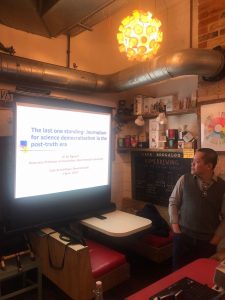
reflects on his experience of presenting at Cafe Scientifique last week:
“I had delivered dozens of talks to non-academic audiences and appeared many times as an expert in the media in Europe and Asia. But I had never had a direct conversation with lay people about my research. I thought it was odd, given that one strand of my research has been in public engagement with science. Hence, I decided to join Cafe Scientifique, which I knew has been a successful activity in Bournemouth and elsewhere in the world.”
“I thoroughly enjoyed the experience. The small cosy coffee shop was fully packed with a diverse and engaging audience. I could see in it, scientists, hospital doctors, teachers, shop keepers, students and, best of all, a Year 8 grammar school girl who made some well-informed points and came to have a quick chat with me at the end.”
“In many ways, it was an opportunity for me to pause and think of my worth to the larger society. Interacting with some people in the audience actually told me that there are quite a lot of things around in Bournemouth that I should have been aware of. And, overall, the whole thing is quite fun.”

The next Café Scientifique will take place on Tuesday 7 May from 7:30pm until 9pm (doors open at 6:30pm). We’ll be joined by Dr Anya Chapman who will be asking: What does the future hold for British seaside piers?
There’s no need to register, make sure you get there early though as seats fill up fast!
If you have any questions please do get in touch
Find out more about Café Scientifique and sign up to our mailing list to hear about other research events: www.bournemouth.ac.uk/cafe-sci
You can also follow us on Facebook and Twitter
NIHR Clinical Research Network Portfolio
Structure
The National Institute for Health Research (NIHR) is one of the largest funders of clinical research in Europe and have a number of funding streams that you can apply for in order to conduct health-related research. The NIHR then has a number of Clinical Research Networks or ‘CRNs’ that are spread out to each region of England. The local CRN is Wessex, based in Hedge End, Southampton.
The ‘Portfolio’
At the heart of CRN activities is the NIHR CRN Portfolio of studies. This consists of high-quality clinical research studies that are eligible for consideration for support from the CRN in England. Adoption onto the portfolio has a number of benefits for researchers, such as help in identifying potential research sites, access to patients and the public to carry out ‘PPI‘ and advice on recruitment strategy at any point during the study. The CRN offers support to researchers via their Study Support Service and likewise via each portfolio manager and their team. You can see a breakdown of each portfolio here on the Wessex CRN page.
The Portfolio and the NHS
Portfolio adoption is usually vital to participating NHS Trusts when considering the research studies they wish to undertake, as they are reimbursed for the resource given to conduct the study (e.g. research nurse support, data manager time).
Each CRN is given a budget for the financial year by the NIHR, which is then distributed to sites based on their recruitment figures.
Requirements
In order to be eligible for portfolio adoption, there are three criteria a study must meet:
- The study must be ‘research’ (this is stipulated, as often what’s classed as research outside the NHS setting, is sometimes a service evaluation, quality improvement etc. within the NHS – see this table);
- Have appropriate ethical approval; and Health Research Authority (HRA) Approval where required;
- Have full research funding – this has to have been awarded via open competition and by the NIHR, other areas of central Government, or an NIHR non-commercial partner (for which there is a list). If the study has received support from multiple funders, then it will be still considered automatically eligible, if one of the funding streams is the NIHR, an area of central Government or a non-commercial partner.
You can read more about study eligibility here, including research funded by overseas partners.
The Portfolio and BU
The source of research funding is the principal determinant of eligibility for NIHR CRN support and so it is encouraged that researchers seek external funding where possible and appropriate, from the NIHR, another area of central Government or one of their non-commercial partners. The amount of funding doesn’t need to substantial in order to be eligible.
For any queries to do with the portfolio or for guidance regarding implementing your research in a healthcare setting, take a look at the Clinical Governance blog. You can also get in touch with BU’s Research Ethics team with any queries.
PalaeoGo! launch at the Etches Collection
PalaeoGo! is a project funded by Bournemouth University (BU) via its Higher Education Innovation Fund (HEIF) that aims to show how augmented reality (AR) can be used as an educational tool at natural history museums, national parks and in any open space or landscape.
We are happy to announce that today (8th of April 2019) we have launched our first deployment at the Etches Collection Museum of Jurassic Marine Life. Visitors to the Museum can now borrow an iPad with our PalaeoGo Etches Edition app installed on it from the reception desk, and go on an AR-powered fossil hunt with [cartoon] Steve Etches himself!
As described in our previous blog post and The Conversation article, museum visitors are reluctant to install any apps on their devices, hence the need for museum-issued ones. However, while exhibiting at the Family Science Festival in Dorchester last month, we might have discovered a secret of how to seed user downloads! As part of the Etches Collection deployment we will be evaluating our approach, and we will share the findings once confirmed, so stay tuned!
This project is an interdisciplinary collaboration between computer animators, computer scientists and natural scientists. The project is led by Peter Truckel, Marcin Budka and Matthew Bennett.
NIHR Valid Informed Consent training dates
Before agreeing to participate in your study, your participants should receive all the information they require in order to make an informed decision. Once they wish to participate, then an informed consent form should be completed and filed appropriately.
Although the process sounds complex, there are currently a great training opportunities to help familiarise yourself with the background to, and process of informed consent in clinical research.
The Wessex Clinical Research Network are hosting the following training sessions at University Hospital Southampton and Poole Hospital –
- Wednesday 8th May, 8:30am – 12:30pm, Seminar Room, Level C, West Wing, NIHR WTCRF, University Hospital Southampton NHS Foundation Trust, Tremona Road, Southampton, SO16 6YD;
- Wednesday 8th May, 1:00pm – 5:00pm, Seminar Room, Level C, West Wing, NIHR WTCRF, University Hospital Southampton NHS Foundation Trust, Tremona Road, Southampton, SO16 6YD;
- Monday 20th May, 8:30am – 1:00pm, Seminar Room 3, Education Centre, Ground Floor, Poole Hospital NHS FT Longfleet Road, Poole, BH15 2JB.
If you’re interested in attending, get in touch with the Wessex CRN to book your place.
EDGE International Conference 2019 – CONNECTED
BU takes responsibility for a large number of NHS-based research projects, spanning a number of clinical areas. To better support BU’s position as Sponsor for these studies, last August the university adopted the EDGE system. This allows us to better collaborate with our NHS colleagues and to ensure our research data is held in a secure and central location. Currently the system is being piloted within the Faculty of Health and Social Sciences for a year.
Last week the EDGE International Conference took place at The Vox Conference Centre in Birmingham, hosted by Fergus Walsh, the BBC’s Medical Correspondent, and organised by the Clinical Informatics Research Unit at the University of Southampton.
Over the two days we heard from speakers from across various organisations during breakouts, workshops and meet & greet sessions. Topics ranged from how to get the best out of the system’s features, using EDGE to connect with colleagues, and use of the system to improve the recording of study data and procedures. Given our implementation of EDGE, and the rarity of use by Universities, BU’s Clinical Governance Advisor, Suzy Wignall was invited to present on how BU has integrated the system.
Across the two days we likewise had keynote sessions, including talks from colleagues in New Zealand and Belgium where the system has been implemented. We also heard from parents of children who have been given access to life-saving research projects, improving their quality of life and health conditions, substantially.
The full agenda can be found here, with EDGE’s twitter feed here, showing photos from the event, and numerous tweets by colleagues.
For any guidance regarding implementing your research in a healthcare setting, take a look at the Clinical Governance blog or get in touch with BU’s Research Ethics team with any queries.
Introduction to Good Clinical Practice – 15th May 2019
Are you interested in running your own research project within the NHS? Good Clinical Practice, or ‘GCP’, is a requirement for those wishing to work on clinical research projects in a healthcare setting.
GCP is the international ethical, scientific and practical standard to which all clinical research is conducted. By undertaking GCP, you’re able to demonstrate the rights, safety and wellbeing of your research participants are protected, and that the data collected are reliable.
The next GCP full day session is scheduled for Wednesday 15th May, at Bournemouth University, Lansdowne Campus (Bournemouth House) – 8:45am – 4:30pm.
The day will comprise of the following sessions:
- Introduction to research and the GCP standards;
- Preparing to deliver your study;
- Identifying and recruiting participants – eligibility and informed consent;
- Data collection and ongoing study delivery;
- Safety reporting;
- Study closure.
If you’re interested in booking a place, please contact Research Ethics.
Remember that support is on offer at BU if you are thinking of introducing your research ideas into the NHS – email the Research Ethics mailbox, and take a look at the Clinical Governance blog.
New funding from Wellcome to boost global research capacity in humanities and social sciences
Wellcome have recently announced their plans to launch two new one-off calls to fund international exchange networks, and infrastructure costs for humanities and social science researchers around the world.
As a result, the Investigator Awards and Collaborative Awards in Humanities and Social Sciences will be paused to new applicants for one year from mid-2020.
The two new one-off schemes will be launched in July 2019, with a deadline for expressions of interest due in Spring 2020. The two new calls are as follows:
International Exchange Awards – These will be made to groups of researchers based in at least two different countries. They are designed to encourage radical and innovative research agendas through the exchange of knowledge, people and resources.
Research Development Awards – These awards are likely to be made to groups of researchers in a single organisation or region. The purpose is for emerging and established clusters of HSS research excellence to have access to a reliable source of infrastructure funding so they can concentrate on building research agendas and developing careers.
If you are interested in these schemes and would like to be notified once these calls are launched, please contact Lisa Andrews, RDS Research Facilitator.
Congratulations to Anita Immanuel on PhD paper
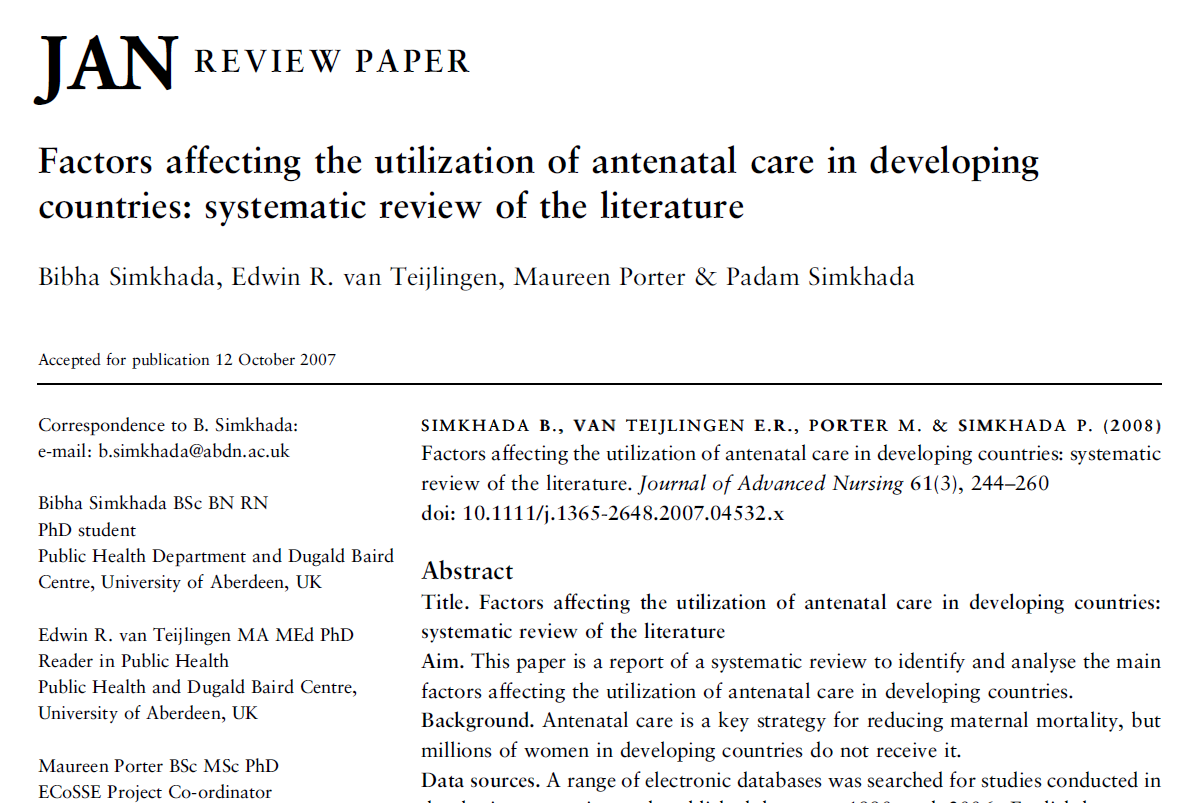
FHSS PhD student Anita Immanuel just had the first paper from her PhD “Quality of life in survivors of adult haematological malignancy” accepted by the international journal European Journal of Cancer Care. This international journal is published by Wiley and has an Impact Factor 2.409.
Survivors of haematological malignancies endure long-term effects of both the treatment and the disease. This paper examines factors that influence their quality of lives through reporting on the results of a survey. The survey used previously validated quality of life questionnaires for use in cancer management. Participants were adults over the age of 18 years who had completed treatment for a haematological malignancy and were between 1-5 years post treatment.
Anita is currently working as Lead Clinical Research Nurse at East Suffolk and North Essex NHS Foundation Trust. Her PhD research (see picture above) was conducted at the Haematology Department of Royal Bournemouth and Christchurch Hospitals NHS Foundation Trust, which has one of the most extensive research portfolios in the Trust. Her PhD is supervised by Dr. Jane Hunt (Dept of Nursing & Clinical Science), Dr. Helen McCarthy, Consultant Haematologist at the Royal Bournemouth and Christchurch Hospitals NHS Foundation Trust, and Prof. Edwin van Teijlingen in the Centre for Midwifery, Maternal & Perinatal Health (CMMPH).
Health Research Authority public involvement guidance – third blog post
Involving patients and/or the public in your clinical research is a great way to ensure that your study is designed and set-up in a way that will be attractive to participants. By carrying out PPI (patient and public involvement) you can also ensure that your research will be of benefit, not only to individuals but also the wider population and healthcare in general.
In 2018 the Health Research Authority (HRA) released guidance to help applicants better identify where they have involved the public in their research applications, and the difference that it made to their studies.
In addition, in January of this year two HRA blog posts were advertised, following the journey of a Research Fellow at the University of Surrey, who conducted PPI for her research project. The first and second posts can be found on the HRA website alongside other news items.
The HRA have just released the third blog post in which they talk to one of the lay Research Ethics Committee (REC) members who sat on the panel that reviewed the fellow’s study. The post explores the Committee member’s views on how public involvement benefited the research application. You can find it here.
Remember that support is on offer at BU if you are thinking of introducing your research ideas into the NHS, social care or healthcare institutions – email the Research Ethics mailbox, and take a look at the Clinical Governance blog.
BU media coverage in Nepal
The article “Why suicide rate among pregnant women in Nepal is rising” written by BU academics was published in The Conversation last year. At the time this attracted Indian newspaper attention. Clearly it is still a relevant issue as it attracted national coverage in a Nepali newspaper this week.
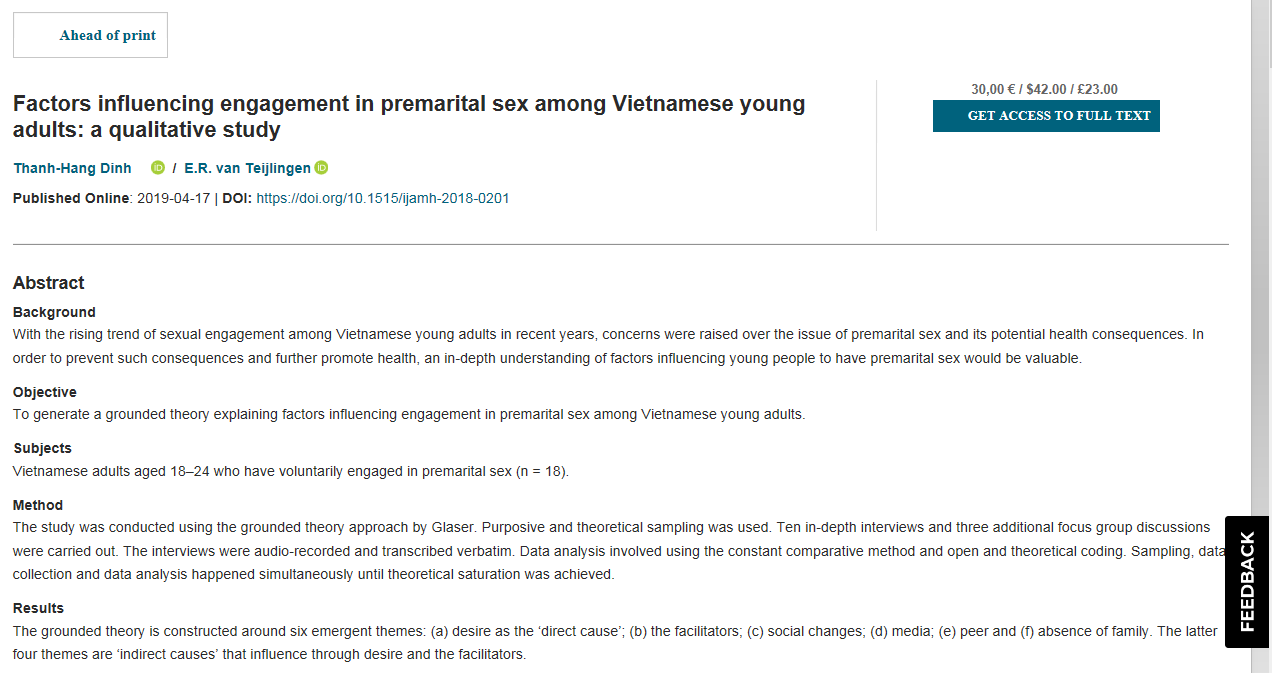
Dr. Bibha Simkhada & Prof. Edwin van Teijlingen
NHS R&D Forum response to Mental Capacity Act Code of Practice consultation
The NHS R&D Forum Research Management Working Group have released their thoughts on how they feel that the Mental Capacity Act Code of Practice can be refined and improved, to reflect current needs.
‘The Research Management Working Group is a group of members of the NHS R&D Forum with a wealth of experience
and expertise in both managing and delivering research activity within NHS organisations.’
You can read the group’s response here. The consultation is now closed, however the current Code of Practice can be found here.
If you are planning to conduct research with human participants that lack the capacity to consent or who may eventually lack capacity to consent, then the research application must go to an ethics committee that is flagged to review Social Care research.
BU ethics panels are not authorised to undertake this review or issue approval, and so an application via the IRAS system must be made. Further information can be gained via the HRA website and by emailing Research Ethics.
REMINDER – Training opportunity: completing and submitting your IRAS application
Are you currently in the process of designing, setting up or planning your research study, and would like to extend your project into the NHS?
Yes? Then you may want to take advantage of this training opportunity.
Oliver Hopper (Research & Development Coordinator, Royal Bournemouth and Christchurch Hospital) and Suzy Wignall (Clinical Governance Advisor, RDS) will be running a training session on how to use, and complete your own application within the IRAS system.
IRAS (Integrated Research Application System) is the system used to gain approvals from the NHS Research Ethics Committee and Health Research Authority, before rolling out your study to NHS Trusts. To support this, the session will include the background to research ethics and the approvals required for NHS research.
The session will also be interactive, and so as participants, you will have the opportunity to go through the form itself and complete the sections, with guidance on what the reviewers are expecting to see in your answers, and tips on how to best use the system.
The training will take place in Studland House – Lansdowne Campus, room 102, this Thursday 28th March at 09:30am – 12:30pm.
Get in touch with Research Ethics if you would like to register your interest and book a place.
Cafe Scientifique: Cyber Security & Digital Forensics: New persistent tracking mechanisms used in the wild
One of the most common Internet threats is web tracking, which enables an entity to gain unauthorised access to a user’s personal data while the user is browsing the web, thus violating privacy. At Bournemouth University we have been researching whether popular browsers protect their users from trackers that use Web Storage, Web SQL, and Indexed Database.
Introducing his research to the Cafe Scientifique audience earlier this month, Dr Alexios Mylonas from the Department of Computing & Informatics highlighted the different tracking technologies currently being used on the World Wide Web that can compromise our privacy.
“We live in a ‘post Snowden ‘ era” he said, and ” there are many ways that malicious entities on the Web, such as trackers can violate our privacy”.
HTML 5.0 provides trackers with new options 
Alexios described his own findings regarding the usage of three technologies from the HTML 5.0 standard (Web Storage, Web SQL, and Indexed Database) on the Internet. He went on to explain the experiments that were conducted against some of the websites we use every day proved that the main use of these technologies is tracking.
“This is different to what the industry and academia believed before we started our analysis. We did not believe that this was the case when we started this research and this is why we conducted the experiments in the first place”.
In many ways web browsers cannot protect our privacy
The focus towards the end of the discussion was the ability of current popular web browsers to delete the data that is being left on browsers by trackers. The results uncovered many occasions where popular browsers such as Firefox and Opera in Android do not allow us to delete the tracking data resulting in our privacy being violated.
Dr Mylonas explained that “if the browser fails to delete tracking data stored by any of the aforementioned technologies then a malicious tracker could ‘resurrect tracking data’ that the user has previously deleted in a similar way as with cookie resurrection”.
After discussing the research, the demonstrations showed the inability of Firefox and Opera in Android to protect the privacy of their users.
The following tool has been developed for you to check your browser; https://bit.ly/2J1Di65
The recently published journal paper in IEEE Access provides more information into the research; Belloro, S., & Mylonas, A. (2018). I know what you did last summer: New persistent tracking mechanisms in the wild. IEEE Access, 6, 52779-52792
The next Café Scientifique will take place on Tuesday 2 April where we’ll be hearing from Associate Professor An Nguyen @anducnguyen who will be discussing science journalism.
If you have any questions, please do get in touch with the Public Engagement Team; publicengagement@bournemouth.ac.uk, you can also follow us on Facebook and Twitter. Plus, why not send us a request to be added to our Public Engagement mailing list and be the first to hear about our research events and activities.

Funding opportunity – Climate Environment and Health

NERC/MRC/ESRC in collaboration with the Belmont Forum, have issued a call to fund transdisciplinary, end-user focused approaches to investigate and address the linkages between climate, environment and health. Projects should seek to bridge knowledge gaps, understand health risks, improve predictability, and deliver usable data, information, and innovative solutions to planners and decision makers. The following themes are prioritised for this call; food systems and nutrition; heat and health and; climate-sensitive infectious diseases.
Projects must be eligible to receive funding from at least three partner organisations participating in this call established in three different countries, and should include researchers from the natural sciences, health/medical sciences, social and economical sciences or humanities, as well as societal partners.
The deadline for expressions of interest is 6th May 19, with full proposals due by 23rd July 19. More information is available on the website.
If you are interested in applying, please contact Lisa Andrews, RDS Research Facilitator or your Funding Development Officer, in the first instance.
FM Food and Health research team awarded the Marie Sklodowska-Curie Actions Seal of Excellence
The Food and Health research team in the Faculty of Management are delighted that their research into encouraging consumption of plant based dishes has been recognised by the Marie Sklodowska-Curie Actions ‘Seal of Excellence’.
Their research VeggiEAT and Veg+ has led the way to providing an evidence based body of activity of which VegMAX was part. Plant based eating leads to a large net economic gain for society, as well as improved health outcomes for the population.
We are thrilled and proud with this recognition.
Mental Capacity Act Conference 2019
On the 19th February 2019, Dr Ben Hicks from the Psychology Department and the Ageing and Dementia Research Centre (ADRC), was fortunate to be invited to present two one hour workshops at the Mental Capacity Act Conference in Dorchester. This is the largest conference for social workers and was attended by around 500 delegates. The conference focussed on assessing capacity in individuals and through a range of presentations by judges and lawyers, sort to outline the many challenges that can be faced whilst undertaking this work. Of particular interest, was a Keynote speech by Alex Ruck Keene, a lawyer based in London that specialises in mental capacity and mental health law. He discussed the many ground-breaking cases he has been involved in regarding the Mental Capacity Act and the multiple publications he has authored that have influenced this area of practice. His passion for, and knowledge of the subject was clearly evident, and it is safe to say that the audience could have listened to him for well beyond his allotted hour and a half timeslot.
Whilst the majority of the conference was concerned with assessing capacity in individuals, Ben took a slightly different angle with his workshops and sought to demonstrate how the ADRC enable people with dementia to have the capacity to contribute to research. This includes: positioning them as experts and eliciting their views at all stages of project development; creating safe spaces where they feel comfortable expressing themselves; and adopting flexible research methods that have a ‘moral sensitivity’ to their capabilities and interests. Ben also outlined the multiple ways whereby society constructs barriers that socially exclude people with dementia and prevent their participation in research and wider society, as well as the work that the ADRC are undertaking to address this. One such method is through a Virtual Reality training program that provides participants with an immersive experience of what it may be like to live with the condition. This innovative approach was well received and a number of the workshop delegates have already approached Ben to enquire about delivering the training within their workplace. This highlights the great work that the ADRC are undertaking to empower people with dementia and provide innovative training to healthcare professionals that emphasises the rights and capacity this population has for contributing throughout society. As one delegate wrote during the evaluation feedback:
“More from Dr Ben Hicks and Bournemouth Uni. He gave an interesting presentation on ageing and dementia research and talked about the responsibilities both himself and his colleagues have undertaken in regards to this. I would be interested to hear more from them.”


BU methods paper reached 2,500 reads
UKCGE Recognised Research Supervision Programme: Applications Close 19 October
Dr. Orlanda Harvey interviewed as expert
Dr. Paul Whittington attends Technology and the SEND Reforms Roundtable in the House of Commons
Dr. Paul Whittington joins Bett 2026 DfE Assistive Technology Roundtable
BU Prof Jonathan Parker promoting social work in Malaysia
Horizon Europe Cluster 3 (Civil Security for Society) 2026 Calls Now Open

MSCA Doctoral Networks 2026 Call Information Webinar

ESRC Festival of Social Science 2026: Application Deadline Extended to Thursday 25 June 2026

Reminder: Register for the ESRC Festival of Social Science 2026 Information Session

ECR Funding Open Call: Research Culture & Community Grant – Apply now

ERC Advanced Grant 2025 Webinar
Update on UKRO services
European research project exploring use of ‘virtual twins’ to better manage metabolic associated fatty liver disease