Dr Holly Crossen-White has had a conference paper accepted for National Programmes Conference: Museums and Digital Memory Conference to be held at the British Museum in September. The paper will be presented with Dr Trudie Cole, Head of Access and Participation, The National Museum of the Royal Navy. Trudie and Holly have previously worked on several research projects related to the use of digital archives and this gives them opportunity to apply their findings within the context of collections held by the National Museum of the Royal Navy. Holly’s research interest in digital archives arose through her PhD which explored the hidden history of illicit drug taking during the early twentieth century. Holly has published on the ethical issues of undertaking research using digital archives and has been awarded Faculty Seedcorn Funding with her colleague Dr. Angela Turner-Wilson for some of this research work.
Tagged / BU research
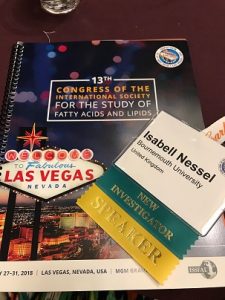
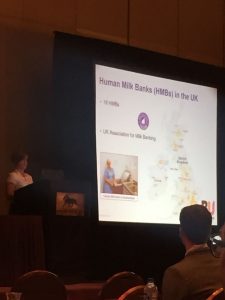
BU’s PGR Isabell Nessel presenting at the 13th Congress of the International Society for the Study of Fatty Acids and Lipids in Las Vegas
The International Society for the Study of Fatty Acids and Lipids (ISSFAL) www.ISSFAL.org held its 13th International Congress in Las Vegas, Nevada, USA at the end of May. After a very informative Satellite Symposium (Arachidonic and docosahexaenoic acids in infant development), the Congress started with a welcome reception in the Tropicana Hotel. This was not only well attended by the approximately 500 delegates from all over the world, but also Elvis Presley and Frank Sinatra made an appearance.
The following 3 days were packed with excellent and informative sessions about General Nutrition, Maternal and Infant Nutrition, Inflammation and Allergy, Clinical Trials
Methodology and Ketoneurotherapeutics. In between, well-known researchers in the field presented their research in plenary talks. Dr Michael Crawford obtained an omega-3 research award and Dr Maria Makrides was awarded with the Alexander Leaf Award. Her presentation entitled “Standing on the shoulders of giants: great women role models, mentors and advocates” was really inspiring.
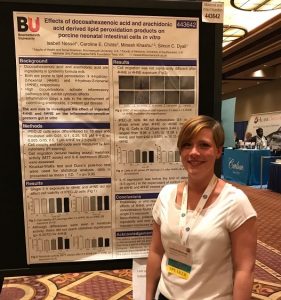
I would like to thank ISSFAL for the opportunity to present my PhD research. My presentation was entitled “Optimising LCPUFA content of donor human milk: A review of current milk
banking practices and recommendations for improvement”, presenting the results of our UK Milk Bank survey, which is now extended internationally. Furthermore, I had two posters displaying our work on preterm formula milk storage conditions and lipid degradation; and the effects of lipid degradation products on intestinal cells in vitro. These presentations gave me the possibility to position myself in the fatty acid research world and to make valuable contacts.
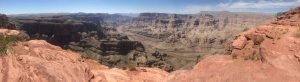

ISSFAL was especially taking care of us New Investigators, providing New Investigator Awards, organising a New Investigator social at the Mob Museum for networking with other researchers at a similar stage, as well as organising a meet the professor breakfast to talk to the experts in the field. One of the none scientific highlights was of course our trip to the Grand Canyon on the free day.
I would also like to thank my supervisors Dr Simon Dyall and Prof Minesh Khashu for their ongoing support as well as Gillian Weaver and Dr Caroline Childs for the fantastic collaborations. Furthermore, I would like to thank Bournemouth University and Santander for making this trip possible.
If you would like to learn more about our research, please feel free to contact me at inessel@bournemouth.ac.uk
Isabell
SciTech PGR Aishah Selamat Discusses On Her Research Impact with UK Data Service
SciTech PGR Aishah Selamat from the Creative Technology Department is one of UK Data Service 2018 Data Impact Fellow. Here in this video, she discusses her research using machine learning to build an analytical model for SMEs in the private coach hire industry and the research impact using UK Data Service open data.
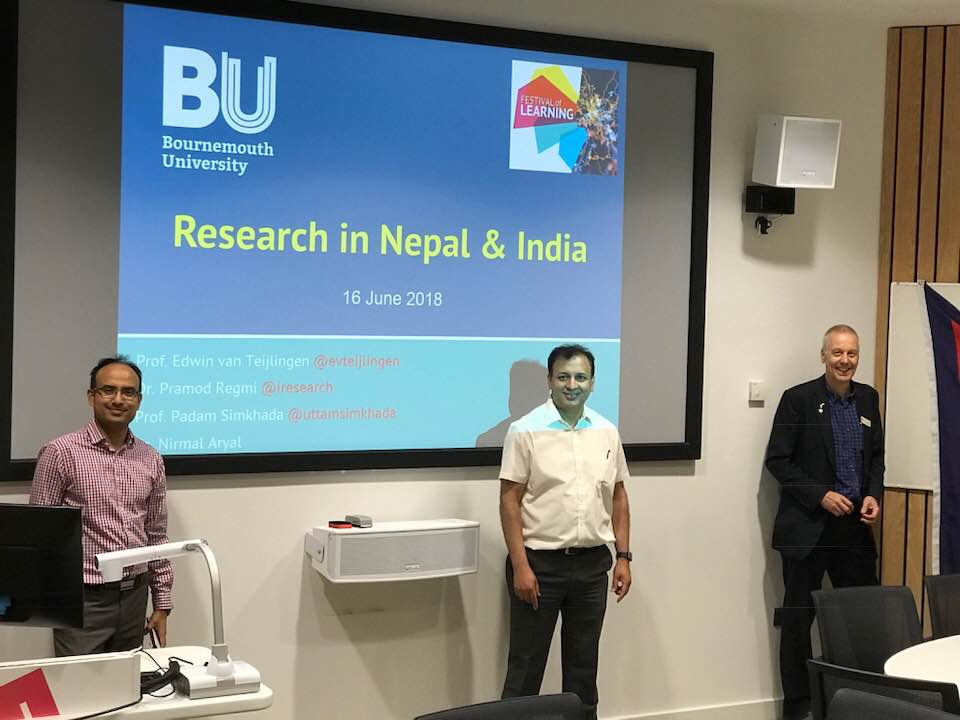
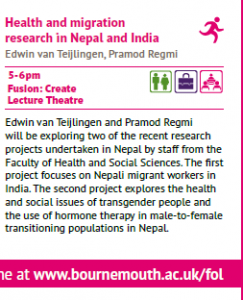
Health & migration research in Nepal & India #BUFoL18
Festival of Learning event 2018 with an international flavour: exploring recent research projects undertaken in Nepal by staff from the Faculty of Health and Social Sciences. The event focuses on Nepali migrant workers in India, women and migration and explores the health and social issues of transgender and the use of hormone therapy in male-to-female transitioning populations in Nepal.
Fusion Building: Create Lecture Theatre, Bournemouth University on Saturday 16 June 2018 from 5.00-6.00PM
Free tickets can be found here!
Prof. Edwin van Teijlingen, Dr Pramod Regmi & Prof Padam Simkhada (BU Visiting Faculty)
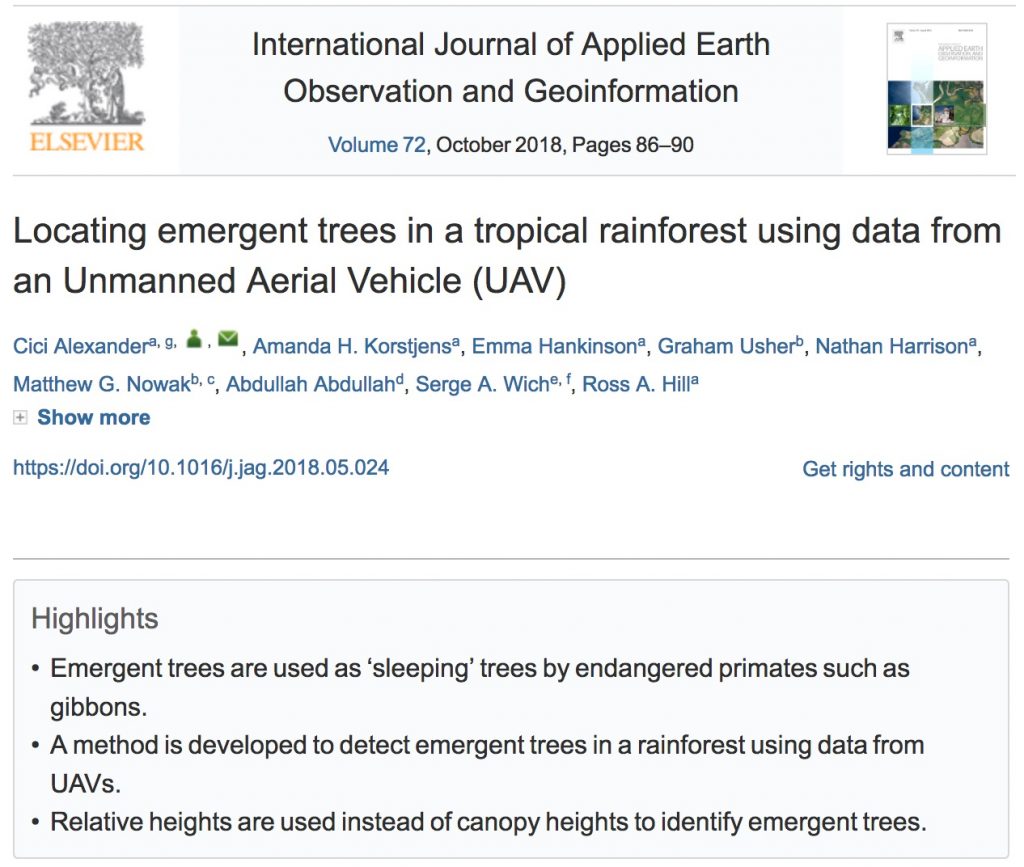
New paper by Cici Alexander for the ‘LEAP: Landscape Ecology and Primatology’ team
EU-funded postdoc Cici Alexander completed her 2 year position with Ross Hill and Amanda Korstjens in September 2017. In this time she analysed LiDAR and UAV imaging data to identify trees and forest structural characteristics for the tropical forests that LEAP works at in Indonesia. The newest paper is hot off the press while another paper is in review. In the new paper, Cici shows a method of using drone-mounted cameras to measure and identify tree structures and variation to locate emergent trees at LEAP’s main field site Sikundur, Sumatra, Indonesia. Emergent trees are important for primate sleep sites and serve many other essential roles in tropical forests, but they are also the most vulnerable trees to selective logging.
The work is done in collaboration with our charity partners (Matt Nowak, Graham Usher) at Sumatran Orangutan Conservation Programme, and Serge Wich from Liverpool John Moores University as well as Dr Abdullah from our international partner Universitas Syiah Kuala. Authors also include ISLHE-LEAP PhD student Emma Hankinson and LEAP MRes student Nathan Harris who were vital in verifying the method on the ground.
(Special limited duration paper access link: https://authors.elsevier.com/a/1XAhj14ynSEdoi).
Her first two papers were technical notes on:
‘Influence of micro-topography and crown characteristics on tree height estimations in tropical forests based on LiDAR canopy height models‘ 2018
‘Structural attributes of individual trees for identifying homogeneous patches in a tropical rainforest‘ 2017
Based on LiDAR data from Batang Toru, Sumatra, Indonesia where the newly identified and highly threatened Tapanuli orangutans occur and a planned dam is threatening the ecosystem.
For more information on the ‘LEAP: Landscape Ecology and Primatology’ research group, visit our website or like our facebook page. Our work featured also in the BU2012-2018 review (p17).
Call for Expert Reviewers for the Newton Fund Prize
The UK National Commission for UNESCO, which is administrating the Newton Prize, is delighted to announce a great opportunity to be part of the Reviewer Team for the Newton Prize 2018.
The Newton Prize is a prestigious global award for research and innovation in developing countries. All the applicants this year are in partnership with South American Newton Fund projects with Brazil, Chile, Colombia and Mexico.
UNESCO are looking for experts from industry and academia in the fields of Agriculture, the Built Environment, Economic Development, Education, Energy, Engineering, Environment, Health, Manufacturing, Sustainability and Technology. Reviewing takes place via an online portal which can be accessed at your convenience between 15 June and 31 July 2018. If you fit the bill or know someone who does, please register here.
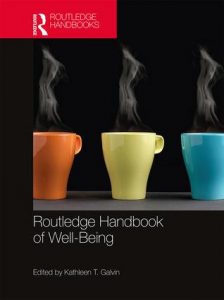
BU contribution to Routledge Handbook of Well-Being
Congratulations to current and past academics in the Faculty of Health & Social Sciences and the Faculty of Science & Technology who contributed to the newly published Routledge Handbook of Well-Being. The editor Prof. Kate Galvin was previously based at Bournemouth University. She is currently Professor of Nursing Practice in the School of Health Sciences at the University of Brighton.

The following four chapters in the edited collection have been authored or co-authored by BU scholars and students past and present:
- Dwelling- Mobility: An Existential Theory of Well-being Chapter 8 by Les Todres & Kate Galvin
- Heritage and Well-being: Therapeutic places, past and present Chapter 11 by Timothy Darvill, Vanessa Heaslip & Kerry Barras
- Embodied Routes to Well-being: Horses and Young People Chapter 20 by Ann Hemingway
- Eighteen Kinds of well-being but there may be many more: A conceptual Framework that provides direction for Caring Chapter 30 by Kate Galvin & Les Todres.
Congratulations to all!
Prof. Edwin van Teijlingen
3DPARE (3D Printing Artificial Reefs in the Atlantic)
Dr Roger Herbert, Dr Alice Hall, Dave Parham & Prof Rick Stafford
Department of Life & Environmental Sciences, Department of Archaeology, Anthropology and Forensic Science.
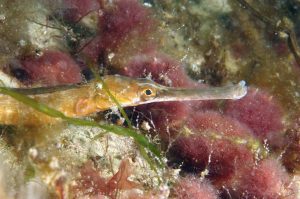
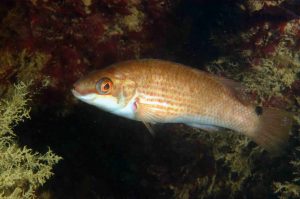
Marine scientists in the Faculty of Science & Technology have been awarded a multidisciplinary four year (2017-21) EU Interreg project to design Artificial Reefs optimised for Atlantic waters. The main objective is to deploy and monitor artificial reef blocks that have been designed and fabricated using innovative 3D printing technology and sustainable, low-impact bio-receptive materials . Artificial Reefs (AR) in Europe have not been optimised for the Atlantic where they have potential application to mitigate for the loss of natural reef habitats and to enhance food production, coastal infrastructure and recreational amenity. 3D Printing technology offers considerable scope to increase the complexity of textures and voids and to create structures that could be replicated in large quantity.
The project is led by the University of Cantabria Department of Civil Engineering (Santander, Spain) who specialise in 3D Printing. The other main partners include Bournemouth University (Faculty of Science & Technology), CIIMAR (Interdisciplinary Centre of Marine and Environmental Research, University of Porto, Portugal), IPMA (Portuguese Institute of Sea and Atmosphere), ESITC Caen Institute for Civil Engineering and Construction (Caen, France).
BU expertise includes the survey and monitoring of biological communities on natural and artificial reefs and will be involved in supporting data analysis and mapping activities, small-scale experimental deployments of different materials and will co-ordinate the design, fabrication and deployment of larger reef blocks across the transnational partnership. BU will also develop protocols to monitor the reef blocks and the collection and identification of biota. This will involve regular surveys including the use of SCUBA and drop-down cameras, data analysis and the presentation and dissemination of results through publications, organising workshops and meetings.
Your ‘Timely Reminder’ – don’t miss these events in June and July!
Every year, the Research & Knowledge Exchange Office, along with internal and external delivery partners, runs over 150 events to support researcher development through the Research & Knowledge Exchange Development Framework (RKEDF).
Responding to your feedback and by popular request, below are the main events coming up over the next two months – please click on the event titles that are of interest to find out more and reserve your place as soon as possible:
JUNE 2018
Wednesday 6th June – STEAMLab – Virtual problems – See this Blog post on how to Apply for a place
Monday 11th June – Research impact and the Research Excellence Framework (REF): an introduction
Wednesday 13th June – REF 2021 Guidance – Q&A session
Thursday 14th June – Royal Society – Bid Writing Retreat
Wednesday 20th June – BRIAN, Open Access and the Impact Module
Wednesday 27th June – Preparing for Brexit
27-29 June – Writing Academy – Summer
JULY 2018
Wednesday 4th July – US Funding Day (Federal & Charities)
Wednesday 4th July – Targeting high quality journals
Wednesday 4th July – 10 ways to increase the impact of your paper
Wednesday 4th July – Writing an academic paper
Thursday 5th July – Fellowship interview Training – Royal Society
Wednesday 11th July – Introduction to bibliometrics
Wednesday 11th July – Advanced Bibliometrics – Using bibliometrics to understand research impact
10/07/18 – 11/07/18 – Marie Sklodowska Curie – MSCA bid writing retreat (2 days)
Thursday 12th of July – Writing and presenting for non-academic audiences (ECR session) *New*
Monday 23rd July – The Writing Academy – Writing day
Tuesday 24th July – Preparing impact case studies for the Research Excellence Framework: a workshop
To see all the events within the RKEDF and the wider Organisational Development offering, please refer to the handy Calendar of Events.
Additionally if you are a PGR please visit the Doctoral College Researcher Development Programme for your own special tailored events.
Medical Research showcase at CoPMRE’s Spring Visiting Faculty Day
The Centre of Postgraduate Medical Research & Education (CoPMRE) held its Spring Visiting Faculty Day at the Executive Business Centre. Fourteen posters (VF Programme Spring 2018) were presented showcasing the breadth of collaborative projects being undertaken by BU and local clinicians. The Best Poster prize was awarded to Dr Paul Whittington, Department of Computing & Informatics, Faculty of Science and Technology, for his presentation entitled Automatic Detection of User Abilities through the SmartAbility Framework. Professor Tamas Hickish, judge, felt that all the posters were excellent and address important health care issues. Paul’s poster was chosen as the research was generated by a deep understanding of disability, the use a mobile phone technology and generalisability to significant areas of health care need such as stroke and frailty. As such his work is scalable and feasible.
Visiting Faculty Days are a great opportunity to share innovative ideas and research. The event was very well received and links for possible further collaboration have already been formed as a result of networking. Our next Visiting Faculty Day will be held in December.
Two reviews by BU academics in the American Anthropologist in 2018
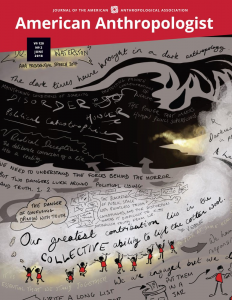
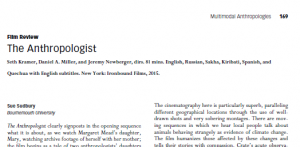
The first review by a Bournemouth University academic in the prestigious journal American Anthropologist was published in its February issue. Dr. Sue Sudbury who is Principal Academic in Media Production reviewed the film ‘The Anthropologist’ [1]. She wrote in this Open Access review that this film raises many interesting issues about the role of the anthropologist and deftly illustrates the divide that exists when different cultures come together. Her conclusion of the review is that ‘The Anthropologist’ is an intriguing and memorable film about environmental anthropologists and the important work they do collecting and telling the stories of people whose lives are being reshaped by climate change. It is also about the relationship between female anthropologists and their daughters. As such, it does an important job of introducing the subject and will no doubt generate discussion, but it is not an anthropological film and doesn’t claim to be.
The second one, a book review this time, appeared this week in the June issue. Prof. Edwin van Teijlingen in Bournemouth University’s Centre for Midwifery, Maternal & Perinatal Health (CMMPH) reviewed the book Midwives and Mothers: The Medicalization of Childbirth on a Guatemalan Plantation by the American anthropologist Sheila Cosminsky [2]. He reminds the reader that some of the work in this book work has previously been published in articles, as clearly stated in the acknowledgments (p. xii). He highlights that “on reading the book I remembered with joy snippets from some of the articles on Doña María I read nearly thirty years ago while working on my PhD thesis.” Cosminsky does a great job of bringing together a lifetime of anthropological (field)work in a comprehensive and easy‐to‐read book.
It is not often that we see reviews written by BU staff in this impressive journal, let alone two in subsequent issues.
References:
- Sudbury S. (2018) The Anthropologist Seth Kramer, Daniel A. Miller, and Jeremy Newberger, dirs. 81 mins. English, Russian, Sakha, Kiribati, Spanish, and Quechua with English subtitles. New York: Ironbound Films, 2015, American Anthropologist 120(1): 169-170.
- van Teijlingen E. (2018) Midwives and Mothers: The Medicalization of Childbirth on a Guatemalan Plantation by Sheila Cosminsky, American Anthropologist 120(2): 369.
New Sociology book by BU’s Dr. Hyun-Joo Lim
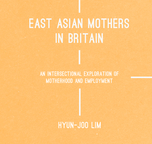
Congratulations to Dr. Hyun-Joo Lim, Senior Lecturer in Sociology, on the publication of her book East Asian Mothers in Britain: An Intersectional Exploration of Motherhood and Employment. This book focus on how Chinese, Japanese and Korean mothers in the UK make sense of their motherhood and employment. It addresses questions such as: “What are the intersecting factors that shape these women’s identities, experiences and stories?”
Contributing further to the continuing discourse and development of intersectionality, this book examines East Asian migrant women’s stories of motherhood, employment and gender relations by deploying interlocking categories that go beyond the meta axes of race, gender and class, including factors such as husbands’ ethnicities and the locality of their settlement. Through this, Dr. Lim argues for more detailed and context specific analytical categories of intersectionality, enabling a more nuanced understanding of migrant women’s stories and identities.
The book is published by Palgrave Macmillan (hardcover ISBN978-3-319-75634-9), see website: https://www.palgrave.com/gb/book/9783319756349
Prof. Edwin van Teijlingen
New BU mental health paper published
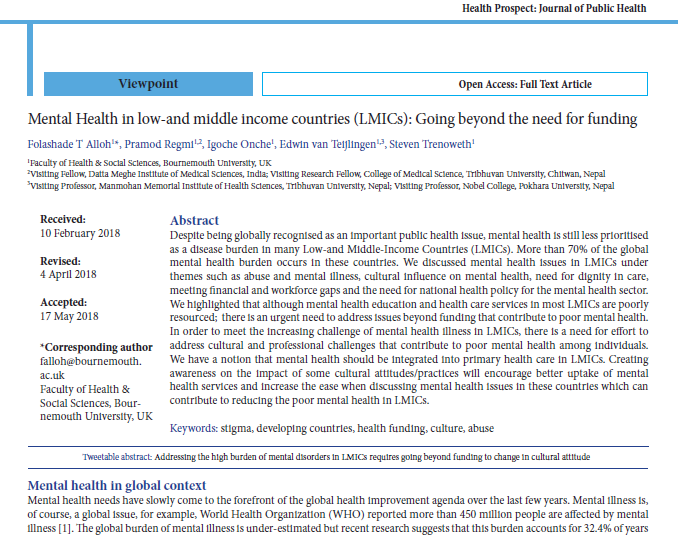
Congratulations to FHSS students Folashade Alloh and Igoche Onche who found out today that their ‘Mental health in low-and-middle-income countries (LMIC): Going beyond the need for funding’ has been accepted for publication by the editors of Health Prospect. The paper is co-authored by FHSS staff Dr Pramod Regmi, Prof Edwin van Teijlingen and Dr Steven Trenoweth. Health Prospect is an Open Access journal.
More than 70% of the global mental health burden occurs in many low-and middle-income countries (LMIC). The paper discusses mental health issues in LMIC under different themes such as abuse and mental illness, cultural influence on mental health, need for dignity in care, meeting financial and workforce gaps and the need for national health policy for mental health sector. The paper highlights that mental health education and health care services in most LMIC is poorly resourced; however, there is an urgent need to address issues beyond funding that contribute to poor mental health. In order to meet the increasing challenge of mental health illness in LMIC, there is a need for effort to address cultural and professional practices that contribute to poor mental health among individuals. The authors argue that mental health should be integrated into primary health care in LMIC. Creating awareness on impact of some cultural attitudes/practices will encourage better uptake of mental health services and increase the ease of discussing mental health issues in these countries which will contribute to reducing stigma faced by mental health patients.
New collaborative publication FHSS PhD students, staff & Visiting Faculty
Congratulations to FHSS PhD students Preeti Mahato and Elizabeth Waithaka, FHSS academics Drs. Catherine Angell and Pramod Regmi and BU Visiting Faculty Prof. Padam Simkhada (Based at Liverpool John Moores University) on the publication of their latest paper: ‘ Health Promotion opportunities for Auxiliary Nurse Midwives in Nepal’ [1]. The paper appeared in Health Prospect: Journal of Public Health.
Mahato, P.K., Regmi, P.R., Waithaka, E., van Teijlingen, E., Simkhada, P., Angell, C. . Health Promotion opportunities for Auxiliary Nurse Midwives in Nepal. Health Prospect, 16 (2): pp. 13-17, May. 2018.
Available at: <https://www.nepjol.info/index.php/HPROSPECT/article/view/19903/16389>. Date accessed: 14 May. 2018. doi:http://dx.doi.org/10.3126/hprospect.v16i2.19903.
Dr Alison Cronin’s book on economic crime published
Congratulations to Dr Alison Cronin on the publication of her book, “Corporate Criminality and Liability for Fraud” by Routledge which builds on her PhD thesis. Taking a rational reconstruction of orthodox legal principles, and reference to recent discoveries in neuroscience, Alison reveals some startling truths about the criminal law, its history and the fundamental doctrines that underpin the attribution of criminal fault. With important implications for the criminal law generally, the focus of the book is the development of a theory of corporate criminality that accords with the modern approach to group agency. Alison puts forward the theoretical and practical means by which companies can be prosecuted, where liability cannot or should not be attributed to its individual directors/ officers.
Exciting PhD studentship opportunity for an aspiring individual with an interest in older people’s health and wellbeing.
For further details and how to apply click here.
Your ‘Timely Reminder’ – don’t miss these events!
Every year, the Research & Knowledge Exchange Office, along with internal and external delivery partners, runs over 150 events to support researcher development through the Research & Knowledge Exchange Development Framework (RKEDF).
Responding to your feedback and by popular request, below are the main events coming up over the next two months – please click on the event titles that are of interest to find out more and reserve your place as soon as possible:
MAY 2018
Wednesday 16th May – Introducing and Evidencing Research Impact: the Basics
Thursday 17th May – Engaging with policy makers
Friday 18th May – Preparing impact case studies for the Research Excellence Framework: a workshop
Tuesday 22nd May – Writing Academy – Writing Day
Wednesday 23rd May – What is the Research Excellence Framework?
JUNE 2018
Wednesday 6th June – STEAMLab – Virtual problems – See this Blog post on how to Apply for a place
Monday 11th June – Research impact and the Research Excellence Framework (REF): an introduction
Wednesday 13th June – REF 2021 Guidance – Q&A session
Thursday 14th June – Royal Society – Bid Writing Retreat
Wednesday 20th June – BRIAN, Open Access and the Impact Module
Wednesday 27th June – Preparing for Brexit
27-29 June – Writing Academy – Summer
JULY 2018
Wednesday 4th July – US Funding Day (Federal & Charities)
Wednesday 4th July – Targeting high quality journals
Wednesday 4th July – 10 ways to increase the impact of your paper
Wednesday 4th July – Writing an academic paper
Thursday 5th July – Fellowship interview Training – Royal Society
Wednesday 11th July – Introduction to bibliometrics
Wednesday 11th July – Advanced Bibliometrics – Using bibliometrics to understand research impact
10/07/18 – 11/07/18 – MSCA bid writing retreat (2 days)
Thursday 12th of July – Writing and presenting for non-academic audiences (ECR session) *New*
Monday 23rd July – The Writing Academy – Writing day
Tuesday 24th July – Preparing impact case studies for the Research Excellence Framework: a workshop
To see all the events within the RKEDF and the wider Organisational Development offering, please refer to the handy Calendar of Events.
Additionally if you are a PGR please visit the Doctoral College Researcher Development Programme for your own special tailored events.
Virtual Problems STEAMLab
On Wednesday, 6th June 2018, BU’s Research and Knowledge Exchange Office will be facilitating a STEAMLab event on Virtual problems.
Which means…?
We’re seeking to come up with novel research which addresses the challenges of new immersive technology.
So, who should attend?
We want anyone who thinks they might have something to contribute, and who is available all day on Wednesday 6th June to come along. We will also be inviting relevant external attendees to contribute to the day. We welcome academics, NGO/business/government representatives/SMEs who wish to contribute to having a positive impact through addressing the challenges.
What do I need to prepare in advance? What will the STEAMLab entail?
Absolutely nothing in advance. During the STEAMLab, you’ll be guided through a process which results in the development of research ideas. The process facilitates creativity, potentially leading to innovative and interdisciplinary research ideas. These ideas will be explored with other attendees, and further developed based on the feedback received.
What if I don’t have time to think about ideas in advance?
You don’t need to do this. Some inspiring speakers with a range of backgrounds will be coming along to give your ideas…
What about afterwards? Do I need to go away and do loads of work?
Well… that depends! The STEAMLab will result in some novel research ideas. Some of these may be progressed immediately; others might need more time to think about. You may find common ground with other attendees which you choose to take forward in other ways, such as writing a paper or applying for research funding. Support will be available to progress project ideas after the day.
What if my topic area is really specific, such as health?
Your contribution will be very welcome! One of the main benefits of a STEAMlab event is to bring together individuals with a range of backgrounds and specialisms who are able to see things just that bit differently to one another.
So, is this just networking?
Definitely not! It is a facilitated session with the primary intention of developing innovative research ideas, which also enables the development of networks. It gives you the opportunity to explore research ideas which you may develop over time, together with the chance to find common ground with academics from across BU and beyond.
So, how do I book onto this event?
To take part in this exciting opportunity, all participants should complete the Virtual Problems-challenges-STEAMLab-Application-Form and return this to RKEDevFramework@bournemouth.ac.uk by 25th May. Places are strictly limited and you will be be contacted to confirm a place place on the STEAMLab with arrangements nearer the time. The event will be held in Bournemouth at the Fusion building.
By applying, you agree to attend for the full duration of the event on 6th June (c. 9:30 – 16:30). Spaces will be confirmed on 1/6/18.
If you have any queries prior to submitting your application, please contact Alexandra Pekalski RKEO Research Facilitator.


NIHR Insight South West Central Conference 2026 at Bournemouth University
BU PhD student presented at World Drowning Prevention Conference in South Africa
National Research Supervision Recognition: Apply Now & Join the Supporting Workshop on 16 September
3C Event: ECR Network Café – Wednesday 16 September 2-3pm
BU geography student’s undergraduate dissertation published in international journal
Horizon Europe Cluster 3 (Civil Security for Society) 2026 Calls Now Open

MSCA Doctoral Networks 2026 Call Information Webinar

ESRC Festival of Social Science 2026: Application Deadline Extended to Thursday 25 June 2026

Reminder: Register for the ESRC Festival of Social Science 2026 Information Session

ECR Funding Open Call: Research Culture & Community Grant – Apply now

ERC Advanced Grant 2025 Webinar
Update on UKRO services
European research project exploring use of ‘virtual twins’ to better manage metabolic associated fatty liver disease