It’s been a busy week. We have oodles of news for you, feel free to scan through and find the sections that are most interesting to you!
Ministerial update
The new Universities Minister, Sam Gyimah, has been more active this week.
The HE Review: The much heralded and still elusive HE Review was a popular topic again this week. Responding to a parliamentary question on the HE finance review Sam hinted: “This review will look at providing an education system for those aged 18 years and over that is accessible to all and provides value for money. It will also look how choice and competition is incentivised across the sector.”
Q – Layla Moran (Lib Dems) asked: with reference to Industrial Strategy…if he will make it his policy to extend the Government’s major review of funding across tertiary education to include the education system for people aged 16 years and over.
A – Sam Gyimah (Con): The government will conduct a major review of funding across tertiary education. In the Industrial Strategy, it was stated that the review will consider a range of specific issues within post-18 education. The government will set out further details on the review shortly.
The Telegraph quote Sam as stating a review of tuition fees will be a “positive move” for the Government. The article also backs up other emerging hints that he may champion small aspects of students’ lives such as not paying for a full year’s rent upfront and challenging high printing costs.
- “I mean it’s a small cost but it just shows there are lots of things around student funding – fees, living costs – I think it is good for us to look at them”
- “The point I was trying to illustrate is the case for reviewing – when you talk to students directly here are a lot of issues in play, not just fees”.
- “This regime has been in place since 2012. There are things that are working well and we shouldn’t forget what is working well. I don’t think we will go back to an era where students do not contribute in any way to their fees.”
The minister’s official title has been finally confirmed as Minister of State for Universities, Science, Research and Innovation (there was a little bit of speculation (by us) that the science and research bit had fallen off in the initial announcement, but it seems to have been an oversight). His responsibilities are:
- industrial strategy
- universities and higher education reform
- student finance (including the Student Loans Company)
- widening participation and social mobility
- education exports (including international students, international research)
- science and research
- innovation
- intellectual property
- agri-tech
- space
- technology
During the Education World Forum Sam signed an agreement with Egypt meaning UK universities are permitted to open branch campuses to offer education in Egypt. This is reported as giving the UK HE sector a competitive advantage in Egypt. Note: currently 82% of UK HE providers deliver degrees overseas. He said: “I welcome the contribution that this partnership will make to both UK and Egyptian economies and the wider benefits it will provide to students and institutions in both counties.”
Egypt’s Minister of Higher Education Khaled Abdel-Ghaffar declared: “We are excited to see how IBCs [International Branch Campuses] will contribute to the fabric of Egypt’s higher education landscape and be catalysts for broader international partnerships between the UK and Egypt in research, innovation and mobility.”
The next big event is the Commonwealth Heads of Government Meeting (April, hosted by UK), perhaps further partnerships may be forged at this forum.
Technology, IT, STEM and the Industrial Strategy
On Thursday the Prime Minister made a speech from Davos in which the industrial strategy and technology featured heavily. Here are the tech focussed excerpts:
“The impact of technology is growing in ways that even a few years ago we could not have imagined.
- Just last week, a drone saved two boys drowning off the coast of Australia by carrying a floatation device to them.
- The use of Artificial Intelligence is transforming healthcare. In one test, machine learning reduced the number of unnecessary surgeries for breast cancer by a third.
- The development of speech recognition and translation is reaching a level where we will be able to go anywhere in the world and communicate using our native language.
- While British-based companies like Ripjar are pioneering the use of data science and Artificial Intelligence to protect companies from money laundering, fraud, cyber-crime and terrorism.
We need to act decisively to help people benefit from global growth now.
So we are establishing a technical education system that rivals the best in the world, alongside our world-class higher education system. We are developing a National Retraining Scheme to help people learn throughout their career. And we are establishing an Institute of Coding – a consortium of more than 60 universities, businesses and industry experts to support training and retraining in digital skills.
And I know from my conversations with tech companies how seriously they are taking their own social responsibility to contribute to the retraining that will help people secure new opportunities in the digital economy. But this strategy and partnership with business goes further than getting the fundamentals of our economy right. It also seeks to get us on the front foot in seizing the opportunities of technology for tomorrow.
We are delivering the UK’s biggest ever increase in public investment in research and development, which could increase public and private R&D investment by as much as £80 billion over the next 10 years.
- We are at the forefront of the development, manufacture and use of low carbon technologies.
- We are using technology to support the needs of an ageing society, for example by employing powerful datasets to help diagnose and treat illnesses earlier.
- And we are establishing the UK as a world leader in Artificial Intelligence, building on the success of British companies like Deepmind.
But as we seize these opportunities of technology, so we also have to shape this change to ensure it works for everyone – be that in people’s jobs or their daily lives…we need to make sure that our employment law keeps pace with the way that technology is shaping modern working practices …to preserve vital rights and protections – and the flexibilities that businesses and workers value…we have to do more to help our people in the changing global economy, to rebuild their trust in technology as a driver of progress and ensure no-one is left behind as we take the next leap forwards”.
Catalyst Fund winners: HEFCE’s catalyst funding round aims to support the Industrial Strategy through developing curriculum programmes directly aligned within skills gap areas. Here are the Universities who obtained funding along with the area they will develop. From HEFCE’s press announcement:
…this funding is supporting a range of projects in many different sectors which align with the Industrial Strategy’s ‘Grand Challenges’ – from advanced engineering to data analytics, and from artificial intelligence to bioscience. HEFCE’s investment will help to enhance graduate outcomes and employability, and to upskill the workforce – providing the key skills that industry and employers will need and contributing to the UK’s productivity in the longer term.
And some questions in Parliament:
Q – Justin Tomlinson (Con): how many students have graduated with a degree in ICT & Computer Science in each year since 2010?
A – Sam Gyimah (Con): HESA 2016/17 data:
Academic year Number of qualifiers
2010/11 14,505
2011/12 15,225
2012/13 15,565
2013/14 16,080
2014/15 15,595
2015/16 15,280
2016/17 16,805
In relation to increasing the number of students studying for a degree in ICT and computer science, the government is undertaking a range of initiatives to promote digital and computing skills throughout the education system. For example, the government is investing £84 million of new funding over the next five years to deliver a comprehensive programme to improve the teaching of the computing curriculum and increase participation in computer science GCSE.
The government is also seeking to strengthen the role that higher education providers can play in providing digital and computing skills. This will be through supporting the establishment of a new Institute of Coding to serve as a national focus for improving digital skills provision at levels 6 and 7 with a £20 million fund to improve higher-level digital skills, with joint collaborations between universities and businesses, and to focus on computer science and digital skills in related disciplines. This will ensure the courses better meet employers’ needs.
Additionally, there is funding to support universities to develop conversion courses in engineering and computer science that allow graduates from other subjects to undertake further study and pursue careers in engineering and computer science.
Following last week’s National Audit Office report on STEM another parliamentary question to the Minister requested data on the numbers graduating with a STEM degree. Here’s the data which shows growth between 15/16 and 16/17:
Academic year Number of qualifiers
2013/14 174,950
2014/15 170,480
2015/16 172,480
2016/17 181,215
Source: HESA Student Record
Tech skills gap: The House of Lords Economic Affairs Committee continued to investigate Higher, Further and Technical Education this week. Witnesses discussed the skills shortage in the tech sector, they stated that employers struggled to hire employees with the skills and expressed concern as deficiencies in education and training. Concern was expressed at the lack of diversity in those studying STEM subjects. A KPMG representative stated universities needed to encourage a wider curriculum within STEM subjects to encourage greater gender diversity. The (in)adequacy of apprenticeships and the damaging inflexibility of the apprenticeship levy was also discussed. It was felt using the levy to support smaller packages of training would better support the tech skills shortages. As would the opportunity for graduates to return to university to brush up on specific skills necessary for the business environment.
- The skills gap was attributed to high sectoral growth as well as digitisation in the wider economy. Computer scientists and mathematicians were cited as particular skills gap areas. Alongside challenges filling the higher end of the digital skills section – software development, machine learning and cybersecurity,
- The lack of mid-grade technicians and apprenticeships was touched upon but the witnesses felt volume of gradates was still a problem even though more were coming through. In particular, the witnesses felt that graduates were lacking ‘soft’ leadership and team-building skills, as well as lacking skills in the artistic and design-orientated side which fed into software development.
- Universities were criticised for not doing a good enough job in making sure their graduates came out of university with appropriate skills for working in new digital roles. It was stated that Universities should provide every student with some degree of coding experience.
- One witness stated that traditional university subjects did provide the skills necessary for working in innovative tech startups.
- Post-graduation support: A witness expressed that graduates should have the opportunity to go back to universities to brush up on skills
Harassment and Hate Crime
Last week there was a partnership announcement detailing funding for a new programme to support universities in tackling antisemitism on campus consisting of a visit to the former Nazi concentration camps at Auschwitz-Birkenau and a seminar dealing explicitly with campus issues and how to identify and tackle anti-Semitism. This week a new question was tabled:
Q – Ian Paisley (DUP): To ask the Secretary of State for Education, what steps his Department is taking to tackle anti-Semitism on university campuses.
A – Mr Sam Gyimah (Con): This government takes anti-Semitism extremely seriously. There is no place in our society – including within higher education – for hatred or any form of harassment, discrimination or racism, including anti-Semitism.
Higher education providers are autonomous organisations, independent from government. They have a clear responsibility to provide a safe and inclusive environment. In September 2015, the government asked Universities UK (UUK) to set up a Harassment Taskforce to consider what more can be done to address harassment and hate crime on campus, including antisemitism. The taskforce’s report, ‘Changing the Culture’, published in October 2016, recommended a zero-tolerance approach to harassment and hate crime.
On 27 July 2017, UUK published a directory of case studies detailing the innovative projects universities have developed to address the taskforce’s recommendations. These include Goldsmith’s hate crime reporting centre (case study 11) which is a joint initiative with the local authority in Lewisham and the Metropolitan Police, which provides students and staff with a safe space to report incidents. These are published on UUK’s website . In addition, the Higher Education Funding Council for England (HEFCE) has provided £1.8 million for projects to improve responses to hate crime and online harassment on campus. HEFCE is currently working with UUK to test the sector’s response to the Taskforce’s recommendations and the results of this will be published early this year.
Employability
Damian Hinds is advocating public speaking and sport to teach children the resilience needed by the workplace. The Telegraph quote Damian as stating the “hard reality” is that teaching children how to build “character resilience” and workplace skills is crucial for a thriving economy. He also spoke at length on digital technologies noting the current generation of children are “digital natives” that should be taught how to create apps rather than how to use them. He noted that some current teaching staff experience trepidation and are failing to embrace technology. That significant funding (£84 million) is being pump primed to improve computer science teaching, the number of IT teachers will treble (GCSE level) and a National Centre for Computing will be established. The Telegraph also state Damian urged schools to focus on the core subjects such as maths, English, sciences and languages – rather than waste time on alternative qualifications. Too much focus on alternative qualifications was ‘well-meaning but did little to recommend pupils to employers’.
Last week Damian announced a package of measures focused on disadvantaged geographic areas to support underperforming schools. £45 million will go to multi academy trusts (MATs) with a proven track record of success to help them build their capacity, drive improvement and raise standards in areas facing the greatest challenges in England.
BU2025
Work is proceeding on the new BU2025 strategic plan, with announcements this week of an updated draft and a set of responses to feedback. BU staff can read them here.
We will be expanding our horizon scanning work to looking at the Fusion themes and other areas from a policy point of view, with a new regular section in this update covering updates relating to the Industrial Strategy, the work of APPGs (All Party Parliamentary Groups), ministerial announcements and so on.
Widening Participation
Bumper happenings within WP this week – new Access and Participation plans progress through parliament, young carers publication, pupil premium funding, UCAS WP data revelations, parliamentary questions and the failure to make progress with social mobility is examined.
New Access Plans – content Currently parliament is progressing the Higher Education (Access and Participation Plans) (England) Regulations 2018 to replace OFFA’s Fair Access Agreements with Access and Participation Plans (the motion was approved in Parliament). These are anticipated to be very similar but heavier in their content on supporting students during their degree (on course achievement, skills and personal support measures) as well as improving their employability prospects. Also mentioned are:
- Closing the gap on the differing achievement outcomes between student groups (e.g. ethnicity gaps)
- Monitoring and evaluation compulsory, with expectation providers move to invest in the most effective interventions (as evidenced by the monitoring and evaluation)
- The views of the student body should be taken into account as the provider develops the plan (this has greater importance and emphasis placed on it than past recommendations to include students)
- OfS powers to enforce and refuse provider’s plans
Section 9.1. talks of the government policy directives to OfS, stating “it is the intention that guidance will be issued to the OfS in due course…in relations to its access and participation activities.”
The annual guidance on plans to the sector will come from OfS early in 2018 for the 2019/20 plans. The process for developing and agreeing the new plans should be the same as the existing Fair Access Agreements with no additional burden.
Access and Participation Plans – Parliamentary Discussion During the parliamentary discussion that agreed the motion to approve the new plans it was stated the Government intends to use HERA (the Higher Education and Research Act) to make further progress on access and participation. Other key points were:
- Institutional autonomy was acknowledged.
- New and alternative providers will be able to charge the full higher fee from the outset if their Access and Participation plans meet scrutiny.
- The expectation that providers will spend a proportion of their higher fee income on Access and Participation continues.
- Where there are serious concerns that a provider has not complied with commitments in its access and participation plan, or other conditions of registration, the OfS will have access to a wide and more flexible set of sanctions and intervention measures to tackle these issues with the individual provider than were available to the Director of Fair Access previously. This could include further monitoring, monetary penalties, suspension from the OfS register or deregistering providers in extreme cases.
Baroness Wolf (Cross bench) raised concerns about regulation: “I have to say that the very short history of the OfS inclines me to feel that we are faced not with a Government who want to leave a regulator to regulate, but one who wish to tell the regulator precisely how to manage”.
- Government response: HERA sets clear limitations in this context in order to protect academic freedoms and institutional autonomy. For the first time, it also makes explicit that guidance cannot relate to parts of courses, their content, how they are taught or who teaches them, or admissions arrangements for students. The OFS will absolutely be left to do its job as the regulator.
The Baroness also expressed trepidation about supporting/tracking individual students and risks to marking anonymity
Lord Addington (Lib Dems) was concerned there was no universal guidance, baseline or good practice for support for disabled students, that supporting each student’s individual needs lead to disparities and that universities should be held to a national universal standard as a minimum.
- Government response: We want institutions to think imaginatively about the support that individual students might need, and we will support them in that. That is because each institution is different: they have different needs and courses, and are based in different parts of the country… it is absolutely essential that they be allowed to decide for themselves how disabled students are looked after. However, the Government spokesperson did undertake to write and set out more on disability adaptation.
Baroness Blackstone (Labour) questioned how the plans and the OfS would address the mature part time decline problem.
- Government response: We are working towards launching a new maintenance loan for part-time students studying degree-level courses from August this year. In addition, the Government are looking at ways of promoting and supporting a wide variety of flexible and part-time ways of learning [accelerated courses]
The lack of student and sector diversity on the OfS Board was also criticised by other members. The lack of a FE represented was noted by the Government and taken back to DfE for consideration.
Finally, on the WP Tsar:
- we expect that bringing resources and expertise from HEFCE and OFFA together in a single organisation, while still having a dedicated champion for widening participation appointed by Ministers, will provide a greater focus on access and participation.
- HERA ensures that the Director for Fair Access and Participation will be responsible for overseeing the performance of the OfS’s access and participation functions, for reporting to other members of the OfS on the performance of its functions.
Library Briefing preceding the Access and Participation Plans
Alongside the Access and Participation Plans legislation the Commons Library has produced a succinct briefing paper on Widening Participation strategy in HE in England. It provides an excellent summary of WP to date and further hints of how the tide has turned in the type of interventions universities are expected to pursue:
- It notes the increase in disadvantaged young people attending university along with sharp rises in the number of young black students and disabled students. Set against decline in attendance from mature and young white low income males.
- Section 2 gives an excellent history of the changing policies behind the WP agenda dedicating several inches to the proposals for universities to set up or sponsor schools to improve attainment. The document notes the Conservative manifesto commitment:
- It notes no further commitments or announcements have been made on this since the election.
- It is well known that Theresa May is a firm fan of sponsoring schools to raise achievement, however, it remains to be seen whether her Cabinet reshuffle may herald a refreshed push in this direction.
- An ‘innovative Evidence and Impact Exchange for Widening Participation’ will apparently be linked to the OfS.
- The transparency duty is mentioned again later on: We will use the transparency duty in the Higher Education and Research Act to shine a stronger light on the universities who need to go further in improving equality of opportunity for students from under-represented and disadvantaged groups.
- The document notes the alternative providers perform well on WP measures (proportion of WP students within the whole student body).
Finally the report mentions two guides:
- OFFA’s The Evaluation of the Impact of Outreach
- The Sutton Trust’s Evaluating Access
Young Carers
The Local Government Association have published Meeting the health and wellbeing needs of young carers which provides basic factual information and shares a number of good practice case studies. The document is a good background read of interest to those with an interest in outreach, social care, or of wider interest to those supporting students who are adult carers. Leaf through the full document to access the case studies.
A parliamentary question to the Universities Minister on BAME access to the arts:
Q – Alex Sobel (Labour): what steps his Department is taking to assist people from BAME backgrounds to be better represented in university arts courses and stage schools.
A: Mr Sam Gyimah (Con):
- The Department for Culture, Media and Sport has commissioned research to understand the existing barriers that prevent people from lower income households and under-represented groups, such as those from Black, Asian and minority ethnic (BAME) backgrounds, specifically from becoming professionals in the performing arts. It is important that the performing arts are representative of society as a whole.
- One of the ways this can be achieved is by doing more to ensure more people from BAME backgrounds go on to higher education. However, for some groups of students from ethnic minorities there is more to do to improve their participation – their retention, success and progression to higher education.
- That is why the most recent guidance to the Director of Fair Access in February 2016, asked him to focus on activity to continue to improve access and participation into higher education for students from disadvantaged and under-represented backgrounds.
- We are also introducing sweeping reforms through legislation. The Higher Education and Research Act includes the creation of the Office for Students, which has a statutory duty to consider the promotion of equality of opportunity for students as it relates to access and participation. It also includes a transparency duty requiring all universities to publish applications, offers, acceptance and retention rates broken down by gender, ethnicity and social economic background. This will help to hold universities to account for their records on access and retention.
Pupil Premium Funding: The Education Endowment Foundation have published The Attainment Gap 2017 considering the value of pupil premium funded trial initiatives aiming to close the achievement gap. Read the Key lessons learned (page 16). They found small group and 1:2:1 interventions were effective but of other trail programmes reviewed 1 in 4 didn’t succeed any better than the current measures schools are taking.
Social Mobility Committee – under questioning: The Education Select Committee’s Accountability Hearings took on the former members of the Social Mobility Commission this week (you’ll recall that previously all the members of the commission dramatically resigned in protest over the Government’s lack of progress in addressing social mobility).
Witnesses:
- Rt Hon Alan Milburn, former Chair, Social Mobility Commission
- Rt Hon Baroness Shephard, former Deputy Chair, Social Mobility Commission
- David Johnston, former Commissioner, Social Mobility Commission
The committee heard that Theresa May’s government lacked clarity around the issues of social mobility and that the Government had neither the ability or the willingness to progress the recommendations of the Social Mobility Commission.
Several questions on FE Colleges took place, with the questions continuing to meander through T-levels, apprenticeship training, and even Learn Direct.
Commencing the second session, the panel were asked whether issues with social mobility had been raised with the government. Alan Milburn, former chair of the Social Mobility Commission asserted the failure of the government to give commitment to the Commission as an independent body, failure to appoint new members leading to a lack of information that the Commission could provide. Baroness Shephard referenced the prime minister’s speech on the steps of Downing Street on the day of taking power where she emphasized social mobility, but went on to criticise her and query the lack of engagement since then. It was stated that since the 2017 election there had been no engagement,
While there had been good initiatives and some good ministers trying to do the right thing, Milburn explained that it didn’t seem that the Government had either the ability or the willingness to put their collective shoulders to the wheel when it came to delivering social mobility and cited the complex Brexit negotiations as the focus of the Whitehall machine. He commented that he felt that the Government lacked the headspace and the bandwidth to really match the rhetoric of healing social division with the reality.
When questioned on whether the Social Mobility Commission was really needed Shepherd responded that if actions and initiatives were left solely to the political process most good initiatives would just fall to the wayside…a more non-political/ cross party body was needed to get things moving.
Milburn concluded by voicing worry that the promises of doing better than previous generations no longer applied with declining youth employment levels and home ownership. He asserted that these issues could not be ignored and stated that there were political, social and economic incentives for parties to put social mobility as the cornerstone of their pledges.
(Excerpts taken from the Committee’s summary by Dods.)
UCAS surprises: Meanwhile amongst the rhetorical doom and gloom of failed social mobility and access challenges an alternative picture emerged from UCAS. With the number of disadvantaged and ethnic minority students entering universities on the rise again. Including a rise in offer rates 71% (2012) to 78.3% (2016/17).
Les Ebdon, Director OFFA, responded:
- “Today’s figures are a positive sign that further progress has been made in widening access to higher education in England, and that the work of universities and colleges is paying off.
- “While encouraging, the detail of the figures show that there are still stark gaps between different groups and at individual universities and colleges. The reasons behind these disparities are multiple and complex, and the challenge now for universities and colleges – as well as the new Office for Students – is to bring about a transformational step change in fair access. Incremental change is not enough for those students who are missing out.”
Admissions & Marketing
A HEPI guest blogger describes Lessons for higher education from private – and quasi-private – schools it talks of the increasing influence of parents in their children’s HE institution choice. Comparing private schooling and HE decisions on matter of affordability, pay off (HE as a conveyor belt into higher-paying employment), and the rise in alternative routes to the workforce: In a world where university itself is no longer the unquestioned guarantor of career success, ‘savvy’ parents are motivated to seek more cost-effective and/or efficacious routes.
It states the hands-on parental influencing has implications for:
- the positioning of marketing material and events;
- universities’ outreach to sixth-form influencers; and
- the stress placed upon students by their increasingly expectant parents.
It concludes by commenting: While the sector remains as rich as ever in statistical data, the appetite of higher education institutions to seek real insight into the buying behaviour of their prospective market remains, in comparison to the business sector, surprisingly weak. The guest blog was written by Mungo Dennett, Director or a strategic research company working with schools and universities.
HE regulation
There’s an interesting article in Friday’s FT about a National Audit Office blog Is the market for HE working?. The blog pulls out key aspects from the increasing marketisation within HE. It provides a good, simple introduction to this multi-faceted debate. It highlights the (market failure) struggles students face when choosing a HE institution:
- Users find it difficult to discern quality and service differences when exercising choice because the ‘product’ is complex, personalised and/or they are unlikely to purchase the service more than once in their lifetime.
- Users struggle to make well-informed choices due to too much or too little information.
- Users’ knowledge of the service is only discernible during, or after, ‘consumption’.
- Users are, or feel, ‘locked in’ once the service is bought and switching provider is not considered realistic or desirable.
- Users play an important role in co-producing the value that they derive from the service.
- Disadvantaged groups struggle to access the services, and or have worse outcomes than other user groups.
- It’s difficult for providers to enter the market or poorly-performing providers to exit it.
It notes there are too few incentives for providers to push take up of the government’s priority courses (e.g. expensive science); that providers have other routes to attract learners when teaching quality isn’t impressive; and that the DfE’s plans for new providers to enter the market (and more providers to exit) are untested and risky because its unclear how well students will be protected during provider exit (nor whether an influx of new providers creating competition will help drive HE quality improvement).
It raises two major concerns associated with the government’s current objectives:
- Increased competition creating a two-tier system will see WP students suffer worse, and graduate employment gaps widen.
- Increased competition will not result in providers charging different tuition fee levels
During the parliamentary consideration of the new Access and Participation Plans this week Lord Hunt of Kings Heath (Labour) tackled marketisation stating: The key to our concern is whether Ministers, instead of promoting scholarship and encouraging research or a concern for truth, have as their goal turning the UK’s higher education system into an even more market-driven one at the expense of both quality and the public interest. It is worth reminding the House that this is not a broken system which needs shoring up and intervention. It is the second-most successful higher education system in the world, with four universities ranked in the top 10. When and how will the Government give us an assurance that they are stepping back from their market-driven obsession and that they intend for the OfS to be a sensible, balanced regulator?
Freedom of Speech
The Select Committee on Human Rights continued its investigation into Freedom of Speech in Universities. Sir Michael Barbet (Chair, Office for Students) was one of the witnesses called this week. The session considered the approach to the issue adopted by the newly formed Office for Students, and the impact of Charity Commission regulations on student events with external speakers. It looked in detail at how the Charity Commission worked with students’ unions, where the responsibility for dealing with events that breached human rights and the law lay, and the clarity of Charity Commission guidance. When asked if Sir Michael had considered how the Office for Students might work with the Charity Commission he confirmed that the two organisations would be preparing a Memorandum of Understanding around their future working
The session also explored the role of the Office for Students in promoting freedom of speech in universities in England. Sir Michael explained that he wanted to see maximum freedom of speech throughout universities, not just in the students’ unions. He acknowledged the universities’ need to have policies in place because they have a responsibility for what happens on their campuses. He acknowledged that some codes of practice were over-complicated, but that good practice did exist. He did not want the Office for Students to issue a single code of practice, saying that would be up to universities and students’ unions.
Questioning how the Office for Students would monitor compliance with the duty to promote freedom of speech among universities followed. Sir Michael reiterated his commitment to maximum freedom of speech and said he would only review university codes of practice on a risk basis. Any intervention would be to promote free speech, he told the committee. Sir Michael clarified that the Office for Students would have no jurisdiction over the students’ union.
When questioned whether the Office for Students was the right body to receive Prevent returns, questioning whether it would have the right expertise. Sir Michael emphasised the need to protect the institutional autonomy of universities and the need to balance that with security. He believed the Office for Students was the right body to this, as the agency that would know about universities, rather a policing agency. He continued to receive challenge on this point.
(Summary courtesy of Dods, Political Monitoring Consultants.)
Contact Sarah if you would like further information on the content of the session.
Other news
International Students: This week the Financial Times ran another story on the economic benefits of international students. The article rehashes HEPI’s study and last week’s mayoral letter, however, the main thrust calls on parliament to unite and overrule what it sees as Theresa May’s lone standpoint of negativity towards international students through their inclusion in the net migration targets. On international students the FT states: the evidence is overwhelming – they bring widespread economic benefit to the UK.
HM Opposition: The Fabian Society issued a report on Labour’s National Education Service plans.
The report features an introduction from shadow education secretary, Angela Rayner MP and contributions from experts in further and higher education, including shadow minister Gordon Marsden MP, former education and employment secretary Lord Blunkett and leading figures from the NUS, UCU, Open University the Learning and Work Institute.
Between them the report contributors argue for a National Education Service that is:
- Accountable – democratically accountable and open at every level
- Devolved – with local decision-making which delivers coherent, integrated local provision, albeit within a national framework
- Empowering – ensuring that learners, employees and institutions are all enabled and respected
- Genuinely lifelong – with opportunities for retraining and chances to re-engage at every stage, and parity for part-time and digital distance learning
- Coordinated – flexible pathways for learners between providers and strong partnerships involving providers, employers, unions and technology platforms
- Outcome-focused – designed to meet social and economic needs, with far more adults receiving productivity-enhancing education but also recognising that learning brings wider benefits
The report also suggests that the ultimate price-tag for the new service may be more than Labour pledged in its 2017 manifesto.
Wonkhe blogger and VC of the Open University Peter Horrocks considers Labour’s National Education Service within the context of the relentless industrial automation in Five things that might save us from the robots, a quick focussed read (with only one shameless Open University plug).
The Universities team within parliament regularly run training events for academics to understand how to begin the process of utilising their research to influence government policy. The Government increasingly leans towards evidence-based policy making and understanding who, when and where the best opportunities are to influence the Government is crucial. Here are the event details: Book a place at Research, Impact and the UK Parliament at Plymouth Marjon University on Wednesday 21 March 2018 at 1.30pm.
At the 3 hour training event, you will learn:
- How to contact MPs and Members of the House of Lords from Parliament’s Outreach & Engagement Service
- How to work with Select Committees from a clerk of a House of Commons Select Committee
- How Parliament has been cited in REF 2014 impact case studies from the Parliamentary Office of Science and Technology
“This event was excellent – well organised, highly relevant, focused, all speakers strong, content highly practical” – RIUKP Attendee
Tickets cost £40 and include afternoon tea. Here’s the link to: Book your place at Research, Impact and the UK Parliament now.
Subscribe!
To subscribe to the weekly policy update simply email policy@bournemouth.ac.uk
JANE FORSTER | SARAH CARTER
Policy Advisor Policy & Public Affairs Officer
Follow: @PolicyBU on Twitter | policy@bournemouth.ac.uk





 On Friday there was an exciting update from the REF Team based at HEFCE – they published the


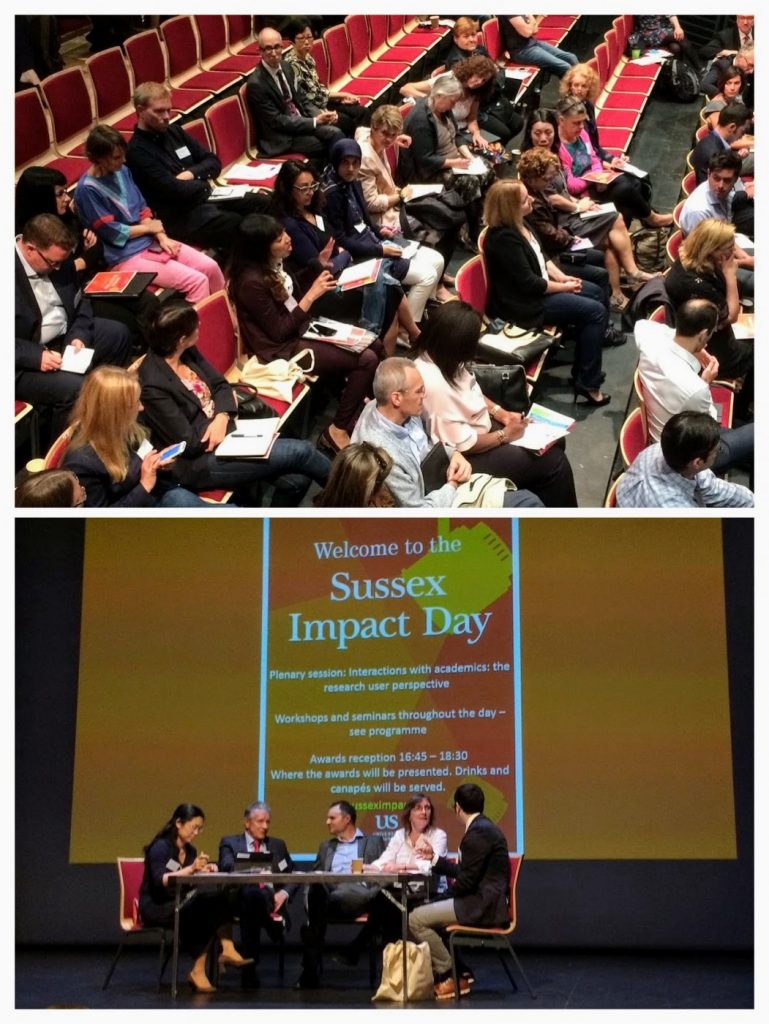

 We’re waiting for your applications for ESRC Festival of Social Science until 5 pm on Friday 5th May.
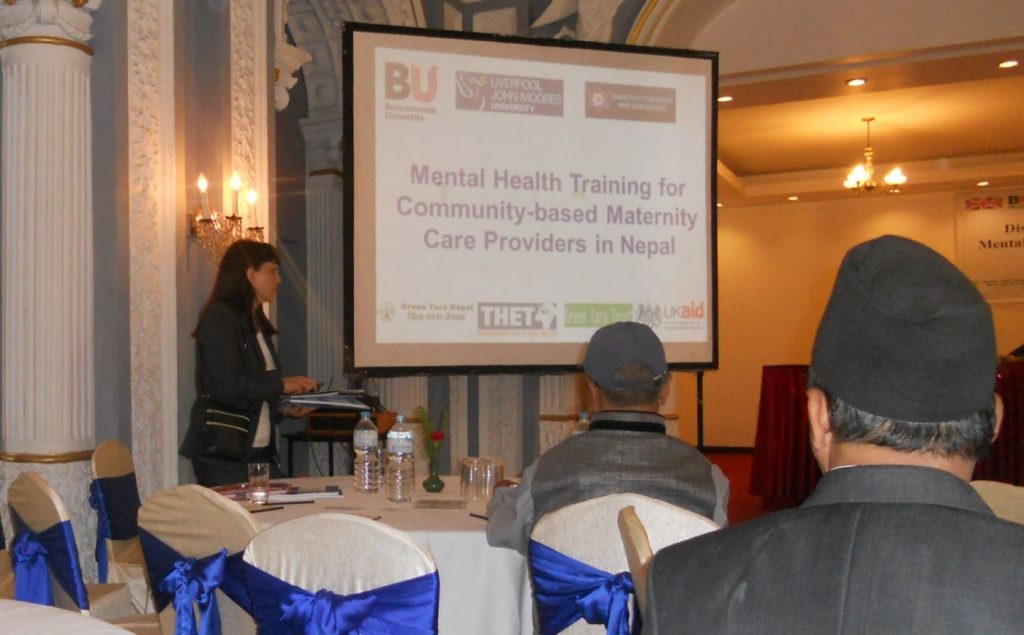


 Yesterday, the RCUK launched reports detailing the impacts of a collective investment of £3.4Bn in 2015/16. These impact reports showcase specific examples of the impact of investment through their various awards, programmes and collaborations. The wide-ranging nature of the impact extends from furthering technological advances to combatting disease to breakthroughs in the creative economy. Click
  The call for participants for the 2017 ESRC Festival of Social Sciences will be opening on 29th March. The festival this year is taking place from the 4th to the 11th of November with events taking place across the BU Campus and in the local area. We will be looking for applications from social sciences researchers to run workshops/exhibitions/lectures/activities (we’re open to ideas) open for attendance for the wider public.







 3C Event: Research Culture, Community & Connections – Wednesday 11 November 3-4pm
 ECR Opportunities: New Development Programme, Researcher Grants & Upcoming Events
 Help us capture BU’s knowledge exchange activity HE-BCI survey 2025–26
 Verbal autopsy paper published two days ago
 ESRC Studentships for 2027 Entry: Opportunity Now Open
 Horizon Europe Cluster 3 (Civil Security for Society) 2026 Calls Now Open
 MSCA Doctoral Networks 2026 Call Information Webinar
 ESRC Festival of Social Science 2026: Application Deadline Extended to Thursday 25 June 2026
 Reminder: Register for the ESRC Festival of Social Science 2026 Information Session
 ECR Funding Open Call: Research Culture & Community Grant – Apply now
 ERC Advanced Grant 2025 Webinar
 Update on UKRO services
 European research project exploring use of ‘virtual twins’ to better manage metabolic associated fatty liver disease