This is a free online event for academics interested in policy engagement, run by Showrunner Communications on 7th September, 13:00-15:00. You can sign up via Eventbrite.
During this session, participants will learn to write for policy stakeholders, including advice on drafting comment articles and blogs, and Select Committee and Government consultation responses.
This session will also focus on building participants’ professional social media profiles and emphasising their expertise online.
Showrunner’s training workshops build the understanding and skills that academics need to effectively achieve policy impact throughout their careers.
This session will be delivered by Nicky Hobbs and Jennifer Harrison, who are communications, policy, and education specialists, in partnership with Showrunner Communications and the Future Leaders Fellows Development Network.
Jennifer Harrison
Jennifer has a distinctive track record within the fields of policy, public affairs, and communications, on behalf of national and local government, the voluntary and community sector, and higher education. Her work has been used by think tanks and policy institutes, directly influenced legislative and policy change, and has represented policy interests at the highest level, including meetings with ministers, in regional and national media, and at parliamentary inquiries.
Jennifer was Durham University’s first policy engagement lead, working with academics to successfully achieve REF and societal impact. This included helping to secure the first ever parliamentary inquiry into urban soil health, securing changes to criminal justice legislation, and campaigning to end irresponsible lending practices that exacerbate poverty. She has been Chair of the Russell Group Political Affairs Network and has contributed widely to thought leadership across the sector, including policy blogs and conference speaking engagements focusing on the nature of policy engagement and research impact.
Nicky Hobbs
Nicky is a communications and engagement leader with over two decades of experience, Nicky has run programmes and led teams for multiple private and public sector organisations.
Nicky has led award-winning communications departments in two Russell Group universities; UCL and Queen Mary and stakeholder engagement at a Government department. At Queen Mary, Nicky led communications for the ground-breaking City of London Institute of Technology which opened in 2022. As a consultant, she has led engagement campaigns for multiple social enterprises and charities and has significant expertise in developing high-impact digital content with a focus on higher and further education.


 This session is aimed at academics and researchers at all career stages and at all stages of the project lifecycle – from formulating research questions and preparing grant applications to developing a potential impact case study.
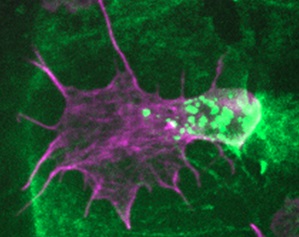 Many of us know that white blood cells help fight bacteria, but we may not be aware that they also act as tiny ‘couriers’, moving all around the body to deliver its building blocks. Without these couriers, the body cannot be constructed properly.
 Barriers such as dams and weirs alter a river’s natural flow, severely affecting aquatic ecosystems and leading to a decrease in water quality. Researchers in Europe have been working to address this issue – with the goal of reconnecting 25,000km of rivers by 2030.
 This RKEDF session aimed at researchers at all career stages, and will give you the tools to help you entify the organisations, groups and people who could either benefit from your research, or be able to influence or facilitate impact arising from it.
 As part of the RKEDF Impact Essentials programme, booking is now open for the Impact Essentials: creating your impact development plan 2-hour in-person workshops. There are 4 dates to choose from and they will be delivered on both Talbot and Lansdowne campuses, so hopefully there will be a date and time that is convenient for everyone who would like to attend.
 How can we shape a better future for ourselves and the planet? Join us on Tuesday 5 September 6:30-8pm for an evening of inspiring talks and discussions with postgraduate researchers from Bournemouth University, all currently working towards their PhDs, who will share their insights and perspectives.







 BU Annual Research Conference: Poster Exhibition Call for Applications
 Vitae Three Minute Thesis (3MT®) Competition: Applications Now Open
 3C Online Social: Thursday 26 March 1–2pm – Research Culture, Community & Can you Guess Who?
 Four BU students at national midwifery conference
 INRC book roundtable/presentation by Drs Jonathan Cole and Catherine Talbot, Wednesday 22/04/2026, 13:00h, P426
 ECR Funding Open Call: Research Culture & Community Grant – Apply now
 ECR Funding Open Call: Research Culture & Community Grant – Application Deadline Friday 12 December
 MSCA Postdoctoral Fellowships 2025 Call
 ERC Advanced Grant 2025 Webinar
 Update on UKRO services
 European research project exploring use of ‘virtual twins’ to better manage metabolic associated fatty liver disease