We are wishing our colleagues, students, researchers and collaborators from South Asia a Happy New Year today. The best wishes for the Bangla New Year 1433 and for the Nepali New Year 2083!
Professors Edwin van Teijlingen and Vanora Hundley
Latest research and knowledge exchange news at Bournemouth University
We are wishing our colleagues, students, researchers and collaborators from South Asia a Happy New Year today. The best wishes for the Bangla New Year 1433 and for the Nepali New Year 2083!
Professors Edwin van Teijlingen and Vanora Hundley
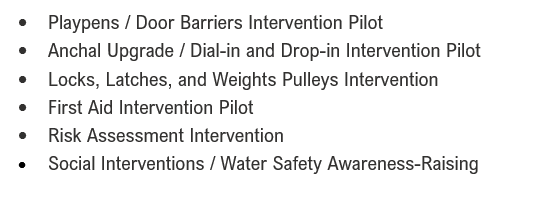
After several little hiccups in our Sonamoni research project we can now show some of the work. Sonamoni is a four-year research study led by the University of Bournemouth and the Centre for Injury Prevention Research Bangladesh (CIPRB) with the University of Southampton, the University of the West of England (UWE), the Royal National Lifeboat Institution (RNLI) and Design Without Borders (DWB) to develop a number of interventions to prevent drowning in children under the age of 2 years in rural Bangladesh. After several stages of well-planned research we worked with local communities and stakeholders to propose six interventions with the prospect of been taken further to a full community-based feasibility study.
These six interventions are being piloted in Bangladesh as I am writing this. This pilot phase is made more difficult at the moment as the country is in the ban of the forthcoming national elections. These elections are particularly challenging for the people in Bangladesh and CIPRB as the local research partner. The previous national election resulted in violent changes, and the lead up to this election has been, and still is, a difficult period.
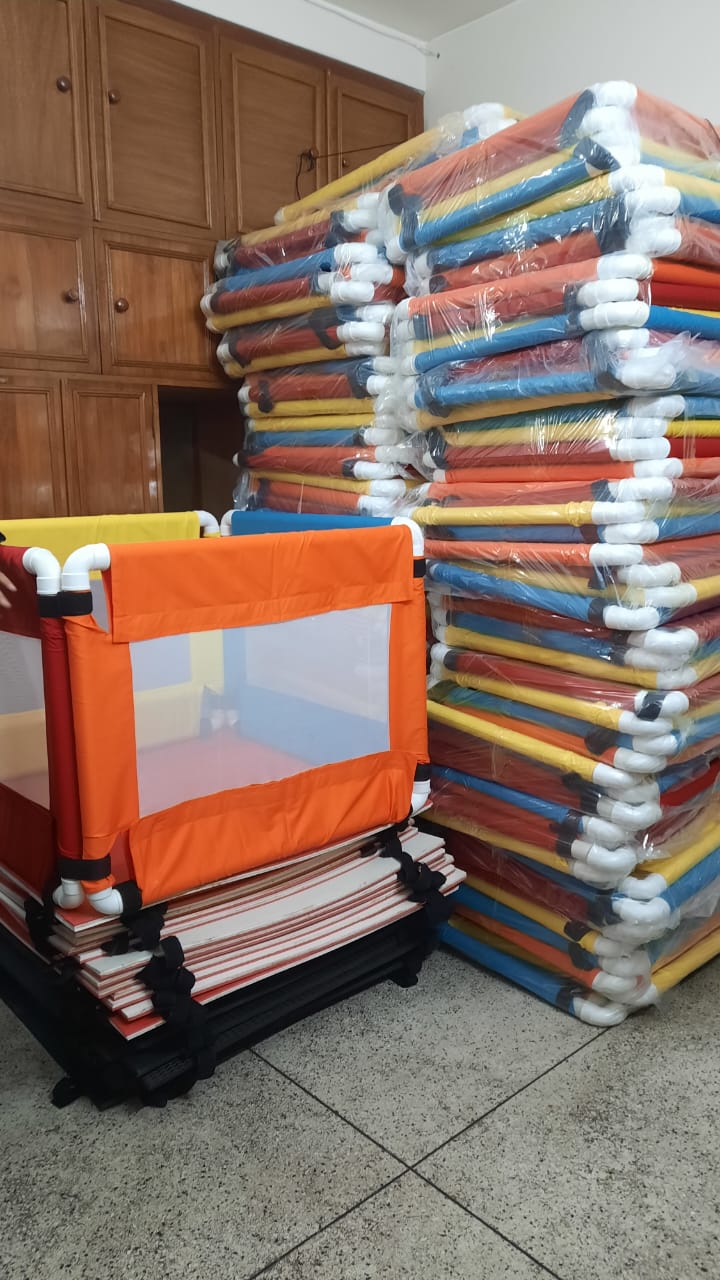
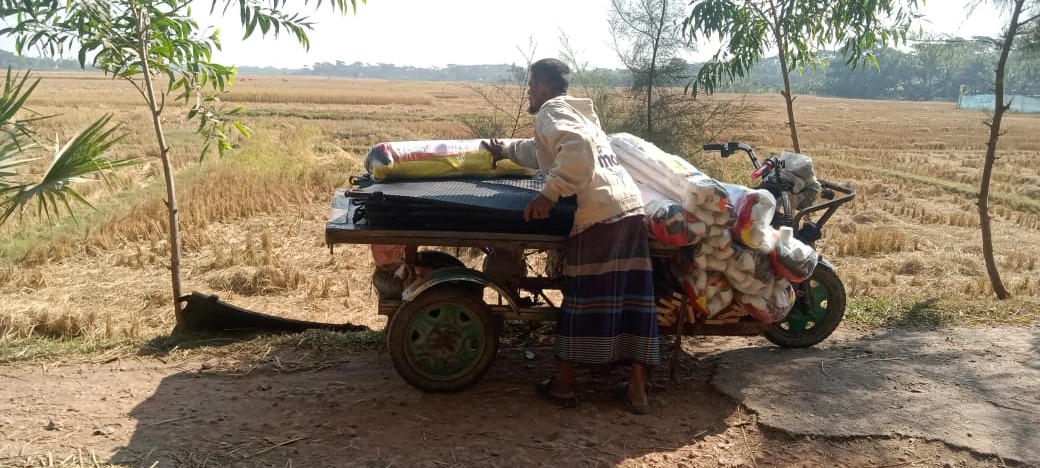
We would like to highlight one of the six interventions in a little more detail, as the Human-Centred Design approach, resulted in a neat, simple and low-cost playpen. The colourful pictures shows the first batch of flatpack playpens in the CIPRB office and some being delivered to rural villages. However, getting the first sixty developed in Bangladesh turned out more difficult than expected.
Our collagues in Bangladesh approached several small to medium-sized companies in the country with the production capabilities to produce a large number of playpens. In the end only one way interested to try and this company took much longer than agreed to produce enough for our pilot stage. The good news is that the first stage of the pilot is underway, although now we have the difficulty of forthcoming national election slowing down our research.
This interdisciplinary study is funded through the NIHR Research on Interventions for Global Health Transformation programme (Ref: NIHR203216). The Bournemouth University team comprises staff from across the university covering all three faculties: Dr. Mavis Bengtsson, Dr. Kyungjoo Cha, Dr. Mehdi Chowdhury, Dr. Yong Hun Lim, Mr. John Powell, and Prof. Edwin van Teijlingen, and Ph.D. student Mr. Md. Shafkat Hossain. For more information about our ongoing research in Bangladesh, please visit the NIHR website.
Saturday 8th November was the final day of the national Festival of Social Sciences (FoSS), which was supported by the Economic and Social Research Council (ESRC). Many universities across the Uk organised a wide-ranging set of events.
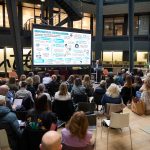
Bournemouth University (BU) organised six events, and on the last day it put up a public-engagement event around its Sonamoni research project at the Royal National Lifeboat Institution (RNLI) building in Poole.
Drowning is the leading cause of death for children aged 6-24 months in Bangladesh, yet it rarely receives the same attention as other global health issues. The Sonamoni project, led by Bournemouth University and the Centre for Injury Prevention and Research, Bangladesh (CIPRB), is an interdisciplinary collaboration with the University of Southampton, the University of the West of England (UWE), the RNLI, and Design Without Borders (DWB) in Uganda. 
This £1.6m project has been made possible thanks to a grant from the UK’s National Institute for Health & Care Research (NIHR) through its Research and Innovation for Global Health Transformation programme. Sonamoni is in the process of developing practical, community-based solutions to reduce drowning among 6-24 months’ old children.
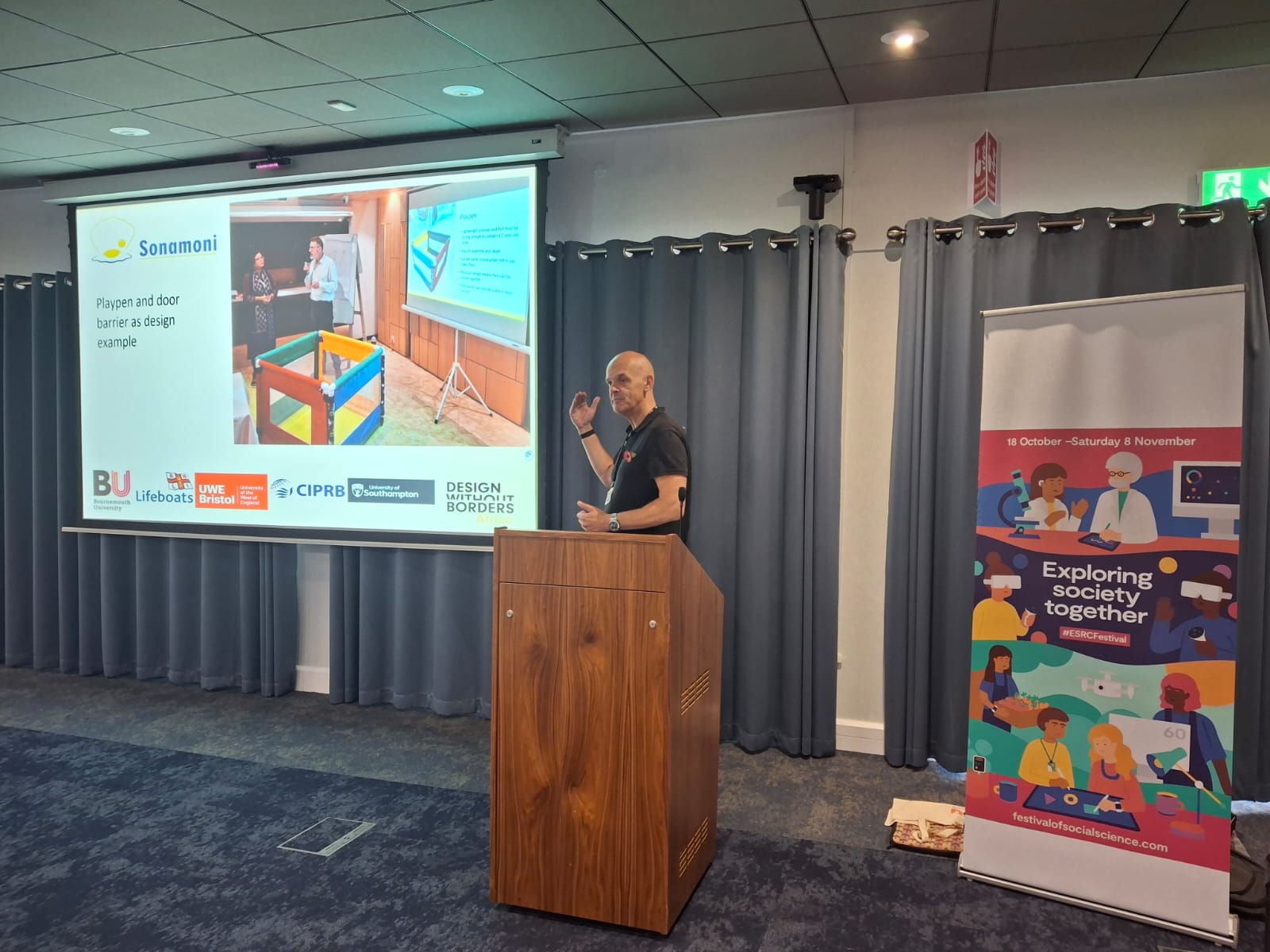
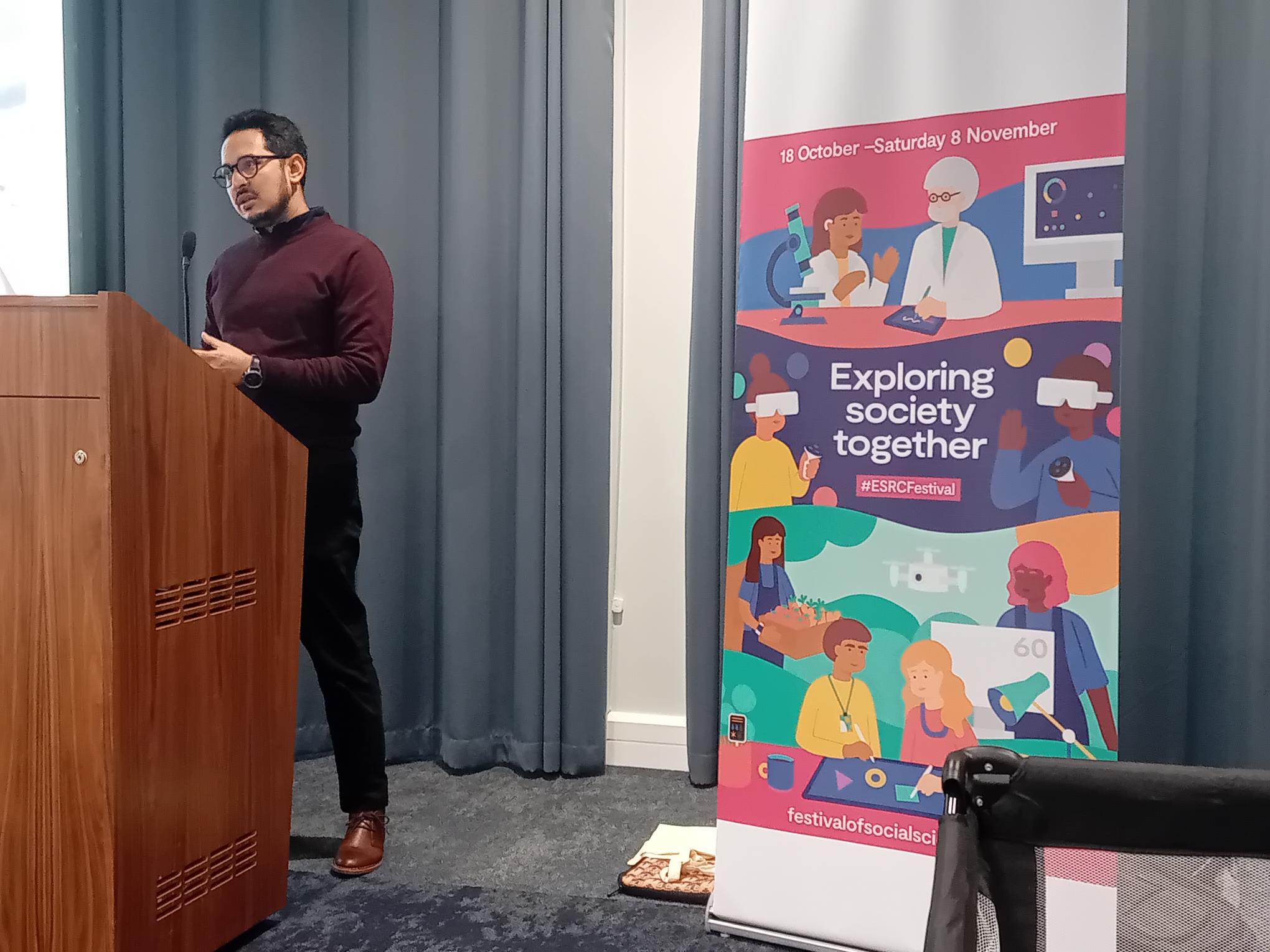
The FoSS event at the RNLI earlier this month was presented by BU academics John Powell and Edwin van Teijlingen with a major contribution from BU’s PhD student Md. Shafkat Hossain, whose doctoral studies focuses on the local community’s understanding of, and engagement with, the Human-Centred Design element of the Sonamoni project. Prof. van Teijlingen, from BU’s School of Health & Care, introduced the project and he highligthed the harmony between the different social science disciplines of the members of the international research team as well as the interdisciplinary nature of this collaboration. The FoSS event was prepared and supported by BU’s Yasemin Oksel Ferraris and Claire Fenton.
One of the ideas generated by the Sonamoni project, which involves local community involvement at all stages of the study, is a low cost playpen to keep young children save. John Powell MBE outlined the Human-Centred Design process and the eight potential solutions it generated.
The FoSS event on the Saturday morning focused particulary on the design stages of the playpen, from concept to a model that could be tested in the field in rural Bangladesh. The colourful first batch of playpens in the photo are ready to be taken to families to be tested in the two field sites. The audience of the FoSS event was particularly interested ways the researchers in Bangladesh managed to get and keep the community involved in this very applied research.
Prof. Edwin van Teijlingen
Centre for Midwifery and Women’s Health
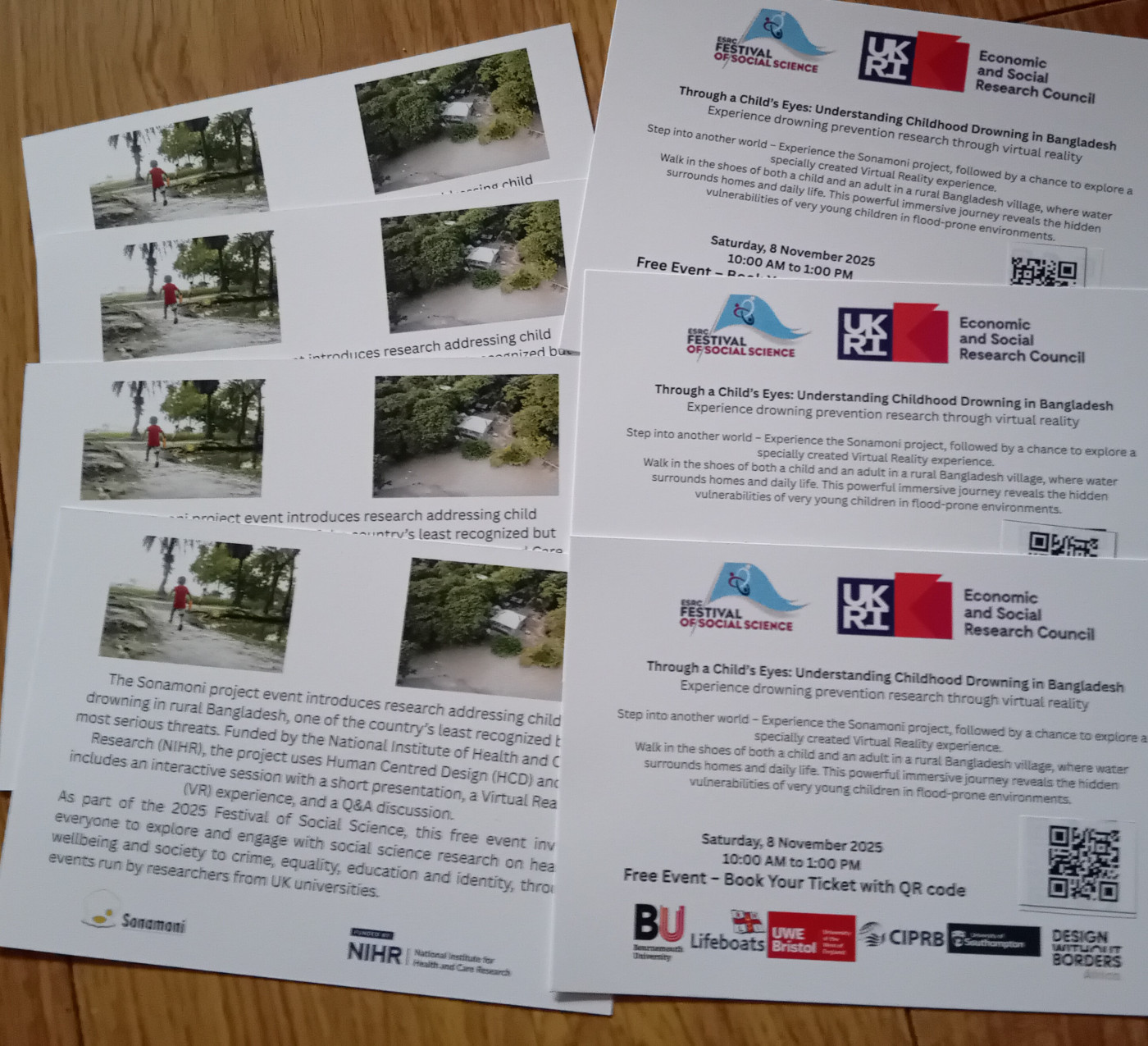
Yesterday we received the postcards to advertise our Festival of Social Sciences (FoSS) ‘Sonamoni’ event which will be held in the beautiful RNLI building on West Quay Road in Poole on Saturday 8th November. This public event focusing on drowning prevention in Bangladesh is free and can be booked online, click here! The FoSS is a UK-wide festival every autumn. It is funded by the Economic and Social Research Council (ESRC) to promote social science research with the general public. The FoSS comprises events ranging from exhibitions, lectures and panel debates through to performances, guided walks and workshops. We would like to thank the ESRC for its support for its support, which includes producing the postcards, and the coffee and teas to be served at the RNLI on Saturday November 8th.
The Sonamoni Project is dedicated to reducing drowning deaths among newly mobile children (under 2 years) by working closely with rural communities in Bangladesh. Using human-centred design (HCD) techniques, the project is identifying solutions, developing prototypes, and assessing their effectiveness. This exciting project is funded by the UK National Institute for Health and Care Research (NIHR) using UK aid from the UK government to support the improvement of global health through high-quality research.
Sonamoni is coordinated by Bournemouth University in collaboration with our partners: the University of the West of England (Bristol), the University of Southampton, and the Royal National Lifeboat Institution (RNLI), Design Without Border (DWB) in Uganda and the Centre for Injury Prevention and Research, Bangladesh (CIPRB).
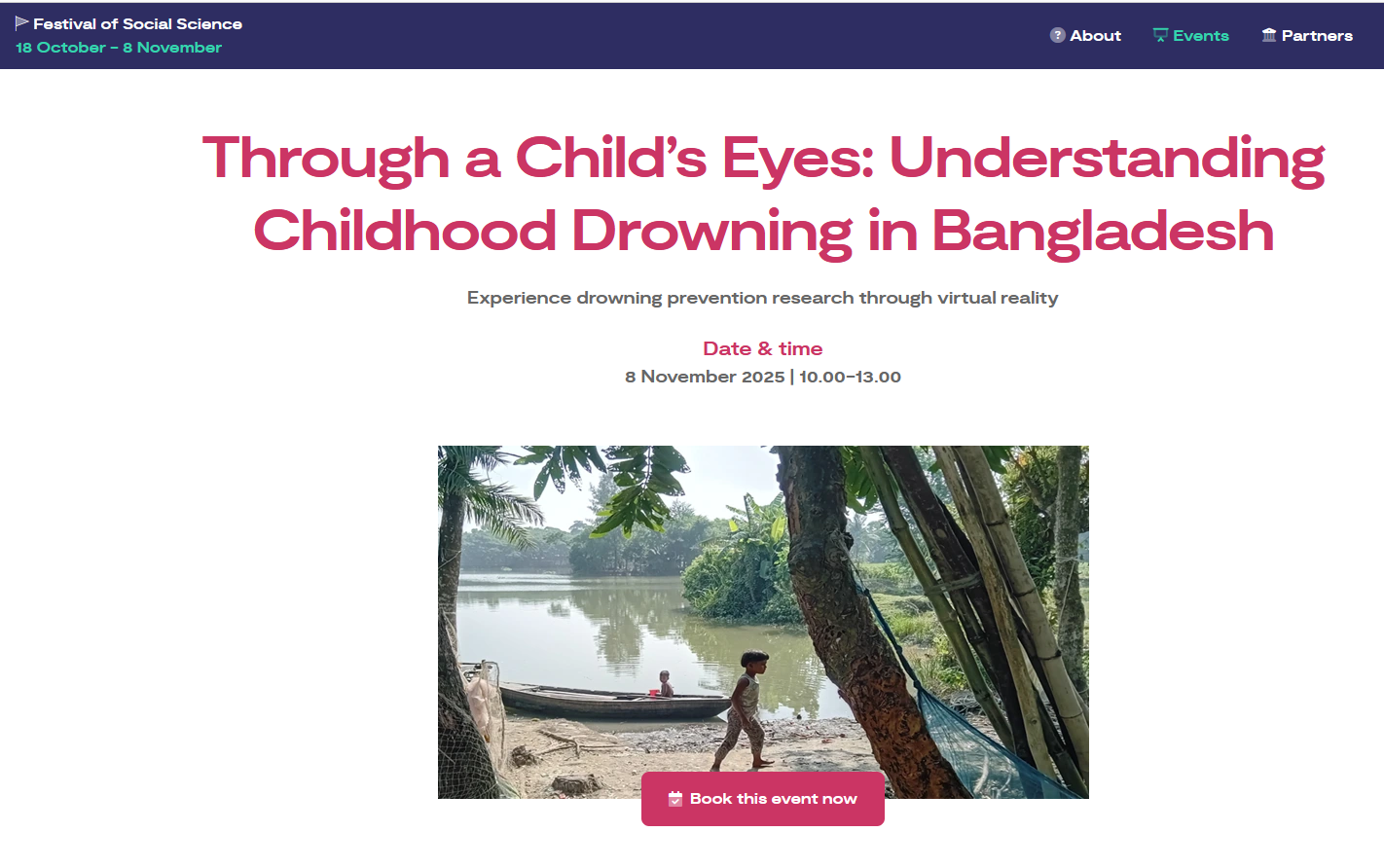
Bournemouth University is participating in the 2025 ESRC Festival of Social Science (FoSS), with a workshop about the Sonamoni project. Sonamoni is being coordinated by Bournemouth University (BU) and it is a collaboration with the Centre for Injury Prevention and Research (CIPRB) in Bangladesh as well as the University of the West of England (UWRE), Bristol, the University of Southampton, Design Without Borders (DWB) in Uganda, and the Royal National Lifeboat Institution (RNLI). Our FoSS event on drowning prevention research will be at the RNLI in Poole on the morning of Saturday 8th November. Tickets for this free event are available, to book yours, click here!
FoSS is a UK-wide festival that takes place every autumn, funded by the Economic and Social Research Council (ESRC). It’s all about sharing social science research with the public in fun and engaging ways—through talks, workshops, exhibitions, performances and more. The festival consists of a series of events run each autumn, delivered by ESRC’s ‘festival partners’, higher education institutions spread across the UK. Events range from exhibitions, lectures and panel debates through to performances, guided walks and workshops.
The Sonamoni Project is dedicated to reducing drowning deaths among newly mobile children (under 2 years) by working closely with rural communities in Bangladesh. Using human-centred design (HCD) techniques, the project is identifying solutions, developing prototypes, and assessing their effectiveness. The project is funded by the UK National Institute for Health and Care Research (NIHR) using UK aid from the UK government to support global health research. The project has Dr. Aminur Rahman (at CIPRB) as its Bangladesh lead, with BU’s Prof. Edwin van Teijlingen as the UK lead. It also includes a BU-registered PhD project by Md. Shafkat Hossain. The interdisciplinary team at Bournemouth University covers all three faculties through: Dr. Mavis Bengtsson, Dr. Kyungjoo Cha, Dr. Mehdi Chowdhury, Dr. Yong Hun Lim, Mr. John Powell, and Prof. Edwin van Teijlingen.
Next month on July 25th Bournemouth University will join in with the world-wide celebrations of World Drowning Prevention Day 2025. The first achievement to highlight is Dr. Jill Nash interesting piece recently published in The Conversation, in which she highlights Five ways to keep teenagers safe by the water [1]. It is also worthwhile to read last year’s contribution to World Drowning Prevention Day by Jill on the dangers of being near water and the role emotions play in making safer decisions [2].
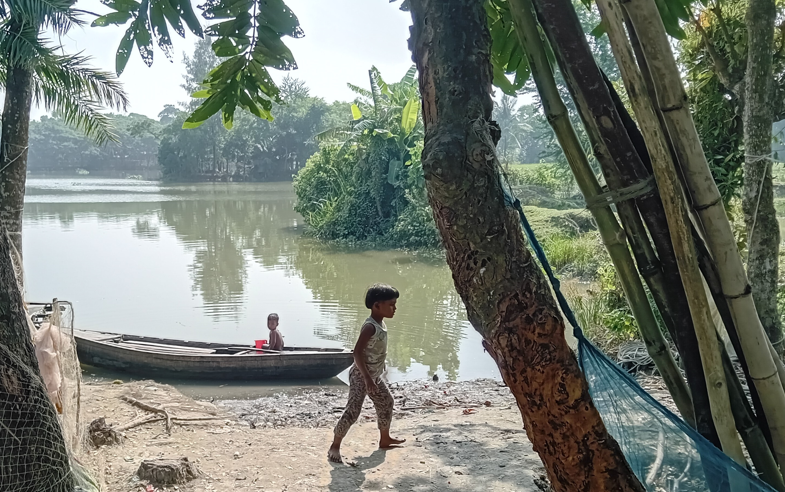
The second major piece of research related to drowning prevention at Bournemouth University is the Sonamoni Project. The Sonamoni Project is working with communities in rural Bangladesh utilizing human-centered design (HCD) techniques. The research project is identifying solutions to reduce the number of drowning deaths in newly mobile children (6-24 months), developing prototype, and assessing the acceptability and usability of potential interventions.
Sonamoni is coordinated by Bournemouth University in collaboration with the University of the West of England (Bristol), the University of Southampton, and the Royal National Lifeboat Institution (RNLI), Design Without Border (DWB) in Uganda and Centre for Injury Prevention and Research, Bangladesh (CIPRB). The interdisciplinary team at Bournemouth University covers three faculties and six academics: Dr. Mavis Bengtsson, Dr. Kyungjoo Cha, Dr. Mehdi Chowdhury, Dr. Yong Hun Lim, Mr. John Powell, and Prof. Edwin van Teijlingen.
This international project funded by the National Institute for Health and Care Research (NIHR) through its Research and Innovation for Global Health Transformation programme, also includes a BU-based PhD student, Mr. Md. Shafkat Hossein. He recently published the first article related to drowning prevention in Nepal [3].
References:
The 2025 NIHR Global Health Research Academy Member event will take place on Tuesday 13th and Wednesday 14th May. The NIHR recognizes that career progression is a common challenge for early-career researchers. This year the event’s theme is ‘Empowering Early-Career Researchers: Navigating Careers in Global Health’. This two-day online event aims to equip participants from across the globe with the skills and knowledge to navigate and build a career in global health research.
Bournemouth University staff and students participating in the NIHR Research and Innovation for Global Health Transformation Call 4: Drowning Prevention for newly mobile infants under 2 years in Bangladesh programme have been invited. This NIHR-funded project is called Sonamoni and BU’s student Md. Shafkat Hossain, whose PhD assessed the work in Bangladesh, is one the participants, as is our colleague from Bangladesh Notan Dutta. In the afternoon BU’s Edwin van Teijlingen who will be chairing a session on ‘Funding & Grant Writing’.
Sonamoni is being coordinated by Bournemouth University in collaboration with the Centre for Injury Prevention and Research (CIPRB) in Bangladesh as well as the University of the West of England, Bristol, the University of Southampton, Design Without Borders (DWB) in Uganda, and the Royal National Lifeboat Institution (RNLI). This project, with Prof. Dr. Aminur Rahman (at CIPRB) as Bangladesh lead, includes the above mentioned BU-based PhD project. The interdisciplinary team at Bournemouth University covers three faculties through: Dr. Mavis Bengtsson, Dr. Kyungjoo Cha, Dr. Mehdi Chowdhury, Dr. Yong Hun Lim, Mr. John Powell, and Prof. Edwin van Teijlingen.
The Department of Design and Engineering at Bournemouth University has a reputation for its Human-Centred Design (HCD) work. In our interdisciplinary Sonamoni project we have HCD at its centre. The Sonamoni project is coordinated by Bournemouth University in collaboration with the University of the West of England (Bristol), the University of Southampton, and the Royal National Lifeboat Institution (RNLI), Design Without Border (DWB) in Uganda and Centre for Injury Prevention and Research, Bangladesh (CIPRB). The interdisciplinary team at Bournemouth University covers three faculties and six academics: Dr. Mavis Bengtsson, Dr. Kyungjoo Cha, Dr. Mehdi Chowdhury, Dr. Yong Hun Lim, Mr. John Powell, and Prof. Edwin van Teijlingen.
Last month two staff from CIPRB, Notan Chandra Dutta and Mirza Shibat Rowshan visited DBW in Uganda, as part of so-called South-South learning. Their objective was to share (1) knowledge and experience of using HCD techniques and (2) best practices of drowning prevention in both countries. Utilizing HCD techniques, Sonamoni is working to identify and prioritize potential solutions, develop prototypes, and assess the acceptability of the interventions to reduce drowning deaths among old children under two in Bangladesh.
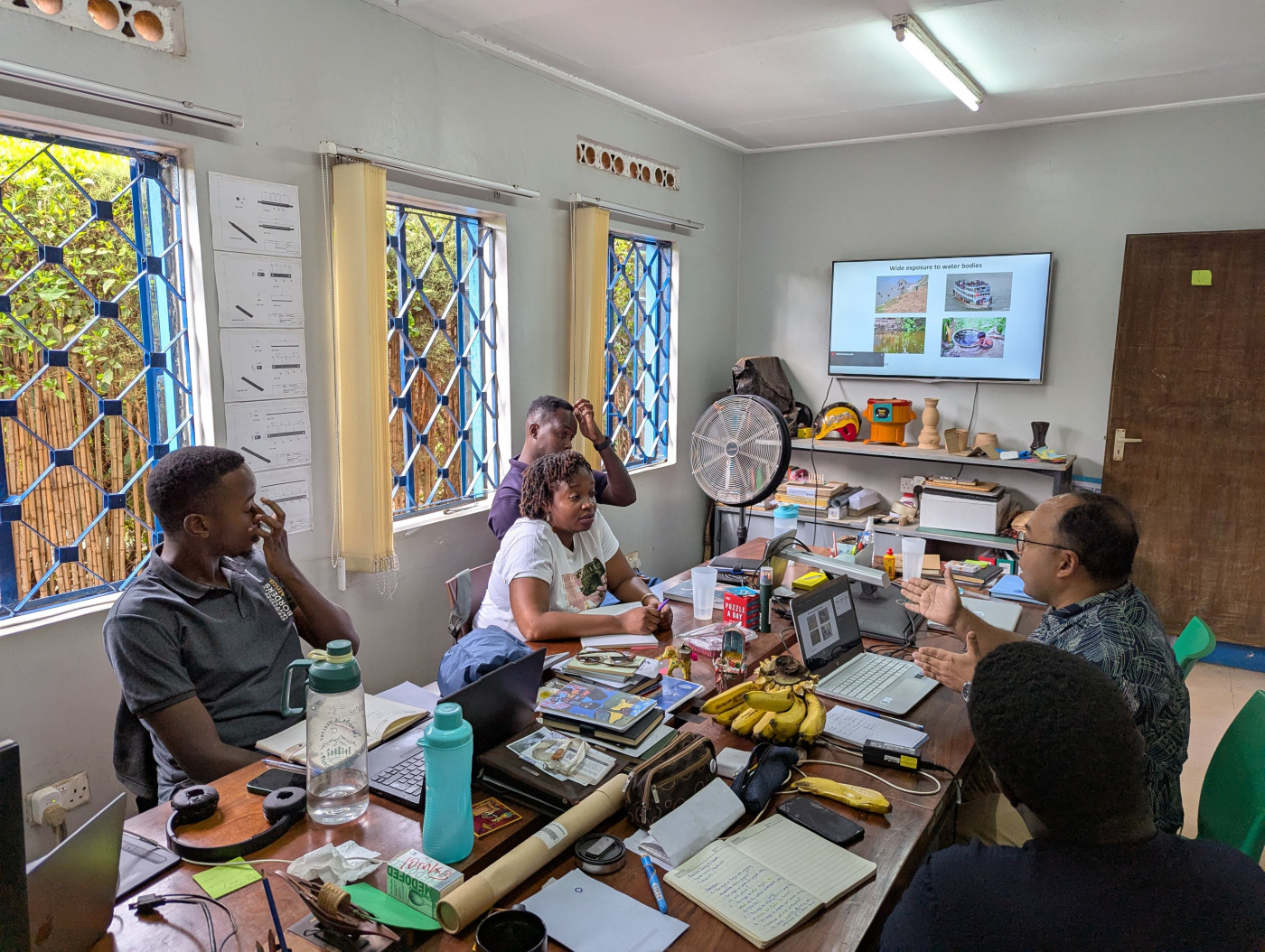
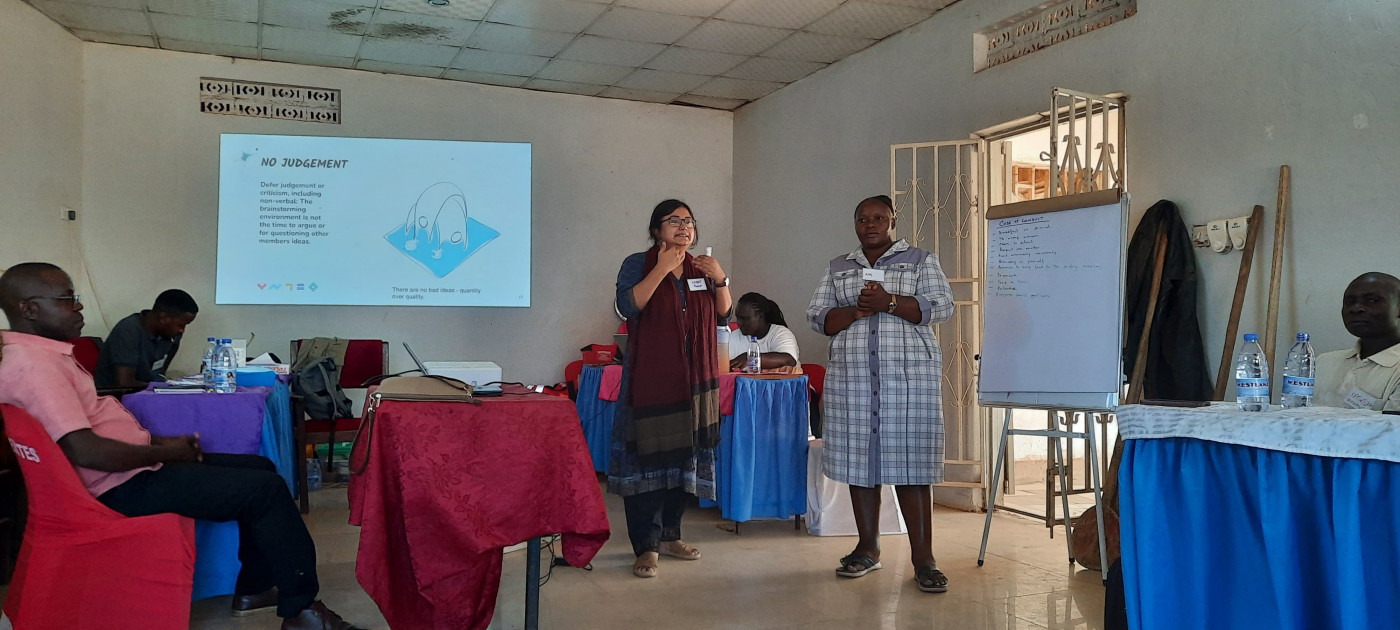
During the visit, Notan and Shibat participated a four-day ideation workshop with the fisher community near Lake Victoria, organized by DWB. In the workshop, different HCD tools were used along with other group activities to generate and refine ideas for the solutions. The generated ideas were recorded by visualization tools. Notan and Shibat also attended a session on the principles of creative facilitation of HCD, including the need to understand the problem, role of the facilitator and other stakeholders. Various visualization tools were discussed, e.g. ‘journey maps’, ‘stakeholder map’, ‘context map’ and different types of sketches. Notan shared CIPRB’s experiences of managing the best drowning prevention practices and its challenges from Bangladesh context.
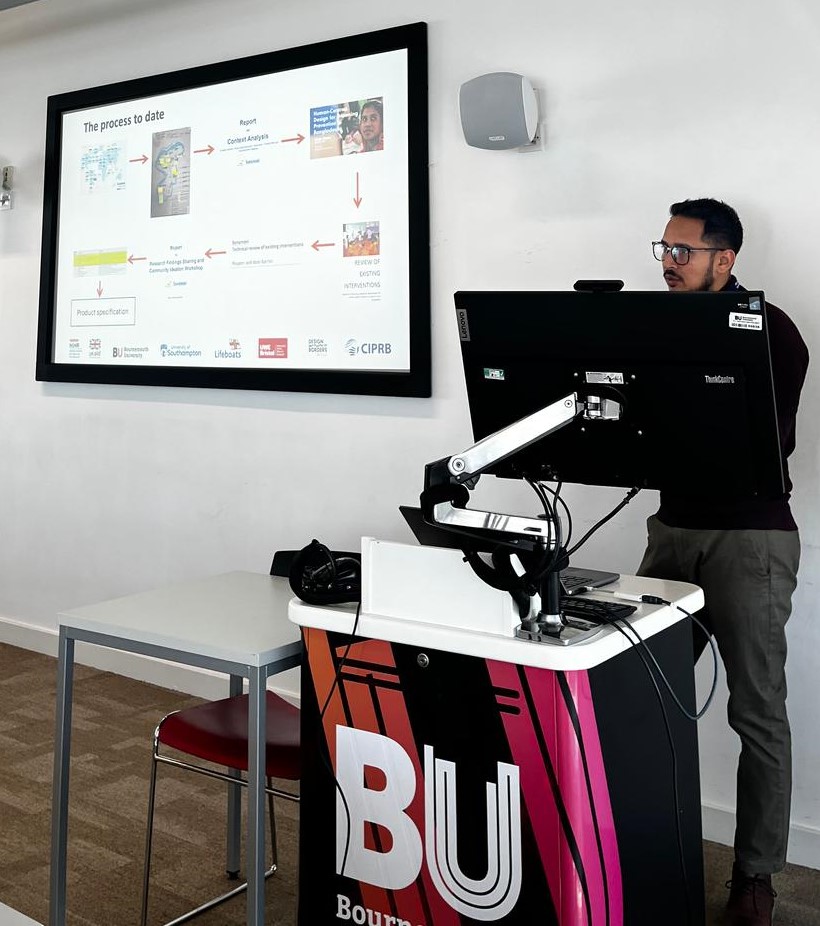
This international project funded by the National Institute for Health and Care Research (NIHR) through their Research and Innovation for Global Health Transformation programme, also includes a BU-based PhD student, Mr. Md. Shafkat Hossein. Last week Shafkat presented our Sonamoni project in lecture to BU Engineering students at Talbot campus.
Prof. Edwin van Teijlingen
The Sonamoni Project is working with communities in rural Bangladesh utilizing human-centered design (HCD) techniques. These design principles have been applied for many years in designing consumer products and, more recently, in the fields of health and social systems. The research project is identifying solutions to reduce the number of drowning deaths in newly mobile children (6-24 months), developing prototype, and assessing the acceptability and usability of potential interventions. This interdisciplinary project is coordinated by Bournemouth University in collaboration with the Centre for Injury Prevention and Research, Bangladesh (CIPRB), the University of the West of England, the Royal National Lifeboat Institution (RNLI), the University of Southampton, and Design without Borders Africa (DwB) from Uganda. Our Sonamoni project has been made possible thanks to a grant from the National Institute for Health and Care Research (NIHR) through their Research and Innovation for Global Health Transformation programme.
As part of the Sonamoni project we arranged some serious South-South learning by facilitating a visit to DwB in Uganda in early march by two of our Bangladesh-based team, namely Notan Chandra Dutta, Research Manager and Mirza Shibat Rowshan, HCD Specialist. DwB applies HCD approaches to complex challenges faced by communities in low and middle-income countries. To gain greater insights into HCD activities the researchers from Bangladesh visited one site near Lake Victoria to observe data collection with fishermen, transporters, and local leaders. Notan and Shibat co-facilitated a four-day long Design Community Advisory Board (DCAB) workshop on the “Enhancing Fisherfolk Safety” project where fishermen, boat owners, transporters, traditional weather forecasters, health workers were the participants. To prevent drowning, HCD was applied in the workshop to generate ideas and share solutions of the lake site community from Lake Victoria of Mayuge district. Lessons learnt from the visit by two staff of CIPRB can further enrich the Sonamoni Project implementation in Bangladesh. The NIHR really values research capacity building and South-South learning in its funded projects, as well as North-South leaning, of course.
Prof. Edwin van Teijlingen
Colleagues are invited to our Bangladesh Midwifery Academic Writing & Publishing Workshop
This online workshop is an introduction to the world of academic writing and publishing. The workshop organisers, Professors Hundley and van Teijlingen will introduce the basic structure of an academic article, highlight the importance of selecting the most appropriate journal, reading and following the author instructions, understanding the role of the journal editor and that of peer reviewers. The authors will use the submission requirements of the Journal of Asian Midwives as an example.
The ZOOM event will be held this Tuesday 18 February 14.00-16.00 UK time. FHSS colleagues who are interested in joining this introductory workshop with midwives and midwifery researchers from Bangladesh can use the following link:
Thank you very much for all those who attended last Wednesday’s monthly online session organised by BU’s Centre for Midwifery & Women’s Health (CMWH). This event featured PhD student Mr. Shafkat Hossein who spoke about his thesis research ‘Using Human-Centred Design (HCD) to develop community-led interventions to prevent drowning among children under the age of 2 in rural Bangladesh’.
His work is part of an interdisciplinary study called ‘Sonamoni’ in which BU collaborates with CIPRB (Centre for Injury Prevention and Research, Bangladesh), the University of the West of England (in Bristol), the University of Southampton, the Royal National Lifeboat Institution (RNLI), and Design Without Borders (DWB) in Uganda. Sonamoni aims to design and develop interventions to reduce the number of young children drowning in Bangladesh.
This public health project is funded by the National Institute for Health and Care Research (NIHR) through its Research and Innovation for Global Health Transformation programme. For more information, visit the NIHR website.
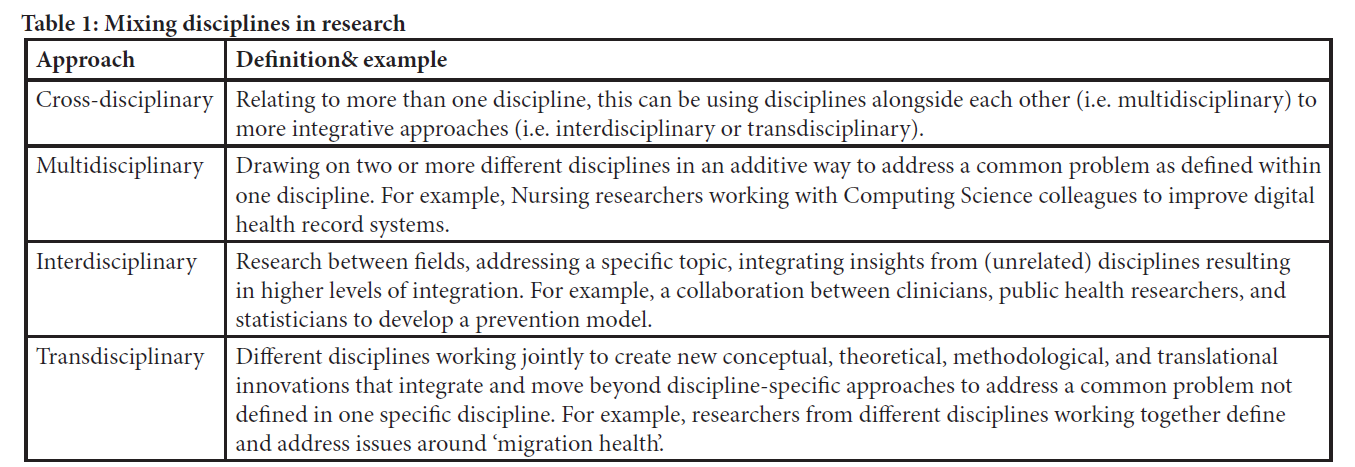
The second speaker at the CMWH event was Prof. Edwin van Teijlingen, who spoke about trials and tribulations of conducting, running and managing interdisciplinary studies. His talk was largely based on three three published papers co-written with BU academic and Faculty of Health & Social Sciences Visiting Faculty members on interdisciplinary or multidisciplinary working [1-3]. There are, of course, differences between multidisciplinary, and interdisciplinary and the even more integrated level of working called transdisciplinary. At the same time the individual member of an interdisciplinary team needs to have individual field-based expertise in their own discipline, e.g. sociology, nursing, chemistry or law to bring required knowledge and skills to that team.
References:
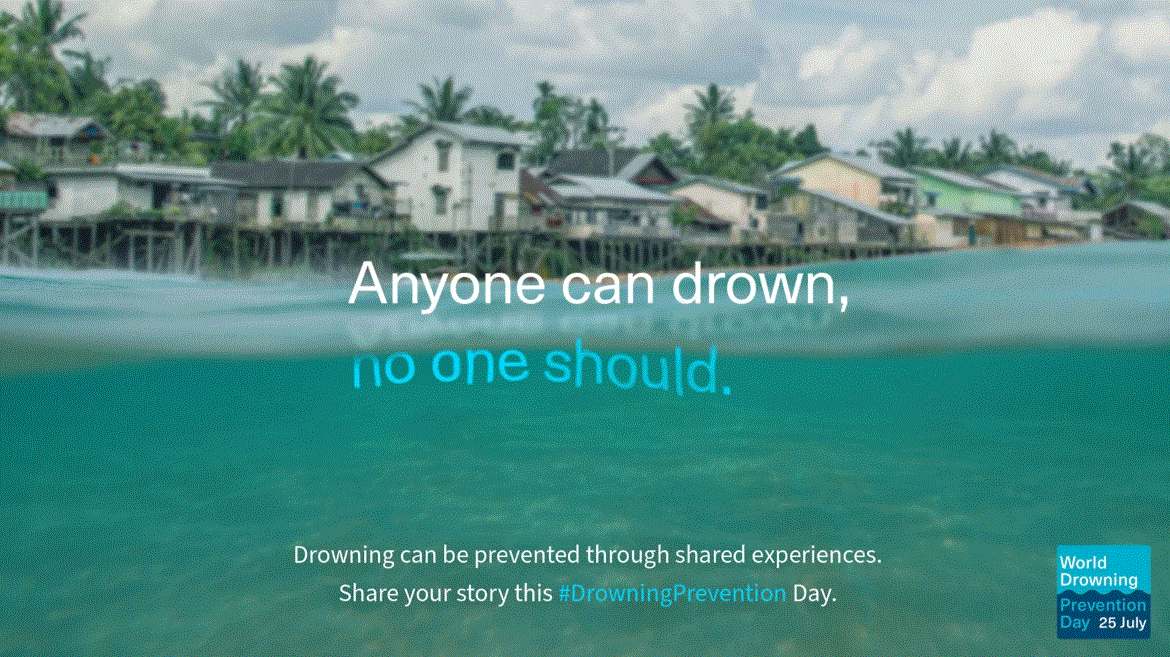
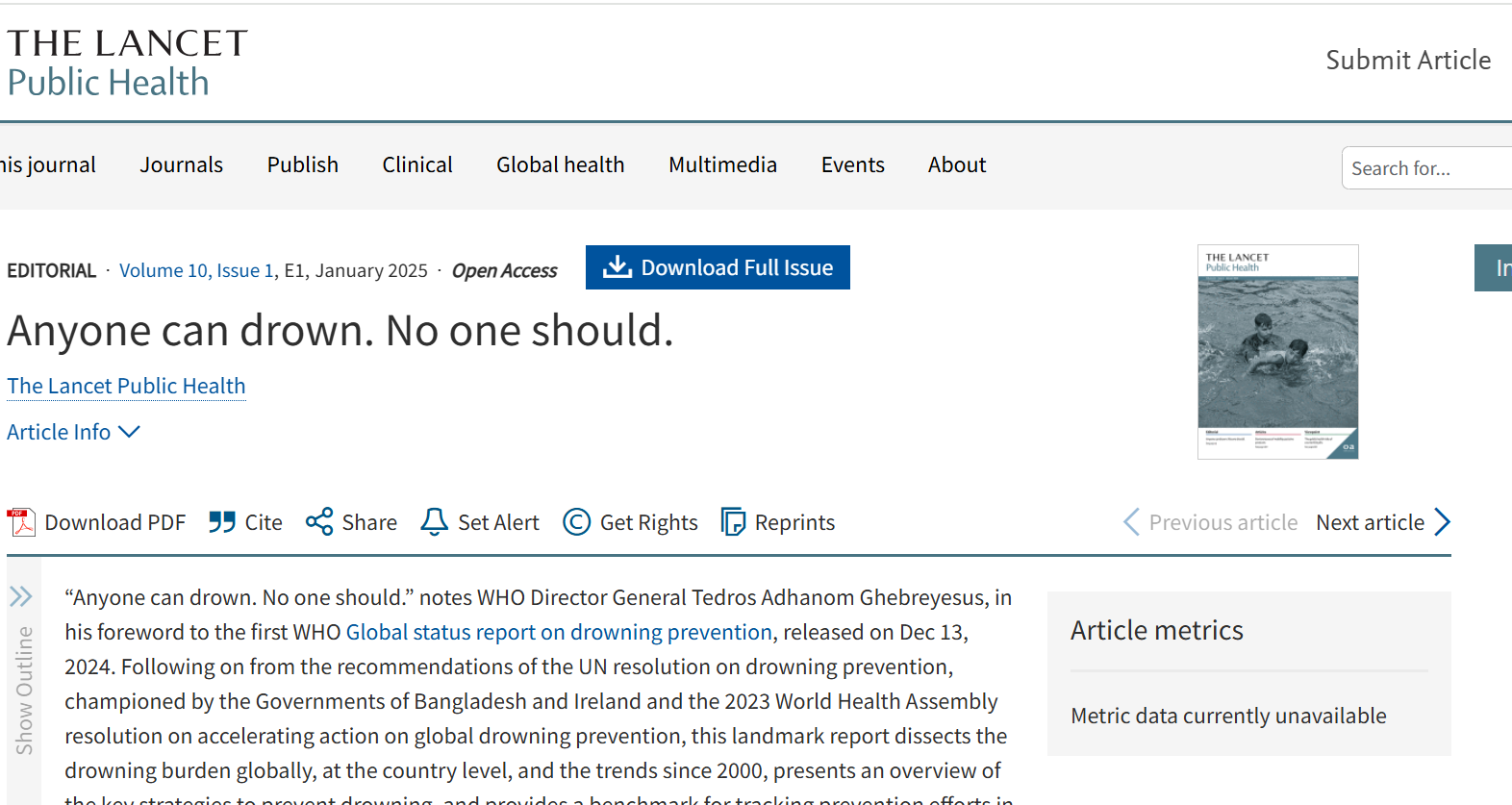
The first editorial of The Lancet Public Health [1] highlights a public health issue close to our work in Bangladesh, namely the risk of drowning, especially in young children. “Anyone can drown. No one should” are the words of the Director General of the World Health Organization (WHO) in its first Global status report on drowning prevention, published two weeks ago (Dec. 2024). According to The Lancet Public Health this landmark report dissects the drowning burden globally, at the country level, and the trends since 2000, presents an overview of the key strategies to prevent drowning, and provides a benchmark for tracking prevention efforts in the future. Importantly, this report sheds light on a tragic, neglected, mostly preventable public health issue.
We are grateful to The Lancet Public Health for raising this important issue in 2025, since Bournemouth University (BU) is currently engaged in research project in this field called ‘Sonamoni’. This an interdisciplinary study is a collaboration with CIPRB (the Centre for Injury Prevention and Research, Bangladesh), the University of the West of England (in Bristol), the University of Southampton, the Royal National Lifeboat Institution (RNLI), and Design Without Borders (DWB) in Uganda. Sonamoni aims to design and develop interventions to reduce the number of young children drowning in Bangladesh.
This public health project is funded by the National Institute for Health and Care Research (NIHR) through its Research and Innovation for Global Health Transformation programme. For more information, visit the NIHR website.
The interdisciplinary team at BU includes three faculties and six member of staff: Dr. Mavis Bengtsson, Dr. Kyungjoo Cha, Dr. Mehdi Chowdhury, Dr. Yong Hun Lim, Mr. John Powell, and Prof. Edwin van Teijlingen. We recently published the first paper ‘Drowning Prevention should be a Public Health Issue in Nepal related to this project [2].
References:
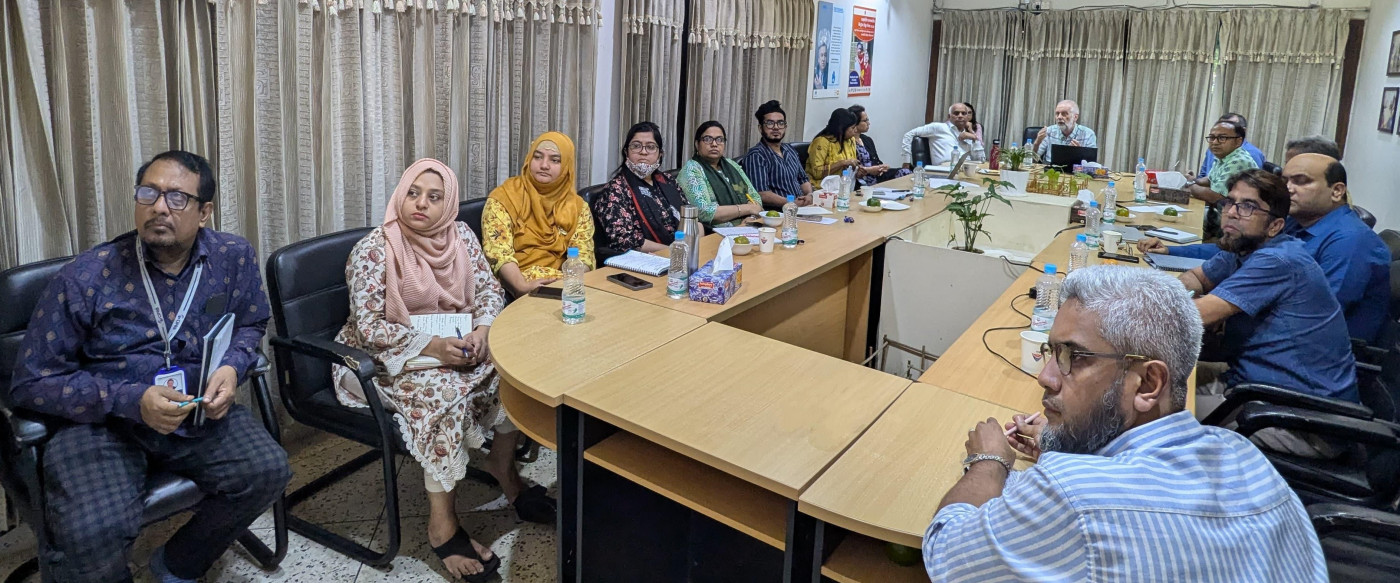
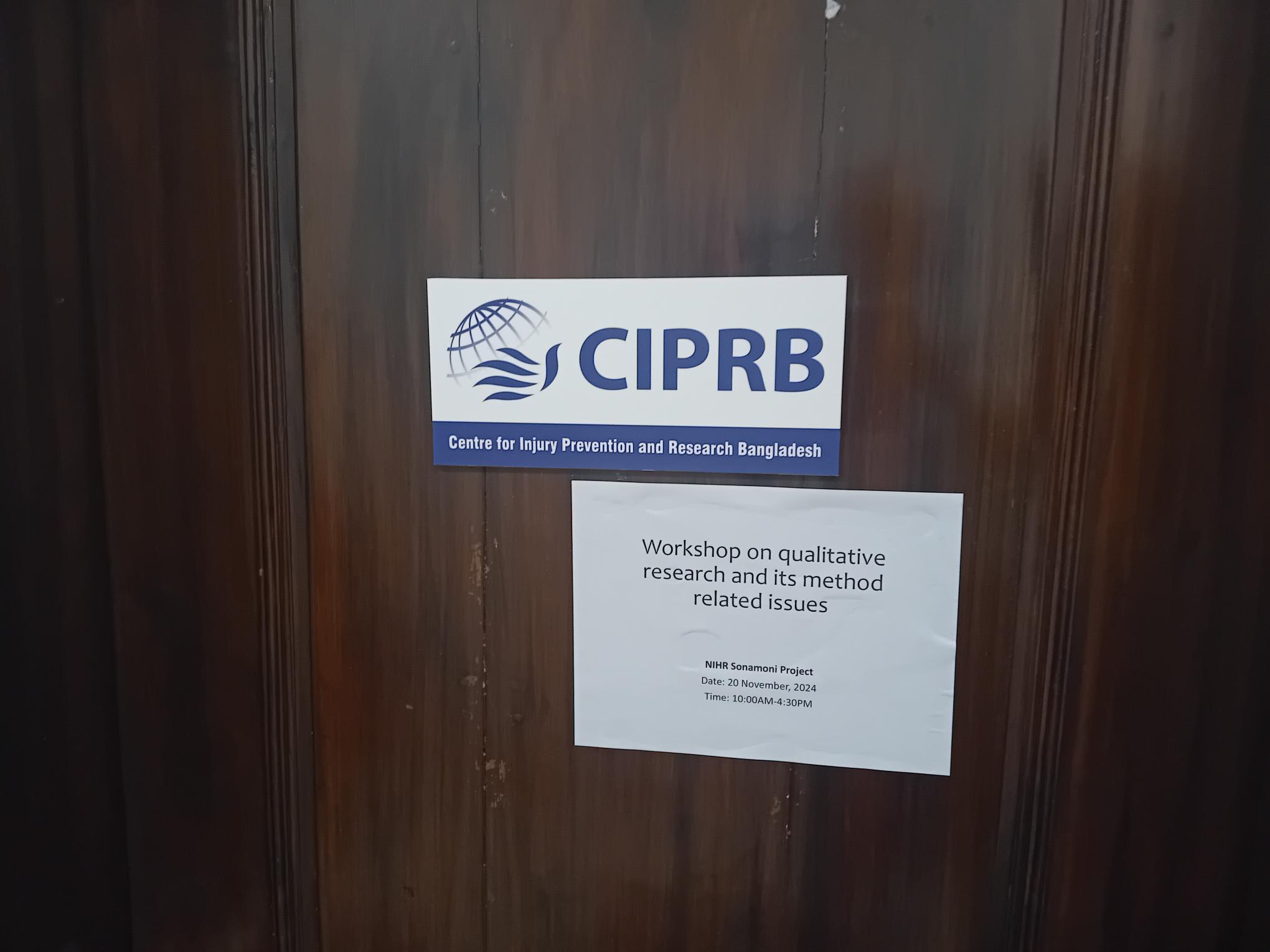
Yesterday I had the pleasure to delivery two research capacity building workshop sessions in Dhaka with staff at CIPRB (Centre for Injury Prevention and Research, Bangladesh). I was in Bangladesh as part of our Sonamoni project, this interdisciplinary project is jointly coordinated by Bournemouth University and CIPRB, in also includes the University of the West of England, Bristol, the University of Southampton, Design Without Borders (DWB) in Uganda, and the Royal National Lifeboat Institution (RNLI). We are working to reduce drownings among newly-mobile children, generally those under two years old. This £1.6m project has been made possible by a grant from the National Institute for Health and Care Research (NIHR) through its Research and Innovation for Global Health Transformation programme.
Two sessions covered qualitative research approaches in the morning and academic writing and publishing in the afternoon. The sessions were attended by staff involved in the Sonamoni project but we made it open to other CIPRB staff and in total 18 people attended. BU’s contributions to capacity-building initiatives aim to develop our collaborators’s research staff’s skills and increase their confidence in conducting qualitative research as well as publishing it.
Professor Edwin van Teijlingen
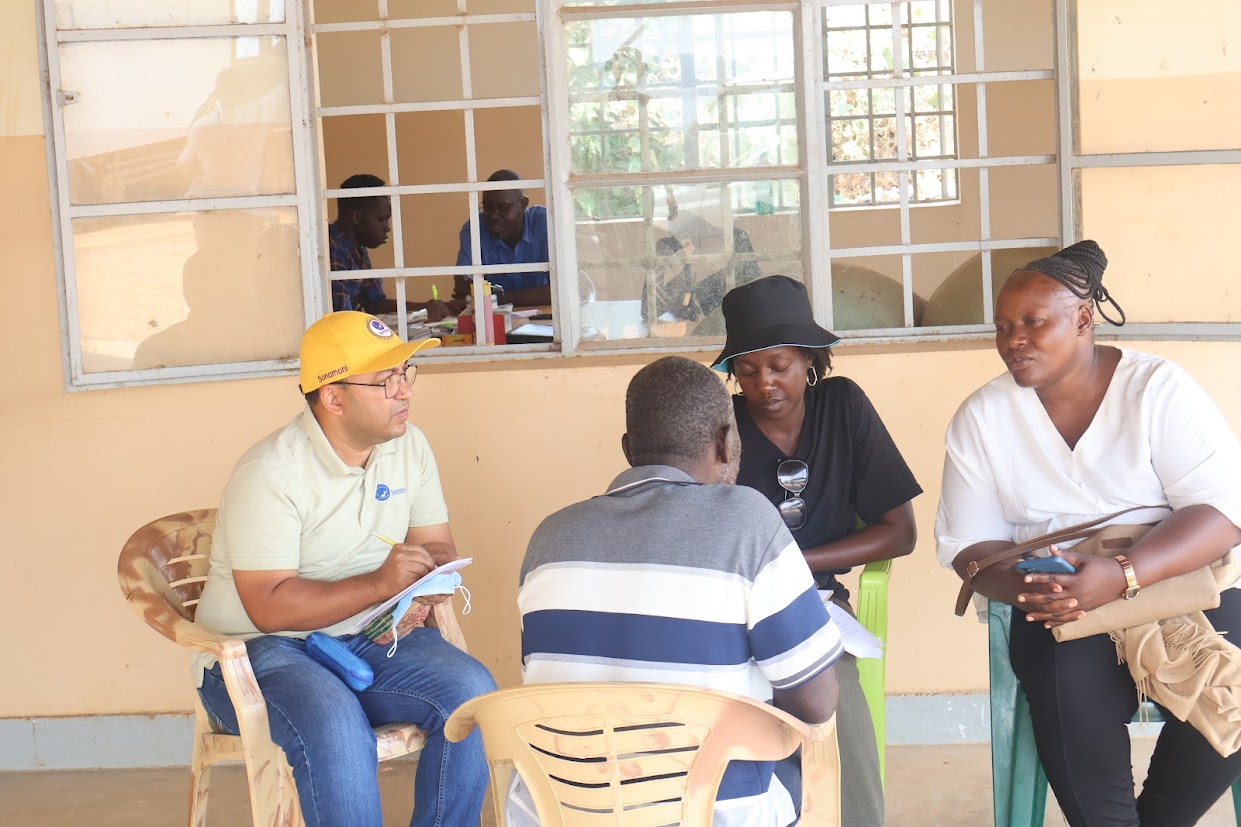
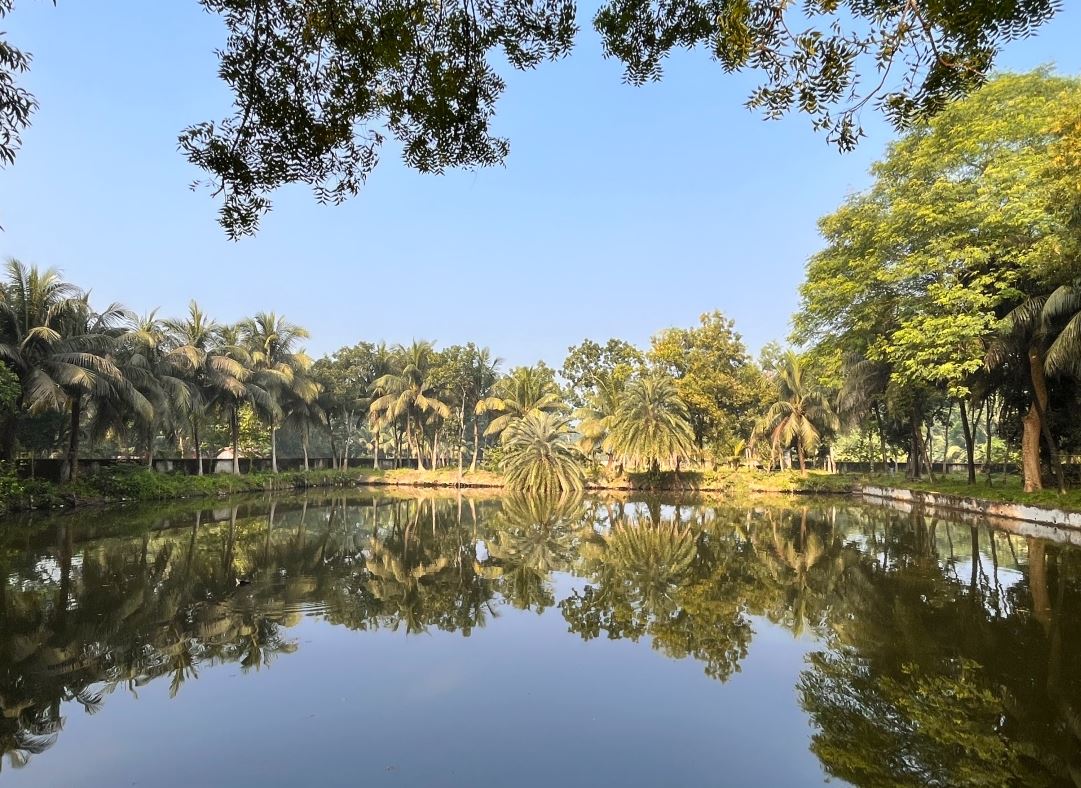
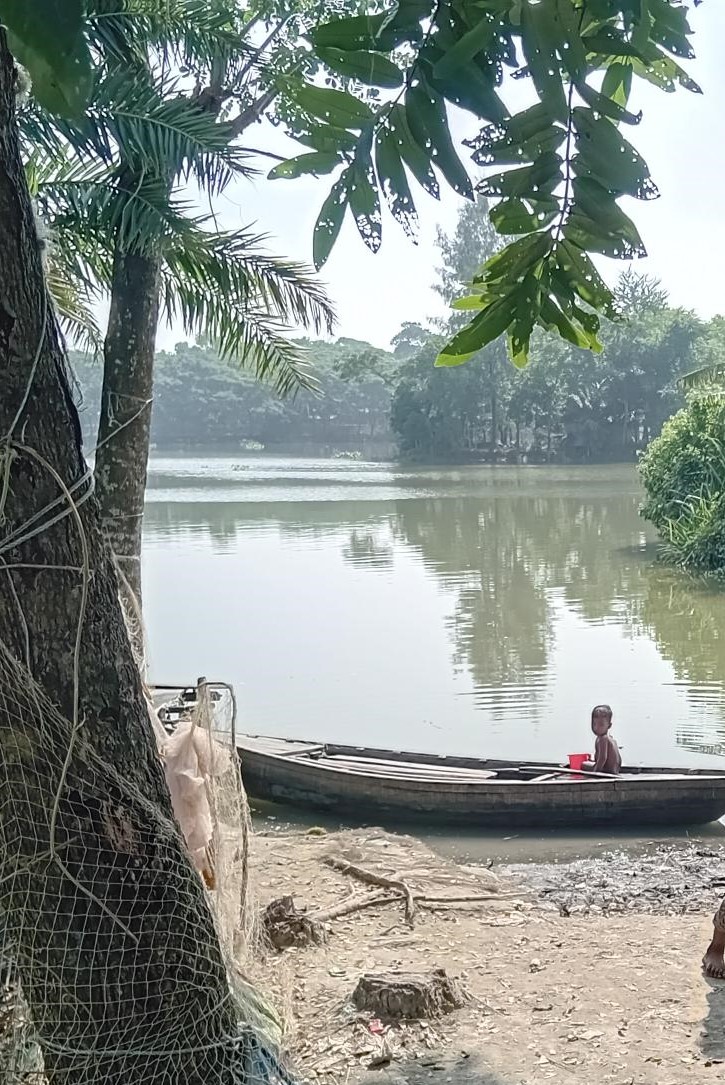
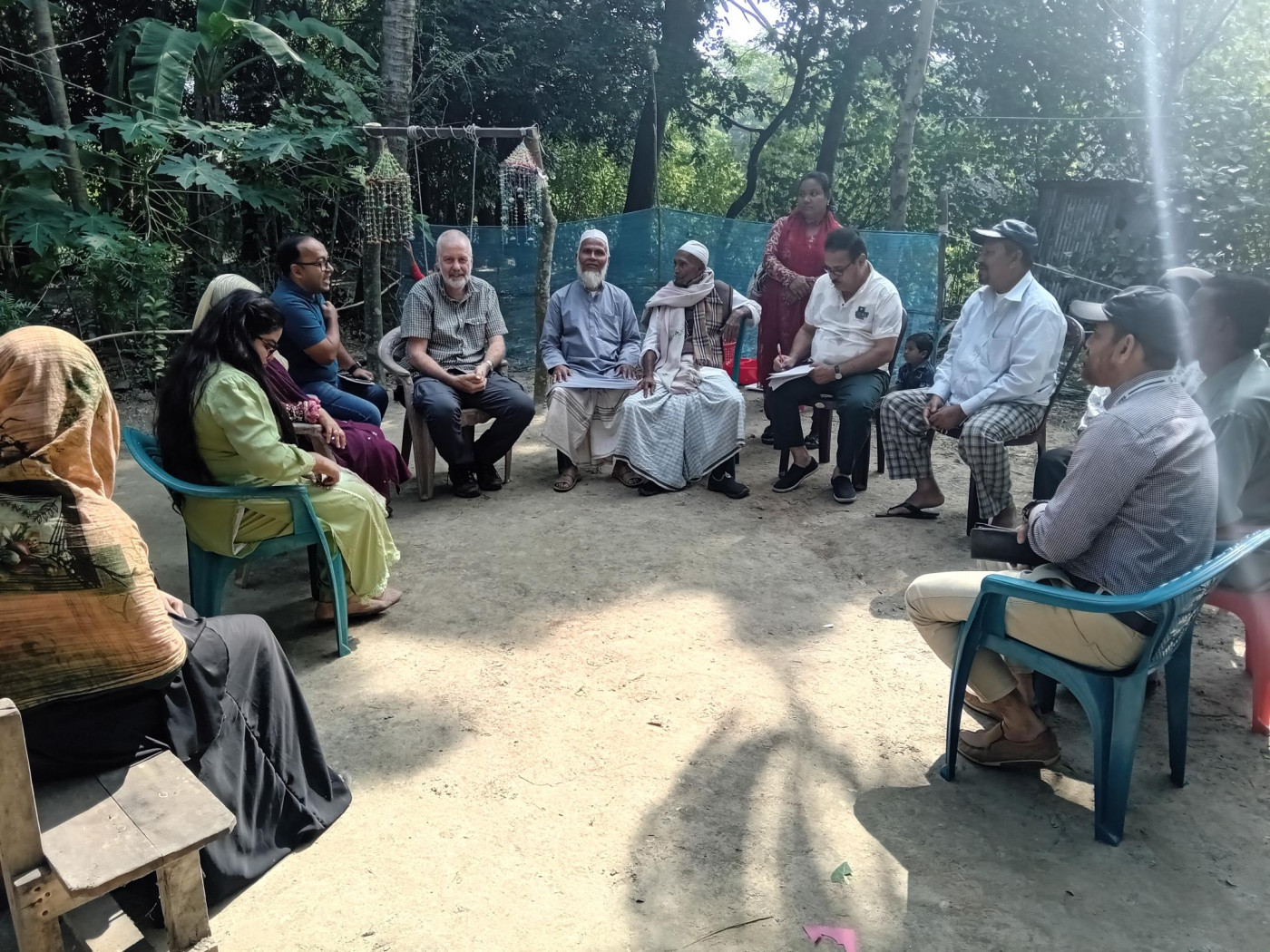
This week I had the pleasure of visiting one of the two major research sites of our Sonamoni project. Sonamoni is jointly coordinated by Bournemouth University in collaboration with the Centre for Injury Prevention and Research, Bangladesh (CIPRB), the University of the West of England, Bristol, the University of Southampton, Design Without Borders (DWB) in Uganda, and the Royal National Lifeboat Institution (RNLI). We are working to reduce drownings among newly-mobile children, generally those under two years old. This £1.6m project has been made possible thanks to a grant from the National Institute for Health and Care Research (NIHR) through their Research and Innovation for Global Health Transformation programme. Yesterday CIPRB staff Prof. Dr. Aminur Rahman and Mr. Notan Chandra Dutta took me to the field site in Kalapari in rural Bangladesh.
This was my first ever visit to Bangladesh despite earlier attempts to go out there two and three decades ago. This visit included an outdoor meeting with a Village Injury Prevention Committee (VIPC) with whom CIPRB has been working for years in harmony.
The Bournemouth University team comprises staff from three faculties: Dr. Mavis Bengtsson, Dr. Kyungjoo Cha, Dr. Mehdi Chowdhury, Dr. Yong Hun Lim, Mr. John Powell, and Prof. Edwin van Teijlingen, and Ph.D. student Mr. Md. Shafkat Hossain. For more information about our ongoing research in Bangladesh, please visit the NIHR website.
Prof. Edwin van Teijlingen
Centre for Midwifery & Women’s Health (CMWH)
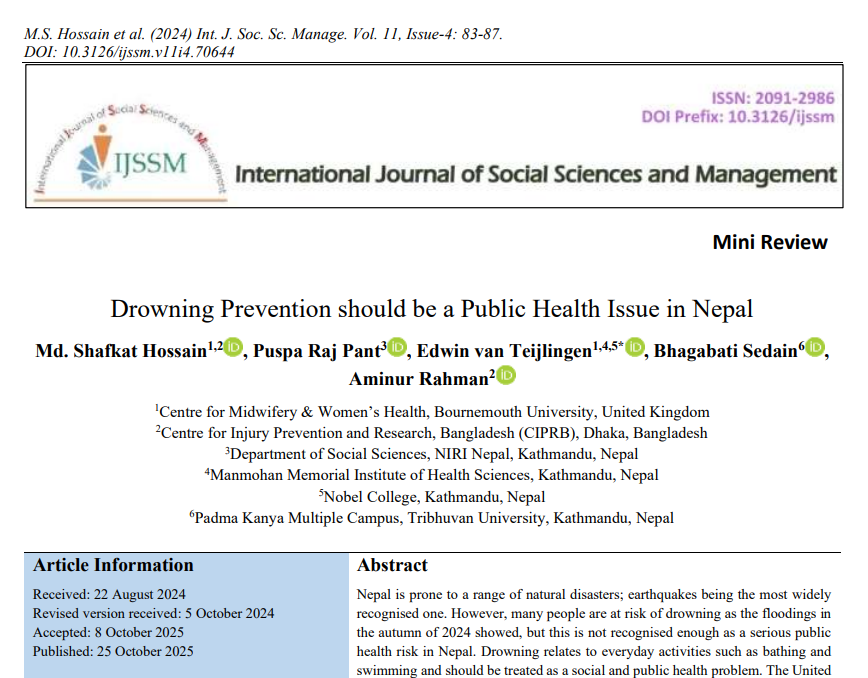
This week the editor of the International Journal of Social Sciences and Management emailed that the paper ‘Drowning Prevention should be a Public Health Issue in Nepal‘ [1] had been published. This is the first paper for our Ph.D. student Md. Shafkat Hossain. Shafkat co-authored this paper drowning prevention experts in Nepal, Dr. Bhagabati Sedain and Dr. Puspa Rai Pant and Prof. Aminur Rahman based at CIPRB (the Centre for Injury Prevention and Research, Bangladesh).
Shafkat’s thesis is part of the interdisciplinary Sonamoni project on drowning prevention in toddlers under the age of two in Bangladesh.
This newly published paper takes lessons learnt from Bangladesh and offers them as ideas to be considered in Nepal. Nepal is prone to a range of natural disasters; earthquakes being the most widely recognised one. However, many people are at risk of drowning as the serious flooding in the autumn of 2024 showed, but this is not recognised as a serious public health risk in Nepal. Drowning relates to people’s everyday activities such as crossing rivers, bathing and swimming and should be treated as a social and public health problem.
The Sonamoni project is being coordinated by Bournemouth University in collaboration with the University of the West of England, Bristol, the University of Southampton, the Royal National Lifeboat Institution (RNLI), CIPRB in Bangladesh and Design Without Borders in Uganda. It funded by the National Institute for Health and Care Research (NIHR) through its Research and Innovation for Global Health Transformation programme. For more information, visit the NIHR website.
As we are reaching the end of Open Access Week is worth highlighting that this paper is fully Open Access, and hence freely available in both Nepal and Bangladesh!
Prof. Edwin van Teijlingen
Centre for Midwifery & Women’s Health
Reference:
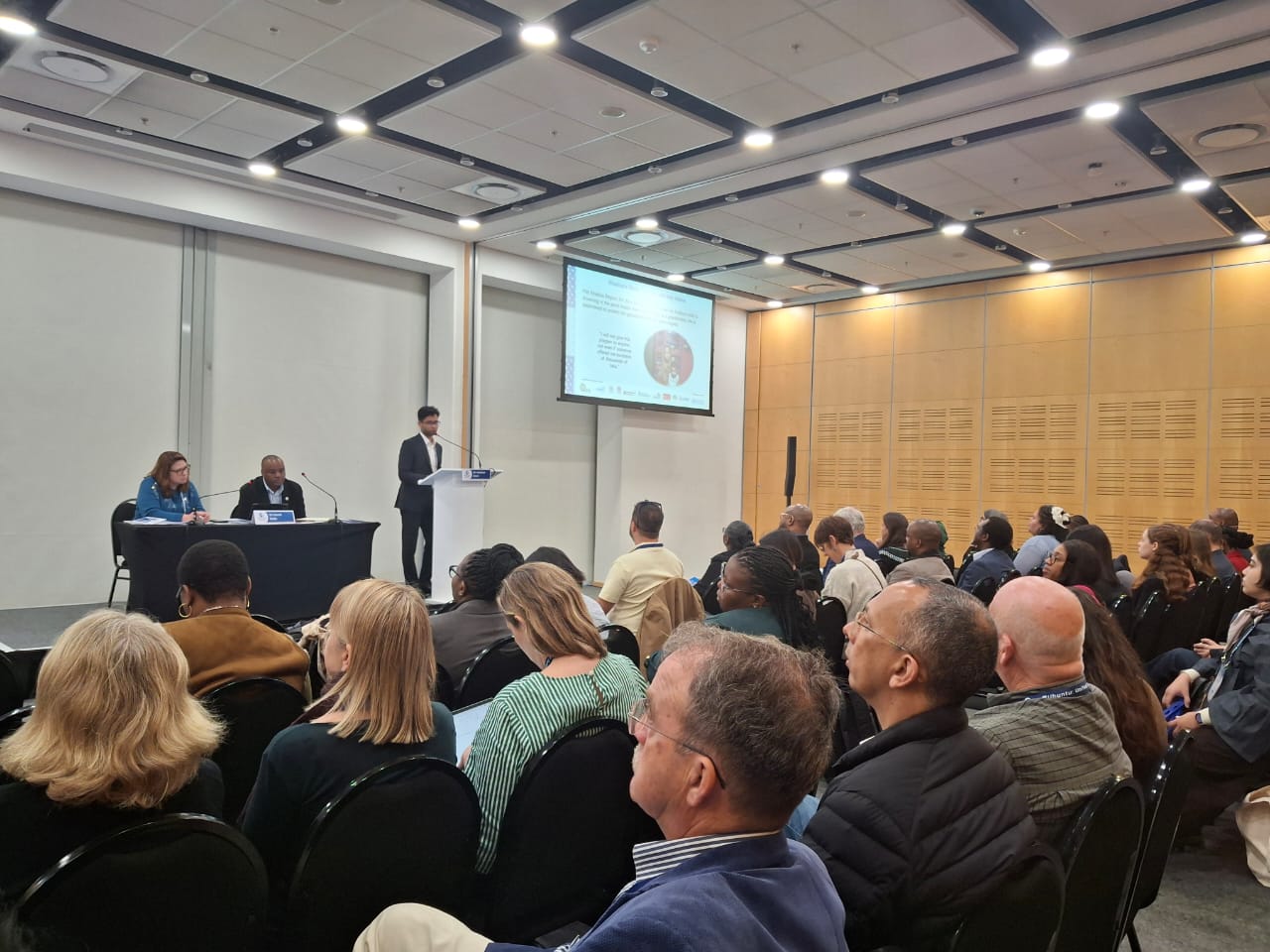
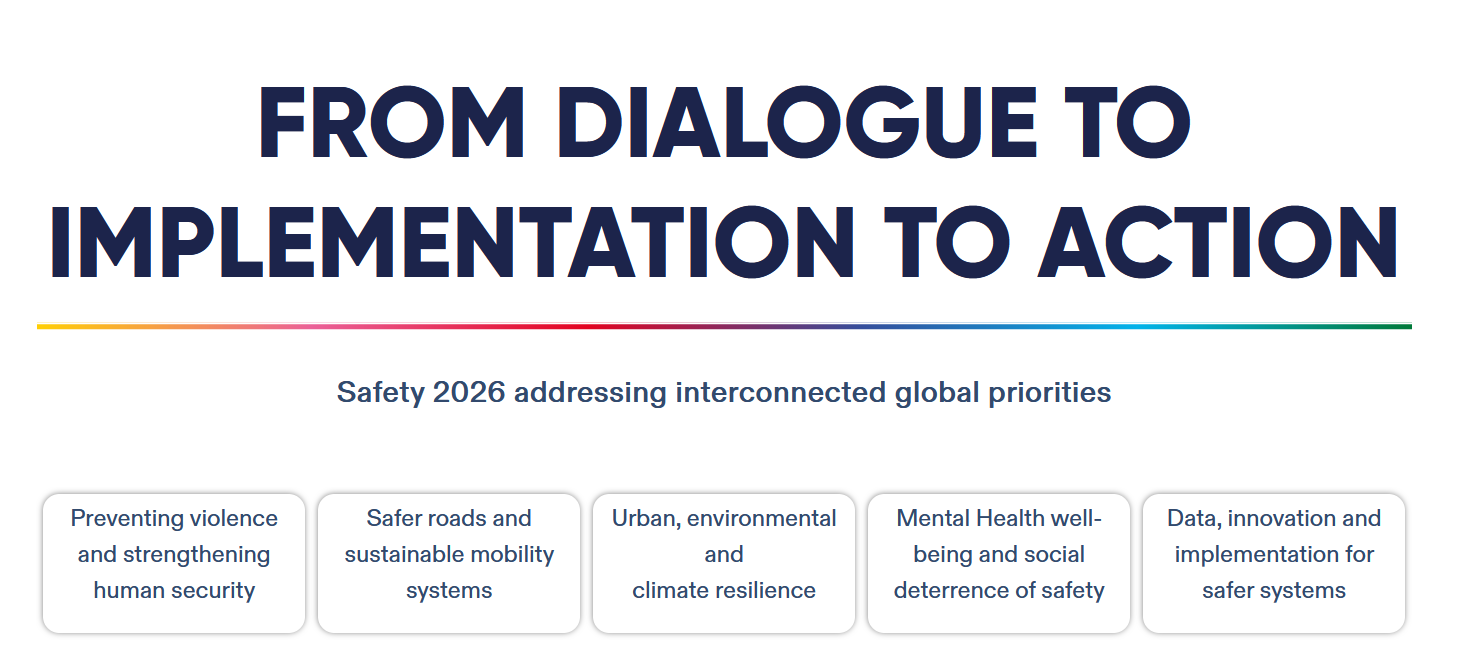
Last week colleagues from our Sonamoni project co-hosted a workshop with TGI Australia (The George Institute for Global Health) at the 15th World Conference on Injury Prevention and Safety Promotion (Safety 2024) which was held in New Delhi (India). Focusing on the strengths of the Human-Centred Design (HCD) approach, this workshop first introduced the design principles to participants and demonstrated how they can be employed to reduce risks and prevent accidents. These design principles have been applied for many years in designing consumer products and, more recently, in the fields of health and social systems. 
In this well-attended workshop researchers presented case studies from Bangladesh (including the Sonamoni project) and Tanzania to illustrate how the process is employed with communities to co-develop interventions aimed at reducing the risk of drowning among fishing folk and vulnerable children.
The team proposed a framework which integrates HCD methodology and traditional research methodologies, creating a more user-centred and multidimensional approach to intervention design. Outputs of the process included user risk journeys, stakeholder mapping and systems diagrams that can be used with communities and wider stakeholders to visualise the problem and bring to life the environment in which interventions are to be designed. These outputs can also be support advocacy and donor engagement.
The proposed framework provides a mechanism for closer collaboration between researchers, practitioners, and communities to work together to co-design context-specific solutions that are culturally and environmentally appropriate. Workshop participants were asked for their expert opinion on the proposed framework, to help us refine the framework and inform future practice.
Our Sonamoni project recently had its own video recording on YouTube.
Sonamoni is a public health project is funded by the National Institute for Health and Care Research (NIHR) through its Research and Innovation for Global Health Transformation programme. For more information, visit the NIHR website.
Sonamoni is coordinated by Bournemouth University in collaboration with Centre for Injury Prevention and Research, Bangladesh (CIPRB), the University of the West of England, Bristol, the University of Southampton, the Royal National Lifeboat Institution (RNLI), and design Without Borders (DWB) Africa.
Prof. Edwin van Teijlingen
Centre for Midwifery & Women’s Health
This week Notan Dutta, from our collaborating research organisation CIPRB (Centre for Injury Prevention and Research Bangladesh) presented a poster on ‘Identifying the strengths and challenges from the perspective of primary caregivers of drowning prevention interventions in Bangladesh’ at the 15th World Conference on Injury Prevention & Safety Promotion (Safety 2024). One of the co-authors of this poster presentation is Bournemouth University’s PhD student Md. Shafkat Hossain. Shafkat also attended the conference in India. Shafkat was in Delhi funded by Bloomberg Philanthropies as part of its Emerging Leaders in Drowning Prevention programme.
This initiative brings together a cohort of younger leaders to join national and international efforts to raise awareness and strengthen solutions and political commitment towards drowning.
Our research into drowning prevention of under two-year old children in rural Bangladesh is funded by the National Institute for Health and Care Research (NIHR) through their Research and Innovation for Global Health Transformation programme.
For more information about our ongoing collaborative research in Bangladesh, please see the NIHR website. This is an interdisciplinary project between Bournemouth University, CIPRB, the RNLI (Royal National Lifeboat Institute), the University of the West of England, the University of the West of England, and Design Without Borders (DWB) in Uganda.
Prof. Edwin van Teijlingen & Dr. Mavis Bengtsson
Centre for Midwifery & Women’s Health
As part of the interdisciplinary Sonamoni project our collaborator Mirza Shibat Rowshan will be presenting at Safety 2024. The 15th World Conference on Injury Prevention and Safety Promotion (Safety 2024) will be held between in the first week of September in New Delhi, India. The conference is hosted by The George Institute for Global Health and co-sponsored by the World Health Organization (WHO).
Sonamoni is being coordinated by Bournemouth University and CIPRB (The Centre for Injury Prevention and Research, Bangladesh) in collaboration with the University of the West of England, Bristol, the University of Southampton, the Royal National Lifeboat Institution (RNLI), and Design Withour Borders in Uganada. This project, with Prof. Dr. Aminur Rahman as Bangladesh lead, includes a BU-based PhD project Mr. Md. Shafkat Hossain. The interdisciplinary team at Bournemouth University covers three faculties through: Dr. Mavis Bengtsson, Dr. Kyungjoo Cha, Dr. Mehdi Chowdhury, Dr. Yong Hun Lim, Mr. John Powell, and Prof. Edwin van Teijlingen.
Shibat works at CIPRB, which is a world leading injury prevention organisation based in Bangladesh. This presentation focuses on a needs assessment of the risk of very young children drowning in rural Bangladesh.All conference abstracts will be published in a pre-conference supplement of the scientific journal BMJ- Injury Prevention.
Prof. Edwin van Teijlingen