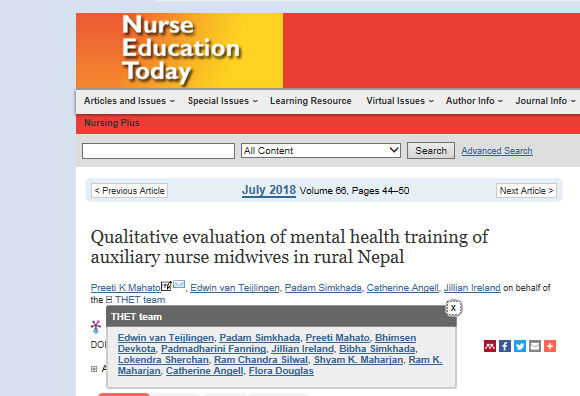
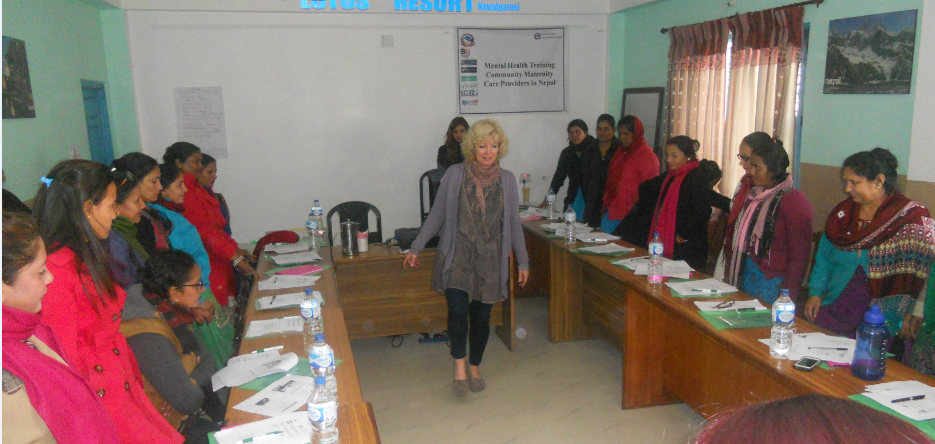
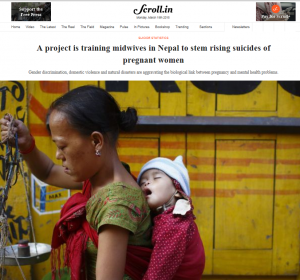
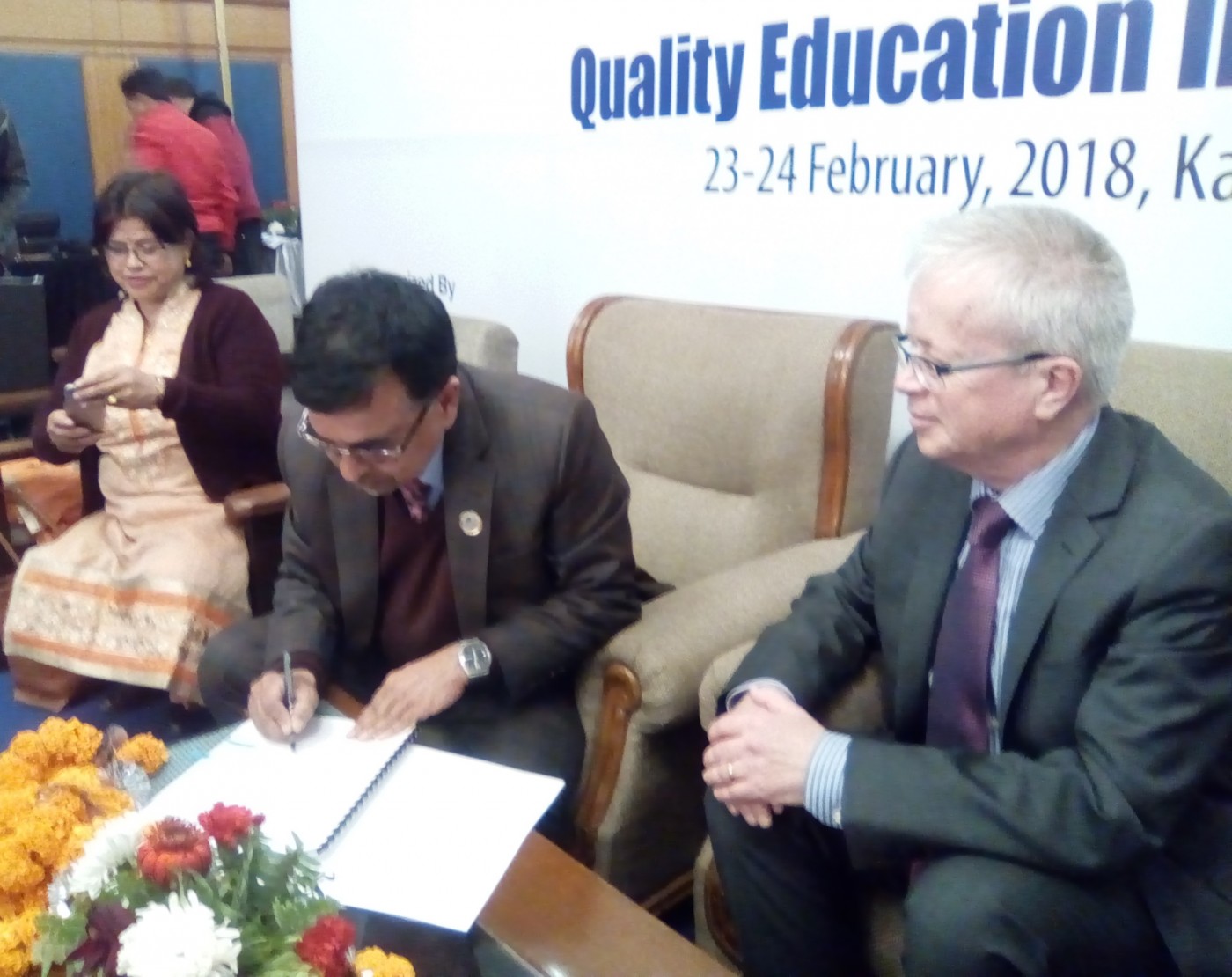
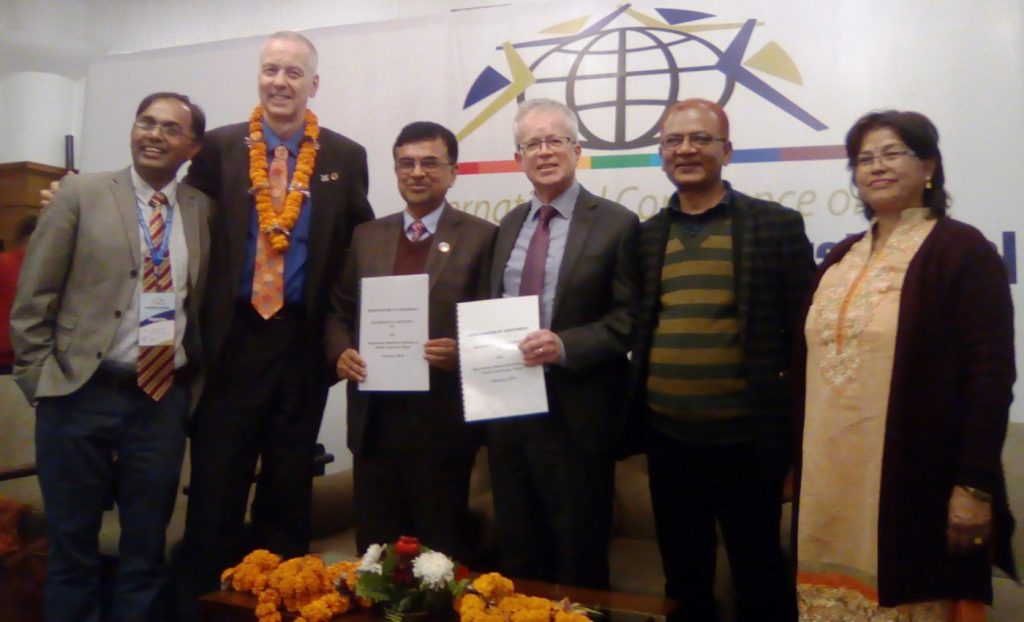
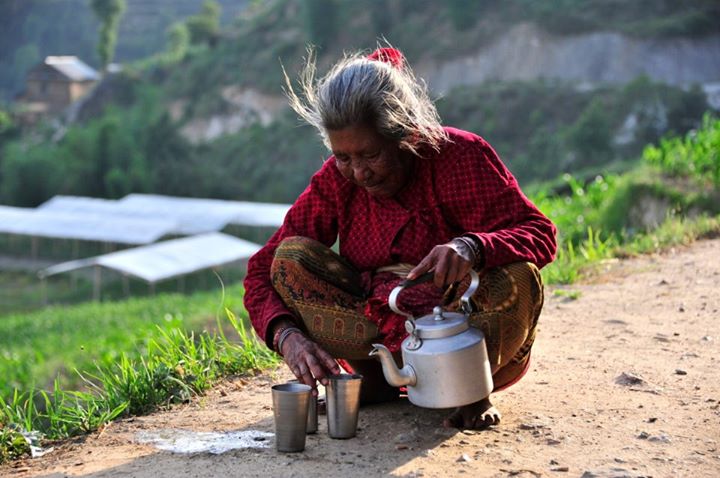
 This week saw the pre-publication of ‘Qualitative evaluation of mental health training of auxiliary nurse midwives in rural Nepal’ in the international journal Nurse Education Today (published by Elsevier). The paper is a report of an evaluation of a THET-funded projectwhich run from 2015 to 2017. Bournemouth University led a team comprising Liverpool John Moores University and Tribhuvan University (the oldest university in Nepal). These three universities worked together on a training project of Auxiliary Nurse Midwives in Nawalparasi focusing on key aspects of mental health and mental health promotion. The project was funded under the Health Partnership Scheme (HPS) which is managed by a London-based organisation called THET (Tropical Health & Education Trust).
Mental illness is increasingly recognized as a global health problem. However, in many countries, including Nepal, it is difficult to talk about mental health problems due to the stigma associated with it. Hence a training programme was developed to train auxiliary nurse midwives, who otherwise are not trained in mental health as part of their pre-registration training in rural Nepal, on issues related to maternal mental health. After the training programme a selection of auxiliary nurse midwives were interviewed to establish their views on the training, its usefulness and ways to improve it.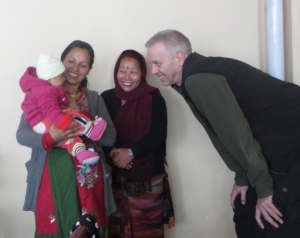
Preeti Mahato is a PhD student in the Centre for Midwifery, Maternal & Perinatal Health (CMMPH) who undertook an in-depth evaluation of our project as part of her PhD research. This qualitative study has three themes emerging: (1) issues related to training; (2) societal attitudes; and (3) support for women. The ‘training’ theme describes the benefits and limitations of training sessions. ‘Societal attitudes’ describes society’s attitude towards mental health which is largely negative. ‘Support’ describes the positive behaviour and attitude towards pregnant women and new mothers.
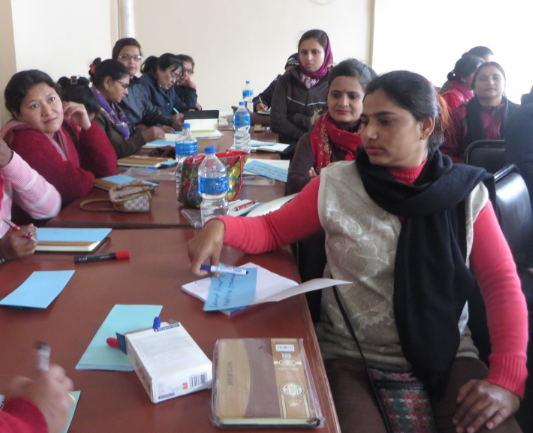 The paper concludes that there is a need for continued training for auxiliary nurse midwives who are based in the community. This gives them the opportunity to reach the whole community group and potentially have influence over reduction of stigma; offer support and diagnosis of mental ill-health. There is still stigma around giving birth to a female child which can lead to mental health problems. It is imperative to increase awareness and educate the general public regarding mental health illnesses especially involving family members of those who are affected.
Reference:
- Mahato, P., van Teijlingen, E., Simkhada, P., Angell, C., Ireland, J. on behalf of THET team (2018) Qualitative evaluation of mental health training of Auxiliary Nurse Midwives in rural Nepal. Nurse Education Today 66: 44-50. http://www.nurseeducationtoday.com/article/S0260-6917(18)30150-3/abstract
 programme will take place at the BINUS University in Jakarta, Indonesia in June 2018 and is designed for students from BU and BINUS University to work together on projects that address one or more of the Sustainable Development Goals (SDG). The SDG’s are a collection of 17 goals set by the United Nations for countries to work towards achieving. The goals are interrelated although each has its own targets and they cover a broad range of social and economic development issues. These include poverty, hunger, health, education, climate change, gender equality, water, sanitation, energy, environment and social justice. Charlotte says, ‘Collaborating with others on these projects will foster the development of my global mind-set and enhance my competence as a researcher interested in health and social sciences research’.



















 Verbal autopsy paper published two days ago
 ESRC Studentships for 2027 Entry: Opportunity Now Open
 SONAMONI contributions to Safety Conference 2026 in South Africa
 Three CMWH presentations at Berlin conference
 Horizon Europe Cluster 3 (Civil Security for Society) 2026 Calls Now Open
 MSCA Doctoral Networks 2026 Call Information Webinar
 ESRC Festival of Social Science 2026: Application Deadline Extended to Thursday 25 June 2026
 Reminder: Register for the ESRC Festival of Social Science 2026 Information Session
 ECR Funding Open Call: Research Culture & Community Grant – Apply now
 ERC Advanced Grant 2025 Webinar
 Update on UKRO services
 European research project exploring use of ‘virtual twins’ to better manage metabolic associated fatty liver disease