This blog post considers two aspects of research – supervision and publication. The two came together in article of mine recently been published online by the Journal of Further & Higher Education (JFHE) http://dx.doi.org/10.1080/0309877X.2011.644774.
In 2008/09, I undertook the PGCert Research Degree Supervision to further develop supervision skills. For the second assignment, I made a study of colleague supervision – the supervision of staff doctoral students by their colleagues and, sometimes, managers. From it, an academic paper was developed and later submitted to JFHE. The article was an opportunity to maximise the outcomes of my study of research supervision and to create insights (possibly “new knowledge”) into a sometimes contentious and little researched area.
The starting point was a claim by Pam Denicolo (2004) that colleague supervision was “a role relationship that has been largely ignored or undervalued by [university] administration” (p. 693) and colleague students and supervisors “felt more vulnerable” than other students/supervisors (p. 706). At the time, I was Deputy Dean (Education) in the Media School and had, at BU and a previous university, observed colleague students often struggling to manage the roles of teacher, researcher, colleague and administrator. So the aim of my qualitative study amongst students and supervisors was to gain greater insight into the colleague students’ research journey and to consider how their working lives could be better structured.
Broadly, the indications from this small-scale study were:
- The students and supervisors did not feel they were “ignored”, “undervalued” or “vulnerable.” There were some advantages of easy access to supervisors that other PGRs don’t have;
- More effort is needed on the research training of colleague students. Those coming into doctoral studies from professional backgrounds said that they often learnt “on the hoof”;
- Some students, in 2009 interviews, feared for their jobs without achievement of a doctoral qualification. Others saw it as an essential part of their development of academic research and professional skills;
- Although Denicolo posited “vulnerability” as a power imbalance between supervisors and staff, the general attitude was that their supervisor was a “friendly facilitator” and supportive;
- Confidentiality of performance on doctoral studies was expected by students as part of their relationship with the colleague supervision;
- The use of group supervision by HSC to support students was seen as very beneficial in aiding cohort progress and reducing the loneliness of the doctoral student’s research journey.
This was a small-scale study (six students and five supervisors) and thus there are limitations of its generalisability, but it indicates that colleague supervision needs to be considered as a special case and not just part of the academic “day job”.

Prof Tom Watson, The Media School
Article: Watson, T., 2011. Colleague supervision – ‘ignored and undervalued’? The views of students and supervisors in a new university. Journal of Further & Higher Education. DOI: 10.1080/0309877X.2011.644774.
Reference: Denicolo, P., 2004. Doctoral supervision of colleagues: Peeling off the veneer of satisfaction and competence. Studies in Higher Education, 29 (6), 693-707.

 Why do I need to think about the impact of my research?

 As part of submitting to the REF, HEFCE requires higher education institutions to provide evidence of research impact that has been realised within the assessment period but which stems from research undertaken at that institution within a number of years prior to the assessment period. Therefore, rather than looking forward to the kinds of impact that
 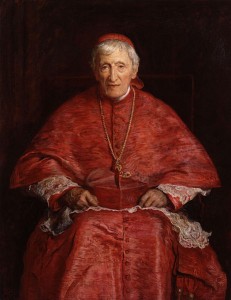 The role of a university has been debated since the nineteenth century. In 1852 Cardinal Newman wrote that the sole function of a university was to teach universal knowledge, embodying the idea of ‘the learning university’. Newman believed that knowledge is valuable and important for its own sake and not just for its perceived use to society (this is very different from the current thinking on the importance of research impact, public accountability and the value of research findings to society at large, issues which I imagine Newman would have thought of as irrelevant!). There was not a great deal in Newman’s work about the importance of research in a university, but research was beginning to play the starring role in mainland Europe where Prussian education minister Wilhelm von Humboldt wrote of the concept of ‘the research university’ and eventually set up the Humboldt University of Berlin. After the Napoleonic Wars, von Humboldt’s view was that the research university was a tool for national rebuilding through the prioritisation of graduate research over undergraduate teaching. This model soon became the blueprint for the rest of Europe, the United States and Japan. Arguably the Russell Group universities are today still structured in a similar way to that envisaged by von Humboldt two hundred years ago.
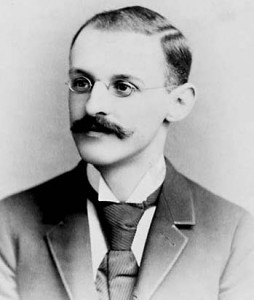 Moving into the twentieth century and we come across American educationalist Abraham Flexner who wrote of ‘the modern university’. In Flexner’s view universities had a responsibility to pursue excellence, with academic staff being able to seamlessly move from the research lab to the classroom and back again. The pursuit of excellence features in many universities strategies, and sounds very similar to the message conveyed by the REF team as part of the REF2014 guidance. The union of research and education also sounds similar to the current structure of many UK universities.
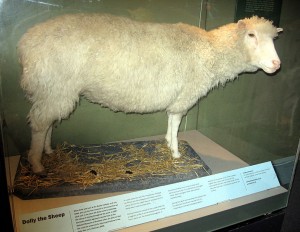 The creation and sharing of new knowledge and new ideas has become the principal purpose of many modern universities. In Northern and Western Europe and North America the university has become the key producer of knowledge (through research) and the key sharer of knowledge (through teaching). The University of Bristol’s Vice-Chancellor Professor Eric Thomas claims that universities are the knowledge engines of our society having produced the vast majority of society’s breakthroughs and innovations, such as: the computer, the web, the structure of DNA, Dolly the Sheep, and the fibre optic cable. Where would we be without these breakthroughs, and would they have come about so quickly without university research?
 I am sure that you would wish to join with me in congratulating both
 The
The  February 2010, was aligned with the annual CAUTHE (
 Congratulations are due to Viachaslau Filimonau of the
  This research project conducted during 2011 is part of a portfolio of research conducted for the National Trust, the UK’s major conservation charity. The organisation is committed to the aims of widening the appeal of the properties and countryside under its management, as well as providing meaning and inspiration as part of this broad appeal. The measurement of enjoyment, linked to meaning and inspiration is therefore a critical measure in the success criteria of individual properties and the organisation as a whole.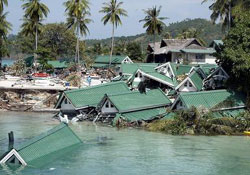
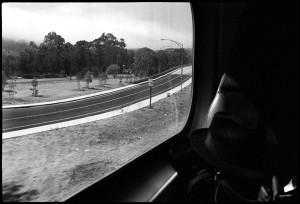 Last week I was sitting on the train, on route to a rather dull meeting in London, and wading through a brief case full of glossy reports and papers that had been accumulating in the in tray for several weeks. Not the sort of reading that usually has the pulse racing or the pages turning. I could at this point make reference to the latest Charles Cumming spy thriller but I will refrain and finish this piece so I can catch a few pages later. Any way in the stack of reading was a report published earlier in the year by the Research Information Network on the
 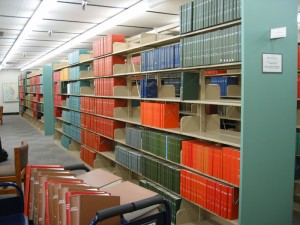 As I think I have reported before I have fond memories of the basement stacks of Queen Mary where as an undergraduate I used to spend my days lost in the shelves of geology journals. A few years later I can still remember how as a new academic one would wait for the post every day and the return from review of a cherished manuscripts and the all-important editor’s letter with the verdict; all now things of the past with electronic submission and on-line publishing. The journal names remain the same but I can’t remember the last time I actually set foot in the library in search of a paper yet my weekly reading list grows longer constantly as electronic alerts draw my attention to the productivity of my colleagues. However nostalgic I may feel about paper copy it is a thing of the past as almost all journals these days are provided as e-journals.
 On Friday last week the RDU organised two bidding workshops with John Wakeford of the Missenden Centre.
 Would you be prepared to share your data with the wider research community or the general public?
  The
The 











 Dr. Ashraf cited on ‘Modest Fashion’ in The Guardian
 NIHR-funded research launches website
 Academics write for newspaper in Nepal
 New paper published on disability in women & girls
 Global Consortium for Public Health Research 2025
 MSCA Postdoctoral Fellowships 2025 Call
 ERC Advanced Grant 2025 Webinar
 Horizon Europe Work Programme 2025 Published
 Horizon Europe 2025 Work Programme pre-Published
 Update on UKRO services
 European research project exploring use of ‘virtual twins’ to better manage metabolic associated fatty liver disease