More than a year ago ( in June 2019) BU Social Entrepreneurs Forum BUSEF was formed in partnership with Association of Sustainability Practitioners and Poole Bay Rotary Club.
Its overarching ambition is to support the development of the landscape of social businesses in the region.The forum’s objectives are underpinned by its commitment to the UN Sustainable Development Goals
Sukanya says in the Dorset Biz News “We paused briefly, in solidarity with the rest of the world, during Covid-19 lockdown in the UK to reflect on how best to support our local community of existing and aspiring social entrepreneurs.
“Now, and celebrating our first year virtually, BUSEF is offering the first of many free workshops and interactive sessions.
“The first virtual session, on Wednesday August 19, from 2.30pm to 3.30pm, is on ‘Legal Structures and Sources of Finance’.
“We will be joined by Jonathan Dixon, Head of Grants Programme at YTKO and Mairead Taylor, Director, Commercial and Business Banking at NatWest.”
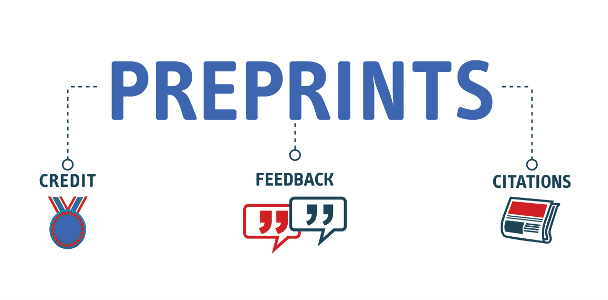
A preprint is a version of a research manuscript published before peer review. Normally, these are published electronically and made freely available on large databases or preprint servers. Some of the popular preprint servers include arXiv, PeerJ, The Open Science Framework, OSF Preprints. Preprint servers provide a DOI (Digital Object Identifier) to enable you to link to your work and version control to curate the different versions as you make changes to your manuscript. Publishing a preprint can speed up the process of disseminating your research and avoiding any delays caused by the publication process.
Preprints achieve many of the goals of journal publishing, but within a much shorter time frame. The biggest benefits fall into 3 areas: credit, feedback, and visibility.
Credit – When you post a preprint with your research results, you can firmly stake a claim to the work you’ve done. If there is any subsequent discussion of who found a particular result first, you can point to the preprint as a public, conclusive record of your data. Most preprints are assigned a digital object identifier (DOI), which allows your work to become a permanent part of the scholarly record – one that can be referenced in any dispute over who discovered something first.
Feedback – In the traditional system, a submitted manuscript receives feedback from 2 or 3 peer reviewers before publication. With a preprint, other researchers can discover your work sooner, potentially pointing out critical flaws or errors, suggest new studies or data that strengthen your argument or even recommend a collaboration that could lead to publication in a more prestigious journal.
Visibility – Preprints are not the final form of a research paper for most authors. Thankfully, preprints and infrastructure providers like Crossref link to the final published article whenever possible, meaning that your preprint can serve to bring new readers to your published paper. A study in the Journal of the American Medical Association saw notable increases in citations and Altmetric scores when authors had posted their work first as a preprint.
Normally journal publishers will not accept work that is published or submitted elsewhere. Journal publishers in subjects where preprints are widely used will accept research that has been previously released as a preprint. As preprints emerge as a normal part of the publishing process in new subject areas, questions about whether preprints are regarded as previously published are still being worked through. It would be prudent to check the policies of publishers who may be the ultimate publishers of your research if you choose to publish your research as a preprint.
Journal publishers encourage the publication of preprints after a paper has been accepted. This is the Green Route to Open Access publication. It is important that the publisher’s policies on preprints after publication / submission are checked on the SherpaRoMEO database.
In recent developments (2017) research funders The Welcome Trust, the Medical Research Council and others have accepted the inclusion of references to preprints in grant applications as evidence of current research activity.
However, there are some crucial points to consider, before you submit your preprint to a server. The preprint guidelines below from Wiley provide some useful points to consider:
Posting of a preprint may violate the copyright agreement or understanding held with a publisher. When you submit an article to a journal you are doing so with the implicit understanding that an accepted article will be published and the copyright for that article then transferred to the publisher. It is ethically wrong to post a preprint that has benefitted from the resources of a publishing house (revision after peer review, copy editing, publication on Wiley Online Library, etc.); especially where the revised, accepted article, and final published versions of a paper are concerned.
A preprint service provider may ask authors to sign an agreement that prevents publication of the work in a journal later. On ChemRxiv, authors may control the usage rights for their posted preprint with one of three CC BY attribution licenses. When posting on a preprint server, such as ChemRxiv, we recommend that authors retain the rights to their work through use of a non-exclusive license to distribute interim research products (e.g., with a CC-BY-NC-ND or no reuse license), so that their publication options are not limited in any way later on. If an author posts a preprint under one of these licenses, the author can grant the publisher rights to use in a commercial and/or derivative manner because the author has retained those rights.
Failure to declare the preprint(s) associated with submission to a journal may be non-compliant with the journal′s Notice to Authors and could be grounds for rejection of a submitted manuscript.
Publicity of preprints through media coverage (e.g., press releases) is not advised when publication of the work in a journal is envisaged. Authors run the risk of attracting media attention to the work before it has undergone a thorough peer-review process.
As mentioned above, different publishers have different policies regarding preprints so do check each publisher policy on the SherpaRoMEO database for accurate information.
For more information on preprints, please visit the links below:
We are thrilled to announce the launch of the Suicide Reporting Toolkit: For Journalists and Journalism Educators, available now at: http://www.suicidereportingtoolkit.com/
We know from research that reporting suicide responsibly requires sensitivity and compassion. Our journalism has the potential to cause harm to vulnerable people if we do not report suicide responsibly and ethically. This new toolkit offers practical resources for both journalists and journalism educators to make sure we do just that.
Created by Dr Ann Luce (Bournemouth University) and Dr Sallyanne Duncan (University of Strathclyde), the Responsible Suicide Reporting model enables journalists–and journalism students–to make ethical decisions about their storytelling whilst under pressure from various news processes. It embeds global media reporting guidelines on suicide—World Health Organisation (WHO), Samaritans, Independent Press Standards Organisation (IPSO), National Union of Journalists (NUJ) and Society for Professional Journalists (SPJ)—within journalism practice and functions within the storytelling process so journalists can question their choices as they produce content.
We’d be very grateful if you could share this resource through your own networks. You can also follow us on Twitter: @SR_Toolkit
Please see below for an update from the Health Research Authority surrounding the review of undergraduate and master’s research projects.
‘Back in March the HRA and devolved administrations announced we had decided to stop reviewing applications for individual undergraduate and master’s student projects until further notice while we prioritised the urgent review of COVID-19 studies. This was also due to the significant pressure on the NHS/HSC, limiting its ability to participate in research studies unrelated to COVID-19.
As the lockdown eases, we wanted to update students, supervisors and HEIs on our current position in relation to student research and ethics review. For now, our existing position of not reviewing applications for individual undergraduate and master’s student projects will remain in place. This means that any student project requiring approvals will not be able to proceed. Any students with approved studies are reminded to check with the relevant NHS/HSC organisations locally about whether or not their projects may continue.
In the autumn we will publish our proposed new guidelines for student research for consultation in use. Students, research supervisors and HEIs will be invited to share their opinions and help shape our framework.
ENCYCLOPEDIA OF TOURISM MANAGEMENT AND MARKETING
Editor in Chief: Professor Dimitrios Buhalis, EDWARD ELGAR PUBLISHING LIMITED
The Encyclopedia of Tourism Management and Marketing has already received more than 100 entries and has already accepted 10 entries! See some examples of the accepted terms on https://tinyurl.com/encyEXAMPLES. These include terms:
A new publication from former PhD student Billy Senington and his supervisor Jonathan Williams investigating low back pain in cricket fast bowlers. Open access in BMJ Open Sport and Exercise Medicine – please enjoy.
https://bmjopensem.bmj.com/content/6/1/e000818
Biomechanical risk factors of lower back pain in cricket fast bowlers using inertial measurement units: a prospective and retrospective investigation, 2020. BMJ Sport Ex Med 6 (1).
Eating disorders have the highest mortality rates of any mental illness. They don’t discriminate, affecting people of all ethnicities, sexualities, gender identities, ages and backgrounds. However, one group is disproportionately affected by these disorders: people on the autism spectrum.
Eating disorders in autistic people are poorly understood, but they tend to be more severe and long-lasting. The longer a person lives with their eating disorder, the harder it is to recover. This may partly explain why some studies suggest autistic people have a poorer prognosis in therapy.
Longer-lasting eating disorders are associated with a greater likelihood of death. The fact that autistic people are vulnerable to chronic eating disorders, alongside other mental illnesses, may be one reason why they die one to three decades earlier, on average, than non-autistic people.
So why are autistic people more vulnerable to eating disorders? A couple of reasons have been suggested.
Dieting
One general and major risk factor for developing an eating disorder is dieting. For people who might already be genetically vulnerable to eating disorders, dieting seems to kick-start something in the brain that can develop the disorder.
While autistic people aren’t more likely to diet than the average person, certain features of autism – including attention to detail, determination and intense fixated interests – may make them better able to maintain the restrictions needed for long-term weight loss when they choose to diet.
The cognitive rigidity that we see in autistic people may also make it easy for them to get stuck in patterns of eating behaviour, while their preference for sameness may cause them to have a limited diet to begin with. For some autistic people, insensitivity to hunger, gastrointestinal problems and sensitivity to tastes, smells and textures make eating difficult anyway.
Moreover, because autistic people are often bullied and socially isolated, dieting and weight loss may give them back a sense of control, predictability, reward and self-worth. Eating disorders may even numb feelings of anxiety and depression.
Alexithymia
A core feature of people with eating disorders is that they find it difficult to identify and cope with emotion. As autistic people struggle with emotions in similar ways, our research team wondered whether this might help explain why they are more likely to have eating disorders.
The personality trait characterised by an inability to identify and describe emotions is called alexithymia. Being alexithymic is like being emotionally colour-blind, and it ranges from subtle to severe. While one alexithymic person might find it hard to pinpoint what emotion they’re feeling, another might notice physical signs such as a racing heart and be able to identify they’re feeling angry or frightened.
Alexithymia is associated with many negative outcomes like suicide and self-injury. In part, this may be because people who cannot identify or express their emotions find it hard to soothe themselves or get support from others.
To see whether alexithymia might contribute to eating disorders in autism, we looked at eating-disorder symptoms and autistic traits in the general population. Autism is a spectrum disorder, so everyone has some level of autistic traits – it does not mean they are actually autistic. Nevertheless, these traits can tell us something about the nature of autism itself.
In two experiments with 421 participants, we found that higher autistic traits correlated with higher eating-disorder symptoms. We also found that higher levels of alexithymia wholly or partially explained this relationship. Our results suggest that having higher autistic traits alongside difficulties identifying and describing emotions may make these people more vulnerable to developing eating-disorder symptoms.
Interestingly, we found differences between male and female participants. While alexithymia was related to eating-disorder symptoms in women, there were no links between alexithymia and eating-disorder symptoms in men. Since the male group was small, however, we couldn’t be sure these findings would hold up in a bigger sample.
Next steps
This research can’t show conclusively that alexithymia causes eating disorder symptoms in people with autistic traits, or indeed autistic people. It might be that the relationships work backwards, and eating-disorder symptoms give rise to alexithymia and to autistic features.
However, first-person accounts from autistic people are consistent with the idea that alexithymia might play a role in their eating disorders. One participant even described how restricting her calorie intake reduced internal sensations that – unknown to her, being unable to identify them – caused her much anxiety.
If supported by further research, these findings have potential implications for treatment. Clinicians already know that therapies need to be tailored for autistic and non-autistic patients, but how best to achieve this is still uncertain. Preliminary research like this may offer some clue by highlighting alexithymia as a potential target. Alexithymia is currently not addressed by clinicians either in autistic people or in those with eating disorders
As there are many negative outcomes associated with being autistic – such as high suicide rates and greater risk of eating disorders – it will be important to explore how much alexithymia, not autism itself, actually contributes to these negative outcomes. Focused interventions to treat alexithymia might potentially reduce these risks.
Young people have probably spent much more of their time than usual playing video games over the last few months thanks to the coronvirus pandemic. One report from telecoms firm Verizon said online gaming use went up 75% in the first week of lockdown in the US.
What impact might this have on young people’s development? One area that people are often concerned about is the effect of video games, particularly violent ones, on moral reasoning. My colleagues and I recently published research that suggested games have no significant effect on the moral development of university-age students but can affect younger adolescents. This supports the use of an age-rating system for video game purchases.
Our sense of morality and the way we make moral decisions – our moral reasoning – develop as we grow up and become more aware of life in wider society. For example, our thoughts about right and wrong are initially based on what we think the punishments and/or rewards could be. This then develops into a greater understanding of the role of social factors and circumstances in moral decisions.
Yet the moral dimension of video games is far more complex than just their representation of violence, as they often require players to make a range of moral choices. For example, players from the game BioShock have to choose whether to kill or rescue a little girl character known as a little sister.
A player with more mature moral reasoning may consider the wider social implications and consequences of this choice rather than just the punishment or rewards meted out by the game. For example, they may consider their own conscience and that they could feel bad about choosing to kill the little girl.
We surveyed a group of 166 secondary school students aged 11-18 and a group of 135 university students aged 17-27 to assess their gaming habits and the development of their moral reasoning using what’s known as the sociomoral reflection measure . This involved asking participants 11 questions on topics such as the importance of keeping promises, telling the truth, obeying the law and preserving life. The results suggested a stark difference between the two groups.
Among secondary students, we found evidence that playing video games could have an affect on moral development. Whereas female adolescents usually have more developed moral reasoning, in this case we found that males, who were more likely to play video games for longer, actually had higher levels of reasoning. We also found those who played a greater variety of genres of video games also had more developed reasoning.
This suggests that playing video games could actually support moral development. But other factors, including feeling less engaged with and immersed in a game, playing games with more mature content, and specifically playing the games Call of Duty and playing Grand Theft Auto, were linked (albeit weakly) with less developed moral reasoning.
No effect after 18
Overall, the evidence suggested adolescent moral development could be affected in some way by playing video games. However, there was little to no relationship between the university students’ moral reasoning development and video game play. This echoes previous research that found playing violent video games between the ages of 14 and 17 made you more likely to do so in the future, but found no such relationship for 18- to 21-year-olds.
This might be explained by the fact that 18 is the age at which young people in many countries are deemed to have become adult, leading to many changes and new experiences in their lives, such as starting full-time work or higher education. This could help support their moral development such that video games are no longer likely to be influential, or at least that currently available video games are no longer challenging enough to affect people.
The implication is that age rating systems on video games, such as the PEGI and ESRB systems, are important because under-18s appear more susceptible to the moral effects of games. But our research also highlights that it is not just what teenagers play but how they play it that can make a difference. So engaging with games for a wide variety of genres could be as important for encouraging moral development as playing age-appropriate games.
Yesterday the Journal of Manmohan Memorial Institute of Health Sciences published our editorial ‘Public Health is truly interdisciplinary’ [1]. This editorial was largely written to counteract some of the jurisdictional claims made in Nepal by certain people in Public Health. These claims express themselves in arguments around the question whether Public Health is a single academic discipline or profession or whether it is a broad profession comprising many different academic disciplines. There are two quite distinct and opposing views. Some argue that Public Health is a broad-ranging single discipline covering sub-disciplines such as Epidemiology, Management, Public Health Practice, Health Psychology, Medical Statistics, Sociology of Health & Illness and Public Health Medicine. Those who support this argument, typically see: (a) Public Health is the overarching dominant discipline, which brings these sub-disciplines together; and (b) that a true Public Health practitioner amalgamates all these individual elements. Others argue that Public Health is more an overarching world view or interdisciplinary approach for wide-ranging group of professionals and academics [2]. In this view some Public Health professionals are first trained as clinicians, others as psychologists, health economists, health management, statisticians, or demographers, and so on and have later specialised in Public Health.
However, their are people in the field claiming that Public Health is a single discipline that can only /or even best be practice and taught by those with an undergraduate degree in Public Health. Basically suggesting you you need a Public Health degree to practice or teach the discipline. Our editorial argues that this latter view suggests a rather limited understanding of the broad church that is Public Health.
This latest editorial is co-authored by Dr. Sharada P. Wasti in Nepal, Prof. Padam Simkhada, who is based at the University of Huddersfield and BU Visiting Faculty and Prof. Edwin van Teijlingen in the Centre for Midwifery, Maternal & Perinatal Health (CMMPH). Both articles listed below are Open Access and free available to readers across the globe.
References:
Wasti, S.P., van Teijlingen, E., Simkhada, P. (2020) Public Health is truly interdisciplinary. Journal of Manmohan Memorial Institute of Health Sciences6(1): 21-22.
The Health Research Authority have launched a new strategy to ensure information about all health and social care research – including COVID-19 research – is made publicly available to benefit patients, researchers and policy makers. The new strategy aims to build on this good practice and make it easy for researchers to be transparent about their work.
The Research Impact Funding Panel is responsible on behalf of the Research Performance and Management Committee for providing internal funding and support to aid the development of research impact at BU. This will ensure a pipeline of case studies for REF 2021 and beyond. It is responsible for assessing and determining priority areas for impact support and investment.
We are seeking expressions of interest (EoIs) for the Deputy Chair of the Research Impact Funding Panel. Deputy Chairs should be members of the Professoriate (Associate Professors).
EoIs for the Deputy Chair role will be reviewed against selection criterion which includes knowledge and experience of research impact, experience of chairing meetings and plans for leading the impact agenda across the university.
EoIs should consist of a CV and short case (maximum length of one page) outlining suitability for the role. These should be submitted to the Research Impact panel mailbox by the deadline of 5pm on 1 September 2020.
New Publication: de Souza, J., Mendes, LF., Buhalis, D., 2020, Evaluating the effectiveness of tourist promotions to improve the competitiveness of destinations, Tourism Economics, Vol. 26(6), pp, 1001–1020, https://doi.org/10.1177/1354816619846748
This study focuses on the evaluation of the tourist destination advertising effectiveness. The destination advertising response DAR model was used to analyze data on the effectiveness of destination promotional campaigns on visitor expenditure, in six trip facets: destination, accommodations, attractions, restaurants, events, and shopping. Independent sample t-tests were conducted to identify any differences in total destination spending among the groups of those visitors influenced for each trip facet. A multiple regression analysis was performed to discriminate the performance of the travel facets expenditures in the estimation of total expenditures. Significant results indicate that the “destination,” “accommodations,” and “restaurants” facets directly influence the total expenditures. Self-planners had the highest variance, explaining in total visitor expenditure compared to the regression analysis results of the other two groups (i.e. travel agencies and online travel agencies). The study also explores how destinations can improve their competitiveness on tourist advertising by using technologies.
Keywords tourism, destination, marketing, advertising, competitiveness, DAR model, destinations, technologies
Every BU academic has a Research Professional account which delivers weekly emails detailing funding opportunities in their broad subject area. To really make the most of your Research Professional account, you should tailor it further by establishing additional alerts based on your specific area of expertise. The Funding Development Team Officers can assist you with this, if required.
Research Professional have created several guides to help introduce users to Research Professional. These can be downloaded here.
Quick Start Guide: Explains to users their first steps with the website, from creating an account to searching for content and setting up email alerts, all in the space of a single page.
User Guide: More detailed information covering all the key aspects of using Research Professional.
Administrator Guide: A detailed description of the administrator functionality.
In addition to the above, there are a set of 2-3 minute videos online, designed to take a user through all the key features of Research Professional. To access the videos, please use the following link: http://www.youtube.com/researchprofessional
Research Professional are running a series of online training broadcasts aimed at introducing users to the basics of creating and configuring their accounts on Research Professional. They are holding monthly sessions, covering everything you need to get started with Research Professional. The broadcast sessions will run for no more than 60 minutes, with the opportunity to ask questions via text chat. Each session will cover:
Self registration and logging in
Building searches
Setting personalised alerts
Saving and bookmarking items
Subscribing to news alerts
Configuring your personal profile
Each session will run between 10.00am and 11.00am (UK) on the fourth Tuesday of each month. You can register here for your preferred date:
These are free and comprehensive training sessions and so this is a good opportunity to get to grips with how Research Professional can work for you.
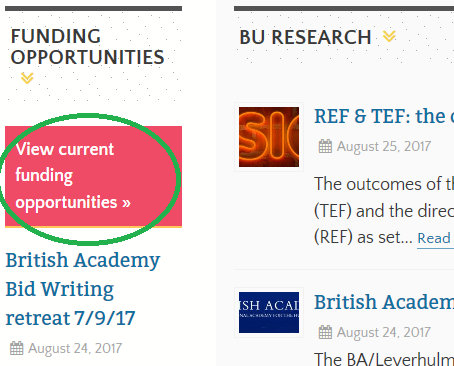
Have you noticed the pink box on the BU Research Blog homepage?
By clicking on this box, on the left of the Research Blog home page just under the text ‘Funding Opportunities‘, you access a Research Professional real-time search of the calls announced by the Major UK Funders. Use this feature to stay up to date with funding calls. Please note that you will have to be on campus or connecting to your desktop via our VPN to fully access this service.
All guidance related to clinical governance and research ethics @ BU can now be found at Research Governance & Integrity (part of BU’s research environment website). By clicking on each “Explore….” section, you’ll find information on:
Stonehenge, an icon of European prehistory that attracts more than a million visitors a year, is rarely out of the news. Yet, surprisingly, there is much we don’t know about it. Finding the sources of the stones used to build the monument is a fundamental question that has vexed antiquaries and archaeologists for over four centuries.
Our interdisciplinary team, including researchers from four UK universities (Brighton, Bournemouth, Reading and UCL) and English Heritage, has used a novel geochemical approach to examine the large “sarsen” stones at Stonehenge. Our results confirm that the nearby Marlborough Downs were the source region for the sarsens, but also pinpoint a specific area as the most likely place from where the stones were obtained.
Two main types of stone are present at Stonehenge: sarsen sandstone for the massive framework of upright stones capped by horizontal lintels; and a mix of igneous rocks and sandstones collectively known as “bluestones” for the smaller elements within the central area.
Inside the sarsen circle. James Davies/English Heritage
Research in the last decade has confirmed that the igneous bluestones were brought to Stonehenge from the Preseli Hills in Pembrokeshire, over 200km to the west. The sandstones have been tracked to eastern Wales although the exact outcrops have yet to be found. However, the origins of the sarsen stones has, until now, remained a mystery.
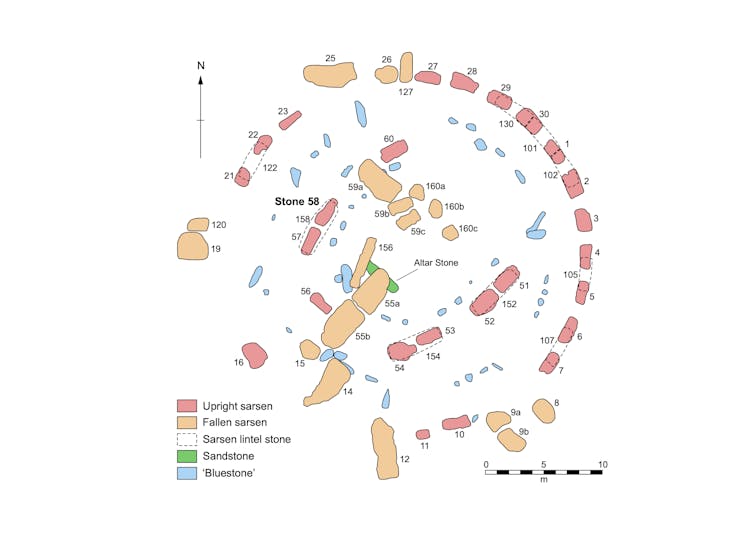
Stonehenge is a complicated and long-lived monument constructed in five main phases. The earliest, dated to about 3000BC, comprised a roughly 100m-diameter circular enclosure bounded by a bank and external ditch. Inside were various stone and timber structures, and numerous cremation burials.
The sarsen structures visible today were erected around 2500BC and comprised five trilithons (the doorway-like structures formed from two uprights joined by a lintel) surrounded by a circle of a further 30 uprights linked by lintels. The trilithons were arranged in a horseshoe formation with its principal axis aligned to the rising midsummer sun in the northeast and the setting midwinter sun to the southwest.
Locating the sarsen source
Conventional wisdom holds that the sarsens were brought to Stonehenge from the Marlborough Downs, some 30km to the north, the closest area with substantial scatters of large sarsen boulders. However, the Marlborough Downs are extensive and greater precision is needed to understand how prehistoric peoples used the landscape and its resources.
Our research has identified what might be termed the “geochemical fingerprint” of the Stonehenge sarsens. We started by analysing the geochemistry of all 52 remaining sarsens at Stonehenge (28 of those originally present are now missing, having been removed long ago).
This phase of the work involved using a non-destructive technology called portable x-ray fluorescence spectrometry (PXRF). Carrying out the PXRF analyses required access to the monument when it was closed to visitors and included several night shifts and one early morning analysing the lintel stones from a mobile scaffold tower. Data collection is never easy!
Most sarsens had the same chemical signature. David Nash, University of Brighton, Author provided
Analysis of the PXRF data showed that the geochemistry of most of the stones at Stonehenge was highly consistent, and only two sarsens (stones 26 and 160) had a statistically different chemical signature. This was an interesting result as it suggested we were looking for a single main source.
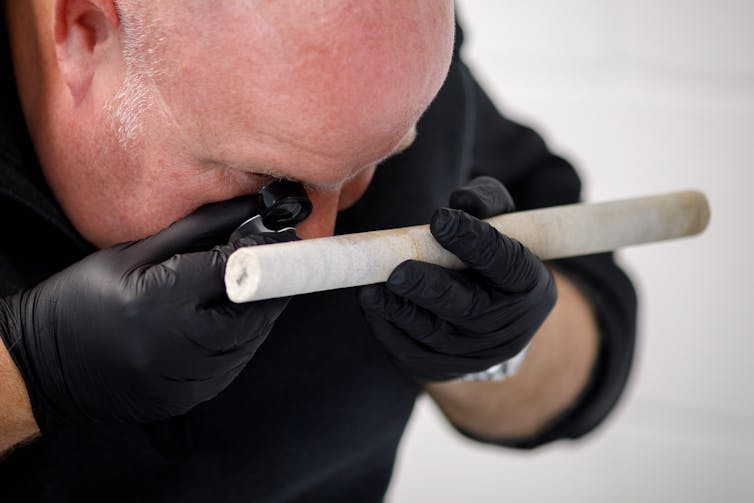
Then came a major stroke of luck. We were able to analyse three small samples that had been taken from one of the stones in 1958, Stone 58, part of the group of sarsens with a consistent chemistry. Using a method known as inductively coupled plasma mass spectrometry (ICP-MS) gave a high-resolution geochemical fingerprint for the Stonehenge sarsen. Like all good detectives, we could now compare our fingerprint with those of the potential sources.
David Nash examining the core from Stone 58. Sam Frost/English Heritage
Sarsen blocks are found widely scattered across southern Britain, broadly south of a line from Devon to Norfolk. We sampled stones from 20 areas, including six in the Marlborough Downs, and analysed them using ICP-MS.
Comparing the geochemical signature from Stone 58 against our resulting data revealed only one direct chemical match: the area known as West Woods to the south-west of Marlborough. We could therefore conclude that most of the Stonehenge sarsens were from West Woods.
Our results not only identify a specific source for most of the sarsens used to build Stonehenge, but also open up debate about many connected issues. Researchers have previously suggested several routes by which the sarsens may have been transported to Stonehenge, without actually knowing where they came from.
Many mysteries remain. Andre Pattenden/English Heritage
Now these can be revisited as we better appreciate the effort of moving boulders as long as 9m and weighing over 30 tonnes some 25km across the undulating landscape of Salisbury Plain. We can feel the pain of the Neolithic people who took part in this collective effort and think about how they managed such a Herculean task.
We can also ask what was special about the West Woods plateaux and its sarsens. Was it simply their shape and size that attracted attention? Or was there some more deep-seated reason rooted in the beliefs and identities of the people that built Stonehenge?
Revealing that all the stones came from a single main source is also important and accords with the evidence that the sarsens were all erected at much the same time. But what about the two sarsens whose fingerprints differ from the main source? Where did they come from? The quest continues, and the questions just keep coming.
Over the last few months we have all had to adapt to new ways of working and interacting with other people, which includes thinking differently about how we engage the public with our research. Below, Dr Oliver Gingrich describes his experience of running an online engagement event, the logistics and support he received from BU’s Public Engagement with Research (PER) team – and most importantly, the impact of sharing his research.
My experience running an online event – KIMA: Noise
For me, as for many others, the new realities in the early days of the Covid-19 health crisis resulted in all new challenges in continuing research practice and dissemination. To help tackle these challenges I thought I’d share our experience developing and running an online event earlier this year, in case you find it useful.
KIMA: Noise by Analema Group. Tate Modern 2019. www.analemagroup.com Image by Sophie le Roux. www.sophielerouxdocu.com
I am a researcher and creative practitioner, and artist with the collective Analema Group, recipients of an Arts Council England project grant for the art and research project KIMA Noise; an investigation into the effect of urban noise on health and wellbeing that we conducted for over three years with one of the leading experts in the field Prof. Stephen Stansfeld (Queen Mary University of London). Over the years Prof. Stansfeld has worked on the effect of noise specifically on learning and spearheaded the European Network on Noise and Health (ENNAH) and is currently working on a RANCH study on the effect of air traffic noise across 4 different countries. The Analema Group is a collective of four people founded by my colleague, the artist Evgenia Emets, Dr. Alain Renaud (Research Fellow at Bournemouth University) and the visual developer David Negrao.
KIMA: Noise by Analema Group. Tate Modern 2019. www.analemagroup.com Image by Sophie le Roux. www.sophielerouxdocu.com
With the Analema Group, we were looking at effective strategies to communicate the known impact of noise on health to wider audiences, including local communities. Having been appointed Tate Exchange Associate, we brought this project to Tate Modern, with support of the Arts Council, resulting in several installations, talks, workshops, the publication of a monograph and ultimately a film. The success of the exhibition, talks and workshops not only transcended through the audience numbers, visitors and participants, but moreover the type of discussions we were able to have with local communities, policymakers, and other artists and activists. The art film KIMA: Noise captured this effort, but with the unprecedented challenges of Covid-19 we needed to find new ways to present this work to the public.
Thanks to Adam Morris and Brian McNulty from Bournemouth University’s world-class Knowledge Exchange & Impact Team (KEIT), we were able to communicate these research outputs to a wider public including BU’s academics: Initially being unfamiliar with the logistics of organising an online screening, I was more than grateful for the handholding and support by Adam in promoting and positioning the screening of the art film, but also for his and his team’s support in orchestrating the event. In the case of our event, online literally meant connected, as speakers from 3 countries (The UK, Portugal and Switzerland) came together.
At the screening of ‘KIMA: Noise – The Film’, we were honoured to welcome Prof. Stansfeld as one of our panelists, as well as Camilla Yavas (Film maker), Paola D’Albore (community engagement), Evgenia Emets (artist) and myself as researcher. The success of the event was highlighted through the wide networks we were able to activate including researchers at Bournemouth, interested artists, activists, and the wider BCP publics. The initial world premiere of the film via Bournemouth University was followed by a vibrant Q&A and discussion on the effect of noise on health and wellbeing that worked as well online as it would have in the space of the Tate. Thanks to the success of this world premiere, the film has since been seen by hundreds of people, with further screenings being planned nationally and internationally. The big benefit of an online event is that audiences and speakers can come together from all corners of the world, and the barrier to entry is so low, which makes it much easier to reach a critical mass. I want to express my sincere feelings of gratitude to BU’s outstanding Public Engagement team, who held our hand every step of the way, and assured the success of KIMA: Noise.
More information on the project can be found here:
Dr Jaeyeon Choe in the Business School has accepted the invitation to join the Mekong Tourism Advisory Group. She will advise on projects around community-based small businesses in remote areas in the Mekong region, focusing on creative and innovative tourism products and programmes as recovery strategies during and after COVID-19.
Please see the current initiatives from Mekong Tourism Coordinating Office below:
https://www.mekongtourism.org/
Dr Choe recently has been invited to a closed webinar, “Tourism Recovery through Travel Bubbles” as a panellist, by the Asian Development Bank, where UNWTO representatives were also participated. She discussed opportunities and challenges of domestic tourism and travel bubbles in Southeast Asia.
Whilst working actively with international organisations, she is looking forward to contributing to the communities on the Mekong, and communicate their needs to policy makers, and the academic community.
Please see the latest BUCRU Bulletin from the Bournemouth University Clinical Research Unit. We hope you find it interesting. Featuring details on our online NIHR Grant Applications Seminar next week (28th July) and how to register.
BUCRU supports researchers to improve the quality, quantity, and efficiency of research locally by supporting grant applications and providing on-going support in funded projects, as well as developing our own programme of research.
Don’t forget, your local branch of the NIHR RDS (Research Design Service) is based within the BU Clinical Research Unit (BUCRU) staff are working remotely at present so please call us on 01202 961939 or send us an emailin the first instance.
BU staff can login below:
Other services
Don’t miss a post!
Subscribe for the BU Research Digest, delivered freshly every day.
 We are thrilled to announce the launch of the Suicide Reporting Toolkit: For Journalists and Journalism Educators, available now at:




 Every BU academic has a
  By clicking on this box, on the left of the Research Blog home page just under the text ‘Funding Opportunities‘, you access a














 ESRC Festival of Social Science 2026: An Opportunity to Engage New Audiences
 New HIV paper by BU PhD student
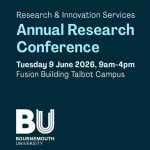 BU Annual Research Conference: Poster Exhibition Call for Applications
 Vitae Three Minute Thesis (3MT®) Competition: Applications Now Open
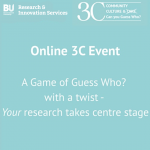 3C Online Social: Thursday 26 March 1–2pm – Research Culture, Community & Can you Guess Who?
 ECR Funding Open Call: Research Culture & Community Grant – Apply now
 ECR Funding Open Call: Research Culture & Community Grant – Application Deadline Friday 12 December
 MSCA Postdoctoral Fellowships 2025 Call
 ERC Advanced Grant 2025 Webinar
 Update on UKRO services
 European research project exploring use of ‘virtual twins’ to better manage metabolic associated fatty liver disease