

Final days to apply to be a 2020-21 Postgraduate Research Department Rep.
PGRs, you can read more about being a Rep and how to apply on the Doctoral College Brightspace community student voice page.
Closing date, Wednesday 14 October.
Latest research and knowledge exchange news at Bournemouth University
Final days to apply to be a 2020-21 Postgraduate Research Department Rep.
PGRs, you can read more about being a Rep and how to apply on the Doctoral College Brightspace community student voice page.
Closing date, Wednesday 14 October.
Bournemouth University will host the CASA2020 international conference this year. It will be officially launched on 13th October 2020. The conference programme can be downloaded from the conference website casa2020.bournemouth.ac.uk. Because of Covid-19, we will host this conference fully online using Zoom platform, and most of the speakers have pre-recorded their presentation and uploaded into our YouTube Channel. The link to each presentation can be found from the programme document. There are also live sessions from 13 to 15 Oct including invited Keynotes, brief introduction for each paper and Q/A discussions.
All the sessions are open to public, welcome everybody to join us! The open ceremony starts from 1pm on 13th Oct 2020.
The CASA2020 conference team
The temporary loss of data relating to 16,000 positive cases of COVID-19 has raised serious concerns about the operation of the UK’s test and trace system. The NHS body responsible, Public Health England, blamed a technical glitch and said cases were added to the system immediately after the problem was spotted. Despite this quick action, many thousands of people have been affected because they were not warned about their contact with an infected person as soon as they could have been.
Most of us would agree that human life is sacred and that COVID-19 deaths should be minimised, if not eradicated. On this basis, we could argue that the Test and Trace system has, until now, shown some serious flaws. However, we are living in a time of great social, medical and personal uncertainty and this must be taken into account.
Across the globe, all governments have faced the same problem: no one is sure what we are dealing with in terms of severity, spread, impact, solutions, and a whole range of previously unencountered problems. In response, we can say that no government has the correct answer because everything is so uncertain.

Uncertainty is a concept familiar to scientists and the medical profession, but less popular with governments and voters. At the beginning of the pandemic, everyone was uncertain of the total number of COVID-19 deaths that would happen across the globe. Even today, no one knows. So governments face the challenge of trying to make popular decisions when the true facts are not known. In turn, the desire for certainty affects policy decisions, which impacts voter opinions and election outcomes.
Systems like the UK’s Test and Trace programme are designed to reduce uncertainty by collecting more information, analysing the growing dataset and helping the government, the NHS and the public better understand the risks. When the system failed to include 16,000 known cases, an opportunity to reduce uncertainty was missed. If the affected individuals had been given the information that they had been in contact with an infected person, then they would have better information about their own probability of catching the virus.
COVID-19 has stimulated a range of different policy choices across the globe. At one extreme, New Zealand is pursuing a policy of complete certainty: the goal is zero COVID-19 cases. At the other extreme, Sweden’s lax approach leaves many citizens unsure if they will become ill. In between, UK policy is like a pendulum, swinging back and forth between more controls and more freedom, trying to respond to the inevitable balance between certainty and uncertainty that all countries face.

While the general perception is that governments are trying to fight the pandemic with differing degrees of success, from an analytic perspective the truth is different: politicians are focusing on trying to create policy certainties during a time of immeasurable medical uncertainty. In this situation, there will always be errors, mistakes, unforeseen consequences, bunglings, confusions and wrong steps.
Because no one really knows what will happen with COVID-19 in the coming months and years, the UK Test and Trace system was a political compromise. Like the idea of total eradication from a new vaccine, the system will never give the population complete certainty in terms of risks, cases and personal health status. COVID-19 is just too complex to be managed by an information system alone. But if reports are correct, analysts in the NHS should have known that their Test and Trace system was too data-rich to rely upon the manual use of Excel to record patient COVID-19 data. On this ground, the NHS has failed to manage its system properly.
The Test and Trace system will never work with the certainty that politicians promise. The virus is too chaotic when it travels through society; managing health services effectively is notoriously difficult and information systems are famed for failing to deliver as promised. Instead, perhaps the message should be that the situation is complex and messy, but an imperfect system is better than nothing. Therefore, the 16,000 cases are not a failure of the system, but an expected uncertainty that is just a sign of worrying times.
Although we must be realistic about what is possible in the current pandemic, there are definite lessons to be learnt from the Test and Trace fiasco. First, the government should manage expectations and explain that systems fail, especially when they are new. Next, the government is clearly working outside its comfort zone in dealing with the pandemic and urgent action should be taken on what policy is trying to achieve. Finally, it’s clear that the NHS doesn’t have enough people with the right analytical skills to run a modern health system in these troubling times.
Whilst there may be many different opinions on what to do next, there is one thing we must face: the uncertainties created by COVID-19 are real and no policy, however well designed, will make them go way any time in the foreseeable future.
Professor of Health Economics, Bournemouth University
This article is republished from The Conversation under a Creative Commons license. Read the original article.

Matthew Robert Bennett, Bournemouth University and Sally Christine Reynolds, Bournemouth University
Every parent knows the feeling. Your child is crying and wants to go home, you pick them up to comfort them and move faster, your arms tired with a long walk ahead – but you cannot stop now. Now add to this a slick mud surface and a range of hungry predators around you.
That is the story the longest trackway of fossil footprints in the world tells us. Our new discovery, published in Quaternary Science Reviews, comes from White Sands National Park in New Mexico, US, and was made by an international team working in collaboration with staff from the National Park Service.
The footprints were spotted in a dried-up lakebed known as a playa, which contains literally hundreds of thousands of footprints dating from the end of the last ice age (about 11,550 years ago) to sometime before about 13,000 years ago.
Unlike many other known footprint trackways, this one is remarkable for its length – over at least 1.5km – and straightness. This individual did not deviate from their course. But what is even more remarkable is that they followed their own trackway home again a few hours later.
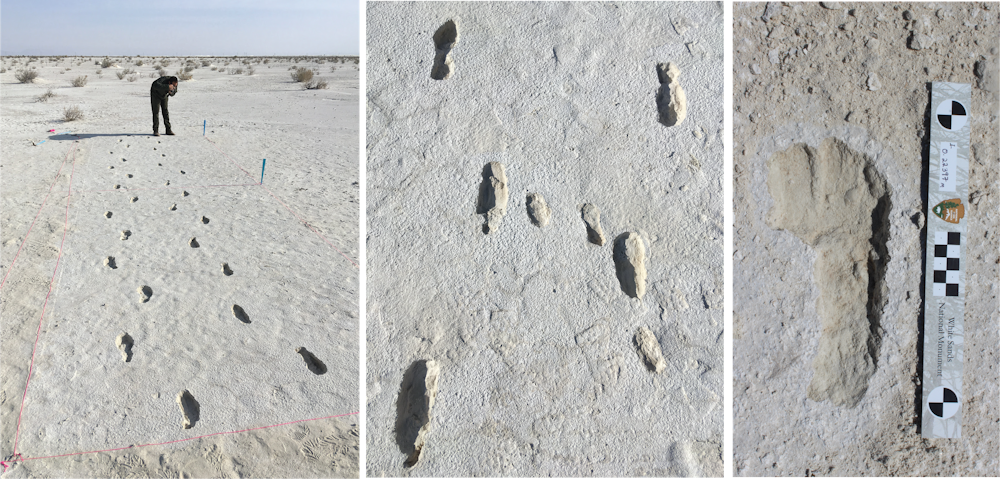
Each track tells a story: a slip here, a stretch there to avoid a puddle. The ground was wet and slick with mud and they were walking at speed, which would have been exhausting. We estimate that they were walking at over 1.7 metres per second – a comfortable walking speed is about 1.2 to 1.5 metres per second on a flat dry surface. The tracks are quite small and were most likely made by a woman, or possibly an adolescent male.
At several places on the outward journey there are a series of small child tracks, made as the carrier set a child down perhaps to adjust them from hip to hip, or for a moment of rest. Judging by the size of the child tracks, they were made by a toddler maybe around two years old or slightly younger. The child was carried outward, but not on the return.
We can see the evidence of the carry in the shape of the tracks. They are broader due to the load, more varied in morphology often with a characteristic “banana shape” – something that is caused by outward rotation of the foot.
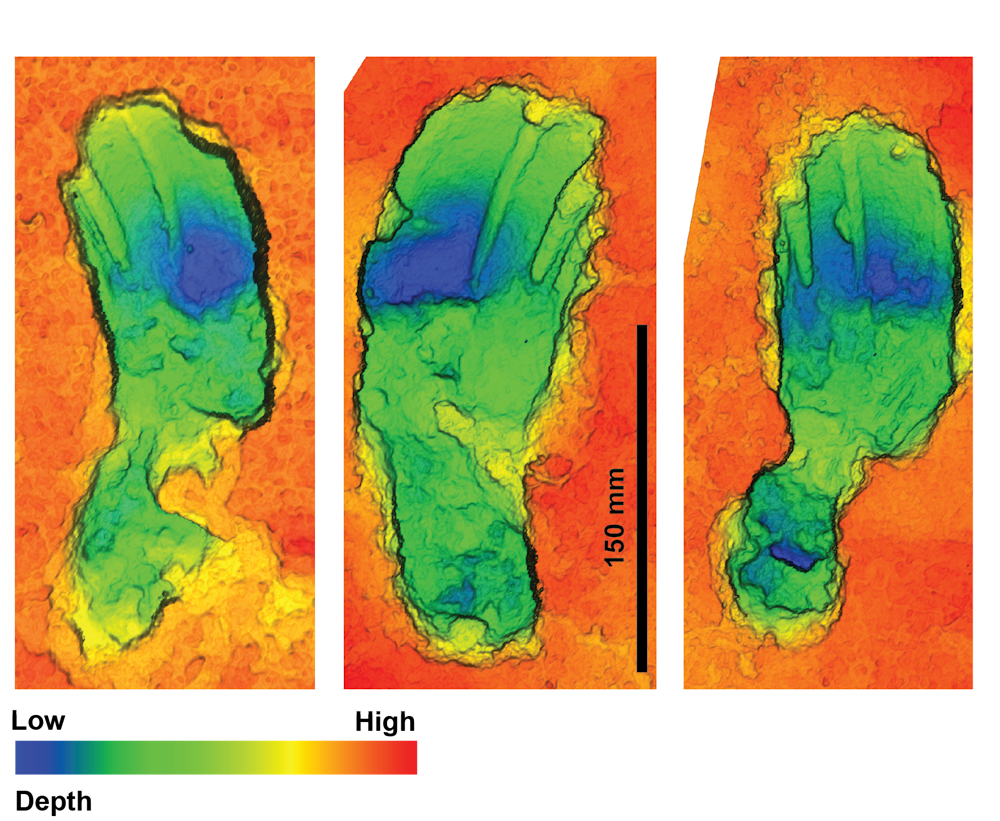
The tracks of the homeward journey are less varied in shape and have a narrower form. We might even go as far as to tentatively suggest that the surface had probably dried a little between the two journeys.
The playa was home to many extinct ice age animals, perhaps hunted to extinction by humans, perhaps not. Tracks of these animals helped determine the age of the trackway.
We found the tracks of mammoths, giant sloths, sabre-toothed cats, dire wolves, bison and camels. We have produced footprint evidence in the past of how these animals may have been hunted. What’s more, research yet to be published tells of children playing in puddles formed in giant sloth tracks, jumping between mammoth tracks and of hunting and butchery.
Between the outward and return journeys, a sloth and a mammoth crossed the outward trackway. The footprints of the return journey in turn cross those animal tracks.
The sloth tracks show awareness of the human passage. As the animal approached the trackway, it appears to have reared-up on its hind legs to catch the scent – pausing by turning and trampling the human tracks before dropping to all fours and making off. It was aware of the danger.
In contrast, the mammoth tracks, at one site made by a large bull, cross the human trackway without deviation, most likely not having noticed the humans.
The trackway tells a remarkable story. What was this individual doing alone and with a child out on the playa, moving with haste? Clearly it speaks to social organisation, they knew their destination and were assured of a friendly reception. Was the child sick? Or was it being returned to its mother? Did a rainstorm quickly come in catching a mother and child off guard? We have no way of knowing and it is easy to give way to speculation for which we have little evidence.
What we can say is that the woman is likely to have been uncomfortable on that hostile landscape, but was prepared to make the journey anyway. So next time you are rushing around in the supermarket with a tired child in your arms, remember that even prehistoric parents shared these emotions.
Matthew Robert Bennett, Professor of Environmental and Geographical Sciences, Bournemouth University and Sally Christine Reynolds, Principal Academic in Hominin Palaeoecology, Bournemouth University
This article is republished from The Conversation under a Creative Commons license. Read the original article.
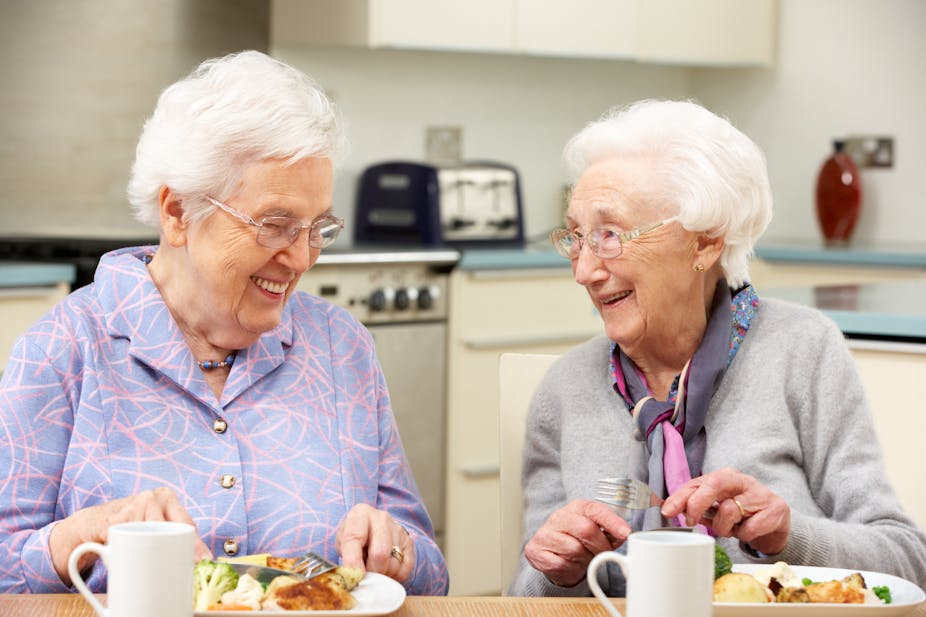
Protein is an essential part of a healthy diet. It helps us build and maintain strong muscles and bones, helps us better recover from illness and injury, and reduces likelihood of falls and fractures. But, as we age, many of us don’t get enough protein in our diet. This is partly because our appetites diminish naturally as we get older. Convenience, effort, and value for money, are also reasons that older adults may not get enough protein.
However, protein is extremely important as we age. This is because our bodies become less able to convert the protein we eat into muscle and other important biological factors that help us better recover from illness and injury – so we actually need to eat more protein as we get older.
Here are five tips to help you get enough protein in your diet as you age.
Research shows that the taste and flavour of high-protein foods can encourage older adults to consume more of them. And taste and flavour are easily added with sauces and seasoning.
In studies where we have offered older adults a hot chicken meal either with or without sauce or seasoning, we find more chicken was eaten from the meals with sauce or seasoning compared to plain meals. Meals with sauces and seasonings were also rated as more pleasant and tastier than the plain meals.
Adding sauces and seasonings to meals can increase the consumption of high-protein foods. Participants also subsequently ate equal amounts of protein at the next meal following flavoured meals and plain meals, meaning that their protein intake was increased overall.
Some foods that add flavours are naturally high in protein themselves. Good examples are strong cheeses – like blue cheese – as well as nuts and seeds.
As well as protein, cheese is full of calcium and other micronutrients, including Vitamins A, D and B12, which also help maintain strong bones. Cheese can be easily added to soups, salads, pasta or mashed potatoes.
Nuts and seeds can be added to breakfast cereals, salads and desserts such as yoghurts, and can provide an interesting texture as well as added flavour. Nuts and seeds are good sources of plant-based protein, and are also high in healthy fats, fibre, and many vitamins and minerals, and can reduce risk of many chronic conditions, such as cardiovascular disease and type 2 diabetes. However, nuts and seeds may not be suitable for everyone (as they can be difficult to chew), but cheese is soft and full of flavour.
Breakfast meals tend to be low in protein – so eating eggs for breakfast is one way to boost protein intake.
Our recent study found egg intake could be increased by providing people with recipes and herb or spice seasoning packets that increased the taste and flavour of eggs. We gave participants recipes that used both familiar and exotic ingredients, from a variety of countries, for dishes that required a range of preparation methods. Egg intakes increased after 12 weeks by 20%, and were sustained for a further 12 weeks in those who had received the recipes.

Eggs are a nutritious source of protein, and are typically easy to prepare and chew, good value for money and have a long shelf life. Egg dishes can also add taste and flavour to the diet. However, eggs may not be suitable for everyone (including those with certain diagnosed conditions), but for most people egg consumption is considered safe.
Try to make cooking as quick and easy as possible. Many types of fish are available that can be eaten directly from the pack, or simply need heating – such as smoked mackerel or tinned sardines. Fish is also full of many vitamins and minerals, as well as omega-3 fatty acids (which are present in oily fish like salmon) which is good for heart health. To allow easier and quicker cooking, purchase meat that is pre-cut, pre-prepared or pre-marinated, or fish that has been deboned and otherwise prepared, and then make use of your microwave. Fish can be very easily and quickly cooked in the microwave.
Beans, pulses and legumes are also easily bought in cans and ready-to-eat, and are all rich sources of protein for those who wish to consume a more plant-based diet. They also contain fibre and many vitamins and minerals, and can protect against many chronic conditions including cardiovascular disease, diabetes and some cancers.
Many people reach for biscuits or a slice of cake at snack time, but try eating a high-protein snack instead next time. Many high-protein foods are already prepared and easy to consume. Some examples include yoghurts or dairy-based desserts – such as crème caramel or panna cotta. Yoghurts and other dairy-based desserts can offer many health benefits, including improved bone mineral density, as necessary for strong bones. Nuts, crackers with cheese, peanut butter, or hummus are also great choices.
Inadequate protein intake can result in poor health outcomes, including low muscle mass and function and decreased bone density and mass, leading to increased risk of falls, frailty, and loss of mobility. To avoid these harms, researchers currently recommend consuming 1.0-1.2g protein per kilogram of bodyweight for older adults compared to 0.8g of protein per kilogram of bodyweight for all adults.
Professor of Psychology, Bournemouth University
Lecturer of Psychology, Bournemouth University
This article is republished from The Conversation under a Creative Commons license. Read the original article.
Last week I sent a reminder email to a health journal in Nepal enquiring about the progress of our submitted manuscript, assuming it had got stuck somewhere in the peer review process. The reply threw me a little and made me realise that some people’s situation is far and far worse than we think. The Nepali editor’s email went:
Dear Professor Edwin
Thank you for your email.
I will update the progress as early as possible.
Stay Safe.
PS: 25% of the medical personnel in the hospital where I am working is infected with COVID-19.
Hope for the positive news.
 I immediately replied and told him not to worry and take as long as necessary. It also made me realise that we don’t always put ourselves in the editor’s shoes, even though I am a journal editor myself.
Food for thought!
Prof. Edwin van Teijlingen
CMMPH
We are super excited to confirm that registration for #BESC2020 (7th International Conference on Behavioural and Social Computing), hosted by Bournemouth University, is now open. BESC aims to become a premier forum in which academic researchers and industry practitioners from data mining, artificial intelligence, statistics and analytics, business and marketing, finance and politics, and behavioral, economic, social and psychological sciences could present updated research efforts and progresses on foundational and emerging interdisciplinary topics of BESC, exchange new ideas and identify future research directions.
#BESC2020 attracted a range of exciting work around interdisciplinary field of behavioural and social computing. All accepted and presented papers expect to be included in IEEE Xplore and submitted for indexing in DBLP, Scopus, Google Scholar, and EI etc. Top quality papers after presented in the conference will be selected for extension and publication in several special issues of international journals, e.g., World Wide Web Journal (Springer) Social Network Analysis and Mining (Springer) and Web Intelligence. So if you wish to simply attend, you have a chance to do so and hear it first before any of the content will appear online or elsewhere.
The 3-days event is taking place online via Zoom.
Please note, even if you are not presenting, you can attend and learn about the latest thinking and practice in behavioural and social computing. Attendance only is free but all participants will need to register via Registration for BESC2020.
We are looking forward to fruitful discussions with all our speakers and attendees,
BESC2020 organising committee
Being asked to examine a PhD thesis is a honour for most academics. As an examiner you always learn something new. If not about the topic itself, you may learn different ways of applying a research method or new theoretical explanations or even new ideas for supervising your own PhD students. It is a joy to have an in-depth scientific discussion with a dedicated and motivated candidate. Usually the candidate is a little nervous, especially at the start of the viva, and I see it as one of my tasks as an examiner to help the candidate to relax a little.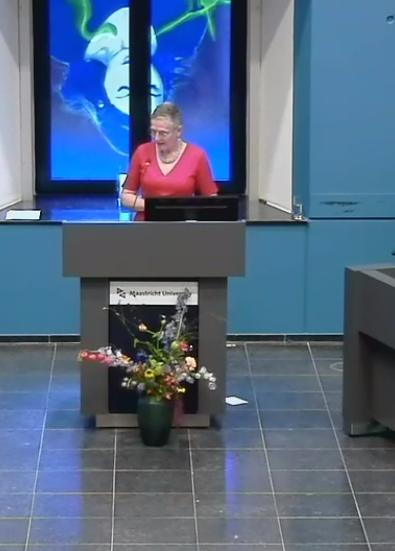
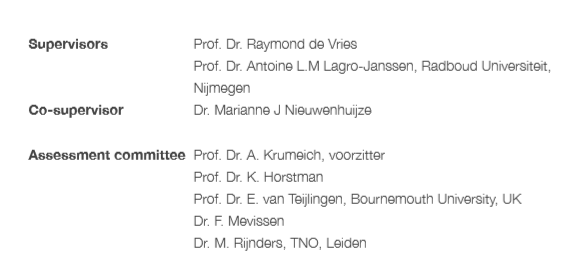 Today I had the pleasure of being one of the examiners for a PhD at the University of Maastricht (the Netherlands). The PhD candidate (now Dr.) Franka Cadée was a little nervous according to her supervisors, although it did not show during the viva.
Interestingly, enough I also felt nervous! Before today I had examined 50th PhD thesis in seven different countries. However, I probably had not felt this nervous since my own viva nearly three decades ago. Why was I nervous? First, although I am Dutch and I have studied in the Netherlands and the UK, I had never attended a PhD examination in the Netherlands. And PhD examinations really do differ between the UK and most northern European countries, especially the public defence of the thesis by the candidate in front of examiners, colleagues, friends and family. Secondly, the candidate today is the president of the ICM (the International Confederation of Midwives). Of course, this does not make any difference in the examination process, this candidate was treated the same as any other student would have been. Thirdly, and most importantly, the ICM had globally advertised the public defence of Dr. Cadée’s thesis to midwives, maternity policy-makers, member of International Non-Governmental Organisations and maternity care providers and invited ‘everybody’ to watch on ZOOM.
I really think it was the latter that made me more nervous than the much more private UK PhD viva with perhaps five or six people in a small class room, or, these days, on ZOOM.
Finally, my congratulations to Dr. Franka Cadée on the successful defence of her thesis Twinning, a promising dynamic process to strengthen the agency of midwives.
Professor Edwin van Teijlingen
Centre for Midwifery, Maternal & Perinatal Health (CMMPH)
The OAPEN Foundation (Online Library and Publication Platform) has launched a new open access (OA) books toolkit for researchers and academic book authors. The toolkit is a free-to-access, stakeholder-agnostic resource that aims to help authors better understand OA for books, increase trust in OA book publishing, provide reliable and easy-to-find answers to questions from authors, and to provide guidance on the process of publishing an OA book.
The toolkit was created in collaboration with Springer Nature and The University of Glasgow and has been written by a global and diverse group of stakeholders from the academic community and scholarly communications organisations.
You can access the toolkit here: www.oabooks-toolkit.org
To learn more about the toolkit or get involved, please contact Tom Mosterd, Community Manager at OAPEN: t.mosterd@oapen.org. You can also sign up to the toolkit newsletter: http://eepurl.com/g5fuFr.

Dr. Ann Luce, Associate Professor in Journalism and Communication in FMC is providing one of two Keynotes at, “The Summit: A Suicide Prevention Conversation 2020” in Africa, tomorrow, Saturday 10th October, 11am-2pm, to mark World Mental Health Day. The topic of her paper is: “Reporting Suicide Cases: A Media Guide to Language and Structure.”
The second Keynote, delivered by by Prof. Andrew Ezadduayan Zamani from Nasarawa State University will discuss the pressing need for evidence-based suicide prevention research in Africa and how to improve information systems in suicide prevention. This FREE online conference is open to all. Please register here: https://www.eventbrite.com/e/the-summit-a-suicide-prevention-conversation-2020-tickets-122925799375
On Monday, 12th October, 12-1:30pm, Dr. Luce will speak on a panel organised by the Ethical Journalism Network on the topic of Responsible and Ethical Reporting of Suicide and Mental Health in the Media, where she will discuss her new Suicide Reporting Toolkit for Journalists and Journalism Educators.

Introducing the event is Hannah Storm, CEO of the EJN. Moderating the event is James Longman from ABC News in the United States. Also on the panel is Kelly McBride, Senior Vice President of the Poynter Institute in Florida, USA; Richard Addy, Former Chief Advisor to the BBC Deputy Director General and Dr. Sallyanne Duncan, senior lecturer in media ethics at University of Strathclyde.
The panel will be hosted on Zoom and is free to join: https://zoom.us/j/97547482061?pwd=dEVPNHNLZ1VxVFBWOTdidVhlVER2QT09
The virtual Conservative Party Conference took place – we’ve coverage of the relevant fringe events below; the Science and Technology Committee ran an interesting session on ARPA, and university adoption of the definition of anti-semitism is back on the agenda.
Jonathan Simons of Public First writes Ambitious Minds for Research Professional aiming to provide insight into the Government’s thought processes behind their HE agenda. The quick read is illuminating (even if you aren’t a policy geek).
The Lords debated the Lifetime Skills Guarantee and Post-16 Education on Tuesday (we mentioned Boris and Gavin’s announcements for this in the policy update last week). Debate followed similar lines as last week plus University Technical Colleges and parity of esteem were discussed.
Lord Storey triggered a chuckle in his enthusiasm for extra funding for FE colleges: My Lords, this is very good news. I do not have to sit on the Bishops’ Bench to say hallelujah. Later he raises: There is no mention of university technical colleges, which have done an excellent job. Does the Minister see an enhanced role for them?
Lord Baker of Dorking echoed this: I am very grateful for the mention of the colleges that I support, the university technical colleges. At the moment, they are by far the most able and successful technical schools in the country. We are having a record year in recruitment and we have incredible destinations. Last year, one of our colleges on the north-west coast of England produced 90% apprentices, which is absolutely incredible when the national average is 6%.
He continued: The trouble is that, since 1945, there has been a huge drive to send people to universities, which is good for social mobility but it means that graduates have had disproportionate esteem, disproportionate political influence and disproportionate reward compared with those who make things with their hands. This is the time when we have to elevate the intelligent hand: to train not only the brain but the hand as well.
Baroness Berridge (Minister for Schools): My Lords, I assure the noble Lord that there is no snobbery in the Department for Education; we want to promote parity of esteem for vocational and technical qualifications across our sector. The Prime Minister and the Secretary of State are behind this.
Maintenance Support
Meanwhile the Centre for Progressive Policy has published Beyond hard hats – What it will take to level up the UK and some of the recommendations chime with delivering the Lifetime Skills Guarantee. The report calls for a Learners’ Living Allowance to support those undertaking part- or full-time training, as an equivalent to maintenance loans available for higher education students, to be paid back under the same conditions upon employment.
There was a Conservative Party fringe event: Back in business: what can modern universities do to support Britain’s recovery? (sponsored by HEPI and MillionPlus). Universities Minister, Michelle Donelan, was on the panel. The event discussed changes within the FE and HE, the recent Lifetime Skills Guarantee announcement, and how universities can provide quality education in a post-Covid world. Also: technical qualifications, up-skilling and re-skilling, the Augar review, and institutions’ roles within their local community.
The Education Policy Institute (and Sheffield Hallam University) ran Higher and further education in post Covid recovery: Competitors or Collaborators? Former HE minister Jo Johnson was on the panel along with the CEO of the Association of Colleges (David Hughes), the public policy editor of the Financial Times (FT), Sheffield Hallam university, Sheffield College and EPI.
The level 4 & 5 ‘regulatory jungle’ was discussed, FE & HE working collaboratively, the FT pointed out that the forthcoming demographic bulge meant there was no shortage of students to go around, and suggested that ensuring a blend of FE and HE was the best way to meet the rising need. Skills were discussed with Jo stating he’d pushed for both credit transfer and modular funding during his HE Minster tenure, but neither are easy to achieve nor implement well. He also called for the removal of the ELQ rule across all subject areas. You can read the rest of the session coverage in this summary.
Wonkhe report specifically on Jo Johnson’s speech: Speaking on an Education Policy Institute panel yesterday, former minister Jo Johnson reported that snobbery about further education was an “artefact”, and there was currently an “aggression” towards higher education in the media. He also noted he had experienced “push back” from some more established universities in developing a national credit transfer framework. TES has the story. The recognition of the media aggression was a welcome acknowledgement from a former minister.
There was also an event on engineering.
The Education Committee held two accountability sessions this week (these are a regular occurrence and question a Minister or senior public figure on the handling of current business). Colleagues interested in disadvantaged school children, catch up, county lines, and educational inequalities will be interested in the summary of the first session here (prepared by Dods).
The second session questioned Michelle Donelan, sadly it was more watery than juicy. She stated that she did not know how many students were currently under lockdown at universities in England instead highlighting that C-19 rates were still relatively low at universities. Donelan said that most students were abiding by the guidelines but that a minority were socialising in a way that was driving spikes in infection. She confirmed the Government was committed that all students could return home at Christmas and various measures were under consideration as to how this would be achieved. Recent sector press has speculated that the DfE were completely unprepared for the guidance the Secretary of State promised would be issued to the sector guiding institutions on how to achieve this. And Wonkhe have confirmed the DfE will launch a Covid-19 helpline for both institutions and students. Donelan was unclear if this would be an automated system or a real person on the end of the line. On the guidance Research Professional report that Donelan was reticent, stating it was being drawn up and will contain a “robust” Q&A session, but it is not quite ready for publication yet….but that one approach being looked at was the quarantining of students in the two weeks before the end of the winter term
Donelan also commented on the perennial fee refund topic stating it was a matter for individual universities, rather than the government, to determine whether students should receive refunds, however she stated that online and blended learning was working well. She also took a strong stance and stated that universities that had not yet adopted the IHRA definition of anti-Semitism would ultimately be forced to do so by Government (more on this below).
Wonkhe have a blog covering the Committee session and considering some of the aspects arising within a sector context. David Kernohan writes: the hearing was just more evidence that DfE is not on top of the situation when it comes to keeping students safe. Guitarists will find fine resonance with the beginning of the blog.
Drop the boo boo
Labour didn’t want to drop the Secretary of State’s mistaken statement last week (that £100 million was available to universities for digital access – it isn’t, it’s for schools) and raised a Point of Order because the mistake hadn’t been corrected in Hansard. Gavin Williamson managed to weasel out of outright confirming he’d got it wrong instead he said: As the House will know, the Government have made available more than £100 million for electronic devices. Those youngsters who are in care and going on to university can access that funding to enable them to have the right type of devices, whether that is a laptop or a router. If a student’s family circumstances change while they are at university, they can go to the Student Loans Company to have their maintenance grant re-assessed. Although the original record hasn’t been amended Kate Green has raised this enough now to have made her point about Gavin’s mistake.
The House of Commons debated universities (not) adopting the IHRA definition of anti-Semitism on Tuesday. Ahead of the debate the Telegraph reported that only one fifth of universities have adopted the IHRA definition of antisemitism.
Sarah has added some key snippets from the full debate below. You’ll spot from the summary that parliament were disdainful of the reasons the sector has given for not adopting the definition.
Vicky Ford (Parliamentary Under-Secretary of State) stood in for Michelle Donelan to give the ministerial perspective on the debate:
At the end of this week’s Education Committee session Chair, Robert Halfon, stated:
ARPA – The Science and Technology Committee held a particularly juicy session on the potential new ARPA style research funding agency. A summary of the two sessions is here and the full session content will shortly be available here.
In the first session the witnesses thought it right that Government should set broad strategic goals and research direction for the agency, particularly those centred on specific challenges (such as health, energy and defence policies). A witness suggested there was no need to wait for consultation outcome on ARPA – that set up could run parallel. Neither witness felt UKRI should run ARPA – that it should sit at a high Government cross-sector level, and that UKRI don’t currently have a challenge-setting role. Walport railed against this statement in the second session stating UKRI could be guided towards a more ARPA-like model without the need for a new body by giving UKRI more freedom and money to work on specific challenges.
The second session witnesses were Sir Mark Walport (UKRI’s previous CEO) and Jo Johnson (previous Universities Minister). Both were responsible for setting up UKRI and both were concerned that an ARPA body would be beneficial. Johnson stated a new body could work but it would have to complement the existing organisations. Furthermore, that there was still no clarity over what purpose a UK ARPA would serve and a new green or white paper should establish this. Overall, he was in favour of ARPA becoming a part of UKRI. Hosting ARPA outside UKRI could fragment the coherence and oversight of the UK research sector. The geographical location of where to locate ARPA was discussed.
Do read the summary here as the above only touches on part of the discussion.
Life Sciences – Two Conservative party fringe events touched on Life Sciences. Here are the summaries:
The Future of Life Sciences – panellists spoke on levelling up in the context of life sciences and the future impact that the sector could have the on the health and wealth of the UK. Data access within the NHS and speeding up access to new and innovative medicines were also mentioned.
Healthy Boost: Putting Life Sciences innovation at the heart of Levelling Up – panellists discussed the need to effectively integrate the life sciences in any future plans to rebuild the UK economy. The unequal effect of Covid on areas was discussed, alongside improving health outcomes and living healthier lives through prevention and Government investment. Manufacturing within the life sciences was mentioned alongside maintaining progress with medicines and medical devices. Universities were mentioned as anchor institutions.
Research Professional also cover the Life Sciences sessions.
REF Review – UKRI have publicised the REF Review which will consider researcher’s perceptions and experience in preparing and submitting to REF 2021. It aims to understand attitudes towards REF 2021 and the affect it has on the academic environment. It also intends to capture views on the challenges and opportunities; whether REF is a driver of research behaviours and culture; and reflection on the practical preparations for REF 2021 at the institution, including lessons learned and changes from REF 2014.
REF Modifications Survey – During lockdown REF was put on hold while new dates were agreed and a survey proposed modifications to the REF exercise. REF have published the summary of the 164 responses to the survey which examined the appropriateness of the modifications for outputs, impact and the environment. A majority of respondents were happy with the modifications although many felt further detail was needed.
REF have also updated information on:
Global Research – Wonkhe tell us about the Wellcome Trust’s Global Research report:
Postgraduate Research Students – UUK, OfS, UKRI and Vitae have published their collaboration – Supporting mental health and wellbeing for postgraduate research students which consider the 17 projects addressing PGR wellbeing that were supported by Catalyst funding. They describe the programme reach: The 17 successful projects covered a wide range of activities targeted at PGRs and supervisors, including workshops, mentoring programmes, peer networks and training embedded into induction events. Co-production was a positive theme, with 171 PGRs directly involved across 11 projects… A variety of resources have been developed for use by the sector available on the OfS website: these range from training materials to wellbeing apps, blogs, online hubs and videos… Fifteen projects have provided case studies that outline their activities, impact and challenges.
Two-thirds of the projects reported improved mental health from their PGRs involved including that PGRs were more aware of how to support and improve their own mental health, and had improved knowledge of where to get help and support. You can read more on the projects here, and the recommendations are on pages 8-9. The report concludes that while the quality of the supervisory relationship is key, all university and college staff have a part to play in supporting the mental health and wellbeing of PGR students.
This week’s research related parliamentary question:
The Parliamentary Office of Science and Technology (POST) have released a new opportunity for research colleagues:
In April POST ran a survey of experts on the COVID-19 outbreak expert database that resulted in the publication of syntheses about the future effects of COVID-19 in different policy areas. From this survey POST developed Parliament’s first Areas of Research Interest (ARIs) which are lists of policy issues or questions that policymakers are particularly interested in.
Currently only the ARIs which are linked in some way to Covid have been released. However, they are not all health based and touch on a range of themes from Crime, economics, inequalities, trade, supply chains, mental health, education, sustainability across several sectors, and so on. Do take the time to look through the full question list to see if it touches upon your research area. Non-researcher colleagues can share the list with academic colleagues within their faculty.
Alongside the publication of the ARIs is an invitation to experts to add current or future research relevant to the topics to a repository that Parliament may use to inform future policy making and Parliamentary work. Research with relevant research across any of the disciplines are invited to submit their work.
BU colleagues are strongly encouraged to take advantage of this rare opportunity to present their research to policy makers The Policy team is here if you need any help.
The Government have announced the R&D Place Advisory Group that will advise Ministers on the R&D places strategy which will build upon the R&D Roadmap and deliver the levelling up strategy across the public, private and voluntary sectors. The press release states that the aim is to build on local potential so that all regions and nations of the UK benefit from a R&D intensive economy. The Place Advisory Group support this by:
The press release also states the group will advise the ministers in confidence. So proceedings may be hard to come by.
The group will be chaired by Amanda Solloway as Minister for Science, Research and Innovation. You can read her speech launching the group here. The secretariat function will also be provided by her department – BEIS. The group is expected to meet monthly while the Government develops the place strategy.
In Scotland the National 5 exams are to be cancelled for 2021 and replaced with teacher assessments and coursework. Higher and Advanced Higher exams will go ahead but will commence 2 weeks later than usual on 13 May. The BBC explain it as: like using coursework and tests for GCSEs while carrying on with slightly later exams for A-levels.
Scotland’s Education Secretary John Swinney stated that going ahead with all exams during the continuing Covid pandemic was “too big a risk”…it couldn’t be “business as usual” for exams but also “there will be no algorithm”. And if Highers cannot be taken, there would be a contingency plan to use grades “based on teacher judgement”.
There are rumours the Government is less certain that exams will go ahead in England. This week they stated universities could start later in Autumn 2021 to accommodate a delay to A level exams. An announcement from the Government on exams is expected later in October. This was confirmed in response to a Parliamentary Question calling for clarity before students submit their UCAS applications. Donelan also confirmed a statement was forthcoming. During her Education Select Committee hearing when she commented that it would be inappropriate if she were to pre-empt and “steal his [Williamson’s] thunder” by making any announcement. And on potential disruption to the start dates for the 2021-22 academic year, the minister added that “if term time needs to be moved slightly to accommodate any potential change in examinations, that is something that can be done quite straightforwardly”. (Source.)
In their article the BBC pose the two key questions:
Concluding that the Government really does need to get its skates on!
Wonkhe report that: Government information on sponsoring an international student has been updated to reflect the new student visa route. There’s also detailed technical guidance on the new route, and a guide for sponsors with material on English language requirements, certificates of sponsorship and record keeping provisions.
UUK also blogged on the topic: Government must act now or risk losing European students for years to come outlining 5 steps they want policymakers to adopt to stabilise demand for UK HE:
The Higher Education Commission convened by Policy Connect have published Arriving at Thriving – Learning from disabled students to ensure access for all. It highlights that despite higher numbers of disabled students accessing HE the barriers they face when they get here are still numerous and unacceptable in today’s inclusive society. The report makes 12 recommendations to improve disabled students’ experience of HE and have a positive knock on effect on their attainment, continuation and graduate outcomes. The report states:
In setting out the key information here we focus on what is lacking, however, the report contains case studies and examples of success too aiming to share and spread good practice throughout the sector.
Key findings:
The report concludes:
All of our twelve recommendations – and we could have made many more – require implementing in their own right if we are to achieve lasting change. The ideal would be for this to take place as part of the system transformation we set out in recommendation five – for the government to create a new system to support disabled people from the classroom to the workplace.
Former HE Minister Chris Skidmore, who set up the Disabled Students Commission in 2019, blogs for Wonkhe to launch the HE Commission’s report. He states:
Professor Geoff Layer, Chair of the Disabled Students’ Commission, praised the report. He stated:
Hillary Gyebi-Ababio, NUS Vice President for Higher Education spoke at the All-Party Parliamentary Group for Students on Tuesday warning MPs not to repeat previous mistakes by ignoring students during this pandemic. She raised the safety of students returning to campus, being locked into tenancy contracts and a lack of access to online learning. She called on the Government to give students the right to leave their course or accommodation without financial detriment and address the financial pressures within the education system (see this). Hillary said:
The APPG for Students Twitter feed highlights the other issues that were raised including digital poverty and the shift to online learning, Muslim students concerned about Test and Trace, and quality of teaching on courses which don’t suit digital delivery.
Research Professional talk of the continued policy intent to not charge HE fees or a graduate contribution in Scotland.
On calls for fee refunds due to Covid teaching changes the Office of the Independent Adjudicator has published an update. The key message that a blanket ban on fee refunds is unacceptable continues and the site has FAQs for students on whether a partial refund might be appropriate or not.
Also making news this week was the decision by the University of St Andrews which means first-year students can leave at any point before December without paying any course fees (accommodation fees are still accumulated). Research Professional speculate the decision could lead to a string of similar demands at other UK universities.
Advance HE published Diversity of Governors in HE. (Press release here.)
Please note – several parliamentary questions haven’t been answered within the required Parliamentary. If a link is not showing an answer check it again in 3 working days. The link is good, the Government are just slow in responding this week.
Students
Covid
And from Prime Minister’s questions this week:
Matt Western (Lab, Warwick and Leamington) said that universities were struggling to contain the coronavirus, with 5,000 cases reported in recent weeks. More local and immediate access for communities was needed, he said. In Leamington, he was told that Deloitte would not deliver testing facilities until the end of this month, weeks after students would have arrived in the town. He asked the PM if the Government was not expecting students to return to universities.
The PM responded it was important that students returned to universities and praised students for complying with the new regulations. There were particular problems in certain areas and the Government would be pursuing measures to bring the virus down, he added.
HE Sector
On social mobility from Prime Minister’s Questions this week: David Johnston (Con, Wantage) said that just 12% of journalists and chief execs came from a working class background and just 6% of doctors and barristers. He called for a renewed focus on social mobility to make better use of all of the country’s talent.
Click here to view the updated inquiries and consultation tracker. Email us on policy@bournemouth.ac.uk if you’d like to contribute to any of the current consultations.
There are no new consultations and inquiries relevant to HE this week.
Midwifery: The Royal College of Midwives has published a report on supporting midwifery students through a global pandemic and beyond.
Mental Health Nursing: Despite 1 in 4 people experiencing a mental or neurological condition at some point during their life mental health nursing remains an unpopular profession (despite making up one third of the UK mental health workforce). A new research report Laying foundations Attitudes and access to mental health nurse education by the Nuffield Trust considers how to attract more people to study mental health nursing and the reasons behind why numbers are currently limited.
C-19 student test results: The BBC raises the issue whereby new students C-19 test results are going to their home GP rather than the university area in which they now reside. This topic has been mentioned several times in Parliament this week with the Opposition pushing the Government to respond.
Dyslexia: The Data & Marketing Association (DMA) has published an employer guide to inclusivity in the workplace. They highlight that dyslexia in the workplace remains misunderstood and the guide aims to help employers support a diverse workforce. They state:
Balance: Wonkhe report that The Women’s Higher Education Network has published research into the experiences of parents working in higher education professional services during the lockdown. Drawn from a survey of 1074 parents, the report found that traditional gender roles still influence the division of domestic responsibilities. The report recommends that employers provide guidance to parents on workloads and expectations, and encourage them to work flexibly.
Similarly, HEPI has a piece on the difficulties student parents face studying at home during the pandemic.
Teaching via social media: Wonkhe have a blog about the wins and pitfalls of utilising the tech that students prefer and teaching through sites such as WhatsApp with notifications through Twitter. The comments are a must read for both sides of the discussion. There are also two other blogs on the adjustment HE lecturers underwent to teach online during Covid – one from a healthcare educator and one charting the human experience.
DfE: The Information Commissioner’s Office reviewed the DfE (who cooperated fully) and have found them in direct breach of data protection law. A DfE spokesperson said:
To subscribe to the weekly policy update simply email policy@bournemouth.ac.uk.
Did you know? You can catch up on previous versions of the policy update on BU’s intranet pages here. Some links require access to a BU account – BU staff not able to click through to an external link should contact eresourceshelp@bournemouth.ac.uk for further assistance.
External readers: Thank you to our external readers who enjoy our policy updates. Not all our content is accessible to external readers, but you can continue to read our updates which omit the restricted content on the policy pages of the BU Research Blog – here’s the link.
JANE FORSTER | SARAH CARTER
Policy Advisor Policy & Public Affairs Officer
Follow: @PolicyBU on Twitter | policy@bournemouth.ac.uk


Dear colleagues
– Do you have a great idea for research in health, social care or public health?
– Are you planning to submit a grant application to NIHR?
Our popular seminar has now moved online and will take place on Tuesday 24th November 2020 from 10.00am – 12.30pm.
The seminar provides an overview of NIHR funding opportunities and research programme remits, requirements and application processes. We will give you top tips for your application and answer specific questions with experienced RDS South West advisers.
Find out more and book a place.
Your local branch of the NIHR RDS (Research Design Service) is based within the BU Clinical Research Unit (BUCRU)
We can help with your application. We advise on all aspects of developing an application and can review application drafts as well as put them to a mock funding panel (run by RDS South West) known as Project Review Committee, which is a fantastic opportunity for researchers to obtain a critical review of a proposed grant application before this is sent to a funding body.
Come as early as possible to benefit fully from the advice
Feel free to call us on 01202 961939 or send us an email.
The SciTech PGR Conference Committee are delighted to showcase the following virtual posters as part of the SciTech PGR Conference on the 9th October 2020:
Filling the gap: Validation of 3D point cloud data for the excavation and recording of mass graves
Samantha De Simone, Martin Smith, Andrew Ford, Ellen Hambleton, & Paul Cheetham
Click the image below to enlarge
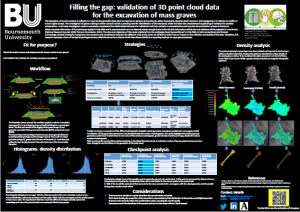 The application of digital technologies occupies a crucial role in the forensic arena, from the examination of injuries on a victim body and to capture a visual and spatial record of the crime scene. In order to obtain quality data, the analyses need to be performed with robust techniques, that must be able to meet the standard of accuracy, validity and reliably required in a courtroom. Among the novel technologies largely applied both during fieldwork and laboratory analyses is multi-view-stereo structure-from-motion (SfM-MVS) photogrammetry. SfM-MVS allows the generation of three-dimensional point (3D) cloud data from a set of overlapping photographs at different viewing angles, representing an accessible and affordable medium for forensic practitioners. Due to its accessibility and time effective aspect, SfM-MVS has been implemented as a recording tool in situ. Therefore, this study focuses on the validation of SfM-MVS for the recording the excavation and relationships of complex deposits in mass graves, where human remains may have high levels of fragmentation and commingling. The aim of the research is to reconstruct the entire excavation sequence in a single 3D point cloud. A complete sequence of the grave with point cloud data would serve as a permanent record and could fill the gap between experts working in the field and laboratory practitioners, enhancing the re-association of disarticulated and fragmented skeletons and facilitating the identification of individuals from their human remains.
The digital advantage: How 3D digitisation can aid in trauma analysis on human remains
Heather Tamminen, Martin Smith, Kate Welham, & Andrew Ford
Click the image below to enlarge
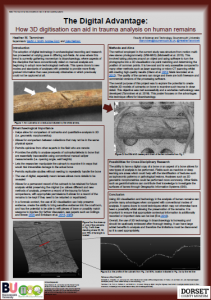 The benefits of recording cultural heritage through digital three-dimensional (3D) media are well-documented; the ability to analyse objects without damage, study items off-site, and compare remains that cannot otherwise be in the same vicinity are all important advantages. Increasingly, human remains are being digitised for respectful preservation and display, however a lot of work still needs to be done to test the quality of these models and their utility for detailed analysis. In 2009, construction of the Weymouth Relief Road led to the discovery of a mass burial with evidence for dramatic events occurring prior to their death. Dating from the 10th Century AD, the individuals were later identified as having originated in Scandinavia and North-Eastern Europe through their isotopic signatures. They had suffered widespread sharp force injuries and whilst these injuries were documented by conventional manual recording methods, more can be done to investigate them, especially with advances in technology. Due to the unique provenance of this collection, it was thought to be an ideal case study to investigate the potential of Multi-View Stereo Structure-from-Motion photogrammetry to generate 3D visualisations of injuries to skeletal remains which are of a quality high enough to study. Current results are promising and indicate that the models can provide detailed replications of the trauma that can be effectively studied without risk of damaging the specimens. The important question then remains of why this is something that researchers would want to spend time and energy doing when studying sharp force trauma. Therefore, this poster delves into the questions of why creating 3D models of sharp force trauma can help our understanding of past peoples and why this has the potential to be an excellent resource for individuals studying trauma both in archaeological and forensic situations.
Applications are still open for 2020-21 Postgraduate Research Department Reps.
PGRs, you can read more about being a Rep and how to apply on the Doctoral College Brightspace community student voice page.
Closing date, Wednesday 14 October.
 I’m the last of the Academic Targeted Research Scheme appointments; I took up my post last month (September) in Health & Science Communication. My home base is in the Faculty of Media & Communication, though my project will span numerous departments across arts and science disciplines.
My research is centred in an interdisciplinary and ubiquitous communication method that can be employed for multiple UN 2030 Sustainable Development Goals: interactive digital narrative (IDN). IDNs can be used in schools, GP waiting rooms, on tablets and smartphones; interactivity significantly increases retention, particularly when incorporated into media that audiences voluntarily and eagerly devote attention to. As a practice-based practitioner/researcher composing IDNs and evaluating their efficacy on multiple projects, I aim to develop a model for health and science communication through reading and writing IDNs that can be implemented in a wide array of scenarios and topic areas.
I came to this work through a serendipitous process, as I earned an undergraduate degree in science and did some postgrad study in evolutionary biology. I quickly discovered, however, that I’m more interested in reading and writing about science than I am in doing it (it was a lot of pipetting DNA!), so I changed tack. Amongst various professional endeavours, I started over, culminating in a PhD in Creative Writing and Digital Media.

My research is largely practice-based, as I compose various creative writing experiments in order to explore how new technologies such as hypertext, scripting, and multimodality affect the creative act and artefact. More recently, I have engaged in two Welsh Crucible-supported projects that brought me back to my science roots, combining interactive storytelling and science communication. You and CO2 examines using interactive digital narratives as bibliotherapy and expressive writing to effect positive attitude and behaviour change regarding the current climate crisis.
Likewise, the Infectious Storytelling project explores the efficacy of interactive digital narratives as persuasive media for educating the public about behaviours that lead to antibiotic microbial resistance. This project incorporates practice-based research, medical humanities, archive research, media analysis, ethnographic research in focus groups, and literary and art criticism, and is based on the historical treatment of tuberculosis in art, media, and literature, using insights  gained from archival research and textual analysis to inform approaches to communicating the importance of proper antibiotic use to patients, farmers, and the general public.
Here at Bournemouth, I’m excited to expand these experiences into a wider “IDNs for SciComm” project. I’m going to be reaching out to colleagues across arts and sciences disciplines at BU, fostering collaborations and new avenues to explore the use of interactive narratives for health and science communication. The aim of this research is to identify and address a number of science and health communication needs through the increasingly ubiquitous digital technology in our lives, including the possibility of ongoing communication about the current COVID-19 pandemic.
If you’re interested in collaborating with me or with others on interdisciplinary arts-science health and science communication, please get in touch!
 The South West Partnership for Environmental and Economic Prosperity (SWEEP) is now 3 years into its 5-year NERC-funded programme. With over 20 diverse projects under its umbrella, the SWEEP team are keen to share some of the results and success they have achieved to date in their mission to support the adoption of natural-capital led strategies and investments in the South West and beyond.
SWEEP are hosting a virtual ‘Natural Capital in the South West’ Expo over 3 days, 20-22nd Oct 2020, where attendees can ‘pick and mix’ from a range of themed sessions focusing on Natural Capital approaches for marine, land, coastal change and whole-catchment settings. There’s also a session which will explore the importance of Natural Capital for a green recovery. The event will be of interest to all those involved in managing the natural environment, and specifically how it can be protected and enhanced whilst also producing gains for business, government and society. Register for this free online event.
A systematic review published late last week assesses the impact of the COVID-19 pandemic on on-going and new clinical trials and research on a range of diseases [1]. The COVID-19 pandemic has resulted in a series of public health policies, including lock down, that have crippled the healthcare systems of many countries. These measures hugely impact on study participants, care providers, researchers, trial sponsors, and research organizations conducting clinical trials. This pandemic has a substantial impact on the trial sites as they experience difficulty in the continuation of trial activities which eventually hampers the progress of the trial and delays study timelines. Most sites are struggling due to delayed subject enrolment, shortfalls in monitoring, and risks of compromised data integrity, and this situation also has a negative impact on the start of future. Researchers are also concerned regarding the delay or cancellations of trials in the pandemic, which will have financial consequences for research organizations/human resources.
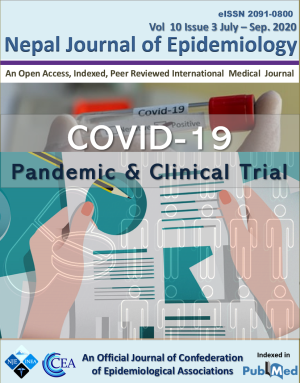 According to one survey, about two-thirds of the respondents have stopped or will soon halt subject enrolment in ongoing clinical trials, one-third halted randomization, and fifty percent of respondents are delaying or planning to delay the studies. Adopting new approaches and understanding the key risk indicators will help managers support trial sites with flexibility and ingenuity. For instance, switching patient site visits to new-trial virtualization, and telemedicine to interact with patients will help manage current clinical trials also beneficial for the post-pandemic era.
Reference:
The recent experiences of barrister Alexandra Wilson (see: https://www.independent.co.uk/voices/black-barrister-defendant-court-racism-alexandra-wilson-justice-b691638.html) provide further evidence of everyday racisms in UK. Examples of discriminatory treatment of Black, Asian and Minority Ethnic people span decades; the extent is beyond the symbolic intervention of Black History Month. However, it would be amiss, at this time, not to share research about Higher Education.
Dr Nicola Rollock’s research for UCU (see: https://www.ucu.org.uk/media/10075/staying-power/pdf/ucu_rollock_february_2019.pdf) documents the current situation in the UK as follows:
“There are only 25 black female professors* in the UK – they make up just 0.1% of all professors, compared to white men who represent two-thirds (68%) of professors. Dr Nicola Rollock (for UCU) interviewed 20 of the 25 at length about their experiences of higher education.
Respondents spoke of a culture where the route to professorship lacks transparency and values only certain forms of knowledge and achievement.
Some complaints – including huge workloads, the blurring of personal and work lives and an obsession with meeting targets – will resonate with many working in academia. However, the report provides a powerful insight into the extra pressures black women have to deal with, and try to manage.
Respondents talked about their experiences of explicit and passive bullying, clumsy stereotyping and the mentally draining strategies they need to devise and implement at speed just to cope. One professor explains how after “over preparing as usual” for a meeting she is still introduced by a senior white colleague as the student representative.
The report says improvements for black academics are not possible unless there is a fundamental shift in how race and racism are understood. UCU said universities need to rise to the challenge set out in the report not just to ensure support is there for the few black women who make it to professorial level, but to overhaul their promotion structures so there is genuine equality of opportunity.
Dr Nicola Rollock made the point: ‘Institutional statements expressing commitment to equality and diversity lack sincerity in the context of the findings’.
‘We need to look at how to transform a system that black female professors say is riddled with unfairness and bias. That starts with an overhaul of promotion structures to ensure genuine equality of opportunity.’ (Matt Waddup, UCU).”
BU staff can login below:







 SONAMONI contributions to Safety Conference 2026 in South Africa
 Three CMWH presentations at Berlin conference
 New interdisciplinary paper on Nepal
 Horizon Europe Cluster 3 (Civil Security for Society) 2026 Calls Now Open
 MSCA Doctoral Networks 2026 Call Information Webinar
 ESRC Festival of Social Science 2026: Application Deadline Extended to Thursday 25 June 2026 Apply now to take part in the 2026 ESRC Festival of Social Science
 Reminder: Register for the ESRC Festival of Social Science 2026 Information Session
 ECR Funding Open Call: Research Culture & Community Grant – Apply now MSCA Postdoctoral Fellowships 2025 Call
 ERC Advanced Grant 2025 Webinar MSCA Postdoctoral Fellowships 2025
 Update on UKRO services
 European research project exploring use of ‘virtual twins’ to better manage metabolic associated fatty liver disease
 Research Information Network