/ Full archive

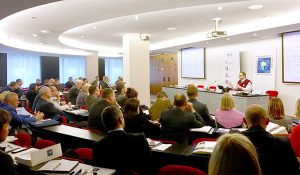
Bournemouth University Professional development courses for tourism and hospitality 18 March – 22 March  2019

Bournemouth University Professional development courses for tourism & hospitality 18 March – 22 March  2019

Department of Tourism and Hospitality Bournemouth University

Information  https://www.bournemouth.ac.uk/about/our-faculties/faculty-management/our-departments/department-tourism-hospitality/professional-development-courses

Booking https://www.eventbrite.co.uk/e/professional-development-courses-for-tourism-hospitality-professionals-tickets-51803261951?_eboga=1715778101.1516471310

Professional development courses for tourism & hospitality professionals

Our series of half-day courses will be delivered through interactive workshops and networking with leading academics and students. They will support managers, supervisors and their teams in their operational and strategic thinking. Our half-day courses will focus on the following areas:

  • The power of technology Professor Dimitrios Buhalis
  • Digital marketing and social media Dr Elvira Bolat
  • Managing tourism destinations, economic impacts and development Professor Adam Blake
  • Heritage interpretation at visitor attractions Dr Duncan Light
  • The greener conference Dr Julie Whitfield
  • Managing self and others Dr Lia Marinakou
  • Looking after your workforce Professor Adele Ladkin
  • Managing a multicultural workforce Dr Charalampos (Babis) Giousmpasoglou
  • Upcoming Asian and Chinese Markets – Attracting new customers Dr Philipp Wassler and Dr Daisy Fan
  • Managing hospitality food waste Dr Viachaslau Filimonau

View the full schedule of short courses and click below for more detail about each course.
Information  https://www.bournemouth.ac.uk/about/our-faculties/faculty-management/our-departments/department-tourism-hospitality/professional-development-courses

Booking https://www.eventbrite.co.uk/e/professional-development-courses-for-tourism-hospitality-professionals-tickets-51803261951?_eboga=1715778101.1516471310

Please feel free to forward this email to interested parties.

Our Professional development courses for tourism & hospitality professionals are primarily for our partners and help us to develop the competitiveness of the tourism and hospitality industries of the future.  Join us to learn how you can develop your potential and competitiveness through managing your staff, developing your product and service, understanding your customers and using digital marketing. You will also have access to our resources and networks to develop your competitiveness. The courses are delivered through interactive workshops and networking with leading academics and students and will support managers to develop contemporary knowledge of critical business aspects that influence their profitability and performance. We pride ourselves on the cutting edge knowledge and professional excellence we cultivate. The combination of staff expertise and enthusiasm, knowledge excellence and co-creation with industry, generate innovation and best professional practice. We have developed a suite of professional development courses for the tourism and hospitality industry to support managers in their operational and strategic thinking. They will bring you the tools and techniques to help grow your business.

ABOUT BOURNEMOUTH UNIVERSITY DEPARTMENT TOURISM AND HOSPITALITY

The Department of Tourism and Hospitality, Faculty of Management, Bournemouth University is a top university in the world for the study of tourism and hospitality, ranked 8th in the world for hospitality and leisure management according to the QS University Rankings 2018 and 12th in the world for hospitality and tourism management according to the Shanghai Rankings of Academic Subjects 2018 and 3rd in the UK for hospitality, event management and tourism in the Guardian League Table 2019. We are recognised globally as a leading contributor to knowledge creation and dissemination in tourism and hospitality. A team of 29 academic staff and over 1,000 undergraduate, postgraduate and doctoral students make us one of the biggest and most prolific departments in the world. The combination of staff expertise and enthusiasm, knowledge excellence and cocreation with industry, generate innovation and best professional practice. Our approach is about creating value with everyone we work with, locally and globally, and to share the benefits with society.

Look forward to welcome you to our Professional Development courses.

Professor Dimitrios Buhalis
Head of Department Tourism and Hospitality
Bournemouth University

Augmented reality promises to rescue dying museums – so why don’t visitors want to use it?

File 20181129 170241 17gifj8.jpg?ixlib=rb 1.1
Matthew Bennett, Author provided

Matthew Robert Bennett, Bournemouth University and Marcin Budka, Bournemouth University

Museums are often perceived as dusty cabinets full off dead and ancient things, especially those institutions you’ve never heard off. You know the ones, the neglected pride of county towns that could play a vital cultural and social role but struggle for funding.

For some, technology is the answer, virtually recreating museums and their contents online, or launching fancy augmented reality smartphone apps that overlay videos of the real world with interactive computer-generated content. We certainly see the potential for such apps to make museums more exciting, especially to young people, and have recently been using them to bring dinosaurs to life.

But sadly our experience suggests visitors just aren’t keen on downloading these apps. So is there another way technology can help revitalise musuems and similar attractions?

We are working on a project called PalaeoGo! that explores how museums and parks can be enhanced by augmented reality, 3D digitisation and new search engines. Our first foray with augmented reality was at White Sands National Monument in New Mexico, US, using a smartphone app called Zappar to support research undertaken there.

Using the phone’s camera to scan a code on a notice board or flyer brings forward a 2D computer-generated image superimposed on the phone’s live camera feed. Users can see a troop of mammoths walk over the horizon with the real landscape behind, or have their selfies taken with a mammoth. We’ve since created our own free app that recreates augmented reality dinosaurs and other extinct reptiles and mammals in 3D, without the need to scan a code.

We deployed the mammoth and a T. rex at various events in 2017 and 2018, allowing visitors to pose for selfies. The tech was embraced enthusiastically, not just by children but by older generations as well. We found the sense of technological wonder coupled with a chance to strike a silly pose with an extinct animal really appealed to the visitors.

Mammoth selfies.
Matthew Bennett, Author provided

But when we first deployed the app at a museum, in summer 2018 at the Etches Collection on Dorset’s Jurassic Coast, it challenged our thinking. In fact, it stopped us dead. When we had staff on site to show people what was possible with our own tablets and phones, the technology had an impact and people were excited to see it in action (although they did not always download the app). But no one engaged when we relied on posters and banners to encourage visitors to download and use the app.

We failed at the first step, not due to a lack of interest in the technology or in the 3D dinosaurs deployed, but due to the fundamental reluctance of visitors to download museum apps. We have since found this experience to be shared by others, such as Skybox Museum, who also struggle to get visitors to download their app deployed at their site in Manchester. In fact, the feedback we’ve received so far suggests that simply getting people to download a museum app, rather than a problem with the underlying technology, is the biggest obstacle to its success.

What makes people download apps?

To find out why, we immersed ourselves in a growing body of consumer-based research on smartphone apps. It turns out that the characteristics of an app are less important when it comes to getting people to download it than whether they trust the makers, and that brand loyalty and familiarity help build this trust. We also know that the potential for social interaction and pure enjoyment are more important than the usefulness or educational value of an app. People want to be entertained, engage with others and are wary of potential risks to their phones and personal data.

So when you’re asked to download an app at the doors of a museum, the default position is to decline. It’s a hard sell, especially if you have children in tow. Promoting the app in advance helps but, even if you overcome this reluctance, people still want a guarantee of fun.

Not enough for a download.
Matthew Bennett, Author provided

What’s the answer? Games are an obvious possibility. Which regular museum visitor hasn’t seen a horde of children with clipboards on some form of quest or hunt? Promising a fun game is perhaps the key to getting children to try the augmented reality we know can change a museum experience.

The alternative is to make such resources available without an app, and we are exploring this. One solution might be to enable visitors to access it through their phone’s internet browser or via a standard QR code. Another idea we are trialling is to preload the technology onto a tablet hired like an audio guide at a museum’s entrance. As the software doesn’t need downloading it can be more complex, for example using locational technology such as GPS that can prompt the user to activate the device at a given spot and offer content tailored to their visit. But this would make social interaction and downloading those fun-filled selfies harder.

We believe that technology has much to offer the museums of the future. In fact, we would argue it’s essential to their survival. In particular, mixed reality, a form of enhanced augmented reality where real people and objects are displayed in virtual worlds, has some exciting potential to create immersive, engaging and educational content. But for once, the smartphone may not hold the key.The Conversation

Matthew Robert Bennett, Professor of Environmental and Geographical Sciences, Bournemouth University and Marcin Budka, Professor of Data Science, Bournemouth University

This article is republished from The Conversation under a Creative Commons license. Read the original article.

Suggest an idea for clinical research – NIHR opportunity

Do you feel there are any gaps in health and social care research? The NIHR are advertising the opportunity to submit your own idea, or ideas, for potential future research projects.

You can submit your idea here, and read example suggestions to help inspire you!

Once submitted, the NIHR will compare the suggestion with existing or ongoing research and will likewise seek advice from a number of stakeholders including patients and members of the public.

Remember that support is on offer at BU if you are thinking of introducing your research ideas into the NHS – email the Research Ethics mailbox, and take a look at the Clinical Governance blog.

Supporting Health and Social Care Research – NIHR resource

Supporting Health and Social Care Research

A range of resources and best practice success stories have been pulled together to make promoting research and its benefits to patient care more accessible to everyone.

The NIHR website now hosts a number of pages and resources, such as how the NIHR can help academic researchers to conduct and deliver research, and success stories from amongst the research community – access the following link to find out more.

Remember that support is on offer at BU if you are thinking of introducing your research ideas into the NHS – email the Research Ethics mailbox, and take a look at the Clinical Governance blog.

Prof. Julian McDougall (CEMP) Presented on NESET II to Advise European Commission about Media Literacy Education

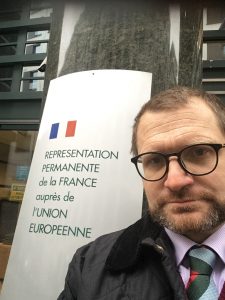
Prof. Julian McDougll, Head of CEMP was invited to Brussels to give a talk in the Network of Experts on the Social Dimension of Education and Training (NESET II) and the European Expert Network on Economics of Education (EENEE) on 22 November 2018. This is the 3rd annual conference organized by the European Commission, which is a major annual event aiming to encourage broader dialogue between policy makers at the EU and national levels and researchers, offering a fertile ground for information exchange.

The 2018 Conference focused on the topic of common European values, active citizenship and key competences. In particular, there is a need to further strengthen the promotion of common European values through education. This conference was oriented towards solutions and practices that demonstrated value and worked well for different levels of education.

As an established and pioneer researcher and educationist in media literacy, Prof. Julian McDougall and CEMP doctoral graduate Marketa Zezulkova were commissioned by the European Commission to produce a systematic review “Teaching media literacy in Europe: evidence of effective school practices in primary and secondary education”. This report detailed the latest research in the area of media literacy and media education and provided policty recommendations to the European Commission from four aspects:

  1. Main competences to support media literacy in education: which should cover the competences of Access, Analysis and evaluation, Creation, Reflection and Action/agency. These competences work together to support students’ active participation in learning through the processes of consuming and creating media messages.
  2. Media literacy education practices to address disinformation: The current media landscape has been marked by the spread of disinformation and ‘fake news’. Media literacy initiatives, including educational programmes involving journalists, have been shown to lessen the vulnerability of children to disinformation.
  3. Effective teaching and learning media literacy practices at school level: which can involve various classroom-based methods (e.g. active inquiry, discussion-based learning, collaborative learning and educational leadership, game-based learning, etc.), most of which are based on active learning. Medium or genre specific pedagogical practices are commonly used in teaching and learning with media literacy (e.g. combined advertising and science literacies).
  4. Key conditions for successful implementation of media literacy education practices in school: which is facilitated by approaches to pedagogy that combine and/or cross boundaries between spaces and roles — the classroom and the extended ‘third space’, teachers and students working in partnership to co-create learning, and professional development in hybrid combinations of physical and virtual networks.

The report ends with policy pointers for the European Commission. Based on the consolidated evidence on the ways in which media literacy can be taught, Professor Julian McDougall made suggestions to the European Commission on the best approaches to providing holisticsupport and resources to media education in the Europe.

This report has been accepted by EU and will be published online shortly:

McDougall, J., Zezulková, M., van Driel, B., Sternadel, D. (2018), ‘Teaching media literacy in Europe: evidence of effective school practices in primary and secondary education’, NESET II report. Luxembourg: Publications Office of the European Union.

The report also cites a mumber of other CEMP projects and publications on media literacy education, including research for the United Kingdom Literacy Association, Media Education Association, Samsumg and the US Embassy  – for more information on these see https://www.cemp.ac.uk/projects/projects.php

*More information ABOUT NESET II
NESET II is an advisory network of experts working on the social dimension of education and training. The European Commission’s Directorate-General for Education and Culture initiated the establishment of the network as the successor to NESSE (2007-2010) and NESET (2011-2014). The Public Policy and Management Institute (PPMI) is responsible for the administration of the NESET II network.

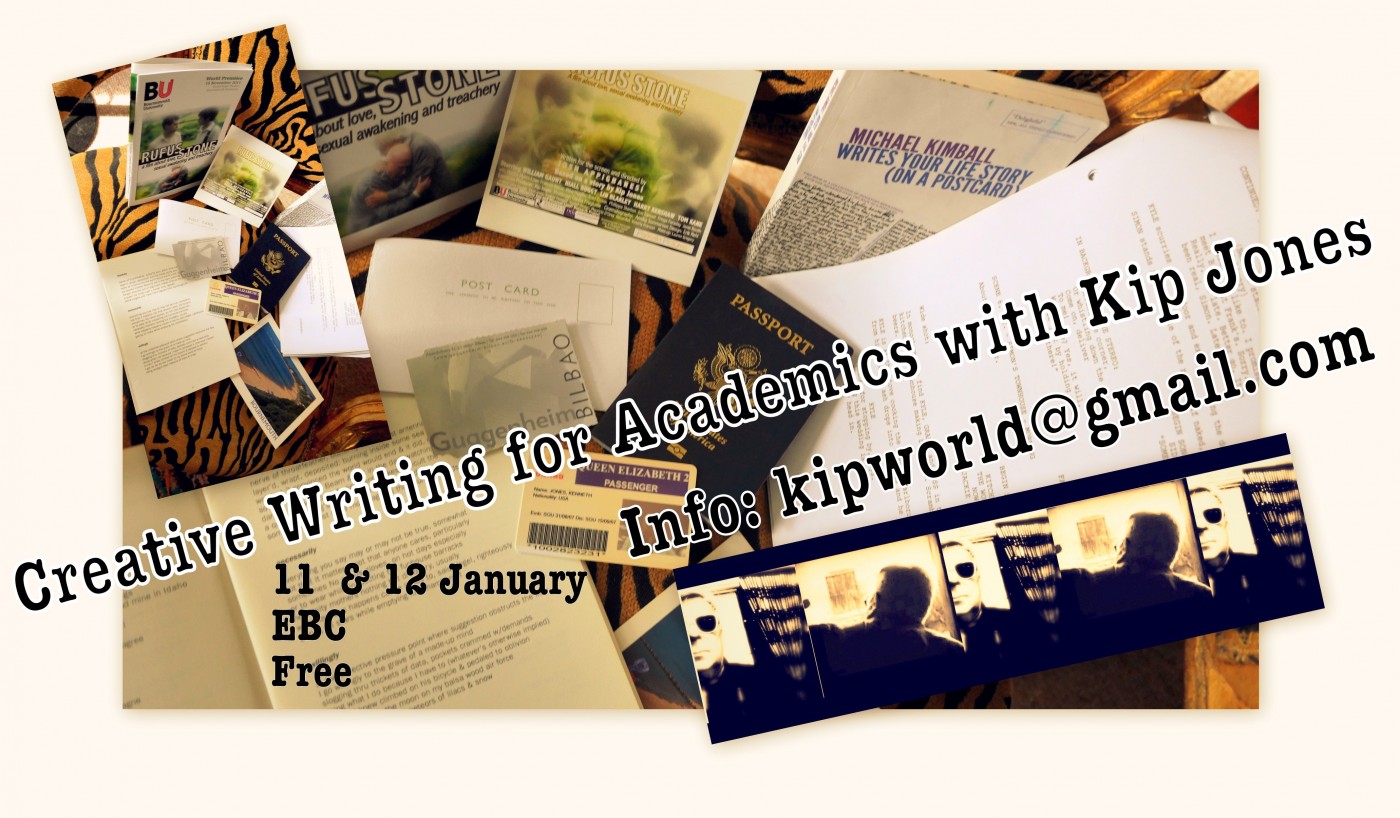
CQR Seminar: Creative Writing Taster Session

Wednesday, 5 Dec 1pm for an hour in RLH 409, experiment with the delights of

Creative Writing for Academics, a taster session, with Kip Jones.

“We passionately believe that as narrative researchers & storytellers we must promote narrative in the content & styles of our publications.

Publication or presentation that is counter to this does a disservice to our commitments as narrativists”.

…and if  you enjoy the session and want more, there will be a two-day workshop 11 & 12 January.

You will be able to sign up for the workshop at the  CQR seminar taster session!

The two-day workshop will be FREE! But you must commit to participating for the two full days. Places are limited and will fill up quickly.

Come along to the Taster Session on Wed 5 Dec at 1 pm, RLH 409, and have a go! It’s fun and you won’t be disappointed!


Shaping Media Policy and Regulation

Following a business engagement event on Digital Strategy and Business Transformation and subsequent publications in academic and practitioner journals, Dr Oliver’s work on the strategic digital transformations of the UKs Creative Industries and media firms has been credited with shaping Ofcom’s media policy and regulation. Ofcom recently commented that his research into the how Sky Plc had managed the digital transition over the past twenty years provided them with a unique insight into Sky’s strategic approach, and it enabled them to “think differently about their ‘growth strategy’ and diversification into new markets such as broadband, fixed and mobile telephony”. Ofcom concluded that Sky had in fact contributed to increased levels of competition in those sectors.

Ofcom also confirmed that the research had helped them to consider their remit as a communications regulator and the potential areas where they could use their expertise in the future, most notably in terms of the potential future regulation of the internet.

Dr Oliver’s research – ‘Strategic Transformations in the Media’ can be found on BRIAN.

#TalkBU next Thursday (6 December) – Are you a Phoebe or a Monica? Improving your ability to communicate

#TalkBU is a monthly lunchtime seminar on Talbot Campus, open to all students and staff at Bournemouth University and free to attend. Come along to learn, discuss and engage in a 20-30 minute presentation by an academic or guest speaker talking about their research and findings, with a Q&A to finish. 

Being able to understand the characteristics and behaviours of different types of personality can help you understand the people you are interacting with, as well as yourself. Join us in the exploration of personality profiles, using Jelly Babies to help change the way you view people.

In this talk, Amanda Wilding, will be discussing her research, which centres around understanding different personalities and the benefit this can have to our social interactions

When: 6th December 2018

Where: FG04, Ground Floor, Fusion Building

Register here to attend

Research photography competition 2019

Can you tell a story of your research through photography?

That’s the challenge we set academics and research students at Bournemouth University.  Photography is a great way to capture and share a different side of your research with other staff, students and members of the public.  The last few years have seen our staff and students submitting a wide range of images summing up their research (last year’s entries can be seen below).

Want to enter 2019’s competition?

Whether you’re in the early stages of your research or it has come to the end, we are inviting all academics and student researchers from across the university to showcase your research through an image relating to this year’s competition theme – Place.  This could include:

  • An image relating to the place your research was carried out,
  • Places that might be impacted by or benefit from your research,
  • The place that inspired your research
  • Your own interpretation of the theme

Whatever your idea is, we want you to get involved and get creative!

Here’s what you have to do:

Step 1: Take your photo.

Each image will need to be 300pi (pixels per inch) with physical dimensions equivalent to an A3 size piece of paper (297 x 420 mm or 11.7 x 16.5 in).  Images smaller than this tend not to have a high print quality.

Step 2: Submit the photo!

You may enter only one photo per person. Once you have the perfect image, all you have to do is submit it by emailing the Research account (research@bournemouth.ac.uk) before the deadline, along with a 100 – 200 word description of your research behind the image.

The submission deadline is 9 January 2019 at 5pm. Late entries will not be accepted.

Staff, students and the general public will then be able to vote for their favourite image. The competition winners will be presented with a prize by Professor John Fletcher in the Atrium Art Gallery, in March 2019. All photographs will be presented in the Atrium Art Gallery for two weeks in March so you’ll get a chance to see all the entries.

Please read through the Terms & Conditions before entering.

This activity is recognised under the Global Talent Programme and allows participating students to gain credit towards their Global Talent Award.

BU Artificial Intelligence for Tourism and Hospitality – IFITTtalk – Wednesday 28 November 2018

BU Artificial Intelligence for Tourism and Hospitality – IFITTtalk
Wednesday 28 November 2018 – 09:00-17:00 FG06, Fusion, Bournemouth University, BH12 5BB, UK
Chairs: Professor Dimitrios Buhalis and Dr Nigel Williams eTourismLab, Department of Tourism and Hospitality, Bournemouth University –
Supported by IFITT talks #BUeTourism #IFITT https://tinyurl.com/BU-IFITT-AI


The (re) emergence of Artificial Intelligence (AI) as a service automation approach leveraging low cost computing and large datasets is impacting consumer experiences and is set to revolutionize tourism experiences. The ubiquitous and prevailing use of mobile devices for communication assures that stakeholders of such ‘consumer experiences’ are required to provide rapid responses to contextual queries made at any time, including within an experience encounter or activity at a destination level. AI tools that can make sense of real-time questions posed by consumers in context can provide significant value and increase engagement as well as reducing costs to destination organizations. The use of AI by tourism organizations is still low and this workshop will explore the opportunities and challenges of engaging AI as a customer co-creation toolset for industry and economic benefits. It will conclude with a scenario development exercise to identify possible futures for AI and Tourism along with a roadmap for the next 3 years of AI/Tourism development.

Evening of 27th Social get together at 19:30 at
Revolution Bournemouth Revolution Bournemouth, 165-167 Old Christchurch Rd, Bournemouth BH1 1JU

09:00 –09:30 Arrival and networking FG06

09:30-11:00 Artificial Intelligence for Tourism and Hospitality – theoretical perspectives

© Professor Dimitrios Buhalis and Dr Nigel Williams, Bournemouth University: Artificial Intelligence for Tourism and Hospitality: From individuals to clusters
© Dr Iis Tussyadiah University of Surrey, Robotics and Artificial Intelligence
© Dr Luiz Mendes Filho, Universidade Federal do Rio Grande do Norte, Brazil, Smart Tourism developments
© Professor Vasilis Katos Bournemouth University: Tourism focused Verticals: smart cities and data-driven circular economy
© Dr Chulmo Koo, Kyung Hee University, Korea, Smart Tourism and Artificial Intelligence

11:00-11:30 Coffee and networking

11:30-13:00 Artificial Intelligence for Tourism and Hospitality – current and future best practice

© Anthony Story SiliconSouth
© Gergana Halatcheva, GHS Global Hospitality
© Lee Mallon, Rarely Impossible
© Rowena (Copestake) Revill Dorset Creative
© Nikos Maniatis The Cato Bot
© Adam Greenwood greenwoodcampbell.com
© Jack Flannigan This is Crowd
Tom Keeping Keeping Studio

13:00 -14:00 Networking Lunch

14:00-15:30 Workshops Designing the future of Artificial Intelligence in Tourism

15:30-16:00 Break and Networking

16:00-17:00 Conclusions Research and Innovation agendas for the future
Chairs: Professor Dimitrios Buhalis and Dr Nigel Williams
AI Fusion: Future research – Projects – Publications – Best Practice Excellence – Education Innovations

Training opportunity – completing and submitting your IRAS application

Are you currently in the process of designing, setting up or planning your research study, and would like to extend your project into the NHS?

Yes? Then you may want to take advantage of this training opportunity.

Oliver Hopper (Research & Development Coordinator, Royal Bournemouth and Christchurch Hospital) and Suzy Wignall (Clinical Governance Advisor, R&KEO)  will be running a training session on how to use, and complete your own application within the IRAS system.

IRAS (Integrated Research Application System) is the system used to gain approvals from the NHS Research Ethics Committee and Health Research Authority, before rolling out your study to NHS Trusts. To support this, the session will include the background to research ethics and the approvals required for NHS research.

The session will also be interactive, and so as participants, you will have the opportunity to go through the form itself and complete the sections, with guidance on what the reviewers are expecting to see in your answers, and tips on how to best use the system.

The training will take place in Studland House – Lansdowne Campus, room 102 on Wednesday 5th December, at 09:30am – 12:30pm.

Get in touch with Research Ethics if you would like to register your interest and book a place.

HE Policy update for the w/e 23rd November 2018

Considering we were late and included much of Monday’s news in the last update, this is a bumper update for you.  Lots of data and lots of speculation about fees etc.  We have managed to avoid the B word this week – as you will have had enough of it from all the other news sources.

Internships

Sophie Bradfield, the Policy & Campaigns Coordinator for SUBU, returns with another guest piece for us this week

Sutton Trust has published research today on graduate internships detailing that “39% of graduates in their twenties have done an internship, including almost half (46%) of young graduates under 24.” These statistics have a direct correspondence with research published in a Lancaster University HECSU-funded Graduate Resilience Project in 2016, looking at how students transition after graduating, where “45% of respondents identified a concern that they lacked relevant experience.” Pairing this with the competition for graduate jobs, it’s of no surprise that so many students seek to undertake internships. At BU gaining placements and real-world experience is a unique selling point and as BU proudly states on the placement information page “90% of our graduates have relevant work experience and this can give you a real head start in the competitive jobs market.” The Students’ Union at Bournemouth University (SUBU) is in absolute agreement that offering opportunities to gain experience can really help students to stand out from the crowd; learn transferable skills for employment; and increase employability and so we have a lot of extra-curricular opportunities on offer for students and collaborate with BU on a number of joint projects including recruiting paid students to be on programme review panels.

(more…)

PGR Live Exhibition (Wednesday 5 December)– All Welcome

PGR Live Exhibition

Wednesday 5 December | 13:00 – 16:00 | K103 Kimmeridge House | Talbot Campus

Come along to this free event and discover this unique display of research undertaken by postgraduate researchers at BU.

Interact with live displays, listen to recordings and explore a wealth of research posters and photographs being presented.


PGR and Supervisors Festive Social

Wednesday 5 December | 16:00 – 18:00 | Kimmeridge House Foyer | Talbot Campus

Following the Live Exhibition we will be hosting a free catered Festive Social for PGRs and Supervisors – booking required.


The Doctoral College look forward to seeing you there.

If you have any questions please contact Natalie at pgconference@bournemouth.ac.uk


BU PhD student PROSPERO publication

Congratulations to BU PhD student Dimitrios Vlachos who had his PROSPERO protocol published [1].   Dimitrios working on a project promoting the Mediterranean-style diet in childbearing age, he is supervised across faculties by Dr. Fotini Tsofliou and Prof. Katherine Appleton.

Well done!

Prof. Edwin van Teijlingen

Centre for Midwifery, Maternal & Perinatal Health (CMMPH)


Reference:

  1. Tsofliou, F., Appleton, K., Vlachos, D. (2018) Barriers and facilitators to following a Mediterranean style diet in adults: a systematic review of observational and qualitative studies. PROSPERO 2018 CRD42018116515


Future Leaders Fellowships Guidance Session – Bookings are open!

This cross-UK Research and Innovation (UKRI) Future Leaders Fellowships (FLF) guidance session, will support and inform early career researchers and innovators who intend to submit an application to the above call. Additionally, mentors of early career researchers are also welcomed and encouraged to attend.

This event will begin with a discussion about the guidance, insights into the writing fellowship grants and talks from successful fellowship grant holders.
This will be followed with 1-2-1 support and a grant writing workshop for those wishing to submit for the next round.

The intended learning outcomes of this session are:

  • To understand what is expected of a FLF proposal.
  • By the end of the session, you will have a good grasp of what is generally required for applications to the scheme and hopefully inspire you to submit

For the first session on Wednesday 16th January, there will also be follow-up workshop will focus on developing your proposal on the 16th February 2019.

This workshop directly supports and is targeted towards those academics proactively working within the context of BU2025 Actions: 28, 29 and 30.

To attend, please see further information available on the BU staff pages and review the calendar of events for further opportunities.