
|
|||||
|
Latest research and knowledge exchange news at Bournemouth University
|
|||||
|
This week’s update looks at some ministerial statements, what the OfS has learned from its funded project son mental health and wellbeing, employability and what works, a look at foundation years, who does them, and the outcomes, more on international students and the review of the post-graduate work visa, and the OfS are taking a fresh look at grant funding for universities.
Research Professional held an event recently and had some interesting speakers. They report on a speech by Jessica Corner, the executive chair of Research England:
At the same event the Science Minister, Andrew Griffith, spoke and amongst other things he addressed the funding point and also suggested that the new UKRI head, when Ottoline Leyser stands down in June 2025, may be from industry rather than the sector
Wonkhe has a blog on work-related experiences that is worth a read with some ideas that can sit alongside placements as a way of building work-relevant experience into courses, especially given the practical difficulties with placements that arise for some students and some sectors. Ideas include:
And while we are on the theme of placements, the OIA has published some notes on cases they have heard. There are a lot of good points in here, some are summarised here.
And much more…
The OfS funded a set of projects and they have now been evaluated. There’s a report and all sorts of analysis, but the one page summary sets out a set of effective practice for addressing barriers to support for a set of target groups and also some conclusions:
The government and the OfS have some concerns about foundation years. One of the recently published quality assessments by the OfS referred to a provider not ensuring insufficient academic support for foundation year students once they progressed onto the main programme – support should have continued for these students at higher levels. This article from Wonkhe in October noted that:
A foundation year is not the same as a foundation degree. A foundation year is integrated with an undergraduate course, whereas a foundation degree is a standalone qualification. We all get a bit confused about how the regulatory conditions apply: continuation is defined as year 1 to year 2: in this case that means foundation year to year 1 undergraduate. Completion means completion of the undergraduate programme (for foundation year students that means 4 years, without a placement year, 5 with a placement).
You will recall that the government is worried about the cost and value add of foundation years. The House of Commons library research briefing on student number controls from August 2023 describes the upcoming cap on fees for some foundation years from the 2025/26 academic year: we are awaiting a consultation on the detail of this.
After the fuss earlier this year about international students allegedly accessing foundation year courses with lower grades than UK students and in the context of the government priorities on reducing migration, the Home Secretary has asked the Migration Advisory Committee to review the post-study work visa.
Although the report is not due until May, and recommendations may not be implemented for the start of the 24/25 academic year, this is likely to have a further chilling effect on international recruitment in September. It is possible though that the government want steps to be taken before the election, the timetable means there will be no time for a call for evidence.
In this context, the QAA has also announced a review of pre-entry courses for international students.
And if you are not sure what these pathways for international students are or how much they are used, the Nous Group have a report out.
The OfS has announced a consultation on how they fund the sector – not tuition fee funding but grant funding. It closes on 23rd June and we will be considering a BU response.
Our current model of recurrent funding for higher education providers is based on assumptions that some activities cost more to deliver than others. This could relate to particular subjects; to supporting particular groups of students to achieve success; or to reflect the operating models of some types of providers. The two primary types of funding the OfS distributes are:
We want to hear views on the effectiveness of the two primary types of funding the OfS distributes: course-based funding and student-based funding.
| First three questions by way of illustration
Question 1: What are your views on OfS course-based funding? We are interested in any views, and below are some prompts for respondents to consider: • Should the distribution of funding continue to primarily reflect the courses and subjects students are studying? Should we also consider additional factors and/or approaches for course-based funding? • What should we seek to achieve with course-based funding? • What activity is currently supported in providers by this funding? • Are there any areas of important provision that are currently not supported by our funding allocations? • How should our approach adapt in the future? • What assessment is currently made by providers of the impact of this funding
Question 2: What are your views on OfS student-based funding? We are interested in any views, and below are some prompts for respondents to consider: • Should the distribution of funding continue to reflect the characteristics of the student population at individual providers? Should we also consider alternative factors and/or characteristics and/or approaches for student-based funding? • What should we seek to achieve with student-based funding? • What activity is currently supported in providers by this funding? • How best can the OfS use this funding to support access, success and progress for students? • How should it be targeted? • What assessment is currently made by providers of the impact of this funding
Question 3: What are your views on OfS capital funding? We are interested in any views, and below are some prompts for respondents to consider: • What assessment is currently made by providers of the impact of this funding? • How should we strike an appropriate balance between formula funding and competitive bidding to allocate capital funding? |
Is this good, normal practice to review this as it was last reviewed in 2012, or deeply worrying? The suggestion that they might use quality data to determine funding is interesting. And there is no new money, it is just the way it is distributed that it is up for discussion.
Wonkhe have a graph of what everyone gets (BU gets nearly £7m). Nottingham University is the top with £49million. There are all sorts of pots in here though, including capital, special projects, student premium, high cost courses, etc. Nottingham’s was nearly all high cost subject funding, as was ours, although we had a relatively large chunk of student premium money too.
You’ll recall that capital allocations recently switched to competitive bidding from an allocation mechanism.
The PM is set to announce new funding for apprenticeships.
The press release gives a bit more detail.
You will recall a deep dive into this in a recent policy update using the DFE’s concept paper. The house of commons library has now issued a briefing paper. It’s a good read, especially if you click through to the full paper, going back over all the history and context. The LLE stuff starts on page 20.
There is a lot more consultation to come
The OfS consultation on free speech complaints panels has now closed and we look forward to the outcomes.
As previously announced, the OfS has confirmed that there will be another consultation before the end of March, on the guidance for the sector and changes to the regulatory guidance.
This is a complex area and an 8 week consultation period is fairly tight.
At BU we promote and celebrate the work done to engage public audiences with our research. The Public Engagement with Research team in Research Development and Support can help promote your event to relevant audiences through our monthly newsletters and via our social media channels.
To be considered for inclusion, your event or activity must be;
Event descriptions may be edited for consistency in style with other content.
Share your upcoming public event or activity

If you have any questions, please contact the team publicengagement@bournemouth.ac.uk
Dr Ellie Jennings and Dr Alice Hunter write for The Conversation about the problems that can occur when young people are treated as athletes rather than children…

Ellie Gennings, Bournemouth University and Alice Hunter, Bournemouth University
A recent report commissioned by Swim England, the national governing body for swimming in England, has found evidence of a “culture of fear” in swimming clubs. The report finds that children involved in competitive swimming can be treated like professional athletes, and the importance of sporting performance held above all else.
Sport can be a positive influence on young people’s wellbeing. Children are encouraged to participate in sport, and the aspiration to become an elite athlete is widely seen as an admirable goal.
Many children will find competitive sport enjoyable and rewarding. But problems can occur when the athletic identity of a young person overshadows their identity as a child. There is a risk that clubs, coaches and parents may treat young people as athletes rather than as children. And this can take place at all levels of sport, from children taking part in sports like swimming at local clubs to those who compete at the highest level.
One participant in the Swim England report said that a focus on swimming performance led to their social and academic life suffering, and that they would frequently push themselves in training to the point of vomiting or collapse to please their coach. “The way in which the sport is delivered to children and hiding under the label of ‘high performance athletes’ is driving people away from the sport they once loved,” they said.
“We’re not here to have fun, we’re here to win!” one parent told a researcher for the Swim England report.
A focus on sporting success above all can compromise children’s wellbeing and safety. Young people may be exposed to environments that are highly pressurised, psychologically demanding and often tolerant of abuse.
Certain practices that take place in youth sports, such as coaches and parents screaming on the sidelines, that would be considered unacceptable in other settings. A teacher would be unable to behave like this towards their charges in a school setting, for instance.
In football academies, child athletes are potential future stars – and money spinners. A business mindset shifts the focus from nurturing children to moulding them into “assets” for potential profit.
Treating children like products rather than unique individuals with their own childhood experiences overshadows children’s vital developmental needs.
Liverpool manager Jurgen Klopp recently spoke about the need to protect young football players, including from media attention, as academy youth players made their debut in senior-level games. “But from tomorrow, leave the boys in the corner, please. And don’t ask: ‘Where are they now? Where are they now? Where are they now?’” he told reporters after Liverpool’s FA cup win over Southampton.
Darts player Luke Littler competed in the World Darts Championships and other major darts tournaments at the age of 16. Littler has received intense levels of public scrutiny that extended beyond the reaches of sport: his private life, including his relationship status, has made headlines.
Attention on the personal life of a minor rushes them towards adulthood but also shows a lack of respect for the privacy of young athletes: a significant safeguarding concern.
Children’s names have even been included in reports about doping. Kamila Valieva, a Russian figure skater, experienced the unwelcome publicity of having her positive test revealed at the age of just 15, causing controversy at the 2022 Beijing Winter Olympics.
This stands in stark contrast to practices elsewhere, such as in courts of law. Article 16 of the UN Convention on the Rights of the Child outlines children’s right to privacy.
Children have the right to be protected from all forms of harm in sport. This extends to their right to participate in sports within a safe and enjoyable environment. There are evidently distinct challenges that arise when young people compete in elite and often adult-dominated sporting spaces.
The abuse of children in sports is a concern at both community and elite levels. It is essential to address these concerns to ensure that the pursuit of athletic excellence does not come at the cost of the fundamental rights and safety of young people.
When children are treated solely as athletes, the excitement around their potential means that the fact that they are still minors may be forgotten. They must be recognised as children first, especially when their performance in elite sports takes place prior to reaching adulthood.
It is the moral obligation of all adults involved in sport to develop an approach that keeps children in sport safe, even when they are classed as elite athletes.
Ellie Gennings, Senior Lecturer in Sport Coaching, Bournemouth University and Alice Hunter, Senior Lecturer in Sports Coaching, Bournemouth University
This article is republished from The Conversation under a Creative Commons license. Read the original article.
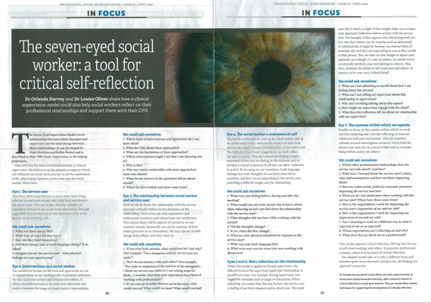 Congratulations to Drs. Louise Oliver and Orlanda Harvey who had their latest article published in the British Association of Social Workers magazine. The article is titled: The seven-eyed social worker: a tool for critical self-reflection”. This article is about how a supervision model, developed by Hawkins and Shohet, which focuses upon the relationship between the service user/client and the social worker. The two BU academics noted that “This model supports critical reflection, delving into the use of self when working with others. It promotes professional curiosity, which is at the heart of critical reflection”. This gives an alternative lens and approach to social work practice.
The 22nd annual Festival of Social Science takes place this year 19th October – 9th November, with the theme of ‘Our Digital Lives’. This national festival offers the chance to create an inspiring event which enables you to connect your research in a creative and engaging way with a broad public audience.
For the second year, BU is partnering with the University of Southampton (UoS) and we are particularly keen to hear from researchers who have already established collaborations with UoS colleagues and may wish to run a joint event. This collaboration enables us to run an extended programme of events, broadening our impact reach and expanding our networks across Dorset and Hampshire.
Funding of up to £1,000 per event is available, and BU’s Public Engagement with Research (PER) team offers continuing advice and support on all areas of event development, planning, delivery and evaluation. The deadline for applications is Thursday 16th May 2024.
ESRC’s Festival Event Leader pack
Find out how to apply at this online information session and hear from BU and UoS about previous festival events. The session will be delivered by BU’s PER team and the Impact Funding Team from UoS.
For more information, please email publicengagement@bournemouth.ac.uk. You can also visit BU’s FoSS 2023 webpage for inspiration and the ESRC’s website.

We want to provide small amounts of funding (up to £500) to help researchers develop and incorporate meaningful, two-way engagement with beneficiaries and research users. The aim is to help support a more engaged research culture across BU and accelerate the impact arising from research.
The scheme is open to researchers at all career stages, whether or not they have previous public engagement experience.
We would like to fund engagement activity that addresses any/all of the following:
The reviewing panel assesses applications on a rolling basis and aims to respond within one week. The latest we can accept applications for this academic year is 28th June and the application form will no longer be accessible after that date.
The relevant staff in the Research Excellence Team will provide support to deliver activities and will manage funds centrally. All activity and spend will need to be completed before 31 July 2024.
(Please note that this funding will not be awarded for attending conferences or networking events where the engagement with stakeholders is speculative.)
For all queries, please contact publicengagement@bournemouth.ac.uk.
This event provides an overview of all the practical information staff need to begin developing their research plans at BU, using both internal and external networks; to develop and disseminate research outcomes; and maximising the available funding opportunities.
Objectives
Indicative content
The induction day will be interactive and give you the opportunity to meet your faculty-facing RDS support, as well as those responsible for strategy, outputs, ethics, impact, public engagement and knowledge exchange. The videos will provide:
Book your place here under ‘RDS Academic & Researcher Induction 27/03/2024’ in the drop-down menu.
On the 6th March 2024, Bournemouth University hosted a Violence Against Women and Girls Summit.
Background: Drs Louise Oliver and Orlanda Harvey (Senior Lecturers in Social Work, Bournemouth University) in partnership with Soroptimist International Bournemouth and the BCP Community Safety Partnership ran a conference last year on Violence Against Women and Girls (VAWG). A reoccurring conversation at the conference was: what next? How do we stop VAWG happening again?
A full report of the outcomes can be found in the report by Dr Oliver and Dr Harvey [https://sigbi.org/bournemouth/joint-report-on-vawg-conference/]
The need to challenge culture led to the team getting together with the addition of Dorset Womens CIC and the charity Acts Fast, to organise the Summit with the intention of bringing together a range of key decision makers form across all those organisations that are on the frontline, working to tackle Violence Against Women and Girls.
The Summit:
The keynote speakers were Superintendent Emma Sweetzer and Dr Kari Davies. Emma emphasized that her role “involves challenging stereotypes and changing a culture from within the force out to the wider public” and her speech was a call to action and Kari presented her research in this area focusing on the barriers and challenges to police and Crown Prosecution Services joint working on rape and serious sexual offence cases.
The summit delegates were regional professionals who work in different areas, under the umbrella of Violence Against Women and Girls, including police, social services, policy makers and managers of charities and researchers. The summit conversations focused on finding solutions to challenging the culture surrounding violence and abuse, and through bringing people together, to think together, and start to develop new suggestions and challenge the issue head on. How to change culture, with a focus on the need to start early and focus on education was at the heart of the discussions.
For further information about the summit, please see the BBC news article https://www.bbc.co.uk/news/uk-england-oxfordshire-68484626
Following this summit, Dr Harvey and Dr Oliver were also interviewed on BBC Dorset and BBC Solent radio, to further talk about VAWG and why this summit was so important. You can listen to the interviews on https://www.bbc.co.uk/sounds/play/p0hct37f?partner=uk.co.bbc&origin=share-mobile
And
https://www.bbc.co.uk/sounds/play/p0hct465?partner=uk.co.bbc&origin=share-mobile
Our next steps will be published in our next report which will be available on the Bournemouth Soroptimists website.
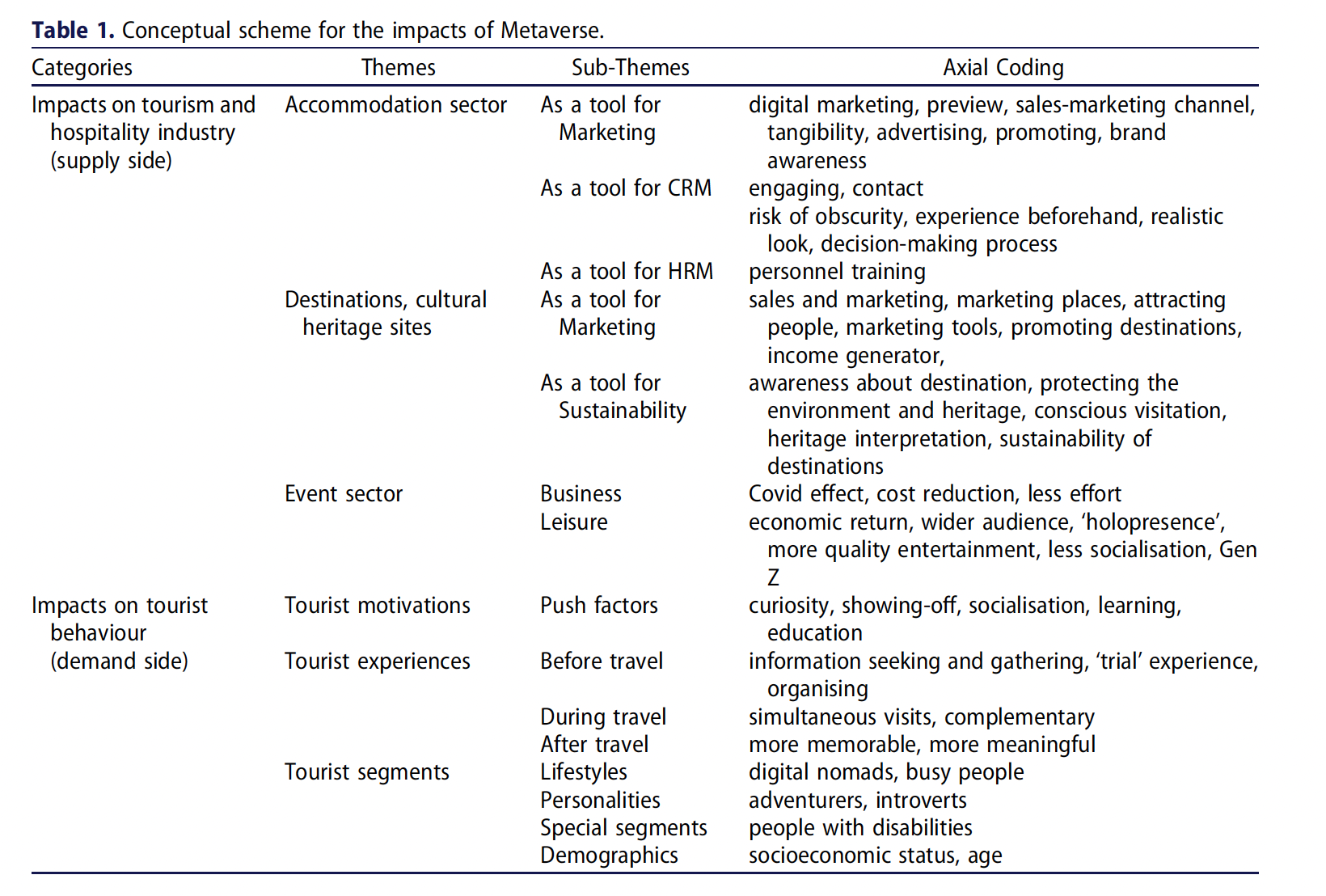
NEW PAPER PUBLISHED ON METAVERSE
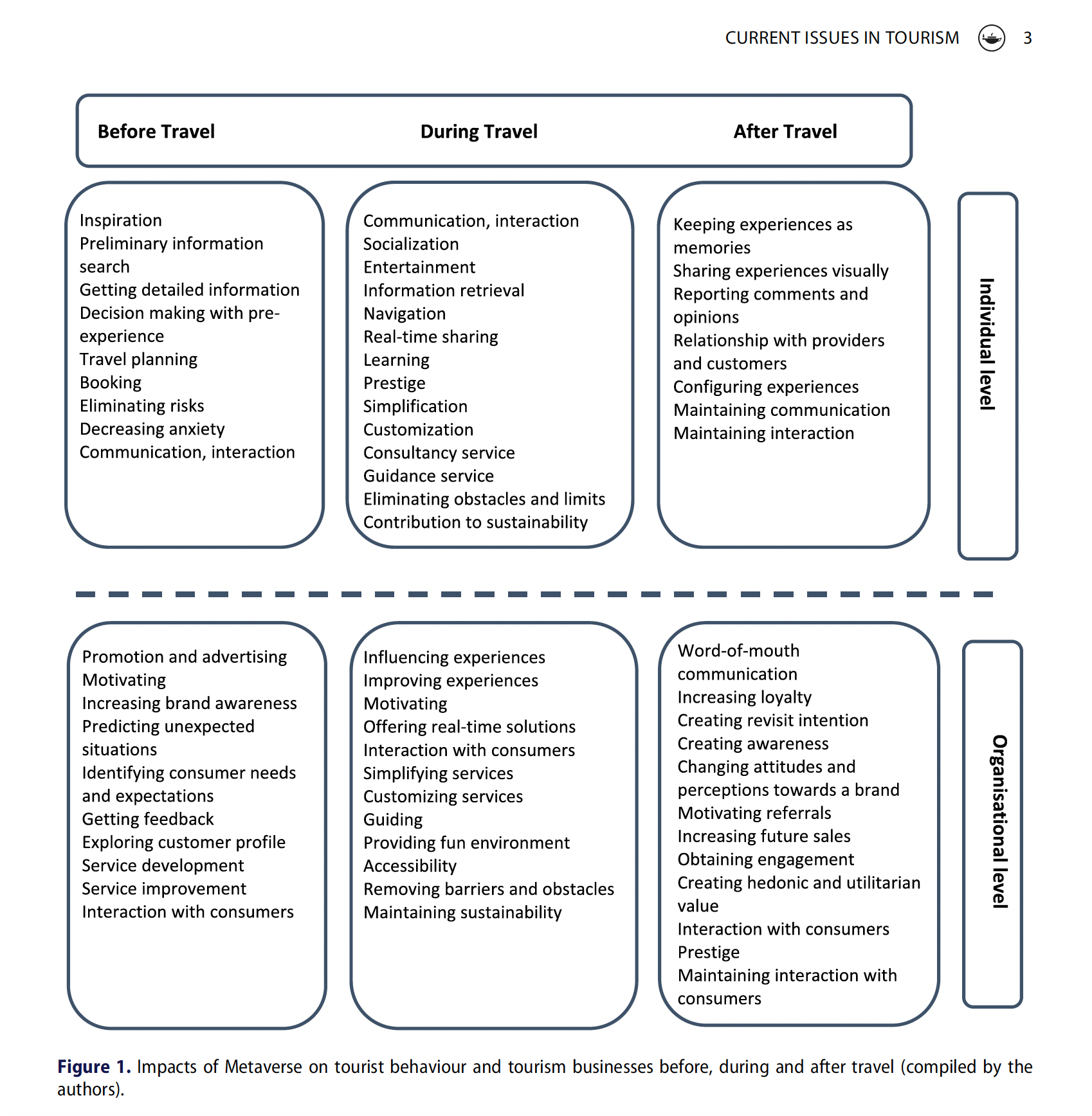
Kılıçarslan, Ö., Yozukmaz, N., Albayrak, T., Buhalis, D., 2024, The impacts of Metaverse on tourist behaviour and marketing implications,
Current Issues in Tourism, https://doi.org/10.1080/13683500.2024.2326989
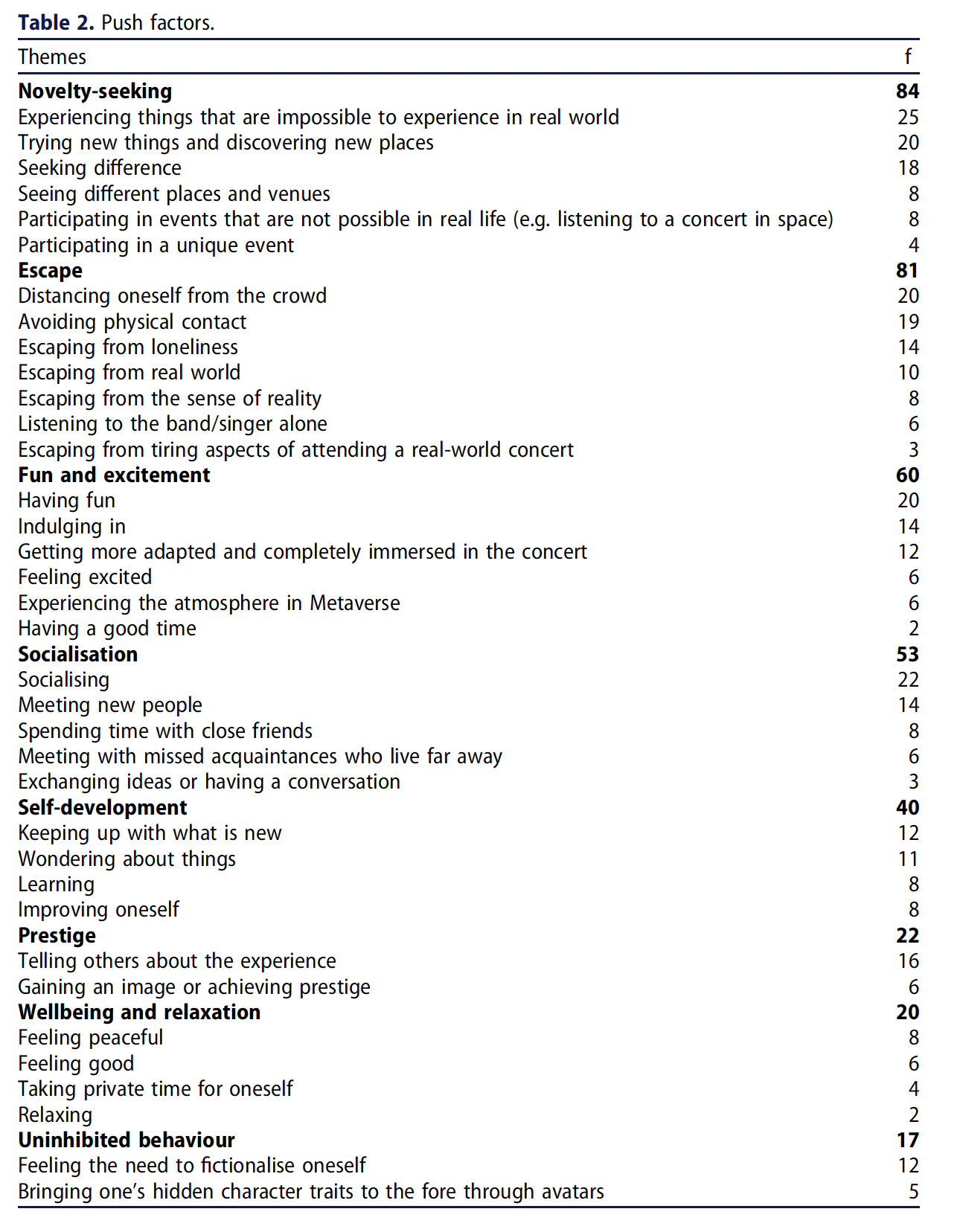
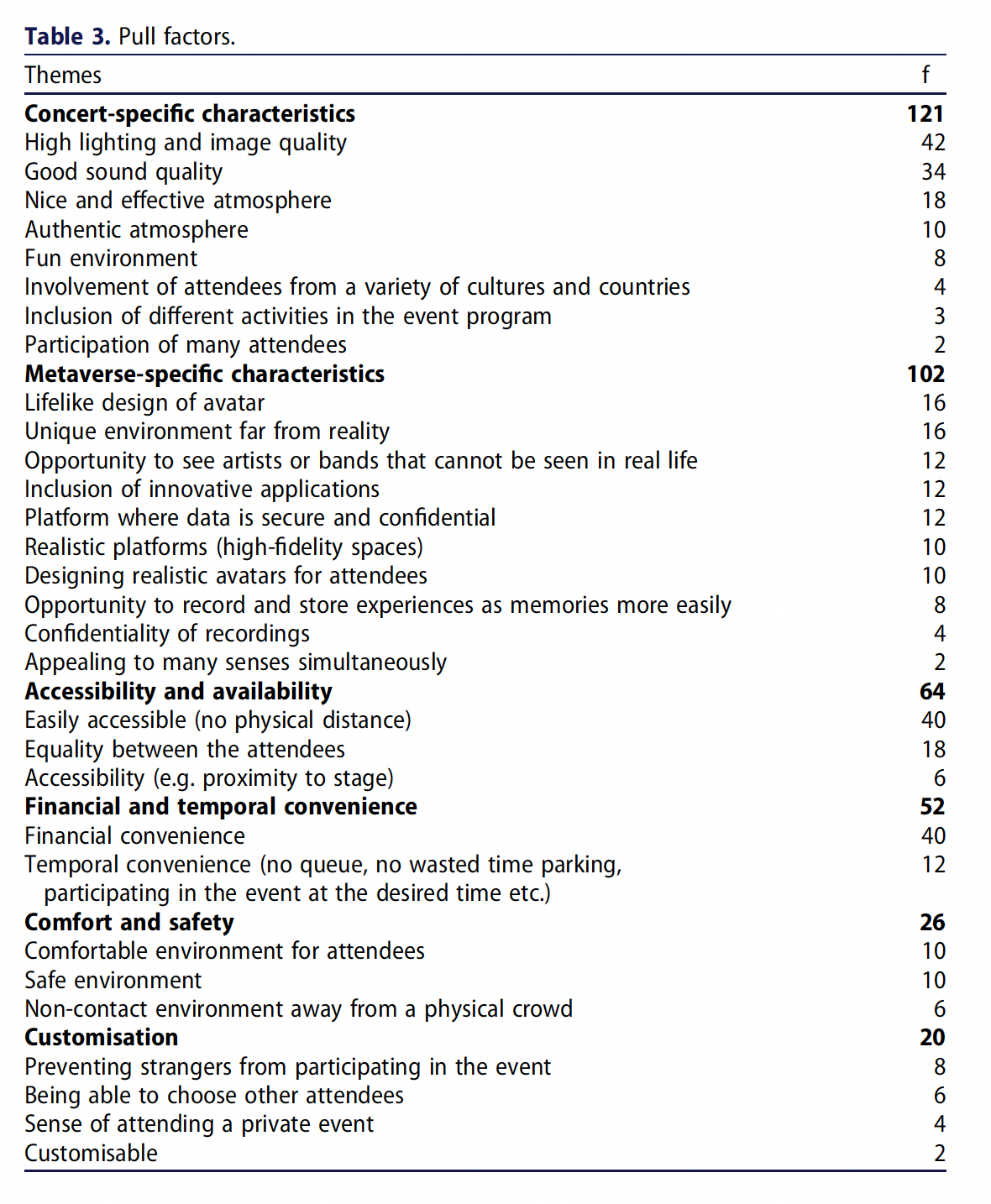
ABSTRACT Metaverse is expected to deeply affect the travel and tourism industry and requires a dearth of empirical research. In this investigation, two exploratory qualitative research studies were conducted to fill this gap. The first research explored the potential impacts of Metaverse on the travel and tourism industry by interviewing tourism academics. Findings revealed that Metaverse could be used for marketing, CRM, and HRM by hospitality organisations, while it would be useful for marketing and sustainability of destinations. It could also influence tourist behaviour before, during, and after travel experiences. One of the notable findings was related to the close relationship between Gen Z and virtual events. The second research identified the motivations of Gen Z individuals to attend a concert organised in Metaverse. Accordingly, novelty-seeking, escape, fun and excitement, and socialisation were the most significant push factors to use Metaverse. Metaverse-specific characteristics, accessibility, and availability were the important pull factors to attend a Metaverse concert.
Dr Conor O’Kane writes for The Conversation about the impact of Friedrich von Hayek’s book 80 years after its publication…
Conor O’Kane, Bournemouth University
“The most powerful critique of socialist planning and the socialist state”, is how Margaret Thatcher described Friedrich von Hayek’s book, The Road to Serfdom. Published in March 1944 during the Austrian economist’s tenure at the London School of Economics (LSE), the book has been enduringly popular among free-market liberals.
Among its admirers was Winston Churchill, who as prime minister released 1.6 tons of precious war-rationed British government paper to allow additional copies to be printed. More recently Elon Musk tweeted a photo of The Road to Serfdom with the caption “Great Book by Hayek” to his 174 million followers, no doubt bringing Hayek’s work to a new generation.
On the other hand, the Austrian is often seen by the left as an intellectual bogeyman, an enabler of unfettered greed, minimal social responsibility and soaring inequality.
So who was Hayek and why does The Road to Serfdom matter?
Born into an upper middle-class Vienna family in 1899, Hayek earned doctorates in law (1921) and political science (1923) at the city’s university. He first made a name for himself in economics in 1928, publishing a report for his research institute employer that predicted the Wall Street crash of 1929 (some critics argue that his achievement gets exaggerated).
Hayek spent 18 years at the LSE (1932-1950), before moving to the University of Chicago (1950-1962). There he worked alongside Milton Friedman, another seminal advocate for free-market principles.
These views were profoundly unfashionable at the time. The social democrat consensus had been shaped by the “robber barron” period of the late 19th and early 20th centuries. Key industries such as rail and oil had been dominated by cartels and monopolies, leading to massive wealth inequalities.
Then came the Wall Street crash and great depression, prompting a loss of confidence in economists and economic reasoning. Free-market capitalism took much of the blame. Socialism was offered as a realistic and even desirable alternative.
Prominent colleagues of Hayek’s at the LSE, including political scientist Harold Laski and sociologist Karl Mannheim, believed socialist planning was inevitable in the UK. The Labour party explicitly warned in a 1942 pamphlet against a “return to the unplanned competitive world of the inter-war years, in which a privileged few were maintained at the expense of the common good”.
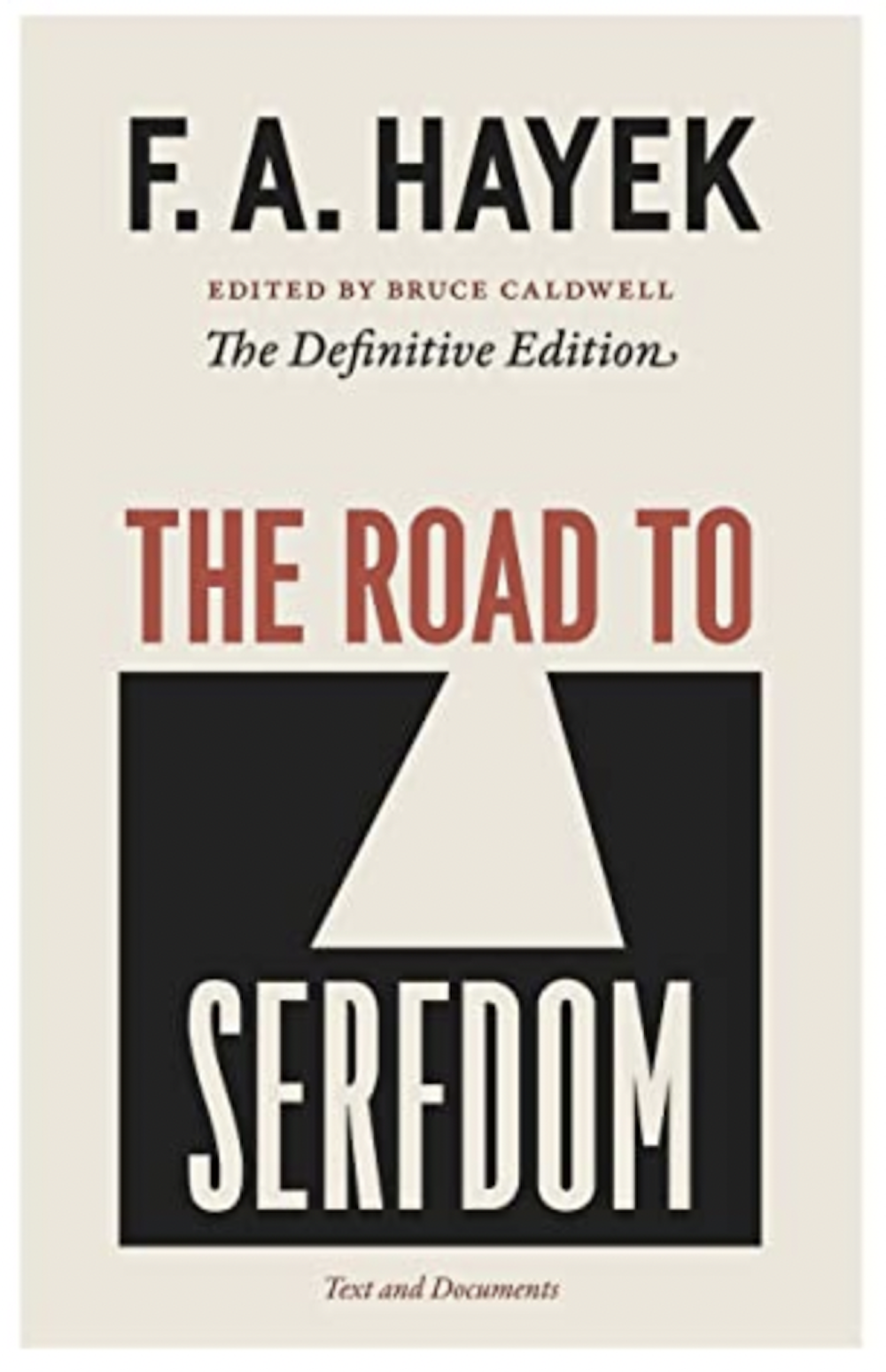
Hayek disagreed. He thought this wave of popular “collectivism” would lead to a repressive regime akin to Nazi Germany.
In The Road to Serfdom, he accepted the need to move beyond the laissez-faire approach of classical economics. But he argued in favour of “planning for competition” rather than the socialists’ “planning against competition” approach. He opposed the state being the sole provider of goods and services, but did think it had a role in facilitating a competitive environment.
In a central theme of the book, Hayek described the difficulties that democratic decision-making would face under central planning. He believed it would lead to policy gridlock and present opportunities for unscrupulous characters to become the key decision-makers.
Hayek’s goal was to show that the British intelligentsia was getting it wrong. Socialist planning, he believed, would see citizens returned to the types of limited freedoms endured by serfs under feudalism.
The Road was especially popular in the US. This was helped by Reader’s Digest publishing a shortened edition in 1945, introducing Hayek to a non-academic audience of some 9 million households. He was seized upon by conservatives opposing Franklin D Roosevelt’s interventionist New Deal, who feared for the loss of personal freedoms and a drift to totalitarianism.
However, Hayek was concerned his ideas had been oversimplified and misinterpreted. He warned of “the very dangerous tendency of using the term ‘socialism’ for almost any kind of state which you think is silly or you do not like”. By the mid-1950s he had distanced himself from American and European conservatives.
Ultimately, though, after the second world war most western countries adopted a more Keynesian approach. Named after Hayek’s greatest intellectual rival, John Maynard Keynes, this involved using government spending to influence things like employment and economic growth.
Hayek’s work, meanwhile, was mostly ignored until the 1970s, a period during which the UK became mired in stagflation and industrial action. He then became the inspiration for Margaret Thatcher’s policy mix of deregulation, privatisation, lower taxes and a bonfire on state controls of the economy. With the US also facing domestic economic challenges, the then US president, Ronald Reagan, followed suit.
If that was perhaps peak Hayek, he has been heavily criticised from some quarters in recent years. The American economist John Komlos, in his 2016 paper, Another Road to Serfdom, convincingly argues:
Hayek failed to see that any concentration of power is a threat to freedom. The free market that he advocated enabled the concentration of power in the hands of a powerful elite.
Such over-concentration had created the “too big to fail” environment in the financial sector in the run-up the global financial crisis of 2008, and many thought Hayekian deregulation was the culprit.
More recently, the tax-cutting economic policies during Liz Truss’s short stint as UK prime minister were incubated by think tanks who regard themselves as the keepers of the Hayekian flame. Similarly, Argentinian president Javier Milei’s libertarian vision of a minimalist state is said to be influenced by Hayek.
Equally, however, it is easy to fall into that trap of oversimplifying Hayek. It is worth noting, for instance, that in the Road, he also envisaged a substantial role for the state. He saw the state providing a basic minimum income for all. He also argued that “an extensive system of social services is fully compatible with the preservation of competition”.
Even Keynes congratulated him on his publication, saying, “morally and philosophically I find myself in agreement with virtually the whole of it”.
In short, while it’s probably fair to say that the world has had to suffer the flaws in Hayek’s ideas, it is important to separate him from his supporters. He was certainly no statist, but his vision for how best to run an economy was not as uncompromising as many would have us believe.
Conor O’Kane, Senior Lecturer in Economics, Bournemouth University
This article is republished from The Conversation under a Creative Commons license. Read the original article.

Good public engagement benefits both researchers and the public – but what is the best way to measure its success?
Workshop 1: Evaluation of Engagement, Monday 18 March, 1-4pm, F110, Talbot Campus
Workshop 2: Advanced Evaluation, Tuesday 19 March, 9am-12pm, S108, Lansdowne Campus
One of the most experienced public engagement trainers in the UK, Dr Jamie Gallagher, is coming to BU to deliver two training sessions on how to evaluate your public engagement activity.
These in-person workshops will highlight how to demonstrate success for funders, record impact, help you improve your processes and give you a better understanding of the people you are connecting with.
Workshop 1 guides you through the best evaluation processes, showing you when, why and how to use evaluation to provide clear, reliable data.
Workshop 2 builds on the learning, taking a more in-depth look at developing evaluation plans for even the most complex topics. You will explore data capture, analysis and reporting and also learn how to write evaluation reports for funders or the REF.
Book on Evaluation of Engagement here and Advanced Evaluation here, selecting the appropriate session from the drop down menu. NOTE: This is a two-day evaluation training workshop. Although you can choose to do either of the workshops, we highly recommend you do both – you need to sign up for them separately.
Tea, coffee and biscuits will be provided at both sessions.
For any queries, please contact publicengagement@bournemouth.ac.uk.
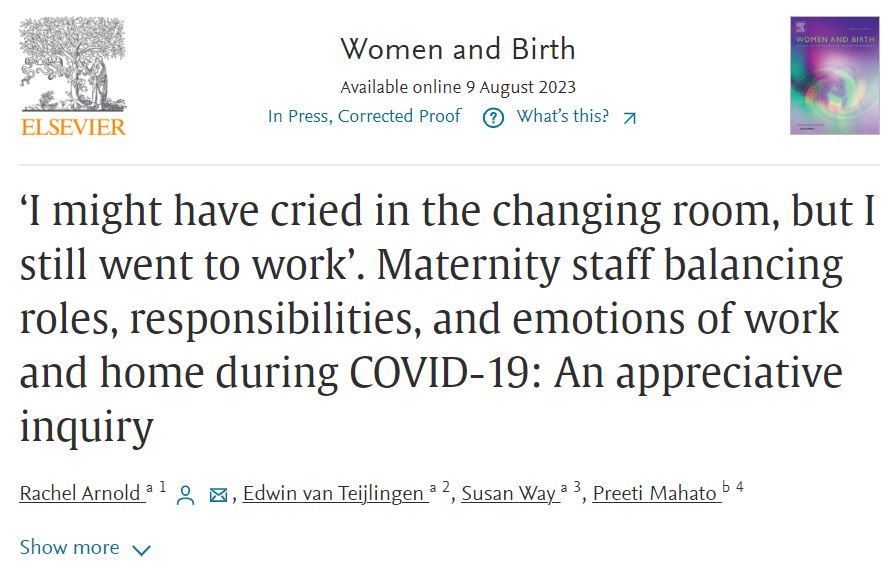
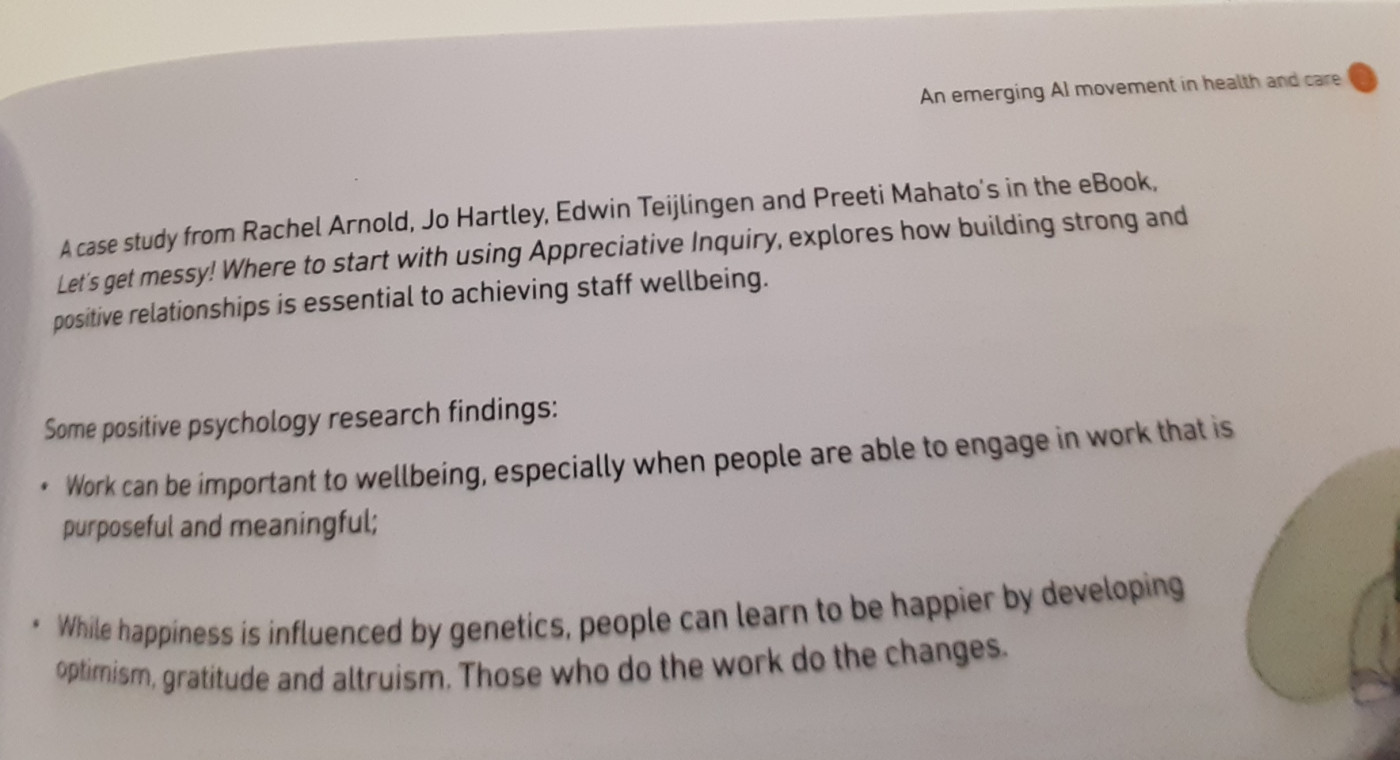 Today we received a copy of the book Appreciating Health and Care in the post. This book has a sub-title ‘A practical appreciative inquiry resource for the health and social care sector’ and refers to the work led by Bournemouth University’s Dr. Rachel Arnold. Appreciative Inquiry values people’s expertise and vision and can motivate people to see the world differently and instigate positive change. Rachel been the lead author on several publications around Appreciative Inquiry [1-3].
Prof. Edwin van Teijlingen
Centre for Midwifery & Women’s Health (CMWH)
References:
Bournemouth University (BU) collaborates with the Bournemouth Christchurch Poole (BCP) Council and Cambridge University on modeling traffic congestion propagation. The work, conducted by Dr. Wei Koong Chai and Ph.D. Candidate Assemgul Kozhabek from BU advocates the use of epidemic theory to model the spreading of traffic congestion in cities.
The team proposes a modified Susceptible-Infected-Recovered (SIR) model that considers the road network structure for a more accurate representation of congestion spreading. Through an N-intertwined modeling framework and analysis using real-world traffic datasets from California and Los Angeles, the study demonstrates improved agreement with actual congestion conditions. The findings offer valuable insights for developing effective traffic congestion mitigation strategies.
Reference:
A. Kozhabek, W. K. Chai and G. Zheng, “Modeling Traffic Congestion Spreading Using a Topology-Based SIR Epidemic Model,” in IEEE Access, vol. 12, pp. 35813-35826, 2024, doi: 10.1109/ACCESS.2024.3370474.

A recent paper looks at the difficulty and conflict that ECRs experience around achieving impact outside academia – something that they feel passionate about – while meeting more traditional and narrow ideas of ‘research excellence’ in academia.
The paper also looks at ‘publish or perish’ pressures, confidence and imposter syndrome in presenting your research as an ECR, and how focusing on impact can affect careers.
Read the paper (open access) at The conflict of impact for early career researchers planning for a future in the academy.
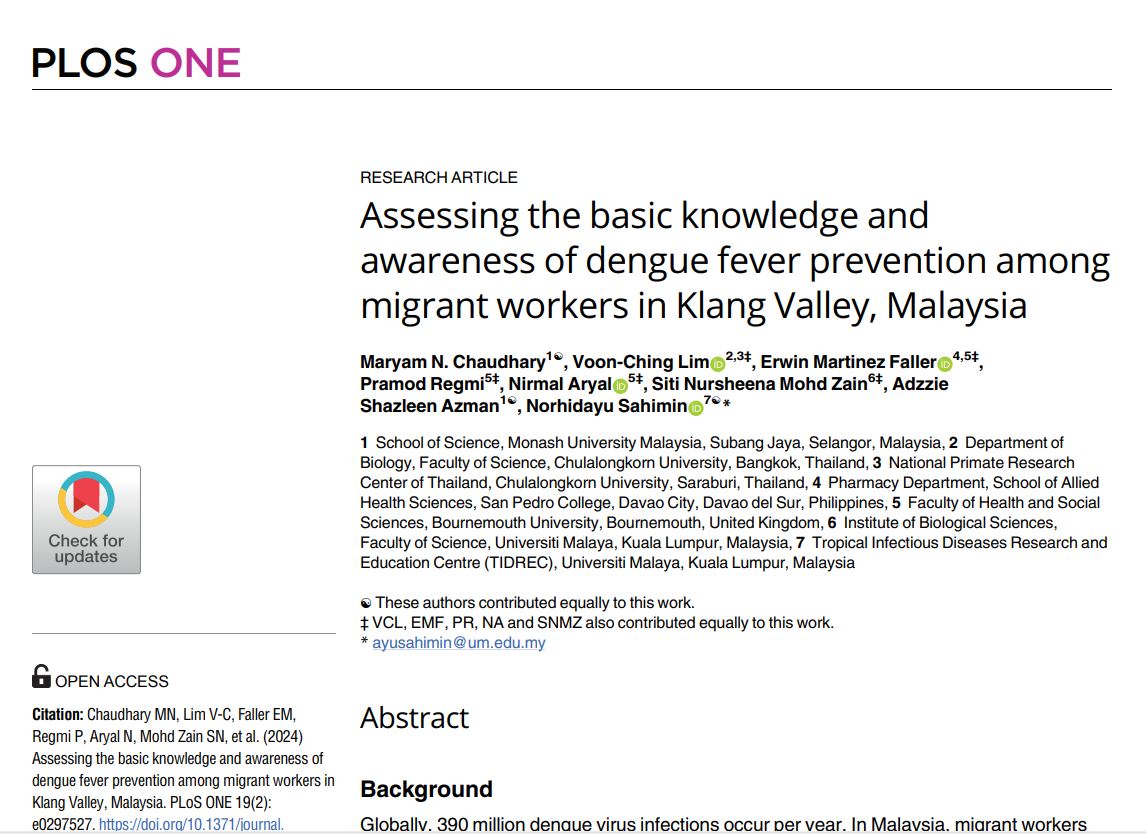 Drs. Pramod Regmi and Nirmal Aryal in the Department of Nursing Sciences published a new paper with colleagues from Malaysia, Thailand, and the Philippines in PLoS ONE under the title ‘Assessing the basic knowledge and awareness of dengue fever prevention among migrant workers in Klang Valley, Malaysia’. [1] Globally, 390 million dengue virus infections occur per year. In Malaysia, migrant workers are particularly vulnerable to Dengue Fever (DF) due to mosquito breeding sites exposure and poor health literacy. This study reports on assessing the current Dengue Fever knowledge, attitudes and practices (KAP). The paper identifies strategies to promote awareness around Dengue Fever among migrant workers in Malaysia. Most respondents were male, working in the services industry, had completed high school, aged between 30–39 years and with less than ten years work experience in Malaysia. Overall, respondents’ knowledge was positively correlated with attitude but negatively with practices. Older respondents, who had completed higher education, obtained higher knowledge scores. Similarly, those with working experience of >20 years in Malaysia obtained higher attitude scores. Respondents with a previous history of Dengue Fever strongly considered the removal of mosquito breeding sites as their own responsibility, hence tended to frequently apply preventive measures. Respondents’ knowledge was also positively correlated to their understanding of Dengue Fever information sourced from social media platforms.
Congratulations!
Prof. Edwin van Teijlingen
Reference:
Are you a social sciences researcher looking for a high-profile opportunity to put on a public engagement event as part of a national festival?
Would you like the chance to receive up to £1,000 funding for your project?
We will shortly be opening the call for applications to take part in this year’s ESRC Festival of Social Science, which runs from 19th October to 9th November, under the theme ‘Our Digital Lives’.
Key dates:
For the second year, BU is partnering with the University of Southampton (UoS) and we are particularly keen to hear from researchers who have already established collaborations with UoS colleagues and may wish to run a joint event.
The festival and our partnership with UoS offers the chance to create an inspiring event which enables you to connect your research in a highly-accessible and engaging way with a broad public audience.
At this stage, we encourage you to familiarise yourself with the ESRC requirements for the festival, and get in touch with any colleagues at UoS who may be interested in running a joint event.
You can also contact the PER Team in RDS to discuss your idea.
For inspiration, have a look at BU’s 2023 festival events and the ESRC’s festival page.
| Essential reading: |
March’s webinar welcomes Space Youth Project. Space Youth Project aims to support young people who are or may be LGBT+ and empower them to have positive self-esteem, know they are supported, have a sense of community and to overcome issues caused or intensified by prejudice in order to facilitate freedom of expression.
The team at Space Youth Project are keen to share their amazing work and explore ideas for research collaboration around trans identities and neurodivergence and the need for specific LGBT+ groups.
Community voices is a collaboration between BU PIER partnership and Centre for Seldom Heard Voices to provide a platform and a voice to local community activists.
Please do join us for this webinar….
Microsoft Teams meeting
Join on your computer, mobile app or room device
Click here to join the meeting
Meeting ID: 397 765 953 34
Passcode: ohbzTW
Download Teams | Join on the web
BU staff can login below:







 Three CMWH presentations at Berlin conference
 New interdisciplinary paper on Nepal
 National Postdoc Appreciation Week 2026: The Changing Landscape of Postdoc Careers
 NIHR Insight South West Central Conference 2026 at Bournemouth University
 Horizon Europe Cluster 3 (Civil Security for Society) 2026 Calls Now Open
 MSCA Doctoral Networks 2026 Call Information Webinar
 ESRC Festival of Social Science 2026: Application Deadline Extended to Thursday 25 June 2026 Apply now to take part in the 2026 ESRC Festival of Social Science
 Reminder: Register for the ESRC Festival of Social Science 2026 Information Session
 ECR Funding Open Call: Research Culture & Community Grant – Apply now MSCA Postdoctoral Fellowships 2025 Call
 ERC Advanced Grant 2025 Webinar MSCA Postdoctoral Fellowships 2025
 Update on UKRO services
 European research project exploring use of ‘virtual twins’ to better manage metabolic associated fatty liver disease
 Research Information Network