Yesterday I wrote my resignation letter to the journal BMC Pregnancy & Childbirth. After acting as Associate Editor for fifteen years the time has come for me to give it up, and I found ‘giving up’ very difficult. The enormous growth in my workload at Bournemouth University and the increasing requests to take on new papers as Associate Editor, on top of the many requests to review papers and grants, just became too much. It made me realize I needed to reduce several tasks and jobs to have a slightly better balanced work-home life.
I am still co-editor of the Journal of Asian Midwives, book review editor of Sociological Research Online, guest editor for a special issue of Frontiers in Public Health, and I am still on the editorial or advisory boards of: Birth (published by Wiley), Sociological Research Online (published by SAGE), Nepal Journal of Epidemiology, Journal of Manmohan Memorial Institute of Health Sciences, and Midwifery(published by Elsevier), so still plenty of work to be done.
Bournemouth University researcher involved in groundbreaking discovery on Scottish island.
by Stephen Bates
A team of researchers have discovered what is believed to be a complete Neolithic cursus set within a rich prehistoric landscape on the Isle of Arran, Scotland.
This monument type is amongst the first that was built by farmers in Neolithic Britain and is huge – measuring 1.1km long and 50 metres wide.
A cursus is a vast Neolithic monument comprised of one or more rectangular enclosures. The cursus on Arran is defined by a large stone, earth and turf bank running around the entire perimeter of the enclosure. Constructing this monument would have involved staggering amounts of labour, transforming the entire local landscape.
This monument type could date to perhaps as early as 3500 BC, researchers say. It is the most complete example of this site type found in Britain and the opportunity to investigate a cursus bank is very rare and hugely exciting.
Prehistoric field boundaries, clearance cairns and round houses, at least some of which may be contemporary with the monument, have also found in the same landscape, all preserved within peatland, sealing the archaeological layers. Ancient soils representing the original Neolithic land surface, together with cultivated soils from the Bronze Age period, provide an unparalleled opportunity to understand how contemporary farming practice and settlement interacted with the cursus monument and how early farmers transformed this place.
Dr Emma Jenkins, Associate Professor in Archaeology at Bournemouth University, co-led the landscape geoarchaeology and environmental science work at the site, supported by Dr Sarah Elliott, Deputy Head of Department, Life and Environmental Sciences (LES) and Harry Manley, Demonstrator in LES.
This involved excavating areas near the cursus into the Neolithic land surfaces and Bronze Age field systems which will allow samples to be taken for dating and other environmental evidence. This will help the team to understand how people used and managed this important landscape and feed critical information into the rewilding strategy about the landscape history of the area.
Dr Jenkins said, “The Isle of Arran is well known for Machrie Moor with its Prehistoric stone and timber circles; standing stones and burial cairns but the discovery that these may be part of a much larger complex which included this enormous cursus elevates this into a region of global significance on a par with other ceremonial landscapes like Stonehenge. As an environmental archaeologist I am particularly excited by the discovery of well-preserved soils, contemporary with the creation of the cursus which means we can investigate how people used and modified this landscape from the time of the first farming communities in Britain.”
This research will provide invaluable information about landscape history and past ecosystems that will feed into the Rewilding strategy currently being put together by landowner David Bennett and the Northwoods Rewilding Network and wider work by Arran Geopark. The team also supported participation by members of the local community in the research process and are exploring future learning and creative opportunities responding to the investigations. Artists from the region were supported by North Ayrshire Council and Arran Theatre and Arts Trust to explore the excavation.
Professor Nicki Whitehouse, Professor of Archaeological Science, University of Glasgow, said: “The initial discoveries reveal a highly unusual combination of a ceremonial monument within a prehistoric farming landscape. It is part of a continuum that likely linked to the ritual site at Machrie Moor, probably forming part of something much more extensive. The science work will allow us to understand about the animals and plants people farmed, how people impacted the landscape and its ecosystems and transformed their soils for cultivation – and what we may learn from this today.”
The combination of investigating all these elements together is highly unusual and has also involved experts from Universities of Birkbeck, Reading, Coventry, Birmingham, and Southampton as well as archaeologists from Archaeology Scotland and Historic Environment Scotland.
UKRIO has announced details of a forthcoming Free Webinar “Introduction to Research Integrity” on Wednesday 18th October from 10:00 – 11:00 BST.
The webinar will look at the challenges involved in ensuring that research is high quality and of high ethical standards, discuss the pressures faced by researchers and explore what researchers and organisations can do to safeguard and enhance good research practice.
During the webinar the following will be discussed:
How straightforward is it to achieve good research practice?
What does ‘good’ research look like and what are the challenges involved?
What does a good research environment look like and how can organisational culture help – or harm – research quality?
What impact can ‘research culture’ – the environment and ethos of research organisations – have on the quality and ethical standards of research?
Do incentives and competition improve the conduct of research or increase mistakes and other problems?
This webinar is aimed at all researchers.
As BU subscribes to UKRIO services, UKRIO webinars are free and open to anyone who may be interested in research integrity and ethics, good research practice and improving research culture and avoiding misconduct.
To register – please click here (takes you to external website).
The Wellcome trust ECR award is for researchers from any discipline with up to 3 years post-doctoral experience doing research that has the potential to improve human life, health and wellbeing. This session is aimed at research leads, Early Career Researchers and mentors.
The scheme has three rounds per year and so the session is also open to those interested in applying in future rounds.
Professor Sam Goodman will be sharing his experience of being on Wellcome’s Early Career advisory group in Medical Humanities, and in reviewing applications for the ECR award.
Professor Goodman has also successfully received funding from Wellcome.
Congratulations to BU’s PhD student Mr. Md. Shafkat Hossain who has been selected by Bloomberg Philanthropies as one of the Emerging Leaders in Drowning Prevention programme. This programme has been designed to create a cohort of younger leaders to join national and international efforts to raise awareness and strengthen solutions and political commitment towards drowning. This programme is hosted by the Global Health Advocacy Incubator and provides a unique opportunity for people like Shafkat to develop leadership skills in drowning prevention, and be a part of a global community working to reduce drowning deaths. This first group of Emerging Leaders includes people from Bangladesh, Ghana, India, Uganda, United States and Vietnam. Each Emerging Leader will be expected to participate in monthly sessions, both online and in person. The programme includes funding for Shafkat to attend the World Conference on Drowning Prevention in Perth, Australia in December 2023 (wcdp2023.com/) and the World Conference on Injury Prevention and Safety Promotion in Delhi, India in September 2024 (worldsafety2024.com/).
Shafkat’s PhD research focuses on aspects of the Human-Centred-Design element of the Sonamoni project. Bournemouth University and the Centre for Injury Prevention and Research, Bangladesh (CIPRB) jointly lead research into the prevention of children drowning deaths in Bangladesh. The project, called ‘Sonamoni’, is being coordinated by BU in collaboration with the University of the West of England, Bristol, the University of Southampton, and the Royal National Lifeboat Institution (RNLI). We are working with CIPRB to reduce drownings among newly-mobile children, generally under two years old. This £1.6m project has been made possible thanks to a grant from the National Institute for Health and Care Research (NIHR) through their Research and Innovation for Global Health Transformation programme. For more information, visit the NIHR website.
It is always a pleasure to see your own paper in print. If all is properly organised at the publisher, the first time you see you paper as it will look in its final version when you receive the proof copy. It is the authors’ task to proofread this final copy and pick up any mistakes you may have made or the journal has made putting your word file into the journal’s layout. More and more journals now ask you to do the proofreading and editing online. The first message here is that proofreading is exact business and most certainly time consuming. Moreover, feeding back mistakes you may find in the proofs is not without its trials and tribulations.
Yesterday we received the proofs for a paper accepted by BMC Health Research Policy & Systems[1]. The BMC is part of the publisher Springer , and it uses an online proof system eProofing to which the authors get temporary access, to read and correct text. This system looks good online, but beware the online version you get to edit does not look the same as the version that will appear in print. The draft print version generated by eProofing has line numbers which don’t appear online when you are editing the proofs. So we had to write on the online system separately that we found a set of quotes glued together, as the system does not allow authors to change the lay-out (for obvious reasons). In this case, we had to write details like: “There needs to be a space after first quote line 421.” What might look okay in the eProofing version didn’t do so in the print version, where it was it is wrong. This is illustrated in the example picture below.
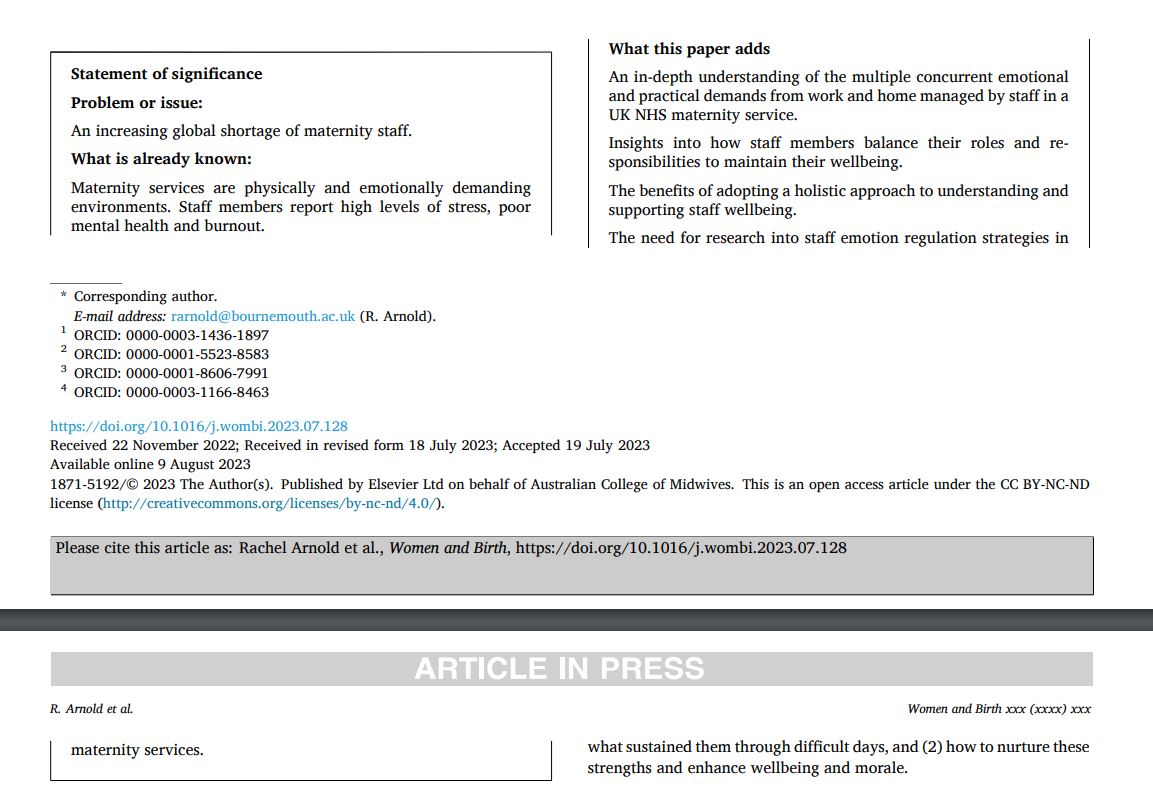
Last month we battled with the proofs of another BU paper forthcoming in the journal Women and Birth [2], which is part of Elsevier. Again, it has an online system for proofs. This system does not allow the authors to correct mistakes in in the line spacing. So we ended up writing to journal manager, not the editor, things like: “There is a very big gap between the end of section 3.7. and Overview of findings section – please could the text be rearranged to get rid of this big gap.” We also asked for a summary section to be kept on one page, not having an orphan two words on the next page, but that appeared to be too difficult a request. We think we a little flexibility, i.e. a human intervention the lay-out could have been improved. See illustration below with text as it appears in the current online-first version.
We like to stress our advice to set plenty of time aside to read and edit the proofs, and to send details instructions to the journal manager or editor about what needs changing. Changes include typos, grammar and style, but also lay-out of text and illustrations, boxes in the text, tables and figures. “It is also important to check tables and figures during the proof-reading as the formatting can often go astray during the typesetting process” as we highlighted by Sheppard and colleagues [3]. Also double check correct spelling of names of co-authors and the final author order in the proofs. Many years ago, I received the proof of pages of a midwifery article [4].
I dutifully read and edited the proof of the actual text, but I never check the short introduction with the authors’ names which an editor had added to the final proofs. When the paper came out in print to transpired that this editor has changed the author order, i.e. my name was first, probably because I had submitted the paper on behalf of my co-author. This cause some problems with my co-author, made all the worse since I am married to her.
Prof. Edwin van Teijlingen
Centre for Midwifery & Women’s Health
References:
Wasti, S.P., van Teijlingen, E., Rushton, S., Subedi, M., Simkhada, P., Balen, J., Nepal Federalisation of Health Team (2023) Overcoming the challenges facing Nepal’s health system during federalisation: an analysis of health system building blocks. Journal of the Health Research Policy & Systems. (forthcoming).
Sheppard, Z., Hundley, V., Dahal, N.P., Paudyal, P. (2022) Writing a quantitative paper, In: Wasti, S.P., van Teijlingen, E., Simkhada, P., Hundley, V. with Shreesh, K. (eds.) Writing and Publishing Academic Work, Kathmandu, Nepal: Himal Books, pp.78-87.
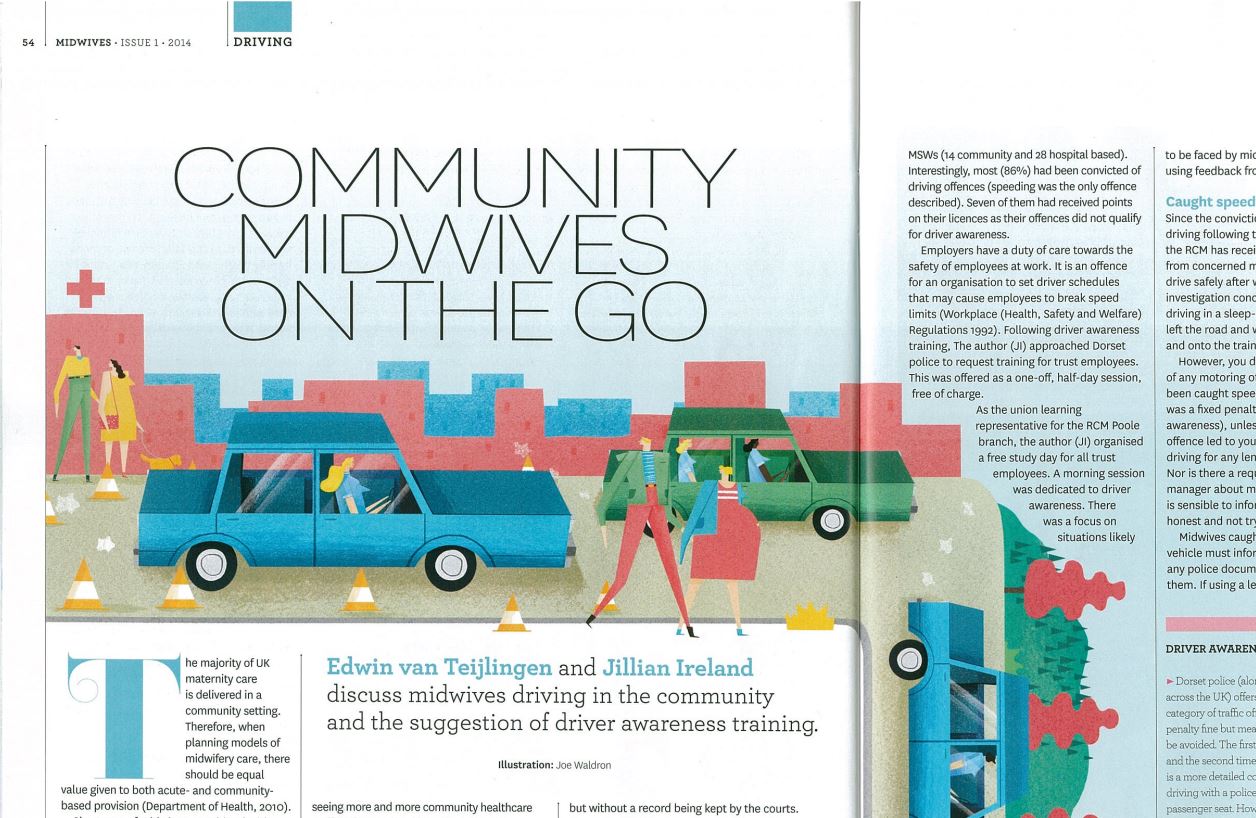
van Teijlingen E., Ireland, J.C. (2014) Community midwives on the go. Midwives 1: 54-55.
This Monday, 11th of September, BU is running a Research and Knowledge Exchange Explorer Event at the Russell-Cotes Gallery and Museum as part of a developing partnership between the two institutions.
The Explorer Event is an opportunity to discuss and develop possibilities for collaborative research and knowledge exchange connected to the Russell-Cotes’ world-class anthropological, archaeological and art collections from across the globe, as well as:
– exploring possibilities for cultural heritage management;
– local seaside tourism;
– Digital and virtual heritage;
– diving into the archives (inc. theatre, local history and beachfront tourism history of Bournemouth);
– wellbeing connections to arts and heritage,
– investigating heritage tourism potential.
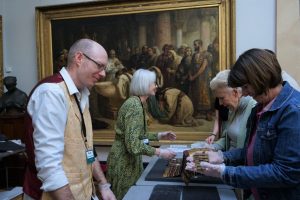
With the guidance of Russell-Cotes staff you will have the opportunity to see some of the collections on display, including a number of collections from across Asia, as well as hidden in the stores, in more detail and discuss with Russell-Cotes experts. It’s also an opportunity to make connections with other BU academics to develop potential cross-disciplinary projects over coffee and cakes.
The History of the Russell-Cotes Collection
I caught up recently with Sarah Newman, the Manager, to find out a little more about this hidden gem on the cliffs of Bournemouth Beach:
Coastal view from the balcony at the Russell-Cotes
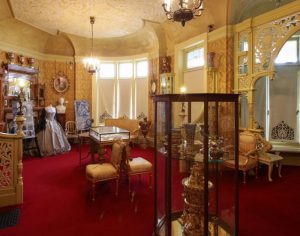
‘It’s an is a very special place because it’s a very personal collection, so you get from the sublime to the ridiculous’ said Sarah. ‘It captures a moment in time, with the collection exhibited in the context for which it was bought and collected for, which is very unlike other museums. There are some small houses where historic collections survive, but here it is a much larger collection, drawn from around the world. Where else do you walk out of a Heavily Victorian grand house out on to the spectacular beach-cliffs with a view out to sea! Until you experience it you can’t understand it, the atmosphere here is so special, the house itself is also a precious ‘object’, and the eclectic nature of our collections really makes it sparkle’.
The collection was created, and then gifted to Bournemouth, by a couple who travelled the world as tourists and this makes it entirely unique. Sarah told me more about how the collection came together: ‘Merton Russell Cotes was a self-made man, yes he was rich, but he was just an average person who became an entrepreneur, someone from relatively humble origins in Victorian society; but the society allowed people to develop socially through love and interest, which is what he and his wife Annie did.’
The Drawing-Room Collection
But there is another very interesting aspect to the Russell-Cotes that is different from other collections, as Sarah explained: ‘In many collections nowadays people are addressing empire in relation to Victorian world travels, as a museum we are very transparent about how things were paid for, and how they were collected by Merton and his wife as tourists. There are few contested pieces here, and there is certainly some ‘cultural bling’ items created for the ‘tourist market’, as well as some truly special pieces, including objects in our Japanese collection. At the time the couple were visiting Japan it was the end of the ‘isolation’ period and people wanted to get rid of the old and were happy to give things away. There are also pieces that the Russell-Cotes’ were given on their travels – there are so many different stories and some real hidden treasures. You can’t pigeon-hole the collection…there are no grand colonial narratives here.’
Monks – One of the photographs from the extensive photographic archive
‘But what you do have is the story of Merton and Annie as a couple, and how they created their dream home. How inspiring is that – what would you do? It’s family story and of how they expressed their philanthropy and love of global cultures. But it’s also a story about how Bournemouth was developed as a tourist resort, with the narratives of the people who live here and the people who visited here. You can see that Merton was right on that and made a virtue out of necessity with the art that he was buying and selling he was definitely wheeling and dealing. He thought about things in terms of ‘Yes this is a wonderful piece of art I can let you buy, and of by the way it comes from Bournemouth and I happen to have a hotel there did you know?
‘Venus Verticordia’, the iconic Pre-Raphaelite work by Dante Gabriel Rossetti (1828 -1882)
He was opening Bournemouth up to the world at a time when people wouldn’t necessarily have had access to information about it. But is was a kind of enlightened view, yes he was doing things for himself as a businessman, but there was also the philanthropy aspect, where he wanted to share what his family loved and had. So we also have wonderful little collections like theatre history, costumes, musical instruments, which are completely untapped. There is so much that would benefit from further examination.’
Contact:
With the BU Partnership we are are just at the start, and the Explorer Event is a great way to open up opportunities and inspire academics. It’s all about the conversations now, so join us at the Event on Monday – go to the Eventbrite link at the top of the blog to book your place!
Any queries, please contact the Knowledge Exchange Manager: wsmorrison@bournemouth.ac.uk
On Tuesday 12th September BU’s Women’s Academic Network is hosting an online talk by Dr Sara Jones and Dr Natalia Kogut from the University of Birmingham. Dr Jones and Dr Kought will be sharing preliminary findings from their research on mismatched expectations and the impact of “Eastern Europeanism” on the experiences of displaced Ukrainian women in UK.
After the start of the war in Ukraine, a significant number of Ukrainian refugees came to Britain, most through the ‘Homes for Ukraine’ scheme that matched refugees with British hosts. They were given shelter and access to social services; however, they faced a number of unexpected challenges in their life in the UK. This paper explores those challenges in the context of Britain as a “post-Cold War” space (Chari and Verdery, 2009). In particular, it considers how “three worlds ideology” continues to impact on British attitudes towards migrants and refugees from Central, East and Southeast Europe and the ways in which Ukrainians encounter life in the UK. The talk is based on a series of narrative interviews with Ukrainians living in the UK and Kogut’s own experience as a Ukrainian fleeing war. On the one hand, there is recognition among the interview participants that refugees from Ukraine have been privileged in comparison to those coming from countries once considered in the “third world”, and that there is a sense of the “closeness” of the UK and Ukraine as European countries. Yet, on the other, interviewees report how they were confronted with an understanding of them as residents of a backward or “second world” country with little to offer – a form of prejudice that has been termed “Eastern Europeanism” (Kalmar, 2022). In turn, the UK’s sense of itself as a “first world”, developed country, is frequently called into question by Ukrainian encounters with the UK’s systems and services, including poor access to medical services, lack of social housing and shortage of school places. We will introduce our policy report Support for Displaced Ukrainians – The Role of History and Stereotypes, including our recommendations for those seeking to support Ukrainians in the areas of work/benefits, housing and hosting, healthcare and language. Speaker Biographies Sara Jones is Professor of Modern Languages at the University of Birmingham. Her research focuses on the cultural, social and political processes of memory, especially memory of socialism and post-socialism in Germany and Central, Eastern and Southeastern Europe. She is author of three monographs, most recently Towards a Collaborative Memory: German Memory Work in a Transnational Context (Berghahn, 2022). She is currently Principal Investigator for the AHRC-funded project Post-Socialist Britain? Memory, Representation and Political Identity amongst German, Polish and Ukrainian Immigrants in the UK. Natalia Kogut is a Postdoctoral Research Associate at the University of Birmingham, working on the projects Post-Socialist Britain? Memory, Representation and Political Identity amongst German, Polish and Ukrainian Immigrants in the UK and Futures of Ukraine: Youth, Mobility and Post-War Reconstruction. Natalia holds a PhD in Law from the Institute of State and Law, V. Korezkiy of NAS (Ukraine). Natalia’s research interests include the human right to life and health, healthcare systems, ecological law, migrants’ rights, and historical memory of migrants. She is a specialist in human rights, right to health, and comparative analyse of health care systems.
It says that the European Commission and the UK Government have concluded negotiations and reached an agreement in principle on the association of the UK to Horizon Europe and Copernicus under the Trade and Cooperation Agreement.
How does it look in practice? UK researchers will be able to fully participate in the Horizon Europe programme on the same terms as researchers from other associated countries from the 2024 Work Programmes and onwards – including any 2024 calls opening this year. As a result:
UK institutions will be allowed to lead collaborative projects as coordinators
UK institutions will count towards the consortium eligibility requirements
For calls from the 2023 Work Programmes, the UK will continue to provide funding under the UK Guarantee scheme managed by UKRI.
Update:
There is also European Commission press release available – feel free to forward link to this page to those EU potential partners who may still be in doubt.
The European Commission has published an updated set of FAQs with more detail on the agreement. Today’s political agreement must now be approved by EU Member States before being formally adopted in the EU-UK Specialised Committee on Participation in Union Programmes. Association to Horizon Europe programmes will become effective as of 1 January 2024.
For more information regarding EU funding feel free to get in touch with Research Facilitator International Ainar.
The MINE Research Cluster and EEG Lab are hosting a four-day CuttingGardens 2023 conference in Bournemouth during 16-19 October 2023. CuttingGardens is a distributed conference on cutting-edge methods for EEG/MEG data analysis, with 20+ “gardens” happening simultaneously at several locations across the world. The common global programme, broadcasted to all locations, includes cognitive neuroscience advances, real-time EEG analysis, reproducible research, and deep neural network. Our Bournemouth Garden’s local programme has hands-on #EEGLab and #MNE-Python tutorials, EEG-VR and EEG-eye tracking workshops, exciting talks and tour of state-of-the-art labs!
Key dates:
Abstract submission deadline: 15 September 2023
Registration deadline: 27 September 2023
Conference: 16-19 October 2023
More information can be found at https://cuttinggardens2023.org/gardens/bournemouth/. Please check the webpage if you are interested. This is an ideal event for anyone who is keen to elevate their EEG/MEG research skills. We welcome research students, postdocs, academics and professionals alike.
Bournemouth Garden Organising Committee:
Xun He, Ellen Seiss, Marina Kilintari, Federica Degno, Ruijie Wang, Andrew Hanson, and Biao Zeng (University of South Wales, BU’s Visiting Fellow)
This half day course is an introduction to PPI and will:
1. Define PPI and why it matters
2. Explore the links between PPI and health equity
3. Explain how to deliver PPI and support those involved
It will be an interactive session, including input from someone with lived experience, talking about their involvement in research.
It will be delivered by Sue Bickler from the Involving People team at Help and Care, an organisation that ‘helps people and communities live the lives they choose’.
Sue has worked in the voluntary sector, local authorities, and health, and has substantial experience engaging with people and communities to ensure that services meet their needs. Her current role brings together the four Healthwatch in Hampshire and the Isle of Wight (HIOW), ensuring that patient voice is central to decision making in the HIOW Integrated Care System and that people are equipped to support effective Patient and Public Involvement (PPI).
The session is funded by Clinical Research Network Wessex and is open to all health and care researchers working in Wessex including public contributors and community organisations.
Book your place here. A link to the online training will then be sent to you.
Could using ‘VOICE‘ – National public involvement in research platform help with public involvement in your research?
Many researchers will already be aware of patient and public involvement (PPI) and the many benefits and the positive impact it can have in their research. Please read two examples of how Cathy and Louise, both postgraduate researchers, have implemented public involvement in their research and read on for more information on VOICE and how it help with your research.
Cathy Beresford, Full time PhD student – Experiences of care in advanced liver disease
“For my research with people who have liver disease, I found VOICE extremely helpful for my public involvement strategy. Before I accessed VOICE, I struggled to reach people for public involvement. Although I am a nurse, I do not specialise in liver disease, and I did not have established links with the people I was seeking to do the research with. With fantastic support from BU PIER Officer Kate Jupp, I advertised my public involvement opportunity and had eight people come forward to take part in an online workshop. I reached a mix of people from different parts of the UK, four are people with liver disease and four are carers of individuals with liver disease. I found this to be the perfect number for a really constructive meeting where we discussed the findings of my recent systematic literature review and made plans for the upcoming research as part of my PhD project. All of the attendees of the meeting said they wanted to be further involved in public involvement as part of the research. Members of the group have since contributed to the participant information leaflets for the study and we are planning a further meeting in the autumn. For each meeting, individual members are given a £25 voucher for their time, which is part of my PhD funding.”
Louise Ward, Part time PhD student (and PPI adviser within BUCRU) – Online PPI: Perceptions and experiences of public contributors and researchers in health and social care research.
“Given that PPI is my chosen topic, it was essential that I have voices of those with relevant lived experience in my own doctoral research to help shape its planning and design. After some initial struggles acquiring funding to undertake PPI in my PhD, I ran some informal introductory PPI sessions to gauge how people have found online PPI and whether it’s been working for them. I spoke with 11 people, 9 of which were found via the VOICE platform, they were a broad range of voices from around the UK.
I posted an ‘opportunity’ on VOICE and was overwhelmed by the response, 38 people applied. I had included additional questions to aid selection, e.g. length of time people have been involved in research, but you can choose whatever you wish to ask for extra information, e.g. experience of a certain health condition or use of a particular service. You are also able to state certain criteria, e.g. age, gender etc. Even with the additional information, it was tough to narrow down to a smaller number (within the budget I’d allowed myself), but after reading through each application I reduced numbers to 10 people and approved/declined/added to wait list accordingly. I ran two PPI sessions via VOICE, the first one with three people (I had some non-attendees so it’s good to plan for that) and the second with six people. Kate from BU PIER also joined the sessions as it’s always good to have a second person to co-facilitate. Both were really useful sessions and all were keen to stay involved in helping with my future research. I have since contacted a smaller number of them and plan to run a regular public advisory group throughout my PhD at various stages to ensure my research stays relevant to those whom it impacts the most.”
To summarise, researchers can:
Easily and quickly register for VOICE
Submit an opportunity request to involve members of the public in their research
Use the digital tools the platform offers to involve members of the public in research
Promote workshops/groups
Facilitate online discussions
Promote opportunities for the public to join steering groups
Online surveys & polls
Set up a closed group to communicate, share documents and support an established public involvement group
Access and share support and learning resources to help patient and public involvement and engagement activities
You can register with VOICE and explore what is available. Please email Kate Jupp or Louise Ward or on: voice@bournemouth.ac.uk to discuss how we can help get the public involved in your research and/or promote an event or opportunity to VOICE members.
VOICE are running an introductory session for new members on 11 September2023 to explain what VOICE is, it will mostly be aimed at members of the public but will give a good insight into what VOICE can offer for researchers too.
Rosie Harper and Malika Felton write for The Conversation about the physical changes that take place during pregnancy and childbirth and share advice on recovery.
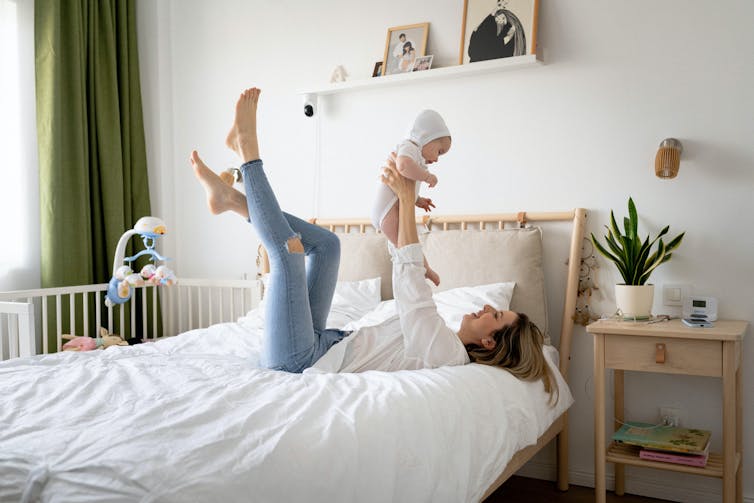
After all the physical changes during pregnancy and following childbirth, many women are left wondering how to get active again and where to begin. Of course, activity after childbirth is an individual journey with multiple things to consider – and one of the first considerations may not be what you expect: your pelvic floor.
Your pelvic floor muscles sit at the base of the pelvis. The muscles form a hammock-like structure that supports the bladder, womb and bottom. As many as one in three women experience unwanted bladder leaks or vaginal prolapse in their lifetime and many of these symptoms can start during pregnancy or following childbirth. This is because this small muscle group takes the weight of the baby for nine months and may be stretched during vaginal delivery.
Your pelvic floor supports the bladder and vaginal tissues, helping bladder and bowel control and vaginal position. Recovery of these muscles prevents unwanted leaks, improves internal comfort and allows women to confidently increase activity.
This article is part of Women’s Health Matters, a series about the health and wellbeing of women and girls around the world. From menopause to miscarriage, pleasure to pain the articles in this series will delve into the full spectrum of women’s health issues to provide valuable information, insights and resources for women of all ages.
So focusing on your pelvic floor around pregnancy and postnatally can help you to recover more easily after childbirth and will allow you to get ready to be more active when you feel up to it.
If you’ve just given birth (or are about to) and you’re wondering where to start, here’s what you need to know:
1. Keep your poo soft
Straining on the toilet can overstretch the pelvic floor muscles which makes it harder for them to work properly. To avoid this you can keep your poo soft by drinking lots of water and increasing the fibre in your diet, such as high-fibre cereals, brown pasta and nuts.
Also, consider your position on the toilet. The use of a stool underneath your feet can make it easier to poo without straining as it helps to straighten the end of the bowel.
2. Get your pelvic floor moving
Squeezing and relaxing the pelvic floor muscles daily can improve blood flow to the area and speed up recovery following childbirth. This is because pelvic floor activity can improve the strength and function of the muscles to help bladder control and vaginal support.
The evidence shows that it usually takes a good three months of regular pelvic floor use to change symptoms – and every squeeze can make a difference. After a vaginal delivery and even after a c-section, the recovery time for the pelvic floor continues for up to one year.
One of the biggest problems with pelvic floor training is that women aren’t sure they are doing the exercises correctly and regularly forget to do the exercises.
To engage your pelvic floor muscles imagine you are holding in wind and trying to close the vaginal opening at the same time. You may feel a lifting and tightening inside of you. Try to breathe normally and relax other muscles like your tummy and buttocks.
To check you are doing it correctly, you can use a mirror to look at the area between your front and back passage. This area (the perineum) will move slightly up and inwards with a correct contraction. After each contraction, let your pelvic floor muscles fully relax. Pelvic health physiotherapists recommend squeezing your pelvic floor for ten seconds before relaxing for ten repetitions, followed by ten short squeezes. And to do this three times a day.
3. Let things settle and go gently
The pelvis and abdominal muscles also need time to recover from carrying a baby. Many women have a normal stretch and separation of their tummy muscles, which in a lot of cases improves around eight weeks after delivery, for others it can take six months. The tummy helps to support the pelvis so rushing back to activity too quickly can put unnecessary strain on these areas.
Opt instead for a gentle increase in activity to help the muscles and joints settle such as walking, yoga or pilates rather than starting higher impact activity, like running, too early.
4. Check your mental health
The pressures on women postnatally can feel overwhelming and combined with sleep deprivation things can take a toll mentally. The National Perinatal Mental Health Project Report focuses on improving mental health support for women after they have given birth by providing more support services. These services can be accessed by speaking to your GP, midwife, health visitor or pelvic health physiotherapist.
Although a good level of activity can improve mental health, over-training can have a negative effect on the body, so take it steady and keep checking in with yourself to make sure you’re functioning at a pace that feels comfortable and that you’re not overdoing it. Listen to your body and avoid comparison as everybody and every pregnancy is different.
Above all else, remember to be kind to yourself, your body has just gone through a massive change. Looking after your mental health and concentrating on your pelvic floor are good starting points. Getting more active with the muscles around your pelvis, including your tummy, can all help during the natural recovery time frame. But listen to your body and take things at your own pace.
European Research Council (ERC) announced a webinar dedicated to their next 2024 work programme to be held on 20 September 2023 from 11:15 to 12:15 UK time.
It is anticipated that potential ERC grant applicants will learn more about the novelties of the ERC Work Programme 2024. Participants will have the opportunity to ask questions about the current and upcoming grant competitions.
The ERC, set up by the European Union in 2007, is the premier European funding organisation for excellent frontier research. It funds creative researchers of any nationality and age, to run projects based across Europe. More information about funder may be found on ERC webpage.
The ERC offers 4 core highly competitive grant schemes:
The Health Research Authority (HRA) has launched new Quality Standards to improve information given to people who are invited to take part in research. The Quality Standards have been launched alongside Design and Review Principles, which show researchers and Research Ethics Committees (REC) what the important ethical considerations are for participant information.
The new HRA Participant Information Quality Standards will help research organisations to understand what good participant information looks like, and will make clear to researchers what the Research Ethics Committees will consider as part of the ethics review, including the review of participant information. The REC will support researchers to create information that meets the Quality Standards.
The aim of the Quality Standards and Design and Review Principles is to make participant information better, and to make the way that RECs review that information more consistent. The documents set out the basic criteria that all participant information must meet, and covers language, accessibility, and mandatory content.
Next steps
The Quality Standards and Design and Review Principles will be phased in from autumn 2023. As study materials are prepared in advance, REC reviews of participant information will initially be presented to research organisations as recommendations as opposed to actions required for approval.
From December 2023, the Quality Standards and Design and Review principles will become mandatory and will be applied to all research applications submitted for review.
Changes to participant information are currently the most likely reason for ethics committees to give a provisional opinion. Using this guidance will increase the possibility of receiving a favourable opinion.
Available templates
Remember that BU has Participant Information Sheet templates that provide much of the required wording to ensure your participants are making a fully informed decision before agreeing to participate.
It is vital that when compiling your information sheets that you remember to include the HRA GDPR transparency wording.
The NIHR Be Part of Research platform is an online service that makes it easy for research participants to find and take part in health and social care research. Participants may search for trials and studies taking place looking at certain health conditions and in locations accessible to them.
Clinical researchers may also make use of the service to extend their recruitment and widen their recruitment methods, as the platform has been designed to make it easier for researchers and potential study participants to find each other.
Using Be Part of Research to recruit participants
To use the service for your recruitment, the study must meet the following requirements:
Be funded or supported by the NIHR. This includes studies on the NIHR Clinical Research Network Portfolio.
Have a dedicated point of contact such as a pre-screener or website for interested volunteers to engage with your research team.
Getting your study onto the Be Part of Research platform
Once your study has been registered on either ISRCTN, ClinicalTrials.gov, or on the NIHR Clinical Research Network (CRN) Central Portfolio Management System (CPMS), your project will then appear on Be Part of Research. Given those visiting the site are mostly patients and members of the public, medical and scientific terminology should be omitted when writing your study summary, with plain English used to ensure the information is accessible to a broad audience. In order to do this, you should:
Keep it short – but don’t oversimplify it. The reader must understand what the study is trying to achieve.
Imagine you are talking to the reader.
Take out any jargon.
Make sure you cover the what, why, when, where and how so they have the basics of your study.
Additionally, to make sure that participants contact the appropriate person, the contact details provided on ISRCTN or ClinicalTrials.gov should be up to date and accurate. In general, the registry record should be monitored continuously so that any changes are reflected on Be Part of Research as soon as possible.
The Faculty of Health & Social Sciences shall be running the two-day ONLINE Masterclass ‘Introduction to conducting a systematic literature review’. The aim is to provide participants with an understanding of how to collate and assess the best possible evidence in the form of a systematic literature review. This masterclass will examine the rationale for systematic literature reviews and take participants through the structured, rigorous, and objective approach used to provide a critical synthesis of the available evidence on a particular topic.
The Masterclass is facilitated by (1) Vanora Hundley, Professor in Midwifery with experience of conducting systematic reviews of health care interventions in both low-and-high-income countries; (2) Edwin van Teijlingen, a medical sociologist with extensive experience in conducting systematic reviews. He has run similar workshops reviews internationally and has published on the importance of systematic reviews; and (3) Caspian Dugdale is Research Librarian with considerable experience in running health information literacy workshops for students, academics and postgraduate researchers.
The masterclass is suitable for anyone who wishes to explore the basic principles involved in conducting a systematic literature review. No previous knowledge is required. Attendees include health and social care practitioners, postgraduate students, and academics. There will be two online days – 8th and 15th November – which will focus on:
Designing a review protocol
Formulating a question
Identifying and selecting relevant studies
Systematic data extraction and collection
Synthesis and analysis of the data
Writing up and reporting systematic reviews.
Booking Information:
The fee of £400 includes two full days with the course facilitators. We are happy to announce that NHS partner organisations are eligible for a reduced fee £200.
 Yesterday I wrote my resignation letter to the journal BMC Pregnancy & Childbirth. After acting as Associate Editor for fifteen years the time has come for me to give it up, and I found ‘giving up’ very difficult. The enormous growth in my workload at Bournemouth University and the increasing requests to take on new papers as Associate Editor, on top of the many requests to review papers and grants, just became too much. It made me realize I needed to reduce several tasks and jobs to have a slightly better balanced work-home life.
 UKRIO has announced details of a forthcoming Free Webinar “Introduction to Research Integrity” on Wednesday 18th October from 10:00 – 11:00 BST.
  The Wellcome trust ECR award is for researchers from any discipline with up to 3 years post-doctoral experience doing research that has the potential to improve human life, health and wellbeing. This session is aimed at research leads, Early Career Researchers and mentors.


 Which events do I need to report?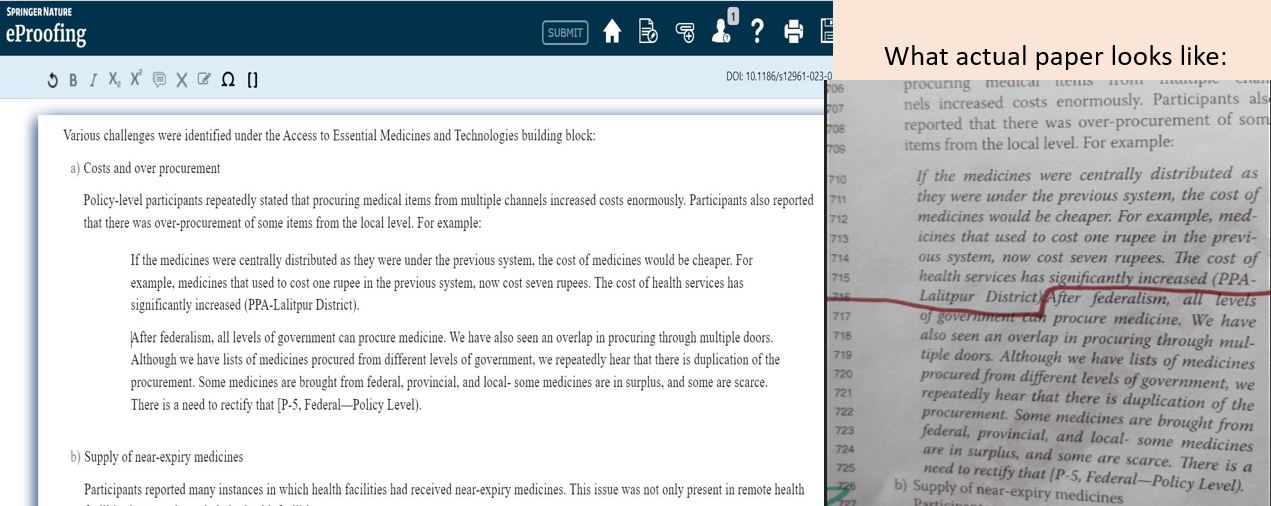


 This morning (7 September 2023)
  There is also European Commission




 It is anticipated that potential ERC grant applicants will learn more about the novelties of the ERC Work Programme 2024. Participants will have the opportunity to ask questions about the current and upcoming grant competitions.







 3C Event: Research Culture, Community & Connections – Wednesday 11 November 3-4pm
 ECR Opportunities: New Development Programme, Researcher Grants & Upcoming Events
 Help us capture BU’s knowledge exchange activity HE-BCI survey 2025–26
 Verbal autopsy paper published two days ago
 ESRC Studentships for 2027 Entry: Opportunity Now Open
 Horizon Europe Cluster 3 (Civil Security for Society) 2026 Calls Now Open
 MSCA Doctoral Networks 2026 Call Information Webinar
 ESRC Festival of Social Science 2026: Application Deadline Extended to Thursday 25 June 2026
 Reminder: Register for the ESRC Festival of Social Science 2026 Information Session
 ECR Funding Open Call: Research Culture & Community Grant – Apply now
 ERC Advanced Grant 2025 Webinar
 Update on UKRO services
 European research project exploring use of ‘virtual twins’ to better manage metabolic associated fatty liver disease