Category / Social work

Up2U: New BU academic publication

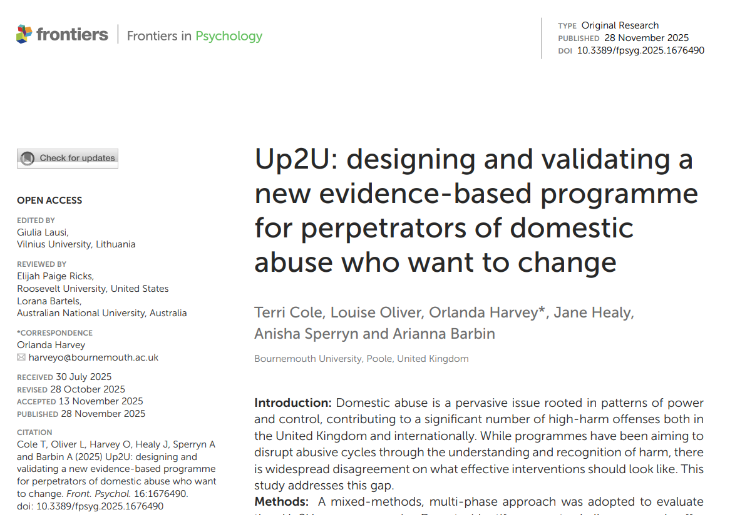
Congratulations to the interdisciplinary BU team on the publication of the paper ‘Up2U: designing and validating a new evidence-based programme for perpetrators of domestic abuse who want to change’ in Frontiers in Psychology [1].   The new paper is part of the series ‘The Dynamics of Emotion Regulation and Aggressiveness in Gender-Based Violence Contexts’, and it appeared in an Open Access journal and is therefore easily accessible.

Domestic abuse is a pervasive issue rooted in patterns of power and control, contributing to a significant number of high-harm offenses both in the UK and internationally. While programmes have been aiming to disrupt abusive cycles through the understanding and recognition of harm, there is widespread disagreement on what effective interventions should look like. This paper addresses this gap.

The authors of this paper include both psychologists and social workers, as well as a student co-author.  The lead author, Terri Cole, is a Principal Academic in Forensic Psychology.


Congratulations!

Prof. Edwin van Teijlingen


Reference:

  1. Cole, T., Oliver, L., Harvey, O., Healy, J., Sperryn, A., Barbin, A. (2025) Up2U: designing and validating a new evidence-based programme for perpetrators of domestic abuse who want to change, Frontiers in Psychology, Volume 16 – 28 Nov.2025 | https://doi.org/10.3389/fpsyg.2025.1676490

BU paper among top 20 most cited papers

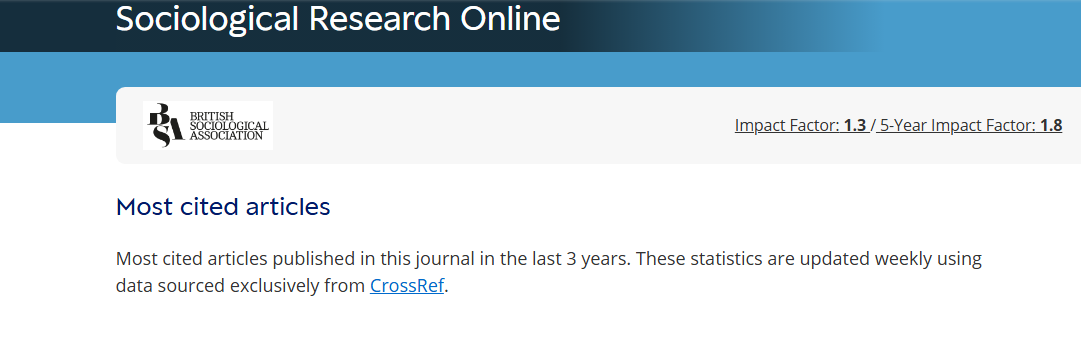
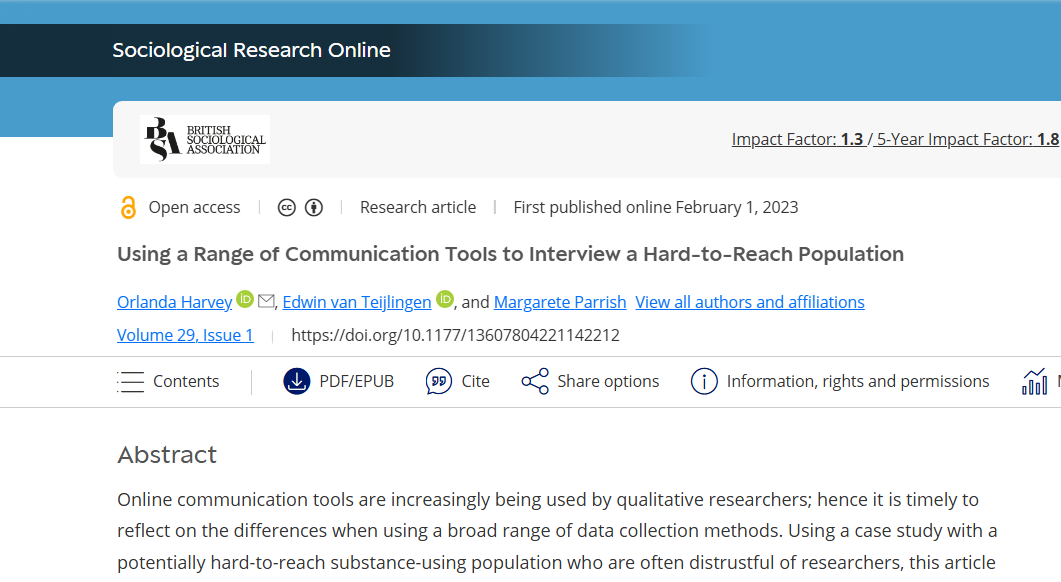
The international journal Sociological Research Online ranked a paper written by Bournemouth University academics in its top twenty most cited papers in the past three years.  The methodological paper ‘Using a range of communication tools to interview a hard-to-reach population’ has as lead author Dr. Orlanda Harvey in the Faculty of Health, Environment & Medical Science.

Reference:

  1. Harvey, O., van Teijlingen, E., Parrish, M. (2024) Using a range of communication tools to interview a hard-to-reach population, Sociological Research Online 29(1): 221–232 https://journals.sagepub.com/doi/pdf/10.1177/13607804221142212

Reflections on My Social Work Summer Internship

For six weeks of my summer between the 2nd and 3rd year of my Social Work degree I completed an internship with the aim of improving my skills relating to the facilitation of PPI (Patient and Public Involvement) workshops and working with people, as well as expanding my knowledge of the issues women of ethnic minority/migrant communities face.

Week 1: I spent this first week getting to know the professionals I would be working with throughout the six weeks and forming positive and trusting relationships with them. I also worked on getting to grips with what the project was, what my role as the intern was, and how the world of PPI works.

Week 2: The majority of this week I read information/research on the various methods we could use for the workshops and general project. I also met with more professionals and learnt about the PPI process and benefits. To prepare further for the workshops I, along with two experienced colleagues (including my internship supervisor), selected the participants we would talk with in the workshops.

All the above information then started to be drafted into the report document to explain the method, reasoning and research behind the project.

Whilst we originally aimed for one (maybe two) workshop groups where we would use the methods I researched within the week, to engage the participants in a productive conversation, we ended the workshop week with an entirely different plan, two workshop groups, a few one-to-one conversations and email responses for those unable to attend.

Week 3: This week saw me preparing for the workshops by talking to other professionals more experienced in the field, amending the questions we aimed to use to engage the participants in a really positive and productive conversation and ensuring that the workshop space would be as equal, fair and safe as we could make it. I learnt this week, the importance of not guaranteeing a safe space as this removes all space for human error. This can make others uncomfortable as they fear making a mistake (and their apology not being accepted).

Week 4: Week four was workshop week. During this week two large group workshops were and four, one-to-one workshops were conducted. I learnt to co-facilitate workshops with both people I do and do not know, and how to engage participants in difficult conversations. I learnt the importance of ensuring participants felt validated and accepted in the space. Each of these workshops were transcribed and written up into a large document collectively.

Week 5: I, along with my internship supervisor, conducted a thematic analysis during this week (putting all the participants contributions and ideas from the workshops into different themes to make the report easier to write and read as it flows easier). A few last minute workshops were held in this week (one-to-one) and I also started writing up our findings in the report.

Week 6: In week six, I, along with my internship supervisor, wrote the majority of the report draft to be sent to the project leads. I also created a PowerPoint presentation to present the findings from this project to the project leads and outline my learning experiences and how they will aid in my final year of university and future career.

Lessons I learnt:

  • Flexibility (I learnt to be flexible BEFORE the workshops began but also DURING (where our method did not fit with the participants we were talking to, especially during one-to-one conversations)
  • Time management
  • Working with others
  • Co-facilitating workshops with people I do and do not know and ensuring the participants feel accepted in the space and their feelings/experiences validated
  • Presenting my ideas to professionals I do not know
  • Professional report writing
  • Ensuring the space is as safe as possible without guaranteeing a safe space for all

This project has taught me a significant amount about working with Women from ethnic minority/migrant communities and the challenges they face both in research but also in daily life. I am sure this understanding as well as the knowledge I gained about working with other professionals and presenting my ideas to them effectively, will stand me in good stead for my final university year and future career in social work.

Megan Jukes, Social Work Student

A note from Dr Orlanda Harvey:
‘It was a joy to support Megan in developing her research skills, and work alongside her on this project. She was very committed to understanding what was required and her confidence grew in leaps and bounds over the course of the project. I am very grateful to the many colleagues at BU who  gave up their time to help support her learning and development, and I am particularly grateful for the help of Kate Jupp as without her the PPI sessions would not have happened. The report that has been drafted will be very helpful to anyone seeking to understand how to engage participants in research in a meaningful way.

Academic Writing, Publishing & Collaborating event sold out!

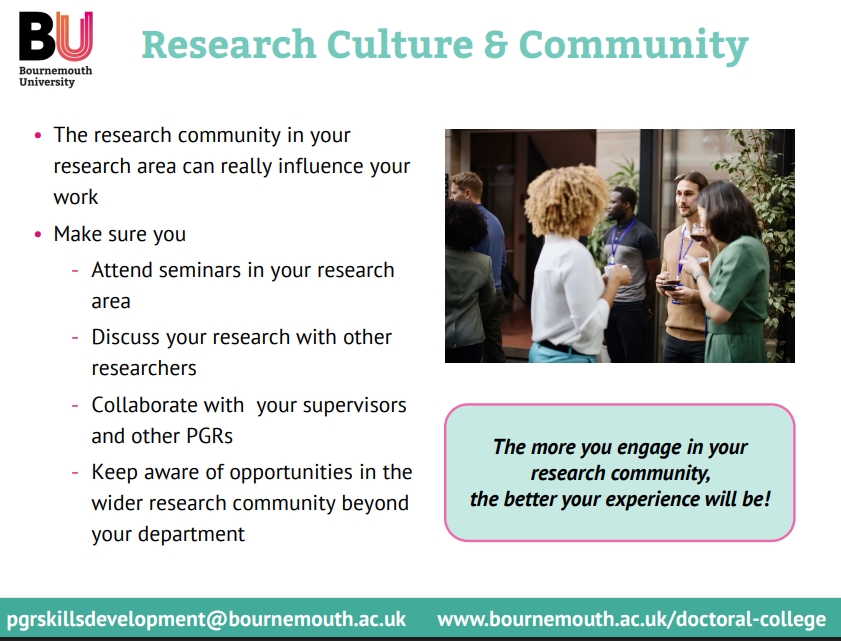
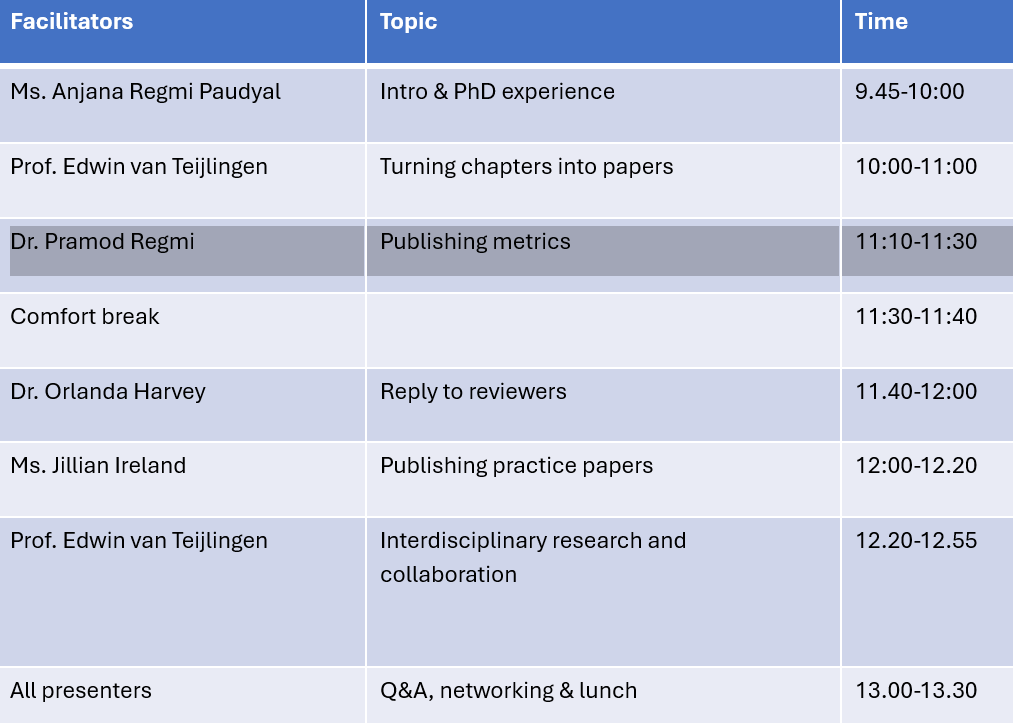
Bournemouth University’s (BU) Doctoral College aims to create a stimulating and motivating Research Culture and Community at the university.  As part of this goal, the Doctoral College has funded a proposal by Anjana Paudyal, Ph.D. student in the Faculty of Health & Social Sciences (FHSS) to organise a half-day workshop on ‘Academic Writing, Publishing & Collaborating’ on 28th May.

This event is part of BU’s Research Culture and Community workshop series.  The interactive workshop, facilitated by experienced BU with as guest contributor Jillian Ireland, Professional Midwifery Advocate at University Hospitals Dorset NHS Foundation Trust.  Of all midwives working in the NHS (i.e. not in academic posts), Jillian is the most widely published midwife in the South of England; Jillian is also Visiting Faculty in FHSS.

Wednesday morning’s sessions will cover  academic writing, collaboration in writing, writing for practitioners’ journals, publishing identifiers and metrics, and responding to journal editors and reviewers. There will also be opportunities for Q&A and networking.

The event at Talbot Campus is now fully booked, but if you are a postgraduate student and you would like to be put on the waiting list: please email Anjana Paudyal at: apaudyal@bournemouth.ac.uk.


We would like to thank the Doctoral College for supporting this important event!

Dr. Orlanda Harvey & Prof. Edwin van Teijlingen

(Anjana’s Ph.D. supervisors)

Crimmigration, Societies, Borders key note talk – Friday 16 May

Keynote talk as part of Crimmigration, Societies, Borders: Transformation of Boundaries and Narratives (British Academy event).
Prof. Ana Aliverti presents – At the heart of the state: the emotional and moral economies of migration policing in Britain.

Date: 16 May
Time: 3.30-5pm
Location: Shelley Lecture Theatre Talbot Campus
Overview: In this lecture, I explore the contrasting and competing rationales, emotions and values that underpin the contemporary governance of marginalised groups, and reflect on the implications of the attendant emotional and moral complex for understanding the state. I focus on migration policing in the UK as a paradigmatic example of such complex, as immigration policies have appended safeguarding and care for the vulnerable to the priority of detecting and ejecting illegal migrants. Drawing on ethnographic research I have conducted with police and immigration officers since 2016, I explore how these officers navigate competing demands for care and control, and the moral tensions and dilemmas that arise in their everyday work. In placing our gaze on the moral and affective world of these frontline staff, the paper seeks to reflect on the complexities of statecraft and rethink state power through more humane and progressive forms of governance, by retrieving a moral grammar of welfare from below forged through human proximity.
Booking now open
www.bournemouth.ac.uk/crimmigration-societies-borders

BU Research Project named in BCP Domestic Abuse Strategy Consultation document

A team of researchers from Bournemouth University (Dr Terri Cole, Dr Louise Oliver, Dr Orlanda Harvey, Anisha Sperrin and Dr Jane Healy) are working with BCP Council on a Perpetrator Programme Review Project- This project aims to review local, national and international programmes for perpetrators of domestic abuse and literary review, alongside stakeholder engagement to make recommendations of a best practice model for a perpetrator programme.

The project is mentioned in one of three draft strategy documents that are out for public consultation.

“The three proposed strategies are as follows:

The draft Preventing Domestic Abuse Strategy 2025-2030 is the overarching strategy to our response to domestic abuse across the BCP area, detailing our proposed priorities and how we aim to take our plans forward with partnership agencies.
The draft Domestic Abuse Safe Accommodation Strategy 2025-2030 is focused on the provision of safe accommodation in the BCP area for survivors of domestic abuse who need support around their housing needs.
The draft Domestic Abuse Perpetrator Strategy 2025-2030 is focused on how we respond to perpetrators of domestic abuse across the BCP area. The strategy aims to prevent people from perpetrating domestic abuse, thereby preventing the harm caused to individuals, children and society.”

Here is the link to the consultation webpages, there is the option to consult on all or some of the three strategies.

https://haveyoursay.bcpcouncil.gov.uk/domestic-abuse-strategies

When is a ‘new’ paper no longer new?

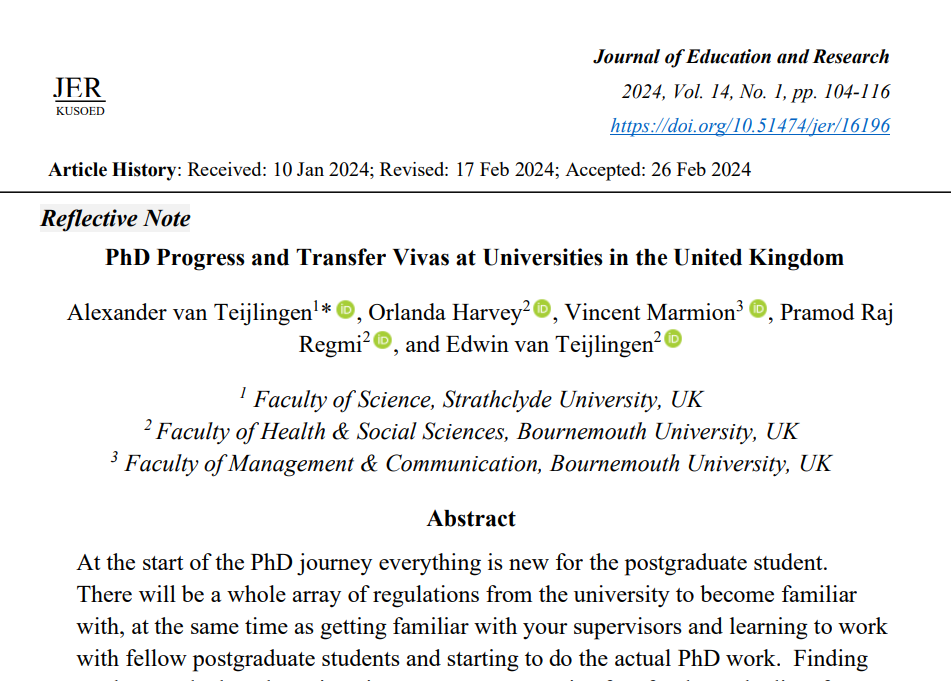
This week we had two new academic papers published online.  The first paper was an education one ‘PhD Progress and Transfer Vivas at Universities in the United Kingdom‘ [1] and the second focused on ‘Knowledge, Attitude and Practices of Masters Level Students in the COVID-19 Pandemic[2].  The first paper clearly states “Article History: Received: 10 Jan 2024; Revised: 17 Feb 2024; Accepted: 26 Feb 2024”, the online information for the second paper states: “Published 2024-12-31”, i.e. both are clearly identified as 2024 papers.

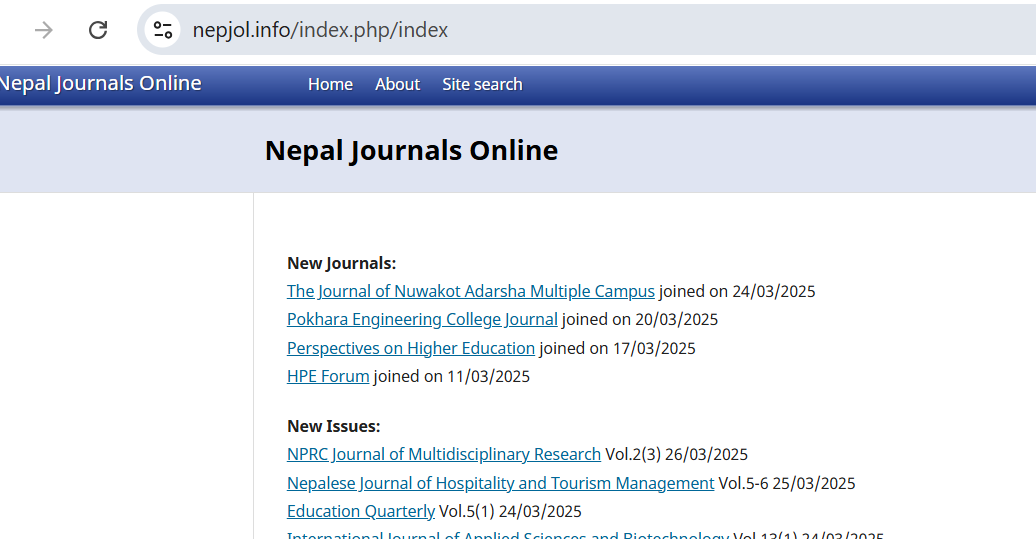
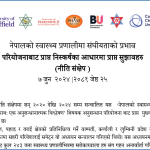
The problem for the authors is that both only appeared online this week.  For example, today (27th March 2025) Nepal Journals Online (NepJoL) reports the publication of the latest issue of Education Quarterly, Volume 5 Issue 1, the one in which we published, as 24th March (see picture below).  The reason this happens is because the journal editors experienced problems in the past year and did not manage to publish an issue in the calendar year, which makes the publication history look less professional.  To avoid having a year missing the most recently published issue is given an official 2024 publication date.

In a world full of problems the minor inconvenience of papers being backdated is twofold for academic authors.  First, we can not really announce the publication of a a new Bournemouth University paper since the dated stamped on it is last year’s.  Secondly, paper can’t be used for the REF as the acceptance date is also set in the past, for papers to be acceptable for inclusion in REF 2029 typically papers need to be made available on Open Access within three months after the acceptance date .


Prof. Edwin van Teijlingen

Centre for Midwifery & Women’s Health


References:

  1. van Teijlingen, A., Marmion, V., Harvey, O., Regmi, P., van Teijlingen, E. (2024) PhD Progress and Transfer Vivas at Universities in the United Kingdom, Journal of Education and Research, 14(1): 104-116, https://doi.org/10.51474/jer/16196
  2. Pasa, R.B., Khanal, K.P., Khatri, B.B., Adhikari, D., Kharel, S., Sharma, M.K., van Teijlingen, E.R. (2024). Knowledge, Attitude and Practices of Masters Level Students on the COVID-19 Pandemic. Education Quarterly, 5(1): 53–72. https://doi.org/10.3126/jeqtu.v5i1.76745

New Social Work Education paper published

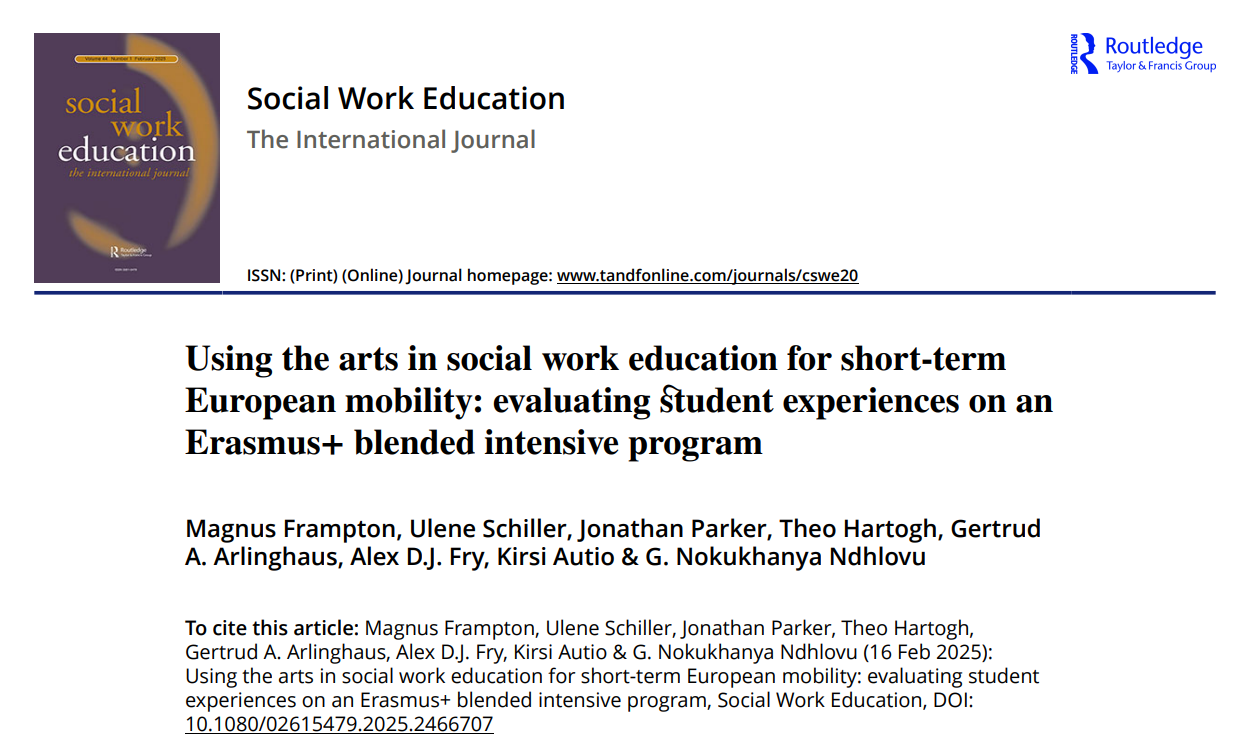
Congratulations to Dr. Alex Fry (Senior Lecturer in the Sociology of Health & Illness) and Professor Emeritus Jonathan Parker who were part of a project researching the use of creative methodologies in pedagogy. Their latest paper ‘Using the arts in social work education for short-term European mobility: evaluating student experiences on an Erasmus+ blended intensive programresulting from this work was published last month in the journal Social Work Education (a Routledge journal) [1].
Well done!
Prof. Edwin van Teijlingen
Faculty of Health & Social Sciences
Reference:
  1. Frampton, M., Schiller, U., Parker, J.,  Hartogh, T., Arlinghaus, G.A., Fry, A.D.J., Autio, K., Ndhlovu, N. (2025): Using the arts in social work education for short-term European mobility: evaluating student experiences on an Erasmus+ blended intensive program, Social Work Education, DOI: 10.1080/02615479.2025.2466707  

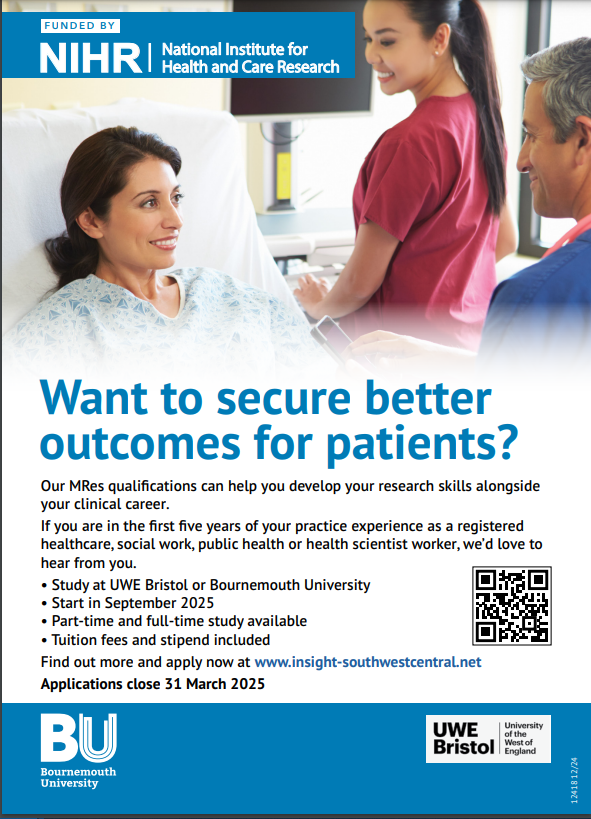
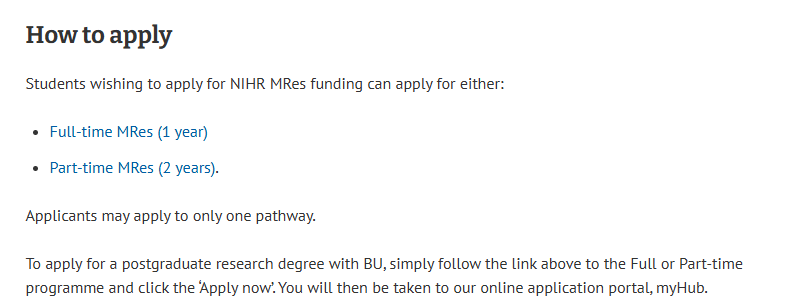
Consider starting M.Res. at Bournemouth University

Bournemouth University is delighted to be working with UWE Bristol as one of the NIHR INSIGHT hosts providing funded postgraduate M.Res. research training for health and social care professionals.  BU provides excellent training, development, and teaching for the postgraduate community across disciplinary and interdisciplinary research fields.

The National Institute for Health and Care Research (NIHR) INSIGHT programme is a unique opportunity designed to inspire and equip the next generation of health and social care researchers. As part of its commitment to fostering a world-class research workforce, the NIHR INSIGHT programme offers a transformative experience with numerous benefits:

  • Exposure to Research Opportunities: Gain invaluable insight into health and social care research.
  • Hands-On Experience: Engage directly with researchers and practitioners, acquiring real-world skills.
  • Mentorship: Receive guidance from experienced professionals, helping to shape your research career and development.
If you are health or social care professional you may want to have a look at the experience of midwifery researcher and current M.Res. student Susara Blunden (click here!).   For a more informal discussion email INSIGHTSWCC@bournemouth.ac.uk
Applications Open until 31st March 2025 (for September 2025 entry).

BU student’s M.Res. paper read 500 times

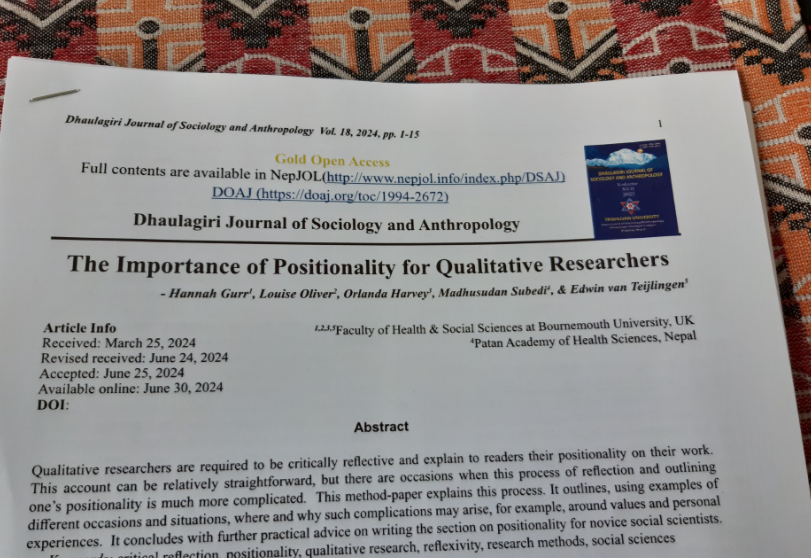
Yesterday ResearchGate alerted us that our paper ‘The importance of positionality for qualitative researchers‘ [1] has been read 500 times. This methods paper was only written last year by Bournemouth University M.Res. student Hannah Gurr, her M.Res. supervisors Dr. Orlanda Harvey, Dr. Louise Oliver and Prof. Edwin van Teijlingen in collaboration with Prof. Madhusudan Subedi from Patan Academy of Health Sciences in Nepal.

In the paper we remind qualitative researchers about the importance of critical reflection, and why they need to explain their positionality to readers of their work. This account can be relatively straightforward, but there are occasions when this process of reflection and outlining one’s positionality is much more complicated. This method-paper explains this process. It outlines, using examples of different occasions and situations, where and why such complications may arise, for example, around values and personal experiences. It concludes with further practical advice on writing the section on positionality for novice social scientists.

Well done Hannah!

Dr. Lou Oliver, Dr. Orlanda Harvey & Prof. Edwin van Teijlingen


Reference:

  1. Gurr, H., Oliver, L., Harvey, O., Subedi, M., & van Teijlingen, E. (2024). The Importance of Positionality for Qualitative Researchers. Dhaulagiri Journal of Sociology and Anthropology18(1): 48–54. https://doi.org/10.3126/dsaj.v18i01.67553

Research seminar and tech showcase 12.02.25: ICONIC (Intergenerational Co-design Of Novel technologies In Coastal communities) project

The Ageing and Dementia Research Centre are welcoming colleagues from Plymouth University to talk about the ICONIC project (see more details below) and showcase some of the technologies they have created.

 The team are interested in talking to any BU colleagues who work on co-design/digital health or immersive technologies and AI so please do come along (and let Michelle mheward@bournemouth.ac.uk know if would like to give a short presentation about your research).

 12th February 2025

11-1pm (presentations will be first and then tech showcase)

P222, Poole House, Talbot Campus

ICONIC Project

The ICONIC (Intergenerational Co-design Of Novel technologies In Coastal communities) project is exploring how co-design of novel technologies can support digital inclusion in Cornwall and Devon. The project recruited 99 participants to join intergenerational co-design workshops to create technologies that support access to environment, heritage, and community resources. The technologies include a social game, immersive heritage and underwater experiences, and a voice AI system accessed via a telephone call. The research team will be sharing their insights from the co-design process for each technology and discuss the effects of participation on digital inclusion.

  • Dr Rory Baxter is a Research Fellow at the Centre for Health Technology, University of Plymouth, working on the EPSRC funded Intergenerational Codesign Of Novel technologies In Coastal communities (ICONIC) project to address digital exclusion in Cornwall and Devon. The project involves the intergenerational co-design of technologies for supporting access to heritage, environment, and community resources. His previous work includes the ESRC funded GOALD and ERDF funded EPIC projects, which focused on digital health innovation co-design and evaluation to support healthy ageing. Prior to that he completed an EPSRC funded iCASE PhD, exploring human navigation and search behaviour, during which Rory developed VR-based experimental tasks using Unity, which were adapted for online platforms during the COVID-19 pandemic.
  • Dr Oksana Hagen earned a BSc in Electrical and Computer Engineering from NCTU (Taiwan), MSc in Computer Vision and Robotics through the Erasmus Mundus ViBOT program, and a PhD in Computing at the University of Plymouth. After a brief period in industry, Oksana joined Aldebaran AI Lab (France) under a Marie Curie Fellowship to focus on research in machine learning. She subsequently contributed to social robotics research for AgeIn project at the University of Plymouth. Currently, she is part of the ICONIC project, developing VoiceAI and underwater telepresence applications through co-design. Her research interests include machine learning, robotics and HCI.
  • Dr Marius Varga’s expertise sits at the intersection of game technology and user experience, with a focus on serious games and immersive experiences. Currently, a Research Fellow part of the ICONIC project, using a co-design approach, Marius leads the development of a multiplayer Social Game focused on seagrass conservation and for Extended Reality (XR), he is developing an immersive heritage experience in partnership with National Trust. Marius is also involved in digital health projects such part of Bridging project – focused on using XR training with autistic employees and employers and Glider project – addressing challenges in frailty through robotics, play and immersive technology.
  • Dr Linan Zhang holds an MA in East Asian Studies (Japanese) and an MSc in International Development from the University of Edinburgh. She later earned a PhD with Transtechnology Research at the University of Plymouth, where she developed a philosophical framework to ease the paradigm conflicts in knowledge sharing, drawing inspiration from an international health collaboration, a global health crisis, and the development discourse. She is currently an Associate Lecturer for i-DAT, a Research Fellow in Orbital Science, and the Media and Admin officer for the ICONIC Project at the University of Plymouth. Additionally, she serves as an Associate Editor for Leonardo Review.

Congratulations to three former BU staff

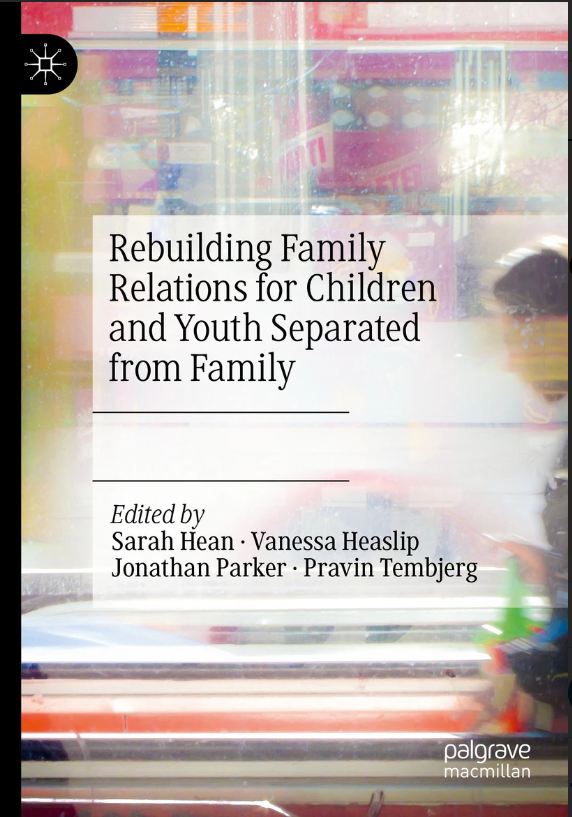
Bournemouth University Emeritus Professor, Jonathan Parker, now Health Services University, UK, former BU academic Professor Vanessa Heaslip, now Salford University and Professor Sarah Hean and Pravin Tembjerg from the University of Stavanger, Norway, are pleased to announce the publication of their edited international research collection Rebuilding Family Relations for Children and Youth Separated from Family.  This edited volume is published by Palgrave Macmillan.

This edited volume explores a range of causes for separation of children and young people from family, the impact of these causes, and methods that both professionals and families may employ to build or rebuild these relations. In particular, contributions focus on six high priority crises through which children and young people become either permanently or temporarily separated from their families: removal by child welfare services, migration, family breakdown, placement into institutional care, incarceration and/or the death of a parent. Contributors include scholars in social work, psychology, health, sociology, social policy, and political science and the work develops co-production participatory research methods and tools in addition to empirical research to enhance professional practice.


Congratulations!

Prof. Edwin van Teijlingen

CMWH

Seventh edition of Social Work textbook

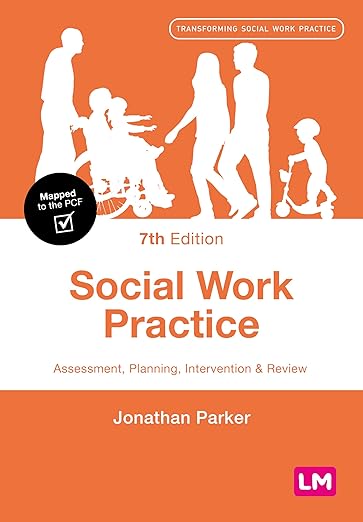
Congratulations to Bournemouth University’s  Emeritus Professor Jonathan Parker who has just published the 7th edition of his best-selling Social Work Practice. This latest edition of Social Work Practice comes with updated content and case studies.  First published in 2004, this textbook has guided social work students through the processes of working with people, groups and communities looking at the politics of assessment, planning, intervention and review and negotiating a value-based approach to practice that acknowledged the centrality of relationships and respect for the people with whom social workers practice.
Well done!
Prof. Edwin van Teijlingen

Understand what hate crime and discriminatory abuse are and how best to respond to them

Over the summer, Jane Healy (Principle Academic in Criminology at Bournemouth University) led an inter-disciplinary research team at Bournemouth University and Royal Holloway which has conducted a survey to evaluate approaches to safeguarding adults who experience hate crime and discriminatory abuse. 

Responses were received from across the UK, identifying challenges and providing examples of good practice. We are keen to share these findings as widely as possible.

The team are hosting a webinar where they will outline the context of hate crime and discriminatory abuse and discuss the anonymised findings and next steps, in a free online event on Tuesday 22 October 2024, from 12pm to 13:30pm. 

Please click on this link to reserve your tickets: Exploring restorative practice approaches to safeguarding adults Tickets, Tue 22 Oct 2024 at 12:00 | Eventbrite 

Please forward to anyone who might be interested in learning more about hate crime and discriminatory abuse, and the research findings.

We look forward to seeing you all at the online event.

Jane Healy and team

Positionality in qualitative research

At the online editorial board meeting today [Saturday 29th June] of the Dhaulagiri Journal of Sociology and Anthropology I had the pleasure of seeing Bournemouth University’s latest paper ‘The Importance of Positionality for Qualitative Researchers‘ ahead of publication [1].  The lead author of this paper is Hannah Gurr and this methodology paper is part of her M.Res. research project in Social Work.  Hannah is supervised by Dr. Louise Oliver, Dr. Orlanda Harvey and Prof. Edwin van Teijlingen in the Faculty of Health & Social Sciences (FHSS).

Dhaulagiri Journal of Sociology and Anthropology is a Gold Open Access journal so when it appears online it will be free to read for anybody across the globe.


Prof. Edwin van Teijlingen

Centre for Midwifery & Women’s Health

Reference:

  1. Gurr, H., Oliver, L., Harvey, O., Subedi, M.van Teijlingen, E. (2024) The Importance of Positionality for Qualitative Researchers, Dhaulagiri Journal of Sociology and Anthropology 18 (1): 48-54.

Congratulations to Social Workers Drs. Oliver & Harvey

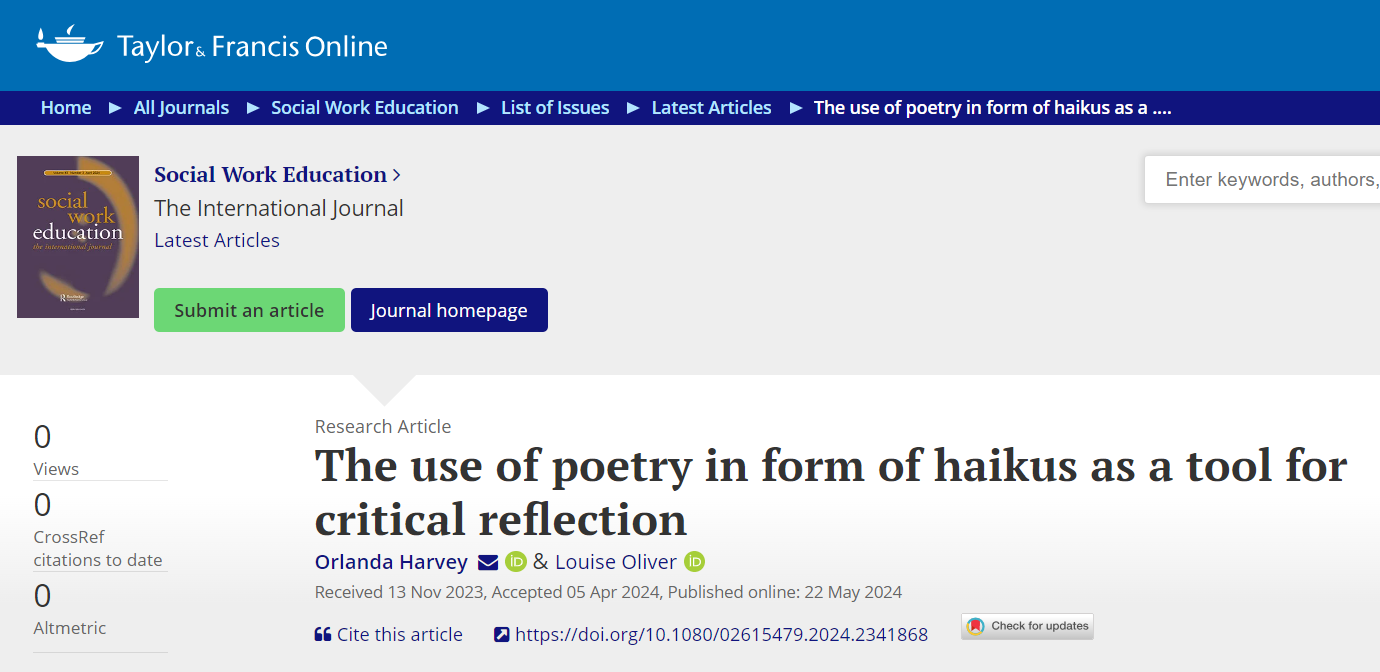
Congratulations to Dr. Orlanda Harvey and Dr. Louise Oliver on the publication of their latest article ‘The use of poetry in form of haikus as a tool for critical reflection’ [1].  This latest academic publication has been published in Social Work Education The International Journal.  This interesting article focuses on critical reflection is an integral part of social work education and practice, yet it is widely understood to be hard to learn, teach, and assess. The authors introduced the use of poetry in the form of haikus to three different qualifying social work student groups to trial a creative way of getting students to engage in critical reflection. Ninety-six students took part in the reflection activity and 23 of the students agreed to take part in the research element, which used a mixed-methods approach to explore the value of haikus in critical reflection. Following the thematic network analysis process, we identified one global theme: that haikus were a useful tool for developing critical reflection. There were three organizing themes identified: the need to create a safe learning environment to support engagement; that taking part provoked reactions; and the activity held important elements that aided the development of critical reflection.


Well done !

Prof. Edwin van Teijlingen

Faculty of Health & Social Sciences