Category / Doctoral College
Doctoral College: Researcher Development Programme
The Doctoral C
ollege would like to present the May monthly update.
This monthly update is for PGRs and their supervisors to outline upcoming research skills and development opportunities including events, workshops and networking opportunities supported by the Doctoral College. In this update we would like to promote the 3 Minute Thesis (3MT®) event, the Researcher Development Programme for May (which includes expert sessions) and the PGR and Supervisor BBQ.
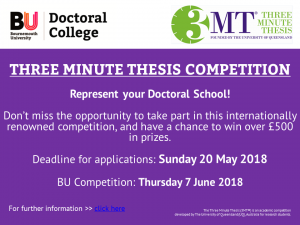
The deadline for 3MT applications is fast approaching and will close at midnight on Sunday 20th May 2018. Submit completed application forms to PGRskillsdevelopment@bournemouth.ac.uk by the deadline to be considered for the Bournemouth University Competition taking place on Thursday 7 June 2018. Look out for free tickets to attend the event, support your colleagues and cheer on your Doctoral School. Find out more on the Researcher Development Hub.
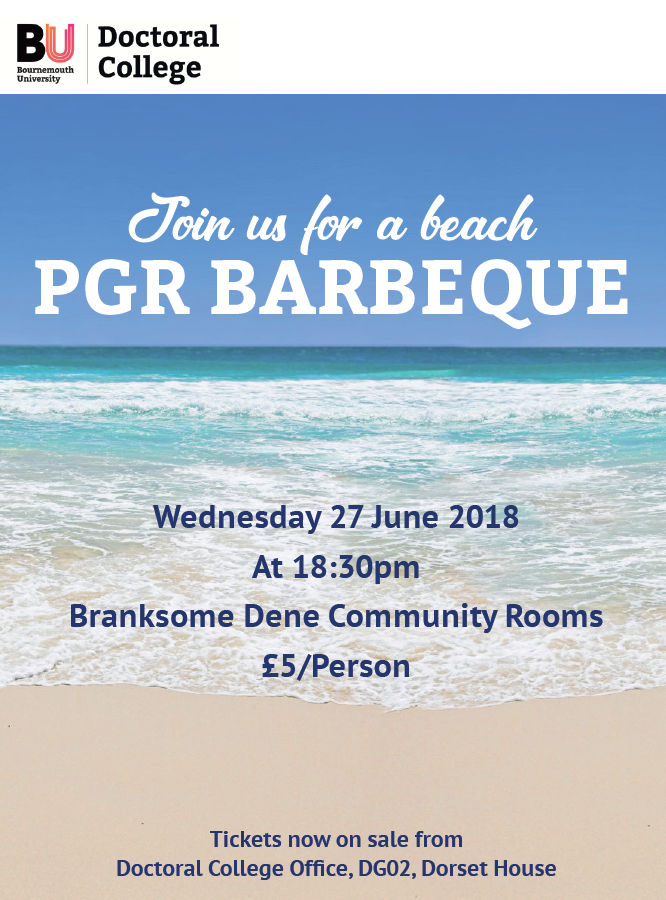
We are also very happy to announce that the 1st Doctoral College PGR and Supervisor beach BBQ will take place on 27th June 2018. To purchase your BBQ ticket for £5 please come to the Doctoral College (Talbot Campus, DG02).
These exciting development opportunities are taking place now so check out our application processes and booking information to advance your current skills, knowledge and networks.
Don’t forget to check out the Doctoral College Facebook page.
BASES Student Conference 2018 – Day 2
The second day of the conference was open by Professor Graeme Close & Mr Michael Naylor with a lecture on “nutritional strategies for competition and performance.”
Follow up with the oral presentations and free communications. I found particular interest in the research of Mr Chynkiamis on the effect of VitaBREATHE on exercise tolerance in COPD patients and in the feasibility study of Miss Thomas on the effect of 10 weeks postural stability exercise on balance in elderly care homes residents. I am glad that I had the chance to discuss with Miss Thomas part of the outcomes and the methods she used for my undergoing research on falls prevention.
Later in the afternoon, I had the opportunity to talk more about inspiratory muscle training (IMT) with Mr Hopkins and Mr Gibb who are looking at the effect of IMT on time trial performance in trained cyclists.
After, the workshop “psychological challenges for physical activity uptake” by Dr Melissa Fothergill intrigued me as I believe it is a crucial matter of discussion, especially if working with frail populations.
The final motivational lecture titled “creating your future” by Dr Steve Ingham closed the 2018 BASES student conference with tips and advice on how to progress in the sport science carriers.
Concluding, it was a great experience as not only I had the chance to improve my network and meet peers with a similar background as mine but most important because in these two days I had increased my awareness and motivations.
A special thanks go to my supervisors Professor Alison McConnell, Dr James Gavin and Professor Tom Wainwright who pointed me at this event.
The conference is now over, and by the time you read this post, I will be already on my way back to Bournemouth.
Thank you for reading,
Francesco.
BASES Student Conference 2018 – Day 1
Every year the British Association of Sport and Exercise Sciences (BASES) organise the student conference, as an opportunity to discuss and exchange views on contemporary issues in sport and exercise science (including clinical exercise, biomechanics, performance, physiology and psychology).
This year the venue is Northumbria University, and the programme includes international speakers from the applied and research worlds.
The conference started with the lecture “not all that can be counted counts – why we should listen to Einstein?” by Mrs Esme Matthew & Miss Laura Needham, who brought they experience as members of English Institute of Sport (EIS) and their work with the UK Olympic team.
It was particularly inspiring to see how the lab works moved into the field of applied science and the relationship that bound researchers and athletes.
Next, after the usual coffè break, it was the time of free communications and oral presentation, where I had the opportunity to attend to the following:
Mr Dray, and his work on the effect of high-intensity interval training on obese men.
Mr Parmar about the difference in maximal aerobic speed in filed-based tests compared to laboratory-based treadmill tests.
Miss McNulty on low-volume, high-intensity priming activity.
Miss White and his work on plyometric training team gym gymnasts.
Mr Addey about the effect of unilateral strength training on recreation runners.
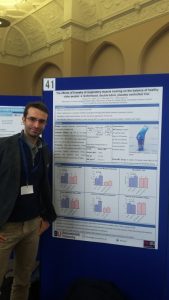
Then, it was the time for poster exhibition, where I presented my research titled: “The effects of 8 weeks of inspiratory muscle training (IMT) on the balance of healthy older people: a randomised, double-blind, placebo controlled trial”.
I was excited, and most important the comments and feedback collected satisfied my expectations.
In particularly I had the chance to discuss IMT with a couple of students from Portsmouth, that today are going to present their works on IMT in athletes.
I also met Mr Tahmosybayat, and his research on 6 weeks of exergaming compare to OTAGO exercise training in healthy older adults and we discussed the outcomes, methods and methodologies of our research.
After there was a range of workshops available from which I chose “a demonstration of how exergaming is used to improve postural control” by Dr Gill Barry at the sport central physiology lab.
Here members of the lab staff showed us their facilities in particular exergame, Kinect, and Biodex BioSway and how they measure balance in frail populations.
At the end of the conference, there was still time for the lectures on “contemporary recovery: translating research to application” by Dr Jonathan Leeder, Dr Jess Hill & Mr Luke Gupta. Who discussed how to optimising recovery following exercises, the efficacy of compression garments on recovery from strenuous exercises and sleep management in elite sports.
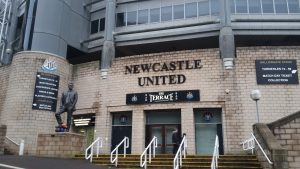
Then we moved to the home of Newcastle United FC, where before dinner we had a motivational/inspiring speech by Mr Nick Grantham specialist in athletic preparation, combat sports and strength training.
Concluding, it was a very productive day and I am looking toward tomorrow where there are going to be more lectures, oral presentations and posters oriented on frail populations and nutrition.
If you would like to follow the conference live use the Twitter Wall: http://bases2018.tweetwally.com/
Thank you for reading.
Francesco.
10th Annual Postgraduate Research Conference Winner Profiles
On Wednesday 7 March 2018 the Doctoral College hosted the 10th Annual Postgraduate Research Conference which brought together and recognised the excellence of BU’s postgraduate research.
Meet this year’s winners:
![]() |
Mark Stevens, Faculty of Management
Research topic: A social identity approach to understanding physical activity. Why I chose this research topic: As a regular runner, and someone who engages in a lot of physical activity myself, I am a strong believer that being active should be a priority for us all. Having also seen first hand the issues being inactive can cause, and being aware of the scale of the inactivity crisis we are facing on a global scale, I am passionate about understanding the factors that influence people’s physical activity levels and devising effective ways of getting—and keeping—people more active. Example of how research at BU has changed things for me: My PhD has given me the opportunity to learn a wide variety of new skills and develop my existing skills in several areas. For example, working closely with my supervisors, collaborating with researchers around the world, and working to publish journal articles has helped me learn several advanced methods of statistical analysis and develop my academic writing. Quick quote: Following on the physical activity theme, but also a good thought about working hard: “Nobody ever drowned in their own sweat!” |
![]() |
Stephen Allard, Faculty of Media & Communication
Research topic: When does Page become Stage: Exploring Evolving Poetic Practices in Digital Spaces. Why I chose this topic: The growth and popularity of social media sites, especially within the last decade, has arguably forever changed the way that we imagine, interact with, and relate to, each other. With increasing cynicism towards these new social worlds of words, with terms such as ‘fake news’ ingrained in the public consciousness, I am fascinated by how poets might add their voices to these new social frontiers. If a search for truth about online interaction is currently only revealing something increasingly seen as fake, then can perhaps poets, using something fictional, reveal new truths about ourselves, and each other, online? Example of how research at BU has changed things for me: Bournemouth University has a rich, diverse, and interactive postgraduate research community, that actually feels like a community. Through events, workshops, and talks, I have gained the opportunity to work with a range of talented and passionate researchers, working across many fields and in many disciplines. This has not only pushed the boundaries and possibilities of my own research, but also opened up new opportunities, and completely new ways of thinking about the postgraduate experience. Quick quote: Oscar Wilde: ‘Everything in moderation, including moderation’ |
![]() |
Louise Oliver, Faculty of Health & Social Sciences
Research topic: Family Narratives of Child-to-Parent Violence and Abuse: Lifting the Veil of Secrecy Why I chose this topic: I have worked within Children’s Social Care for over a decade, with a focus on working with family violence and abuse. As part of my practice, it became apparent that there was a dearth of research about children who are controlling, aggressive and/or violent towards their parents, as well as limited targeted support for families experiencing child-to-parent violence and abuse. This motivated me to study this form of family violence and abuse in order to further prevent, intervene and support families experiencing this. Example of how research at BU has changed things for me: This research has helped in many ways, it has helped develop my practice by improving my theoretical understanding of family violence and abuse, and I have been able to incorporate this within my practice. I am also in a position that I am able to offer advice and guidance to my colleagues. Quick quote: “…a moment of silence, a question without answer, provokes a breach without reconciliation where the world is forced to question itself” (Foucault 1967) |
| Amal Musa Almoualed, Faculty of Media & Communication
Research topic: Saudi Women Journalists—An Exploration of Their Role and Practice in an Age of National Transformation Why I chose this topic: The advancement, development and empowerment of women is a lifelong interest of mine, something I wish to study and achieve in my personal and professional life. This motivated me to approach my research from both sides—‘journalism’ and ‘women’—in order to combine my joint passions for journalism research and the advancement of women. Example of how research at BU has changed things for me: Being a researcher in Women and Journalism at Bournemouth University has developed my personal and professional skills and exposed me to other cultures. This has helped broaden my horizons and also helps me communicate more effectively with professionals and colleagues from different cultures. Quick quote: These are two of my own quotes, which I always recall whenever I need to encourage myself to continue pursuing my dreams: ‘Being a woman means to have patience, determination, enthusiasm and confidence as you challenge any barriers that limit your success in your personal and professional life.’ ‘Some women seek to be pretty and work hard to remain pretty their entire life; however, I believe my prettiness is determined by being mindful, ambitious, and successful in achieving my goals.’ |
|
![]() |
Ejike T. Ezeh, Faculty of Health & Social Sciences
Research topic: Shared decision-making: investigating the potential of an interactive, web-based information tool to support treatment choice of people with advanced pancreatic cancer Why I chose this topic: I have always been interested in the impact of information technology in healthcare, and when the opportunity became available, I applied and was selected. Also, being able to help people in making important decisions about their health is a rewarding experience for me. Example of how research at BU has changed things for me: Research has taught me that you have to be very thorough and systematic even in the most basic things in life. Someone may build on your work in the future. I am more careful in my utterances as well. There must be sufficient evidence to support them. Quick quote: When the going gets extremely tough, then you are close to a breakthrough. |
![]() |
Nurist Surayya Ulfa, Faculty of Media & Communication
Research topic: I am undertaking a PhD on ‘the digital virtual consumption practices and commercial enculturation among Indonesian Muslim girls’. In particular, the work aims to account for how Indonesian Muslim girls’ engagement with DVC in Girls games shapes both their literacy of and desire for Western consumer culture and the role of Islam in the process. By doing this, enables me to shed light on the interplay between market and religion under the consumer culture theory traditions. Why I chose this topic: Since 2009, as an academia in Diponegoro University Indonesia, I have been interested in studying children and marketing communication themes in Indonesia. My PhD problematization derived from my previous finding on Muslim children engagements with local and global media practices. Example of how research at BU has changed things for me: Undertaking PhD in Bournemouth University is a journey that I have thoroughly enjoyed so far. The reliable and supportive supervisory team is obviously the best part of my PhD journey. By way of their guidance, I have learned a lot about my research area and had valuable opportunities to develop myself. |
![]() |
Giulia Levi, Faculty of Health & Social Sciences
Research topic: Between silence and agitation. Coping strategies and third-party interventions in divided societies: a comparison between post-conflict Bosnia and post-referendum UK. Why I chose this topic: The Brexit referendum has favoured the emergence of new lines of division in the British society. After years working in civil society organisations operating in divided contexts I have seen how initiatives to bridge societal divisions often apply standardised models overlooking the specificities of the contexts and of the people they work with. My project looks at how such initiatives are experienced by beneficiaries in order to develop a more socio-culturally sensitive approach. Example of how research at BU has changed things for me: Since I started my PhD I’ve had the chance to participate in workshops and conferences, meeting researchers I could discuss my ideas with. As part of my research I am exploring the cultural diversity of Dorset collaborating with civil society organizations on the ground that work on hate crime prevention and victims’ support. Quick quote: ‘Every culture is always on a nomadic path’ (M. Engelke) |
Doctoral College Researcher Development Programme
The Doctoral College would like to present the April monthly update.
This monthly update is for PGRs and their supervisors outlining upcoming research skills and development opportunities including events, workshops and networking opportunities supported by the Doctoral College.
In this update we would like to congratulate the winners of the 10th Annual Postgraduate Research Conference and share highlights of the conference in the video below. The deadline for 3 Minute Thesis (3MT®) applications has been extended, Researcher Development Programme workshops for the remainder of the academic year are available to book via myBU: Doctoral College Community and check out the Doctoral College Facebook page and Researcher Development Hub for more regular updates on all Researcher Development opportunities.
E-poster presented by CMMPH student Preeti Mahato in Singapore
Last week I attended and presented e-poster at the RCOG (Royal College of Obstetrics & Gynaecology) World Congress 2018 in Singapore. The main congress programme run 22 to 24 March. RCOG president Professor Lesley Regan told in her opening speech that this Congress had more than 2,800 delegates and 150 speakers from 82 countries. Prof Regan also said that the Congress focused on the need for all to work in the field of obstetrics and gynaecology and to act as advocates for women’s health. Furthermore, she stressed that it is necessary to look beyond clinical aspects and provide safe, high-quality care to speak for the needs of the women, many of whom have no choice of their own.
The e-poster I presented ‘Study of rural maternity and childbirth care in a southern district of Nepal’ is part of my PhD study on maternity care in Nepal.

My e-poster
My poster was displayed on the morning of 22nd March (8:08– 8:16 AM) under the topic ‘early pregnancy and acute gynaecology’. Over the three days programme schedule, I also attended several plenary sessions, oral presentations and viewed many e-posters. Although there were many topics specific to clinical aspects of obstetrics and gynaecology, I was mostly interested in presentations related to contraception and fertility control, abortion, gender equality, reproductive and sexual health of marginalised communities, female genital mutilation, breastfeeding and so on. Overall, it was a great experience to learn about research in women’s health and maternity care and an opportunity to do networking with researchers with similar interests.
Finally, I would like to thank Santander Awards to provide me fund to cover my expenses to attend this congress and my supervisors for motivating me to apply for this conference.
Final Few Days: Postgraduate Research Showcase
Join us for this showcase exhibition and explore the latest postgraduate research emerging from BU. An exhibition of postgraduate researchers’ posters and photographs will be on display at the Atrium Gallery, Poole House, Talbot Campus, from 12 – 16 March 2018, 10am-4pm.
Free to attend, all welcome.
Postgraduate Research Showcase
Join us for this showcase exhibition and explore the latest postgraduate research emerging from BU.
This year the Doctoral College hosted its 10th Annual Postgraduate Research Conference. The popular event provides a valuable platform for postgraduate researchers from across different years and disciplines to present posters and photographs explaining their research projects in a clear, concise and creative way to a public audience.
Further information about the conference and details of this year’s winners is available on 10th Annual Postgraduate Research Conference webpage.
An exhibition of postgraduate researchers’ posters and photographs will be on display at the Atrium Gallery, Poole House, Talbot Campus, from 12 – 16 March 2018, 10am-4pm. Free to attend, all welcome.
If you have any questions, please contact pgconference@bournemouth.ac.uk
Doctoral College Researcher Development Programme
The Doctoral C
ollege would like to present the March monthly update.
This monthly update is for PGRs and their supervisors to outline upcoming research skills and development opportunities including events, workshops and networking opportunities supported by the Doctoral College. In this update we would like to promote the 3 Minute Thesis (3MT®) event, R.E.D talks, the Researcher Development Programme for 2017-18, and the 10th Annual Postgraduate Conference.
We are very happy to announce that 10th Annual Postgraduate Research Conference is taking place today. The conference will see PGR students, academics and other colleges from across BU come together to celebrate the diverse and exciting research being undertaken. More information about the day will be sent over the next week.
Don’t forget to check out the Doctoral College Facebook page.
The 10th Annual Postgraduate Research Conference – 1 Day to Go!
Click to Register.
The 10th Annual Postgraduate Research Conference – 2 Days to Go!

Click to Register.
The 10th Annual Postgraduate Research Conference – 3 Days to Go!
Click to Register.
The 10th Annual Postgraduate Research Conference – 1 Week to Go!
The Doctoral College kindly invites you to attend the 10th Annual Postgraduate Research Conference taking place in the Fusion Building, Talbot Campus.
Click to Register
The Annual Postgraduate Research Conference is an opportunity to listen to and engage with current postgraduate research taking place at BU. Organised and hosted by the Doctoral College this cross-faculty and interdisciplinary conference supports postgraduate researchers at all stages in presenting their research to their peers and colleagues across BU.
There will be oral, poster and photography presentations taking place throughout the day with a networking opportunity at the end.
If you have any questions please email pgconference@bournemouth.ac.uk. We look forward to seeing you.
British Federation of Women Graduates: Research Presentations Day
Saturday May 12th 2018 (10.30am – 4.00pm)
At BFWG HQ: 4 Mandeville Courtyard, 142 Battersea Park Road, London SW11 4NB
Are you a postgraduate woman student? Do you have research you would like to present to a discerning audience – and have the chance of winning a small prize of £120 for the best presentation to a general audience? Or would you like to join with us just to listen to other postgraduate women students presenting their research? The British Federation of Women Graduates Research Presentations Day (RPD) offers these opportunities. Past attendees, both presenters and audience, have found the Day thoroughly enjoyable and helpful in developing presentation skills.
If you think you would like to submit an abstract please go to the following webpages www.bfwg.org.uk where you can find more details and an abstract form. Closing date for applications is Saturday March 24th 2018.
All, postgraduates and anyone else interested (male or female), are welcome to attend as audience. Bona fide students (UG or PG) come free. For others there is a charge of £10. A sandwich lunch is included. For further information or to express interest in attending, please contact: rpd@bfwg.org.uk
Sent on the behalf of the Doctoral College, Researcher Development Programme 
Focus on realising your potential.
This month Vitae’s ‘Focus on theme’ is realising your potential.
‘Your doctorate is more than a research project, it is an invaluable opportunity to develop yourself professionally and progress in your career. Make sure you make the most of this time by thinking about, and planning for, what comes next!
Whether you are just starting out or already juggling many balls; browse our advice, guidance and tools to help you. This ‘focus on’ is designed to help you think through your career goals, and discover the myriad of ways in which you can realise your potential as a researcher.’
Find out more on this topic and a whole range of resources offered by Vitae on their website.
The Doctoral College RDP workshops up until June 2018 are available to book for PGRs via the myBU BU: Doctoral College Community. If you are a PGR and cannot view this community please let us know and we will add you.
If you have any questions regarding PGR development or the Researcher Development Programme please get in touch with Natalie or Clare (Research Skills and Development Officers) at pgrskillsdevelopment@bournemouth.ac.uk.
Final Few Days – 3MT
Only a few more days left to get your application in for the inaugural Three Minute Thesis (3MT) competition ⏱.
Find out more information about eligibility, prizes and how to apply on the Doctoral College Research Development Hub.
For any queries please email Natalie or Clare at PGRskillsdevelopment@bournemouth.ac.uk.
We look forward to receiving your application.
Looking for a different way to disseminate your PhD research?
Do you want to showcase your PhD? Raise the profile of your research? Be in with the chance of winning over £500 worth in prizes?
If the answer is yes to any of the above then the 3MT® might be the opportunity for you.
The 3MT® competition cultivates students’ academic, presentation, and research communication skills.
Presenting in a 3MT® competition increases capacity to effectively explain research in three minutes, in a language appropriate to a non-specialist audience.
Eligibility: Active PhD and Professional Doctorate candidates who have successfully passed their transfer milestone (including candidates whose thesis is under submission) by the date of their first presentation are eligible to participate. If your Viva Voce will take place before the date of the University final (7 June 2018) you are not eligible to enter the competition.
Eligible applicants should submit a fully completed application form, to the Research Skills and Development Officers at PGRskillsdevelopment@bournemouth.ac.uk by midnight on Monday 5 February 2018.
We look forward to receiving your application.


Seeing the fruits of your labour in Bangladesh
Exploring Embodied Research: Body Map Storytelling Workshop & Research Seminar
Marking a Milestone: The Swash Channel Wreck Book Launch
No access to BRIAN 5-6th February
ECR Funding Open Call: Research Culture & Community Grant – Application Deadline Friday 12 December

MSCA Postdoctoral Fellowships 2025 Call

ERC Advanced Grant 2025 Webinar
Update on UKRO services
European research project exploring use of ‘virtual twins’ to better manage metabolic associated fatty liver disease