Category / Business and economic sustainability

Publishing systematic and scoping reviews to improve your research profile

With the forthcoming REF 2021 in mind we would like to encourage both staff and postgraduate students to consider writing up their literature reviews as journal articles. Systematic and scoping reviews are a great way of publishing quality publications. They are highly valued as REF submissions, especially, but not only, in the health field.

There is plenty of support at Bournemouth University: from academic colleagues, with vast experience in writing reviews, to the library team, who can advise on, for example, developing your systematic search strategy and which databases to search.


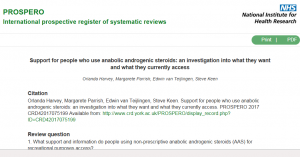
You can start with publishing your review question and research strategy on PROSPERO, international prospective register of systematic reviews. We would like to highlight just one BU example in the field of the social sciences.  FHSS PhD student Orlanda Harvey published her proposed review ‘Support for people who use anabolic androgenic steroids: an investigation into what they want and what they currently access’ late last year on PROSPERO [1].

You might like to have a look at reviews published by Bournemouth University staff, which can be found by searching BURO, our institutional repository of research outputs. Moreover, BU academics have published several methods papers on the doing and writing systematic reviews [2-4].


Information about searching the literature for systematic reviews is available on this guide by the library team.


Other pages with useful information include:


Hopefully we have encouraged you to think about publishing your literature reviews as separate articles, and to seek help early in that process!


José López Blanco & Edwin van Teijlingen


For further information, please contact:

José López Blanco, Faculty Librarian (Health and Social Sciences), Library & Learning Support, Academic Services at tel 67350 or email:  hsslibteam@bournemouth.ac.uk


References:

  1. Harvey, O., Parrish, M., van Teijlingen, E., Keen., S. (2017) Support for people who use anabolic androgenic steroids: an investigation into what they want and what they currently access. PROSPERO 2017 CRD42017075199 Available from: http://www.crd.york.ac.uk/PROSPERO/display_record.php?ID=CRD42017075199
  2. van Teijlingen E., Napper, M., Bruce, J., Ireland. J. (2006) Systematic reviews in midwifery, RCM Midwives Journal 9(5): 186-188.
  3. van Teijlingen, ER, Simkhada, B., Ireland J., Simkhada P., Bruce J. (2012) Evidence-based health care in Nepal: The importance of systematic reviews, Nepal Journal of Epidemiology 1(4): 114-118.
  4. Stewart, F., Fraser, C., Robertson, C., Avenell, A., Archibald, D., Douglas, F., Hoddinott, P., van Teijlingen, E., Boyers, D. (2014) Are men difficult to find? Identifying male-specific studies in MEDLINE and Embase, Systematics Reviews 3,78.

It was like an asteroid strike!

Alan Rusbridger, the former Editor of The Guardian, recently gave an insightful talk to Fellows at the Reuters Institute for the Study of Journalism (University of Oxford). He described the impact of digitalisation and new media technologies on the Publishing Industry as “an asteroid strike” that had decimated organisational business models, value chains, profitability and employment levels.

Dr John Oliver (FMC) attended the event and commented that whilst the UK Publishing Industry continues to adapt and undergo structural change, the industry had in fact outperformed all other UK Creative Industries between 1997-2014.

Whilst the industry had seen the workforce contract from 308,500 in 1997 to 225,000 in 2014, the structural adaption of human resources has produced a positive effect on industry performance, with the Gross Value Added per employee by increasing from £20,554 to £45,244 (+120%) over the same period.

A copy of the paper can be found on BRIAN.

(https://brian.bournemouth.ac.uk/viewobject.html?cid=1&id=212682)
Oliver JJ. (2017). Exploring industry level capabilities in the UK Creative Industries. Creative Industries Journal, 10(1):75-88

The future of research at Bournemouth University

I hope you have enjoyed discovering more about the exciting and diverse research that has been undertaken at Bournemouth University (BU) over the last twenty five years. For me, the thread that runs through each of these research journeys is working with and making a difference to the world outside academia. From influencing midwifery practice, to helping the police and security forces make us safer, to working with governments around the world to improve their response to natural disasters, researchers at BU have long been exploring ways for their research to benefit others.

At the core of all our work at Bournemouth University is our aim to bring together research, education and professional practice in a model we call ‘Fusion’. This blend of elements helps us to ensure that our research makes a difference to professional practice and informs our teaching. Working with industry enables us to shape research that helps to tackle some of the pressing issues facing our society, while also ensuring that we produce graduates who have the skills they need to succeed in their chosen careers.

Looking to the future, as we launch our BU2025 strategic plan, we intend to build on our Fusion approach making Bournemouth University a place that inspires learning, advances knowledge and enriches society. As part of this, we are investing in two new gateway buildings in Bournemouth and Poole. These will equip us with state-of-the-art learning and research facilities, including high-quality media production studios which will enable us to build on our already outstanding international reputation for animation and media production, as well as providing a new home for health and social sciences.

We will also be responding to the ambitions set out in the Government’s Industrial Strategy through developing our existing research strengths in health and medicine, animation, sustainability and low carbon technology as well as assistive technology. Research will play a significant part in helping the UK to rise to societal challenges, such as an ageing population, the need for the development of clean energy and use of technology in driving economic growth. By building on our existing areas of research expertise, producing outstanding graduates and working with industry, Bournemouth University will help to ensure that the UK is well equipped to succeed in the future.

I am proud of the work of Bournemouth University’s researchers, students and professional support staff over the last twenty-five years and I look forward to seeing the difference that we make to the world around us in the coming years.

This article was featured in the 2018 Bournemouth Research Chronicle. To see the magazine in full, click here or pick up a copy in Poole House or Studland House reception.
 Vice Chancellor, 

Professor John Vinney             

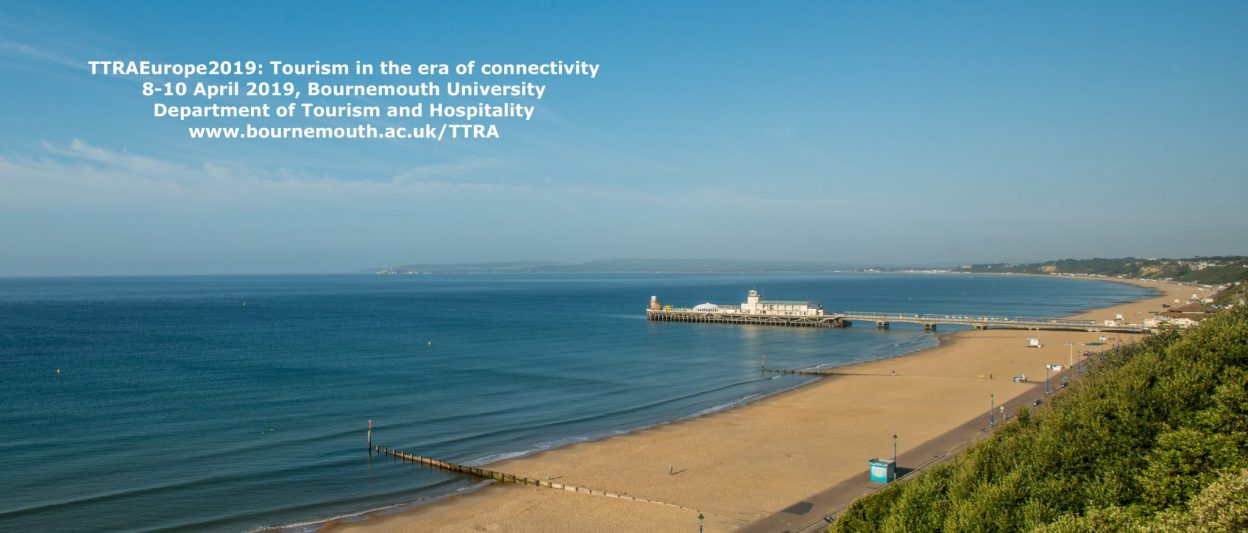
join TTRAEurope2019, Tourism in the era of connectivity, Bournemouth University Department of Tourism and Hospitality www.bournemouth.ac.uk/ttra 8-10 April 2019

join us for the TTRAEurope2019, Tourism in the era of connectivity, Bournemouth University Department of Tourism and Hospitality www.bournemouth.ac.uk/ttra 8-10 April 2019


Conference website http://www.bournemouth.ac.uk/ttra
Submission link https://easychair.org/conferences/?conf=ttraeurope2019

The Travel and Tourism Research Association’s 2019 European Chapter Conference will be hosted by Bournemouth University Department of Tourism and Hospitality in Bournemouth from Monday 8th to Wednesday 10th April 2019. This is a three-day conference that will include a doctoral colloquium day and industry best practice thread. The theme of the conference is Tourism in the Era of Connectivity, which covers a broad range of themes to ensure that we are inclusive of the widest range of tourism research.


People-to-people connectivity is an essential aspect of tourism; bringing people from all aspects of life together to meet, share moments and explore cultures, resources and experiences. Connectivity brings us together through shared routes, accessibility, communication, and experiences in different environments and destinations. Increasingly, global society is becoming more connected, facilitating opportunities for exchange and interaction, bringing both opportunities and challenges. Tourism is changing dramatically in the era of connectivity.

Advanced technology enables users to amalgamate information and big data from various sources on their mobile devices, personalise their profile through applications and social networks, and interact dynamically with their surroundings and context. Tourism professionals increasingly use technologies and networking to bring different stakeholders together to co-create value for all. The conference will connect the different concepts of connectivity, personalisation, tourism development and marketing towards co-creation of the tourism experience. It will explore how these experiences can support the co-creation of value for all stakeholders and address a range of components of connectivity.

Examples of the conference themes include but not limited to:

Coastal Tourism; Tourism Marketing; Economics and Planning; Culture and Heritage; Hospitality Innovations; Digital Tourism; Sustainability and Wildlife; Gender, Accessibility and Inclusion; Tourism Management; Overtourism; Tourism and Philosophy; Special Interest and Niche Tourism; Spiritual, Religious and Pilgrimage Tourism; Events and Leisure; Experience and Co-creation; Small Business and Entrepreneurship.

Submission Guidelines

All papers must be original and not simultaneously submitted to another journal or conference. The following paper categories are welcome:

  • Research papers and case studies (5,000 word paper or 1,000 word extended abstract)
  • Doctoral research papers (5,000 word paper or 1,000 word extended abstract)
  • Applied (industry and sector) papers (1,000 word extended abstract)
  • Student papers, including Masters theses (1000 word extended abstract)

Instructions to Authors

Please adhere to the following for your submission:

  • Word limit of 1,000 words for extended abstracts; word limit of 5,000 words for full papers.
  • Word limit includes references, tables, figures, etc.
  • Please use Arial font size 12 throughout.
  • Must be presented in MS Word Format, on size A4 (210 by 297 mm) paper, with margins of: left 3 cm, right, top and bottom 2.5 cm.
  • Any illustrations should be of high resolution, preferably in JPEG or TIFF format.
  • The page composition should be as follows:
    • TITLE: In uppercase, bold, and centered.
    • AUTHOR/ AUTHORS: in lowercase and the surname(s) in uppercase.
    • AFFILIATION AND CONTACT DETAILS: in uppercase.
    • CATEGORY: please indicate the paper category of the submissions (Research paper and case study; Doctoral research paper; Applied (industry/sector) paper; Student paper (for all students other than doctoral researchers)).
    • TEXT: Arial 12, full justification and single spacing. Paragraphs will begin without tabulation and with single spacing with regard to the title or the prior paragraph.
    • FIGURES AND TABLES: will be incorporated into the text in the corresponding place. They will be numbered separately (figures and tables) by order of appearance (Arabic numerals). The title, in bold and centered, will be located at the top and will be separated from the figure or table by space.
    • FOOTNOTES: Please keep to a minimum. Where used they should be consecutive, with full justification and Arial 8 font.
    • REFERENCE STYLE: please use the referencing style of the American Psychological Association (APA) Sixth Edition.

Important Dates

Deadline for submission: 5th January 2019

Notification for acceptance: 5th February 2019

Final submission: 1st March 2019

Early Bird Deadline: 1st March 2019

Conference: 8th-10th April 2019 **TTRA CONFERENCE IN BOURNEMOUTH**

Conference themes and call for papers

Submit papers for the conference

Contributions by academics, practitioners and phd students are welcome in the following categories:

Categories Requirements
Research papers and Case studies Papers 5000 words or 1000 word extended abstract
Doctoral Research papers Papers 5000 words or 1000 word extended abstract
Applied (industry and sector) papers 1000 words extended abstract
Student papers (including master theses) 1000 words extended abstract

Confirmed Invited speakers so far

Travel and Tourism Research Association 2019

Associate Professor Luisa Andreu Department of Marketing, Faculty of Economics, University of Valencia, Spain

Professor Carlos Costa University of Aveiro, Portugal and Editor of the Journal of Tourism & Development

Professor Alan Fyall, University of Central Florida, USA and coEditor of Elsevier’s Journal of Destination Marketing & Management

Professor Scott McCabe Nottingham University and co-Editor of Annals of Tourism Research

Assistant Professor Luiz Mendes-Filho, Tourism Department, Universidade Federal do Rio Grande do Norte, Brazil

Professor Tanja Mihalic University of Ljubljana, Slovenia

Associate Professor Ana María Munar Copenhagen Business School, Denmark

Professor Nigel Morgan, Swansea University, UK

Professor Mike Peter (University of Innsbruck, Austria) The Relevance of Family businesses in Tourism and Hospitality

Professor Cleopatra Veloutsou University of Glasgow UK and co-Editor in Chief of the Journal of Product and Brand Management.

From spin doctors to social media: The evolution of political communication

New media, particularly social media, have become instrumental in political elections and campaigns today. Politics has changed dramatically over the past couple of decades, partly due to the continuously emerging forms of communication. The field of political communications combines different elements of political science, communication, cultural studies, media, and psychology, and has been established at Bournemouth University since 2002.

The Centre for Politics and Media Research at BU focuses upon the soft power exerted through political campaign communication and its impact upon society and the citizen, the social and cultural frameworks which shape ideology and the collective psychology of publics, and the psychology of political violence. BU academics Professor Barry Richards, Professor Candida Yates and the Director of the Centre, Dr Darren Lilleker, have different research backgrounds within media, advertising, cultural and communication studies and psychology.

“I’ve always been interested in the relationships between politics, emotion, culture and society” explains Professor Yates, “my Doctoral research focused in particular on the cultural politics of emotion, film and masculinity in crisis. From there, I began to look more widely at the ways in which different emotions are shaped, experienced and communicated in politics, culture and society.”

Throughout the 1990s, political communication in Britain and elsewhere underwent a huge change which is often associated with Tony Blair’s New Labour government with its use of spin doctors and mediatised news management. There was also a significant increase in news media competition and advances in technology that seemed to provide citizens with a sense of choice and control over media consumption, although this sense of empowerment with regards to social media is now often questioned and problematized.

“I turned my attention away from the study of masculinity in film and instead turned to the analysis of political communication and the culture of politics more widely; I analysed the fantasies and feelings that emerged in relation to some key political figures at the time and how those psycho-political formations relate to the ways in which we engage with and emotionally invest in politics,” says Professor Yates.

“People thought of spin as this manipulative, domineering process that was all about bringing the techniques of marketing into politics in a bad way,” says Professor Richards. “However, I thought that there was something potentially more positive in this shift in political communication, and so the arrival of spin and political marketing increased my interest in electoral politics.”

Throughout this time, mainland Britain was also facing political violence and terrorism.

“In the 1970s and 1980s, it was almost exclusively Irish Republican terrorism, and then in the late 1990s and early 2000s we had the arrival of Islamist terrorism across the world,” explains Professor Richards. “I had always been interested in terrorism: the impact it has on the British public and the psychology of how people could come to carry out attacks.”

These years showed a huge shift in global politics. With this, political communication started to become more and more promotional, and celebrity culture began to infiltrate politics.

“There was a dominant set of ideas by the government at the time and then there were other marginal ideas that didn’t get voiced,” explains Dr Lilleker. “When I started doing my research, what interested me was how politicians developed ideologies, how they were sold and then understood by citizens.”

With the introduction of social media in the early 2000s, the hegemony of the mass media was challenged and political communication changed dramatically. The prevalence of social media in politics has made parties and officials more accessible and accountable to citizens. “Now, citizens can react immediately to an event and they can even influence what’s being said by using social media to come together to form a mass,” explains Dr Lilleker.

With evolutionary changes such as new media and globalisation shaping politics, political communication is clearly evolving rapidly and becoming increasingly important. Future research within the Centre for Politics and Media Research will include looking further into the psycho-dynamics of contemporary political culture, the marketization of political discourse and campaigning, and comparative politics.

“I am now looking at the role of empathy in relation to the current political, social and cultural landscape of Brexit and its aftermath, which is very polarised” says Professor Yates. “I’m interested in how empathy can emerge in groups and whether there is a way that we can actually help to facilitate it as a way to encourage constructive rather than destructive debate.”

“I’m embarking on some research into national identity and its relationship to the needs for safety and for dignity, which I think are major drivers of our experience and action as citizens. The starting point is how much do people think of themselves as having a national identity these days. This is a very rich psychological area as well as an important political issue,” says Professor Richards.

Meanwhile, Dr Lilleker is concerned with the dangers of social media and the misleading and fake news that is shared and consumed by millions. In the light of recent revelations about the use of data from social media sites, such as Facebook, this has perhaps never been so important.

“Media literacy has never really been taught but I think now it’s crucial to understand what’s happening on social media, especially for young people who should be educated on this issue.”

“At BU, there are a few of us now who look into the structures of feeling and emotions that underpin politics as it represented, communicated and experienced ,” says Professor Yates. “We want to develop that field to become a centre of excellence.”

To keep up with the latest news from the Centre for Politics and Media Research, visit www.bournemouth.ac.uk/pmg

This article was featured in the 2018 Bournemouth Research Chronicle. To see the magazine in full, click here or pick up a copy in Poole House or Studland House reception.
Developing doctoral research at Bournemouth University

Over the last fifteen years, more than 640 students have completed their doctoral studies at Bournemouth University in a range of subjects, from engineering to midwifery, from business management to animation. During that time, support for postgraduate research students (PGRs) has gradually developed, so that Bournemouth now has a thriving community of over 630 postgraduate researchers.

“Our new Doctoral College has its roots in the establishment of the Graduate School, back in 2003,” explains Dr Fiona Knight, one of the Doctoral College’s two Academic Managers. “Originally, our aim was to help make postgraduate research student’s journeys more consistent. At the time BU had 7 Academic Schools and postgraduate research students experiences really varied according to where they were based. We wanted to make sure that no matter where you were in the university, you had the same outstanding experience.”

“We began to work much more formally; introducing a Code of Practice for Research Degrees, developing training and formal qualifications for our supervisors, and giving much more structure to the research degree journey. The route to getting your PhD became much clearer,” continues Dr Knight.

The Doctoral College team have also worked hard to develop a sense of community among Bournemouth University’s postgraduate research students. This year will see their 10th annual Postgraduate Research Conference take place, where postgraduate research students from across BU will be able to share their research via presentations, posters and photography. “It’s the perfect opportunity for others working at BU to find out more about the exciting research being carried out by our postgraduate researchers” explains Dr Julia Taylor, the other Doctoral College Academic Manager.

Throughout the year, postgraduate research students can also develop their research, professional and personal skills by signing up to any number of skills and training courses offered through the Doctoral College’s Researcher Development Programme or hone their public speaking skills by taking part in the internationally renown 3 Minute Thesis™ .

Olivia Placzek, a postgraduate student in the Faculty of Management has been studying at Bournemouth University for the last eighteen months and is Chair of the Postgraduate Researchers Rep Committee.

“I’ve really enjoyed my journey so far, and it’s great to see how well the students, supervisors, administrators and the Doctoral College work so well together,” says Olivia, “I like all the opportunities we have to learn something new; whether it’s taking a course, going to a workshop or just catching up with other student’s research over coffee.”

“Having all these opportunities to choose from means that you can improve your skillset and the chances of going into the career you aspire to; which might be continuing in research or going into industry. There are always workshops on offer to help improve your skills, no matter what your goals are.”

Doctoral college case study

 Min Jiang joined Bournemouth University in 2010 to begin her studies in MSc Computer Animation and Visual Effects, after completing her first Master’s course at the Communication University of China whose programme is in partnership with Bournemouth University (BU).

“I thought I was certain to return to China after the one year’s Master’s course, however, BU won me over with their amazing animation course,” says Min. “I’ve learnt so much here and the life in Bournemouth is just too good to be over so quickly, so I continued my study as a PhD student in Computer Animation for a further 5 years.”

Alongside her PhD studies, Min also participated in group research projects which helped to develop her real-world skills such as project management and working effectively with others including external researchers and experts.

“Throughout my experience at BU, the Doctoral College has been very helpful. They provide funding for us to attend and present at conferences, conduct experiments and buy advanced equipment,” says Min. “They arrange all our training sessions and seminars to help us go through each stage of our PhD smoothly.”

After Min graduated from her studies in 2016, she went on to work for Oriental DreamWorks in Shanghai and is now working for Moving Picture Company in London, a global leader in visual effects.

“Luckily, BU gave me a very good introduction to the entire industry. Not only do we use the same system and animation tools as the university, but many of my colleagues are BU graduates too!”

“The Doctoral College really cared about our studies as well as our lives outside the university. All the tutors there were very kind and helpful; they took the time to get to know us all individually and take care of us.”

To find out more about BU’s Doctoral College, visit: www.bournemouth.ac.uk/doctoral-college

This article was featured in the 2018 Bournemouth Research Chronicle. To see the magazine in full, click here or pick up a copy in Poole House or Studland House reception.

Brexit: champagne, parmesan, prosecco and feta could soon be at the centre of negotiations

As Brexit day creeps closer, one issue that remains unresolved is the way that food names will be protected in Britain and the EU. From parmesan and feta to cornish pasties and Bavarian beer, the EU is fiercely protective over protected designations of origin (PDOs) or protected geographical indications (PGIs).

A number of highly popular products are protected under this legal framework that dictates certain products can only be produced in certain regions. So champagne must be produced in the Champagne region of France and prosecco in a small pocket of north-eastern Italy. These are products with big market shares in the UK, with consumer loyalty being built up and consolidated through the use of these reputable geographical names.

The issue is also important to the UK. Many British products are also protected under the EU regime. It helps protect both their quality and value.

Accept no imitations.
Shutterstock

But when the UK leaves the EU, it will no longer be under the laws that govern the protective status of these products. The government’s recently launched white paper, which outlined the UK’s plans for Brexit, declares that Britain will set up its own protection of geographical names to provide for continuous protection of UK products within the UK. But it doesn’t mention any continuation of the EU’s protection scheme.

Some in Brussels have expressed fear that British producers will start exploiting previously protected European names. Yet, rather ironically, British products would not lose their status in the EU (and could still seek new EU registrations in the future), since the EU allows for the protection of geographical names from non-EU countries. It’s an imbalance which seems to please British negotiators.

So, the European Commission fears that after Brexit the high level of protection that European products currently enjoy in the UK under EU law may evaporate. The white paper proposal rather contrasts with the commission’s proposal, which suggests that the UK continue protecting geographical indications, as it does under the EU.

US interference

But the EU’s desire that post-Brexit Britain keep its protection of geographical indications is bound to collide with US strategic interests. The US position is an important factor to take into account in the Brexit negotiations. If the UK signs a trade deal with the US, it will likely clash with a lot of EU regulations – including provisions governing the use of geographical names for food and beverages.

The US plays by different rules when it comes to the protection of these names. There are numerous US food companies that freely use European geographical expressions (including parmesan and feta for cheese) to identify products that have not been produced in the relevant European locations. In the US, these are considered to be generic names that describe the products and cannot be monopolised by anyone, not even by the producers coming from the relevant European geographical area.

Is it feta or ‘Greek-style cheese’?
Shutterstock

That is why the US is lobbying the UK to abandon the EU’s protection of geographical indications, namely to allow US food and beverage companies to enter the British market by freely using European names. A US-UK trade deal would likely be contingent on the UK dropping the EU-level protection of geographical indications. But this, in turn, would scupper the prospects of a trade deal with the EU – an even bigger trading partner for the UK.

Sticking point

The EU has continuously placed great emphasis on the protection of its geographical names during trade negotiations. It proved to be a big sticking point in the Transatlantic Trade and Investment Partnership (TTIP) negotiations. France and Greece, for example, threatened to veto a deal with the US unless it upheld their geographical indications. More recently, Italy’s minister for agriculture noted that Italy may not ratify the EU’s trade deal with Canada because, in his view, it does not adequately protect Italian geographical names.

The ConversationIt is therefore not a stretch to say that the entire Brexit deal could hinge on the issue of geographical indications. There is no doubt that providing a level of protection in the UK which is comparable to the current EU scheme – for example, via a mutual EU/UK recognition scheme – would facilitate an agreement not only on the specific issue of geographical names, but also of the entire Brexit deal. This would, however, make favourable trade agreements between the UK and the US less likely. The battle over geographical indications will surely go on.

Enrico Bonadio, Senior Lecturer in Law, City, University of London and Marc Mimler, Lecturer in Law, Bournemouth University

This article was originally published on The Conversation. Read the original article.

New BU migrants’ health publication

The Journal of Immigrant and Minority Health (Springer) just accepted the latest paper by former FHSS Ph.D. student Dr. Pratik Adhikary (photo). [1]  His latest paper ‘Workplace accidents among Nepali male workers in the Middle East and Malaysia: A qualitative study’ is the fourth, and probably final, paper from his Bournemouth University Ph.D. thesis.  This latest paper is based on the qualitative part of the mixed-methods thesis, his previous papers focused more on the quantitative data. [2-4] 

Since this is a qualitative paper it also offers a more theoretical underpinning than the previous papers.  The work uses the dual labour market theory which associates labour migration specifically to the host economy as it explains migration from the demand side. Labour migrants from less developed economies travel to fill the unskilled and low-skill jobs as guest workers in more developed economies to do the jobs better trained and paid local workers do not want to do.  This theory also explains the active recruitment through labour agents in Nepal to help fulfil the demand for labour abroad, and it helps explain some of the exploitation highlighted in host countries. The theory also helps explain why lowly skilled migrant workers are often at a higher risk to their health than native workers . Similar to migrant workers from around the world, Nepali migrant workers also experience serious health and safety problems in the host countries including accidents and injuries.

The latest article will be Open Access in the Journal of Immigrant and Minority Health!


References:

  1. Adhikary P, van Teijlingen E., Keen S. (2018) Workplace accidents among Nepali male workers in the Middle East and Malaysia: A qualitative study, Journal of Immigrant and Minority Health (First Online), https://link.springer.com/article/10.1007/s10903-018-0801-y
  2. Adhikary P., Keen S., van Teijlingen, E. (2011) Health Issues among Nepalese migrant workers in Middle East. Health Science Journal 5: 169-175. www.hsj.gr/volume5/issue3/532.pdf
  3. Adhikary, P., Sheppard, Z., Keen, S., van Teijlingen, E. (2017) Risky work: Accidents among Nepalese migrant workers in Malaysia, Qatar and Saudi, Health Prospect 16(2): 3-10.
  4. Adhikary P, Sheppard, Z., Keen S., van Teijlingen E. (2018) Health and well-being of Nepalese migrant workers abroad, International Journal of Migration, Health & Social Care 14(1): 96-105. https://doi.org/10.1108/IJMHSC-12-2015-0052

Re-thinking the Profession of Project Management for Sustainability

Project management contributes trillions to the global economy; driving business innovation and converting politicians’ promises into new systems and constructions that are intended to improve everyday life.

Sustainable development is a global priority and yet sustainability and project management do not sit comfortably together.  There is tension between the long-term focus of sustainable development and the inherent pressure on projects to deliver against short-term measures of success.  Furthermore, projects regularly fail.  For example, Meier (2017) suggest 71% of projects in 2015 failed or were challenged.  The financial, social and environmental costs of wasted resources and lost opportunities each year are also measured in trillions across the globe.

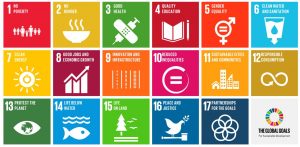
The UN’s 17 Sustainable Development Goals

Dr Karen Thompson and Dr Nigel Williams, both from the Department of Leadership, Strategy and Organisations, recognise that principles of responsible management and sustainability must be effectively incorporated into project management research and practice.  Without responsible project management, projects are likely to hasten degradation of the environment and increase tensions in society.  As a growing population competes for scarce resources, human conflict across the globe is likely to worsen.  Responsible management of projects is therefore globally significant.

An international, cross-disciplinary workshop to think about Responsible Project Management was recently hosted by Nigel and Karen at BU.  One focus was the project manager competencies because Wheatley (2018), among others, argues that enhanced project management capabilities would increase the beneficial impact of projects.  A central premise to emerge was that managing projects responsibly will require project managers to go beyond delivering defined results for specific customers to managing the impact of their activities on society and the environment.

The workshop brought together leading academics and practitioners to begin exploring the concept of Responsible Project Management, with a particular focus on what competencies project managers require to think and act responsibly.  An amazing 43 people engaged with us over two and a half days.  Feedback collected formally and informally was incredibly positive.  One outcome is recognition that the role of a project manager need to shift from a functional role, to leading and facilitating sustainable change.

Steve Knightley

The event began with a relaxed and informal afternoon with Steve Knightley, multi-award-winning musician/song writer, who shared his journey of creating a sustainable business.  The following day, BU’s Deputy Vice Chancellor, Professor Tim McIntyre-Bhatty, welcomed participants and shared his vision of the future, including BU2025.  Other participants from BU included the Head of BU’s Programme Management Office, Jackie Pryce; BU project managers; and Sustainability Manager, Neil Smith.  Colleagues Dr Mehdi Chowdhury, Senior Lecturer in Economics, Tilak Ginige and Dr Sulaf Assi, both from the Faculty of Science and Technology, and several BU students contributed presentations and stimulated discussion.

External participants included Professor Darren Dalcher, Director of the National Centre for Project Management; Professor Andrew Edkins, Director of the Bartlett Real Estate Institute and Professor of the Management of Complex Projects; Professor Gilbert Silvius, thought leader and author on sustainable PM from the Netherlands, and other UK academics.  Representatives from two professional bodies – the Association for Project Management (UK) and the Project Management Institute (USA) – reflected a range of practitioner perspectives; Arup Director Rob Leslie-Carter joined us via Skype, and Rowan Maltby, Project Consultant at Pcubed participated.  Sustainability thinking was used to provoke discussion and challenge norms, led by a Director of the Association of Sustainability Practitioners, Gwyn Jones.  We discussed B-corps, a new type of business organisation where the aim is to deliver value to stakeholders without preference.  Unlike not-for-profit organisations, B-corps recognise the importance of profit, because without profit a business is not sustainable.  Organisation and governance of B-corps reflect a need for stewardship of resources and impacts across a wide range of stakeholders, including the environment, users of outputs, staff, suppliers, and the wider community.

The workshop generated ideas about making project management a profession that goes beyond a technical function delivering outcomes defined by others.  We suggested a range of competences and understandings project managers will require if projects are to be managed responsibly in the future, such as dealing with uncertainty, ethical complexity, and better anticipation and mitigation of damaging unintended consequences.  Workshop outputs included ideas for research bidding, writing papers, learning, teaching and module content.  Already we are collaborating on a guide for project practitioners to begin sharing the ideas with national and international audiences.

References

Meier, S.R. 2017. Technology Portfolio Management for Project Managers. Available online: https://www.pmiwdc.org/sites/default/files/presentations/201703/PMIW_LocalCommunity_Tysons_presentation_2017-02.pdf [Accessed 7 July 2018]

Silvius, A.J.G. 2017. Sustainability as a new school of thought in project management.  Journal of Cleaner Production. Vol. 166. Pages 1479-1493

Wheatley, M. 2018.  The Importance of Project Management.  ProjectSmart. Available online: https://www.projectsmart.co.uk/the-importance-of-project-management.php [Accessed 8 July 2018]

New Security textbook published by BU academic

Shamal Faily has just published the textbook Designing Usable and Secure Software with IRIS and CAIRIS with Springer.

The book was written to help practitioners, be these UX designers, security architects, or software developers, ‘build in’ security and usability. The ACM Code of Ethics states that True security requires usability – security features are of no practical use if users cannot or will not use them. This book explains how usable and secure software can be designed using the IRIS framework and the CAIRIS software platform, and provides real case studies where security and usability is incorporated into software designs at an early stage. This is something most people agree should be done, but few people give advice on how to do it. This book helps fill this gap.

The book also helps educators and students by providing a resource for a course on Security by Design. As explained in the preface, this book was written to support our undergraduate and postgraduate Security by Design unit at BU, and pointers are included on how different parts of this book can support this or similar courses.

More information about this book can be found here. As the book will be used to support teaching at BU, soft and hard copies should be available from the library soon.

Grand Challenges – Clean Growth and Future of Mobility

There are several initiatives to develop state of the art low carbon energy technologies to capture, generate and store energy from renewable sources. Non-renewable sources of energy especially those derived from fossil fuels are finite, and have been contributing to greenhouse gases. In turn ozone depletion and global warming are on the rise.

There have been recent developments in terms of tidal, wind, solar PV and solar thermal technologies, however there are still challenges in terms of efficiency and amount of useful energy that can be generated versus global demands. In addition, dependency on rare earth materials still exists, thermal efficiency of thermo-fluids (fluids used as a medium of heat energy transfer) have upper thresholds and have implications on the durability of systems. Costs of conventional energy materials such as cobalt and lithium carbonates have been rising sharply since 2015-16. Thermal instability of lithium ion batteries and issues are still significant.

At BU NanoCorr, Energy & Modelling (NCEM) Research Group we are developing novel solar thermal (low carbon) technologies incorporating nano enhanced thermofluids and storage materials.

Research and development in low carbon technology at BU is focused on two main themes; clean growth and future of mobility. For further details and to take part in discussion by providing your comments please click on the link (it takes less than a minute to register).

‘GDPR for Charities’ workshop: a report

On Monday, June 11th we ran our long planned ‘GDPR for Charities’ workshop at the Enterprise Business Centre.  This workshop was one of the outputs from our Charity Impact Acceleration Scheme funded project to help a local charity with their GDPR readiness activities.  The aim of this workshop was to share the techniques and lessons learned from this project with the wider non-profit community in the Dorset region and beyond.  This was a one-day event attended by around 40 participants working for or with charities of various sizes.

Shamal Faily opened the workshop (slides) by setting out some of the challenges faced by charities making sense of GDPR, before giving an overview of what would be planned for the day.

Jane Henriksen-Bulmer then gave an overview of GDPR and Data Protection Impact Assessments (DPIAs) before presenting the ‘DPIA Data Wheel’ – a step-by-step process for carrying out a DPIA (slides).

The participants were then divided into four groups and, with the assistance of our BU facilitators, used the Data Wheel to conduct a DPIA for a hypothetical but realistic scenario. The groups then came together to present the privacy risks they found to the rest of the participants.

After lunch, Tessa Corner delivered a talk on StreetScene‘s experiences applying the DPIA Data Wheel (slides), before Shamal gave a talk on how to find security & privacy risks, and demonstrated the use of CAIRIS to support the discovery and management of risks (slides).

After these talks, Raian Ali hosted a lively panel on GDPR and its implications for charities before Jane closed the day by summarising some of the results of applying the DPIA Data Wheel with StreetScene (slides) and discussing some next steps to build on the momentum from this workshop (slides).

If you’re interested in finding out more about the workshop, or would like to get involved in any follow-on activities then please contact Jane Henriksen-Bulmer or Shamal Faily.

Creative launch for Responsible Project Management research

Dr Karen Thompson and Dr Nigel Williams, of the Department of Leadership, Strategy and Organisations, are drawing on the creative industries to kick-start research on Responsible Project Management.

They have designed a 2-day interactive workshop that will bring together leading researchers and practitioners from across the UK and Europe.  This inter-disciplinary event will begin to consider how Project Managers can develop sustainability competencies to meet the UN’s 17 Sustainable Development Goals (SDGs).  A social learning approach, incorporating ‘Open Space Technology’, will be used to develop new understandings, practices and relationships.  Building on existing literature on Responsible Management, an important objective of this workshop is to identify a future research agenda for Responsible Project Management.

To get participants into a creative mindset, the workshop will be preceded by a relaxed and informative event with multi-award winning singer/songwriter Steve Knightley.  His journey is one of growing a business from grass roots to international fame.  A business that delivers excellence and fosters a warm embracing sense of community, and a journey that has taken him from local pubs to the Albert Hall, and beyond.

Academics and practitioners with a keen interest in sustainability from any discipline are invited to join one or both events.  Booking is essential.

Monday 2 July Growing a Sustainable Business  https://growingasustainablebusiness.eventbrite.co.uk

Tuesday 3 & Wednesday 4 July: Responsible Project Management Interactive Workshop https://responsibleprojectmanagement.eventbrite.co.uk


Background and rationale for research on Responsible Project Management

Responsible project management is the concept of incorporating the UN’s 17 Sustainable Goals in Project Management.

Projects and project management are now widely recognized by organizations as being essential to achieving their strategic objectives (Turner 2014).  Project management is a transferable skill, and projects are the engines of change across industries and in many aspects of business.  Research on project management therefore sits at the heart of business, management and education.  Since projects are conceptualized and realized by temporary, heterogeneous groups of individuals, existing management interventions from Operations and Supply Chain Management such as ISO14000 may be of limited value. There is therefore a need for Project Management researchers to develop academic insights that can encourage the application of responsible principles as well as the development of Project Managers with the competencies to deliver projects informed by knowledge of sustainability issues.

Sustainability is formally recognized as a global priority and impacts all aspects of project management (Silvius 2016).  The domain of management has begun to incorporate sustainable principles using the UN Goals which inflenced the Global Compact framework on Human Rights, Labour, Anti-Corruption and the Environment. At BU, Sustainability is a strategic investment area.

There is an emerging strand of research at the intersection of project management and sustainability.  However, the focus of existing research is developing metrics to evaluate project outcomes.  Incorporating sustainability into projects requires project managers to go beyond delivering defined results for specific customers to managing the impact of their activities on society and the environment.

Building on existing literature on Responsible Management, an important objective of this workshop is to identify a future research agenda for Responsible Project Management, with a focus on developing new researchers and practitioners. The workshop will feature organised, cross-disciplinary interaction among researchers and practitioners.


HE policy update for the w/e 25th May 2018

Brexit

In the PM’s speech this week referred to below, she mentioned the implications of Brexit for research:

…. since 2010 the number of overseas students coming to study at UK universities has increased by almost a quarter. The UK will always be open to the brightest and the best researchers to come and make their valued contribution. And today over half of the UK’s resident researcher population were born overseas.

When we leave the European Union, I will ensure that does not change.

  • Indeed the Britain we build together in the decades ahead must be one in which scientific collaboration and the free exchange of ideas is increased and extended, both between the UK and the European Union and with partners around the world.
  • I know how deeply British scientists value their collaboration with colleagues in other countries through EU-organised programmes.  And the contribution which UK science makes to those programmes is immense.
  • I have already said that I want the UK to have a deep science partnership with the European Union, because this is in the interests of scientists and industry right across Europe.  And today I want to spell out that commitment even more clearly.
  • The United Kingdom would like the option to fully associate ourselves with the excellence-based European science and innovation programmes – including the successor to Horizon 2020 and Euratom R&T.  It is in the mutual interest of the UK and the EU that we should do so.
  • Of course such an association would involve an appropriate UK financial contribution, which we would willingly make.
  • In return, we would look to maintain a suitable level of influence in line with that contribution and the benefits we bring.

The UK is ready to discuss these details with the Commission as soon as possible.

Some more flesh was put on these bones by a policy paper from the Department for Existing the EU: Framework for the UK-EU partnership Science, research and innovation

AI, data and other Industrial Strategy news

The PM made a speech this week announcing 4 “missions” that sit below the Industrial Strategy with a  focus on AI and data, amongst other things– you can read my blog of the highlights here

In related news, Innovate UK published a report on the immersive economy

And the government issued 4 calls for ideas and evidence on the PM’s 4 missions.  They want new ideas here:

  • AI and data:  “we have one question:  Where can the use of AI and data transform our lives?”
  • Ageing society: “we would like to hear your thoughts on the following: How can we best support people to have extra years of being healthy and independent? 
  • Clean Growth: “we would like to hear your thoughts on the following:  How can our construction industry use its existing strengths to halve energy use in buildings?”
  • Future of mobility: “we have one question:  How can we ensure that future transport technologies and services are developed in an inclusive manner?.

If you’d like to contribute to any of these, please contact policy@bournemouth.ac.uk

Subject level TEF

You can read BU’s response to the subject level TEF consultation here.  We agree with the issues raised below and we advocated a new model because of serious problems with both Model A and Model B.  We also suggested a longer time frame (because of the volume of work involved, not complacency), and disagreed with both grade inflation and teaching intensity metrics.  And we challenged the awards at both institutional and subject level, proposing instead two awards (good and excellent/ excellent and outstanding) with stars for subjects.

Interesting developments for TEF (and more generally), the OfS have published their timetable for NSS and Unistats data for 2018:

  • The Office for Students (OfS) is applying the Code of Practice for Statistics to its data publication in anticipation of its designation as a producer of official statistics by July 2018. This has implications for the pre-publication access that we can grant to NSS outcomes and Unistats data, as these will now be treated as official statistics. As a consequence, we will now publish the NSS public dataset at the same time as providers are able to access their own data 2 on Friday 27 July 2018.
  • There will also be no provider preview as part of the annual Unistats data collection and publication process, and data available in system reports will be limited to that essential for quality processes associated with the Unistats return.
  • In June 2018, we will add earnings data from the Longitudinal Education Outcomes dataset for English providers to Unistats.
  • From September 2018, we will begin to use the Common Aggregation Hierarchy developed for the Higher Education Classification of Subjects to present data on Unistats in place of the current subject hierarchy.
  • The Unistats website will be updated in June 2018 to include Year three outcomes from the Teaching Excellence and Student Outcomes Framework.

And :

  •  Following consultation on the outcomes of the Review of Unistats in 2015, the funding bodies are working together on options for a replacement for the Unistats website. This new resource would draw on the findings from the review about decision-making behaviour and the information needs of different groups of prospective students. We will progress this work in stages – ensuring that it is developed in a way that meets the needs of prospective students across all countries of the UK – and will provide the sector with periodic updates, the first of which will be in summer 2018.

Research Professional have a neat summary of the sector response.

On Wonkhe:

  • panel chair Janice Kay of the University of Exeter reflects on progress made and the challenges – and opportunities – arising from the exercise.  when breaking down the metrics into 35 subjects, cohort sizes can be small”  “ it is clear that the current format of the seven subject groupings poses challenges. For example, while it may reduce the writing load by asking institutions to describe its subjects in a summated way, it has sometimes limited what subjects can say about themselves, making it difficult to identify what happens in individual subjects. And we have heard that the format can increase writing effort, even if volume is reduced… It’s critical during this exercise that the written judgments can continue to do this, and that holistic judgments are not captured by metrics. There is therefore a question whether metric and written submission data can be better balanced in Model B.”  Plus some credibility issues with Model A
  • Melanie Rimmer, chief planner at Goldsmiths, University of London, ponders the likely outcomes of the subject-level TEF consultation.  Model B best meets the primary intention of Subject-Level TEF – that being to provide greater information to students – since it allows for greater variation between outcomes for subjects. However, highlighting variation in provision will only be attractive to institutions where that differentiation is a better rating than the current provider-level rating. If you want to hide weaker performance, then opt for Model A.  The main argument in favour of Model A is that it will reduce the burden of submission and assessment. That will be attractive to institutions which, having been through the exercise once and established their credentials, perceive the requirements of TEF as an unnecessary additional imposition that will deliver minimal return. Solid Golds and Silvers are likely to prefer Model A for this reason. Those at the borders of the ratings, with an eye on how close they are to moving between them, are more likely to see value in the greater effort required by Model B.”  “Those which are unlikely to see their rating change, or indeed which might see their metrics moving in the wrong direction and worry about a lesser rating, will naturally support longer duration awards. Those hoping to gain a shinier medal as a result of improving performance will see value in more regular submissions.”  “There are, however, bound to be areas of common ground on the consultation proposals. Every institution I have spoken to has identified a problem with the subject classifications, highlighting why combining disciplines X and Y makes no sense in their institution. However, in each case the disciplines cited are different because the issues stem primarily from institutional structures.”
  • Stephanie Harris of Universities UK (UUK) looks ahead to the future of TEF and the forthcoming statutory review of the exercise.
  • Claire Taylor of Wrexham Glyndŵr University looks at TEF from a quality enhancement perspective and considers the options for institutions in devolved nations.  “perhaps the very act of putting together the written submission also provides an opportunity for us to engage with an enhancement agenda. By reflecting upon TEF metric performance within the written submission, providers have an opportunity to outline the qualitative evidence base in relation to enhancement, evaluation and impact, within the context of their own overall institutional strategic approach to improving the student experience”.  But: “the introduction of grade inflation metrics during TEF3 is of questionable value. Such a metric does not consider the contexts within which providers are operating. Providers have robust and detailed mechanisms for ensuring fair and equitable assessment of student work, including the use of external examiners to calibrate sector-wide, a system that contributes positively to the enhancement agenda and to which the grade inflation metric adds little value.”, and “The consultation asks for views around the introduction of a measure of teaching intensity. In my view, the proposed measure has no meaning and no connection to excellence, value or quality, let alone enhancement. There is the potential for the information to be misleading as it will need specialist and careful interpretation”
  • with an updated TEF diagram, “The Incredible Machine”, David Kernohan and Ant Bagshaw look at TEF3 and question its compatibility with the earlier versions of the exercise.  “So what – honestly – is TEF now for? It doesn’t adequately capture the student experience or the quality of teaching. It does not confer any benefit – other than a questionable marketing boost – to providers, and there is no evidence that students are making serious use of it to choose courses, universities, or colleges. Internationally, concerns have already been raised that the three-level ratings are confusing – it’s been widely reported that “Bronze” institutions are often not considered to meet the UK’s laudably stringent teaching quality thresholds. And it is not even a reliable time series – a TEF3 Gold is now achievable by an institution that would not have passed the test under TEF2 rules. Later iterations may well be built “ground up” from subject TEF assessments, once again changing the rules fundamentally. Let’s not even mention TEF1 (it’s OK, no-one ever does) in this context.”

From Dods: The Science and Technology Committee have published its report from the Algorithms in decision-making inquiry which acknowledges the huge opportunities presented by algorithms to the public sector and wider society, but also the potential for their decisions to disproportionately affect certain groups.

The report calls on the Centre for Data Ethics & Innovation – being set up by the Government – to examine algorithm biases and transparency tools, determine the scope for individuals to be able to challenge the results of all significant algorithmic decisions which affect them (such as mortgages and loans) and where appropriate to seek redress for the impacts of such decisions. Where algorithms significantly adversely affect the public or their rights, the Committee highlights that a combination of algorithmic explanation and as much transparency as possible is needed.

It also calls for the Government to provide better oversight of private sector algorithms which use public sector datasets, and look at how best to monetise these datasets to improve outcomes across Government. The Committee also recommends that the Government should:

  • Continue to make public sector datasets available for both ‘big data’ developers and algorithm developers through new ‘data trusts’, and make better use of its databases to improve public service delivery
  • Produce, maintain and publish a list of where algorithms are being used within Central Government, or are planned to be used, to aid transparency, and identify a ministerial champion with oversight of public sector algorithm use.
  • Commission a review from the Crown Commercial Service which sets out a model for private/public sector involvement in developing algorithms.

Social Mobility Commission

Under the 10 minute rule, the Chair of the Education Committee Robert Halfon introduced legislation to give greater powers and resources to the Social Mobility Commission (SMC), the body set up to promote social justice.  (Link here at 13.52.09pm).  It will have its second reading on 15th June.

The Committee published a draft Bill in March alongside its report.  In its report, the Committee called for the establishment of a new implementation body at the heart of Government to drive forward the social justice agenda.

And in the meantime, the Government have announced a recommendation for a new Chair.  Dame Martina Milburn has spent 14 years as Chief Executive of the Prince’s Trust, supporting more than 450,000 disadvantaged young people across the country in that time, with three in four of these going on to work, education or training. She is also a non-executive director of the National Citizen Service and the Capital City College Group, and was previously Chief Executive of BBC Children in Need and of the Association of Spinal Injury Research, Rehabilitation and Reintegration.

Immigration

From Dods: Last Friday the Science and Technology Committee announced that it intends to develop its own proposals for immigration and visa rules for scientists post-Brexit. This work follows the Government’s rejection of the Committee’s call for the conclusions of the Migration Advisory Committee (MAC) relating to science to be brought forward to form part of an ‘early deal’ for science and innovation.

The Committee published its report on “Brexit, Science and Innovation” in March, and has recently received the Government’s response. The report welcomed the Prime Minister’s call for a “far-reaching pact” with the EU on science and innovation and recommended that an early deal for science—including on the ‘people’ element—could set a positive tone for the rest of the trade negotiations, given the mutual benefits of cooperation on science and innovation for the UK and the EU.

The Committee will draw on the submissions to its previous Brexit inquiry and the sector’s submissions to the MAC to construct its proposals for the immigration system, but further input to this process is welcome on the following points:

  • If an early deal for science and innovation could be negotiated, what specifically should it to contain in relation to immigration rules and movement of people involved with science and innovation?
  • What are the specific career needs of scientists in relation to movement of people, both in terms of attracting and retaining the people the UK needs and supporting the research that they do?
  • What aspects of the ‘people’ element need to be negotiated with the EU-27, as opposed to being simply decided on by the Government?
  • On what timescale is clarity needed in relation to future immigration rules in order to support science and innovation in the UK?

Consultations

Click here to view the updated consultation tracker. Email us on policy@bournemouth.ac.uk if you’d like to contribute to any of the current consultations.

Subscribe!

To subscribe to the weekly policy update simply email policy@bournemouth.ac.uk

JANE FORSTER                                            |                       SARAH CARTER

Policy Advisor                                                                     Policy & Public Affairs Officer

Follow: @PolicyBU on Twitter                   |                       policy@bournemouth.ac.uk