Category / Business and economic sustainability

HE policy update for the w/e 18th May 2018

Summit on BME Leadership in HE

This event was hosted by AdvanceHE, the new agency that was formed recently to include the Leadership Foundation for Higher Education, the Higher Education Academy and the Equality Challenge Unit.

Wonkhe have pointed out that:

  • So far only 45 out of 167 higher education institutions have signed the Advance HE Race Equality Charter’s principles [BU is one of them]. Of those 45, only nine have actually been formally recognised for demonstrating evidence of their commitment. The first wave of eight 2015 Charter award holders are reapplying for accreditation this summer.”

Baroness Valerie Amos spoke at this event on 16th May and also wrote in the Guardian. about leadership.

  • “There are deep-seated prejudices and stereotypes which need to be overcome. University leaders need to acknowledge that we are not doing enough. The UK has some of the best universities in the world – but what is the point of that if we are not offering real equality of opportunity?”

Also in the Guardian on Wednesday was an article by Shakira Martin, President of the NUS, who spoke at the same event.

  • “This year has also seen black students fighting back, rising up, taking to the streets, starting campaigns and writing powerful letters, like the three brave students from the University of Exeter, to say enough is enough. However, the onus should not be on them to tackle discrimination. The sector is pretty good at sharing best practice. This is one area where distinct, hardline initiatives are needed in abundance. Institutions must be bold. It only takes one or two to get serious about dealing with the issue head-on and others will follow suit.”

Launch of UKRI

UK research and Innovation have published its Strategic Prospectus which create a research and innovation system that is fit for the future and equipped to tackle the environmental, social and economic challenges of the 21st Century. As the press release outlines, the prospectus is the start of this process and over the next 12 months UKRI and its councils will continue to engage with their communities, the wider public, and undertake research, to further develop individual strategic delivery plans. Please see the following links for more information:

UKRI will work with its partners to push the frontiers of human knowledge, deliver economic prosperity, and create social and cultural impact. It describes four underpinning areas key to delivering this:

  • Leading talent – nurturing the pipeline of current and future talent
  • A trusted and diverse system – driving a culture of equality, diversity and inclusivity and promoting the highest standards of research, collaboration and integrity
  • Global Britain – identifying and supporting the best opportunities for international collaboration
  • Infrastructure –  delivering internationally-competitive infrastructure to ensure we have the best facilities to foster innovation and conduct research

Over the coming months, UKRI will be conducting research and consultation to further develop its approach to working with others and to answer a series of big questions. These include how to grow the economy across different regions of the UK whilst continuing to expand our existing world-leading excellence; how to reduce the gap in productivity and the best approaches to developing talent across the diverse population of the UK, providing the skills needs of the future.

UKRI Chief Executive Professor Sir Mark Walport said:

  • “Our Strategic Prospectus has been developed to ensure that everyone in society benefits from the knowledge, innovation, talent and ideas generated from our funding. UK Research and Innovation builds on the excellence of our individual councils. We will work collaboratively with researchers, innovators and entrepreneurs to develop the most exciting ideas and innovative technologies and bring these to fruition. Delivering this success will take commitment, a collective effort and new, ambitious ways of working.”

Vision: • We will push the frontiers of human knowledge and understanding. • We will deliver economic impact • We will create social and cultural impact by supporting society to become enriched, healthier, more resilient and sustainable.

Values: Collaboration, Excellence, Innovation, Integrity

  • On talent: We will:
    • Seek to increase skills at all levels, to maintain a broad disciplinary skills base, and work with partners to identify key skills gaps and build capacity. We will support vocational education and apprenticeships alongside more traditional pathways through higher education. • Support individuals to move between business and research careers, creating opportunities to develop careers in ways that stimulate creativity and innovation.
    • Back universities to develop vibrant research environments which act as magnets to attract and nurture talent.
    • Support multidisciplinary teams when these are needed to conduct research and innovation. This will require the creation of more highly valued roles for technologists, data scientists and others for the teams that are needed to tackle tough challenges.
    • Promote continuing professional development, accompanied by lifelong learning and training throughout the careers of researchers and innovators.
  • On the system: We will:
    • Drive change, both as an employer and through our research and innovation funding. • Embed equality, diversity and inclusion at all levels and in all that we do.
    • Seek to create a culture that facilitates and safeguards the opportunities for all to be respected and treated fairly.
    • Take an evidence-based approach, commissioning and funding research and evaluations to understand the issues, what interventions work – and what does not work. • Collaborate and engage with partners nationally and internationally, to gather evidence and ideas, to help catalyse and facilitate change.
  • On Research culture: We will prioritise four related areas:
    • Research and innovation ethics – norms that define acceptable behaviour and practice
    • Conduct – the use of honest and verifiable methods in proposing, performing, and evaluating research
    • Reproducibility – the ability to achieve commensurate results when an experiment is conducted by an independent researcher under similar conditions
    • Analysis of funding mechanisms and metrics and their impact on culture
  • On transparency: We will:
    • Identify the highest value areas where UKRI can drive improvements to the open research system in the near to mid-term.
    • Build on the expertise in Councils and the wider community to identify technological innovations that could transform open research.
    • Engage with Government and external groups to ensure the UK continues to play a leading role in the international open research movement

Haldane Principle:

  • “(page 9): 3 In engaging with UKRI, BEIS will have regard to the Haldane principle …..The HER Act defines more precisely how the Haldane principle will apply with respect to UKRI.  For the science and humanities councils…. section 103 sets out that the Haldane principle is the principle that decisions on individual research proposals are best taken following an evaluation of the quality and likely impact of the proposals (such as a peer review process).  Section 97 provides equivalent measures for the activities of Research England. Strategic, long term decision making requires input from both subject matter experts and central government, as explained in the written ministerial statement. This includes investment in large capital infrastructure and research treaties.  The Haldane principle does not apply to the government’s funding of innovation and the activities of Innovate UK.”

Immigration

From Dods, referring to an article in Politico: May intervenes to speed up new UK immigration plan.  The Government have purportedly brought forward plans to publish the Immigration White Paper before the summer recess. This new timetable, if accurate, means the White Paper will be published before the long-awaited Migration Advisory Committee’s report into the economics of immigration, due to be published in September. Formerly, Home Office officials had said this report would inform Government immigration policy, justifying the long delay in publishing the White Paper.

More definitely, the Commons Science and Technology Select Committee have announced a new inquiry into “an immigration system that works for science and innovation”.

  • “The Committee published its report on “Brexit, Science and Innovation” in March, and has recently received the Government’s response. The report welcomed the Prime Minister’s call for a “far-reaching pact” with the EU on science and innovation. We had recommended that an early deal for science—including on the ‘people’ element—could set a positive tone for the rest of the trade negotiations, given the mutual benefits of cooperation on science and innovation for the UK and the EU. The Committee now intends to produce its own proposals for an immigration system that works for science and innovation, with the aim of completing this in advance of the MAC’s report later this year.”

The Committee Chair, Rt Hon Norman Lamb MP, said:

  • “It was disappointing that the Government doesn’t see the need to secure an early science pact, and assumes that scientists are happy to just wait and see what’s in the Immigration Bill next year. We’re going to roll up our sleeves now and set out our proposals for an immigration system that works for the science and innovation sector.”
  • “Today’s revelation that more than 1,600 IT specialists and engineers offered jobs in the UK were denied visas between December and March sends the message that the UK is not interested in welcoming science talent at the moment. The Government needs to work quickly to correct that impression.

The Committee will draw on the submissions to its previous Brexit inquiry and the sector’s submissions to the MAC to construct its proposals for the immigration system, but further input to this process is welcome on the following points:

  • If an early deal for science and innovation could be negotiated, what specifically should it to contain in relation to immigration rules and movement of people involved with science and innovation?
  • What are the specific career needs of scientists in relation to movement of people, both in terms of attracting and retaining the people the UK needs and supporting the research that they do?
  • What aspects of the ‘people’ element need to be negotiated with the EU-27, as opposed to being simply decided on by the Government?
  • On what timescale is clarity needed in relation to future immigration rules in order to support science and innovation in the UK?

The deadline for submissions is Wednesday 6 June 2018 – please contact policy@bournemouth.ac.uk if you would like to submit evidence to this inquiry.

Post-18 review

The Secretary of State for Education has written to the Chair of the Education Committee about the HE review:

  • “You asked for clarification on how the Review of Post-18 Education and Funding will inform my department’s preparations for the next spending review, particularly with regard to further education. The Spending Review 2019 will provide an opportunity to set budgets and fund government priorities across the whole DfE remit from 2020-21 onwards. The Department’s preparation for the Spending Review will include consideration of any recommendations from the Review of Post-18 Education and Funding.”

Policy impact

I presented this week on engaging with policy makers, part of a regular series of workshops that we run at BU for academic and professional support staff.  Read my blog here.

And while we’re talking about the “what”…did you know that government departments publish their areas of research interest?  This is a guide to where research funds might go, and is useful if you are thinking about policy impact. The collection is here, and four new ones were added on Thursday:

The DCMS one says “It is designed to encourage researchers and academics to explore those topics that could be of benefit to DCMS and our sectors and act as a starting point for future collaboration.”

Digital Health, Life Sciences

The government have published the annual report from the Bioscience and health technology sector database for 2017 – there are some interesting graphics and context for the strategic investment areas:

There is scope for an argument about focus on place for the industrial strategy here – the detailed maps in the main report  highlight the weakness in the South West but opportunity for Bournemouth given our location almost in the South East and close to London.

And out on Monday, this report from the National Centre for Universities and Business:

  • “To compete, the UK must ensure that its universities are as embedded into the digital health knowledge exchange process as those in California and Massachusetts. Furthermore, as the UK cannot outspend the US, our systems for procurement and deployment into the NHS, and the high quality of research in UK universities, must be connected more effectively in the ecosystem. We noted earlier that patients and consumers are willing to share their data for research – although there is a sensible debate about opt-in versus opt-out, and patient control over what might be shared – but there remain significant standardisation challenges across primary and secondary care systems that must be overcome to drive research excellence.”

Postgraduate loans and numbers

New data from the Office for Students shows an increase in postgraduate masters’ student numbers since the introduction of the postgraduate masters’ loan.  ·        Read the news item in full on the Office for Students website.

The effect of postgraduate loans data – key findings (the survey uses HESA data)

  • In 2016-17 postgraduate masters’ loans of up to £10,000 were introduced to assist students with tuition fees and living costs.
  • In 2016-17 there was an overall increase in entrant numbers but only for students to eligible courses. The number for non-eligible courses decreased. Single-year transition rates straight from undergraduate degree to postgraduate study saw a similar increase in students to eligible courses.
  • Age: The largest increase in entrant numbers on eligible courses and increase in transition rates have been for students aged 25 and under. Overall, the age profile of entrants to postgraduate study has changed slightly, with a larger proportion of younger students than in previous years.
  • Gender: Male and female entrant numbers on eligible courses both show an increase. Similarly, there has been no difference between the genders in transition rates or loan take-up.
  • Ethnicity: There has been a larger increase in entrant numbers on eligible courses for black students than for white students, which has resulted in a change in the ethnic composition of the postgraduate entrant population. The proportion of postgraduate entrants on eligible courses who are black has increased from 8 per cent in 2015-16 to 11 per cent in 2016-17.
  • Disability: Disabled students comprised 12 per cent of the entrant population on eligible courses in 2015-16. However this has increased to 15 per cent in 2016-17.
  • Educational disadvantage: The proportional increase in entrant numbers on eligible courses, and increases in one-year transition rates, has been greatest for students from the lowest-participation areas. This means that those from the lowest undergraduate participation areas are now more likely to enter postgraduate study immediately after undergraduate study than those from the highest participation areas.
  • The proportion of students who were eligible for a loan and took one out was greatest among:
    • students aged 25 and under on entry
    • black students
    • students who declared a disability
    • students from lowest-participation areas.
  • For all student groups, the proportion of graduates able to realise their intention to continue postgraduate studies has increased. However, the increase was greatest among:
    • students aged 26 and over
    • black students
    • students who declared a disability
    • students from lowest-participation areas.

The Intentions After Graduation Survey data., key points:

Between January and April 2017 final year undergraduates on first degree courses were invited to answer the survey about their intentions after graduation. Overall, nearly 83,000 final year students from 268 UK higher education providers that take part in the National Student Survey (NSS) responded to the Intentions After Graduation Survey. This analysis focuses on almost 70,000 students at 238 English providers.

While the students’ most frequent intention within six months from graduation is to ‘look for a job’ (around 50 per cent of respondents each year), there is a clear upward trend in the percentage of students who intend to undertake postgraduate (PG) study. Among 2016-17 respondents, more than one student out of five selected ‘further study’ as their intention after graduation.

For all students, the intention to continue studying becomes greater further in the future (i.e. more than six months after graduation). Of students who are certain or likely to study at PG level in the future, 55 per cent intend to look for a job or have already been offered a job when surveyed.

In terms of motivation, almost 70 per cent of the students who intend or are likely to continue studying selected ‘interest in the subject’ as a reason for their intention. Only 35 per cent of the students would continue to study, among other reasons, to get a better job or to open up more career choices.

Female students are more likely to intend to continue to study than male students, as are black students relative to other ethnic groups. Also, young students from the lowest-participation areas are more likely to state an intention to continue study relative to those from higher-participation areas

Other news

The Office for Students is recruiting for its committees – provider risk, quality assessment and risk and audit.

Care leavers will be boosted by a new £1,000 bursary payment if they choose to do an apprenticeship from August 2018, the Government announced on 17 May

Subscribe!

To subscribe to the weekly policy update simply email policy@bournemouth.ac.uk

JANE FORSTER                                            |                       SARAH CARTER

Policy Advisor                                                                     Policy & Public Affairs Officer

Follow: @PolicyBU on Twitter                   |                       policy@bournemouth.ac.uk

Government areas of research interest

Did you know that government departments publish their areas of research interest?  This is a guide to where research funds might go, and is useful if you are thinking about policy impact.

The collection is here, and four new ones have been added today:

The DCMS one says “It is designed to encourage researchers and academics to explore those topics that could be of benefit to DCMS and our sectors and act as a starting point for future collaboration.”

There are strategic themes and long lists of specific questions – if you’re working on any of these, you might want to read our blog from earlier today and contact the policy team. 

Dr Alison Cronin’s book on economic crime published

Congratulations to Dr Alison Cronin on the publication of her book, “Corporate Criminality and Liability for Fraud” by Routledge which builds on her PhD thesis. Taking a rational reconstruction of orthodox legal principles, and reference to recent discoveries in neuroscience, Alison reveals some startling truths about the criminal law, its history and the fundamental doctrines that underpin the attribution of criminal fault. With important implications for the criminal law generally, the focus of the book is the development of a theory of corporate criminality that accords with the modern approach to group agency. Alison puts forward the theoretical and practical means by which companies can be prosecuted, where liability cannot or should not be attributed to its individual directors/ officers.
AiMM researcher provides expert opinion

With the imminent arrival of General Data Protection Regulation and continued fallout from the Cambridge Analytica scandal, the misuse of people’s personal data and privacy has become a topic of strategic importance for governments, regulators and businesses alike.

Conor O’Kane, from the Advances in Media Management (AiMM) research group, has been researching the use of ‘privacy seals’ as a means to enable individuals to better control their personal data. His work continues to resonate with the popular press who have sought out his expert opinion in order to demystify the key issues surrounding data protection. His latest piece in the Daily Mirror argues that the use of a privacy seal would be an important step in rebuilding our public trust.

A ‘user friendly’ guide to personal information disclosure

As the controversy over the use of personal data by Cambridge Analytica and Facebook continues to rage, many firms around the world are bracing themselves for further revelations of data privacy infringement.

Conor O’Kane (FMC) was recently asked to provide his expert opinion on the issue of data transparency and privacy. His research examines how provisions in the new General Data Protection Regulation impacts on personal information disclosure.

In a recent US Senate hearing, Mark Zuckerberg, was criticised for the complexity of Facebook’s privacy approach, with Senators asking why the firm couldn’t provide more user friendly information on their disclosure policies. In line with this sentiment, the Daily Mirror asked Conor to write an article summarising the controversy for their readership.

The online version of the article can be found at:

https://www.mirror.co.uk/news/uk-news/facebook-admits-grabbing-personal-data-12312131

Good representation BU research at 2018 BNAC conference

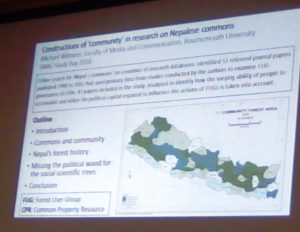
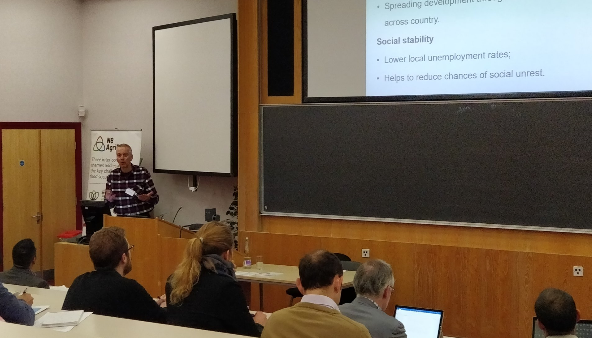
Today on the second day of the 2018 BNAC (Britain-Nepal Academic Council) conference there was a very good representation of Bournemouth University (BU) research at Durham University.  BU’s Professor Michael Wilmore presented his paper: Construction of ‘Community’ in Research on Nepalese Commons.  In the morning FHSS’s PhD student Jib Acharya had an oral presentation on Impact of Healthy Snacks on Children’s Health: An Overview of a Pilot Study.

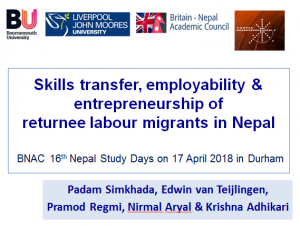
Prof. Edwin van Teijlingen presented joint work between BU, Liverpool John Moors University (LJMU) and the University of Oxford on the topic Skills transfer, employability & entrepreneurship of returnee labour migrants in Nepal. Bournemouth University was involved in this project through Dr. Pramod Regmi, Dr. Nirmal Aryal and Prof. Edwin van Teijlingen.

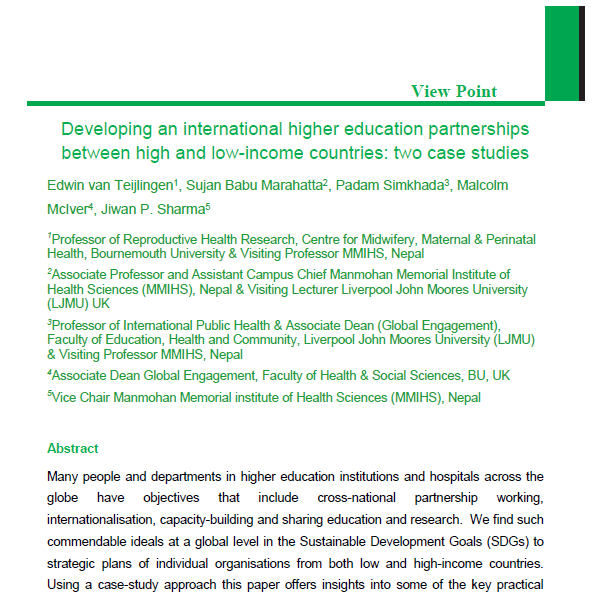
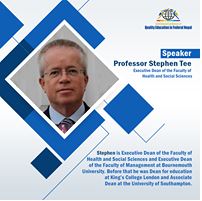
The final talk of the day (and of the conference) was by Prof. Padam Simkhada from LJMU.  Prof. Simkhada is also Visiting Professor at the Centre for Midwifery, Maternal & Perinatal Health at Bournemouth University.  He was presenting Debate on Educational Reform in Nepal: Outcomes of the International Conference on Quality of Higher Education in Federal Nepal on behalf of LJMU, Bournemouth University and Manmohan Memorial Institute of Health Sciences (MMIHS) in Nepal.  Earlier this year BU signed a Memorandum of Agreement with MMIHS in Kathmandu.


Global Traction in the USA!

New York is the world’s media capital and it is no surprise that American academic institutions dominate the field of Media Management. Fordham University in New York extended an invitation to me as a Visiting Scholar, and as a Santander Universities Network partner, the process of engaging with them was straight forward.

My application to the Santander Mobility Scheme had 3 primary objectives which fused research, education and professional practice. During my visit to the USA, I taught on Fordham’s MSc Media Management programme, had discussions with leading media management scholars and the Editor of The International Journal on Media Management.
I also met with the Managing Director of the Boston Consulting Group to discuss the metrics that are used to measure the level of innovation in firms, as well as their the chronic under performance. I also had a meeting with the Editor of Strategy & Leadership to discuss developing a ‘Masterclass’ paper on Scenario Planning and how best to encourage Early Career Researchers to write for the journal.

All of this activity aims to develop a number of fusion based outputs and impacts into the near and medium term future. Overall, it was a great trip and many thanks to the Santander Staff Mobility Scheme!

Combating economic crime

We report here on a successful programme of research, involving engagement with public policy, aimed at reducing the scourge of economic crime. If accepted the proposals made would have a substantial impact on frauds involving major companies, especially those in the financial services sector.

 Economic crime takes many forms: from traditional manifestations of fraud, bribery, money-laundering and tax evasion to modern slavery and human-trafficking offences providing forced labour. Striking at the heart of global security, funding terrorism and political espionage, it also inflicts direct costs to businesses and economies, nationally and world-wide. Fraud alone is calculated to have cost the UK economy c. £190 billion (2017) while global estimates reveal a loss of £2.75 trillion (2013).

Focusing on corporate criminality, in March 2017, we responded to the Ministry of Justice Call for Evidence on Corporate Liability for Economic Crime. We argued that the current preference for corporate liability premised on the company’s failure to prevent criminal misconduct, as exemplified in the Bribery Act 2010, has little application in the context of widespread frauds emanating from “criminogenic” corporate cultures. Central to our proposals were a unique approach to attributing corporate dishonesty, through the adoption of a Criminal Practice Direction, and a shift of resources from regulation and compliance to investigation and prosecution of serious fraud.

In March and April 2018, we went on to publish our full results in a series of two articles in the Company Lawyer: New models of corporate criminality: the development and relative effectiveness of “failure to prevent” offences; and New models of corporate criminality: the problem of corporate fraud – prevention or cure? The General Editor of The Company Lawyer is Professor Barry Rider, Cambridge University, who was honoured in 2014 with the award of an OBE for services to the prevention of economic crime.

The research for these articles was wide-ranging with many questions that needed to be asked, from the definition of fraud itself and the scale of economic crime to the relative effectiveness of models that could be employed to tackle corporate fraud. Traditional “black letter” law research was useful for some aspects, for example, the analysis of the Bribery Act 2010 and its extension in the Criminal Finances Act 2017 in relation to offshore tax evasion. Other questions required substantial historical research, such as the law’s response to the particular problem of bribery and the precedents for the successful use of a “failure to prevent” model of criminality. The impact of reforms and potential reforms required a detailed analysis of recent prosecutions and the use of deferred prosecution agreements.

On Sunday 18th March 2018, the Independent reported Solicitor-General Robert Buckland MP as saying there is a “strong case” for a new corporate economic crime offence. We anticipate that our timely research will prove valuable in shaping the debate as to what the law should be and how it can be made to work.

Dr Stephen F Copp, Associate Professor, Law Department

Dr Alison Cronin, Senior Lecturer, Law Department

The impact of strategic transformation on employee productivity

A strategic commentary on the interconnected areas of corporate strategy and employee performance are discussed in the latest issue of Strategic HR Review. The paper provides a longitudinal analysis of how two firms adapted, reconfigured and transformed their businesses to meet the demands of an operating environment characterized by inexorable changes in digital technologies. It presents data and conclusions on how the management of “human resources” had delivered different employee productivity outcomes over the long term.

50 FREE downloads are available at: https://doi.org/10.1108/SHR-10-2017-0069

Brexit Impact – Creative industries, tourism and digital single market

The House of Commons Digital, Culture , Media and Sport Committee has published a report on the potential impact of Brexit on the creative industries, tourism, and the digital single market – click here for the full report.

Here are excerpts from the Conclusions and Recommendations

The UK creative, tech and tourism industries need sufficient access to talent to continue as world leaders. That is self evidently in the nature of being a global centre of excellence in these areas. The then Secretary of State, Rt Hon Karen Bradley MP, said that Brexit is an opportunity to think about “how we can upskill our native workforce”, but this alone will not address the challenges that businesses face today particularly in an increasingly globalised and international sector. Brexit will place a greater urgency on developing the skills of the domestic workforce, but we cannot allow a skills gap to occur which could create shortages of essential workers for businesses in the UK as a result of our departure from the EU. (Paragraph 32)

The then Secretary of State’s assertion that analysis of the workforce must be completed on a sector–by–sector basis is a sensible approach. However, the lack of detail regarding precise numbers is problematic. There is a lack of clarity about reliance on EU workers. For instance, figures cited to us for the number of people working in tourism ranged from 3 million to 4.5 million. (Paragraph 33) It is imperative that any analysis examines regional demand for staff and the operational requirements of businesses and organisations, ranging from very small start-ups to international corporations.

Irrespective of Brexit, the Government should overhaul the existing visa system for non-EU nationals, who also make a valuable contribution to the UK economy, including our creative, technology and tourism industries. These industries rely on EU workers, and their commercial success is built on having a diverse workforce. The Government must heed warnings that SMEs across creative industries and tourism will not have the capacity to manage a new system that foists additional bureaucracy upon them. (Paragraph 52) We believe that salary levels are a crude proxy for value and fail to recognise the central role that workers from the EU and beyond play in making British businesses successful. We recommend that the Government explores ways in which commercial value, and value to specific sectors of the economy, can be factored into the UK’s post-Brexit immigration system. (Paragraph 53)

Simplicity should be a key feature of the future migration arrangements that the UK will agree with the EU. In particular, the creative industries and performing arts need a system which complements the spontaneity that defines live performance. (Paragraph 54)

The ability to utilise Creative Europe to secure additional sources of funding, combined with the freedom it gives to British organisations to lead projects with partners from across the EU (and outside the EU), means that there are clear incentives to maintain our participation. (Paragraph 67.) If the UK were to depart Creative Europe, this would represent a significant blow to the performing arts, museums, galleries, publishing and many other sectors in the creative industries. The limitations of participation experienced by other non-EU members illustrates that reaching agreement may not be straightforward but, equally, neither the UK nor EU member states will benefit from the UK’s departure. (Paragraph 68)

The Government should publish a map of all EU funding streams that support tourism and creative projects, whether dedicated to this specific purpose or not. This mapping exercise should:
– spell out where previous EU funding has, directly or indirectly, benefitted these sectors;
– indicate those streams that will need to be replaced;
– provide an overview of the total sum of funding that the UK government will provide to cover these costs; and
– clarify the role of the devolved administrations in the present arrangements and their proposed role in the future in the eyes of the UK Government.
In addition, the Treasury and DDCMS should illustrate how ‘value for money’ will be measured in any assessment of those EU funds that will be honoured by the Government’s guarantee. (Paragraph 79)

Some businesses, in the fashion and textiles sector, for instance, do see opportunities to improve trade links beyond the EU post-Brexit, and to develop strategies to support more UK-based production.(Paragraph 88)

The success of the UK’s digital economy is underpinned by ongoing data transfer across the globe and particularly within the EU. In order to preserve the UK’s policing and security arrangements, and to maintain commercial confidence, the Government must aim to deliver certainty from March 2019 onwards. (Paragraph 117) It is important to recognise that Brexit creates a potential risk that the UK’s ability to transfer data across borders will be limited.

The conclusions of the House of Lords Committee expose two key concerns.
Firstly, leaving the EU may not give the UK the flexibility to develop data protection law in the manner called for by witnesses such as Dell EMC.
Secondly, once we leave the EU, our influence over the development of the legal framework that will guide UK law will be reduced, undermining our ability to agree structures and exemptions for the UK, and diminishing our role as a world leader in data protection law. (Paragraph 119)

Brexit puts at risk the UK’s position as a world leader in developing and implementing the regulatory system for data protection. To address this concern, the Government should lay before Parliament an action plan which describes how, post-Brexit, the UK will be able to develop policy on data protection to support businesses and protect consumers, in order to keep pace with the demands of fast moving and developing technologies. (Paragraph 120)

It is very encouraging that the tourism and aviation sectors believe that existing aviation arrangements will be replicated once the UK has left the EU. Unfortunately, the then Secretary of State could provide very little detail as to the nature of the discussions, potential stumbling blocks and, crucially, the timing associated with reaching an agreement. The Government should recognise that it needs to provide certainty to an industry that is already marketing holidays for summer 2019, and for the consumers who will purchase them. (Paragraph 132) We believe reaching an early agreement in relation to aviation is a key priority for the Government. Nevertheless, the Government must provide an assurance that contingency plans are being made in the event of no deal being agreed and provide more information as to what any contingency arrangements would mean for businesses and travellers. (Paragraph 133) The development of a new system of entry to the UK for EEA visitors will be a key aspect of the UK’s relationship with the EU after Brexit. In its consideration of the implications of altering the principle of free movement, the Government must be aware of the detrimental impact this could have for the UK as a tourist destination. Businesses and organisations within the tourist industry are understandably concerned and we believe that the Government should be cautious about taking any steps which could harm the ‘welcome’ the UK provides to tourists. (Paragraph 138) Given the potential benefits to the British tourist industry, while the Government is grappling with the challenges posed by Brexit, it would be wise to design a new system also to encourage more tourism from non-EU markets. We recommend that the Government publishes an analysis of how the visa system could be developed to boost inbound tourism by visitors from beyond the EU. (Paragraph 139)

Preserving a strong, robust Intellectual Property framework is crucial for the continued success of the creative industries after Brexit. As such, the Government should clarify its position on whether EU Intellectual Property transposed into UK law (via secondary legislation or otherwise) will continue to apply after Brexit, and if not, what contingency plans the Government has in place to ensure that the current level of Intellectual Property protection remains following the UK’s departure from the EU. At the very least, the Government should commit to ensuring that the current level of Intellectual Property protections offered by EU and UK law, including those that are vital to the success of the Creative industries, will remain unchanged. (Paragraph 158.) Equally, the Government should clarify how it intends Intellectual Property enforcement to operate after the UK has left the EU. The Government should lay out its plan for cooperation with EU states after Brexit on Intellectual Enforcement Property matters, and outline what improvements, if any, it intends to make to the current enforcement framework. (Paragraph 159)

If Country of Origin rules cease to apply after Brexit then we must expect this will have an impact on the broadcasting industry within the UK. The Government must set out the steps it is taking to avoid that outcome, explaining its negotiating objectives and the timescale for such negotiation. The Government should provide an update to the Committee on progress made in securing a deal by the end of May 2018. (Paragraph 184.) The Government should also confirm as soon as possible that it intends for the United Kingdom to remain members of the European Single Market and under the terms of the current Country of Origin rules, for a transitional period after Brexit, until the end of 2020. (Paragraph 185)

The concerns of audio-visual sector, including broadcasters, producer and rights holders, over terms of the Draft Digital Single Market Directive which would affect territorial licensing are just one example as why it is crucially important that the UK needs to preserve its influence while Brexit proceeds. The Government should clearly spell out its strategy for doing so and how it proposes to embed its future participation in the widening of the digital single market in any Withdrawal Agreement. (Paragraph 191)


Two papers on health & migration in Nepal

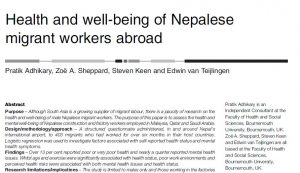
This last week two separate papers have been accepted on aspects of health and well-being among migrants workers from Nepal.  The first in the International Journal of Migration, Health and Social Care is based on a completed PhD project in the Faculty of Health & Social Sciences with Dr. Pratik Adhikary as first author [1].  This paper ‘Health and well-being of Nepalese migrant workers abroad’ is co-authored by two former FHSS staff Dr. Zoe Sheppard and Dr. Steve Keen, and Prof. Edwin van Teijlingen of the Centre for Midwifery, Maternal & Perinatal Health (CMMPH).


The second paper ‘A study of Health Problems of Nepalese Female Migrants Workers in the Middle-East and Malaysia’ was accepted by the Open Access journal BMC International Health & Human Rights [2].  The lead author of this paper is Bournemouth University (BU) Visiting Faculty Prof. Padam Simkhada (based at Liverpool John Moores University) and two of his co-authors are based in Nepal: Manju Gurung (chair of Pourakhi Nepal) and Dr. Sharada Prasad Wasti and one at BU: Prof. Edwin van Teijlingen .

There is  a growing momentum in migration research at BU with further academic papers being published related to studies on migrant workers from Nepal [4-8], relatives of migrant workers [9], migration into the UK [10-12], Eastern European migration issues [13-15], migration and tourism [16], migration and the media [17] as well as migration in the past [18].


References:

  1. Adhikary P, Sheppard, Z., Keen S., van Teijlingen E. (2018) Health and well-being of Nepalese migrant workers abroad, International Journal of Migration, Health and Social Care (accepted). https://doi.org/10.1108/IJMHSC-12-2015-0052
  2. Simkhada, P.P., van Teijlingen, E.R., Gurung, M., Wasti, S. (2018) A study of Health Problems of Nepalese Female Migrants Workers in the Middle-East and Malaysia, BMC International Health & Human Rights (accepted Jan.).
  3. Adhikary, P., Simkhada, P.P., van Teijlingen E., Raja, AE. (2008) Health & Lifestyle of Nepalese Migrants in the UK BMC International Health & Human Rights 8(6). Web address: www.biomedcentral.com/1472-698X/8/6.
  4. van Teijlingen E, Simkhada, P., Adhikary, P. (2009) Alcohol use among the Nepalese in the UK BMJ Rapid Response: www.bmj.com/cgi/eletters/339/oct20_1/b4028#223451
  5. Adhikary P., Keen S., van Teijlingen, E. (2011) Health Issues among Nepalese migrant workers in Middle East. Health Science Journal 5: 169-175. www.hsj.gr/volume5/issue3/532.pdf
  6. Adhikary, P., Sheppard, Z., Keen, S., van Teijlingen, E. (2017) Risky work: Accidents among Nepalese migrant workers in Malaysia, Qatar and Saudi, Health Prospect 16(2): 3-10.
  7. Aryal, N., Regmi, PR., van Teijlingen, E., Simkhada, P., Adhikary, P., Bhatta, YKD., Mann, S. (2016) Injury and Mortality in Young Nepalese Migrant Workers: A Call for Public Health Action. Asian-Pacific Journal of Public Health 28(8): 703-705.
  8. Simkhada, PP., Regmi, PR., van Teijlingen, E., Aryal, N. (2017) Identifying the gaps in Nepalese migrant workers’ health & well-being: A review of the literature, Journal of Travel Medicine 24 (4): 1-9.
  9. Aryal, N., Regmi, PR., van Teijlingen, E., Dhungel, D., Ghale, G., Bhatta, GK. (2016) Knowing is not enough: Migrant workers’ spouses vulnerability to HIV SAARC Journal of Tuberculosis, Lung Diseases & HIV/AIDS 8(1):9-15.
  10. Scammell, J., 2016. Nurse migration and the EU: how are UK nurses prepared? British Journal of Nursing, 25 (13), p. 764.
  11. Holscher, J., 2017. The effects of Brexit on the EU, the UK and Dorset – a migrant’s account. BAFES Working Papers, 1-11.
  12. Sapkota, T., Simkhada, P., van Teijlingen, E. (2014) Nepalese health workers’ migration to United Kingdom: A qualitative study. Health Science Journal 8(1):57-74.
  13. Filimonau, V., Mika, M. (2017) Return labour migration: an exploratory study of Polish migrant workers from the UK hospitality industry. Current Issues in Tourism, 1-22.
  14. Janta, H., Ladkin, A., Brown, L., Lugosi, P., 2011. Employment experiences of Polish migrant workers in the UK hospitality sector. Tourism Management, 32 (5): 1006-1019.
  15. Mai, N., Schwandner-Sievers, S. (2003) Albanian migration and new transnationalisms, Journal of Ethnic & Migration Studies 29(6): 939-948.
  16. Dwyer, L., Seetaram, N., Forsyth, P., Brian, K. (2014) Is the Migration-Tourism Relationship only about VFR? Annals of Tourism Research, 46: 130-143.
  17. Marino, S., Dawes, S. (2016). Fortress Europe: Media, Migration and Borders. Networking Knowledge, 9 (4).
  18. Parker Pearson, M., Richards, C., Allen, M., Payne, A., Welham, K. (2004) The Stonehenge Riverside project Research design and initial results Journal of Nordic Archaeological Science 14: 45–60.

HE policy update for the w/e 24th November 2017

Industrial Strategy

A little bit late this week, but that gave us the opportunity to include a reference to the Industrial Strategy, launched today. It has just been published and you can find it here. It sounds as if it hasn’t moved on much from the Green Paper – read our end of summer summary here.

Headlines, courtesy of Dods, are:

  • Industrial Strategy Challenge Fund will invest £725 million in new programmes to capture the value of innovation
  • first ‘Sector Deals’ – to help sectors grow and equip businesses for future opportunities
  • 4 ‘Grand Challenges’ which will take advantage of global trends to put the UK at the forefront of the industries of the future.

Sector Deals will include construction, life sciences, automotive and AI the first to benefit from these new strategic and long-term partnerships with government, backed by private sector co-investment. Work will continue with other sectors on transformative sector deals.

4 Grand Challenges; global trends that will shape our rapidly changing future and which the UK must embrace to ensure we harness all the opportunities they bring, they are:

  • artificial intelligence – we will put the UK at the forefront of the artificial intelligence and data revolution
  • clean growth – we will maximise the advantages for UK industry from the global shift to clean growth
  • ageing society – we will harness the power of innovation to help meet the needs of an ageing society
  • future of mobility – we will become a world leader in the way people, goods and services move

To ensure that the government is held to account on its progress in meeting the ambitions set out in the strategy, an Independent Industrial Strategy Council will be launched in 2018 to make recommendations to government on how it measures success.

Linked to this, ahead of the budget, the PM announced a boost to research funding. The Government will make an additional investment of £2.3 billion in 2021/22 (total R&D investment £12.5 billion in 2021/22). They will also work with industry to boost R&D spending to 2.4% of GDP by 2027 (possible increase of £80 billion over next 10 years).

The Business Secretary, Greg Clark said: “Through our Industrial Strategy we are committed to building a knowledge and innovation-led economy and this increase in R&D investment, to 2.4 per cent of GDP, is a landmark moment for the country. The UK is a world leader in science and innovation. By delivering this significant increase as part of our Industrial Strategy, we are building on our strengths and working with business to ensure that UK scientists and researchers continue to push the boundaries of innovation.”

Budget and the fees review

And having mentioned the budget – we were expecting an announcement about HE fees and funding, but there wasn’t one. There was a hint about post-study visas. As you will recall, if you have been following the “national debate” since May, a “major review” was promised by the PM at the Conservative Party conference in October with a freeze on fee increases in the meantime and nothing has been heard since. Fee increases for were put on hold – so that there are currently no planned increases for 2018/19 or beyond. Wonkhe have noticed that the “red book” that comes out with the budget has confirmed that this freeze is planned for 2 years but nothing is said beyond that. So the review may still be on the cards, but maybe the budget was too soon, or too risky, a forum for that announcement.

And with that in mind, note this bit from the summary of the Lords Select Committee proceedings below “Cross-subsidy is worth a major inquiry in its own right.

Parliamentary Questions

Following the Panorama programme disclosing alleged abuse of the student loan system, questions were asked in Parliament last week

Gordon Marsden: What safeguards her Department operates to prevent the abuse of student loan funding by private Higher Education providers. [113082]

Joseph Johnson:

  • Higher Education Institutions that are designated for student support must, on an annual basis, meet robust standards for quality, financial sustainability, and management and governance.
  • Designated Alternative Providers without their own Degree Awarding Powers are also subject to student number controls, limiting the number of students eligible for student support that they can recruit each year.
  • The Department can and does use sanctions where breaches of the conditions of designation are identified, including the suspension or removal of designation for student support where we have serious concerns about providers.
  • Following the passage of the Higher Education and Research Act, the Office for Students (OfS) will be established formally in January 2018. It will provide, for the first time, a single regulator for higher education providers regardless of how they are funded. The OfS will have powers to assess the quality of, and standards applied to all English Higher Education provision.
  • The OfS will place a focus on students and greater emphasis on ensuring value for money for students and taxpayers. There will continue to be tough and rigorous tests for providers who want to enter the system and enable students from all backgrounds to receive funding.

Angela Rayner: What additional funding allocation her Department will receive for each of the next three financial years to fund the increased RAB charge resulting from the increase to post-2012 loan repayment thresholds. [113058]

Joseph Johnson:

  • The Government has frozen tuition fees for academic year 2018/19 and for financial year 2018-19 has raised both the repayment threshold and the thresholds at which variable interest rates apply to borrowers in repayment.
  • The repayment threshold will rise from £21,000 to £25,000 for the 2018-19 financial year (from 6 April 2018). Following the threshold change, interest will be charged at RPI for those earning below £25,000 (compared to £21,000 before) and at RPI+3% for those earning above £45,000 (compared to £41,000 before), with interest applied on a sliding scale for those earning between those two thresholds.
  • The long-term cost of the student loan system is reflected in the Resource Accounting and Budgeting (RAB) Charge, which measures the proportion of loan outlay that we expect not to be repaid when future repayments are valued in present terms. In each of the financial years (a) 2017-18, (b) 2018-19 and (c) 2019-20, the RAB charge for higher education loans is expected to change from around 30% under the previous policy to between 40% and 45% under the new policy.
  • The allocated budget for RAB expenditure forms part of the total resource departmental expenditure limit. It is disclosed within the depreciation figure set out within the annual report and accounts. In the 2016-17 annual report and accounts, this was forecast to be £3.5bn for 2017-18, £3.9bn for 2018-19 and £4.3bn in 2019-20. As in prior years, the 2017-18 budget and future budgets will be reviewed as part of the annual Estimates process and confirmed in the published Estimates documents.
  • The cost of the system is a conscious investment in young people. It is the policy subsidy required to make higher and further education widely available, achieving the Government’s objectives of increasing the skills in the economy and ensuring access to university for all with the potential to benefit.

Gordon Marsden: What monitoring and scrutiny of student recruitment agents for private Higher Education and Further Education providers her Department undertakes. [113080]

Joseph Johnson:

  • All higher and further education providers are accountable for their respective recruitment practices. If those breach the respective conditions for funding then a consequence may be regulatory sanctions or termination of their contract. Providers are subject to robust regular monitoring for standards for quality, financial sustainability and management and governance.
  • And in the meantime, the House of Lords Economic Affairs Select Committee investigation into the Economics of Higher, Further and Technical Education continues. This week’s update comes from the oral evidence heard on 14 November.

Q: To what extent do you think technical education can be delivered through higher education institutions?

  • Professor Patrick Bailey (DVC, London South Bank University): all the universities are delivering higher education courses that include enormous amounts of information directly relevant to workplaces. Most…ensure that all their students will have professional practice and some of the technical skills that are going to be required when they move into jobs afterwards. There is a move…to ensure that students are job-ready when they leave. There is a misconception that there are technical skills and pure academic subjects. Even those that would be defined as purely academic now have significant components that ensure that people are ready for a wide range of tasks. Many universities are also well directed towards developing the technical skills.
  • Pam Tatlow (Chief Executive, MillionPlus): If you want to deliver learning and qualifications that match what employers want and the reality of students’ lives, whatever their age, there is a very good case for a more flexible funding system where you fund by credit or module. That would reflect the reality of the lives of students, both the younger ones and the older ones already in the workplace…. However, it would not be for the Chancellor to introduce the primary legislation we need to create a more flexible funding system. The Government missed an opportunity to do that in both the Education Act 2011 and the Higher Education and Research Act 2017.
  • Professor Bailey: There is a subtlety here in that once students are enrolled on a three-year programme, universities are penalised in how they are judged if students do not progress through to that degree… across the sector overall we are losing the opportunity to upskill a wide range of people who could meet the needs of the industries around the UK, which are crying out for levels 4, 5 and 6 in particular.
  • Professor Bailey: The universities are extremely well placed to take level 4s and upwards. However…the ability to have a break and to exit at an early stage without a penalty increases the opportunity for many, particularly part-time and mature students who are challenged in other ways. There is a continuum: the idea that it is either FE or HE is wrong. FE does not have either the expertise or facilities to deliver at level 6 and rarely at level 5. Crucially, more and more universities like mine are working closely with FE to ensure that students feel they have a choice, as they come through level 3, either to go to level 4 at FE or move to a higher education degree at a university. It comes back to giving choice and ensuring that students have the chance to develop skills to their maximum potential.
  • Lord Burns: The same question has been on my mind. Are you saying that you can see a world in which universities are going to do both HE and FE work? I can see that FE cannot do the university work but over the years I have watched universities becoming involved in more and more different areas…with mergers, they are getting bigger and bigger. Is the end product here that universities will try to do everything over the age of 18?
  • Pam Tatlow: No.

  • Sir Anthony Seldon (VC, Buckingham University): I disagree…some universities will embrace FE. I think we will see a top tier—Oxford, Imperial et al−that becomes more research-focused, competing in the world tables and other, more regionally-based, universities that will come down to FE and even UTCs and academies and go all the way through. We do not know, but that is my sense: that the new binary divide will be between HE and FE but with less research and with high research at the top end. Who knows?

Is there a disparity in the available funding higher education and further technical education? If so, how would you address it?

  • Professor Mike Thomas (VC, University of Central Lancashire): Yes, there is a disparity. I can tell you how we are addressing it…We feel that when you do an undergraduate degree—four years for engineering or five years for medicine and so on—you should also be allowed the opportunity to do an apprenticeship at the same time, so that when you qualify and graduate you may be, say, a four-year engineering degree-holder but you may also be a trained fitter or plumber. If you are doing construction, you could do joinery or carpentry. We tested this model internally in the university. We have 1,000 student start-ups at the university, which is quite a large number for the economy of Lancashire, creating about 3,000 jobs over three years, with a turnover of about £500,000 on average. Many of them come from fashion and the arts, because when they get their degree they set up on their own. When we piloted this internally at the university, we found that our art students, particularly fashion students, wanted to do a certificate in accountancy because they were setting up their own businesses, but they were not allowed to do it because it involved different funding or different institution.
  • We are modelling a system in the university whereby students can do that. At the moment, we are picking up the fees. Engineers can train through a long-term apprenticeship levy. Arts and fashion students can train to get other types of qualifications. We do not take the hierarchical vertical view of learning; we take a horizontal model and work with 21 FE colleges so that our students can go there on Wednesday afternoons or spend four to six months in employment. The piloting with BAE involves them doing two years of a degree in the university, but in the final year they move to a levy and a degree apprenticeship, so that reduces their fee loans. They pick up an “Earn as you Learn” as they go along, and they graduate with a degree and an apprenticeship at the same time. We think that we meet the employer need.
  • The difficulty is the silo payment; you have to have an EFA or an ESF payment or a student loan. We think there should be one payment and that undergraduates should be allowed to do apprenticeships and respond to the lifelong learning. For me, it is self-evident that people need support, in relation to what Peter said. We are living longer and people are doing different jobs. Even if they stay in the same firms, the technologies in that firm will change so they will need to relearn anyway as they go along, but those opportunities are not there. We are very much modelling a horizontal model.
  • Lord Turnbull: I think you are telling us that we are going down a cul-de-sac in thinking of tertiary education as having these two divisions, HE and FE apprenticeships, and that we want to create something that is seen across this whole system… You heard in the previous session that you can go along the pathways and every time you hit a block there is some kind of regulatory funding decision to the effect that, “When you get here, you cannot get on to the next stage”.
    The committee then moved on to discuss the blockages and how it could be easier for people to move across different models.
  • Professor David Latchman: This emphasis on the student and the student outcome is the key, because we have a system that is basically like the school system: you leave school at 18 and you will never go back. Our system is predicated on you requiring an undergraduate degree, 18 to 21, and never needing that again. Somehow or another, within the funding envelope or in some other way, we have to get to this lifelong learning issue, because the world is changing. What you do at 21 is not going to be what you do at 51, and to assume that you will never need to get other qualifications between 21 and 61 or whatever is madness in today’s world.

Q: What kind of future do you see for degree apprenticeships?

  • Professor Bailey: I can see an engagement from business and industry more generally, which has picked up as they have had to pay the levy and have realised the financial implications and how it affects them, and that has been really positive.
  • Pam Tatlow: The Institute for Apprenticeships does not understand HE standards, which is a major issue…there is an inflexibility in the Government’s approach to the use of the apprenticeship levy. There could be some relaxation…. There is a bit of a numbers game going on when actually we need degree apprenticeships to be allied with programmes where it makes sense. We are dependent on the employers recruiting to degree apprenticeships; it is not our gig. We need the employers to be convinced that this is what is going to deliver for them.
  • Professor Bailey: The concern…is that a tranche of standards have been identified by the professions, which need to be superimposed on the qualification requirements that we have for degrees—in particular critical thinking, working in teams, synthesising information and taking complex problems.. there are high-level skills that would benefit anybody within a technical discipline, but how the technical part is defined is rather more specific within those particular disciplines. They can complement each other, but it makes it a very complicated process for us, because we have to run the whole degree programme and map that across a different set of standards that the apprenticeships require. However…I think it has provided an additional incentive for employers to become engaged in how we develop qualifications.

TEF

  • Professor Bailey: [we] were aware that we were using very weak proxies to identify the quality of education in the UK. We did our very best to combine the crude metrics that were used to identify which rating institutions should get with the provider statement that went alongside it. The thing that came across really strongly from the teaching excellence framework was how little difference there was in the quality of provision. At the beginning, it was assumed that there were outstanding institutions and others that were performing very poorly and it was important to identify those extremes. In the end, you obtained what I will call a black mark if you were 2% below the standard in an area being measured, such as the quality of the facilities. You got a gold star if you were 2% above that. That tells us that the differences across the sector were very much smaller than people outside higher education had perceived…As to how it has helped students, it is probably slightly limited because the range is smaller than had been perceived at the outset.

Cross-subsidisation of research

  • Lord Darling of Roulanish: Jo Johnson, the Universities Minister, said recently that he wanted to see a reduction in the cross-subsidy between courses. What is your view on that?
  • Professor Simon Marginson: Cross-subsidy is worth a major inquiry in its own right. It is a complex problem, and it is an information issue in part. The tendency has been for us to find every way and means we can to subsidise and build research, because research is not only integral to the role of universities but has become central to their national and global competition…Of course, teaching and research are integrally related. It is not as if, when you subsidise research, you do nothing but teaching. It becomes a more complicated problem. Some disciplines are cross-subsidised by others. In many institutions, I suspect that the relatively low-cost business programmes, which generate high volumes of students, with large numbers of international students paying full fees and so on, subsidise a lot of other activity.

OfS consultation (part 3)

We continue our series on the OfS consultation on the future regulatory framework with the 4th objective of the OfS on value for money for students and a look at how the OfS will regulate the HE market (as opposed to how they will regulate individual providers, which we will come back to in a future update).

Objective 4: that all students, from all backgrounds, receive value for money

  • “Providers have a responsibility to ensure that students are able to secure value for money for their investment in their education, just as students have a responsibility to engage with their own learning and take the opportunities higher education offers.”
  • “Transparency is also central to promoting value for money for students and protecting their rights, shining a light on provider activities and ensuring they are held to account. Students must be assured that the investment they are making in their future is worthwhile, and will be able to challenge institutions that do not deliver on their commitments.”
  • Under the management and governance condition (see the section on this below), providers in the Approved categories will be expected to be demonstrably responsible for operating openly, honestly, accountably and with integrity, and will be required to publish a statement on the steps they have taken to ensure value for money for students and taxpayers which provides transparency about their use of resources and income. Providers should design this statement to allow students to see how their money is spent, following examples from other sectors, such as Local Authorities publishing breakdowns of how Council Tax is spent. ….Where there are substantial concerns the OfS may carry out an efficiency study to scrutinise whether a provider is providing value for money to both its students and the taxpayer.”
  • “Higher education providers are autonomous institutions, and they are solely responsible for setting the salaries of their staff. However, the taxpayer is the sector’s most significant single funder and there is a legitimate public interest in their efficiency, including of senior staff pay. There will be a new ongoing registration condition requiring providers to publish the number of staff paid over £100,000 per annum, and to explain their justification for pay above £150,000.”
  • “Arrangements will be made for the publication of data on senior staff remuneration, including in relation to protected characteristics such as gender and ethnicity. Where issues with senior staff pay lead to substantiated concerns over governance, the OfS will be able to arrange for efficiency reviews into the providers.”
Consultation question: What more could the OfS do to ensure students receive value for money?

Market regulation – Chapter 2

“Effective competition compels providers to focus on students’ needs and aspirations, drives up outcomes that students care about, puts downward pressure on costs, leads to more efficient allocation of resources between providers, and catalyses innovation. The higher education sector in England is well suited to market mechanisms driving continuous improvement “

“It does not, however, follow from these features that an entirely laissez-faire approach is appropriate. Higher education is a service unlike any other:

  • there are almost never repeat “purchases” of the same type of higher educational courses by an individual student – the market is in most cases a one-shot game
  • many of the primary benefits to the student (for instance improved learning, knowledge, and skills, greater earnings and career prospects, and personal fulfilment) are not received immediately; they are spread out over their life time. This exposes the market to distortions such as time inconsistency (where students’ preferences change over time) and temporal discounting (where students value the benefits of higher education less because they occur in the future)
  • similarly, the cost of higher education is often not paid immediately, but rather paid for after through graduate repayments, which in most instances are subsidised by the state. This too, creates temporal distortions, and exposes the sector to moral hazard (where students may take greater risks because they do not necessarily bear the full cost of the degree)
  • there are (currently) significant information asymmetries, and prospective students often make decisions with limited reliable information
  • in the case of undergraduate degrees, there is a price cap in place for some providers. In practice, providers sometimes compete in terms of the grades they require to admit students, rather than on price
  • institutional failure has significant repercussions for current, past, and (in some cases) potential future students, as well as wider social and political consequences. This is why the OfS’s regulatory framework is designed to prevent sudden, unplanned market exit (in particular through its approach to early warning monitoring), and support students to continue their studies if their original provider can no longer deliver their course. The creative destruction witnessed in more traditional markets, though still a powerful and relevant tool, has the potential to carry greater costs
  • there are both private and non-profit organisation competing in the provision of similar services”

Student engagement: The OfS will engage with students to ensure the student voice is not only heard clearly, but that students actively shape the OfS and – by extension – the sector itself. Alongside the student representation on the Board and Student Panel, the OfS will seek the input of individual students and their representative bodies, including student unions.”

The Teaching Excellence and Student Outcomes Framework (TEF): “In accordance with the provisions set out in HERA, a statutory Independent Review of the TEF will likely take place in academic year 2018/19 and will report in time to influence the assessment framework for assessments taking place in academic year 2019/20 (TEF Year 5). Depending on the findings of the Independent Review and of the subject pilots, this will also be the first year of subject level TEF. The assessments taking place in academic year 2019/20 will therefore constitute the completion of the TEF development process. This will be a significant milestone for the TEF, which has the potential to evolve over time as the Research Excellence Framework (REF) has done.”

Proposed on-going condition:   Condition P: “The provider must participate in the Teaching Excellence and Student Outcomes Framework (TEF).”

Consultation question: Do you agree or disagree that participation in the TEF should be a general condition for providers in the Approved categories with 500 or more students?

Removing unnecessary barriers to entry (for new providers that meet a high bar): “The OfS and HERA will enable new providers in particular through the mechanisms below:

  • Simplification of the regulatory landscape:
  • No requirement for a track record
  • Increased options for market entry
  • Recognition of diversity
  • Reduction in burden
  • Grant funding and registration fees
  • Validation”

Accelerated courses: ”HERA includes powers for the Government (subject to approval by Parliament) to set the annual tuition fee cap – for accelerated courses only – at a higher level than their standard equivalent. This should incentivise more providers to offer accelerated courses, increasing choice for students. At the same time, the cost for a student taking an accelerated course which is subject to the new fee caps will be less than that of the same course over a longer time period. The Government will consult shortly on specific proposals for accelerated courses.”

Teaching grant: “The teaching grant is designed to support a range of activities and provision …The majority of the funding is used to support provision where the cost is greater than the amount received as tuition fee income either because the course is costly to provide, because the location brings about additional costs or additional opportunities, or the provision is highly specialised, as with the support provided to our world-leading specialist institutions. The teaching grant supports efforts to improve social mobility by widening access to under-represented or disadvantaged students and ensuring their continued participation and success in higher education. Funding also supports innovation and the national academic broadband infrastructure. The OfS will continue with this approach, but it will also wish to deploy the teaching grant strategically, taking into account Government priorities. This will enable it to influence sector level outcomes“

Widening Participation – Parliamentary question

Q – David Lammy (Lab): Whether she has made an assessment of the effectiveness of steps taken by Oxford and Cambridge Universities to improve access and widen participation from under-represented groups; and if she will make a statement.

  • A – Joseph Johnson (Con):. …the Director [of Fair Access (DfA)] negotiates with institutions to ensure that Access Agreements are stretching and appropriately demanding. Higher Education Institutions are independent from Government and autonomous – legislation specifically precludes Government from interfering with university admissions.
  • In our guidance to the DfA, published in February 2016, we asked for the most selective institutions, which include the University of Oxford and the University of Cambridge, to make faster progress on widening access, and to ensure their outreach is more effective. The guidance acknowledged that within this group of institutions there is wide variation, with some demonstrating little progress.
  • Access agreements for the 2018/19 academic year show that the University of Oxford and the University of Cambridge plan to spend over £22 million on measures to further improve access and student success for students from disadvantaged and under-represented backgrounds.
  • Following the introduction of the Higher Education and Research Act, from January 2018, the Office for Students (OfS), with a new Director for Fair Access and Participation appointed by my Rt Hon. Friend, the Secretary of State, will take on responsibility for widening participation in higher education. The OfS will have a statutory duty to promote equality of opportunity across the whole lifecycle for disadvantaged students, not just access. As a result, widening access and participation will be at the core of the OfS’ functions. In addition, our reforms will introduce a Transparency Duty requiring higher education providers to publish application, offer, acceptance, drop-out and attainment rates of students broken down by ethnicity, gender and socio-economic background. This will shine a spotlight on those higher education institutions that need to go further and faster to widen participation in higher education.

Consultations

Click here to view the updated consultation tracker. Email us on policy@bournemouth.ac.uk if you’d like to contribute to any of the current consultations.

Subscribe!

To subscribe to the weekly policy update simply email policy@bournemouth.ac.uk

JANE FORSTER                                            |                       SARAH CARTER

Policy Advisor                                                                     Policy & Public Affairs Officer

65111                                                                                 65070

Follow: @PolicyBU on Twitter                   |                       policy@bournemouth.ac.uk