Dear All,
Université Paris 1 Panthéon Sorbonne in partnership with Bournemouth University is hosting 3rd annual colloquium for academics and professionals investigating the theory, context and practice of the B2B marketing.
Please see details on the theme, the indicative programme and submission instructions below. We are also pleased to inform that Professor Peter Laplaca is coming to facilitate the session aimed at helping you to write and publish in high quality journals. Moreover, the colloquium is sponsored by the Journal of Industrial Marketing Management (the lead ranking journal for the B2B marketing, 3* ABS ranking).
For any information related to the event and submission/registration process, do email Dr Elvira Bolat at ebolat@bournemouth.ac.uk and Dr Kaouther Kooli at kkooli@bournemouth.ac.uk
Theme: ADDRESSING THE BIG PICTURE: MACRO-ENVIRONMENT CHANGES AND B2B FIRMS
Organising team:
Université Paris 1 Panthéon Sorbonne
- Dr Héla Benmiled-Cherif, Maître de Conférences, Ecole de management de la Sorbonne, PRISM (porteur du projet) Hela.Benmiled@univ-paris1.fr
- Dr Guillaume Chanson, Maître de conférences en Stratégie, Ecole de management de la Sorbonne, PRISM Guillaume.Chanson@univ-paris1.fr
- Professeur Jean- François Lemoine, Directeur du Pôle Marketing, Professeur de Marketing, Ecole de management de la Sorbonne, PRISM, Jean-Francois.Lemoine@univ-paris1.fr
- Professeur Alexandre Steyer, Professeur de Marketing, Ecole de management de la Sorbonne, PRISM Alexandre.Steyer@univ-paris1.fr
- Professeur Catherine de la Robertie, Professeur de Stratégie, Ecole de management de la Sorbonne, PRISM Catherine.De-La-Robertie@univ-paris1.fr
- Professeur Jean-Jacques Pluchart, Professeur émérite de Stratégie, PRISM Jean- Jacques.Pluchart@univ-paris1.fr
Bournemouth University
- Dr Kaouther Kooli, Lecturer in marketing, Faculty of Management, Bournemouth University, kkooli@bournemoth.ac.uk
- Dr Elvira Bolat, Lecturer in marketing, Faculty of Management, Bournemouth University, ebolat@bournemouth.ac.uk
- Dr Julie Robson Senior Principal lecturer in marketing, Faculty of Management, Bournemouth University, Jrobson@bournemouth.ac.uk
- Dr Nektarios Tzempelikos, Tzempelikos , Senior lecturer in marketing, Anglia Ruskin University, Lord Ashcroft International Business School, nektarios.tzempelikos@anglia.ac.uk
To-date, B2B research has examined the factors that drive successful buyer/seller relational exchanges in business markets. However, the focus has mainly been on the supplier, the customer and/or the interaction between them, with little attention being paid to the impact of macro-factors on these interactions. The result is limited knowledge of the complexities that the broader macro-environment encompasses, how these affect the theory and practice of B2B marketing and how their management could be a source of differentiation for B2B firms. In other words, the ‘big picture’ of where and how B2B firms operate is still lacking.
Macro-environmental changes are both major and uncontrollable. They range from political and legal changes, to demographic and social conditions, as well as technological developments, natural disasters and civil wars. These factors influence firms’ decision making, their strategies, innovation, technological prowess, and market performances. . This need, to address the big picture of the impact of the macro environment on B2B firms, provides the topical basis for this Call for Papers.
Relevant topics for the Colloquium and special journal issue include (but are not limited to):
- Analysis of B2B relationships and firm responses to macro environmental changes.
- The management of macro-environment changes by B2B firms in the present and the future.
- The effects of political changes on B2B relationships g. the current discussions on Britain’s continued membership of the EU
- Legal changes, g., the growth of patent applications and issues of Intellectual property as indicators of firms’ R&D and innovation activities in a country or countries.
- Social and psychological effects of B2B activities with the business custom
- The impact of technological changes, g. how Social media is affecting B2B firms’ intelligence gathering and product marketing for their B2B
- How environmental factors affect (positively or/and negatively) relational exchanges in B2B m
- Value co-creation between firms and/or sub-contractors in similar or different industries
- Other topics affecting B2B firms, such us services marketing, customer relationship management, supply chain management and log
This colloquium is dedicated to researchers in B2B marketing. Day one will provide an opportunity for authors to present their papers and gain feedback from their B2B peers. On day two the keynote speaker will provide insight into how to get published in top B2B journals. Papers presented at this conference will be considered for publication in a special dedicated issue of Industrial Marketing Management.
Programme
Day 1
8.15-8.30 Welcome and refreshment
8.30-10.30 Parallel Session 1 Paper presentation ( 2 x 4 papers)
10.30- 10.45 Coffee break
10.45-13.00 Parallel Session 2 Paper presentation ( 2 x 4 papers) 13.00-14.00 Lunch
14.00-15.45 Parallel Session 3 Paper presentation ( 2 x 4 papers) 15.45-16.00 coffee break
16.00-17.30 Parallel Session 4 Paper presentation ( 2 x 4 papers)
19.00 Dinner
Day 2
7:30 – 8:00 Refreshment
8:00 12:00 Keynote Session: How to get published in a top B2B journal
Chair: Professor Peter Laplaca
12:00 – 12:15 Coffee break
12:15-14.00 Keynote Session: B2B research needs: Advancing the discipline & Close of Colloquium
Chair: Professor Peter Laplaca
14.00 Lunch
Deadlines
- 11th January 2016 : paper submission closes at midnight
- 25th January 2016 Paper decision notified to authors.
- 12th February 2016 Conference registration deadline for those presenting
Paper Format & Review
Full-length paper submission according to the guidelines of Industrial Marketing Management to B2Bcolloque@gmail.com
Manuscripts must be original, unpublished works not concurrently under review for publication at another outlet and are expected to follow the standard formatting guidelines for IMM (Guidelines can be found at https://www.elsevier.com/journals/industrial-marketing- management/0019-8501/guide-for-authors ). Do not submit a paper at the IMM paper submission website. Address questions regarding the special issue to any of the organising team.
The papers will undergo a rapid-response review process by end- January and must not be submitted to a journal prior or during this time. Success in the review will not guarantee publication in the special issue, but in order to be accepted for special issue publication, papers need to be presented at the colloquium.
Colloquium fees: Academics € 300 PhD students € 200
IMPORTANT
- For any cancellation after the 01 March 2016 there will be no refund of the fees
To register for the colloquium please go to http://b2b2016.sciencesconf.org






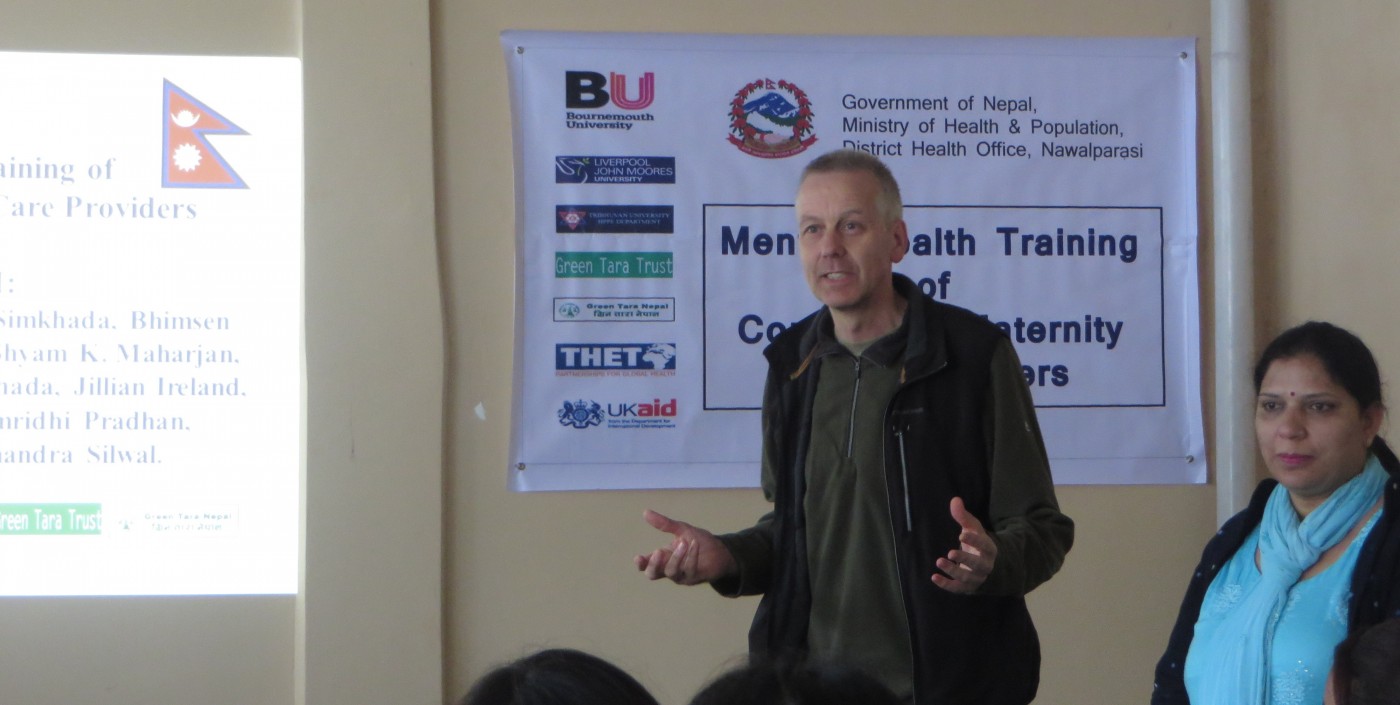
 with BU on a range of health and maternity-care projects. The birthing centre has been improved since our last visit one year ago. There now is a newly build decomposition pit for the disposal of placentas. There is a new postnatal recovery room, and the number of local women giving birth in the facility has been increasing! When we arrived a new baby had just been born an hour or so earlier (second photo with proud father on the right).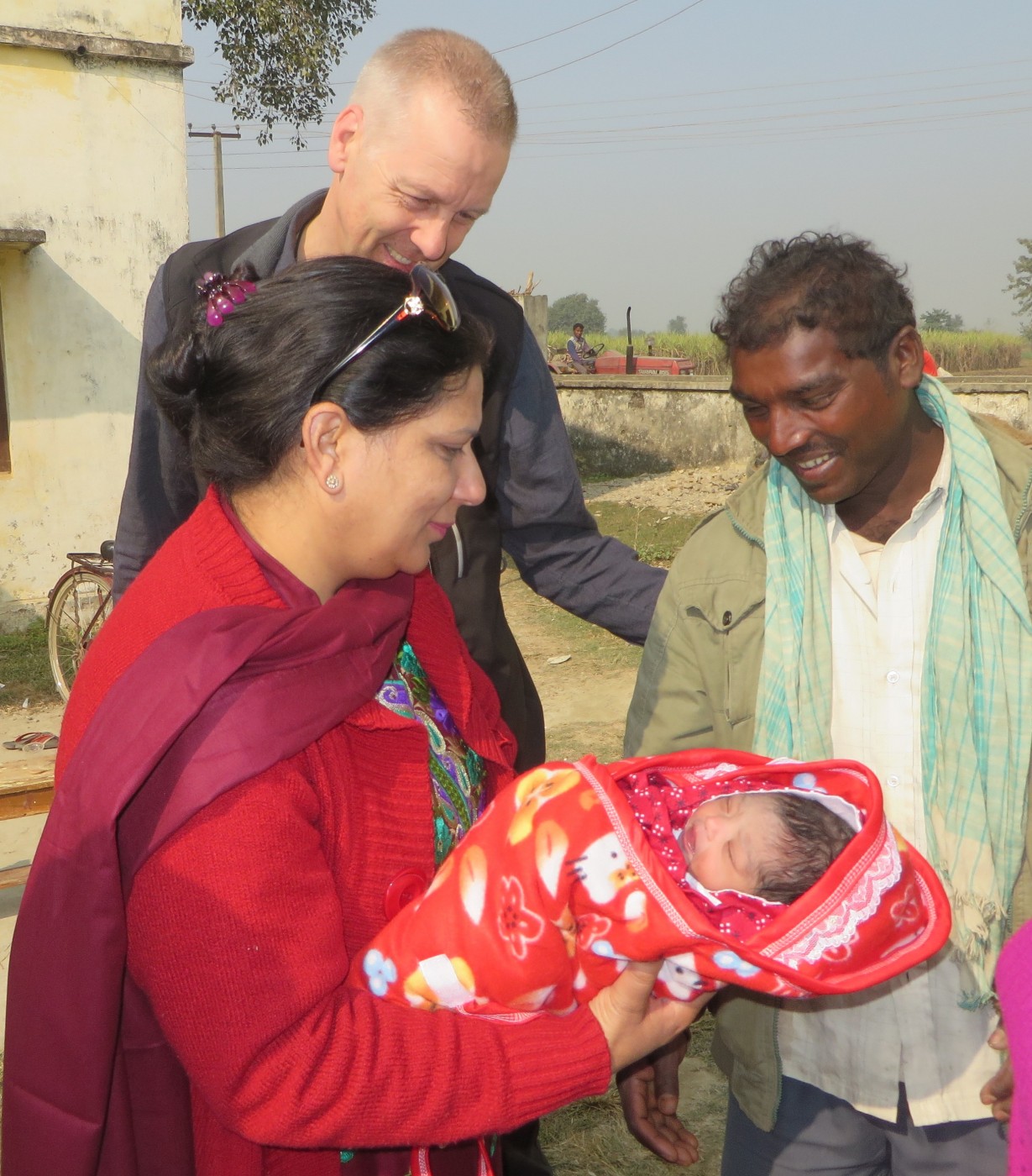













 BU Annual Research Conference: Poster Exhibition Call for Applications
 Vitae Three Minute Thesis (3MT®) Competition: Applications Now Open
 3C Online Social: Thursday 26 March 1–2pm – Research Culture, Community & Can you Guess Who?
 Four BU students at national midwifery conference
 INRC book roundtable/presentation by Drs Jonathan Cole and Catherine Talbot, Wednesday 22/04/2026, 13:00h, P426
 ECR Funding Open Call: Research Culture & Community Grant – Apply now
 ECR Funding Open Call: Research Culture & Community Grant – Application Deadline Friday 12 December
 MSCA Postdoctoral Fellowships 2025 Call
 ERC Advanced Grant 2025 Webinar
 Update on UKRO services
 European research project exploring use of ‘virtual twins’ to better manage metabolic associated fatty liver disease