Category / Public engagement
Public talk “Performance in pairs: Human minds acting together” is coming up!
Performance in pairs: Human Minds acting together
Wednesday 8th November, 6:30-8:30pm
KG01, Talbot Campus, Bournemouth University
My PhD student, Juan Camilo Avendaño Diaz, and I are running an interactive talk in collaboration with the ESRC Festival of Social Science to explore recent research findings in psychology suggesting that our cognitive functions and behaviour could be shaped by another person who performs similar tasks next to us. During this talk, we will introduce some of these scientific findings and the theories behind, along with their potential implications for our everyday life. You will also have the chance to see psychological experiments in action, and to try some of them on-site.
The ESRC Festival of Social Science offers a fascinating insight into some of the country’s leading social science research and how it influences our social, economic, and political lives. Bournemouth University are running 11 fascinating events including debates, workshops, virtual exhibitions and much more!
To find out more about this event and to book yourself a ticket, please go to this website: https://research.bournemouth.ac.uk/esrc-fss/. To book a ticket for the “performance in pairs” talk, check out this webpage: https://www.eventbrite.co.uk/e/performance-in-pairs-human-minds-acting-together-tickets-36890618834. Please share this event with anyone you feel may benefit from getting involved, or anyone you know who has an interest in the topic!
Hope to see you there!
Xun He
Senior Lecturer in Psychology
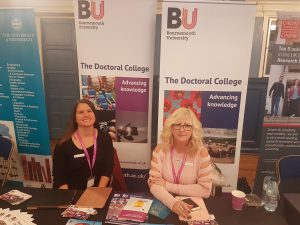
Doctoral College: Researcher Development Programme
The Doctoral C
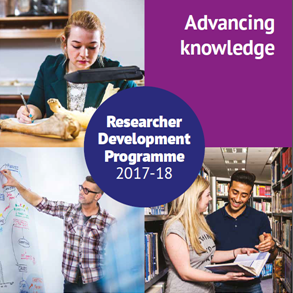
ollege would like to present the new 2017 / 2018 Researcher Development Programme
This monthly update is for PGRs and their supervisors to outline upcoming research skills and development opportunities including events, workshops and networking opportunities supported by the Doctoral College. In this update we would like to introduce the inaugural 3 Minute Thesis (3MT®) event and R.E.D talks, alongside the Researcher Development Programme for 2017-18, the 10th Annual Postgraduate Conference and Santander Mobility Fund. These exciting development opportunities are taking place now so check out our application processes and booking information to advance your current skills, knowledge and networks.
Don’t forget to check out out the Doctoral College Facebook page and Researcher Development Hub on the website.
AHRC funded Reading on Screen Project moves on to Brighton and Sheffield
The Arts and Humanities Research Council (AHRC) funded Reading on Screen project held two workshops recently; one at the University of Brighton (22-24 September) and one last weekend (14-15 October) at Sheffield Hallam University.
At Sheffield
we were fortunate to be included in the programme for Off the Shelf, a literary festival that runs throughout October in the city featuring some high profile authors, including this year Robert Webb and Henry Blofeld. We also took part in Brighton’s Digital Festival, showcasing some of the stories and also featuring some of our storytellers in a lively discussion about the future of reading in the digital age.
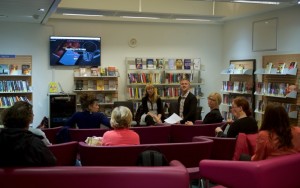
The stories produced in the workshops are now available for viewing on the project website and we welcome comments!
An exhibition of the stories is
planned for December 15 in Brighton’s Media Centre. Here we will be featuring the stories we are producing based on photographs and audio recordings captured during the workshops. We will also be hearing from some of the storytellers from all three workshops (Bournemouth, Brighton and Sheffield) about their experiences of the workshops and how this opportunity has opened new doors for them.
HE policy update for the w/e 13th October 2017
Well, anyone who thought the Minister would have less to do in this session of Parliament, other than oversee the implementation of the Higher Education and Research Act, was underestimating him. Rather unexpectedly he demonstrated yesterday that he had fully embraced the Fusion model (he calls it a three legged stool) by announcing a new excellence framework for knowledge exchange to sit alongside REF and TEF. We have a bit on each, along with an update on that funding review (what funding review) and some other news.
New Knowledge Exchange Framework (KEF)
REF, TEF (even when it’s TESOF, see below) and now the KEF….a new excellence framework has been announced by the Minister at the annual HEFCE conference.
Described by the Minster (apparently) as the “third leg of the HE stool” this new framework will be run by Research England (under its head (designate), David Sweeney, and also responsible for the REF). Like the REF, the KEF will have a clear cash “carrot” for participation and to motivate high performance – it will provide a new method for allocating Higher Education Innovation Funding (HEIF).
The story was all about the UK’s competitiveness. The Minister celebrated the quality of UK research but challenged the sector to have more connection to the wider world and impact on the economy, to justify the “outsize role” that universities play in Research and Development in the UK – compared to industry. He said:
- “…the system needs to find a new gear. University income from business engagement is growing more slowly than the economy as a whole, with British universities producing fewer spin-outs and less licensing income per pound of research resource than US counterparts. As a greater proportion of R&D takes place in universities in the UK than in other countries, it’s especially important that we get this right.”
- “Over half of the money the UK taxpayer provides for R&D goes to the Higher Education sector – £4.8bn out of £8.8bn in 2015.
- The result is that a far greater proportion of R&D – 26% – takes place in our universities – than in comparable countries, with 20% in France, 17% in Germany, 13% in the US and 12% in Japan.
- This funding arrangement has helped ensure the excellence of British universities and their strong performance in international league tables, which give a heavy weighting to research.
- But the fact that by international standards an unusually large proportion of our R&D activity takes place within our universities brings with it increased responsibilities.”
BU Academic’s Research Featured at V & A Event Celebrating Black History Month

Dr Nicole Ferdinand was one of the featured speakers at the V & A’s Out of Many One Caribbean Carnival Event
On Sunday 8th October, 2017, the Victoria and Albert Museum hosted Out of Many One Caribbean Carnival as part of its celebration of Black History Month. Dr Nicole Ferdinand of BU’s Department of Events and Leisure was invited to give a lecture on her research on Trinidad-style carnivals and their internationalization, which was delivered to a packed audience and inspired lively debate. Other presenters included Dr Emily Zobel Marshall, Course Director of the School of Cultural Studies and Humanities, Leeds Beckett University and legendary Guyanese poet, John Agard who had the audience spell bound with his both humorous and thought provoking poems.

Dr Emily Zobel Marshall, Course Director, Leeds Beckett University and John Agard, Poet
The event also featured a live steel band, masquerade and dance workshops and an impromptu parade. For more on Dr Ferdinand’s presentation at the event, read her journal article International Festivals as Experience Production Systems in Tourism Management.
NCPQSW journey
Right at the very beginning of our journey at NCPQSW… An experience that we won’t forget…. Our recent attendance at the House of Commons Financial Scamming Event.
by Caroline Jones and Stevie Corbin-Clarke
Stevie: As someone who was fresh out of university this June, I did not expect to be involved in such an amazing opportunity so early in my career. It was an experience that has inspired me to get involved in as many exciting opportunities like this in the future as I can.
Caroline: Having joined the research team as recently as August, it was a great way to get stuck into the role and see first-hand the amazing work that NCPQSW does.
So, we were provided with the opportunity to assist our colleagues with running and organising an event about Cyber Scams and Financial Fraud at the House of Commons this September. Of course, we snapped up the offer to attend without having a second thought, especially because we were both very aware of the importance and the prevalence of the topic at hand in current times.
In the days leading up the event, everyone was rushed off their feet in preparation of creating information packs, ensuring everyone had RSVP’d and sorting out nearly 100 name badges. We spent the morning of the event in London getting ourselves prepared, setting up and having a nice spot of lunch, which we found as new staff members to be a very beneficial team building experience and certainly helped to settle the nerves!
During the event, it was amazing to see first-hand the impact that Professor Keith Brown, Professor Lee-Ann Fenge, Dr Sally Lee and the rest of the NCPQSW research team is having and how wide spread the attendance was. It successfully brought together everyday citizens with members of parliament and other influential people, providing a platform for those with real-life scamming experience to be heard as well. We were surrounded by incredible members of the public, that spoke about their personal struggles with scams as well as influential individuals from many organisations, such as Which? and Trading Standards.
We felt fortunate to be able to listen to the key speakers, which included a representative from Age UK, a superintendent from the City of London and our very own Vice Chancellor Professor John Vinney. We also had the chance to hear from Conor Burns MP, who hosted the event. We certainly benefitted from listening to and getting involved in great conversations about protecting the vulnerable from scamming, as we moved around the room.
Despite some last minute technical glitches – and an archaic alarm bell that would not cease ringing in the middle of each speech – the event was a success.
After months of planning, we were so proud to see how it all came together. We felt honoured to be representing the NCPQSW team in such a wonderful setting, and are excited to find out about future events. We hope that there will be further opportunities to get involved with events like this, however The House of Commons will sure be a tough one to out do!
We used the whole day as an opportunity to really push the social media presence of NCPQSW, and we even created a hashtag: #BUScamsAware. Being in London was certainly a great opportunity to take photos for us post our Twitter account and keep our followers updated.
We shall leave you with some interesting facts to show the scale of financial scamming and how it is being tackled:
-16 billion has been seized from criminals in the last 5 years.
-Since Nov 2016, 1,900,000 items of scam mail have been intercepted by Royal Mail.
-Call blockers like True Call can be used to help protect the most vulnerable.
For further information, see our website:
Globalisation of the Wessex Portal thanks to HEIF
Over the Summer of 2017, project manager Katie Thompson has been working to redesign and improve the Wessex Portal to include a global conservation theme. The site has been enhanced to target a global audience, still focussing on key themes such as public engagement but also to include a global conservation section.
This new project was one of the outcomes of a recent visit to Kenya and South Africa by WP manager Katie Thompson, who developed collaboration with a school and charity organisation. These international trips focused on wildlife research and environmental education. Katie Thompson liaised with students and teachers, and is working to initiate an environmental club, with participation from the school. Children from the schools will be able to showcase their work online via the WP website and social media pages. This will be shown in the updated WP ‘Conservation Forum’ section of the website with public input (http://www.wessexportal.co.uk/conservation/).
An upcoming visit to South Africa next month will aim to build on these relationships, and expand upon organisations to collaborate with and expand outreach to international countries.
If you would like more information, then please do not hesitate to contact either Katie Thompson thompsonk@bournemouth.ac.uk or Genoveva Esteban gesteban@bournemouth.ac.uk (Principal Investigator) Join our website, and follow us on FB and twitter for regular updates.
ADRC attend European Health Psychology Society Conference, Padua, Italy

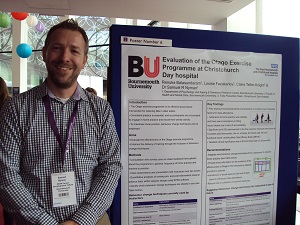
Dr Samuel Nyman, Yolanda Barrado-Martín and Iram Bibi from the Psychology Department and Ageing and Dementia Research Centre (ADRC) attended the 31st edition of the European Health Psychology Society Conference in Padua (Italy) from 29th August to 2nd September 2017.
European and International researchers met in Padua on this occasion to learn about projects under the theme “Innovative ideas in Health Psychology”. Dr Samuel Nyman and Yolanda Barrado-Martín had an oral presentation each entitled: “Systematic review of behaviour change techniques used to increase physical activity among people with dementia” and “Acceptability of a tai chi intervention for people living with dementia and their informal carers”. Dr Samuel Nyman was also in charge of chairing the session “Physical and cognitive function in later life” in
volving these two presentations. Those attending the session showed their interest in the topic and asked questions about ways of facilitating people living with dementia’s participation in exercise interventions. This was a great experience for Yolanda who presented for the first time her PhD pilot results to an international audience.
Participation in EHPS Conference was a valued addition in knowledge regarding interventions, exercise, behaviour change techniques, adherence to interventions, and relationship of patient and care givers. Titles of few among many interesting sessions are highlighted; “Mechanisms and adherence in interventions for patients with chronic disease,” “Caregiving and relationships in health,” “Methods for building better behavior change interventions,” “Dyadic regulation processes to promote health and well-being in romantic couples,” Developing and evaluating interventions to promote physical activity: issues in special settings and populations” and “Behaviour change theory and interventions in implementation research.” Iram Bibi found that the Poster presentations were also a great learning experience and an opportunity to socialize with scholars from around the globe.
Research flying high for BU – Bournemouth Air Festival was a roaring success
The public were all smiles down at the Bournemouth Air Festival over the first weekend of September. Even as the rain poured, we had hundreds of people engaging in our research which ranged from testing your taste buds to having a go on Bournemouth University’s very own Virtual Reality headset.

“I loved seeing both old and young interested in finding out about our recreation of a local historical landmark. It is brilliant to see all areas of the public wanting to learn more and hear about the future of our research!”
The researchers who joined us from both Bournemouth and Southampton had an amazing time interacting with the public. Both young and old were fascinated by the technology we were showcasing – VR headsets and 3D printers – as well as having a go at the interactive ‘Scams and Ladders’ board that Sally Lee and Lee-Ann Fenge had brought to show the public the effects of not being careful with your money.
Cancer Research UK joined us from Southampton and told us how pleased they were to see so many people engaging with their research. Even the research engagement manager commented that “it was great to be able to talk to smaller groups of people for a longer period of time and really get into what research we do as close as Southampton. It was great to see how the engagement was teaching them something new about the research we are currently undertaking to help fight cancer!”

Everyone was obsessed with these models that were being printed on the day – you were even able to have a go at designing a 3D model yourself”
We are so glad to have joined up with the British Science Association, Siemens, University of Southampton, Cancer Research UK, and Barclays to bring an engaging tent of science to the Bournemouth Air Festival. We are grateful to everyone who got involved with our events and we hope to see you at our future events over the next year, check out our website for more information!

“The British Science Association helped us attract people to the tent with some Science Busking – everyone loved learning about the Bernoulli Principle and migrated straight into the Science tent after to learn even more”
The Conversation about midwifery campaign
Last week saw the publication of a piece by BU Professors Vanora Hundley and Edwin van Teijlingen in The Conversation under the title: “Why UK midwives stopped the campaign for ‘normal birth’”. The editor of The Conversation invited the authors to write in reply to the statement: “According to media reports, women will no longer be told they should have an intervention-free birth and midwives will be encouraged to use terms a “physiological birth” rather than “normal birth”. We are looking for an expert to comment on this.”
The resulting article is the result of a quite long process of writing a draft, which was initially edited by The Conversation in a way the authors did not feel represented what they wanted to say. In our original submission we raised the role of the media with regard to responsible reporting, but it seems this was a step too far. In submitting a re-written version, which was edited again before it came back to the authors, we were advised that academics should not ‘blame the media’ since that avoids addressing the issue, but what if the media really does have a role? After seven or eight major alterations we reached and an agreed version that we think is a balance and fairly easy to read newspaper article. Our new book Midwifery, Childbirth and the Media due to be published by Palgrave Macmillan will cover these media issue in greater detail.
Professors Vanora Hundley & Edwin van Teijlingen
CMMPH
Telling tales of Engagement competition- DEADLINE 6/12/17
The EPSRC are offering three prizes of £10,000 for RCUK Digital Economy (DE) grantholders to help capture and promote the impact the Digital Economy grant is having. Applicants will need to explain how they will use the prize to engage the public with their research and demonstrate what the benefits of the research have been. Applications must be received no later than 12:00 noon on Wednesday 06 December 2017.
To discuss this further please contact Ehren Milner (emilner@bournemouth.ac.uk).
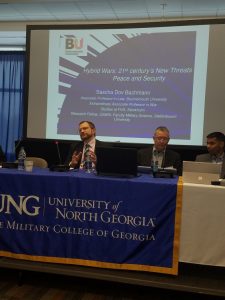
BU’s Centre for Conflict,Rule of Law and Society’s Sascha Dov Bachmann visited the Centre for Military Studies – Faculty of Military Science at Stellenbosch University, South Africa


Dr Beukes (CEMIS, US), Dr S Bachmann (BU) and Prof Liebenberg (CEMIS, US)
BU Researcher publishes chapter in forthcoming book, “Role of the Mediterranean Diet in the Brain and Neurodegenerative Diseases”
The chapter is called, “Interplay between lipid mediators and the immune system in the promotion of brain repair”, and looks at the interactions of omega-3 and omega-6 fatty acids with endocannabinoids in neuroinflammation, neurogenesis and brain aging.
The brain is highly enriched in docosahexaenoic (DHA) and arachidonic (ARA) acids, omega-3 and omega-6 polyunsaturated fatty acids (PUFAs), respectively. DHA and other long-chain omega-3 PUFAs are precursors of anti-inflammatory and pro-resolving mediators, whereas ARA is precursor of inflammatory eicosanoids, but also pro-resolving mediators. The endocannabinoid system comprises a group of bioactive lipids, receptors and enzymes involved in their synthesis and degradation. 2-archidonoylglycerol (2-AG) and anandamide (AEA) are the primary agonists of cannabinoid receptors in the brain, substrate for enzymes such as cyclooxygenases, lipoxygenases and cytochrome P450 mixed function oxygenases, which release ARA upon hydrolysis. The aging brain has impaired ability to balance protective and detrimental effects of the immune system and chronic low-grade neuroinflammation is a contributor to cognitive impairment and development of neurodegenerative diseases. There is a complex interplay between omega-3 and omega-6 PUFAs, the endocannabinoid system and the immune system. This chapter summarises current evidence of this interplay and discusses the therapeutic potential in the promotion of brain self-repair.
Dr Simon Dyall’s Bioactive Lipids Research Lab conducts research investigating the role of bioactive lipid mediators in brain protection and repair across the lifespan and following neurotrauma.
The book, Role of the Mediterranean Diet in the Brain and Neurodegenerative Disease” is edited by Farooqui T. and Farooqui A., and is due for publication 1st November 2017 by Academic Press. Paperback ISBN: 9780128119594
U3A Public Lectures – Public Engagement Opportunity
Public engagement team is currently looking for speakers for U3A Public Lectures day taking place on Monday 11th September at EBC.
The University of the Third Age are a community of retired/ semi retired people who enjoy the reward of learning and take part in regular groups and sessions to expand their skills and life experiences.
They are very enthusiastic audience so be prepared for lots of questions and interesting discussion about your research.
We are looking for talks that fit into the history theme as we’re inviting Boldre Parish Historical Society to join us, but if your research is not directly related we’d still love for you to be involved!
This is a half day event, however we only ask for you to be there for duration of your talk (30-40 minute talk followed by Q&A session)
If this sounds like something you would like to do or know someone who may be interested, please drop us an email – fol@bournemouth.ac.uk
We’re looking forward to hearing from you!
Final call for Bournemouth Air Show Science Tent participants: Sign up!
August is almost upon us and that means before you know it the Bournemouth Air Festival will be upon us.
We are still looking for hands-on activities to come join us at the Air Festival as we run their first ever Science Tent with support from the British Science Association and Siemens UK.
We’re looking for interactive and engaging activities or exhibits that:
- Have a strong emphasis on science and technology
- Highlights some of the exciting research happening at BU
- Can join us for at least two consecutive days
- And are suitable for the diverse audiences that are going to visit the Air Festival
If you have an activity that fits this criteria– or even an idea for an activity that would fit this criteria and would like advice and support to design and deliver it– then contact Natt (nday@bournemouth.ac.uk) to express your interest.
We are also still recruiting individuals to try their hand at Science Busking for the Air Festival. No previous experience is required as we will be providing full training and busking activities for you. You just have to be a friendly, approachable individual who wants to engage with the public at the Festival. If this sounds like you– again, contact Natt (nday@bournemouth.ac.uk)
Nuffield Research Placements: “My experience at the Orthopaedic Research Institute”
Hi, my name is Holly Coombs.
I am currently doing a research placement at Bournemouth University as part of the Nuffield programme, which gives people at the end of their first year of A-levels a chance to work with professionals in science based professions.
Alongside PGR Francesco Ferraro, I have been predominantly working on his study on inspiratory muscle training and how by using a device called POWERbreathe is possible to improve inspiratory muscles strength.
I will be at Bournemouth University for four weeks where at the end I am going to write a report that will hopefully be published by the Young Scientist Journal.
My report is going to be on the Timed Up and Go test (TUG). It is going to include information about what the TUG test is, as well as how it can help us to predict falls and measure stability.
My whole aim of this placement is to gain research skills that will help me later in life as I intend to pursue a medical career.
On the 20th July, I got the chance to use two surgical simulators:
The Orthopaedic Research Institute (ORI) contains the Ossim SimK total knee replacem
ent simulator, and the VirtaMed knee arthroscopy. This is the only lab in Europe where the two simulators are together.
Indeed, the ORI produces high-quality research which helps doctors and students to understand and learn more about many fields, including orthopaedic surgery, knee and hip replacements. With the aid of Shayan Bahadori (Orthopaedic Research project manager), I progressed from drilling holes into a piece of woods to trying a full knee replacement. Next, I got to try my hand at a knee arthroscopy which I found very challenging.
From trying these surgical simulators, I have learned that perseverance and resilience are essential. At first, I found that even
just drilling holes into a piece of wood using the simulator was incredibly hard. However, as I used and practiced the simulators more, I could feel myself improving and progressing in the fundamental skills required.
This is a valuable experience to have gained as it is essential for all careers, not just medical ones.
In conclusion, continuing my placement, I hope to assist in the carrying out of respiratory muscles tests and I hope that by the end of my internship I will have a greater understanding of what it takes to conduct a research study and also how the data collected can be used and analysed.
Modern Creative Technologies and Their Applications in VR Based Laparoscopic Surgery Simulation
Kun Qian is a PhD candidate in the National Centre for Computer Animation, Faculty of Media and Communication. He has been working on computer graphics, game, vfx and virtual reality technologies for more than 10 years. He will deliver a talk on his research of surgery simulation at 7pm, 25th July at K103, as part of the BCS Animation and Game Development SG event. The detail can be found at http://www.bcs.org/content/ConWebDoc/58181 . It is free for all the attendees, everybody is welcome. Please register at the link above, because we will bring some refreshment based on the number of registrations.
Abstract: With the development of computer graphic and haptic devices, training surgeons with virtual reality technology has proven to be very effective in surgery simulation. Due to the various unsolved technical issues, the laparoscopic surgery simulation has not been widely used. Such issues include modelling of complex anatomy structure, large soft tissue deformation, frequent surgical tools interactions, and the rendering of complex material under the illumination. A successful laparoscopic surgery simulator should integrate all these required components in a balanced and efficient manner to achieve both visual/haptic quality and a satisfactory refreshing rate. In this talk, we propose an efficient framework integrating a set of specially tailored and designed techniques, ranging from deformation simulation, collision detection, soft tissue dissection and rendering. This framework can be used as a low level engine for surgery simulation by integrating and optimizing modern creative technologies.
Dr. Xiaosong Yang, MBCS
Associate Professor of Computer Animation
National Centre for Computer Animation
Faculty of Media and Communication
Bournemouth University
http://staffprofiles.bournemouth.ac.uk/display/xyang


Opportunities to support our REF preparations
SPROUT Returns: Designing Sustainability in Research Practice – Wednesday 20 May 12-2pm
Innovative Approaches to Doctoral Supervision: Selected Case Studies
3C Event: Research Culture, Community & Canapés-Tuesday 19 May 1-2pm
New chapters published in maternity book on risk
The British Academy European Research Council Grant Support Sessions
Apply now to take part in the 2026 ESRC Festival of Social Science
Reminder: Register for the ESRC Festival of Social Science 2026 Information Session

ECR Funding Open Call: Research Culture & Community Grant – Apply now

ECR Funding Open Call: Research Culture & Community Grant – Application Deadline Friday 12 December
MSCA Postdoctoral Fellowships 2025 Call
ERC Advanced Grant 2025 Webinar
Update on UKRO services
European research project exploring use of ‘virtual twins’ to better manage metabolic associated fatty liver disease