If you would like to know more please contact
Dr Zulfiqar Khan (Associate Professor)
Director Sustainable Design Research Centre
Latest research and knowledge exchange news at Bournemouth University
If you would like to know more please contact
Dr Zulfiqar Khan (Associate Professor)
Director Sustainable Design Research Centre
Introducing the Mass Observation Project (1981-2014)
as a data source for researchers
We invite you to attend an interactive day-event for researchers and doctoral students.
This event will introduce you to the unique resources of the Mass Observation Project (MOP). It provides the chance to discuss and try-out the opportunities that the MOP presents for qualitative longitudinal and/or mixed-method research.
The MOP is a self-selecting citizen’s writing project where individual writers have been answering sets of themed questions/directives on a range of different issues, themes and events between 1981 and present day (http://www.massobs.org.uk/index.htm).
At this event you will:
This event would be suitable for any researcher – including post-graduate/doctoral researchers from a range of different disciplines (social sciences, humanities, and different science and STEM disciplines) who are considering using qualitative and/or mixed research methods.
The event takes place on Monday 27th October at The Keep in Brighton (http://www.thekeep.info/) – 10am to 4.30 pm. (please arrive for registration before 10)
The Keep is a fully accessible venue. If you require further information on accessibility, please contact moa@sussex.ac.uk.
Refreshments and lunch will be provided.
There is a £16 fee to cover the costs of this event. Please book by visiting: http://go.soton.ac.uk/61a
The maximum number of participants for this event is 20. Booking for this event will close at midnight on 20th October, or when we have reached our maximum number of participants.
For enquiries about this event please contact Rose Lindsey tel: 02380 594442 or email: R.Lindsey@soton.ac.uk
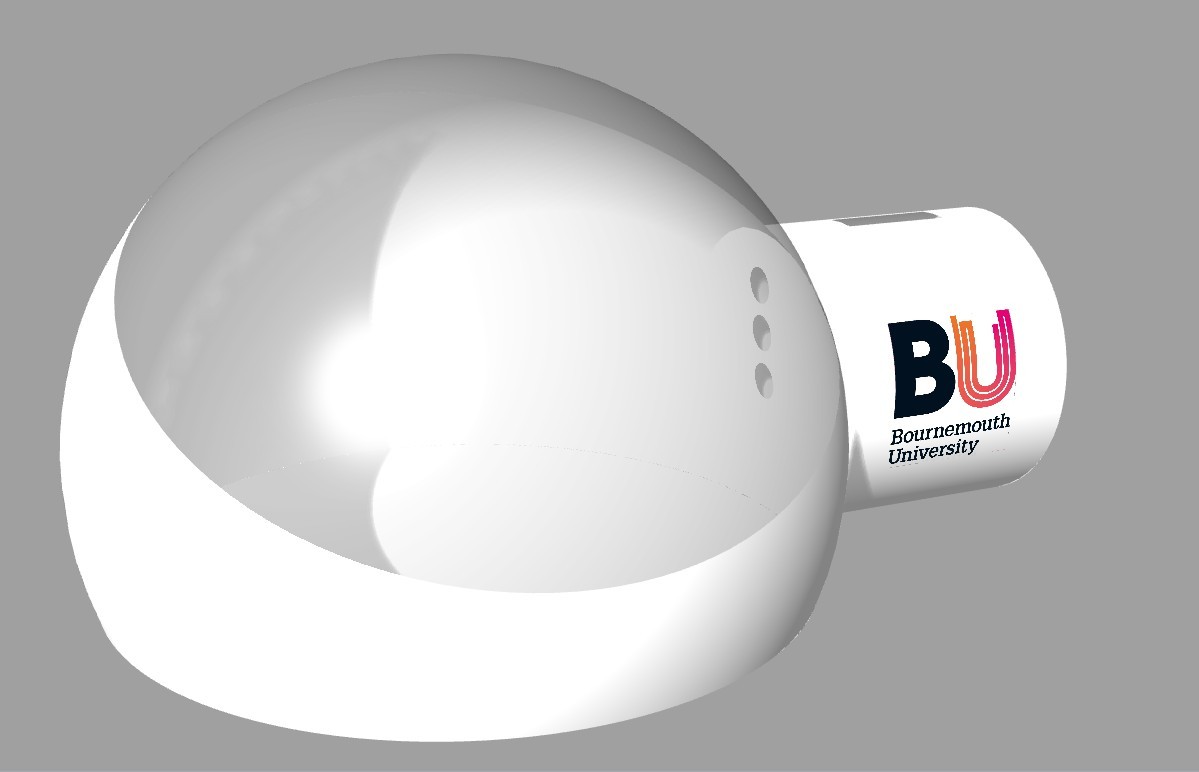
As part of International Open Access Week, events will be taking place in ‘BU’s Bubble Dome’ on Talbot Campus in the Courtyard. The dome can also be booked for team meetings and if you’d like to book this alternative space for your meeting please email Barry Squires.
The dome is available on the following dates and times:
Fitting a maximum of 15 people, the Bubble Dome accommodates soft bean bag seating only and a laptop and flat screen TV is available for use. It is a fully enclosed weather proof installation, but will be unavailable in severe wind or rain.
I have put together a seven week programme of seminars that deal with research practice drawing on my own experience. The programme is independent of any official development programme, but forms a natural complement to other things running at BU, such as the Grants and Writing Academies. The course caters for all types of research not just those based in the sciences and the weekly sessions will consist of a seminar with an opportunity for discussion, as well as time in which participants can discuss their current projects, papers and bids.
The programme is free and open to all members of academic and professional/support staff at BU. A certificate of attendance and completion will be issued and registration is via Organisational Development: staffdevelopment@bournemouth.ac.uk
The only pre-requisite is that participant’s make a commitment via a ‘learning contract’ to attend each of the sessions, unless absent due to unforeseen circumstances outside work. The programme will run on Tuesday lunchtimes (12.15 to 13.45) and starts on the 21nd October 2014. Participants are welcome to bring their lunch if they wish. The minimum cohort size is 8 and confirmation that the programme will run will be given by 1st October 2014. If there is sufficient interest a second cohort may run in the spring term. You will find further details at Staff Intranet including an outline programme.
I am delighted to announce the launch of the inaugural Knowledge Transfer Partnerships Academic Development Scheme (KTPADS). This centrally coordinated programme is for academic staff to work towards achieving a Knowledge Transfer Partnership (KTP).
What is KTP?
A KTP is part-funded by the government and the aim of this scheme is to encourage collaboration on projects between businesses and academics. KTP had previously been called the Teaching Company Scheme (TCS), though a rebrand a decade ago saw the TCS become KTP. KTP is managed by Innovate UK (formerly the Technology Strategy Board) and provides benefits to all parties involved – this scheme offers a fusion of academic and industry collaboration supported by an associate (graduate).
What is to benefit to me?
KTP is an excellent way of bringing in income and developing knowledge exchange with a clear pathway to impact.
Key benefits of KTP are as follows:
What does this scheme involve?
This scheme consists of an initial one-day training course, on Wednesday 29th October 2014, off campus to provide you with the necessary information to pursue a KTP in your area of research. The training day consists of information about KTP, engaging with business and writing proposals. Members will be required to bring KTP ideas to develop.
Members are then supported throughout the year in developing their KTP ideas including support in working with business and bespoke one-to-one sessions with the Innovate UK KTP Adviser. Additional support includes a travel budget for members to use on potential KTP collaboration visits. Expected time commitments for this scheme are: one full day for the training course on 29th october 2014, two half-day support networks in 2015 and at least three one-to-ones with the KTP Adviser from Innovate UK and unlimited one-to-ones as per your requirements from the KE Adviser (KTP) within the BU Research and Knowledge Exchange Office.
Please note: members are expected to collaborate with business and submit a KTP proposal within a year of starting the scheme.
What are the KTP funding priorities?
If you’re interested in working on KTP, there are a number of funding priorities for KTP as detailed below:
Currently, there is a special funding call with an agri-food theme. This funding call has an additional £2.3m to fund KTP in this area, further information on this call can be found here.
If your research speciality fits into any of these themes, then KTP could be a great knowledge exchange project for you.
How do I apply?
To apply for a place on the scheme, please contact Rachel Clarke to request an application form. This form will need to be signed by yourself and your Deputy Dean of Research & Enterprise (or equivalent). Applications open on Monday 22nd September and close at midnight on Wednesday 8th October.
A further KTP Academic Development Scheme will be announced in 2015 via the BU Research Blog.
If you would like to discuss this scheme or receive an application form, please contact Rachel Clarke, Knowledge Exchange Adviser (KTP) on 01202 961347 or clarker@bournemouth.ac.uk
If you fancy attending an interactive day event aimed for doctoral students and researchers, this event is one not to miss!
The event will introduce you to the unique resources of the Mass Observation Project (MOP). It provides the chance to discuss and try-out the opportunities that the MOP presents for qualitative longitudinal and/or mixed-method research.
The MOP is a self-selecting citizen’s writing project where individual writers have been answering sets of themed questions/directives on a range of different issues, themes and events between 1981 and present day.
Reasons why you should attend this event
During the day you will be able to:
This event would be suitable for any researcher – including post-graduate/doctoral researchers from a range of different disciplines (social sciences, humanities, and different science and STEM disciplines) who are considering using qualitative and/or mixed research methods.
Where and when the event will take place
The event takes place on Monday 27th October at The Keep in Brighton – 10am to 4.30 pm. (please arrive for registration before 10) The Keep is a fully accessible venue. If you require further information on accessibility, please contact moa@sussex.ac.uk.
General Information for the day
On the day refreshments and lunch will be provided. There is a £16 fee to cover the costs of this event and if you could please book by visiting this link : The maximum number of participants for this event is 20. Booking for this event will close at midnight on 20th October, or when we have reached our maximum number of participants.
For enquiries about this event please contact Rose Lindsey tel: 02380 594442 or email: R.Lindsey@soton.ac.uk
If you have been away from the workplace, you may feel that your career is on hold or slipping backwards, but with the schemes highlighted below, you have the opportunity to re-invigorate your academic career:
Within Biomedical Sciences, the Wellcome Trust Research Re-entry Fellowship is one scheme within their suite of Flexible Working options. This scheme is for postdoctoral scientists who have recently decided to recommence a scientific research career after a continuous break of at least two years. It gives such scientists the opportunity to return to high-quality research, with the potential to undertake refresher or further training. The fellowship is particularly suitable for applicants wishing to return to research after a break for family commitments. The next deadline is 06/10/14.
The Wellcome Trust also offers the Sanger Institute Fellowship, which enables and opens routes back into science for those who have had a break from scientific research – for any reason. The funder understands that even a short time out of research can have an impact on your career, which is why they have created a postdoctoral fellowship providing an additional opportunity specifically for those who have been out of scientific research for one year or more to return to high-quality postdoctoral training. One Fellowship will be awarded each year. Each Fellowship will last for three years and can be worked full time, part time or flexibly. The next call for applications will be in mid-2015.
A Daphne Jackson Fellowship is a unique fellowship designed to return STEM professionals to their careers after a break. Fellows normally carry out their research part-time over 2 years, in a university or research establishment in the UK. The Fellowships are flexible and include a tailored training programme designed to update skills and knowledge and support you in your return to research. If you are ready to return to research following a break of 2 or more years, take a look at their sponsored fellowship opportunities. Alternatively, if you have a potential host institution and/or research area in mind, you can apply for a fellowship at any time. If your application is successful, the Trust will endeavour to find suitable sponsorship.
The Royal Society’s Dorothy Hodgkin Fellowship scheme is for outstanding scientists in the UK at an early stage of their research career who require a flexible working pattern due to personal circumstances such as parenting or caring responsibilities or health issues. Female candidates are particularly invited to apply. The scheme covers all areas of the life and physical sciences, including engineering, but excluding clinical medicine. Applicants must be able to demonstrate a current need for flexible support due to personal circumstances at the time of application. This can include current parenting or caring responsibilities (such as raising children or looking after ageing or seriously ill family members), clinically diagnosed health issues or other personal circumstances that create a need for a flexible working pattern. This scheme is closed for 2014 but should open again in late 2014 / early 2015.
Although these are the main schemes, it is worth checking if smaller funders or charities in your field also provide such funding. For example, a quick internet search found a similar scheme offered by the British Heart Foundation.
There are so many important reasons for researchers to share their knowledge with the wider society. To name a few:
That’s why the Press Office, together with R&KEO, is hosting Make Your Voice Heard on Wednesday 10th September. At this event you’ll learn how to do this as effectively as possible, with practical communications tips and techniques, whilst joining in discussions on what academics bring to media discourse.
John Fletcher has some particularly interesting insights on the importance of communication. You can read his recent blog post online here.
Please book onto this event if you haven’t already done so via this Eventbrite link. There are a limited number of places still available.
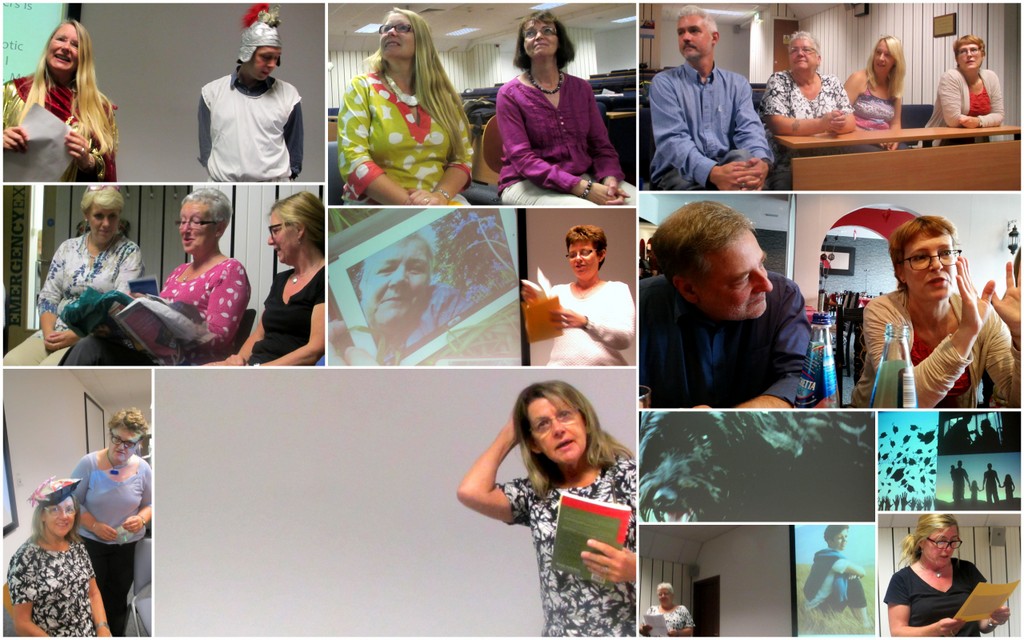
The newly formed ARTS in Research Collaborative recently held two days of exploration of biography and ways and means of expressing the stories of others creatively and ethically. The workshop was entitled, “A Past/A Present” ARTS in Research (AiR) Workshop.
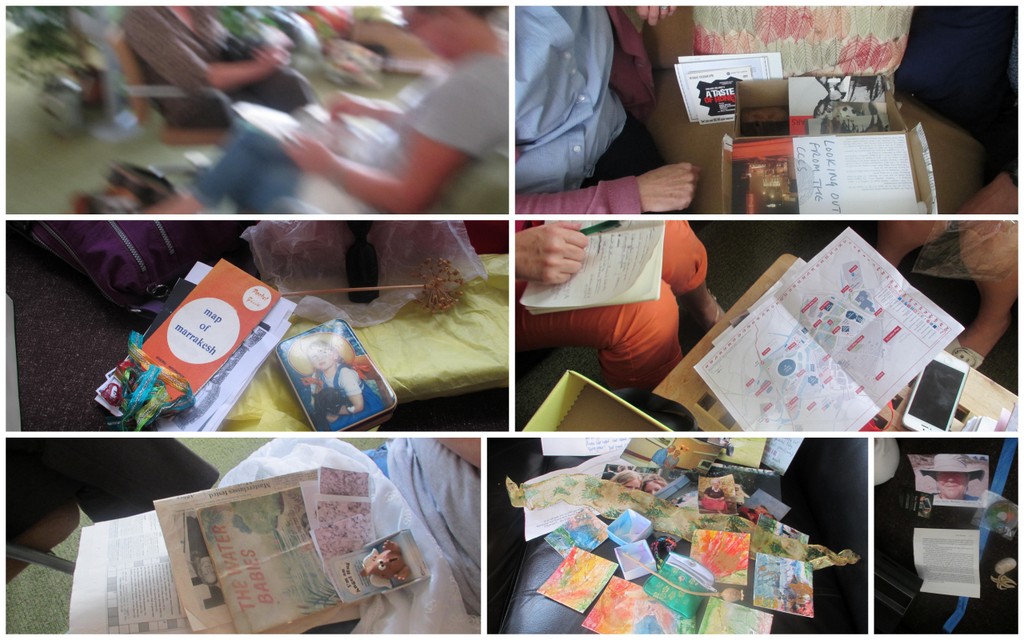
Using shared objects representing a time or event in each participant’s life, a ‘partner’ then created a five minute presentation of and from the storied materials. Participants in the two-days of exploration came from HSC, the Media School and DEC. Both faculty and postgrad students took part.
The brief was kept simple and instruction to a minimum. Organiser Kip Jones shared examples from his own work of finding ways and means of responding creatively to detailed data as well as time and material constraints. Other than that, participants engaged in a learning process through participation itself and the sharing of their experiences. The group has agreed to write up the encounter for a journal article.
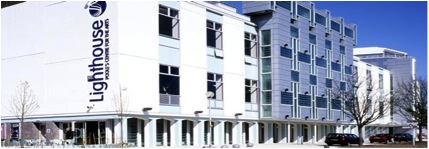
The ARTS in Research Collaborative’s next workshop is planned for November at The Lighthouse in Poole. Details to follow. It will be open to a wider audience and there will be a charge to attend, but BU faculty and students are encouraged to apply for training and/or development funding within their Schools.
This event is part of a nationwide-project to gather views and encourage debate about how the different features of the UK research environment are affecting, both positively and negatively, the work and behaviour of scientists at all stages of their career. The findings of the project will be published and presented to policy makers towards the end of 2014. This is your chance to contribute. The event is open to anyone and is free to attend but please do make sure you register in advance, here.
There are also similar events taking place in universities throughout the UK during September, for more information please follow the link here.
The structure of the day will be as follows:
Calling all scientists – what’s it like being you?
Friday 12 September 2014
2.30-4pm (lunch available from 2pm)
Xfi Henderson Lecture Theatre, Streatham Campus, University of Exeter
Video linked to Exchange Seminar Yellow, Penryn
Panel members:
Nick Talbot FRS (Chair)
Professor of Molecular Genetics and Deputy Vice-Chancellor, Research and Knowledge Transfer, University of Exeter
Tim Naylor
Professor of Astrophysics, College of Engineering, Mathematics and Physical Sciences, University of Exeter
Elizabeth Bohm
Senior Adviser, The Royal Society
Nicky Britten
Professor of Applied Health Care Research, University of Exeter Medical School
On the 9 September, Daryl Jones, from Altmetric for Institutions (a web-based application for tracking, monitoring and reporting on impact of research outputs) will be here at Bournemouth University to run a demonstration of the application.
Below are the target audiences that this will likely benefit –
i. Research administrators
· View and analyse the online attention paid to own institution’s research outputs at the institution, department, and author levels.
· Find evidence for institution’s societal impact.
· Compare results from own institution to those of other institutions.
ii. Communications officers
· Assess public engagement and reputation for own institution.
· View and analyse online attention paid to institution’s research outputs.
· Identify key influencers in the community for boosting future engagement
iii. Faculty members
· View and analyse online attention paid to personal or research group/departmental scholarly outputs.
· If involved with promotion and tenure: assess online attention paid to articles for a specific faculty member.
The different types of metrics that the product takes into account (tweets, blog posts, policy documents, news stories, and much more) and how Altmetric for Institutions works with this information to provide a score (in the form of the Altmetric donut) shall be shown.
There is currently an element of Altmetric imbedded within BRIAN. Please do come along to this demonstration to find out more about how Almetric for Institution can help you in managing your research outputs.
The demonstration will take place in EB202, Executive Business Centre, Lansdowne Campus on the 9September, starting at 10.30am (the session will probably last for an hour). If you are interested, or know anyone who will benefit from this demonstration, please do send Peng Peng Hatch an email to express your interest.
Refreshments will also be available on the day.
It’s not enough just to do cutting edge research. We also know that we have to share it and pass on our findings or even our views about matters that are important to society. Such profile-raising can help attract future research funding, raise our standing and that of BU and, with an eye on REF2020, help achieve impact.
Talking to journalists, using social media and updating blogs or websites does not come naturally to all of us and can be seen as just another demand placed on people who are already struggling with a busy schedule.
The communications department at the University have offered to make it easier for us to get our voice heard. They are hosting an event entitled Make Your Voice Heard to explore how to do this with impact and effect.
Taking place next week on 10 September 2014, we will discuss important topics, such as how academics can enrich the media and how to balance different stakeholder wants and needs. There will also be opportunities to acquire some practical tools, tips and techniques.
Ultimately, it would be great to see more of our staff sharing their unique and valuable perspectives on matters important to society and raising the profile of BU in the local, regional and national scene. Whether that’s through informed comment or sharing research outcomes, the communications team can help us do it more effectively.
‘Make Your Voice Heard’ runs from 9:00 – 14:00 on Talbot Campus and lunch will be provided. It is open to all researchers, from PGRs to Professors.
You can see the full schedule and book your place by following this link to the Eventbrite page. If you would like to find out more before booking, please contact Sarah Gorman (Corporate Communications Assistant).
It’s not enough just to do cutting edge research. We also know that we have to share it and pass on our findings or even our views about matters that are important to society. Such profile-raising can help attract future research funding, raise our standing and that of BU and, with an eye on REF2020, help achieve impact.
Talking to journalists, using social media and updating blogs or websites does not come naturally to all of us and can be seen as just another demand placed on people who are already struggling with a busy schedule.
The communications department at the University have offered to make it easier for us to get our voice heard. They are hosting an event entitled Make Your Voice Heard to explore how to do this with impact and effect.
Taking place on 10 September 2014, we will discuss important topics, such as how academics can enrich the media and how to balance different stakeholder wants and needs. There will also be opportunities to acquire some practical tools, tips and techniques.
Ultimately, it would be great to see more of our staff sharing their unique and valuable perspectives on matters important to society and raising the profile of BU in the local, regional and national scene. Whether that’s through informed comment or sharing research outcomes, the communications team can help us do it more effectively.
‘Make Your Voice Heard’ runs from 9:00 – 14:00 on Talbot Campus and we will even be providing lunch. It is open to all researchers, from PGRs to Professors.
You can see the full schedule and book your place by following this link to the Eventbrite page. If you would like to find out more before booking, please contact Sarah Gorman (Corporate Communications Assistant).
I look forward to seeing you there…..
In May, we were privileged to welcome experts on the topic of Open Access to speak at Bournemouth University (BU) in an event well attended by delegates from HEIs across England, Scotland and Wales. BU’s Open Access Event was enjoyed by all who attended, if you missed the event or would just like to recap on the presentations the videos from the event are now available for your viewing pleasure –
Benefits of Open Access – Alma Swan
Open Access in a Post-2014 REF – Ben Johnson, HEFCE
Open Access publishing and emerging networks of open research – Catriona MacCullum, PLoS
Implementing open access at the University of Oxford – Catriona Cannon, Bodleian Libraries
Open Access: BU Style – Emma Crowley, Jean Harris and Shelly Maskell
Next Wednesday on Talbot Campus, Paul Barnes from Academic Services will be hosting a Writing Academy lunchbyte session focused on the writing of academic publications when English is not your first language.
The session will look at:
After the presentation, attendees are invited to stay and discuss the topic with the speaker over lunch. There is also an option for attendees to book one to one appointments with the speaker to discuss any individual needs they may have.
To book on to the above workshop please visit the Staff Development & Engagement Pages on the Staff Intranet.
For further information please contact Shelly Anne Stringer
A recent free Maternity, Midwifery & Baby Conference held in London offered an ideal opportunity for Bournemouth University to showcase two innovative projects. The first, co-presented by Dr. Sue Way and Sian Ridden, a 2nd year midwifery student, focused on a joint chiropractic and midwifery newborn clinic which was set up with Fusion principles in mind. There are a number of aims of the clinic, of which the main is to optimise women’s opportunities to breastfeed successfully by providing chiropractic care for babies and breastfeeding support and advice to mothers. There are two further important aims, one of which, is to enhance student (undergraduate midwifery students & chiropractic students) learning opportunities and secondly, to provide networking and collaborative opportunities for students and staff in relation to research and dissemination of findings around these particular topics. When it was Sian’s turn to present, she was confident and articulate. She discussed a case study and how her knowledge was enhanced by being part of the clinic. Sian found attending the clinics provided her with a great learning experience and it was empowering that she was able to provide breastfeeding support under the guidance of the experts in the respective fields (Alison Taylor and Dr. Joyce Miller). Preliminary breastfeeding results from the clinic are promising. More details to follow in due course. Finally the seminar concluded by discussing the re-launch of the clinic in September, and to raise awareness of the re-launch, a free local conference (funded by Fusion Funding) for the community will be taking place on the 12th July 2014. For further information on the above clinic or the conference please contact Alison Taylor on ataylor@bournemouth.ac.uk or Dr. Sue Way on sway@bournemouth.ac.uk .
The second seminar presentation took place after lunch and it focused on a study which is currently taking place involving five 3rd year midwifery students and the feasibility of incorporating newborn infant physical examination (NIPE) competencies into the pre-registration midwifery programme. Traditionally these competencies are usually achieved post qualification when midwives have a number of years’ experience under their belt. However BU midwifery students felt differently and Luisa Cescutti-Butler discussed how the study was initiated by Luzie who asked the question: “why couldn’t they learn all the necessary skills in the third year of their programme”? Luzie took to the podium and presented her section like a duck to water. She didn’t shy away from the difficulties from taking this extra study on, but was quite clear that the benefits for women in her care were worth the extra work. The presentation generated quite a lot of heated discussion with some midwives in the audience quite adamant that students should not be taking on this ‘extended’ skill. However Luzie was able to stand her ground and confidently counter ague as to why students should gain these skills during the undergraduate programme. She received a resounding clap and cheers from the audience.
It takes some courage to stand up in a room full of people and present, and Sian and Luzie were brilliant. Both students did Bournemouth University and in particular the midwifery team proud. For further information on the above study please contact Luisa Cescutti-Butler on lcbutler@bournemouth.ac.uk
An Immigration Compliance Session facilitated by Barbara Montagna, Immigration Compliance Officer is taking place on the Thursday 12th June 2014, 16:00-17:00, Lansdowne Campus.
This session provides an overview of the immigration rules and is a great opportunity to ask questions. The session includes a short presentation, which summaries the immigration rules affected BU, its students and staff. There will be some time for questions and answers provided as well.
To benefit the most from this workshop please come along with any questions about immigration at BU for our students, staff or visitors.
This session is aimed at: All staff who deal with international students enrolled at BU.
To book your place on this workshop, please email staffdevelopment@bournemouth.ac.uk