Tagged / Researcher Development

Beyond Academia: Exploring Career Options for Early Career Researchers – Online Workshop

Enhance your professional growth with this upcoming researcher development and research culture opportunity for ECRs

Beyond Academia: Exploring Career options for ECRs

Wednesday 25 February, 1:30 – 4:30 pm

Online

Facilitated by Margaret Collins from Training for Universities

This engaging, practical 3-hour workshop supports early-career researchers considering their next professional chapter. Whether moving by choice or necessity, many researchers are now seeking meaningful, fulfilling alternatives to the traditional academic path. This session helps participants recognise their transferable skills, explore a wider range of careers options, and build the confidence to take their next steps, both inside and outside academia.

Find out more and register here

For more opportunities, explore the Researcher Development Hub and catch up on our February Newsletter.

If you have any questions, please contact the Researcher Development and Culture Team researcherdevelopment@bournemouth.ac.uk.

UKCGE Recognised Research Supervision Programme: Deadline Approaching

Whether you are a seasoned supervisor or just starting out in supervision, professional recognition is a powerful way to validate your expertise and contribute to a thriving research culture at Bournemouth University.

The UK Council for Graduate Education (UKCGE) offers a national accreditation programme that allows you to benchmark your practice against the Good Supervisory Practice Framework.

Why apply?

UK universities are increasingly prioritising supervisor development to enhance research culture and doctoral support. The Research Supervisor Recognition Programme (RSRP) encourages supervisors at all levels to engage in structured self-reflection, using the Good Supervisory Practice Framework to identify strengths and target areas for growth.

Key benefits of RSRP Awards:

  • Structured Self-Reflection: Evaluate your methods and decision-making.
  • Benchmarked Excellence: Map your practice against national standards.
  • Professional Growth: Identify clear pathways for improvement, whether applying for Full or Associate awards.

With over 30 BU supervisors already recognised, now is the perfect time to join their ranks.

Which pathway is right for you?

The Research Supervisor Recognition Programme offers two levels based on your current experience:

Award Level Eligibility
Recognised Supervisor (Full Award) For those who have supported doctoral candidates all the way through to final examination and completion
Recognised Associate Supervisor (Associate Award) For those who haven’t yet seen a candidate through to completion, or who supervise in an informal capacity

Steps to apply

1. Write your reflective account

You will need to write a reflective account of your supervisory practice aligned with the Good Supervisory Practice Framework.

Submit your application using the relevant form:

Recognised Supervisor Reflective Account Form  Word 56.37KB

Recognised Associate Supervisor Reflective Account Form Word 55.72KB

Find out more about structured self-reflection

2. Gather your references and supporting documentation

To authenticate your reflective account, you are required to provide supporting documentation.

For the Full Award, you will need:

  • A reference from a former doctoral candidate.
  • A reference from a colleague who knows about your supervisory practice (e.g., a co-supervisor).

For the Associate Award, you will need:

  • A reference from a colleague who knows about your supervisory practice (e.g., a co-supervisor).
  • A Supervision Observation report.

Forms for Referees:

3. Seek formal approval

Before your application can move to the final review stage, a formal approval email must be sent from your Associate Dean Research, Innovation and Enterprise directly to researcherdevelopment@bournemouth.ac.uk 
Key information

Peer-reviewed feedback: Applications are reviewed by a two-person panel. You will receive detailed, actionable feedback regardless of the outcome.

Fully funded: The Doctoral College is covering the full cost of applications for all BU supervisors.

Support for your application: Access the guidance and tips shared during our recent Supervisory Lunchbite workshop here.

FAQs:UKCGE | Frequently Asked Questions

Important Deadlines

Internal BU Deadline: 9am, Monday 16 March 2026

UKCGE Deadline: Friday 20 March 2026

Expected Outcome: June 2026

Complete applications should be submitted to Julia Taylor (Doctoral College) at researcherdevelopment@bournemouth.ac.uk
Register now to attend the 17th Annual Postgraduate Research Conference – Wednesday 3 December 2025

Register now to attend the 17th Annual Postgraduate Research Conference, hosted by the Doctoral College.
Join us for a day of showcasing some of the excellent research taking place across BU by our postgraduate research community. This event provides a platform for our postgraduate researchers to present their research, share insights, and engage in meaningful discussions with peers, university colleagues, and external partners.

Date & Time: Wednesday 3 December, 9am-4:30pm

Location: Fusion Building, Talbot Campus

This year, the Poster Exhibition will take place in FG04 & FG06, Fusion Building, with viewings taking place in the morning and during the lunch break. Oral presentations hosted in Share Lecture Theatre in the Fusion Building.

Read the full brochure here

Whether you’re a researcher, academic, colleague, or just interested in the cutting-edge work happening at BU find out more and book your place here 

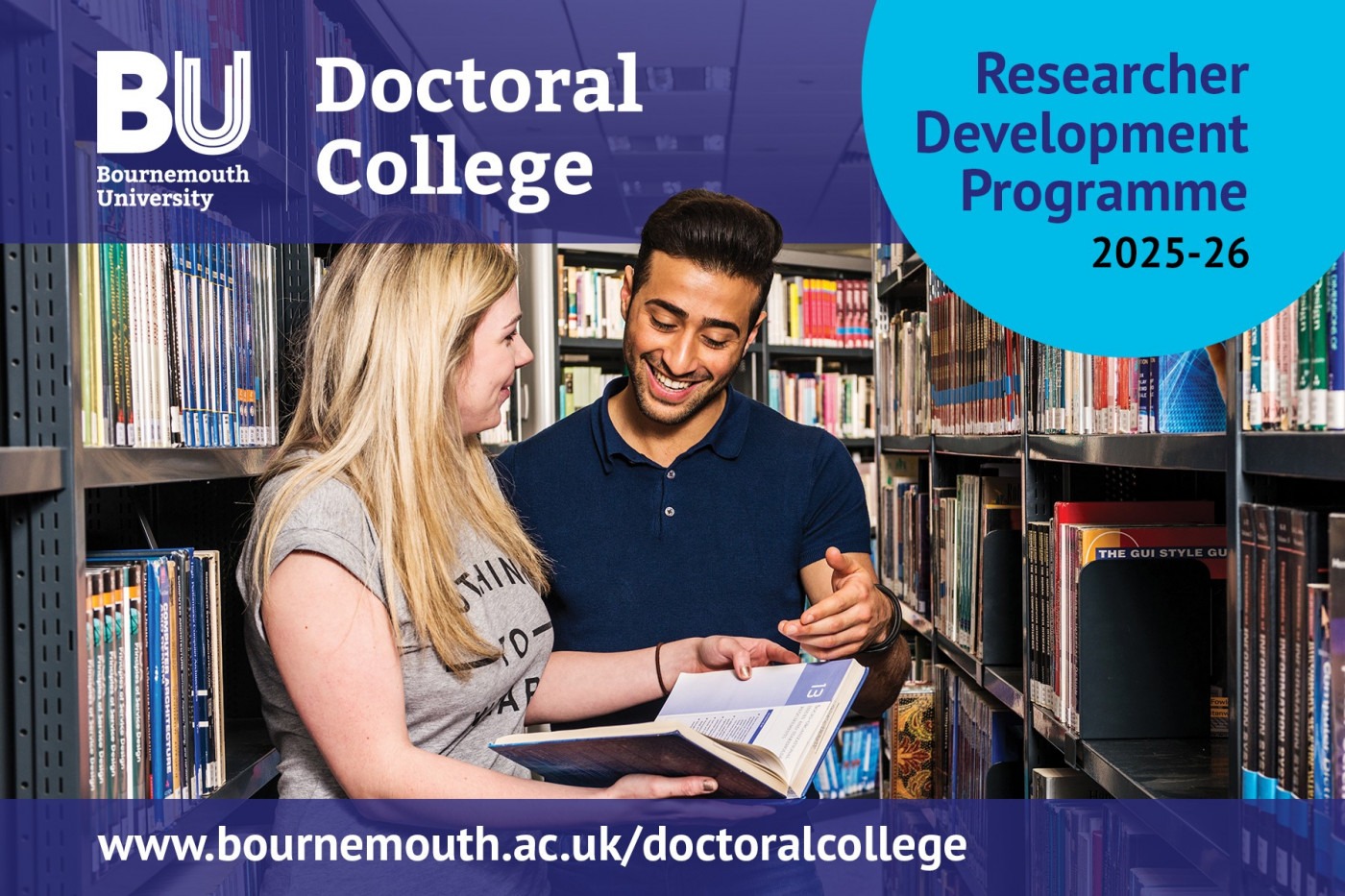
We are delighted to re-launch the 2025-26 Researcher Development Programme

We are delighted to re-launch the 2025-26 Researcher Development Programme.

Bookings for sessions until December are now open via the RDP Brightspace! There are more than 30 different workshops to choose from, with more opening in November!

The programme has been recently reviewed to align with the new Vitae Researcher Development Framework.

Have a look at the 2025-26 brochure (if you would like a printed version, just pop into the Doctoral College).

Not sure whether to attend an RDP session? Feedback across the programme in 2024-25 was again overwhelmingly positive with attendees reporting the following:

  • 96% would recommend a workshop
  • 97% found the workshops relevant and useful
  • 93% found the workshops interesting and engaging
  • 93% reported improved research/personal/professional skills and increased confidence in topics covered

We would like to express our sincere gratitude to the exceptional academics and professional staff who facilitated workshops within the Researcher Development Programme. Their expertise and dedication have significantly contributed to the success of the programme, providing immense value to all participants. Their commitment to fostering an enriching learning environment greatly contributes to the academic and professional growth of our research community.

If you have any queries about the programme, please contact: pgrskillsdevelopment@bournemouth.ac.uk.

Doctoral College PGR Research Culture and Community Grant – Apply Now!


The Doctoral College is delighted to launch the second round of funding for the PGR Research Culture and Community Grant (RCCG).


This grant is intended to support PGR-led activity across researcher development, research culture and research community building initiatives. It can be used to fund a social event, training activity, analysis workshop, digital skills session, writing session or other activity to enhance the PGR experience. In addition to community building, the purpose of the grant is to enable PGRs to gain transferable skills and experience in planning, organising, promoting and implementing such activities.

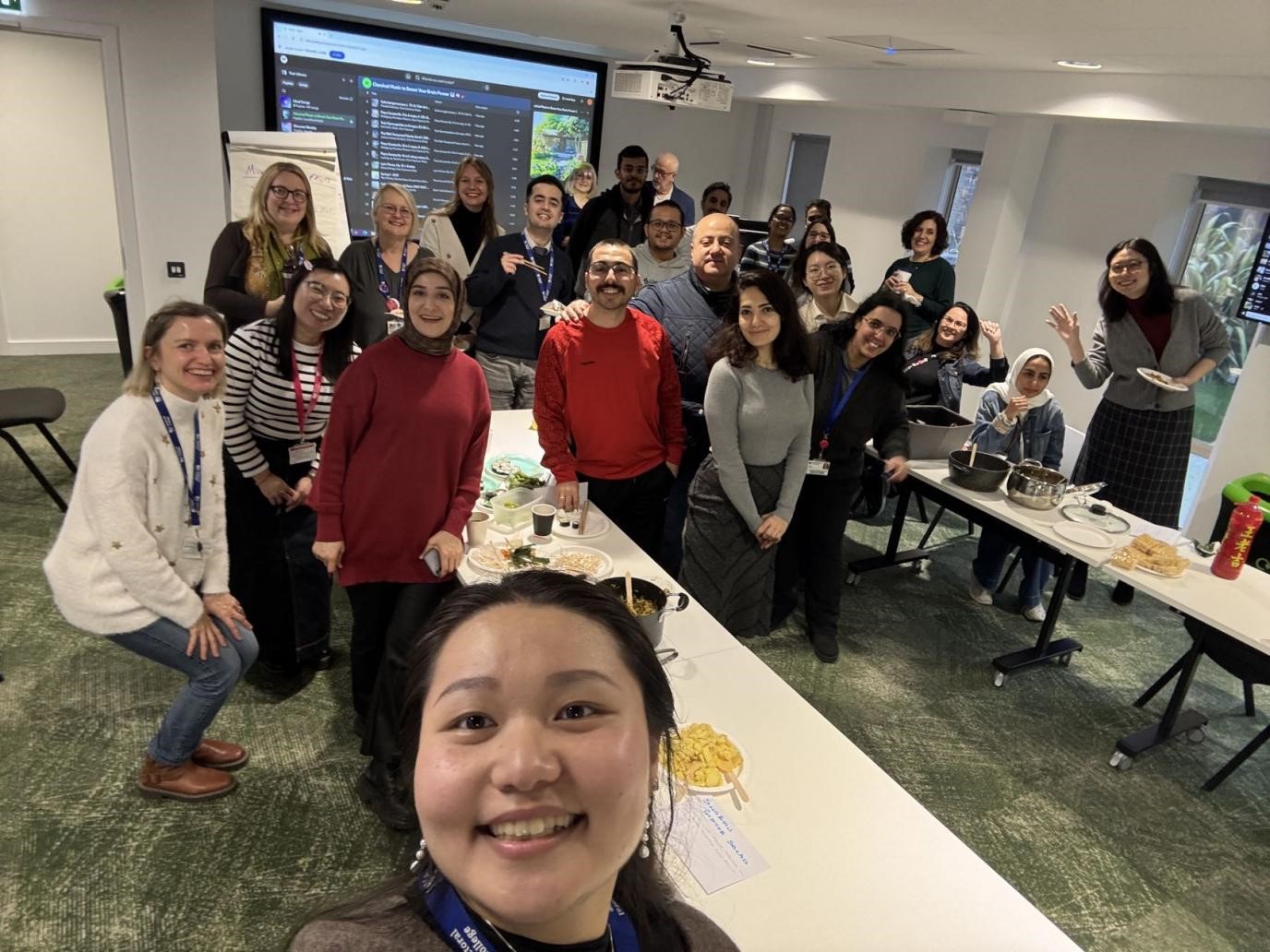
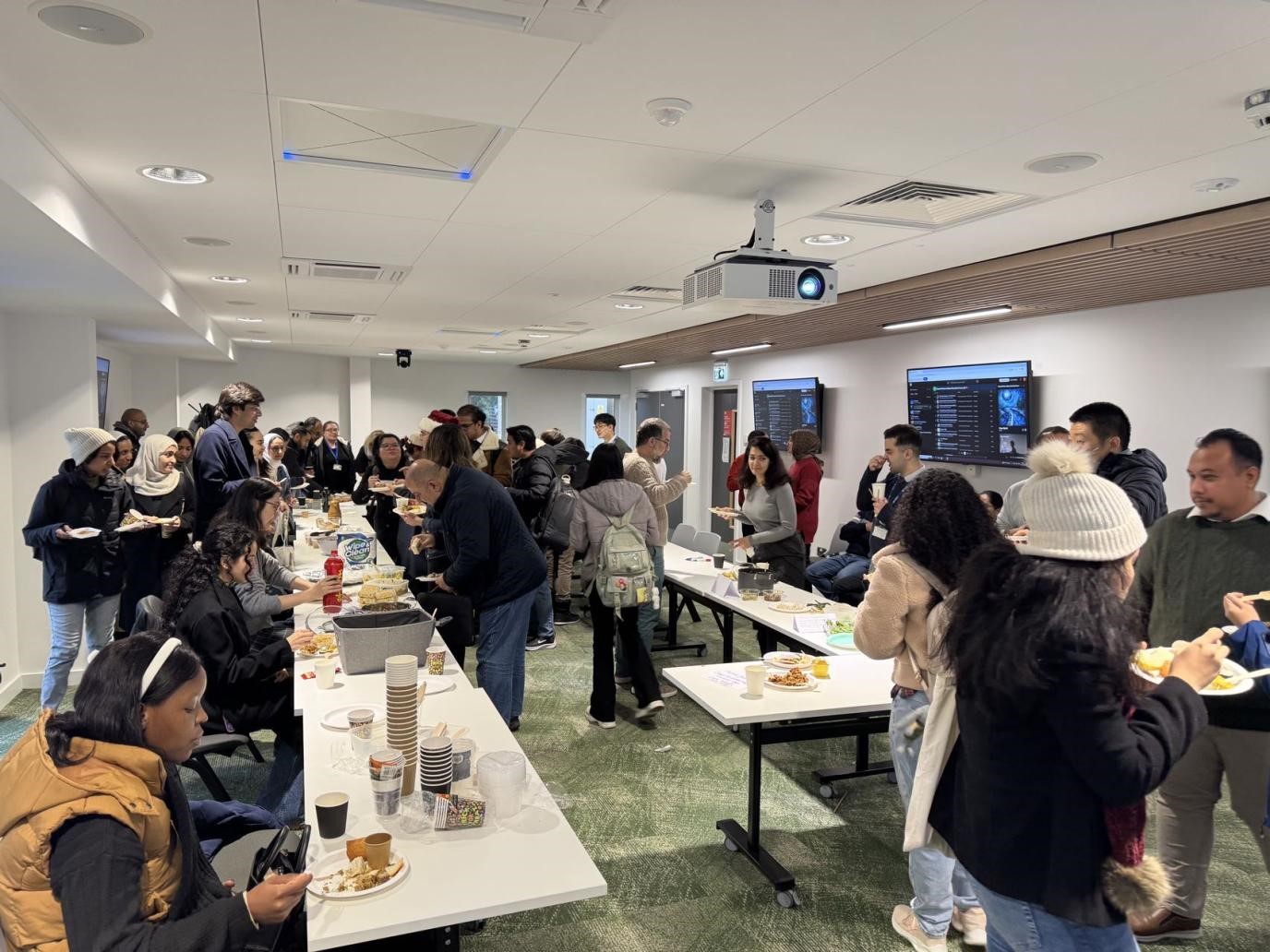
A successful event that took place during the first round of funding, was “Culture on a Plate”, organised by Bohan Liu from BUBS. Read on to learn about Bohan’s experience and how this event has had a positive impact on the PGR community:

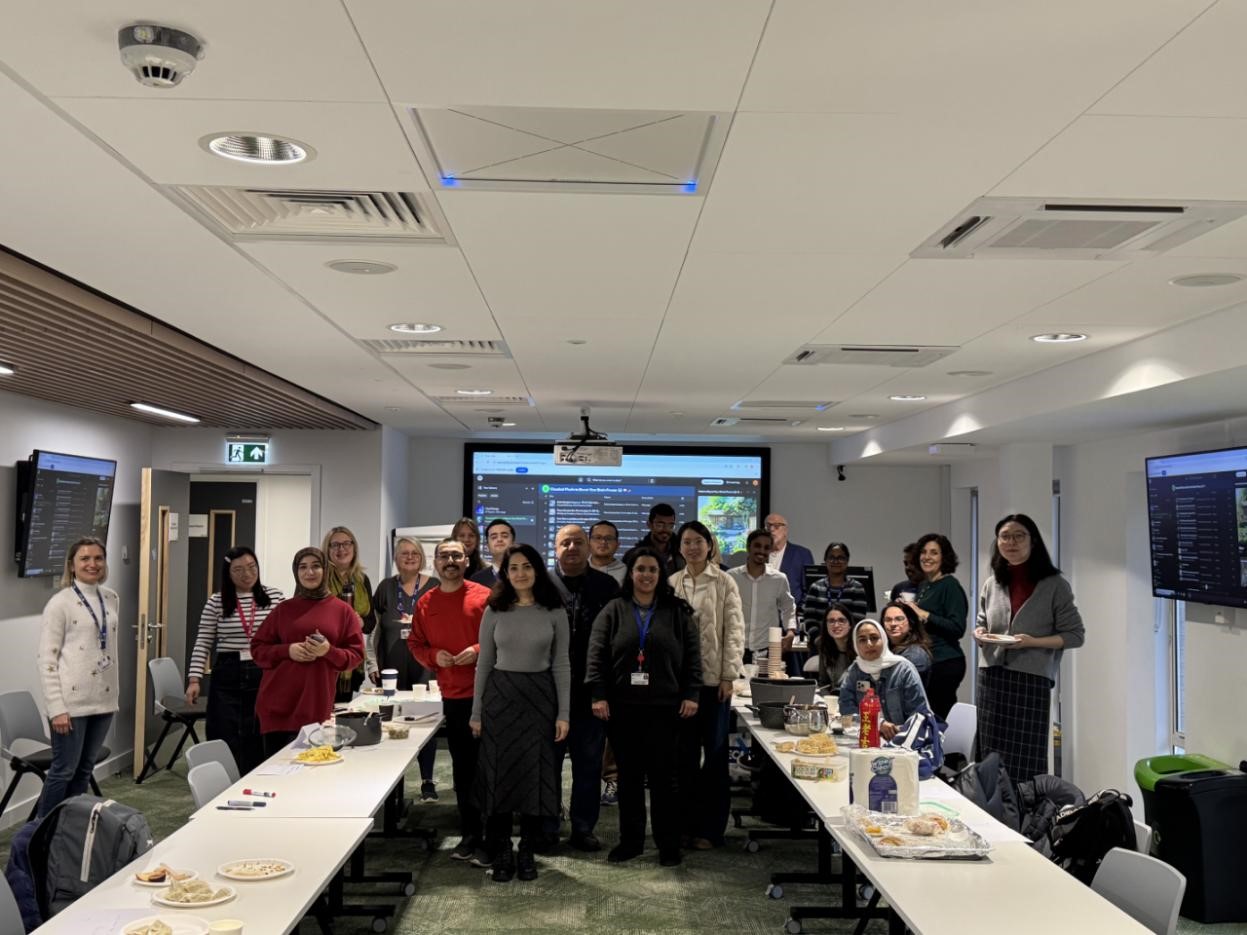
On 11th December 2024, Bournemouth University’s PGR community came together for the much-anticipated “Culture on a Plate” event, a celebration of cultural diversity through food.

The event brought together over 40 attendees from various departments, showcasing a vibrant array of home-cooked dishes that reflected traditions from around the world. Each dish carried a unique story, sparking meaningful conversations and creating a deeper appreciation for the cultural richness within our community. The enthusiasm of participants was heartwarming, with many praising the event and suggesting it become a regular tradition at BU. A heartfelt thank you goes out to the 21 contributors who shared their culinary creations and the individuals who kindly provided recipes for everyone to try at home. The feedback was overwhelmingly positive, with attendees expressing their gratitude for the opportunity to connect through shared meals and cultural stories.

For me, organising this event was an incredibly enriching experience. It helped me develop essential skills in event management, cross-cultural communication, and community building. It was both challenging and rewarding to see the joy and sense of belonging it brought to our PGR community.

I am deeply grateful to the BU Doctoral College for their support and funding, without which this event would not have been possible. Many thanks go to Enrica Conrotto and the staff from the Doctoral College, whose efforts were instrumental in bringing this event to life. I would also like to extend a special thank you to Professor Dimitrios, whose guidance and encouragement played a crucial role in shaping the success of this event.

This joyful gathering, held just before the Christmas holiday and New Year, was more than just a celebration of food. It was a spark of passion for inclusivity and connection, one that I hope will continue to grow and inspire the BU community into the coming year.

This experience has been immensely fulfilling and has reaffirmed the importance of fostering a collaborative PGR community. I hope this forum marks the beginning of more initiatives aimed at empowering BU researchers to achieve academic excellence and make meaningful contributions to their fields.

Bohan Liu (BUBS)

We hope this event has inspired you and perhaps has given you some ideas to submit an application for this second round of funding.

If you would like to apply, full details can be found on the Doctoral College Brightspace, including the application form.

  • Applications opened Monday 13 January 2025
  • Applications close Monday 24 February 2025

If you would like to discuss your ideas before submitting your application, please contact:

pgrskillsdevelopment@bournemouth.ac.uk


Bursaries available to attend the 2024 Vitae Researcher Development Conference

A number of bursaries are available to enable researchers to attend the Vitae International Researcher Development Conference 2024.

The conference takes place online from 3rd-5th September and in-person in Birmingham on 23rd and 24th September.


It is the flagship annual event of Vitae, a non-profit programme to support the professional development of researchers, and will cover topics around policy and practice in researcher development.

29 bursaries are available in total – covering attendance at both the online and in-person events or the online-only elements.

The bursaries have been sponsored by UKRI, British Academy’s Early Career Researcher Network, and Wellcome – with different criteria for each.

They are available to researchers in the following categories:

  • who are, have been, or are looking to be involved in researcher networks and staff associations or committees (UKRI bursaries)
  • part of the BA Early Career Researcher Network (British Academy bursaries)
  • with an interest in equity, diversity and inclusion within the research environment (Wellcome bursaries)

The closing date for applications is Tuesday 20th August.

For more information and to apply, please visit the Vitae Researcher Development Conference website

MOOC: Career Management for Early Career Academic Researchers

RDS has been advised of this free external and online course:

Career Management for Early Career Academic Researchers aims to support researchers to explore their career options and make career plans.

Participants of previous courses have said:

This course has been fantastic, particularly as I am at a stage where I am finishing my PhD and was worrying about what comes next. I didn’t realise a lot of the things about academic and non-academic career paths, and have found the self reflection tasks invaluable.

 My motivation to take control of finding my future career has increased exponentially from the day I started this course.

 I have learned more than I ever imagined about choosing my career path. I feel much more confident and better equipped to choose the right career after my PhD.

Through a series of articles, videos, discussions, and reflective exercises, researchers will be encouraged to consider what they want out of a career; to explore the academic career path and many other career options; and to increase their confidence in job search and applications.

The MOOC is a collaboration between the University of Glasgow, University of Edinburgh, and University of Sheffield.  It’s a free online course and open to research students and early career research staff at any institution in the UK and beyond.  It may be particularly useful for researchers who are unable to access any on campus support you offer due to other commitments, or for researchers in institutions that are unable to offer any dedicated careers support to these groups.

The course will start on 27th January – for more information and sign up details go to:

https://www.futurelearn.com/courses/career-management


BU is not responsible for the content of external websites


External Survey – Research-active academic staff

We have received notification of an external survey:

Vitae are hosting a survey that is open to research-active academic staff, regardless of career stage or level of engagement, across the UK’s Higher Education Institutions. Results will provide an evidence-based outline of the current position across the UK to help improve training, support and professional development in higher education.

The survey will help identify examples of good practice that can be shared and mainstreamed and will also identify whether there are important gaps in researcher development and training provisions at key stages of a research-active member’s career that should be filled.

By taking part in the surveyyou will help make a contribution to achieving a good and healthy research environment, and helping further embed the reputation of UK Higher Education in an increasingly competitive world research environment.

It is different from the consultation to Support the Career Development of Researchers, which ran last year, and in addition to the Principal Investigators and Research Leaders Survey (PIRLS), as the current survey focuses specifically on the training aspect of researcher development.

Complete survey here (deadline Friday 29 November 2019)  

or at https://www.vitae.ac.uk/impact-and-evaluation/review-of-staff-development-and-support-provision-for-academic-research-across-uk-higher-education-institutions

The survey is being hosted and the data processed by Vitae on behalf of the University of the Highlands and Islands and Oxford Brookes University.

This is an external survey with Bournemouth University not responsible for any third party links. This post is to raise awareness of this initiative only.

Postgraduate Research Live Exhibition

New for 2018
Postgraduate Research Live Exhibition

This live exhibition is a unique display of the breadth and quality of research undertaken by postgraduate researchers at the University and allows those who take part an opportunity to disseminate their research in new, creative and interactive ways to a wide audience.

Applications are now open for postgraduate research students.

Application deadline 09:00, Monday 29 October 2018.

Live Exhibition Guidance
Application Form

If you have any questions or wish to discuss your idea please contact me:

Email: pgconference@bournemouth.ac.uk


The Research and Knowledge Exchange Development Framework is changing!

To enhance the researcher development workshops available to BU’s academics, the Research and Knowledge Exchange Office is making some changes to the Research and Knowledge Exchange Development Framework (RKEDF), in consultation with senior faculty staff.

BU academics wishing to find out more about these exciting developments should refer to their internal Faculty Blogs for more details.

Make sure that you don’t miss out on these career-enhancing opportunities!

Vitae Researcher Development International Conference

On 11 – 12 September 2017 Clare Cutler and Natalie Stewart (Doctoral College Research Skills and Development Officers) attended the Vitae Researcher Development International Conference, focused on researcher development policy, impact and application.

With over 400 delegates in attendance, the conference celebrated 100 years of the modern PhD in the UK and 50 years of researcher development. With a strong emphasis on the future of researcher development, the growing importance of developing the highest calibre research students, and an increasingly diverse and competitive job market, we came back inspired…inspired to provide a sector leading researcher development programme accessible to all Bournemouth University postgraduate research students.

Three Minute Thesis UK Final

The UK National 3MT® Final was hosted at the conference gala dinner where six finalists from across the UK competed to win a £3k grant to spend on a public engagement activity and a place on the Taylor & Francis Journal Editor Mentoring Programme. This year’s winner was Thomas Fudge from Brunel University. Thomas, who completed his undergraduate degree in Product Design here at BU, stole the prize with the winning presentation on ‘decentralised sanitation for developing communities with energy and nutrient recovery’. You can watch all of the finalist presentations on the Vitae Website here.

Researcher Development Programme

With Researcher Development at the forefront of the research agenda, this year the Doctoral College Researcher Development Programme will be offering over 150 workshops, online modules and video resources specifically for our postgraduate research student’s professional, personal and research development. We have also teamed up with the University of East Anglia, to provide an interactive online training series which is due to launch later this month.

In addition to this full and varied programme we will also be launching the Doctoral College’s inaugural 3MT® event. For your place in this national competition and to be in with a chance of presenting your research at the 2018 Vitae Conference 3MT® Final, don’t forget to submit your application by Sunday 22 October 2017 to PGRskillsdevelopment@bournemouth.ac.uk.


EURAXESS – November Newsletter

As notified in the November EURAXESS Newsletter, there are a number of research workshops open for registration under Researcher Links and the Newton Fund. The workshops give researchers the opportunity to form new international connections and Early Career Researchers may apply for grants in order to participate.
Some of the opportunities are:

Further opportunities are listed on the British Council website.

Why not sign up for the EURAXESS Newsletter so that these and further opportunities are delivered direct to your own inbox?Euraxess

Euraxess UK is a British Council hub, which aids researchers in their career development, supporting mobility and acting as a support mechanism for researchers moving abroad or moving to the UK. Their services include:


Researcher Development Evaluation Toolkit

Are you aware of the new unveiling of the Researcher Development Evaluation Toolkit? This could be a fantastic opportunity for you. The aim of the toolkit, which is developed by the Vitae Impact and Evaluation Group, is to provide researcher developers, policy and decision makers with access to a range of useful evaluation resources including evaluation template shared by our member institutions, case studies, papers, presentation and links.

This toolkit is a great addition to resources on impact and brings together the significant body of work Vitae and the Vitae Impact and Evaluation Group have developed since the original researcher development sector impact framework document first published in 2008. This resource should prove a great support to those evaluating impact whether new to the area or experienced in evaluation.

These resources can help with focusing on what is important when planning and implementing researcher development evaluation projects.

Impact levels for researcher development evaluation – The Impact Framework establishes a clear and robust focus for evaluation of researcher development initiatives and activity. It takes you through five levels of evaluation

Planning your evaluation – A step by step approach to help plan a successful evaluation study.

Evaluation templates – These are useful templates to help in the design of researcher development evaluation surveys.

Evaluation case studies – These researcher development impact case studies are written by higher education institutions in the UK.

Papers and Presentation – These give you access to recent papers and presentations with useful references to help develop successful evaluation studies.

Useful Links – There is additional information available to members on specific topics linked to researcher development evaluation.

There is huge encouragement for the members to contribute more examples of evaluation templates – join the Vitae Member Community for future updates.

BU achieves European Commission’s HR Excellence in Research Award!

I am delighted to confirm that this week Vitae announced Bournemouth University is one of 11 UK universities that have achieved the HR Excellence in Research Award from the European Commission. This brings the total number of UK universities that have gained the Award to 72. Other universities gaining the Award at this time include the University of Warwick, the Open University and Imperial College London. David Willetts MP, Minister for Universities and Science has said: “Our world-class universities are once again leading the way. It is great news that another 11 UK universities have been awarded the HR Excellence in Research Award. It’s vital that the working conditions of researchers continue to improve because world-class science and research are the key to future economic growth.”

The Award recognizes the work BU has already undertaken to improve the working conditions and career development of all its staff undertaking research, and the University’s ongoing commitment to this agenda. Supporting the career development of all staff undertaking research is embedded in the BU2018 Strategic Plan and we now have an externally approved action plan for strengthening and improving existing practices to EU standards. Progress towards achieving the action plan will be overseen by the University R&KE Committee which is chaired by the PVC and attended by the Deputy Dean (R&KE)/equivalent, REF UOA Leaders, a researcher representative (Dr Marilyn Cash, HSC) and representatives from the R&KEO and other Professional Services. Updates will be posted regularly to the Research Blog.

We’re always open to receiving feedback from BU colleagues. If you have any comments on the proposed actions in the plan or suggestions for improving the research environment then please email these to me at jnortham@bournemouth.ac.uk.

*********

EC HR Excellence in Research Award: ‘A UK-wide process, incorporating the QAA UK Quality Code for Higher Education, Chapter B11: Research Degrees and the Concordat to Support the Career Development of Researchers, enables institutions to gain the European Commission’s HR Excellence in Research Award, acknowledging alignment with the principles of the European Charter for Researchers and Code of Conduct for their Recruitment’.

Launch of our new Researcher Development webpage!

Today we have launched a Researcher Development webpage as part of the Research Blog that focuses specifically on the development of researchers at BU. The page currently contains information about training and development opportunities, Vitae, the ECR Forum and what BU is doing to support the implementation of the Concordat to Support the Career Development of Researchers. We aim to develop this into a comprehensive suite of information for staff researchers over the next few months. If there is anything you’d like to see on the webpage that isn’t there yet then please let us know so it can be added.

To mark the launch of the Researcher Development webpage we have also sent a copy of the Concordat and the relevant Vitae briefing document on implementing the Concordat to all staff researchers at BU and their line managers, as well as to colleagues in Human Resources, Staff Development and the Graduate Employment Service. We are currently undertaking a gap analysis of how current BU policy and practice compares to the Concordat and will publish an action plan of initiatives to improve alignment with the Concordat in due course. The action plan already includes a number of exciting new projects aimed to improve the environment for researchers and I look forward to sharing these with you shortly.

The seven principles of the Concordat are:

1. Recruitment and selection – Recognition of the importance of recruiting, selecting and retaining researchers with the highest potential to achieve excellence in research.

2. Recognition and value – Researchers are recognised and valued by their employing organisation as an essential part of their organisation’s human resources and a key component of their overall strategy to develop and deliver world-class research.

3. Support and career development 1 – Researchers are equipped and supported to be adaptable and flexible in an increasingly diverse, mobile, global research environment.

4. Support and career development 2 – The importance of researchers’ personal and career development, and lifelong learning, is clearly recognised and promoted at all stages of their career.

5. Researchers’ responsibilities – Individual researchers share the responsibility for and need to pro-actively engage in their own personal and career development, and lifelong learning.

6. Equality and diversity – Diversity and equality must be promoted in all aspects of the recruitment and career management of researchers.

7. Implementation and review – The sector and all stakeholders will undertake regular and collective review of their progress in strengthening the attractiveness and sustainability of research careers in the UK.

If you have any feedback about the new Researcher Development webpage or any questions about the Concordat and its implementation at BU then please send me an email.

BU Researcher Development Programme from May to June 2012

Updated sessions for the BU Researcher Development Programme from May to June 2012 are below. Booking is essential as places are limited – details of how to book are listed under each session.

Statistics Surgeries: Individual statistics advice with Dr John Beavis

 Public Engagement Workshop

  • Outline:  The workshop will look at What Public Engagement is; Why does it matter?; How to do it: Engagement in practice; Internal support for creating a supportive environment for engagement
  • Date: Wednesday 23 May 2012
  • Time: 9.30 am – 11.30 am
  • Room: PG22
  • Facilitator: Dr Rebecca Edwards
  • Booking: graduateschool@bournemouth.ac.uk

Practice-Led Research

  • Outline: What are the fundamentals of practice-led research?
  • Date: Wednesday 23 May 2012
  • Time: 2:00 pm – 4:00 pm
  • Room: PG22 Poole House, Talbot Campus
  • Facilitator: Dr Stephen Bell and Associate Professor Neal White
  • Booking: graduateschool@bournemouth.ac.uk

Intellectual Property & Copyright

  • Outline: Understanding IPR and Copyright in relation to your research
  • Date: Wednesday 30 May 2012
  • Time: 15:00 pm –17:00 pm
  • Room: PG22 Poole House, Talbot Campus
  • Facilitator: Dr Sukhpreet Singh
  • Booking: graduateschool@bournemouth.ac.uk

Academic Writing Skills Course

  • Outline: This workshop covers essential good practice in writing, editing techniques and methods of improving organisation
  • Date: Monday 18 June 2012
  • Time: 09.30 am – 4.30 pm (lunch will be provided)
  • Room: P401, Poole House, Talbot Campus
  • Facilitator: Sue Mitchell (external visitor)
  • Booking: graduateschool@bournemouth.ac.uk  FULLY BOOKED – places still available for the same workshop on 19 June (see below)

Academic Writing Skills Course

  • Outline: This workshop covers essential good practice in writing, editing techniques and methods of improving organisation
  • Date: Tuesday 19 June 2012
  • Time: 09.30 am – 4.30 pm (lunch will be provided)
  • Room: EBC704, Executive Business Centre, Lansdowne Campus
  • Facilitator: Sue Mitchell (external visitor)
  • Booking: graduateschool@bournemouth.ac.uk There are limited places available for this workshop, so book early to avoid disappointment!

Postgraduate Research Conference

  • Outline: This annual conference is designed to showcase the best of BU’s postgraduate research and to provide a unique opportunity for PGRs to present their work within a learning environment. Our multi-disciplinary conference will allow for cross-school interaction as well as opportunities for collaboration, where appropriate. Full details can be found here
  • Date: Thursday 28 June 2012
  • Time: 09.30 am – 4.30 pm (lunch will be provided)
  • Room: Thomas Hardy Suite
  • Booking: graduateschool@bournemouth.ac.uk  

Details of further workshops coming soon!

Details will be published on the BU Research Blog, so subscribe today to the BU Research Blog to keep in touch with current events to avoid the disappointment of missing out!