In previous blogs we have described how BUCRU can help in developing grant applications. In this blog we describe some of the funded projects we are involved in.
BUCRU led research
Fatigue management in multiple sclerosis (MS): We have just completed a multi-centre randomised trial of a cognitive behavioural approach to fatigue management in people with multiple sclerosis1. This project was funded by the MS Society (http://www.mssociety.org.uk).
Improving activity and wellbeing in people with MS: We are just starting a MS Society funded pilot study to look at the Nintendo Wii home gaming system as a method of helping people with MS increase their activity levels and wellbeing.
Systematic review of psychological interventions for people with MS: A small grant to update our existing Cochrane review2
BUCRU collaborative projects
IDvIP: A National Institute for Health Research (NIHR) Research for Patient Benefit (RfPB) (http://www.ccf.nihr.ac.uk/RfPB/Pages/home.aspx) funded project. This is a multi-centre trial comparing 2 methods of pain relief for women in labour; diamorphine and pethidine3. The Chief Investigator is a Consultant in one of the local hospitals and a member of the Bournemouth University Visiting Faculty. BUCRU staff were involved in the design of the study, applying for the grant, data management, statistical analysis and interpretation, and advice on project management.*
WEIGHTED: A small grant from the College of Emergency Medicine held by a local Consultant/ member of the Visiting Faculty. This study is about to start and aims to develop a robust method of estimating the weight of patients attending a hospital emergency department. Many patients require a weight dependent dose of potentially life saving medication, but are too ill to be actually weighed. BUCRU were involved in designing the study and securing funding, and will be involved in ongoing advice on project and data management, statistical analysis and interpretation.
PEARLS: A large multi-centre trial of training maternity staff in assessing and repairing tears to the perineum acquired during labour and delievery4. This project is funded by the Health Foundation (http://www.health.org.uk) and run under the auspices of the Royal College of Midwives. BUCRU has been involved in data management, statistical analysis and interpretation.
PREVIEW: A pilot randomised trial comparing two methods of looking after tears to the perineum. The Chief Investigator is based in Birmingham, and the study is funded by the NIHR RfPB funding scheme. This study has recently started, and BUCRU was involved in the design of the study and the funding application. Further involvement will be in advising on project management, data management and statistical analysis.
Clinical Doctoral Research Fellowship: (http://www.nihrtcc.nhs.uk). Award held by BU and won by a radiographer based at the Anglo-European College of Chiropractic. The project involves tracking and measuring spinal motion. The research may have important implications in diagnosing people with chronic lower back pain. BUCRU were involved in the study design and funding application, and 2 members of staff are supervisors for her PhD.
Contact us:
In the first instance please contact
Louise Ward (administrator):
Bournemouth University Clinical Research Unit
R505 Royal London House
Christchurch Road
Bournemouth BH1 3LT
BUCRU@bournemouth.ac.uk
Tel: 01202 961939
http://blogs.bournemouth.ac.uk/bucru/
1 Thomas, P.W., Thomas, S., Kersten, P., Jones, R., Nock, A., Slingsby, V., et al., 2010. Multi-centre parallel arm randomised controlled trial to assess the effectiveness and cost-effectiveness of a group-based cognitive behavioural appoach to managing fatigue in people with multiple sclerosis. BMC Neurology, 10:43
2 Thomas, P.W., Thomas, S., Hillier, C., Galvin, K., and Baker, R. (2006). Psychological interventions for multiple sclerosis. The Cochrane Database of Systematic Reviews (Vol. Issue 1, pp. Issue 1. Art. No.: CD004431. DOI: 10.1002/14651858.CD004431.pub2): John Wiley and Sons, Ltd.
3 Wee, M.Y.K., Tuckey, J.P., Thomas, P., Burnard, S. 2011. The IDvIP Trial: A two-centre randomized double-blind controlled trial comparing intramuscular diamorphine and intramuscular pethidine for labour analgesia. BMC Pregnancy and Childbirth, 11: 51
4 Bick, D.E., Kettle, C., MacDonald, S., Thomas, P.W., Hill, R.K., Ismail, K.. 2010. PErineal Assessment and Repair Longitudinal Study (PEARLS): protocol for a matched pair cluster trial. BMC Pregnancy and Childbirth, 10:10.
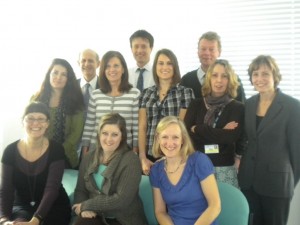


 The academics selected were chosen from a group of 57 finalists who attended a series of day-long workshops at the BBC exploring the key to making scholarly research into good programmes. They’ve gone on to work with BBC producers to develop their broadcasting ideas, contributed to Radio 3’s Free Thinking festival, made regular appearances on Radio 3’s arts and ideas programme Night Waves and pitched ideas for full length programmes based on their research.
 The
The 


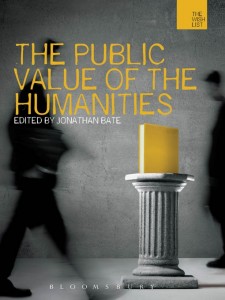 Demonstrating the public value of research will be a significant part of the forthcoming REF exercise. Most major funding bodies now require an impact statement as part of the application process. Universities are being required to demonstrate that their research offers value for money and tangible benefits outside of the academic sphere. This is easier in some disciplines than others, with many people believing the arts, humanities and social sciences (AHSS) will struggle to demonstrate impact.
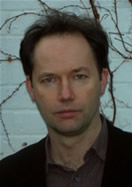 I assume I was invited because I am just coming to the end of an
  There have been a wide range of important studies that have used covert methods, that have collected data from people who do not know they are being studied at the time, who would not give permission or, had permission been sought, where the data may have been dubious or biased. Researchers justify their actions by stating the need to gain access to inaccessible groups, to illuminate important social issues, and to uncover the unpalatable. Famous examples include, of course, Rosenhan’s[1] study of the ways in which mental illness may be attributed by location and situation (
 Where do our research ideas come from in the social sciences? Often from lectures and dialogue within these with students, from supervision, and observations we make in everyday life. That we have collected initial soundings and thoughts from these settings and situations, which has not been scrutinised or completed without informed consent is not questioned: it would be ridiculous to assume we needed informed consent to undertake our daily practices!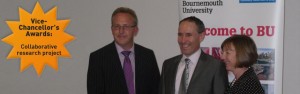
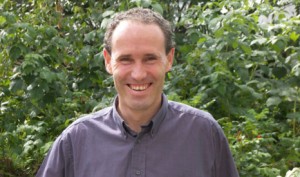 Richard received the award for having made a substantial impact in collaborative working within BU, and securing external funding to create an innovative research network involving internal colleagues and external institutions. The research undertaken by the network has led to high impact outputs.
 I am delighted to tell you that BU has been awarded the AHRC Block Grant Partnership: Capacity Building Scheme grant that we applied for early this year. The final numbers are given below:







 3C Event: Research Culture, Community & Connections – Wednesday 11 November 3-4pm
 ECR Opportunities: New Development Programme, Researcher Grants & Upcoming Events
 Help us capture BU’s knowledge exchange activity HE-BCI survey 2025–26
 Verbal autopsy paper published two days ago
 ESRC Studentships for 2027 Entry: Opportunity Now Open
 Horizon Europe Cluster 3 (Civil Security for Society) 2026 Calls Now Open
 MSCA Doctoral Networks 2026 Call Information Webinar
 ESRC Festival of Social Science 2026: Application Deadline Extended to Thursday 25 June 2026
 Reminder: Register for the ESRC Festival of Social Science 2026 Information Session
 ECR Funding Open Call: Research Culture & Community Grant – Apply now
 ERC Advanced Grant 2025 Webinar
 Update on UKRO services
 European research project exploring use of ‘virtual twins’ to better manage metabolic associated fatty liver disease