Congratulations to Dr Clare Killingback on her inspirational pedagogy article on assessment feedback. Enhancing the student experience through systematic inquiry along with Dr Osman Ahmed and Dr Jonathan Williams. https://www.sciencedirect.com/science/article/pii/S0260691718308785?via%3Dihub
/ Full archive
Research Assistant Required
Dr John Oliver (FMC) requires a research assistant to work on a British Academy funded project, starting in early January.
The project involves a longitudinal analysis of Corporate Annual Reports using the qualitative software package NVivo. The first stage of the research will involve up to 150 hours of work paid at Grade 6. The successful applicant will be an experienced NVivo user and proficient in English Language.
For further details or an informal chat, please contact Dr John Oliver (FMC) via the following email address (joliver@bournemouth.ac.uk)
HE policy update for the w/e 9th November 2018
Two major reports out this week covering value for money and international students plus all the excitement and intense debate from Wonkfest. Enjoy!
Value for Money in HE
The Education Select Committee have published their inquiry report on Value for Money in Higher Education. The committee calls on both universities and the Government to ensure better outcomes for students, expand degree apprenticeships, make university more accessible to a more diverse range of students and tackle Vice-Chancellor pay. Here are the key recommendations taken from the report: (more…)
Doctoral College Santander Mobility Awards | Rutendo Musikavanhu Awardee Report
Behind animation: How technology is changing the landscape of computer animation
The next lecture in Bournemouth University’s popular inaugural lecture series will take audiences on a tour through the history of animation to its modern day uses. Computer animation merges an appealing form of art with innovations in computing technologies, creating visual pieces and stories beyond our day-to-day experiences and inspiring generations.
In this inaugural lecture, Professor Jian Chang, Professor of Computer Animation at Bournemouth University will give an introduction of the history of computer animation and related technologies, illustrating how this has developed to the present. He will then look at what the future holds and the ways in which technology is evolving and changing our definition, production and consumption of computer animation.
“Animation is a fascinating subject.” explains Professor Chang, “Since its merger with computer technology, we have seen very rapid advances in terms of what animators are able to produce. Moving forwards another step; we’re now seeing emerging technologies applying animation to virtual reality and augmented reality, which have applications in entertainment, education, manufacturing and healthcare.”
“As well as exploring the story of animation, I’ll be drawing on my own research expertise which focuses on physically based modelling, virtual reality and novel uses of human computer interaction. Most recently this has translated into an innovative project with partners across Europe exploring the uses of digital and augmented reality at important heritage sites. It’s an exciting project, which has the potential to change the way we experience history and culture.”
Professor Chang is part of BU’s National Centre for Computer Animation which has been a pioneering force in the establishment of computer animation as a discipline for 30 years. Through its teaching and research, NCCA blends together technical developments in computer animation with artistic principles and practice. Students have gone on to work on internationally renowned films such as Gravity, Interstellar and Ex-Machina.
Professor Chang’s lecture will take place at 7pm, 27 November on Talbot Campus. Doors will be open from 6:30pm. Free tickets can be booked here.
REGISTRATION NOW OPEN: Second Annual FMC Postgraduate Researcher Conference 2018
Firstly, we would like to take the opportunity to say thank you to all of the researchers who took the time to submit their abstracts for next month’s Second Annual FMC Postgraduate Researcher conference. The conference committee was particularly delighted to see the exceptional quality and diversity in submissions this year, and only further underlines the level of research being undertaken here in the Faculty of Media and Communication. We will respond to all applicants by Friday 9th November (today).
Conference Keynote Speaker – Dr Sam Goodman
In addition to this year’s fantastic collection of papers, we would like to say a massive thank ‘brew’ and warm welcome to our own Dr Sam Goodman, Senior Lecturer in English & Communication here in the Faculty, who will be delivering the keynote to close our conference:
Critical Drinking: Approaches to Interdisciplinary research practice through British Beer Culture (details below)
In addition to Sam’s talk, there will be a complimentary optional beer tasting, comprising of three tasters of modern British Beers that have been chosen to pair thematically with the subjects under discussion. So come along and ease the ‘ale-ments’ of researching with this fantastic closing event.
Although the tasting is free of charge to all FMC staff and postgraduates, we would kindly ask you to register as early possible, as places are limited, and it would be ‘un-beer-able’ if you were to miss out!
Registration
Registration is now open to all FMC staff and postgraduates, and can be accessed via the Conference’s Event Bright Page here:
Through this link you will find registration for both the conference and the additional optional beer tasting. All of our conference speakers are required to register, so if your abstract is successful we still ask you to register (link above). If you have any questions or queries regarding registration or the tasting please do not hesitate to email Alex: aalberda@bournemouth.ac.uk.
With a larger and more diverse line-up of papers, talks, and events than ever before, we can’t wait to see all of you at this year’s Second Annual FMC Postgraduate Researcher conference on the 5th December.
The Conference Team
Alexandra P. Alberda
Graphic Medicine and Curatorial Practice
T: @ZandraAlberda
Stephen Allard
Socio-digital Poetics
T: @fictiondissy
Melanie Brown
Copyright Law and Cultural Heritage
Mbrown@bournemouth.ac.uk
#FMCPGRcon18
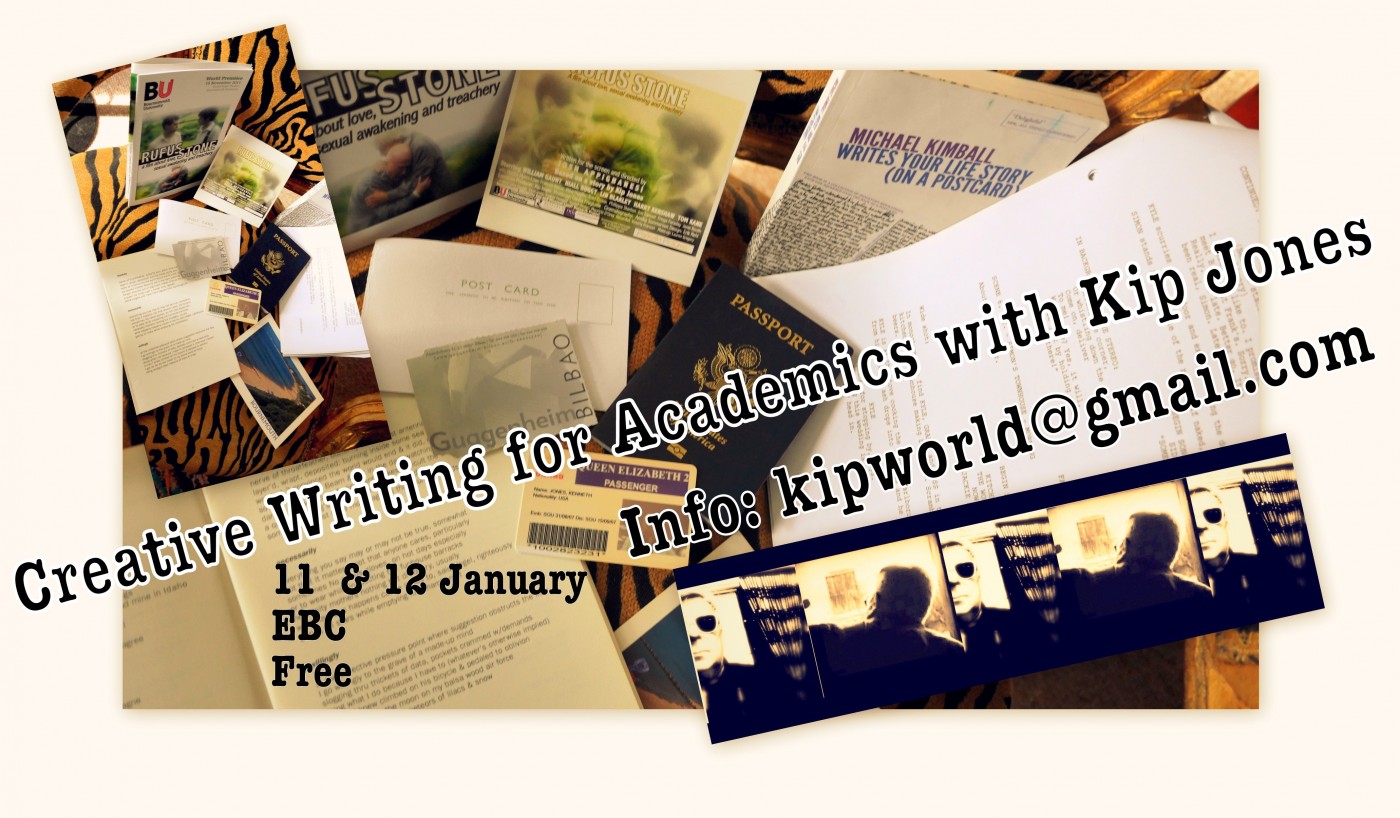
Creative Writing Workshop Coming in January, Taster Session 5 Dec
Read Susanne Clarke’s report on the last Workshop.
Email me for further info.
An update on The TACIT TRIAL: Tai Chi for people with dementia
The TACIT Trial has reached some important milestones recently.
We closed the study to recruitment in July and we completed our last Tai Chi class earlier this month. Data collection will come to an end later this month with data cleansing, analysis, and write-up to follow. We’ll then expect to know the main results by around March 2019.
In the meantime, those interested to find out more about the study can read some papers published from the study:
[1] The findings from the pilot intervention phase, led by BU PhD student Yolanda Barrado-Martín:
Barrado-Martín, Y., Heward, M., Polman, R., & Nyman, S. R. (2018). Acceptability of a dyadic Tai Chi intervention for older people living with dementia and their informal carers. Journal of Aging and Physical Activity, published online 30 August, DOI: 10.1123/japa.2017-0267.
https://journals.humankinetics.com/doi/abs/10.1123/japa.2017-0267
[2] The trial protocol, led by chief investigator Samuel Nyman:
Nyman, S. R., Hayward, C., Ingram, W., Thomas, P., Thomas, S., Vassallo, M., Raftery, J., Allen, H., & Barrado-Martín, Y. (2018). A randomised controlled trial comparing the effectiveness of Tai Chi alongside usual care with usual care alone on the postural balance of community-dwelling people with dementia: Protocol for The TACIT Trial (TAi ChI for people with dementia). BMC Geriatrics, 18, e263. DOI: https://doi.org/10.1186/s12877-018-0935-8.
https://bmcgeriatr.biomedcentral.com/articles/10.1186/s12877-018-0935-8
You can also find out more about the study here: www.bournemouth.ac.uk/tai-chi
Doctoral College Santander Mobility Awards | Isabell Nessel Awardee Report
Music from the University of Huddersfield here at BU
On Wednesday 17th October special guest Dr Owen Green (University of Huddersfield) joined us for a concert of multi-channel, surround-sound music in the Allsebrook Lecture Theatre. Owen diffused a range of fixed-media musical work from the University of Huddersfield during the first half, beginning with Dr Alex Harker’s guitar-derived Fractures, then on to Dr Elena Hidalgo’s Origen, and concluding with Professor Pierre Alexandre Tremblay’s mesmerising asinglewordisneverenough1.
After a short interval we heard two works featuring performances from Owen – Neither the Time nor the Energy (2015, revised 2018, live, for cardboard and truculent electronics), and an improvised duo featuring bowed cardboard box (Owen Green) and cello (Laura Reid). It was a rich and varied programme, and our thanks go to Owen Green for his inspiring performance and excellent musical selections. Once again, student volunteers from our BSc Music & Sound Production Technology provided crucial help rigging the loudspeaker system. Thanks to all who attended!
This concert was supported by Creative Technology and EMERGE.
Sustainable Seas
Colleagues with an interest in the sustainability of the seas may be interested in this summary of an Environmental Audit Committee Sustainable Seas session.
Click this link to read the summary. The summary has been provided by Dods political monitoring consultants and is only available to BU staff and student readers.
Alternatively you can view the session on Parliament TV here.
EoIs invited for BU Ethics Panel Chairs and Deputy Chairs
Expressions of interest are invited for the Chairs and Deputy Chairs of the Social Science and Humanities Ethics Panel and the Science, Technology and Health Ethics Panel. These prestigious and honorary roles work across the university to champion the highest ethical standards in research undertaken by staff and students.
This document provides further information about the roles and the application process.
Expressions of interest, consisting of a CV and brief statement outlining suitability for the chair/deputy chair role, should be submitted to RKEO (researchethics@bournemouth.ac.uk) by 5pm on Wednesday 14 November 2018 (please note the deadline has been extended).
For an informal discussion about the roles please contact one of the current Chairs:
- Dr Sean Beer, Chair of the Social Science and Humanities Ethics Panel
- Prof Holger Schutkowski, Chair of the Science, Technology and Health Ethics Panel
If you have any questions regarding the process, please email Sarah Bell/Suzy Wignall using the researchethics@bournemouth.ac.uk email address.
Creating Impact on Business Practice and Strategy
The future of YouTube was a co-created research project between Emma Parrett, Strategic Partnerships Director at OMD UK and Dr John Oliver (FMC). OMD are a strategic communications and planning agency that employs over 8,500 people in more than 120 offices globally and are the most awarded agency network in the world.
One of OMDs clients are YouTube and the challenge they faced was how to develop long-term market insight and strategic solutions in a rapidly changing media environment.The project combined imaginative and systematic thinking in a way that provided a unique insight into future media environments and how YouTube could compete using multiple strategic options.
The impact of the project and the scenario planning methodology has influenced OMD’s business practices in a number of ways. They believe that their media planning team were better able to make sense of often conflicting macro-environmental trends and are now able to find more advanced strategic insight. Additional positive outcomes were evidenced by increased usage of scenario planning, as well as staff and client understanding of a methodology which they ultimately regarded as a way of obtaining strategic solutions in a rapidly changing business environment.
Dr Oliver commented that the benefits of academics working with industry professionals to create knowledge and instrumental impact on business practices has been evidenced in this project.
Furthermore, the YouTube project has been written up and published in both industry and academic journals and the level of publisher downloads has run into the thousands.
The article can be accessed at: https://authors.elsevier.com/a/1Wbaj1lnoC6sq
Looking for a Challenge?
Bournemouth University invites expressions of interest from internationally recognised mid-career to senior researchers who currently work outside the UK, and are active within the social sciences and humanities who wish to apply for the British Academy Global Fellowship scheme (BAGF).
The purpose of the Global Professorships is to enable world-class scholars to further their individual research goals while strengthening the UK research base and advancing the research goals and strategies of their UK host universities. Each four-year appointment is intended to be a complete project in itself and is expected to involve a specific research focus.
More information about the scheme will be available presently from the British Academy. There are strict eligibility requirements and potential candidates are advised to check these carefully.
Candidates who intend to apply for a BA BAGF at Bournemouth University as the host institution are asked to submit the following BA EOI form – Prof 2018 application to apekalski@bournemouth.ac.uk no later than 27th November 2018.
There is no guarantee that applications which arrive after this date will be supported or processed.
Procedure For applicants applying through Bournemouth University
Should you be interested in applying through Bournemouth University for a BAGF, please note that your expression of interest application will be assessed by the relevant Faculty in the first instance.
Once your application has been approved by Faculty, it will be sent for internal review. The panel will be convening on the 13th December 2018, and candidates can expect feedback by 4th December 2018.
If your application has been approved, the research facilitator responsible will work with you on your application.
The internal deadline for submitting applications via the BA’s Flexi-Grant system will be 5 working days before the external BA deadline (28 February 2019) – this is to allow time for institutional approval of your application, a requirement by the British Academy.
If you have further questions or queries please contact lease contact apekalski@bournemouth.ac.uk.
Why should we care about your research?: Think impact
Research impact is a relatively new concept introduced by the UK Research Council in 2009. In fewer than 10 years, it has rapidly gained momentum such that it has now become an integral part of the Research Excellence Framework (REF) 2021 accounting for 25% of the total score (increased by 5% from the REF 2014). For research grant proposals in the UK and in many other countries, applicants need to clearly demonstrate their ‘impact plan’ (i.e. who is going to benefit and how?) and present ‘pathways to impact’ activities (i.e. what are you doing to increase the chance of your research making a difference?). Prof. Mark Reed on his website (www.fasttractimpact.com) suggests that reviewers of grant applications are now looking for costing of around 5% to 10% of the total budget in ‘pathways to impact’ activities.
During a one-day impact workshop on August this year Prof. Reed said that he thinks one word that best represents ‘research impact’ is ‘benefit’. Researchers use ‘public money’ which could otherwise be used in other important areas, so it shouldn’t be surprising if funders or the public ask ‘what benefit (or effect or change) is likely to come from your research?’ Thus, research should be relevant to the pressing need of the people and render benefit to the individuals or society, beyond academia.
Although impact of the research may not be predicted at the very outset and could be affected by external factors, it is now commonly agreed by the expert scientific community and research funders that well-planned impact activities with pre-determined impact goal increase the likelihood of achieving research impact. Research impact is relevant not only to established researchers but also to research students. Postgraduate research students could develop impact plans and pathways to impact activities which are feasible in a given time and available resources. Pathways to impact activities may include writing a research blog, newspaper articles, building a network with key people or organisations via social media (e.g. Twitter, LinkedIn). It will help them to ‘stand out’ from the crowd and to become more competitive when looking for jobs.
Planning for research impact and thinking about ways in which to enhance the impact will help give an answer to the question ‘why should care about your work?’
These references will help to understand research impact in depth:
Reed, M.S. (2018) The Research Impact Handbook, 2nd Edition, Fast Track Impact.
Dr. Nirmal Aryal
Postdoctoral Researcher (Impact)
Faculty of Health and Social Sciences
Paper from Creative Technology Department Accepted in Premier Conference
Congratulations! Dr Feng Tian, from Creative Technology Department (SciTech), has got a paper accepted by the Thirty-Third AAAI Conference on Artificial Intelligence (AAAI-19). It saw a record number of over 7,700 submissions this year. Of those, 7,095 were reviewed, and only were 1,150 papers accepted, yielding an acceptance rate of 16.2%.
The paper, “Orderly Subspace Clustering”, is a joint publication with Feng’s PhD student, Jing Wang, who graduated from Creative Technology in 2017. Congratulations to Jing as well!
BU Humanising Practice SIG meeting
We are a group of academics and practitioners who have an interest in what makes us Feel Human and how this is linked to Health, Wellbeing, Dignity and Compassion. As part of the Centre for Qualitative Research CQR we use Lifeworld approaches, embodied knowing and subjective experience as the basis for our understanding. For more information please click here
At meetings we discuss issues following two presentations, and share our on-going work into humanising practice in education, practice and research.
Our next meeting is
On 6th December 2018, From 2pm to 4.30 pm,
At Room B225 Bournemouth House Bournemouth University, Lansdowne Campus, (BH1 3LH)
We have two great presentations:
- Humanising higher education by practicing with an embodied relational understanding. Dr Camila Devis-Rozental, Senior Lecturer, OVC, BU
- Humanising education through digital stories: the human side of technology Dr Sue Baron Lecturer in Adult Nursing FHSS BU
All staff, students and external visitors are welcome
If you would like directions to the venue, have any queries OR If you are not already a member of the Humanising SIG e-mail list and would like to be informed of future events, please contact Caroline Ellis-Hill at cehill@bournemouth.ac.uk
Health Research Survey – have your say
Do you want to have a say in deciding priorities for health research?
Have your say and rank priorities for research to help make care safer for adults with complex health needs. The list of priority areas in this survey was identified by patients, carers, the public and healthcare staff who filled out the first survey earlier this year. The survey is open to those not currently doing healthcare research.
The survey can be accessed here. Deadline: 12 November 2018
The NIHR Imperial Patient Safety Translational Research Centre, who are running this survey with the James Lind Alliance, will host a workshop on 17th December (London) with the results of this survey to come to a consensus for the top 10 areas for research. The results will be widely publicised to encourage research funding bodies and research teams to address these questions. It will also do research in some of these areas itself.


ESRC Festival of Social Science 2026: Application Deadline Extended to Thursday 25 June 2026

First publication for two CMWH PhD students
Opportunities to support our REF preparations
SPROUT Returns: Designing Sustainability in Research Practice – Wednesday 20 May 12-2pm
Innovative Approaches to Doctoral Supervision: Selected Case Studies
Reminder: Register for the ESRC Festival of Social Science 2026 Information Session

ECR Funding Open Call: Research Culture & Community Grant – Apply now

ECR Funding Open Call: Research Culture & Community Grant – Application Deadline Friday 12 December
MSCA Postdoctoral Fellowships 2025 Call
ERC Advanced Grant 2025 Webinar
Update on UKRO services
European research project exploring use of ‘virtual twins’ to better manage metabolic associated fatty liver disease