/ Full archive

Latest Funding Opportunities

Money Bear FundingThe following is a snap-shot of funding opportunities that have been announced. Please follow the links for more information:

Arts and Humanities Research Council

Follow-on funding for impact and engagement scheme

These support innovative and creative engagements with new audiences and user communities that stimulate pathways to impact within the area of arts and humanities. Grants are worth up to £100,000 over a maximum period of one year. Smaller grants of up to £30,000 may be awarded for shorter or higher risk activities.

Maximum award: £100,000

 Closing date: None open call

Research grants – early-career route

These enable individual researchers to collaborate with, and bring benefits to, other individuals and organisations through the conduct of research related to the arts and humanities, and support researchers at the start of their careers in gaining experience of managing and leading research projects. Provides grants for projects with a full economic cost (fEC) between £50,000 and £250,000 for a varying duration up to a limit of 60 months.

Maximum award: £200,000

Closing date: None open call

Research grants – standard route

These support research projects by enabling individual researchers to collaborate with, and bring benefits to, other individuals and organisations through the conduct of research related to the arts and humanities. The standard route provides grants for projects with a full economic cost (fEC) between £50,000 and £1,000,000 for a varying duration up to a limit of 60 months.

Maximum award: £800,000

Closing date: None open call

Economic and Social Research Council

COMING SOON: UK in changing Europe – Brexit priority grants

*** The Economic and Social Research Council will shortly be inviting applications for its UK in changing Europe – Brexit priority grants. Applications are expected to open at the beginning of December and to close on 25 January 2017. Call information will be published when applications open. The following information is subject to change. These grants support additional activity, including research synthesis and potential new short-term research activity, related to the process of the UK leaving the EU. The grants will be between £100,000 and £300,000 (100 per cent fEC, with the ESRC contributing 80 per cent fEC) and for a duration of up to 18 months. The ESRC expects grants to commence on 1 April 2017.

Be aware this is a pre-call and there may be further conditions announced in the full call.

Maximum award: £240,000

Closing date: 25 Jan 17 (forecast)

Engineering and Physical Sciences Research Council

Whole energy systems scoping studies

The EPSRC/Energy systems catapult will fund up to eight studies across the six areas identified. Scoping studies are expected to be up to a maximum of nine months in duration and up to £60k (80% FEC) in value. Funding could be used for researcher time, travel, workshops and other engagement activities to further develop consortia and larger programmes of work. Interdisciplinary collaboration and consortia building within applications is strongly encouraged as is partnership and engagement activities with organisations outside of academia e.g. Government, regulators and industry.

Maximum award: £60,000

Closing date: 19 Jan 17

 Medical Research Council

Health systems research initiative fourth call – providing evidence to strengthen health systems in low- and middle income countries

This is the fourth annual call for the Health Systems Research Initiative. Up to £6million is available for funding proposals under this call.  Innovative proposals are sought from across the public health, social and biomedical sciences and must clearly identify what health system challenge is being addressed. Proposals must situate this clearly-defined challenge within an understanding of the broader health system linkages and describe how and why findings from the project have the potential to improve the health of people living in low and middle-income countries. Funding is available for research only; we will not fund the routine delivery of health services.

Maximum award: Not known

Closing date: 24 Jan 17

Improving cross-sector comparisons – beyond QALY

This supports research into the possibility of creating a measure of quality of life or wellbeing, which would have utility across health and social care. Grants may be awarded for any period of up to five years.

Maximum award: Not known

Closing date: 21 Jun 17 (recurring)


Methodological research for health and care systems modelling – identifying and measuring spillover effects

Funding supports research into methodologies for developing models which may enable identification, measurement and understanding of spillover effects in health service and public health systems.

Maximum award: Not known

Closing date: 21 Jun 17 (recurring)

Methods research to support the use of observational data in clinical decision making – highlight notice

Funding supports the development of innovative methods for identifying, synthesising, interpreting and presenting observational data for use in guidance development and clinical decision-making, both at the national level and for individual patients, and in particular, how one may interpret and rationalise data from different sources.

Maximum award: Not known

Closing date: 21 Jun 17 (recurring)

Royal Society, GB

Royal Society/Leverhulme Trust senior research fellowships

These enable academic researchers to be relieved of all their teaching and administrative duties and to concentrate on full-time research in all areas of the life and physical sciences, including engineering, but excluding clinical medicine. A total of seven fellowships are provided each year. The fellow’s employing institution receives reimbursement for the full salary costs for the fellow. Research expenses of up to a maximum of £2,500 are available to cover the cost of consumables, equipment and travel.

Maximum award: Not known

Closing date: 18 Jan 17 (recurring)

Wellcome Trust, GB

Research bursaries

These support individuals working on small- and medium-scale research projects based on library or archive collections supported by the trust. Bursaries are usually worth between £5,000 and £25,000 each, and may contribute towards travel, subsistence and research expenses.

Maximum award: £25,000

Closing date: 31 Mar 17 (recurring)

If you are interested in submitting to any of the above calls you must contact your  RKEO Funding Development Officer with adequate notice before the deadline.

For more funding opportunities that are most relevant to you, you can set up your own personalised alerts on Research Professional. If you need help setting these up, just ask your School’s/Faculty’s Funding Development Officer in  RKEO or view the recent blog post here.

If thinking of applying, why not add notification of your interest on Research Professional’s record of the bid so that BU colleagues can see your intention to bid and contact you to collaborate.

Fusion project leads to best paper award

Work by BU researchers examining the human aspects of Digital Rights Management has won a best paper award at the Fourth International Workshop on Artificial Intelligence and IP Law. This is joint work carried out by Marcella Favale, Neil McDonald, Shamal Faily, and Christos Gatzidis.

This work, which resulted from research carried out during the FIF funded MADRIGAL project, examines the perspective of DRM from the perspective of content creators using qualitative socio-legal analysis.

In addition to this work, we were also invited to write an extended version of this paper for SCRIPTed, which is currently in press.

Well done Marcella and the rest of the MADRIGAL team!

Workshop: using social media

rkeo-dev-logo-square

Social media is a popular way of sharing information and connecting with audiences you might not otherwise be able to reach.  It’s a good outlet for sharing research findings and for learning more about potential stakeholders in your area.

As part of our new Research & Knowledge Exchange Development Framework, we will be running a session about using social media to share your research and connect with stakeholders.  This session is part of the ‘planning for impact and communicating research’ pathway.

This workshop will be led by BU’s social media manager – Jasmine Connolly, who will take you through the basics of using social media at work.

Date & time: Wednesday 30 November 9:30am – 11:30am

Location: Talbot Campus

For further information and to book, see BU’s staff intranet.

Congratulations to FHSS orthopaedics academics

j-nurs-ortho-2016Congratulations to James Gavin, Tikki Immins and  Thomas Wainwright on the publication of their systematic review: ‘Stair negotiation as a rehabilitation intervention for enhancing recovery following total hip and knee replacement surgery‘.

Reference:

Gavin, J., Immins, T., Wainwright, T. (2016). Stair negotiation as a rehabilitation intervention for enhancing recovery following total hip and knee replacement surgery. Int J Orthop Trauma Nurs. Available online October 2016


Enhanced Rehabilitation Of The Upper Limb Following Stroke By An Adaptive Virtual Reality And FES Approach

We would like to invite you to the latest research seminar of the Games and Music Technology Research.presimage


Speaker: Nathan Barrett (A Bournemouth University PhD student based at Salisbury NHS).


Title:     Enhanced Rehabilitation Of The Upper Limb Following Stroke By An Adaptive Virtual Reality And FES Approach


Time: 2:00PM-3:00PM

Date: Wednesday 30th November 2016

Room: PG11, Poole House, Talbot Campus


Abstract: Of the approximately 150,000 people a year who suffer a stroke in the UK, 85% of survivors are left with some degree of motor dysfunction in their upper limb. Complete functional recovery has been found to occur in just 5% to 34% of cases. These low rates may be due to rehabilitative interventions that lack the volumes of specific motor practice needed to induce neuroplasticity – a form of cortical rewiring that allows the brain to adapt after damage. Assistive technologies, such as Functional Electrical Stimulation (FES) and virtual games, can augment such therapy and may be beneficial to a person’s recovery.

FES is a type of electrotherapy which has good clinical evidence for its use. Electrically-stimulated movements, however, often lack combined voluntary effort – a factor necessary to aid effectiveness. Virtual games, on the other hand, often inspire huge amounts of volitional movement, although, particularly with popular commercial devices, this movement isn’t always therapeutic.

Combining the two is therefore an attractive prospect, yet attempts at this have resulted in systems that are costly, immobile and commercially unavailable. There is therefore a need to combine the two within a system that fulfils the criteria for an effective assistive technology. The system, Esmé (the Electrically-Stimulated Movement and game Environment), is currently in development. This seminar provides an overview of the project and discusses next steps.


We hope to see you there.

IP Management in H2020 – with a special focus on MSCA Webinar

dev_framework

The European IPR Helpdesk is running a number of webinars over the next few months and RKEO are registering and promoting those relevant to BU’s activities.

The next webinar on IP Management in H2020 – with a special focus on MSCA will be next Tuesday:

29/11/16     9:30 AM     Location:  PG30d, Poole House – Talbot Campus

Duration: 60 minutes (presentation) + 15 minutes (Q&As)

Please arrive at 9:15am for a prompt 9:30 start with the webinar duration being one hour. We have the room booked for a longer time so that we can have a post-webinar discussion afterwards, if appropriate. Please only register on the European IPR Helpdesk link if you will be joining the webinar from your own desk rather than joining us.

You can also check the European IPR Helpdesk Calendar for all their events. RKEO will be attempting to secure one of the limited webinar slots for each one which is relevant to BU – details of future webinars, where BU is registered, will be posted on this blog. In the meantime, please find out more about the work of the European IPR Helpdesk.

If you would like to attend this event, please do so via the Organisation Development page for this event.

Catering is not provided, but do feel free to arrive coffee in hand.

Most read article (Early Career Researcher)

The first article published by FOM academic Samreen Ashraf has become the ‘Most Read’ article on Research Gate compared to those published by other authors in her department.

The paper focuses on consumer trust in Islamic banks. The authors differentiate between the definitions of trust and confidence in the paper. Specifically, it addressed the questions: to what extent are trust and confidence active influencers in the decision-making process, are they differentiated or are they one of the same? Also how does the Pakistani collective cultural context further complicate the application of these concepts? These questions were addressed by using qualitative methods.
This study provided further insight into consumer behaviour within financial services and specifically Islamic banking and has contributed to the theoretical understanding of the concepts of trust and confidence.

For those interested in reading the paper the full reference is: Ashraf, S., Robson, J. and Sekhon, Y., 2015. Consumer trust and confidence in the compliance of Islamic banks. Journal of Financial Services Marketing, 20(2), pp.133-144.

Alternatively, the paper can be accessed via Research Gate!

my-picture-amjulie-picture

Cage4All shortlisted for Pride of Sport Awards

Cage4All, a Hampshire-based charity, has been shortlisted for the Daily Mirror’s Pride of Sport Award for their work to make sport more accessible to marginalised groups, including those with dementia.  Researchers from Bournemouth University’s Dementia Institute have been involved in evaluating the effects of Cage4All’s work.

Cage Cricket allows small groups of people to take part in a modern twist on the game of cricket, which sees every player rotate around the pitch to take on the role of batter, bowler, fielders and umpire.  The game takes up much less space than traditional cricket and its structured approach makes it easy to learn.

Bournemouth University’s Dr Rick Fisher and Dr Ben Hicks, Lecturer in Health Psychology, have been working alongside the charity to evaluate their work with people with dementia.

“We were originally approached because of Dr Hick’s PhD project which explored the use of technology clubs for men with dementia in rural areas,” says Dr Fisher, “Dr Hick’s research showed the benefits of both the activity and the social contact.  He discovered that most social clubs tend to be aimed at women, so we were really interested to find out how sporting activities might help men with dementia.”

“We ran a small pilot study with people who had quite advanced dementia, who we initially thought would struggle to get something out of the project because of the difficulties they face,” explains Dr Fisher, “However, we were very quickly proved wrong as the people involved were able to take part in the game and showed signs of enjoying themselves.  We had a lot of positive feedback from carers who could see that it was making a difference.”

Simon Young, Managing Director of Cage4All noted “To see someone with a severe diagnosis taking the ball between his fingers, to ensure that the seam of the ball is correctly lined up, as he would have been taught sixty years ago, is a quite stunning sight. To see groups having the opportunity to take part in physical recreation within a safe and structured environment has established a ground-breaking community partnership through Cage 4 All which can provide hope and opportunity for communities across the UK.”

The team hope that the ideas they have been able to draw from this pilot project will enable them to carry out further research into the benefits of sport for people with dementia.

“It was very encouraging to see that those involved in the game appeared to be able to learn new rules and skills and seemed to enjoy the role of umpire, where they were able to take charge of other players,” says Dr Fisher, “In future projects, we’d like to be able to see how this kind of activity makes a difference in people with dementia over a longer period.”

The Daily Mirror’s Pride of Sport Awards take place on 7 December.

Two Day Questionnaire Design Masterclass

Faculty of Health and Social Sciences


Need help designing a questionnaire?

This two-day Masterclass will help you get started through a series of expert lectures, group discussion, and hands-on sessions, covering both tool development and administration.

  • Who should attend: Postgraduate researchers/professionals interested in developing a questionnaire
  • Schedule: 10am – 4pm, 23—24 January 2017
  • Venue: Executive Business Centre, Bournemouth University


Facilitators:

Professor Vanora Hundley – Professor of Midwifery

Professor Edwin van Teijlingen – Professor of Reproductive Health

Dr Zoe Sheppard – Senior Lecturer in Quantitative Methods


Booking information:

The fee of £200.00 includes two days with the course facilitators, refreshments and class materials. Please note that resources will be provided electronically and that accommodation and travel costs are not included.

BU staff/PGRs – To book on please contact rfreeman@bournemouth.ac.uk

External delegates – please register online at:

https://questionnairemasterclass.eventbrite.co.uk (places limited)


CMC’s Promotional Cultures and Communication Centre wins prestigious industry research award

CMC’s Promotional Cultures and Communication Centre (PCCC) is delighted to announce that the recent research project they undertook for Exterion Media won ‘Best Research Initiative’ at last week’s Media Research Group Awards.  The MRG is the industry group for research professionals working in media related roles and is a great showcase for the work we do here.

The project was titled ‘The Mood of the Underground’ and undertaken in partnership with COG Research, a leading independent research agency.  It comprised of a number of elements: a literature review undertaken by PCCC- CMC; a proposed approach recommended by CMC; primary research completed by PCCC-CMC and COG, and delivery of the final debrief written by PCCC-CMC and COG.

Congratulations to Stuart Armon, Rebecca Jenkins, Chris Miles, Georgiana Grigore, Janice Denegri-Knott, Jill Nash and Shenel McLawrence who worked on this project.

Civic Media Hub launches ‘Innovation Lunches’

 The Bournemouth University Civic Media Hub is hosting a series of ‘Innovation Lunches’ with invited guests from institutions across the UK. Bringing together BU faculty, PGR and UG students from different faculties and areas of expertise, the innovation lunches offer time to discuss new methodological practices and share interdisciplinary approaches to questions around data, digital media and society. With the aim of fostering collaborations for future grant bidding and strengthening our interdisciplinary connections, innovation lunches foster a space for inspiring research.

A catered lunch will be provided. Events are open to all staff and students, but places are limited. RSVP to attend an innovation lunch to afeigenbaum@bournemouth.ac.uk

Exploring Methods for Investigating Algorithms and Data Processes w/ Lina Dencik (Cardiff University)

Wednesday December 7th @ 13:00-14:00 F305 (Fusion Building, Talbot Campus)

As algorithms tell us what we want to watch and predict the years we have left to live, few aspects of our social, cultural and economic lives are left untouched from data processes. Despite popular claims, this datification of society is never neutral. What does it look like to study data as emerging sets of power relations?  How can we approach algorithms as social processes? Join us for an interdisciplinary discussion on methods for investigating algorithms and data processes.

 Bio: Dr Lina Dencik is Senior Lecturer and Director of the MA in Journalism, Media and Communication in the School of Journalism, Media and Cultural Studies at Cardiff University, UK. Her research is concerned with the interplay between media developments and social and political change, with a particular focus on globalization and resistance. She has recently been working on issues relating to surveillance, visibility, and the politics of data. Her most recent book is Critical Perspectives on Social Media and Protest: Between Control and Emancipation (co-edited with Oliver Leistert, Rowman & Littlefield International, 2015).

Sharing undergraduate research: how SURE led one student to Norway and beyond

Next year Bournemouth University will be hosting the British Conference of Undergraduate Research, an international showcase of research from undergraduates of all disciplines.  Students submit an abstract and if accepted to the conference, have the chance to share their work through a poster, oral presentation or art displays.  It’s a great opportunity to get an insight into academic life and develop key skills that will be of benefit no matter which career they end up in.

Charlotte Fodor, a recent graduate from the Faculty of Media & Communication took part in this year’s Showcasing Undergraduate Research Excellence (SURE) – BU’s internal research conference.  Below she shares her experience of taking part and how it’s helped her career to develop.


I am recent graduate who took part in this year’s SURE conference. I presented my research, which explores the representation of disabled people in literature, and was delighted to be awarded a prize for the best presentation.

My prize enabled me to attend a conference related to my research interests.  This led to me applying and being accepted as a speaker at a conference in Bergen, Norway.  I used the funding I won through taking part in SURE to pay for my travel costs.

It was my first time in Norway and I stayed in Bergen for three days. It was a beautiful, welcoming place; with rolling mountains, intricate sculptures, and pastel coloured buildings.

The conference, known as “Gender, Body, and Health”, was organised by the Nordic Network and hosted by the University of Bergen. I met a variety of academics and speakers from all over the world: from America, to India, to Sweden, to Germany, who introduced me to exciting ideas and perspectives that I had never considered before. These are just a few examples of the fantastic topics that I had the chance to learn about. Discussions on whether or not Literature could evoke a DeafBlind experience; Universal Design and Disability; the Female, Disabled body in India; Disability and the Art of Quiet Protest…

SURE was the first conference that I spoke at and it led me to Norway. I sincerely consider SURE to be a stepping stone towards my aims for the future.

Taking part in opportunities like SURE will stretch your mind. You will have to think on the spot during the Q&A, and figure out your time management (you can only talk for a limited amount of time. I had to condense my 10,000-word dissertation into a paper that lasted for 10 minutes). It will also help you to develop as an independent researcher and enrich your C.V.

Whether, like me, you want to pursue academia further; or, you are preparing for the job market, taking part in SURE will cement the skills you need for the future and has the potential to open more doors for you that you may not have considered.

Visiting Bergen and networking was an exciting adventure, and it was a great kick-starter for my Postgraduate research, which I’m now underway with at the University of Southampton!


To find out more about taking part in the British Conference of Undergraduate Research or to find out how your students can submit an abstract, visit www.bournemouth.ac.uk/bcur17

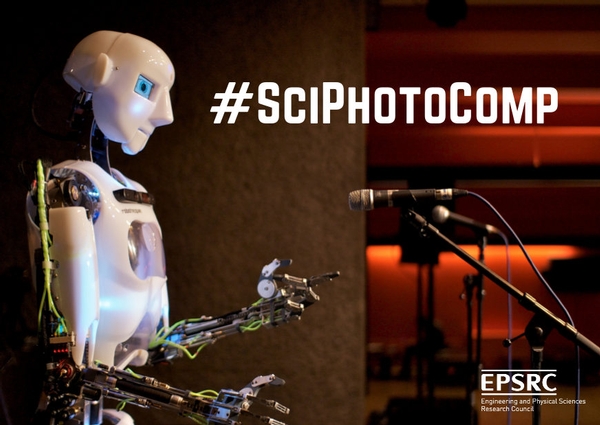
The Research Photography Competition is back for 2017 and set to be the best one yet!

researchphotographycompetitionintranet1

Following on from the success of the previous two years, we’re delighted to announce that the Research Photography Competition will be returning for its third year. The competition is part of our activities to engage BU students with research.

Over the past two years we’ve set BU academics the challenge of telling the story of their research, through a single image. This year we want to focus on the impact that your research can have or will have outside of academia. Not only this, we want both our staff and student researchers getting involved, from across the university. Whether you’re at the early stages of your research or it has come to the end, we want you to get involved and showcase the impact your research has had or will have through a single image.

How do I enter?

It’s easy! Pick up a camera and capture an image or use one you already have. You can be as creative as you like with your images and capture any area of your research, in relation to its impact.

Once you have, all you have to do is submit it to us via email (research@bournemouth.ac.uk) by Wednesday 25 January 2017, along with a 100 – 200 word description of your research behind the image.

Voting will then go live in February. Staff, students and the general public will be able to vote for their favourite image. The competition winners will then be presented with a small prize by Professor John Fletcher in the Atrium Art Gallery, in March 2017. You’ll get a chance to view all the competition entries in the Atrium Art Gallery and online after the event too!

Taking part is a great way to showcase your research and grow your academic profile both in and outside the university. As well as raising awareness of your research, you’ll be in for the chance of winning some Amazon vouchers!

Each image will need to be:

  • 300ppi (pixels per inch)
  • with physical dimensions equivalent to an A3 size piece of paper
Millimetres Inches
Portrait (width x height) 297 x 420 mm 11.7 x 16.5 in
Landscape (width x height) 420 x 297 mm 16.5 x 11.7 in

Need Inspiration?

Then take a look at our Photo of the Week, where you can read about the research behind the images

Should you have any queries about the competition, then get in contact with Hannah Jones in the Research and Knowledge Exchange Office.

For more information, take a look at the Research Website.

Please read through the Terms and Conditions