Special Day Conference, BU at the Freud Museum:
‘Powerplay: Psychoanalysis and Political Culture’
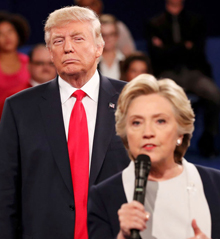
We are surrounded by political culture as never before and yet, in some ways have never felt so powerless. The recent Brexit vote ( see: http://bit.ly/EUReferendumAnalysis2016_Jackson-Thorsen-and-Wring_v1) and the victory of Trump in the US Presidential election (US Election Analysis website) have foregrounded the significance of politics as a field of social and cultural contestation, shaped by the dynamics of power, history and material interest, but also by the irrational forces of emotion and processes of unconscious fantasy. In December 2016, the BU Centre for Politics and Media collaborated with the Freud Museum, and the Media and Inner World research network to host a special conference on different aspects of political culture today.
The conference was held at the Anna Freud Centre and the Freud Museum, London and it brought together some renowned figures to look at a broad idea of political culture and psychoanalysis, discussed as history, as a state of mind, as televisual culture and as being linked to political practice. Throughout the course of the day, the conference looked at these different areas, and how those spheres feed into the political imagination and the unconscious processes that shape it.
The day began with organizer, Professor Candida Yates (biog) who in her opening remarks, developed the themes of her recent book, The Play of Political Culture, Emotion and Identity (Palgrave Macmillan) by discussing the psychodynamics of political culture, focusing as a case study on the relationship between shame and the emotional appeal of Donald Trump for voters.
BU Professor Barry Richards (biog) then chaired the first full session of the day with the renowned cultural historian, Professor Eli Zaretsky (biog). He discussed ‘The Three Faces of Political Freud’ and the hisorical influences of psychoanalysis upon political social movements (abstract).
The second presentation was given by Psychoanalyst and Organisational Consultant, Philip Stokoe (biog), who presented a psychoanalytic approach to understanding the states of mind in societies that can produce Brexit and Trump (abstract)
In the afternoon, BU Professor, Iain MacRury (biog) interviewed the acclaimed TV screenplay writer, Andrew Davies (biog), who discussed the experience of writing TV drama House of Cards and its links to the theatre of politics in ‘real life’.
In the final session, Psychotherapist and TV and radio broadcaster, Professor Brett Kahr (biog) interviewed Baroness, Professor Sheila Hollins (biog) about the day to day culture of working as a female politician in the House of Lords. As an Independent member of the House of Lords, she speaks on mental health, disability and press regulation and she spoke in a highly compelling way about the experience of her work in those fields.
The conference was fully booked and the audience was made up of psychotherapists, analysts and academics and PhD students from the fields of politics, history, cultural studies and psychosocial studies. Students from the BU MA in International Political Communication also attended and contributed to the discussions that took place throughout the day.
The talks were recorded on podcast and so there will be an opportunity to catch up via the Freud Museum website: https://www.freud.org.uk/events/76650/power-play-psychoanalysis-and-political-culture/
Our thanks to the Centre for Politics and Media and the Freud Museum for hosting and partly funding this timely and enjoyable event.

 The Centre for Qualitative Research presents Lee-Ann Fenge and Carole Pound “In Conversation…” about Participatory Action Research and Co-operative Inquiry this Wednesday at 1 pm in RLH 201.
 BU has an agreement with Springer which enables its authors to publish articles open access in one of the Springer Open Choice journals at no additional cost.



 The BMJ have launched a new research tool called Research to Publication, with the aim of getting more authors from submission to publication. It is comprised of a series of self e-learning modules, enabling researchers to hone and improve their research capabilities.







 Verbal autopsy paper published two days ago
 ESRC Studentships for 2027 Entry: Opportunity Now Open
 SONAMONI contributions to Safety Conference 2026 in South Africa
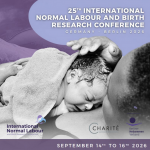 Three CMWH presentations at Berlin conference
 Horizon Europe Cluster 3 (Civil Security for Society) 2026 Calls Now Open
 MSCA Doctoral Networks 2026 Call Information Webinar
 ESRC Festival of Social Science 2026: Application Deadline Extended to Thursday 25 June 2026
 Reminder: Register for the ESRC Festival of Social Science 2026 Information Session
 ECR Funding Open Call: Research Culture & Community Grant – Apply now
 ERC Advanced Grant 2025 Webinar
 Update on UKRO services
 European research project exploring use of ‘virtual twins’ to better manage metabolic associated fatty liver disease