RKEO Academic Induction
The Research and Knowledge Exchange Office (RKEO) invite all ‘new to BU’ academics to an induction.
14 April 2015
4th Floor
09.00-09.30 Refreshments
09.30-11.30 RKEO Academic Induction
12.00 Close
Latest research and knowledge exchange news at Bournemouth University
RKEO Academic Induction
The Research and Knowledge Exchange Office (RKEO) invite all ‘new to BU’ academics to an induction.
14 April 2015
4th Floor
09.00-09.30 Refreshments
09.30-11.30 RKEO Academic Induction
12.00 Close
The Knowledge Exchange and Impact Team (fondly known to us as KEIT) is a relatively new team within RKEO. KEIT is made up of an enthusiastic group of people working to ensure that BU’s research and knowledge is informed by society for the benefit of society on a number of cross institutional projects such as the Festival of Learning and HEIF-5 funded initiatives, amongst many others!
A busy month for KEIT has seen the public engagement team run Café Scientifique on Tuesday 7th April, Dr James Dyke from Southampton University came to Café Boscanova and gave a brilliant talk on ‘Is humanity really in the existential danger zone’. The team have also seen the launch of a new public lecture series, with the support of the U3A. Attendees provided positive feedback and were extremely keen to interact with the talks throughout the day. This event had a great variety of speakers on topics such as health, exercise, nutrition and more.
We now have 5 live Knowledge Transfer Partnerships and are recruiting candidates to work with our academics and interested businesses. The KTP Academic Development Scheme cohort 2 started last week, kicking off with a development day on KTP. The next KTP submission deadline is this week and we already have 2 submissions from Science & Technology and are looking forward to receiving more!
KEIT have managed to communicate our fantastic research across many channels, including an article on Dr Sally Reynolds’ research, featured in Dorset Magazine, entitled ‘how have landscapes shaped human evolution?’ BU also featured a profile piece in International Innovation, a magazine run by Research Media. Another publication for BU to be proud of is Bournemouth Echo publishing one of our research articles from the BRC, click here to read that article on Dr Kevin McGhee’s research on ‘Could fruit flies hold key to understanding schizophrenia?’.
Our student engagement programme has seen events take place over the last month, with 14:Live taking place on the 24th March. Professor Matthew Bennett gave an amazing talk on ‘Walking the Landscape: Footprints, Human Evolution and Forensic Science’. The Research Photography Competition saw a great number of high quality images submitted to the competition. Voting has now closed and the winner and runners up will be announced shortly.
An article was published in the student newspaper The Rock highlighting some of the research Dr Julie Kirkby is undertaking, which explores how children with dyslexia are affected when reading classroom boards. This article was posted on BU news and was the number one news item and was also picked up by a number of websites.
BU’s HEIF projects received a massive boost with the news that three projects have received funding, including Destination FeelGood and a project from the Faculty of Science and Technology to look into software development for research. Another success of a HEIF funded project, The Wessex Portal is to host the event Wessex Conservation forum twice a year after the success of the first event.
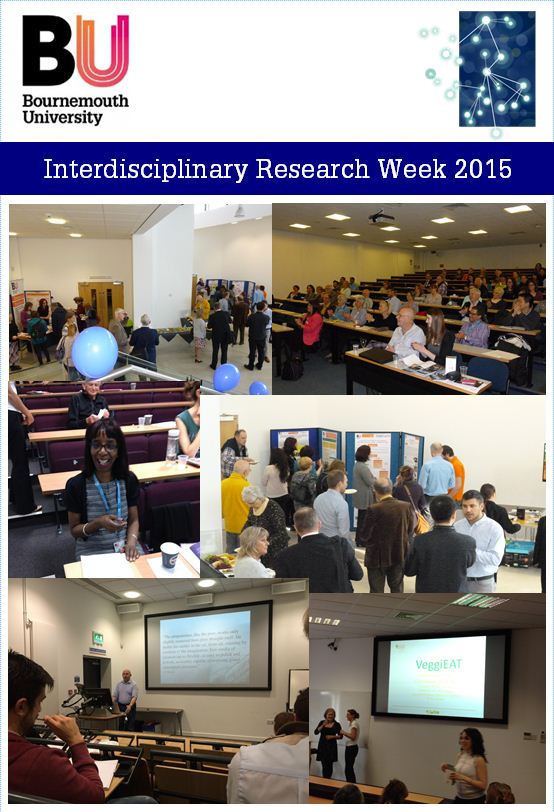
The Research & Knowledge Exchange Office have also been developing the Interdisciplinary Research Week which will take place from 11th-15th May 2015. The talks have been scheduled and we are now actively promoting the event. There are many exciting events taking place over the course of the week and you can find a full list of everything that is taking place, from engaging speakers to exciting topics here.
If you’re feeling inspired by our blog post and would like to get involved with some of our projects then feel free to get in touch:
Rebecca Edwards – Knowledge Exchange and Impact Manager
Rachel Bowen – Research Communications Manager
Rachel Clarke – Knowledge Exchange Adviser (KTP)
Jayne Codling – Knowledge Exchange Adviser
Naomi Kay – Public Engagement Officer
Harry Gibson – Public Engagement Event’s Organiser
Sam Squelch – Student Engagement Coordinator
To find out more about us and what we do, take a look at our team page.
On Thursday I took the opportunity to attend a seminar at the Wilson Centre run by the Maternal Health initiative (MHI). The MHI seminar series promotes dialogue and understanding among practitioners, scholars, community leaders, and policymakers with the aim of facilitating creative interventions that can be integrated into policies and programs worldwide. This month’s topic focused on the neglected issue of Perinatal Common Mental Health Disorders (PCMDs) in low- and middle-income countries (LMICs). 
Mental health concerns have remained largely absent in large-scale global maternal health programs, and the first speaker Prof Jane Fisher (Jean Hailes Professor of Women’s Health and Director Jean Hailes Research Unit School of Public Health & Preventive Medicine, Monash University) provided the background to the problem. Jane highlighted the damage done by work in the 1980s that suggested that women in LMICs were protected from perinatal mental disorders because of the traditional care practices after birth. The result of this misinformation has been a dearth of research in LMICs and a failure to recognise the impact that PCMDs may have on both maternal and perinatal morbidity and mortality. Jane presented data on the prevalence and determinants of mental health disorders in LMICs that indicated that they are a very real issue for women in LMICs. She called for universal programmes for all pregnant women and for maternal mental health to be included as an indicator within the proposed Sustainable Development Goals.
Prof Ricardo Araya (Professor Global Mental Health, London School of Hygiene and Tropical Medicine) presented data to support the global burden posed by mental health disorders. He highlighted that a lack of specialist human resources and a lack of funding were the biggest barriers to addressing the issue. Presenting his extensive work in this area, he highlighted how task shifting has been shown to be an effective mechanism of providing support for women. However, he warned of the burden that this was placing on already over-worked frontline health workers and called for the maternal health community to provide greater attention and resources to address this neglected area of maternal health.
The discussion focused on the importance of raising the profile of mental health within the global maternal health community and on how health care providers can be supported to deliver interventions in LMICs. In the Centre for Midwifery Maternal & Perinatal Health we recognise the need for work in both these areas – researchers at CMMPH are currently working on mental health training for maternal care providers in Nepal. For further information contact Edwin van Teijlingen.
You can download the MHI presentations and watch the video here: http://www.wilsoncenter.org/event/integrating-mental-health-maternal-health-programs
The following funding opportunities have been announced. Please follow the links for more information:
Proposal are invited for the More Years Better Lives call. This aims to support innovative and interdisciplinary research into the drivers to, and constraints on, extending working life. Research is expected to cross the traditional boundaries of government departments and occupational sectors and to examine the implications of extending working life for older workers, new labour markets, health, well-being and intergenerational equity. Proposals are invited for research into one or more of four broad topics: modern work factors, longer working life and inequality, health challenges, and caring responsibilities. Maximum award: not specified. Closing date: 02/06/15.
Royal Society, GB
This Research Grant scheme is for scientists in the UK who are at an early stage in their career and provides ‘seed corn’ funding for new projects of timeliness and promise. The objective is to increase availability of specialised equipment and essential consumable materials, and to support essential field research. The scheme also provides support for research in the history of science or to assist with publication of scholarly works in the history of science. The scheme covers all areas of the life and physical sciences, including engineering, but not clinical medicine. Maximum award: £15000. Closing date: 26/05/15.
The SABMiller Royal Society Exchange Programme supports collaborative projects between researchers in the UK and in sub-Saharan Africa, particularly in Ghana and Tanzania in the following areas: water and sanitation, including water engineering and irrigation, waste water management and other related projects; agriculture and crop science, excluding animal or veterinary science but including land, soil management and crop production; renewable energy including solar, wind or hydro-energies, energy capture and storage, and other related projects. Maximum award: £21000 over three years. Closing date: 28/05/15.
Please note that some funding bodies specify a time for submission as well as a date. Please confirm this with your RKEO Funding Development Officer
You can set up your own personalised alerts on Research Professional. If you need help setting these up, just ask your School’s/Faculty’s Funding Development Officer in RKEO or view the recent blog post here.
The long-term care revolution national challenge, an SBRI competition run by Innovate UK, is now open for registration.
The aim of this competition to stimulate the development of innovative new products, services and systems that disrupt the current long-term care model, have a clear and viable route to market as well as the potential to be commercialised at scale.
More information on this funding opportunity.
Applications from consortia that include companies outside the long-term care sector are encourage to apply bringing fresh and innovative ideas to the challenges of this competition.
Competition Briefing event, 14 April 2015.
This event is an excellent opportunity receive first hand information about the competition – its scope, application process, key dates etc. as well as meet and network with peers, potential partners, market leaders & innovators in the industry
More information on the briefing event.
For queries about this competition, please contact support@innovateuk.gov.uk
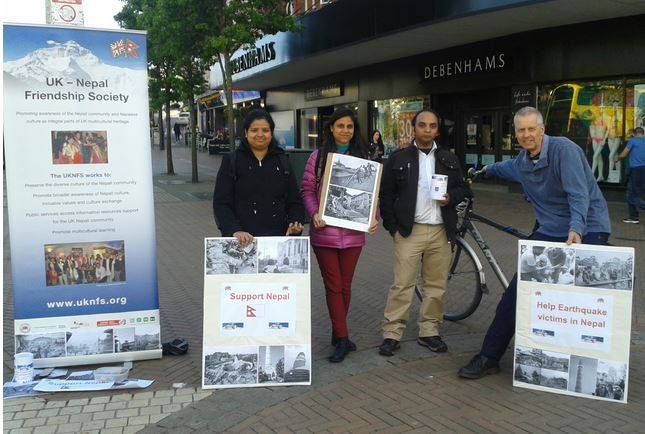
Earlier this week Prof. Edwin van Teijlingen presented at Social Science Baha on the topic of research capacity building in Nepal. Together with many colleagues in Nepal and the UK Edwin has been working on a DFID and British Council funded project under the title PARI (which stands for ‘Partnership on improving Access to Research Literature for Higher Education Institutions in Nepal’). The invited presentation has been recorded by Social Science Baha and is now available online here.
The slides used on Monday are available too.
Presentation April 2015 Soc Sci Baha
Prof. Edwin van Teijlingen
CMMPH
Lunchtime Seminar with Peter Thomas, Wednesday 15th April 1-1.50pm, R303
Please come to listen to Professor Peter Thomas present on the impact that his research into fatigue in Multiple Sclerosis is having, noting the importance of research with strong potential for patient benefit, and the importance of the research funder.
Further information on this Seminar series can be found by clicking on the link below.
There is no need to book – just turn up. Contact Zoe on zsheppard@bournemouth.ac.uk for more information.
We look forward to seeing you there.
Following the previous announcement, to support you and your potential fellow, RKEO are running a two-day Marie Skłodowska-Curie Fellowship on 14th and 15th April. You are welcome to invite your potential fellow to this event, so that you can work together, developing your bid. The days will be a mixture of training and supported time to start writing your bid. Refreshments will be provided.
This event is free but does not include any travel or accommodation for your guest academic. You must book your place via Dianne Goodman, dgoodman@bournemouth.ac.uk, who is now in the post of Funding Development Co-ordinator. External guests must have a BU academic with them at the event and bookings cannot be accepted from non-BU staff. When booking please give numbers attending and any dietary requirements. Please book by Thursday 9th April as catering arrangements need to be finalised.
Please do not ask your guest to book any travel until your attendance is confirmed by RKEO. If the guest requires a a visa to attend, any letters required must be supplied by your Faculty.
If you don’t yet have a fellow or they cannot attend, you are still welcome to attend this event. BU academics who wish to be fellows are also invited.
The current call is now open with a closing date of 10th September 2015. Please follow the link to see the call documents and context. More information about the call is given on the dedicated MSCA webpage, including success stories to inspire you!
Do you have a Knowledge Transfer Partnership (KTP) query? Or perhaps need some advice on how to start off a KTP discussion with a business? Neil Grice, our local KTP Adviser from Innovate UK will be on Talbot Campus from 9.30am – 11.30am on Tuesday 14th April for a series of one-to-ones with academics who would like dedicated KTP support.
To book one of these 20 minute slots, please contact Rachel Clarke, KE Adviser (KTP) on 61347 or email clarker@bournemouth.ac.uk
Click here to find out more about KTP.
Bournemouth University research on Computing and Informatics, the Engineering of Social Informatics focus area, achieved a strong presence in the 21st International Working Conference on Requirements Engineering: Foundation for Software Quality (REFSQ), which was held from March 23 to March 26, 2015 in Essen, Germany. (Refer to http://refsq.org/2015/).
Our participation included the presentation of three short papers and their posters:
In addition, our contribution included the presentation of one full paper:
The papers were presented by two PGRs, Mahmood Hosseini and Alimohammad Shahri. The topics attracted much attention by fellow researchers who were present in the conference. The follow-up discussions yielded some interesting opportunities for possible collaboration. It was also a great opportunity for knowledge exchange and to maximise the visibility and impact of our research in Computing and Informatics and to demonstrate our vibrant environment.
The research was partially funded by a European FP7 Marie Curie CIG Grant (the SOCIAD Project), the Graduate School of Bournemouth University via the Santander PGR Development Fund and Streetscene Addiction Recovery Ltd (match-sponsor of Jingjie Jiang PhD).
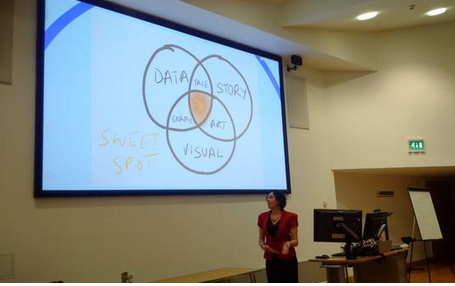
Digital technologies like google maps have transformed the ways people relate to visual representations of geographic space. From zoom functionality on street view, to rainbow coloured social network graphs, people are engaging their geographical imaginations to produce visual representations that matter to them and their research.
This second Datalabs event introduces participants to mapping tools and techniques for visual analysis and storytelling with spatial data. On Day 1 you will explore open source software for mapping location-linked data, discovering how to scale, symbolise and tell stories with the maps that you make. Then on Day 2 we learn how APIs work to retrieve information from social network sites like twitter and facebook. You will explore how to turn this social media data into maps and create mashups with other data, creating stories for public engagement and finding new, collaborative research questions along the way.
Our innovative datalabs format combines Masterclasses with hands-on workshop sessions to enhance and share skills around working with data for civic and humanitarian research and public engagement. Datalabs involve students and staff from across BU’s faculties, as well as participating NGOs, journalists and digital designers.
Our popular first event was oversubscribed, so register early to take part in this exciting interdisciplinary initiative! Monday April 27th – Tuesday April 28th: http://www.eventbrite.co.uk/e/datalabs-2-maps-and-mashups-tickets-16433088811
Datalabs is a Fusion CCCP Funded project. The project team includes: Dr. Anna Feigenbaum, Dr. Einar Thorsen, Dr. Pippa Gillingham, Professor, Dr.Hamid Bouchachia, Dr. Dan Jackson, Dr. Shelley Thompson, Dr. Nathan Farrell, Dr. Edward Apeh, Dr. Duncan Golicher, Dr. Rebecca Edwards, Robert Munday, Oz Dermirkal and stakeholder coordinator, John Horne.
The Civic Media hub was established in 2014 and brings together a multidisciplinary, cross-Faculties team of researchers and students that work in collaboration with external stakeholders to co-create effective ways of tackling important social issues. We combine expertise from humanities, social sciences, geography, computer science and data analytics. Bios for the Datalabs team can be found at http://www.civicmedia.io/#team
Biotechnology YES, now in its 20th year, is an innovative competition developed to raise awareness of the commercialisation of ideas among early career researchers. The competition is funded by sponsorship and aims to encourage an entrepreneurial culture in the UK postgraduate and postdoctoral base for the benefit of the UK bioeconomy.
6 workshops are being held across the UK in the autumn and three of these are to be hosted by industry:
The Royal Society of Chemistry is once again sponsoring teams to compete in Chemistry YES to be run in conjunction with the Biotechnology YES workshops.
Environment YES, now in its 10th year, will once again be run alongside Biotechnology YES.
This competition is open to all bioscience early career researchers not just those funded by BBSRC.
For further information and how to apply please visit:
The April edition of our monthly business briefing for the UK’s creative industries is now live! This is a monthly publication that provides a digest of useful information about funding, financing, support and events to assist creative entrepreneurs with their innovation and growth agendas. This month’s edition offers edited highlights of a number of public funding programmes from leading organisations supporting our sector including: Innovate UK, Nesta, British Film Institute, Creative England, Creative Scotland, Horizon 2020 & more.
We regularly conduct workshops and training sessions on academic writing at home and abroad. Yesterday afternoon I did one in Kathmandu for staff at Social Science Baha and Green Tara Nepal. There were the usual comments and queries about authorship, references, length of papers or sections of
papers, how to target the ‘best’ journalfor my article, etc. One interesting question I had not been asked before was: “How did you feel when you had your first paper published?”, followed by the question: “Who did you tell about it?” I thought that was a very nice question, and also reminded me why we do these kind of workshops for those who haven’t had the pleasure yet of getting a paper in print.
Prof. Edwin van Teijlingen
CMMPH
Every BU academic has a Research Professional account which delivers weekly emails detailing funding opportunities in their broad subject area. To really make the most of your Research Professional account, you should tailor it further by establishing additional alerts based on your specific area of expertise. The Funding Development Team Officers can assist you with this, if required.
Research Professional have created several guides to help introduce users to ResearchProfessional. These can be downloaded here.
Quick Start Guide: Explains to users their first steps with the website, from creating an account to searching for content and setting up email alerts, all in the space of a single page.
User Guide: More detailed information covering all the key aspects of using ResearchProfessional.
Administrator Guide: A detailed description of the administrator functionality.
In addition to the above, there are a set of 2-3 minute videos online, designed to take a user through all the key features of ResearchProfessional. To access the videos, please use the following link: http://www.youtube.com/researchprofessional
Research Professional are running a series of online training broadcasts aimed at introducing users to the basics of creating and configuring their accounts on ResearchProfessional. They are holding monthly sessions, covering everything you need to get started with ResearchProfessional. The broadcast sessions will run for no more than 60 minutes, with the opportunity to ask questions via text chat. Each session will cover:
Each session will run between 10.00am and 11.00am (UK) on the fourth Tuesday of each month. You can register here for your preferred date:
These are free and comprehensive training sessions and so this is a good opportunity to get to grips with how Research Professional can work for you.
On 6th April, Easter Monday, professor Edwin van Teijlingen will present the process and selected findings of research capacity building work conducted in Nepal. The invited lecture at Social Science Baha in Kathmandu was originally planned for early January, but unfortunately had to be cancelled at the last moment due to a national strike in Nepal.
PARI (Partnership on improving Access to Research Literature for Higher Education Institutions in Nepal) refers to a project to support and enhance health research in Nepal; a partnership between Tribhuvan University, three UK universities (including Bournemouth University), and the Development Resource Centre (Nepal). The British Council and DFID (UK) funded PARI to help build research capacity over a three-year period.
Nepal has limited capacity in health research, which restricts ability to implement evidence-based health care. PARI aimed to move university lecturers away from textbook teaching and make them more critical of the academic literature available on the Internet.
PARI workshops delivered to Nepal universities introduce the foundations of evidence-based practice and outline key electronic databases of health care and health service literature available to Nepalese academics. These workshops were informed by: (1) a curriculum review of all health-related courses at the major universities in Nepal; and (2) a needs assessment with lecturers, librarians and students of the major universities.
Key message included that We need to move away from textbook teaching in health care and teach health-care discipline students how to find the most appropriate evidence-based treatment for each patient.
The PARI team:
Ram Sharan Pathak,Tribhuvan University,Nepal
Padam Simkhada, Liverpool John Moores University, UK.
Bhimsen Devkota, Development ResourceCentre,Nepal
Edwin van Teijlingen,Bournemouth University,UK
Julie Bruce,University of Warwick, UK
Pramod Regmi, Development Resource Centre, Nepal
Amudha Poobalan, University of Aberdeen, UK
Trilochan Pokharel, Nepal Administrative Staff College, Kathmandu Nepal
The work has resulted in two academic publications:
Colleagues associated with the Health Economics Research Unit (HERU), Health Services Research Unit (HSRU) and the Rowett Institute of Nutrition and Health (all based at the University of Aberdeen), the Nursing, Midwifery & Allied Health Professional Research Unit (University of Stirling), the Scottish Collaboration for Public Health Research & Policy (SCPHRP) based at the University of Edinburgh and the Centre for Midwifery, Maternal and Perinatal Health (CMMPH) at Bournemouth University published their latest paper on obesity research. The paper ‘A systematic review of the cost-effectiveness of non-surgical obesity interventions in men’ is published in the journal: Obesity Research & Clinical Practice. This systematic review summarises the literature reporting the cost-effectiveness of non-surgical weight-management interventions for men. Studies were quality assessed against a checklist for appraising decision modelling studies. This research is part of the larger ROMEO study.
Prof. Edwin van Teijlingen
Faculty of Health & Social Sciences
Reference:
Boyers, D., Avenell, A., Stewart, F., Robertson, C., Archibald, D., Douglas, F., Hoddinott, P., van Teijlingen, E., A systematic review of the cost-effectiveness of non-surgical obesity interventions in men, Obesity Research & Clinical Practice (online first)
The following funding opportunities have been announced. Please follow the links for more information:
Engineering & Physical Sciences Research Council
Training & Skills Hubs
Quantum technologies are those that enable the creation, control and manipulation of sensitive and fragile quantum effects within single systems. Training and Skills Hubs will act as nodes within the national network of Quantum Technology Hubs, whose aim is to harness and exploit the research and training strengths that exist across the UK academic landscape, facilitate partnering with industry, and tackle the key technological challenges that need to be overcome to realise the promise of quantum technologies.
Award amount max: £15 million to support 3 – 5 Hubs for 5 years
Closing date: 2/06/2015
Royal Society
International Scientific Seminars
This scheme is for Royal Society Research Fellows who want to organise a small two-day scientific seminar at the Royal Society at Chicheley Hall.
Award amount max: £5000 for travel plus costs for up to 20 delegates
Closing date: 4/06/2015
Engineering & Physical Sciences Research Council
Quantum Technologies Strategic Capital Investment Call
Funding is available for individual or consortia of institutions that demonstrate how their proposal will augment existing capabilities in the UK and that bring together a suitable support package that enhances this capital funding and enables delivery of new capabilities for the national network.
Proposals should clearly articulate the industrial contribution and leverage supporting this investment and how the investment would strengthen industrial engagement
Award amount max: Up to £25 million in total
Closing date: 2/06/2015
Innovate UK
Spearheading future electric vehicle battery production
Innovate UK and the Office for low emission Vehicles (OleV) are to invest up to £10 million in a single consortium to develop a pilot line to understand how to produce high-voltage electric vehicle batteries at a rate that can later be scaled up for commercial production.
Award amount max: Up to £10 million
Closing date: 3/06/2015
Biotechnology & Biological Sciences Research Council
Future Leader Fellowship
The Future Leader Fellowship (FLF) will provide support for researchers wishing to undertake independent research and gain leadership skills. The FLF will support the transition of early stage researchers to fully independent research leaders. As such FLFs represent part of our commitment to the supply of highly skilled professional scientists to the UK.
Award amount max: Unspecified
Closing date: 4/06/2015
Economic & Social Research Council
Training Bursaries
The ESRC wishes to improve the standards of research methods and to stimulate the uptake of high quality training courses in research methods across the UK social science community.
Each year there are bursaries for up to £1,000 each to enable staff in the UK social science community engaged in research, teaching research methods or supervising research to update their research skills. Contract researchers working in HEIs are also eligible for the bursaries.
Award amount max: £1000
Closing date: 15/4/2015
Innovate UK
Game-changing technologies for aerospace – collaborative R&D
Innovate UK is to invest up to £10 million in collaborative research and development and feasibility studies to accelerate the commercialisation of highly innovative technologies for civil aerospace
Award amount max: Up to £10 million
Closing date: 9/09/2015
Engineering & Physical Sciences Research Council
Living with Environmental Change Challenge Fellowships
EPSRC’s Living With Environmental Change theme is keen to support the next generation of leaders in adapting to and mitigating climate change. This is a strategic activity focusing on a key challenge within the EPSRC LWEC theme and on bringing new thinking into the area.
The research required to answer this challenge requires a broad based, problem-directed and multidisciplinary approach. Applicants can come from any discipline area but we will not fund fellowships across councils therefore the balance of the research described in the application should be within the remit of EPSRC.
Award amount max: Unspecified
Closing date: 10/06/2015
Please note that some funders specify a time for submission as well as a date. Please confirm this with your RKEO Funding Development Officer
You can set up your own personalised alerts on Research Professional. If you need help setting these up, just ask your School’s/Faculty’s Funding Development Officer in RKEO or view the recent blog post here.
If thinking of applying, why not add notification of your interest on Research Professional’s record of the bid so that BU colleagues can see your intention to bid and contact you to collaborate.