The emergence of Hybrid Threats and Hybrid War as new security challenges of the 21st Century – from its early examples in Israels war against Hezbollah in 2006 to Russia’s War in Eastern Ukraine. Dr. Sascha Dov Bachmann, Associate Professor in Law, Co-Director of BU’s Conflict, Rule of Law and Society( https://research.bournemouth.ac.uk/centre/conflict-rule-of-law-and-society/) presented at the 24th Annual SLS-BIICL Conference on Theory and International Law at the British Institute of International and Comparative Law in London. He argues that Hybrid War is more than Compound Warfare by utilising new technologies of cyber and Hybrid Threats. His work on teh subject was recently published as HYBRID WARS: THE 21st-CENTURY’S NEW THREATS TO GLOBAL PEACE AND SECURITY in the South African Journal of Military Studies, http://scientiamilitaria.journals.ac.za/pub/article/view/1110/1107.
/ Full archive
Entrepreneurship in the 21st Century
The BU Centre for Entrepreneurship participated in a high profile event at the EBC on Wednesday 20 May looking at Entrepreneurship in the 21st Century.
Attracting over 80 delegates, including CEO’s, Directors, entrepreneurs and BU students, the event was organised by Barclays and sponsored by BU and Saffrey Champness. It aimed to facilitate discussion with founders and experts from the South Coast and included an exhibition area where current and past BU students, Static Games, el RHEY and Cub-Bee-Hole, demonstrated their entrepreneurial skills by showcasing their own products and services.
Mark Painter, Centre for Entrepreneurship Manager, who welcomed the delegates on behalf of BU, said, ‘we were delighted to have the opportunity to support and take part in this event. The feedback from the delegates was extremely positive and I am looking forward to building on this activity and exploring other ways for us to work with organisations like Barclays and Saffrey Champness to support entrepreneurs’.
Craig Jamieson, Regional Director of Barclays Wealth & Investment Management introduced Matt Macri-Waller, Founder and CEO of Benefex, who gave an inspiring and entertaining insight into his own journey as an entrepreneur and his approach to tackling the various obstacles he has faced.
This was followed by a panel discussion, moderated by Richard Heggie, Head of Proposition and Delivery for Entrepreneurs at Barclays Wealth and Investment Management, which provided a fascinating insight into the issues, challenges and opportunities facing the entrepreneurs of today and the future.
Panel member, Nigel Jump, BU’s Professor in Regional Economic Development, reminded delegates of the challenges facing the UK in terms of needing to increase productivity and observed that it will be the entrepreneurs who will drive UK economic growth. The other panellists were Matt Macri-Waller, Founder and CEO of Benefex, Nick Fernyhough, Partner of Saffery Champness, Georgina Hurcombe, Founder and Managing Director of LoveLove Films, and Richard Phelps, Managing Director, Accountable Executive for Entrepreneurs at Barclays.
Mark Painter added, ‘this event is another great example of the Centre for Entrepreneurship working in partnership with other organisations to help share knowledge and expertise and really demonstrates BU’s commitment to engaging with and supporting the business community.’
Strong Presence of Computing and Informatics Research at RCIS’15 Conference in Athens, Greece
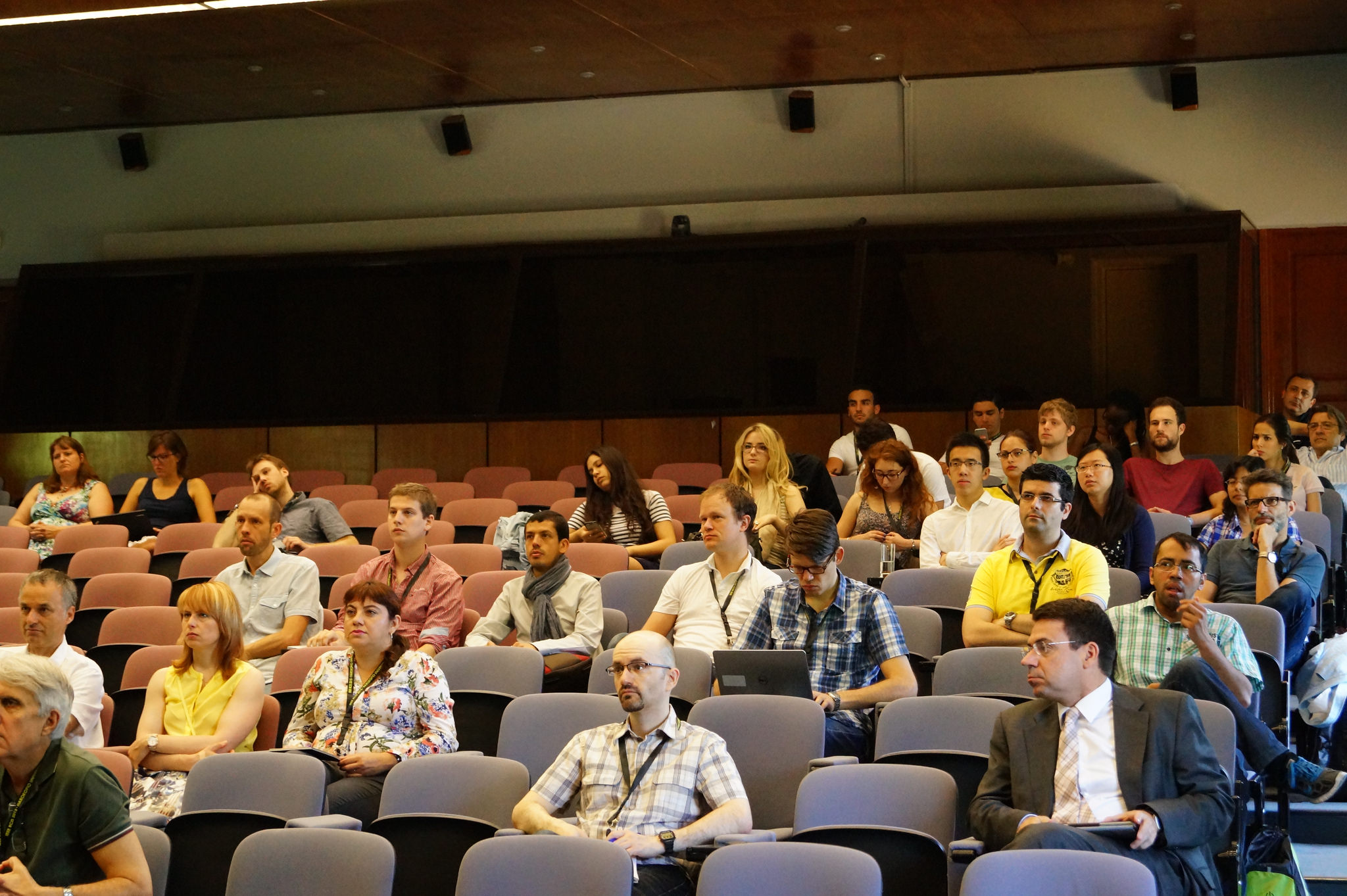
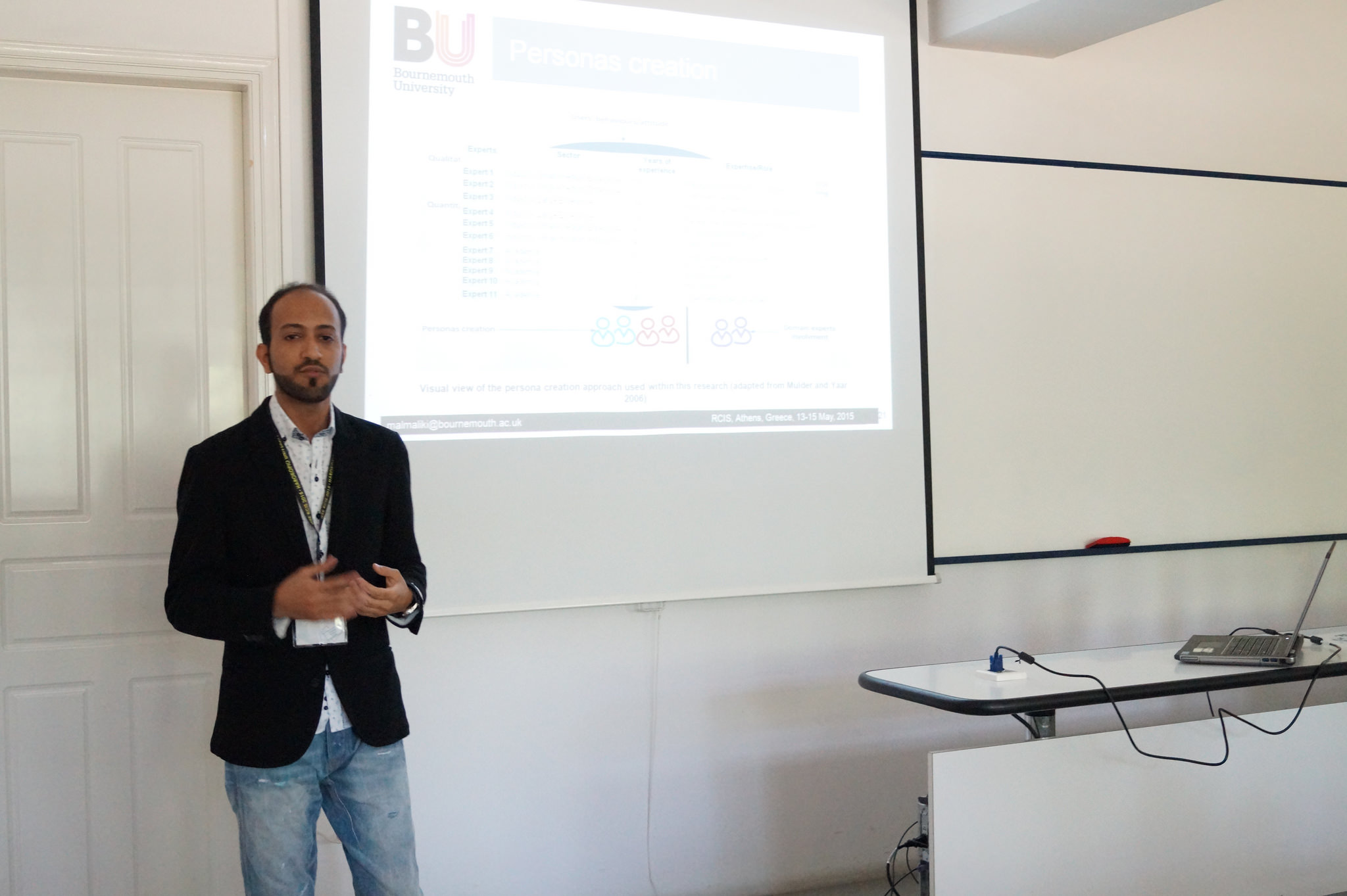
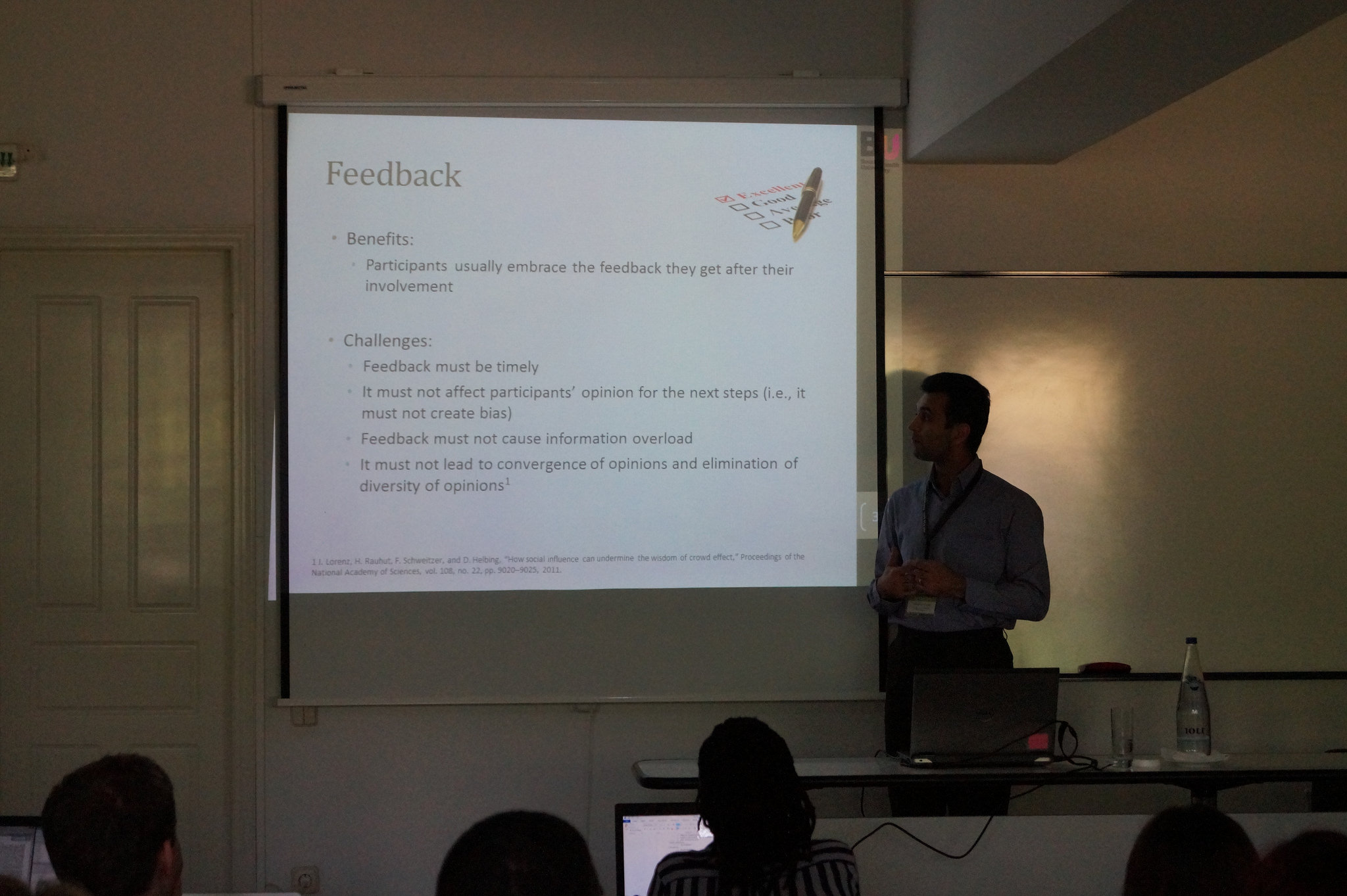
Bournemouth University research on Computing and Informatics, the Software and Systems Engineering focus area, achieved a strong presence in the IEEE Ninth International Conference on Research Challenges in Information Science (RCIS), which was held from May 13th to May 15th, 2015 in Athens, Greece. (Refer to http://www.rcis-conf.com/rcis2015/).
Our participation included the presentation of three papers:
- “Adaptive Software-based Feedback Acquisition: A Personas-based Design”: Malik Almaliki, Cornelius Ncube & Raian Ali
- “Configuring Crowdsourcing for Requirements Elicitation”: Mahmood Hosseini, Alimohammad Shahri, Keith Phalp, Jacqui Taylor, Fabiano Dalpiaz & Raian Ali
- “Recommendations on Adapting Crowdsourcing to Problem Types”: Mahmood Hosseini, Alimohammad Shahri, Keith Phalp & Raian Ali
The papers were presented by two PGRs, Mahmood Hosseini and Malik Almaliki. Fellow researchers and practitioners praised the timeliness and applicability of the topics and stated their interest for possible collaboration. The presentations also provided a great opportunity for the exchange of knowledge, for increasing the visibility and impact of our research in Computing and Informatics in Bournemouth University and for displaying our vibrant environment. This follows our last year success at this same conference RCIS’14 and our recent strong presence in REFSQ’15.
The research was partially funded by a European FP7 Marie Curie CIG Grant (the SOCIAD Project), and the Graduate School of Bournemouth University via the Santander PGR Development Fund.
“Very useful, informative (and fun) time. Thank you so much” BUDI hosts 4th Public Open Meeting
Raising awareness of dementia has been a key part of the last three years of BUDIs work. This week we held our 4th annual public open meeting to coincide with national Dementia Awareness Week. The highlight for me was our carer and person with dementia panel where participants from some of our projects spoke about their experiences of living with dementia in the community and the impact our initiatives have had on their lives, in particular the BUDI orchestra. I concur with the comment of one attendee that “The carers panel was thought provoking”. The ultimate aim of the work we do is about improving lives and it is only by hearing about people’s direct experiences that we can ensure that our ongoing and future work addresses the needs and aspirations of those impacted by dementia.
Another attendee commented “Much wider range of speakers than expected” reflecting the range of projects we showcased, both BUDI projects including, evaluations of dementia-friendly community initiatives in Dorset and North Somerset; our intergenerational IT Club; BUDI Orchestra; Gardening; and Care Farming. As well as a number of external organisations we work with who shared the work they are doing locally to support people with dementia living within the community, including: Alzheimer’s Society, Future Roots, Dorset Fire and Rescue Service, and the Wessex Academic Health Science Network.
Following previous successful events I tend to have positive expectations of our community engagement work – this was reflected in the comment of another attendee: “I expected a high standard but that was surpassed”
Fusion Investment Fund open for applications
FIF is open!
Excuse me? You don’t know what FIF is?
FIF stands for the Fusion Investment Fund. It is designed to support staff in developing as researchers, educators and practitioners. Since its inception in 2012, FIF has funded over 200 projects with awards totalling more than £2m.
Want to know more?
Two funding strands are available to staff: Co-creation and co-production strand (CC&CP), and Staff mobility and networking strand (SMN).
For all the policy documents, Fund FAQs and information about applying, please visit the FIF website.
Please direct all initial enquiries to the Fusion Investment Fund Co-ordinator, Sue Townrow, at Fusion Fund.
Working creatively to explore abuse in young people’s relationships – the CATCAM project
There is increasing awareness of the risks that young people face in terms of abusive personal relationships and intimate partner violence (IPV), and the Home Office has recently widened the definition the government uses to include abuse against those aged 16-17 as well as adults
Intimate partner violence concerns physical violence directed against a partner and often includes sexual violence and psychological abuse (Jewkes, 2002). This is a global issue and increasing concern is now being expressed about IPV in teenage and young people’s relationships (Keenan-Miller et al. 2007). US research suggests that 66 % of college-aged dating students experience at least one incident of IVP (Smith et al. 2003).
The project which has received Fusion Funding from BU aims to:
- Develop creative methodologies/animation to explore the nature of abuse in young people’s relationships;
- Explore how such methods might be used in domestic abuse prevention education
To date we have had two creative workshops which have used a range of materials and motion capture to produce a short piece of animation visualising mood and emotion. Those involved have enjoyed trying newapproaches to express and visualise meaning associated with relationships and abuse. It is great to be a co-learner in this process and to be taken out of my comfort zone as we are encouraged to use ‘visualisation’ techniques in a co-produced piece of work. Here are some examples of some of our visualisation work to date.
For more information on the CATCAM project please contact:
Dr. Lee-Ann Fenge lfenge@bournemouth.ac.uk
Collaboration in Malaysia – BU and INTI-IU, Kuala Lumpur, Malaysia
Dr Carol Clark and Dr Judith Chapman visited INTL-International University, Nilai, Kuala Lumpur, Malaysia following a visit at the end of 2014 by Professor Tim McIntyre-Batty. The faculty of Health currently consists of one programme – Physiotherapy BSc (Hons). Colleagues at INTL-IU wish to expand their provision of health science programmes and their research profile. Carol and Judith met with some of the faculty including Dato’ Professor Rahmah Mohamed – Dean of the Faculty of Health and VC of INTL-IU, Professor Narasimman Swaminathan – Head of Research and Praveen Surendran – Head of Physiotherapy Programme. Primarily to discuss similar research interests, physiotherapy programmes in Malaysia and the UK and provision of additional health related programmes for example; public health, nutrition and paramedic science. We found we had a lot of common ground and put together a paper setting out ideas relating to future collaborative work.

Carol and Judith joined Dato’ Professor Rahmah Mohamed the Dean of the Faculty of Health and VC of INTL-IU and colleagues from the faculty for an evening of entertainment. We were introduced to Malaysian culture in the form of dancing and cuisine and were made to feel very welcome.
Carol and Judith facilitated a work shop highlighting the importance of Physical activity in the prevention of non-communicable diseases including Metabolic Syndrome. Non-communicable diseases account for over two thirds of the global health burden in relation to mortality and morbidity. The non-communicable diseases include: diabetes, heart and lung diseases, stroke, some cancers and dementia. In Malaysia the prevalence of diabetes is 10% and increasing while metabolic syndrome in the > 30 year olds is between 24% – 47% and ethnically dependent. With a growing elderly population and rising obesity the burden of non-communicable diseases has increased significantly in Malaysia in the last 10-15 years. The aim of the workshop was to explore how Physiotherapists might influence and engage in the promotion of physical activity through the lifespan by considering the motivators and barriers in Malaysia.
Students from two universities (INTL- IU and Ramsay Sime Darby University) attended the workshop and shared their own levels of physical activity and explored ideas relating to increasing physical activity engagement amongst different groups in Malaysia in the future.
Dr Carol Clark, Dr Judith Chapman (Faculty of Health and Social Sciences, BU) Professor Narasimman Swaminathan and Praveen Surendran (Faculty of Health, INTI-IU)
An Overview on the Design and Analysis of Collaborative Decision Making Games
We would like to invite you to the next research seminar of the Creative Technology Research Centre.
Title: An Overview on the Design and Analysis of Collaborative Decision Making Games
Time: 2:00PM-3:00PM
Date: Wednesday 27th May 2015
Room: P302 LT, Poole House, Talbot Campus
Abstract: Collaborative games require players to work together on shared activities to achieve a common goal. These games received widespread interest in the past decade, yet little is known on how to design them successfully, as well as how to evaluate or analyse them.
This talk will describe a research project that aims to deliver a better understanding of collaborative processes designed in the mechanics of Collaborative Decision Making Games (CDMGs) in which collaboration takes place during the game play process at conscious cognitive level. To follow the aim, Collaboration Engineering (CE), a discipline that has studied collaboration for decades is used as a theoretical guideline to analyse and design CDMGs. At the analysis stage of this research, the primary focus is on understanding how CE is used in the design of the mechanics of CDMGs and within the design stage the goal is to demonstrate a pattern-based approach, developed using CE principles, which is then applied to the design of these games.
Potential insights from this research make clear in what contexts CE is relevant and what kind of role it can play both in terms of analysis and the design of CDMGs.
We hope to see you there.
AiR – being creative at the Social Research Association conference
Five members of the AiR (Arts in Research) collaborative delivered an experiential workshop at the Social Research Association conference on Creative Research Methods in the Social Sciences on Friday 8th May at the British Library, (Left to right: Anne Quinney, Maggie Hutchings, Caroline Ellis-HIll, Wendy Couchman and Michelle Cannon). The conference brought together researchers from a diverse range of disciplines including human geography, criminal justice, media, and migration studies. By inviting the delegates to create a sculpture in pipe-cleaners of their journey to the conference, the keynote speaker, Professor David Gauntlett from the University of Westminster, set the scene for an interactive and inspirational day in which presenters shared their creative research methods.
Drawing on the two day workshop, A past/a present, held at BU in September 2014, the collaborative shared their experiences and invited the audience to learn what it feels like to reveal our often most private self to an unfamiliar person by talking about the significance of a personal artefact that they had with them. The participants found it to be a very powerful process which can occur in a very short space of time.
As well as learning about collage as a research tool in working with offenders, the use of hand drawn timelines in working with returning Afghan migrants, walking as a tool for understanding marginalised young men, and walking to develop understanding the day to day lives of women asylum seekers, the AiR collaboration members made new connections and explored several potential research collaborations.
The ARTS in Research (AiR) collaborative is open to BU students and staff across faculties and disciplines. Please contact the AiR facilitator, Dr Kip Jones, (kipworld@gmail.com) to join.
https://research.bournemouth.ac.uk/2014/01/arts-in-research-air/
New paper by PhD student Sheetal Sharma
Sheetal Sharma, PhD student in the Centre for Midwifery, Maternal and Perinatal Health (CMMPH), published her latest paper this week in the Asian Journal of Social Sciences & Humanities [1]. The paper ‘Nepenglish’ or ‘Nepali English’: A New Version of English? raises the question whether we are beginning to see a new variant of English.
The paper is co-authored with Mrs. Pragyan Joshi from the United Nations Development Programme (UNDP) in Kathmandu and BU Prof. Edwin van Teijlingen. Sheetal’s PhD research focuses on the evaluation of a large-sclae maternity care improvement intervention in rural Nepal.
The paper is based on listening to people in Nepal speaking English and reading their writing in English. English is a living language and different native and non-native speakers develop English in slightly different ways. This paper argues that it is time to consider whether we should study the English spoken by native-Nepali speakers (Nepenglish) as a separately developing variant of English. The question is particularly intriguing since Nepali English bears such a similarity with Indian English, as both are largely based on originally Sanskrit-based languages. The focus is particularly on how native-Nepali speakers express themselves in English.
Reference:
- Sharma, S., Joshi, P., van Teijlingen, E. (2015) ‘Nepenglish’ or ‘Nepali English’: A new version of English? Asian Journal of Humanities & Social Sciences 4(2): 188-193. www.ajssh.leena-luna.co.jp/AJSSHPDFs/Vol.4%282%29/AJSSH2015%284.2-21%29.pdf
Prof. Edwin van Teijlingen
CMMPH
“What do you get out of your student-staff co-created research experience?”
This was a question reflected on by the SciTech student and staff recipients of this year’s CEL Co-creation student projects. Five level H(6) students in SciTec won CEL co-creation bursaries this year to work with academic staff (Figure 1). Here we share their individual experiences and their overall reflection.
Figure 1. Faculty of Science & Technology student and staff winners of the 2015 CEL-funded Co-creation Projects. Left to right – Matthew Kidd, Tom Barnham, Dominick Jay, Kevin McGhee, Emilie Hardouin, Emma Hill, Keith Pretty, Simon Harding.
INDIVIDUAL EXPERIENCES
Project 1 – Emma Hill. LabTube – a series of video protocols for the DNA lab equipment. The aim of the co-creation project that I am involved in is to produce a series of instructive videos on the equipment (show scales and balances) within the DNA laboratory. This will allow students to remind themselves of the protocol of a specific piece of equipment and so feel confident to continue their work without needing a supervisor present every time they use something. Working on this project has allowed me to learn new skills from experienced members of staff from varying scientific backgrounds, and gain hands on experience with equipment that I wouldn’t have had much interaction with on my course. It’s great to know I’ve been able to help produce a resource to be used by students for years to come.
Academic Mentor reflection for Project 1 – Kevin McGhee. This award is yet another great initiative by BU, promoting the development of our students’ skills for future employment through projects which enhance the lab experience for all of us
Project 2 – Simon Harding. The role, contribution and management of student social media groups as part of the learning experience at BU. I worked with the Learning Technology team and my supervisor Keith Pretty as part of my co-creation project. The aim was to investigate the role of student social media groups and how they can contribute towards the student learning experience. Creation of student guidance will give students the knowledge and tools to utilise student social media groups. The solution will also make recommendations for the university when integrating social media groups. Working closely with my supervisor and the rest of the co-creation team I held data collection event with BU students to gather data on their perspectives of student social media groups. The team work helped to make the data collection event a success. Collaborative work with my supervisor has given me new skills and improved my experience which I will take with me when I finish university and pursue my career in the computing industry.
Project 3 – Matthew Kidd. Adoption and implementation of BLE Beacon technology at Bournemouth University to enhance open, collaborative learning opportunities. I worked closely with Keith Pretty and the learning technology team for my co-creation project. The aim was to investigate the feasibility for implementing a new emerging technology: BLE Beacons into the learning environment. It was identified that students are bringing their mobile devices onto campus with many intending to use them to support with studies. Yet research has found that many students find the devices a distraction with some unsure on how to effectively use them in learning. It has been discovered that whilst infrastructure and services exist little has been done to integrate them into the learning experience; BLE beacons have an opportunity to shape this. By working on a co-creation project I have had the opportunity to work with stakeholders which are critical to the deployment of new technologies, this relationship has enabled a much broader understanding for the operation of the University and has enabled me to develop new skills throughout the process.
Project 4 – Dominick Jay. iBU Student Informing Feature Development. I worked with my supervisor and the iBU technical team with the end goal being the identification and development of a feature prototype for the iBU application. This prototype was evaluated at both the initial and design stages by fellow students, and after development by the iBU team. Events took place allowing for critical feedback to be delivered from students in response to design ideas. Using co-creation this year has introduced a unique way of working, and has helped improve how I work both as a team and individually.
Project 5 – Tom Barnham. A Utility, Usability and User Experience Evaluation of the iBU Mobile Application. My co-creation project was based on a user evaluation of the iBU application, which required participants to conduct tests. Keith Pretty helped me structure my project and plan the most essential part of the project which was to conduct a user evaluation experiment. We were able to meet key contacts that could provide valuable information including the iBU development team. The client was Stuart Claw and provided useful information and always swiftly replied to emails.
Academic Mentor reflection for Projects 2, 3, 4 & 5 – Keith Pretty.
This co-creation funding has offered a fantastic opportunity to work with students on projects that have a direct influence on the learning experience, through building on our use of Technology Enhanced Learning (TEL) and the iBU mobile application. Key BU teams were brought into help shape the four projects from the outset, acting as clients for each student to work with. This has enabled the sharing and application of a wide range of skills and experience, plus the opportunity for networking between the iBU, Learning Technology, library and other teams within the university. I already work with most of these teams regularly as part of my own teaching and learning development projects, but the students have brought in new perspectives and insights into our use of TEL that have enabled the outcomes of these projects to be stronger.
I would like to take this opportunity to not only thank CEL and Tom, Simon, Dominick and Matt for creating a great learning opportunity for us all, but also the time, dedication and effort that the iBU and Learning Technology teams have put into their roles as clients to support the students. In particular, David Fevyer and Stephen Pyne from the Learning Technology team and Stuart Claw and Philip Downes from the iBU team. I have enjoyed working with everyone immensely and recommend other staff to take up future opportunities for co-creation that will be on offer.
OVERALL REFLECTIONS
The student and staff co-creators were invited to spend a few minutes of an informal, celebratory session capturing on posit notes their responses to the question “What do you get out of your student-staff co-created research experience?” (Table 1). I have colour coded some of their responses to indicate how they might match gains in all three of the spheres of learning for effective citizenship (Figure 2).
Table 1. Replies to the question “What do you get out of your student-staff co-created research experience?”. Colour codes indicate matches with spheres of learning of cognitive maturity (yellow), integrated identity (blue) and mature relationships (pink).
Figure 2. The core spheres of learning for effective citizenship (based on Baxter Magolda & King, 2004)
There is a growing global interest in 21st century education creating effective citizenship through fostering the underpinning personal development towards “Self Authorship” – i.e. the ability to collect, interpret, and analyze information and reflect on one’s own beliefs in order to form judgments” (Baxter Magolda, 2007). The reflections of the students and staff co-creators in the above projects suggests that research co-creation is a great way of enhancing the whole BU university learning experience and developing effective global citizenship. It is also great fun. We hope you feel inspired to get co-creating research too!
Complied by Ant Diaz, CEL theme leader for student engagement & co-creation. adiaz@bmth.ac.uk
References.
Baxter Magolda, M. B., & King, P. M. (2004) (Eds) Learning partnerships: Theory and models of practice to educate for self-authorship. Sterling, VA: Stylus
Baxter Magolda, M. B. (2007). Self‐authorship: The foundation for twenty‐first‐century education. New Directions for Teaching and Learning, 2007(109), 69-83.
Highlights from the World Confederation of Physical Therapy Congress, Singapore, May 2015
Around 3400 delegates from all over the world gathered in Singapore at the start of May for the World Confederation for Physical Therapy Congress. With an impressive 572 platform presentations, 1,578 poster sessions, and 36 networking sessions there was certainly plenty of opportunity to be informed and stimulated by new ideas.
Three representatives attended from Bournemouth University (Judith Chapman, Carol Clark and Clare Farrance) who presented some of their current research (8 papers) around reflective practice, chronic pain, joint hyper-mobility and physical activity. Clare commented that sharing research around these areas provided “a great opportunity to see where our research at BU sits within the clinical and academic physiotherapy situation worldwide”.
Other highlights included learning more about educational approaches for undergraduate students, the use of integrating technology to support people with long-term conditions, furthering international relationships and collaborations, and of course the amazing array of food in Singapore (including the chilli crab!).
Many thanks to the Faculty of Health and Social Sciences and Santander PGR Mobility Awards for funding to make attendance at this valuable conference possible.
Inter-professional Education Dementia Themed Study Day
Last Friday we delivered the second dementia themed study day for the undergraduate students in the Faculty of Health and Social Sciences. In total about 500 students attended over the 2 days. Students from adult nursing, mental health nursing, physiotherapy, occupational therapy, social worker, nutritional students, Operating Department Practitioners attended.
The aim of the day was for the students to gain an insight into the lived experience of dementia and see the person beyond the diagnosis. The humanising values framework underpins the undergraduate courses and the students were encouraged to consider how they can deliver humanised care and avoid de-humanised care, when caring for people with dementia.
There were a range of sessions and delivery styles that engaged the students throughout the day. A carer spoke with compassion about how she looks after her husband who has Alzheimer’s, the students felt this insight would encourage then to work more closely with family members. Throughout the day many speakers showed films of people with dementia talking about their experiences, the students feel as a result of seeing these they will take more time to hear the voice of the person they are looking after. Working in pairs the students shared an aspect of their life story with each other. By doing this they were able to consider the value of individual life history in supporting the person with dementia.
There were further sessions sharing some of the research the faculty are undertaking with people with dementia. For example Dr Jane Murphy discussed her work around nutrition and offered some very practical tips that the students can take to practice to assist a person with dementia with their diet. Dr Michelle Heward from BUDI shared some of the innovative work being undertaken by this team. The day concluded with a presentation by the Alzheimer’s society, very timely in light of this being Dementia Awareness week.
One of the highlights for many students was a role play by five different health care professionals (Dr Bethan Collins,(OT), Carol Clark and Debbie Neal, (physio), Sheeran Zsigo and Margarete Parrish (Social workers), Lesley Elcock and John Tarrant (ODP), Michele Board (Nurse)), who discussed their individual roles when caring for a person with dementia. This emphasised to the students the importance of collaboration when caring for a person with dementia. Health and social care is too often fragmented, with services based on professional and institutional boundaries when it should be co-ordinated around the needs of patients. Following the Care Act 2014 a duty was placed on local authorities to promote the integration of care and support services with health services. The role play demonstrated to the students the importance of integrated care and the interprofessional team working (and playing) together!
There were many positive comments from students including this one from an adult nursing student,
“Just wanted to say a huge thank you for today. Personally I feel this course has started with a bang and it’s been a shock. Todays reminded me why I’m doing this and its made feel more determined to keep working hard. So thank you for that”.
Michele Board, Senior Lecturer Nursing Older People.
GeoNet Seminar on Citizen Science
In this GeoNet seminar we were joined by Gitte Kragh (BU Life Sciences), Hayley Roberts (BU AAFS), Rick Stafford (BU Life Sciences) and Paola Palma (BU AAFS), to discuss their different experiences with volunteers and the challenges they faced during the process. Outsourcing of data collection to volunteers is becoming increasingly popular, allowing the time consuming task to become much more efficient. It also provides a beneficial experience for the volunteers, making unique topics and discoveries accessible to the public. For example, Hayley Roberts expressed the importance of sharing archaeological finds, which would usually be off limits to the public, in order to enrich learning and understanding of Britain’s past.
Similarly, Paola Palma discussed her maritime archaeology projects, including the M.A.D. About The Wreck project, which encouraged the wider community to get involved and learn about maritime heritage in Poole. She has made projects accessible to the entire community, providing opportunities for disabled people and even prisoners to get involved and learn.
Gitte Kragh continued the discussion delving deeper into the sociological aspect of citizen science. She has investigated the relationship between volunteer happiness, work ethic and the outcomes for conservation. It seems that the happier the volunteers the greater the efficiency of work. However, the social aspect of volunteering, making friends and socialising with other volunteers may also inhibit work output. This therefore suggests that management of the projects is highly important and should be specialised depending on the age, skill level and type of project, in order to balance volunteer experience and success of the project.
Public participation plays a key role in data collection as Rick Stafford went on to discuss. Rick has explored the use of social media to help with citizen science such as the collection of bee biodiversity data. Using smartphones and apps is a useful and easy way to collect data on a large scale. Engaging the public is a great way to simultaneously collect data whilst educating and encouraging the community to become actively involved in the conservation of our environment and ecosystems. There are challenges however, as the precision and accuracy of the data collected may be limited due to volunteers’ skill level.
All agreed that management of volunteers was crucial to provide successful outcomes for both the volunteers and the project. The extent of engagement from volunteers is dependent on both social and environmental factors. Hayley Roberts agreed that there are many challenges to overcome, particularly in the Archaeology field, where legislation is usually there to restrict access out of fear that unskilled volunteers will cause destruction to these finite resources. Overall though, it seems that citizen science has a fundamental role in collecting important data, whilst providing an invaluable learning experience for volunteers allowing them to actively participate in environmental conservation, raising public awareness in the process.
Charlotte Unwin, GeoNet Intern
Our next seminar is this Thursday the 21st May from 1-2 in PG19. We have a visit from Craig Young (Reader in Human Geography at Manchester Met University), joined by Tim Darville (BU SciTech AAFS) and Anne Luce (BU M & C)
Craig is currently organising a seminar series which will include the politics of (re)burial, trade in body parts, dark tourism, body donation, diaspora and bodily disposal, the ethics of excavation, ‘green’ burial and theological perspectives on the dead body. In this seminar he will give us a perspective on corpse geographies and deathscapes (places for death, dying, mourning and remembrance). He will be joined by Tim Darvill (BU SciTech AAFS) who has recently published on life, death, ritual and regional identity in Britain c. 1600 BC and by Ann Luce (BU M & C) who will bring a perspective from her research into suicide rates across the US and UK, discourses on suicide and suicide in the media.
Science Communication Awards
The science communication awards are intended to reward outreach work carried out by young scientists and established researchers to inform, enthuse and engage the public. Bio researchers from UK universities and institutes can submit an application to the competition.
There are two prizes in the competition. The first is the New Researcher Prize which is a total of £750. This prize is open to bioscience researchers currently reading for a Masters/PhD or in the first year of a post-doctoral position.
The second prize is the Established Researcher Prize which is a total of £1500. This prize is open to bioscience researchers who are beyond the first stages of their research career as defined in the New Researcher category. The Society is looking for researchers who communicate their own work well, and who represent their own field strongly in the science communication world.
The Society is looking for applicants who have had a commitment to outreach over a long time period. This could include activities from talks to hand on demonstrations and art displays. The audiences can vary from school children to patients to the general public, but should not include a scientific audience above school level.
The judges of the competition will be looking for a programme of activities that can be demonstrated to have brought good quality science to non-academic audiences. The marking will be specifically on scientific content, influence and recognition, innovation, evaluation and feedback, impact on society and working hard to reach sectors.
To find out more about the competition, how to apply and previous winners, please click here.
Upcoming CfE Event: Your Brand is your BIGGEST Asset!
Thursday 11 June 2015
5:30pm arrival for a 6pm start
Executive Business Centre, Bournemouth University, 89 Holdenhurst Road, Bournemouth BH8 8EB
Have you ever considered whether you are making the most of your brand? Do you treat your brand as a valuable business asset?
Our team of experienced academic consultants at BU invite you to join them for a thought provoking seminar and hear ideas around branding as a strategic asset. The session will consider key issues such as brand identity, image and values and the role that your consumers can play in co-creating brand experiences.
This is a free event for businesses, BU students, BU staff and BU Alumni so the perfect chance to network! Refreshments will be provided, to find out more or to book your place please click here
Hot news from the Knowledge Exchange and Impact Team
KEIT Team Blog – May 2015
Festival fever
Festival fever kicks off this latest update from KEIT (Knowledge Exchange and Impact Team, Research and Knowledge Exchange Office). The Festival of Learning website is now live! Make sure you have the dates in your diary for a hot bed of activities running from Saturday 11 – Friday 17 July. To get you in festival mood why not join us in Poole Town Centre on Saturday 30th May and Bournemouth Town Centre on Saturday 13th June. Open to friends and family we would love to see you there! Let’s just hope the sun is shining.
Working with business
Delighted with the news that interim HEIF funding has secured an extension to the knowledge exchange roles held by Jayne Codling and Rachel Clarke (KTP) business engagement activity is also warming up for a busy summer. Listed below are just a few of the events targeted at a business audience:
Faculty of Management Business Networking Brunch
16th June: 8.30am – 10.30am
Networking with the Creative Industry
13th July: 6.00pm – 9.00pm
Research and Knowledge Exchange Showcase
11th-17th July :Various times
For more information and a full list of events why not check out the events listing on the business services website or select business audience on the Festival of Learning website. These provide a great opportunity to network as well as develop your knowledge and skills in a number of different business related areas.
Celebrating 40 years this year Knowledge Transfer Partnerships (KTPs) are a national scheme and building momentum at BU. We have five KTPs awarded with three in the recruitment phase. This is a fantastic achievement from the Faculty of Science and Technology (SciTech) with more in the pipeline university wide. Please feel free to circulate these vacancies to your contacts.
TDSi – Firmware Development Engineer
Chantacre – IT Systems Engineer
Hot off the press
BU has received some red hot coverage resulting from the articles included within the latest Bournemouth Research Chronicle (BRC) including research by Kevin McGhee (Genetics of fruit flies) and Jane Murphy (Improving nutrition in cancer survivors) . Sarah Thomas’ MS research also featured in the Nursing Times online. Matthew Bennett’s new NERC grant about developing technology used to identify ancient footprints to use in modern day crime scenes was turned into a press release and picked up by the Bournemouth Echo, as well as Police Professional. (A trade publication.)
Is your research a hot topic? Contact Rachel Bowen for tips on how to get your voice heard particularly amongst the media and also how to use the research website.
A big thank you to all those that took part in our first research photography competition. A project started by Sam Squelch who is a BU work placement student. Sam set the challenge to BU’s academics and postgraduates earlier this year to tell the story of their research in a single image. To find out more including the winner and runners up head to the research website.
Save the date – Café Sci – Tuesday 2nd June
BUDI Open Public Meeting 2015
BUDI are holding their annual Open Public Meeting on Wednesday 20th May. This years topic is “Dementia-friendly Communities”
The meeting will discuss and debate the concept of dementia-friendly communities and will consider the challenges faced by those living with dementia and how our communities can respond to ensure that people with dementia can live well.
To find out more and bo
ok your FREE ticket click here . Please forward details to those you wish may want to attend.


BU geography student’s undergraduate dissertation published in international journal
Why some commons survive and others don’t
BU Research blog in 2023 grows into 2026 publication
REF 2029 Sector Survey: Have Your Say
BU methods paper reached 2,500 reads
UKCGE Recognised Research Supervision Programme: Applications Close 19 October
Horizon Europe Cluster 3 (Civil Security for Society) 2026 Calls Now Open

MSCA Doctoral Networks 2026 Call Information Webinar

ESRC Festival of Social Science 2026: Application Deadline Extended to Thursday 25 June 2026

Reminder: Register for the ESRC Festival of Social Science 2026 Information Session

ECR Funding Open Call: Research Culture & Community Grant – Apply now

ERC Advanced Grant 2025 Webinar
Update on UKRO services
European research project exploring use of ‘virtual twins’ to better manage metabolic associated fatty liver disease