A week of intense debate over fees, artificial intelligence, student nurses and the decline of part time provision. Enjoy!
Fees, fees, fees…and the HE Review
HEPI’s Free and Comprehensive University
HEPI have published a new blog The Comprehensive and Free University by Professor Tim Blackman (VC Middlesex, but writing personally). In essence it argues for free fees and a greater focus on the comprehensive university model (institutions that service their regional community with less focus on entrance requirements, generally less research intensive too).
Blackman commences by tackling the current HE Review. He highlights that because the Government have informed the ‘independent’ panel conducting the HE Review that abolishing tuition fees isn’t an option there is already a political bias. He addresses the arguments against abolishing fees (unfair – non-graduate taxpayers footing bill for those that will become higher earners and unaffordable to the public purse) and raises cross-generational fairness (older graduates had no fees and maintenance grants). Instead he feels the simple solution is to raise income rates within the higher and additional tax bands (effectively raising the repayment threshold to £45,000). He notes approx. 66% of graduates are within these tax bands (so 34% are non-graduate high earners that would contribute). He states the cost of abolishing fees is £7.5 billion per year and that increasing the higher rate tax from 40% to 45% (and the additional rate from 45% to 65%) would fully cover the £7.5 billion.
This approach would see the Treasury holding these taxation purse strings. So a pertinent question is – how much of this funding would actually reach universities and who would be the winners and losers from the Government’s allocation method? Currently the funding going direct from students to Universities is a neater, perhaps fairer, system from the University prospective and one that many within Government appear keen to retain. As the tax would be retrospective we could question whether student number controls be reintroduced, at least until the Treasury was confident the public purse would be repaid. And surely there would be even more focus on graduate outcome earnings?
Returning to Blackman, he isn’t a fan of writing off the loans of existing graduates, despite the unfairness of their being the only paying meat within the chronological free tuition sandwich. He feels those paying off their loans will “know that new cohorts paying no fees will still contribute if and when they become higher earners”. He also doesn’t propose the re-introduction of maintenance grants (as the tax income wouldn’t cover this) and states its right for students who chose to move away from home to study to take out a loan to do so. Blackman believes far more students should study locally and the costs commuter students incur to study at their nearest university could be partly met by public transport discounts funded by reducing the subsidy away from the over-60’s away free travel. Note, adjustments for rurality or areas without public transport aren’t adequately addressed.
At first Blackman’s suggestions that only students that are willing to take loans and pay fees should attend a distant institution appears socially regressive. After all it seems to close down student choice – preventing selection of an institution dependent on whether the course content best fits their interest, selection for the perceived quality of the institution, or attending a prestigious institution for the reported employment outcome boost. There is a clear hit to social mobility in expecting those in the poorest areas, who may be most debt adverse to only attend their nearest institution. What if their local institution doesn’t deliver their programme, e.g. medicine. Is Blackman suggesting the choice would be loans and fees or abandon their career aspirations? Blackman defends his localism by explaining that moving away to attend university residentially is a colonial legacy, and happens less in other countries (America, Australia). He sees moving away as a perk which would only continue via the loan system. He states:
A policy of encouraging local study has many benefits. It is less costly to students and taxpayers, greener in transport terms and would take pressure off many local housing markets. It also offers an option for phasing in free higher education. Just as going to university ‘in state’ in the United States means considerably lower fees than studying out of state, free higher education in England could at least initially be restricted to studying ‘in region’, based on the Government Office regions abolished in 2011. Studying out of region would mean paying a regulated fee, at a level to be decided, but similar in principle to how students from Scotland pay fees to attend English universities.
He does go on to address the social mobility elements:
…of course, [its] potentially an argument against this idea if local study becomes the only choice for many people from low income households because they cannot afford the out-of-region fee or lack the resources to maintain themselves away from home. This would only really be an issue of educational disadvantage if the effect was to narrow the choice of types of university or course, but this choice is already narrowed by ‘top’ universities using academic selection in a way that excludes many such people, whose prior attainment tends to be significantly lower than those from better-off households.
Blackman feels the answer lies within requiring all universities to have more diverse intakes – socially, ethnically and by ability: Institutional quotas incorporating a required balance across entry grades and social background – basically an elaboration of current access benchmarks – would provide a basis for the diversification I advocate even without initially confining free higher education to local study. But it would enable such a policy to be managed so that there are enough free local places for the range of prior attainment in any region.
Above all, at a time when young people are under pressure from so many directions, and the number of part-time adult learners is collapsing, abolishing fees and using higher rate tax bands to pay for it would be an important statement about those who are successful in their careers and businesses investing in young people and adult learning.
Blackman pushes back against HE sector criticism that it is seen as the only way and discredits other vocational routes by weaving in the Government push for more flexible methods of degree delivery:
It also seems possible that with this review we will see the progressiveness of student loans for degree study being criticised as a market distortion, tempting students who would be better opting for shorter vocational courses or apprenticeships. Not only does that threaten to undo the progress made so far with widening access to degree study, but it fails to address far more important issues about what we are teaching and how, such as replacing outmoded academic years and credit with more flexible competency-based learning and assessment.
Blackman does believe there is a risk that student number controls could be reintroduced, even with the current fee loan system by noting that the Treasury’s purse isn’t unlimited. The expected future rise in the number of young people aspiring to enter higher education (as outlined in HEPI report 105) will challenge any funding system, but loans no longer mean that student number controls are off the agenda given the level of taxpayer contribution to settle unpaid debt and support high-cost subjects. The idea that fees and loans would guarantee university autonomy and funding has also worn thin with the Office for Students’ new regulatory regime and a further fees freeze.
Loan Interest Rates
The RPI inflation rise created renewed criticism this week as it means student loan interest rates will increase to 6.3% in September (up from 6.1%). Much of the controversy stems from the use of RPI which has been denounced as inappropriate method for student loans (RPI is no longer used as a national statistic). The Government now uses the consumer price index for many calculations and there have been calls for it to be applied to student loans. The Guardian ran with the story: Ministers under fire as student loan interest hits 6.3% on Wednesday. To put this into context re-read Martin Lewis’ explanatory article for his clear explanation of why (for 83% of students) the interest rate rise won’t mean they ever pay more. Here’s an excerpt:
The interest doesn’t change what you repay each year
You become eligible to repay your student loan in the April after you leave University.
From this point, students must repay loans at a rate of 9% of everything they earn above £25,000 each year (or more technically £2,083 a month). So if you earn £30,000, as that’s £5,000 more than the threshold, you repay 9% of it – which is £450 a year.
This means the amount you owe (the borrowing plus interest) never has an impact on what you repay each year. I know people really struggle with this, so let’s pick out of the air a current salary of £35,000 (purely done for maths ease as it’s £10,000 above the threshold) and look at how different levels of borrowing impact your repayments – though the same principle applies whatever you earn.
- Student loan & interest: £20,000. Your earnings: £35,000.
As you repay 9% of everything above £25,000 your annual repayment is £900.
- Student loan & interest: £50,000. Your earnings: £35,000.
As you repay 9% of everything above £25,000 your annual repayment is £900.
- To get silly to prove a point: student loan & interest: £1 billion. Your earnings: £35,000.
As you repay 9% of everything above £25,000 your annual repayment is £900.
As you can see, changing what you owe – even to the absurd level of £1 billion – simply doesn’t impact your repayments (you may find it easier to listen to my BBC Radio 5 Live student finance podcast to understand this). |
HE Review and Fees
At UUK’s Political Affairs in HE Forum on Thursday HE fees received frequent mention. A wide range of personal views were stated: Conference Chair Stephen Bush (New Statesman) opened by declaring the days of £12,000 fees are gone. Katie Perrior (previous Director of Comms at No 10) highlighted how if the Government can only make a measly concession on fees its better ’not to go there’ with the nuance the review should focus on wider issues instead. Her take was that the review outcome would tackle loan interest rates and perhaps address maintenance grants. Speaking officially in the session on the Review of Post-18 Education and Funding Philip Augar (Chair of the HE Review panel) set out to bring the audience ‘up to date’ and provide an ‘inking into the panel’s current thinking’. The official word on the HE Review is that it will be much broader than a review of fees, covering far more ground. The review has to fit with the Government’s objectives to reduce the deficit and the national debt, and decisions must be taken based on evidence.
The panel are approaching the review based on two questions:
- What should the tertiary education system be doing for the country (what are its objectives)?
- How does the current system match up to this?
The panel are subdividing the evidence between economic and social objectives.
Economic requirements for tertiary system:
- Skills
- Innovation (expectation for the tertiary system to create innovation)
- The assertion that FE and HE is crucial for economic dynamism
- Value for money (one of the biggest issues)
- The premise that all must be done transparently and in the most official manner
- There must be a balance of contributions between state and employers
Social elements:
- Improving life chances
- Accessible education and training
- Cultural issues – education fostering good citizenships and interaction
- Excellence – any changes must not risk the sector’s academic excellence
Philip confirmed workstreams matching and measuring against these criteria were currently in progress, including reference and focus groups across the range of students, employers and providers. He stated he felt there was ‘room to improve value and coherence’, and then promptly left the conference for a pressing parliamentary engagement before questions could be asked.
Other members of the panel were:
Rt Hon Lord Willetts, former Universities and Science Minister (Conservative)
Professor John Denham, Professor, University of Winchester and former government minister (Labour)
Each went on to give their opinion of the HE Review.
Willetts presented a supportive stance for Universities and felt the problems and challenges within tertiary education mainly lay outside of the University sector. He felt the review should tackle:
- The underfunding of FE
- Strengthening non-university routes
- Part time and mature HE opportunities
He felt the current fees model was the best way (for young, full time, undergraduates) – but that the grievances over the interest rate should be addressed. He was clear that fees were over-debated and echoed the need to move away from fees to tackle the more pressing above three issues he described. On part time and mature he felt an entirely different funding model (non-loan) is needed.
An interesting point he highlighted is that public spending on apprenticeships now exceeds public spending on Universities.
John Denham presented a range of more complicated messages questioning whether the HE system is actually producing what the UK economy and students need, specifically on graduate underemployment. He felt how an institution responds to the funding system is pivotal – more than what the funding system is.
Although Denham is a Labour party member, and while he conceded that abolishing fees is attractive, he doesn’t feel it’s the answer. He noted if fees are abolished but everything else stays the same the result will be a costly system that delivers exactly as it does already (and doesn’t tackle any of the systemic problems – widening participation, achievement gaps, graduate outcomes). Denham’s argument was that the HE system can be made cheaper. He also noted that the investment in FE is ‘pathetically low’ and requires addressing [although presumably not at the expense of the HE sector – which the current system of direct fee payments from student to institution provides a limited safeguard against].
Quality of Apprenticeships & Skills
On Tuesday the House of Commons Education Select Committee met to consider the quality of apprenticeships and skills training. Witnesses called to provide evidence were:
- Mark Dawe, Chief Executive, Association of Employment and Learning Providers
- Lady Andrée Deane Barron, Group Education and Central Skills Director, Central YMCA
- Petra Wilton, Director of Strategy and External Affairs, Chartered Management Institute
The session focused on apprenticeships and what support could be offered to apprentices who were struggling. There was discussion about entry level requirements to apprenticeships and whether they would be able to recruit the kind of able candidate who could not suit or afford university.
Dawe was sceptical of the idea that everyone should be a level 3 or level 4 apprentice. He stated there was a lack of level 2 apprentices and the UK really needed more of these.
Degree-level apprenticeships were discussed with Lucy Powell (Lab/Co-op, Manchester Central) explaining that the committee had met a lot of degree-level apprentices, and despite the impressive quality of candidate, many had needed an A grade in their maths exam to win a place. She questioned what this meant for social mobility.
Dawe responded that high grades did not necessarily differentiate between different social classes. However, many organisations were considering different ways of assessing potential candidates, e.g. Dyson has an “amazing programme” full of “incredible applications“. Dawe argued the more high-grade students who moved in, the more tertiary education would transform. Petra Wilton presented statistics to argue that apprenticeships were supporting social mobility: 49% of apprentices were aged 30, 52.5% were female, and 51% were from disadvantaged regions. She went on to say the all age process means that those that did not get a degree the first time round, had access now and ‘failed graduates’ found it opened their career prospects in ways “they had never imagined“.
It was also noted that travel cost support for apprentices would particularly benefit those living in rural areas and could improve attendance at face to face delivery sessions.
More generally it was argued that the external evaluation of apprenticeship quality requires improvement to support employer deliver and stronger progression pathways are needed.
Other apprenticeship news
DfE’s Apprenticeship and levy statistics note a drop in apprenticeship starts – down by 31% (25,400 starts in Jan 2018 compared to 36,700 in Jan 2017). The Independent covered the story noting ‘the structure and implementation of the apprenticeship levy has acted as a barrier and brake to skills development’.
Artificial Intelligence
The House of Lords Select Committee on Artificial Intelligence has published AI in the UK: ready, willing and able? following their recent inquiry. The inquiry concluded the UK is capable of being an AI world leader and a great opportunity for the British economy. Excerpts:
As soon as it works, no one calls it AI anymore …
Artificial intelligence has been developing for years, but it is entering a crucial stage in its development and adoption. The last decade has seen a confluence of factors—in particular, improved techniques such as deep learning, and the growth in available data and computer processing power—enable this technology to be deployed far more extensively. This brings with it a host of opportunities, but also risks and challenges, and how the UK chooses to respond to these, will have widespread implications for many years to come.
‘Access to large quantities of data is one of the factors fuelling the current AI boom.’ The report describes how balancing data gathering and access with personal privacy needs careful change. To do this means not only using established concepts, such as open data and data protection legislation, but also the development of new frameworks and mechanisms, such as data portability and data trusts. A nod is made to safeguarding amid the recent scandal too: ‘Large companies which have control over vast quantities of data must be prevented from becoming overly powerful within this landscape’.
The report calls for:
- Government and the Competition and Markets Authority to proactively review use and monopolisation of data by big technology companies
- To ensure use of AI does not inadvertently prejudice the treatment of particular groups in society. Government to incentivise the development of new approaches to the auditing of datasets used in AI, and to encourage greater diversity in the training and recruitment of AI specialists.
- Create a growth fund for UK SMEs working with AI to scale their businesses; a PhD matching scheme (costs shared with private sector) and standardisation of a mechanism for spinning out AI start-ups (based on University research).
- Increasing visas for overseas workers with valuable skills in AI.
- An AI Council is formed to rationalise the hopes and fears associated with AI and to inform consumers when artificial intelligence is being used to make significant or sensitive decisions.
- Government investment in skills and training to mitigate the digital disruption to the jobs market that AI is likely to exacerbate. The National Retraining Scheme may be vital, needs to be developed in partnership with industry taking on board lessons learnt from the apprenticeships scheme. More AI in children’s curriculum. Conversion courses (3-6 months) to meet needs of researchers and industry.
- The Presenti-Hall Review (intellectual property management in AI) recommendations be endorsed and the government commit to underwriting, and where necessary replacing, funding for European research and innovation programmes.
- Law Commission should provide clarity regarding the adequacy of existing legislation should AI systems malfunction, underperform or otherwise make erroneous decisions which cause harm.
- AI developers to be alive to the potential ethical implications of their work and the risk of their work being used for malicious purposes. (This was discussed on Monday 16th’s Today programme on Radio 4). Funding applications should demonstrate consequential understanding of how the research might be misused. 5 principles were proposed to form a shared ethical AI framework.
Read the report in full here.
The report has been heavily criticised by the Institute of Economic Affairs (see their press release) who state: The recommendations on how the UK can become a global leader in Artificial Intelligence are off the mark. While the report contains numerous uncontroversial and welcome suggestions on such topics as increased use of AI in the National Health Service, more visas for talented technologists, and the need to make public sector data sets available to the private sector, many of the recommendations would hamper the development of AI domestically and antagonise foreign innovators.
The report acknowledges the need to make it easier for universities to form “spin-out companies,” which are effectively startups with university ownership of intellectual property. Reform of the current spin-out procedure is necessary, though that is only a small part of the large amount of regulatory barriers for startups in the UK. It is not enough to care only about university research when the large American companies criticized for being too large were not university spin-outs themselves.
It is helpful that the UK’s Parliament is examining the opportunities that artificial intelligence creates. However, it would do better to focus on removing the barriers currently in place, rather than developing new ones.
Do read the short press release for critique on other elements of the Lords report if you have an interest in this area.
UKRI – Interim Executive Chair
UK Research and Innovation have appointed Dr Ian Campbell as the new interim executive chair of Innovate UK. Campbell will take over from 4 May until a permanent Executive Chair is appointed. His background is within aging, life sciences, medical devices and diagnostics.
Dr Ian Campbell said: “I am absolutely delighted to be appointed as interim Executive Chair of Innovate UK. Our role as the business-facing arm of UK Research and Innovation is more important than ever as we seek to meet the target of spending 2.4% of our GDP on research and development. Innovate UK, working together with all the research councils has a key role to play in realising that ambition through flagship programmes such as the Industrial Strategy Challenge Fund. I am really looking forward to working with and leading our fantastic team to make sure that businesses have the support they need.”
Here is the press release on the interim appointment.
Widening Participation & Achievement
HE’s influence on life and death
Nora Ann Colton (UCL) blogs for Wonkhe to explore the link between lack of HE provision and high rates of mortality within cold spot areas. Excerpt: In 2014, HEFCE published maps that revealed “cold spots” in higher education provision across England. These maps revealed gaps in subject provision, student mobility, and graduate employment. Though this work was significant in providing useful information for higher education providers and local authorities, there is more to the question of educational “cold spots”. There has always been an understanding that a lack of employment opportunities, poverty, and deprivation lead to higher mortality rates, but recent research suggests a link between a lack of higher education provision and high rates of mortality.
Nora highlights Blackpool as an example of ‘death by no higher education’ where demand for professional occupations is increasing and fewer and fewer jobs are available for lower skilled workers. Nora discusses the research demonstrating that better-educated people live in less-polluted areas, tend to be less obese, are more physically active, are less likely to smoke, and do not as frequently engage in risky behaviours. She argues against an economically focussed reductionist approach to HE: A reductionist approach to higher education, its mission, and its impact fails to recognise the profound effect that it can have on an individual in terms of shaping their quality of life, health and life expectancy. Nora calls for the sector to re-consider their messaging:
If a university education is the best signifier of future good health and high earnings, the higher education sector needs to get its messaging right. This approach requires that we recognise that higher education and the missions of universities are more than simply getting a student a job. Institutions must work with the government and the health sector to ensure these life changing outcomes. The higher education sector needs to start adopting this approach to fulfil its role in ensuring that we not only have a better-educated working population, but a healthier one as well.
PARLIAMENTARY QUESTIONS
Disabled Students
Q – Sir Mark Hendrick: To ask the Secretary of State for Education, what assessment his Department has made of the effect of the introduction of the £200 self-contribution for disabled students who are in receipt of disabled student allowances on (a) the take-up of the equipment needed to study independently and (b) trends in the level of participation of disabled students; and if he will make a statement.
A – Sam Gyimah: The most recent data show that, for full-time undergraduate students domiciled in England, 4,600 fewer students were in receipt of equipment Disabled Students Allowances (DSAs) in 2015/16 than in 2014/15. The main reason for this fall is that the £200 student contribution to the costs of computer hardware took effect from September 2015.
This government remains committed to supporting disabled students in higher education, both through DSAs and through supporting higher education providers’ efforts to improve the support they offer their disabled students. Alongside this commitment, we are keen to better understand the impact of DSAs on eligible students, including that of recent DSAs reforms. We have commissioned a research project to explore this – we will respond to the research findings when they are available in spring 2018.
WP Statistics
HESA have released their statistical UK performance indicators for 2016-17 using the Polar 4 measures. This link gives a good summary, or for a brief insight Wonkhe note:
6.6% of UK-domiciled full-time first-degree students received Disabled Students’ Allowance (DSA).
On the non-continuation rates of part-time first-degree entrants, and rates of resumption of study after a year out – of the 31,155 full-time, first-degree entrants who did not continue into their second year in 2015/16 10% resumed study at the same provider the following year. The release also shows that, two years after entering higher education, around a third (33.5%) of part-time students had terminated their studies. The Open University accounted for 83% of these students.
Lifelong Learning (House of Lords)
On Tuesday the House of Lords debated Lifelong Learning. Baroness Garden of Frognal (Lib Dem) opened the debate by discussing the huge decline in part time degree uptake and stated the higher fee system was “undoubtedly one of the major factors that prevents adults from upskilling or reskilling” She asked the minister to comment on fee changes and its impact on disadvantaged groups. Shadow spokesperson for education, Lord Watson of Invergowrie, agreed that fees were a cause of decline and raised questions on the Government’s target for apprenticeship starts.
The impact of technology creating changes within employment and employment opportunities was raised and the Baroness called on the minister to comment on the Made Smarter review (proposes to digitally upskill 1m people over the next five years through an online platform). Lord Knight of Weymouth (Labour) stated a lifelong learning culture was vital as technology will force multiple career changes within an individual’s life. He concluded that radical reform was needed and “not just tinkering with a redundant system“.
The Baroness stated craft and creativity had “been squeezed out” of the school curriculum in favour of academic content and she asked the Government to discuss their engagement on this topic, along with how the Government were encouraging adults to learn languages.
She said that Government should recognise that lifelong learning was critical and explicitly give the recommendation that all universities should “consider how best to support this educational provision, either through developing a more flexible curriculum or producing open educational resources.” Lord Addington (Lib Dem) added the importance of lifelong learning and skills for those with dyslexia and other hidden disabilities.
Baroness Bakewell (Lab), a member of the Artificial Intelligence Committee, asked if the post-18 review of funding would confront the fourth industrial revolution.
Lords Spokesperson for Higher Education, Viscount Younger of Leckie, discussed the points made throughout the debate and stated that ‘lifelong learning was becoming increasingly important due to a number of trends and challenges that are shaping the future of work in the UK.”
He outlined the various Government schemes and initiatives that aided in the development of skills throughout life which included the national retraining scheme, career learning pilots, the flexible learning fund and the outreach and cost pilots. He stated that the response to the T-level consultation would be released “very soon.”
On barriers to part-time learning he said that the review of the post-18 education-plus funding would look at how we can encourage flexible and part-time learning to allow people to study throughout their lives.
Nursing Students
Earlier in the academic year some nursing students were overpaid on their student loan.
Helen Jones asked a parliamentary question to follow this up:
Q – Helen Jones: what estimate he has made of the number of nursing students who have received incorrect payments from the Student Loans Company and who have been told that money will as a result be deducted from their future payments.
While the parliamentary question hasn’t been answered yet (due on Monday) the Government have responded on how they intend to recover the funds from nursing students who have been overpaid on their student loan. Additional payments of up to £1,000 and a deferred re-payment scheme have been set up. The Government says affected students can apply for this additional, non-repayable, maintenance support for the rest of this academic year if they are facing hardship. The Student Loan Company will also defer the recovery of the overpaid funds until affected students have finished their courses and can afford to repay. Overpaid students will be eligible for normal support as per usual in the next academic year.
Sam Gyimah stated: “My priority has been to ensure none of the affected student nurses should suffer hardship as a result of an administrative error. These short-term, practical steps will provide immediate help for those who need it so they can concentrate on their studies and their future careers without concern.”
The Royal College of Nursing have responded:
“This is a small but welcome recognition of the problem. But it does not go anything like far enough. Student nurses will still struggle to pay bills and childcare costs and they must not be forced to turn to loan sharks or even quit their studies as a result.
“This was not a problem of their making and we will not let them pay the price. The overpayment mistakes must be written off and they need money this month without a bureaucratic nightmare.
“This announcement lacks detail and we will keep asking the difficult questions until students have the answers.”
Parliamentary Questions
Student Loans – Appointment
Q – Gordon Marsden: To ask the Secretary of State for Education when he plans to appoint a new permanent chief executive of the Student Loans Company.
A- Sam Gyimah: The Student Loan Company’s (SLC’s) Shareholding Administrations (the Department for Education, the Welsh Government, the Scottish Government and the Northern Irish Executive) are working closely with the SLC Board on the appointment of a new permanent CEO. This appointment will take place as soon as possible.
TEF
Q – Gordon Marsden: To ask the Secretary of State for Education when he plans to appoint the independent chair of the review into the Teaching Excellence Framework.
A – Sam Gyimah: My right hon. Friend, the Secretary of State is planning to appoint a suitable independent person to report on the operation of the Teaching Excellence and Student Outcomes Framework by autumn 2018. The department is currently engaged in a process for identifying people who have both the required experience and can command the confidence of the sector.
STEM
Q – Gordon Marsden: what discussions he has had with the (a) Home Secretary and (b) Secretary of State for the Department for Exiting the European Union on universities being able to continue to recruit academics to teach STEM subjects after the UK leaves the EU.
A– Sam Gyimah: The government recognises that the ability to continue to attract Science, Technology, Engineering and Mathematics (STEM) academics from across the EU post-exit is a priority for the higher education (HE) sector. That is why departments are working to ensure the interests of the HE sector are represented in EU exit planning, and the government has been clear that the UK will remain open to academic staff and researchers from Europe and beyond.
To help provide certainty to current and prospective EU academics, in December 2017 we reached an agreement with the EU that EU citizens living in the UK when we exit will be able to get on with their lives broadly as now, and enjoy rights such as access to healthcare, benefits, and education. We will extend the December deal to those that arrive during the implementation period, but EU citizens who arrive here during this period must register with the Home Office after three months residence in the UK.
We are considering the options for our future migration system and a crucial part of this work is the government commissioning the Migration Advisory Committee to assess the impact of EU exit on the UK labour market. Their report in September will help to inform our thinking.
Elsewhere, the government is taking steps to increase the supply of important STEM skills, including by supporting new institutions such as the New Model in Technology and Engineering and the Institute of Coding, where a consortium of employers and universities will ensure HE courses meet the needs of the economy.
Contract Cheating
Q – Stephen Timms: what assessment he has made of the prevalence of fraudulent dissertation-writing services for university students; and what plans he has to address that practice.
A- Sam Gyimah: Higher education providers, as autonomous organisations, are responsible for handling matters of this nature, including developing and implementing policies to detect and discourage plagiarism. To help providers tackle the issue, we asked the Quality Assurance Agency, Universities UK and the National Union of Students to produce new guidance, which was published in October 2017.
This guidance is the first set of comprehensive advice for providers and students on the subject. It makes clear that where providers are working with others to deliver programmes, such as through validation, care should be taken to ensure that partner organisations are taking the risks of academic misconduct seriously. Providers are also encouraged to consider steps to scrutinise potential partners’ processes and regulations when developing validation arrangements. This is in line with the wider expectations set out in the UK Quality Code for Higher Education which all providers must meet. The code establishes the fundamental principle that degree awarding bodies have ultimate responsibility for academic standards and the quality of learning opportunities, regardless of where these opportunities are delivered and who provides them.
Going forward, I expect the Office for Students to encourage and support the sector to implement strong policies and sanctions to address this important issue in the most robust way possible.
2019/20 EU student fee levels
Q – Hilary Benn: To ask the Secretary of State for Education, whether non-UK EU students starting university courses in the UK in academic year 2019-20 will be charged home student fees for the full duration of their course.
A – Sam Gyimah: Applications for courses starting in 2019/20 do not open until September 2018, and we will ensure EU students starting courses at English Institutions in that academic year have information well in advance of this date.
Consultations
Click here to view the updated consultation tracker. Email us on policy@bournemouth.ac.uk if you’d like to contribute to any of the current consultations.
Other news
Social Media: a new All Party Parliamentary Group has launched on Social Media and Young People’s Mental Health and Wellbeing. It will be chaired by Chris Elmore MP (Labour).
Disadvantage: An Education Policy Institute report comparing educationally disadvantaged pupils within England with other nations has concluded England needs to double the number of disadvantaged pupils achieving the top GCSE grades to match the performance of the best nations.
Industrial Strategy: Ministers have announced £8 million for innovation to tackle global climate change and prepare for natural disasters as part of the Industrial Strategy for Commonwealth countries.
Transition to work: Stephen Isherwood writes about the stark differences between academic and working life in Communicating the university-to-work transition to students.
He states we underestimate the difficulties of the transition that students have to make when they start full-time work. That it’s a myth that employers expect fully work-ready hires who don’t require any development, but the spectrum of experience ranges from the student who hasn’t even had a bar job, to those with a one-year placement and more. The biggest development need is found in the complex areas of working with others. “Teamwork” is vague – a term used to describe managing up, dealing with conflicts, and working across complex team structures – University group exercises don’t match up to this. Real on the job experience is valued most and graduates with meaningful work experience are more employable. Isherwood states employers think that interns are much more likely to have the skills they seek than those without work experience:
But not all work experience has to be gained via a city internship in a gleaming Canary Wharf skyscraper. Work experience comes in many forms. Pulling shifts in a restaurant often involves dealing with demanding people. A student on a supermarket till can see around them the business decisions that companies make on a day-to-day basis. The fact that fewer and fewer young people are now working part-time during their school years is a problem.
Students who interview well demonstrate how they proactively developed relevant skills. A problem with course-related group work examples is that everyone has them. Employers are more likely to hire the student who has done more than they were told to, and can explain how they overcame difficulties and got stuff done.
He concludes:
It’s in the interests of employers, universities, and the students themselves to improve transitions into work. The more students gain meaningful experiences to develop the skills that will get them started in their career, the deeper their understanding of their strengths, and the easier and quicker they will transition to the world of work.
The Guardian ran a related article this week: Working while you study: a means to an end or a career opportunity.
Subscribe!
To subscribe to the weekly policy update simply email policy@bournemouth.ac.uk
JANE FORSTER | SARAH CARTER
Policy Advisor Policy & Public Affairs Officer
65111 65070
Follow: @PolicyBU on Twitter | policy@bournemouth.ac.uk
 she replied with a smile. I couldn’t have agreed more.
 media. If during my first trip to the Netherlands, I got to know the work of guardians/mentors and Eritrean music and cuisine, in Sweden I could pinpoint better the impact national and local policies have on asylum-seeking young refugees. Sweden has been in the spotlight recently as it was criticised by international organisations for not enhancing enough the protection of asylum seekers. Moreover, its Finance minister recently declared that she regrets her government’s decision to let more than 160,000 refugees into Sweden, as integration is not working. While the migration debate is quite heated, one has to acknowledge the type of support given to unaccompanied refugee children. From access to digital technologies, private and public housing and a myriad of services/programmes offered by NGOs and volunteers, probably many other EU countries would have a lot to learn from this Nordic country.











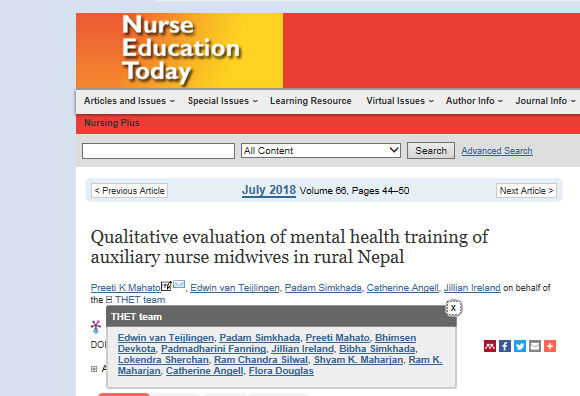


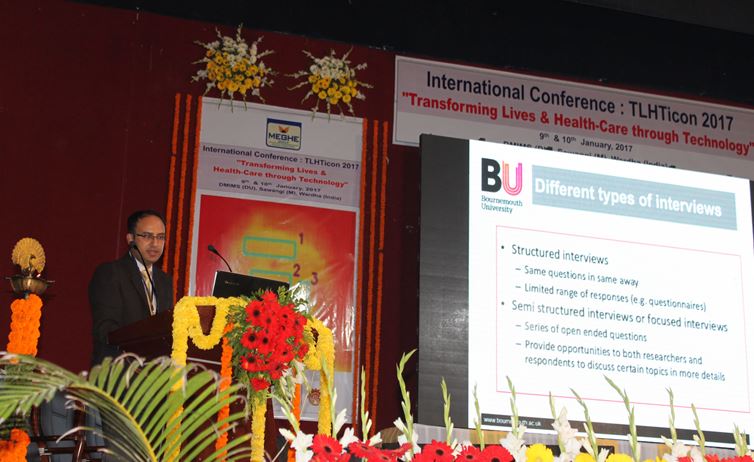











 Verbal autopsy paper published two days ago
 ESRC Studentships for 2027 Entry: Opportunity Now Open
 SONAMONI contributions to Safety Conference 2026 in South Africa
 Three CMWH presentations at Berlin conference
 Horizon Europe Cluster 3 (Civil Security for Society) 2026 Calls Now Open
 MSCA Doctoral Networks 2026 Call Information Webinar
 ESRC Festival of Social Science 2026: Application Deadline Extended to Thursday 25 June 2026
 Reminder: Register for the ESRC Festival of Social Science 2026 Information Session
 ECR Funding Open Call: Research Culture & Community Grant – Apply now
 ERC Advanced Grant 2025 Webinar
 Update on UKRO services
 European research project exploring use of ‘virtual twins’ to better manage metabolic associated fatty liver disease