Category / Social Work and Social Policy

CARING AND WORKING: Developing insights into the world of the working carer and disseminating through art

Part 2: Disseminating through art

Background
In the first part of our blog series we described the research we undertook on working carers and how after successfully applying for funding from a collaborative BEAF and BU pilot project, we were matched with artist Adilson Naueji to communicate findings. We now share some reflections from this collaborative project which happened during the summer of 2025.

About the artist

Adilson’s journey as an emerging artist began during the COVID lockdown as a way to relieve the stress of the situation. Drawing and painting allowed him to create powerful works that connected with his community and tell authentic stories.

His artistic practice focuses on human features, and his realist style enables him to explore the relationship between individuals and their surroundings. Through acrylic and oil paintings, he documents daily urban life and shares real histories.

He was attracted to the carer research work due to personal experience and also because it allowed him to focus on a new work that was not only visually appealing but also socially relevant.

The process

We firstly shared our research findings with Adilson – consisting of our original brief for the BEAF project and a cutdown version of an in-progress research article focusing on quotes from working carers. Helping visualise some of the issues that they experienced and perhaps providing some ideas about how they could be represented in an artwork whilst also providing some background on caring and working carers.

During July 2025 I had a very productive meeting with Adilson at the Lighthouse where he was presenting his first solo exhibition – BH5 Boscombe Beyond Your Eyes. He chatted to me about the exhibition and we also sat down over a coffee to discuss the project brief and how he thought he could visualise his initial ideas and thoughts.

After much searching, Adilson was able to locate a carer living in the region who was no longer working due to her caring responsibilities and the family member that they cared for – her husband, who had chronic fatigue and a range of other long-term health conditions – who both agreed to participate in the project.

In August, I had a follow-up meeting with Adilson where we chatted about progress on the project and was lucky enough (with my wife) to be able to view a work in progress at his studio to get a feel for the work itself, the size of the canvas and to chat about the areas of the painting still to be completed. This was very much appreciated, as showing the partially completed artwork to anyone prior to finalising was something that he wouldn’t normally do.

Connecting with the carer and her family and sharing their challenges was difficult emotionally, but Adilson approached this in a very empathetic way which really comes through powerfully in the final piece he produced.

Increasing empathetic understanding through art

Participants in our study (Pulman and Fenge, 2025) felt that it was difficult for some managers and colleagues to fully appreciate working carer experiences unless they had personal experience of a similar situation. This highlights the need for more training for line managers and the wider workforce about the needs and experiences of working carers to promote supportive working environments.

By disseminating findings through art, we wanted to engage with, and communicate to, employers across the region using a visual approach which would help to open a window on the hidden world of the working carer.

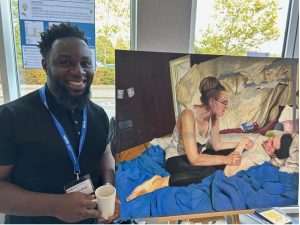
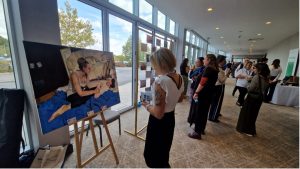
To date, we have been able to display the finished artwork at the NIHR ARC Wessex Annual Event in October with Adilson in attendance to discuss his painting with event attendees.
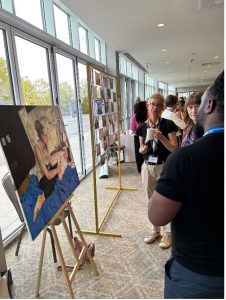
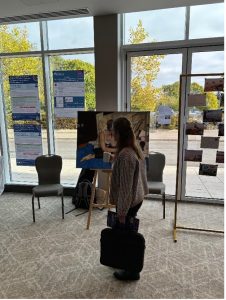
   

This highlighted how impactful, stimulating and thought provoking art can be as opposed to the usual blend of event posters and PowerPoints we, as researchers, quite often utilise to display academic findings – sometimes stopping people in their tracks as I witnessed on the day.
Next Steps

In addition to any forthcoming plans between BU and BEAF to display project outputs, we are also hoping to display the artwork again at an event on Carers Rights Day on 19th November and an exhibition at the Lighthouse in Poole during January 2026.

We are also interested in how we can best help Adilson to move further into the crossover areas of health research and art outputs by looking at potential funding streams (arts council and health funding pathways) which he might be able to access beyond this current project, as this area seems like it has incredible potential in highlighting qualitative data in a visually arresting and reflective way.

Positives of collaborating with local artists

Disseminating research can sometimes be incredibly dry as a subject, where important findings might be hidden digitally behind a journal firewall within reams of text and quotes, or worse, be highlighted in a staid or complex web of slides risking losing key research messages to (sometimes) disinterested attendees.

Art offers a tangible, visually impacting way of connecting an audience to a research message on a deeper level which is likely to stay longer in the memory. Mention of da Vinci’s Mona Lisa or Munch’s The Scream will immediately trigger a direct visual memory in a person in a way that text might not always be able to accomplish.

There might be significant challenges in the process of linking these ideas, but as Adilson notes, these are worth overcoming:

Dealing with things as the sensitive matters of carers, finding the subject, and short deadlines increases the challenge and probably influenced the final result of the painting. On the other hand, it was the most educational project I ever worked on, and diving into the universe of carers you cannot walk out indifferent. I feel honoured to give face to the research you are doing in this field, and I truly hope the artwork serves the purpose in real life for which it was made; to raise awareness about carers, starting conversations at different levels of our society.

Looking at more innovative ways of cascading research messages via a long-standing medium like art seems like an incredibly simple and powerful step forward in increasing research impacts and prompting a discussion with an audience in retrospect. So if you are a post-doctoral researcher, seeking a new way of disseminating research evidence, what are you waiting for?

With thanks to:

  • Artist Adilson Naueji.
  • The working carer research project was supported by the NIHR Applied Research Collaboration (ARC) Wessex.
  • The artwork created was supported by BEAF Arts Co and Bournemouth University.

More information on our project:

Professor Lee-Ann Fenge – lfenge@bournemouth.ac.uk

Dr Andy Pulman – apulman@bournemouth.ac.uk

https://nccdsw.co.uk/clusters/research/carer-research

https://www.arc-wx.nihr.ac.uk/social-care

Pulman, A. and Fenge, L.-A., 2025. Caring and working: developing insights into the world of the working carer. Health & Social Care in the Community. https://onlinelibrary.wiley.com/doi/10.1155/hsc/5541190

https://www.instagram.com/adilson_naueji/

New PhD publication on Nepal’s migrant workers

Congratulations to BU postgraduate student Yagya Adhikari, who has just been informed by the editor of the Journal of Immigrant & Minority Health that his paper “Parental migration for work and psychosocial problems among left-behind adolescents in Nepal” [1] has been accepted for publication.  Yagya’s PhD is based in the Faculty of Health, Environment & Medical Science.  He is supervised by Dr. Pramod Regmi and Prof. Edwin van Teijlingen with support from Mr. Sudip Khanal, Lecturer in Biostatistics, at Manmohan Memorial Institute of Health Sciences (MMIHS) in Kathmandu.  This is the second paper from Yagya’s PhD the first one was published at the start of his PhD studies [2].  Both papers are published in Open Access journals and therefor will be freely available to read by anyone in the world with internet access.


References:

  1. Adhikari, Y.R., van Teijlingen, E., Regmi, P.R., Khanal, S., Parental migration for work and psychosocial problems among left-behind adolescents in Nepal, Journal of Immigrant & Minority Health (forthcoming)
  2. Adhikari, Y.R., Regmi, P.R., Devkota, B., van Teijlingen, E.R. (2022) Forgotten health and social care needs of left-behind families of Nepali migrant workers. Journal of Health Promotion, 10(1):1–4. https://doi.org/10.3126/jhp.v10i1.50976

CARING AND WORKING: Developing insights into the world of the working carer and disseminating through art

Part 1: Developing insights into the world of the working carer

Background
Earlier this year we completed a study exploring the experiences of working carers in the South of England – part of a larger research project funded by NIHR ARC Wessex exploring carers needs, experiences and ideas about improving carers involvement in research (Pulman and Fenge, 2025).

A carer is anyone who provides unpaid care to a family member, partner, or friend who is unable to manage without support due to an illness, frailty, disability, mental health issue, or addiction.

Caring, unpaid, for older, disabled or chronically ill relatives or friends is something most of us will experience in our lives – all of us has a two in three chance of doing so. (HM Gov, 2023)

Carers who work in addition to their caring responsibilities – known as working carers – often face an ongoing struggle when trying to combine the dual demands of providing care with paid employment. There are nearly 3.7 million working carers in England and Wales; 2.6 million (72%) of these working in full-time paid employment alongside their caring roles, whilst about 1.6 million carers have problems combining work and care (Austin and Heyes, 2020).

The purpose of our research was to understand the experience of being in paid employment whilst providing unpaid care to someone, including adjustments made to employment, support provided by employers and support agencies, the impact on the carers perceived wellbeing and ideas for improving their involvement in carers research.

Realities of combining working with caring

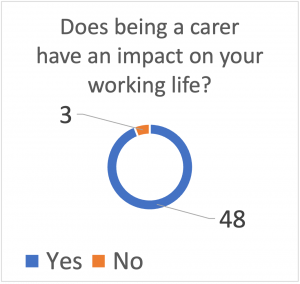
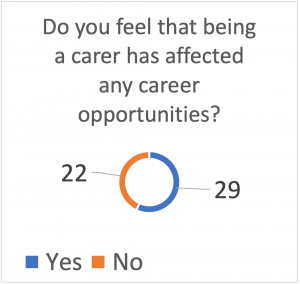
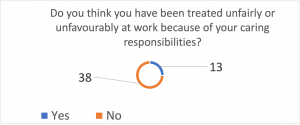
Initial exploratory PPI work was carried out between September and December 2024 – including n=6 unpaid carers attending a one and a half hour facilitated workshop where they contributed to the design and development of the initial draft of the online questionnaire. Data was collected between December 2024 and May 2025, with n=51 working carers completing our online survey.

We found:

Several themes emerged concerning the carers experience at work, the support mechanisms in place which were helpful to them, issues and challenges experienced and ranked suggestions for future research to develop further understanding of the world of the working carer.

Our research highlighted the importance of developing more humanised ways of employers understanding a working carer’s needs and to meaningfully assist them in meeting their full potential within the workforce.

Employers need to think and plan differently for people with unpaid caring responsibilities and realise that working carers need more:

  • ENGAGEMENT from employers about how they can stay in work and be supported.
  • EMPATHY from employers regarding their caring responsibilities and demands.
  • EQUALITY from employers, showing respect and giving carers opportunities to thrive.

Increasing empathetic understanding

Participants in our study (Pulman and Fenge, 2025) felt that it was difficult for some managers and colleagues to fully appreciate working carer experiences unless they had personal experience of a similar situation. This highlights the need for more training for line managers and the wider workforce about the needs and experiences of working carers to promote supportive working environments.

Enhanced training about working carer lived experience, including examples from film and television, innovative higher education eLearning techniques, mixed media, or listening to carer experiences face-to-face could be very beneficial in helping managers and the wider workforce to become more aware of and immersed in the lifeworld of a carer (Todres and Galvin, 2006; Pulman, Todres and Galvin, 2010).

With these approaches in mind, we wanted to reach corporate hearts and change ‘head in the sand’ mindsets by evoking a sense of common connection. To engage with, and communicate to, employers across the Wessex region using innovative visual approaches which would help to open a window on the hidden world of the working carer.

An opportunity to collaborate with local artists

In June, Professor Mel Hughes and Dr Gladys Yinusa invited expressions of interest from university researchers to work with local artists to produce a creative output which would help maximise the reach and impact of current research projects. The pilot project being a collaboration with BEAF Arts Co, an open-access, multi-art form festival and year-round arts programme based in Boscombe.

BEAF (2025) are an innovative and independent organisation of freelancers and volunteers, who feel passionately that culture changes communities for the better and there is a strong evidence base for creative outputs being an inclusive tool for reaching and involving communities in research and for extending the reach of research findings, including to community, academic, policy and practice audiences.

The pilot was developed to build connections with a local artist network who would be involved in selecting their preferred research project – matching the research team with a local artist and then providing funding to cover artist fees and materials. After successfully applying for funding for our research project, we were matched with artist Adilson Naueji to communicate findings.

We look forward to sharing reflections from this collaborative project in the second part of this blog post series soon.

With thanks to:

  • Artist Adilson Naueji.
  • The working carer research project is supported by the NIHR Applied Research Collaboration (ARC) Wessex.
  • The artwork being created is supported by BEAF Arts Co and Bournemouth University.

More information on our project:

Professor Lee-Ann Fenge – lfenge@bournemouth.ac.uk

Dr Andy Pulman – apulman@bournemouth.ac.uk

https://nccdsw.co.uk/clusters/research/carer-research

https://www.arc-wx.nihr.ac.uk/social-care

References:

Austin, A. and Heyes, J., 2020. Supporting working carers: How employers and employees can benefit. CIPD/University of Sheffield.

BEAF Arts Co (2025). BEAF Arts Co Homepage, available online at: https://gotbeaf.co.uk/ (accessed September 30, 2025).

HM Gov (2023). Carers Week 2023: crunching the numbers… HM Gov Social Care Blog, available online at: https://socialcare.blog.gov.uk/2023/06/09/carers-week-crunching-the-numbers/ (accessed September 30, 2025).

Pulman, A. and Fenge, L.-A., 2025. Caring and working: developing insights into the world of the working carer. Health & Social Care in the Community.

Pulman, A., Todres, L., & Galvin, K. (2010). The carer’s world: An interactive reusable learning object. Dementia9(4), 535-547.

Todres, L., & Galvin, K. (2006). Caring for a partner with Alzheimer’s disease: Intimacy, loss and the life that is possible. International Journal of Qualitative Studies on Health and Well-being, 1, 50–61.

BU paper among top 20 most cited papers

The international journal Sociological Research Online ranked a paper written by Bournemouth University academics in its top twenty most cited papers in the past three years.  The methodological paper ‘Using a range of communication tools to interview a hard-to-reach population’ has as lead author Dr. Orlanda Harvey in the Faculty of Health, Environment & Medical Science.

Reference:

  1. Harvey, O., van Teijlingen, E., Parrish, M. (2024) Using a range of communication tools to interview a hard-to-reach population, Sociological Research Online 29(1): 221–232 https://journals.sagepub.com/doi/pdf/10.1177/13607804221142212

Reflections on My Social Work Summer Internship

For six weeks of my summer between the 2nd and 3rd year of my Social Work degree I completed an internship with the aim of improving my skills relating to the facilitation of PPI (Patient and Public Involvement) workshops and working with people, as well as expanding my knowledge of the issues women of ethnic minority/migrant communities face.

Week 1: I spent this first week getting to know the professionals I would be working with throughout the six weeks and forming positive and trusting relationships with them. I also worked on getting to grips with what the project was, what my role as the intern was, and how the world of PPI works.

Week 2: The majority of this week I read information/research on the various methods we could use for the workshops and general project. I also met with more professionals and learnt about the PPI process and benefits. To prepare further for the workshops I, along with two experienced colleagues (including my internship supervisor), selected the participants we would talk with in the workshops.

All the above information then started to be drafted into the report document to explain the method, reasoning and research behind the project.

Whilst we originally aimed for one (maybe two) workshop groups where we would use the methods I researched within the week, to engage the participants in a productive conversation, we ended the workshop week with an entirely different plan, two workshop groups, a few one-to-one conversations and email responses for those unable to attend.

Week 3: This week saw me preparing for the workshops by talking to other professionals more experienced in the field, amending the questions we aimed to use to engage the participants in a really positive and productive conversation and ensuring that the workshop space would be as equal, fair and safe as we could make it. I learnt this week, the importance of not guaranteeing a safe space as this removes all space for human error. This can make others uncomfortable as they fear making a mistake (and their apology not being accepted).

Week 4: Week four was workshop week. During this week two large group workshops were and four, one-to-one workshops were conducted. I learnt to co-facilitate workshops with both people I do and do not know, and how to engage participants in difficult conversations. I learnt the importance of ensuring participants felt validated and accepted in the space. Each of these workshops were transcribed and written up into a large document collectively.

Week 5: I, along with my internship supervisor, conducted a thematic analysis during this week (putting all the participants contributions and ideas from the workshops into different themes to make the report easier to write and read as it flows easier). A few last minute workshops were held in this week (one-to-one) and I also started writing up our findings in the report.

Week 6: In week six, I, along with my internship supervisor, wrote the majority of the report draft to be sent to the project leads. I also created a PowerPoint presentation to present the findings from this project to the project leads and outline my learning experiences and how they will aid in my final year of university and future career.

Lessons I learnt:

  • Flexibility (I learnt to be flexible BEFORE the workshops began but also DURING (where our method did not fit with the participants we were talking to, especially during one-to-one conversations)
  • Time management
  • Working with others
  • Co-facilitating workshops with people I do and do not know and ensuring the participants feel accepted in the space and their feelings/experiences validated
  • Presenting my ideas to professionals I do not know
  • Professional report writing
  • Ensuring the space is as safe as possible without guaranteeing a safe space for all

This project has taught me a significant amount about working with Women from ethnic minority/migrant communities and the challenges they face both in research but also in daily life. I am sure this understanding as well as the knowledge I gained about working with other professionals and presenting my ideas to them effectively, will stand me in good stead for my final university year and future career in social work.

Megan Jukes, Social Work Student

A note from Dr Orlanda Harvey:
‘It was a joy to support Megan in developing her research skills, and work alongside her on this project. She was very committed to understanding what was required and her confidence grew in leaps and bounds over the course of the project. I am very grateful to the many colleagues at BU who  gave up their time to help support her learning and development, and I am particularly grateful for the help of Kate Jupp as without her the PPI sessions would not have happened. The report that has been drafted will be very helpful to anyone seeking to understand how to engage participants in research in a meaningful way.

New Centre for Midwifery & Women’s Health (CMHW) paper on Nepal

Last week the international Journal of Water, Sanitation and Hygiene for Development emailed to tell that our paper ‘Exploring handwashing knowledge and practice among lactating mothers in Kathmandu’s slum communities[1] had been accepted for publication.

It is widely known that poor access to good quality water, sanitation, and hygiene (WASH) lead to high morbidity in young children. The paper reports on a cross-sectional study conducted with 127 breastfeeding mothers in two slum settlements in Nepal’s capital.  It found that most had a good knowledge of WASH and appropriate washing of hands. However, the prevalence of illness among children whose mothers had only basic education was 26% higher than those whose mothers had completed secondary education. Family income and hand-washing practice were also significantly associated with child health (p < 0.01). Nearly three in four (73.2%) of children had experienced health issues, particularly diarrhoea, in the past half year.

The authors concluded that strengthening maternal hand-hygiene education programmes, particularly for lactating mothers, and improving WASH infrastructure are necessary, as well as promoting affordable hand-washing solutions in urban slums.

Prof. Edwin van Teijlingen


Reference:

  1. Devkota, G.P., Sharma, M.K., Sherpa, S., Khanal, T.R., Devkota, B., van Teijlingen, E. (2025) Exploring handwashing knowledge and practice among lactating mothers in Kathmandu’s slum communities, Nepal, Journal of Water, Sanitation and Hygiene for Development, 15:1-10. doi: 10.2166/washdev.2025.084

Nepal migrant workers returning from India

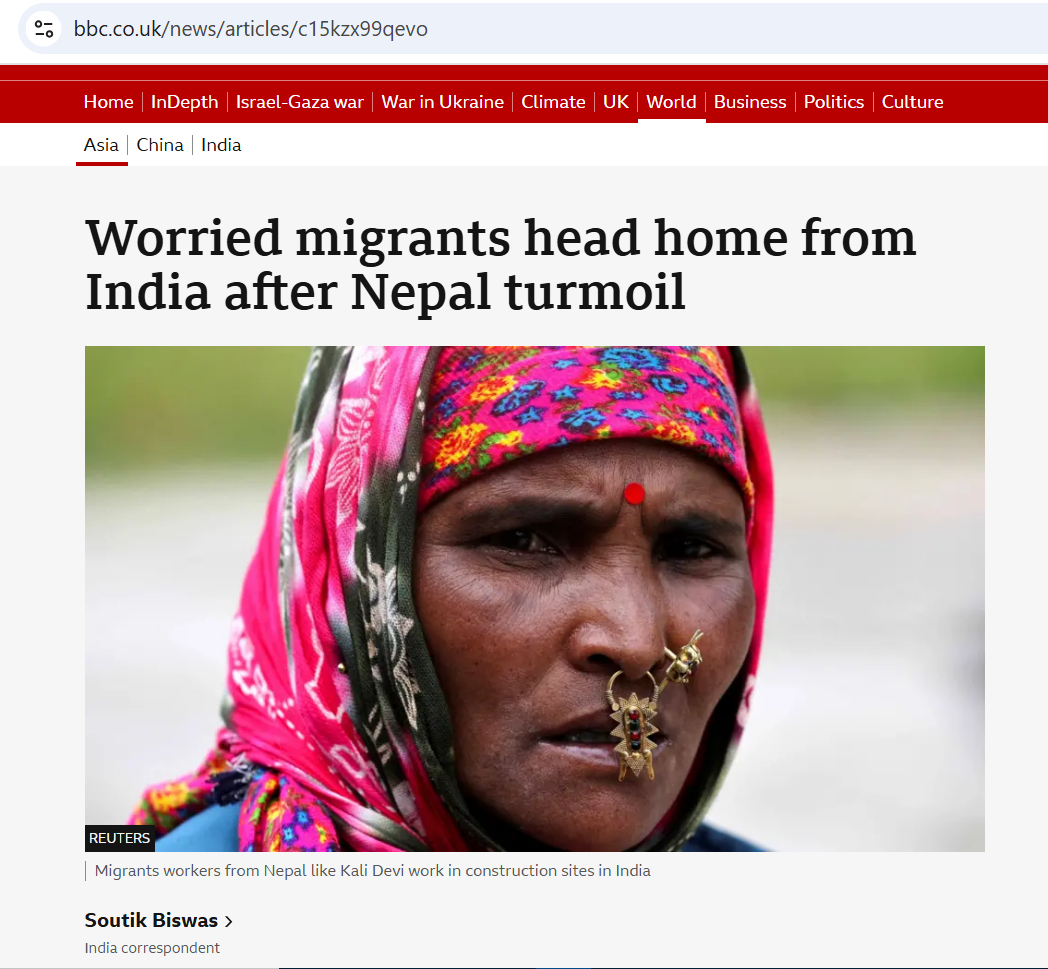
Nepal has been in the world news this week for the wrong reasons, with young protesters burning down the parliament, and damaging many government building in all seven provinces.  Some 30 young people died in the process and and thousands of sometimes dangerous prisoners were freed.   After the political and social upheaval in the country this past week, Nepalese migrant workers are beginning to return home from India to be with their families. Today (Friday 12th September) the BBC online reported under the heading ‘Worried migrants head home from India after Nepal turmoil‘.

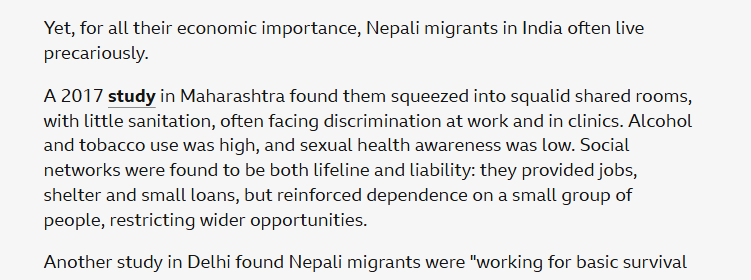
The journalist interviewed both migrant workers and students from Nepal living in India.  The piece also cited several studies on Nepalese migrant workers in India, including a Bournemouth University (BU) study with the title ‘The Health of Nepali Migrants in India: A Qualitative Study of Lifestyles and Risks[1].  This publication is one of the many published papers on the health and well-being of Nepalese migrant workers conducted in BU’s Faculty of Health, Environment & Medical Sciences.  The lead author of this paper in theInternational Journal of Environmental Research and Public Health is Dr. Pramod Regmi, Principal Academic in International Health. 


References:

  1. Regmi PR, van Teijlingen E, Mahato P, Aryal N, Jadhav N, Simkhada P, Zahiruddin QS, Gaidhane A. (2019) The Health of Nepali Migrants in India: A Qualitative Study of Lifestyles and Risks. Int J Environ Res Public Health. 16(19):3655. doi: 10.3390/ijerph16193655.


Health promotion paper read 8,000 times

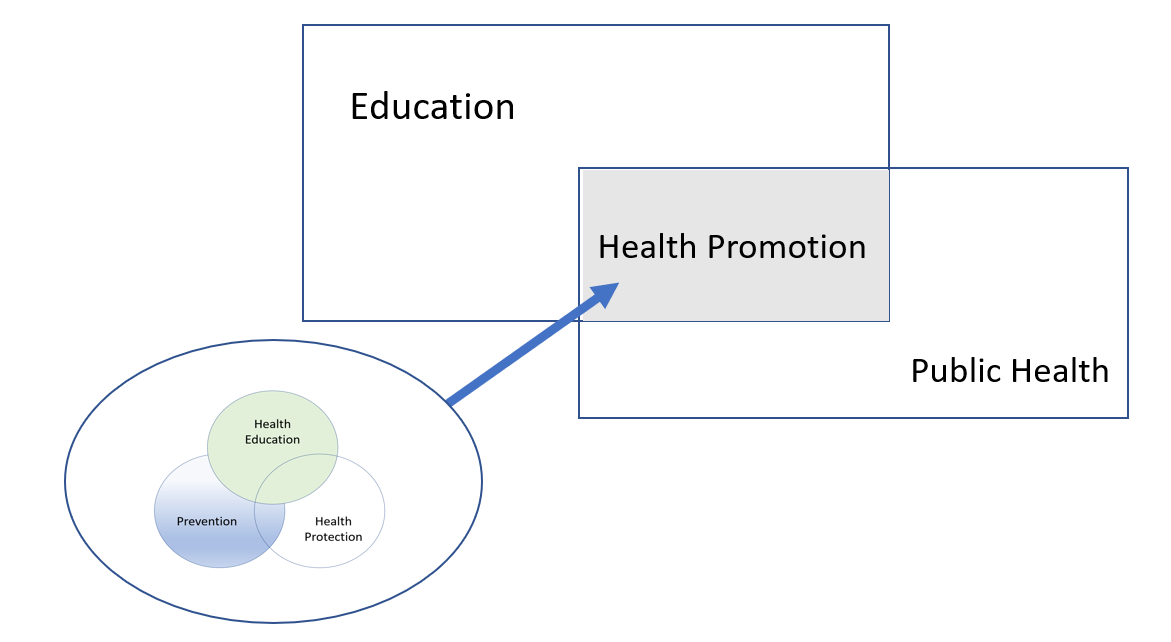
This morning ResearchGate informed us that our paper ‘Understanding health education, health promotion and public health[1] which was published in 2021 has been read 8,000 times.  This thinking piece delves into the differences between the concepts of: (a) health education; (b) health promotion; and (c) public health. This confusion does not limit itself to the individual terms, but also to how these terms relate to each other. Some use terms such as health education and health promotion interchangeably; others see them clearly as different concepts. The paper starts by outlining the authors’ understanding of these individual terms.

They suggest how the five principles of health promotion as outlined by the World Health Organization (WHO, 1984) fit into Tannahill’s (2009) model of three overlapping areas: (a) health education; (b) prevention of ill health; and (c) health protection. Such schematic overview places health education within health promotion and health promotion itself in the centre of the overarching disciplines of education and public health.  The authors hope their article helps reduce confusion among all those interested in our discipline, including students, educators, journalists, practitioners, policymakers, politicians, and researchers.


Prof. Edwin van Teijlingen

CMWH


Reference:

  1. van Teijlingen, K. R., Devkota, B., Douglas, F., Simkhada, P., & van Teijlingen, E. R. (2021). Understanding health education, health promotion and public health. Journal of Health Promotion9(01), 1–7. https://doi.org/10.3126/jhp.v9i01.40957


Top baby names in England and Wales in 2024

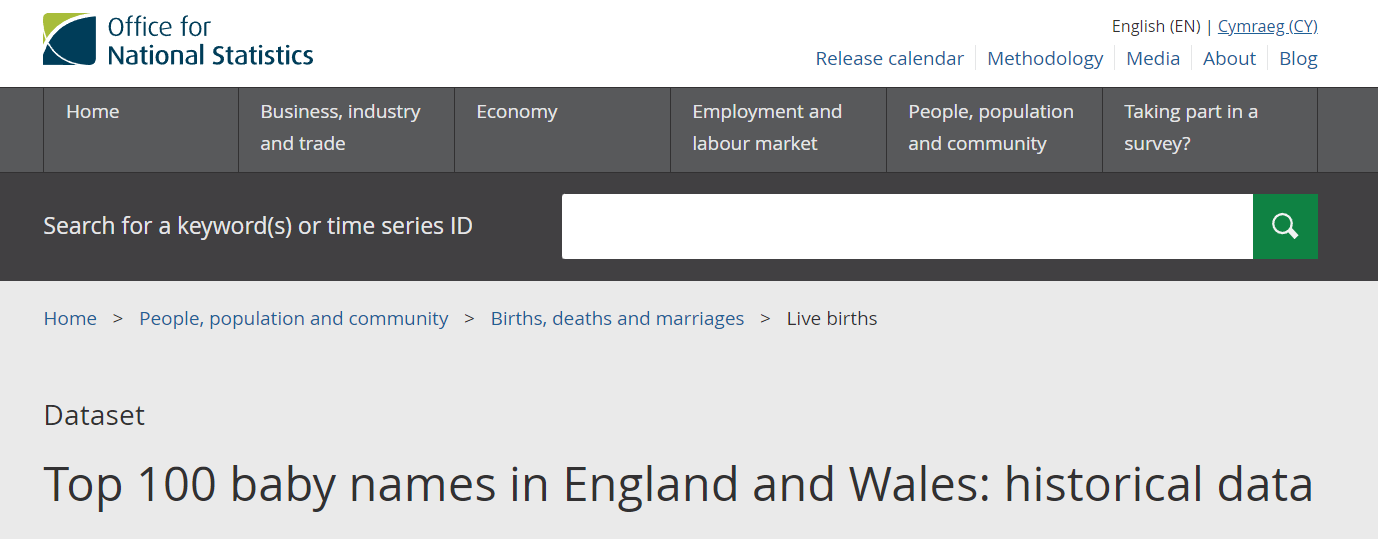
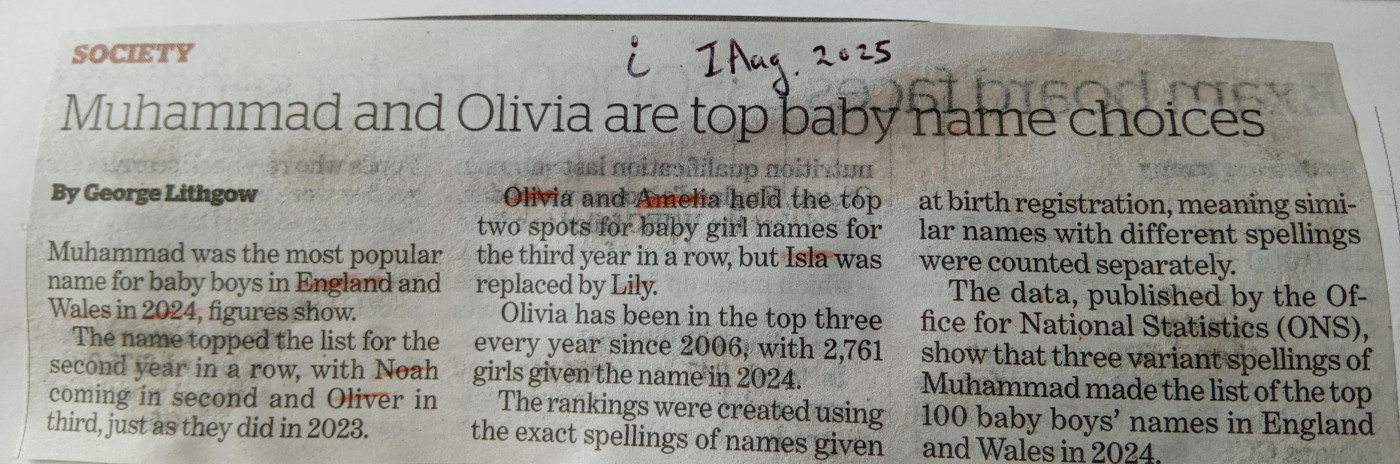
Earlier this week the Office for National Statistics (ONS) published its annual list of the most popular baby names for boys and girls.  The top three names for girls were: Olivia, Amelia and Lily and for boys these were Muhammad, Noah and Oliver.  Interestingly two different spellings of Muhammad, namely Mohammed and Muhammed also made it to the top hundred most common names.  There is a clear sociology in the naming of babies.  First, there is an element of culture and religion, but there is also a clear element of fashion.

To make a simple comparison I looked at the top three most common names for girls and boys in neighbouring the Netherlands.  According to Dutch official statistics the top girls’ names were in 2024: Emma, Olivia and Lily, and the top three boys names were: Noah, Luca and Lucas. Interestingly, the top name in England and Wales Muhammad is not even in the top 40 most popular boys’ names in the Netherlands, and neither are Mohammed and Muhammed.  However, whereas England and Wales listed three different spellings of Muhammad, the Netherlands had six different ones (these were names used at least ten times that year): Muhammad, Mohammed, Mohamed, Mohamad, Muhammed, and Muhammad.  All variants together made it the fourth most popular boys name in the Netherlands.

Charles Dickens | Mystery of Edwin Drood | 9780140439267 | Daunt Books

To highlight the fashion element of naming babies, the name Edwin was not listed on either country’s list.  The ONS website also offers historic lists of top 100 names for baby boys and girls for 1904 to 2024 at ten-yearly intervals.  The very last year Edwin was in the top 100 boys’ names was in 1944 when it reached number 89 in the top 100!


Prof. Edwin van Teijlingen

Professor of Reproductive Health, Centre for Midwifery & Women’s Health

Conducting training in Kathmandu by BU academic

This week Dr. Pramod Regmi, who is Principal Academic in International Health in the Faculty of Health & Social Sciences, taught a CPD refresher workshop on systematic reviewing in Kathmandu.  This workshop is part of our long-standing Memorandum of Agreement between Bournemouth University (BU) and Manmohan Memorial Institute of Health Sciences (MMIHS) in Nepal.  The teaching aimed to refresh knowledge and provide practical training on various aspects of the systematic review process, including literature searching, study selection, data extraction, critical appraisal, and synthesis. The programme, which included both staff and Master students, was jointly organized by MMIHS and BU.

May be an image of 8 people and text that says "HEALTHSCIENCES SCIENCES अफहेलसाराइन्सेज હહર इन्सज"

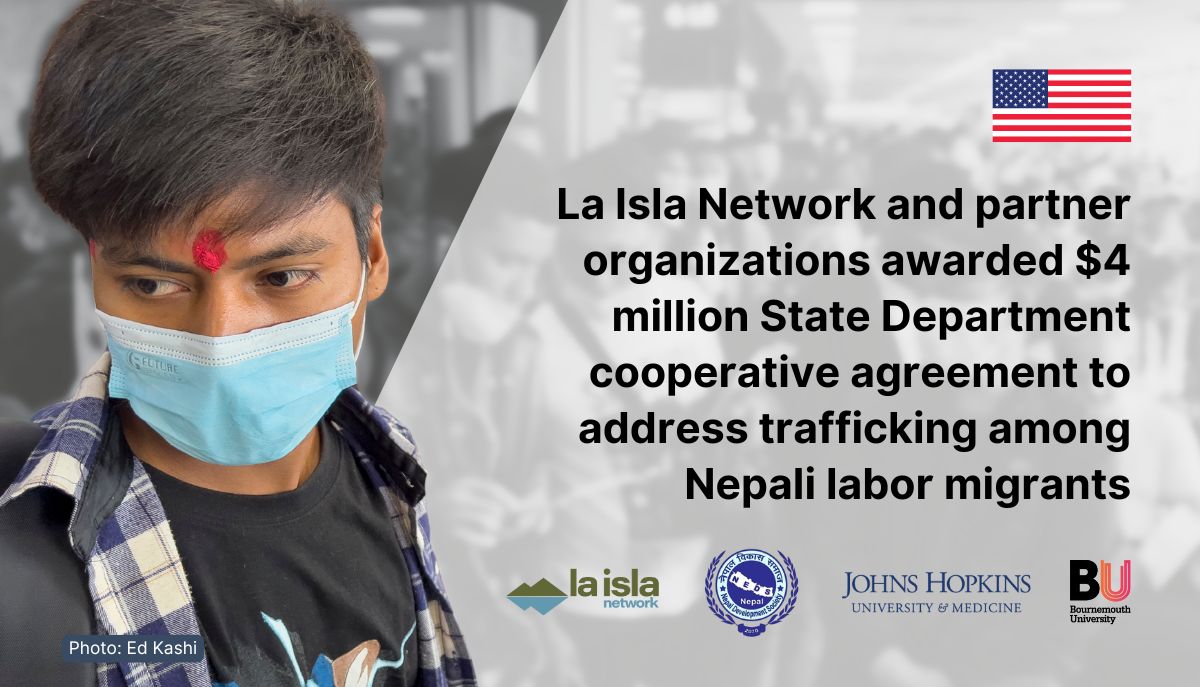
The staff at MMIHS also welcome BU’s Ph.D. student Ms. Anjana Paudyal.  Anjana is currently in Nepal as part of the UK’s Turing Scheme Traineeship Programme.  Over the past few years MMIHS have kindly hosted several BU students who came to Nepal under the Turing Scheme.  Anjana’s Ph.D. focuses on human trafficking, which is form of modern slavery.  Despite being a global problem, modern slavery is understudied and poorly understood. Victims of modern slavery are exploited and can experience significant physical, psychological, or sexual, and reproductive health problems. Until recently, there has been little research in this field, especially in low-income countries such as Nepal.  Anjana”s Ph.D. fits in with BU’s collaboration with the US-based La Isla Network, the Johns Hopkins University Bloomberg School of Public Health and the Nepal Development Society (for details click here!).   Led by La Isla Network, we are leading the first-ever international effort to research and address trafficking among Nepalese labour migrants. The work is funded by a $4 million cooperative agreement awarded by the U.S. Department of State’s Office to Monitor and Combat Trafficking in Persons, International Programs.


Prof. Edwin van Teijlingen

Centre for Midwifery & Women’s Health

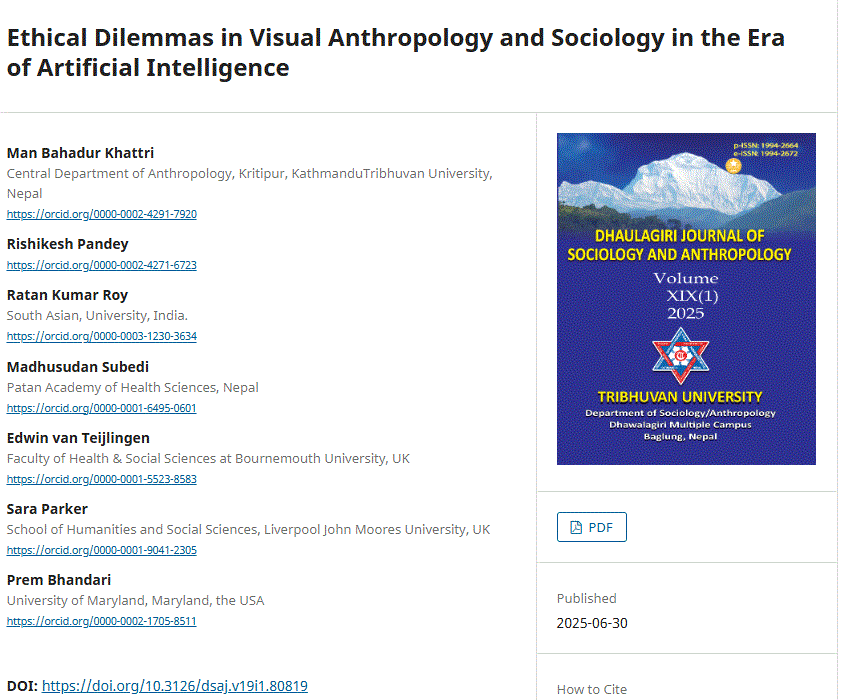
AI and Visual Anthropology & Sociology

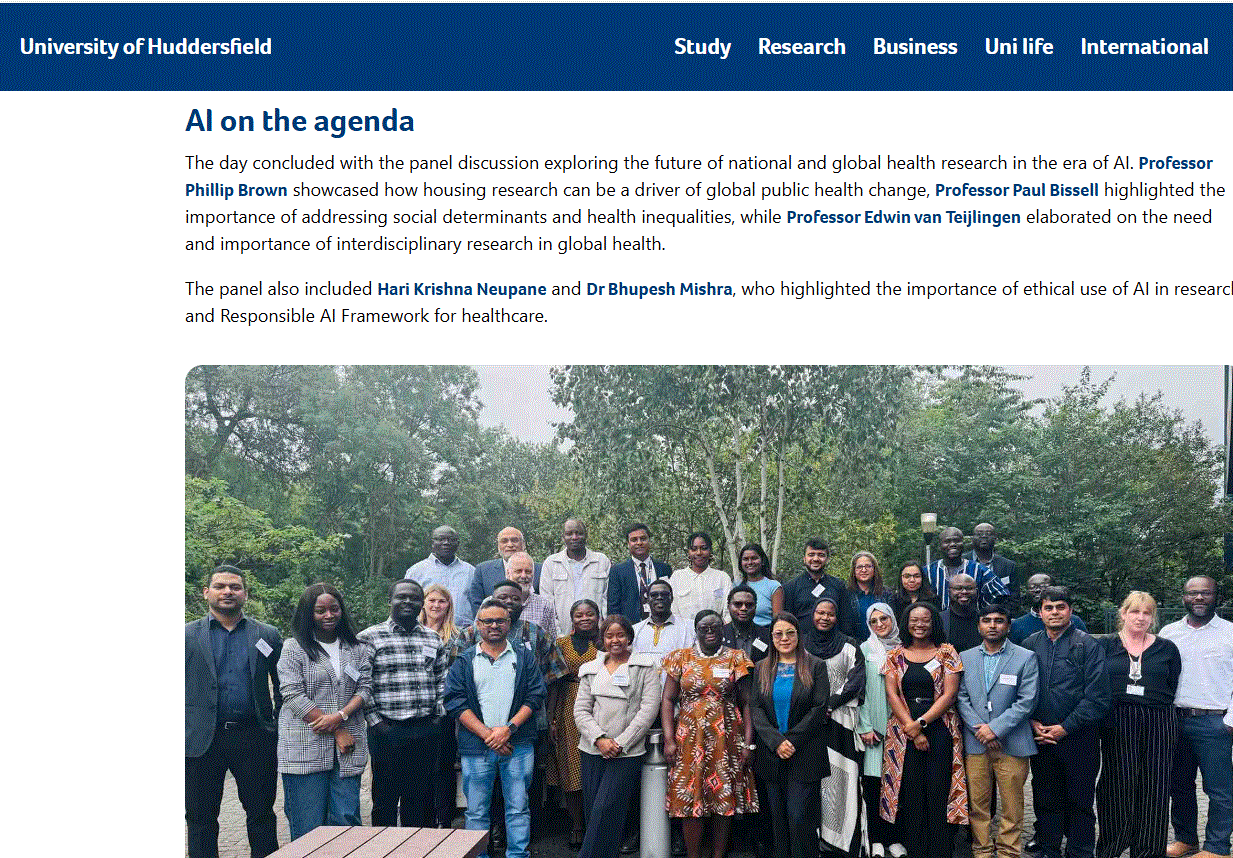
Scholars worldwide are in dialogue about using Artificial Intelligence (AI) in various fields of research.  Of course, AI can make certain kinds of work more efficient, this is also the case in social science research. Although ethical use of AI is still fuzzy, the use of AI in visual anthropological and sociological research that entails the Interpretive Approach raises several questions. The editorial  team of Dhaulagiri Journal of Sociology and Anthropology, including BU’s Professor Edwin van Teijlingen, just published a research note raising three key questions: First, are researchers satisfied with the interpretation (the meaning created) by AI, i.e., the authenticity of the interpretation?; (b) Secondly, can AI reach the depth of the details of the visual object being interpreted? And thirdly, what ethical issues would AI-based research encounter if AI were highly supportive?

They agree that answering these questions is not easy. Since a detailed analysis of these components needs rigorous research work, we consider issues that will be the basis for further research in this editorial note. Hence, the purpose of this editorial note is to bring the research agenda to the forefront of researchers for further investigation rather than answering specific research questions mentioned above.


Reference:

  1. Khattri, M. B., Pandey, R., Roy, R. K., Subedi, M., van Teijlingen, E., Parker, S., & Bhandari, P. (2025). Ethical Dilemmas in Visual Anthropology and Sociology in the Era of Artificial Intelligence. Dhaulagiri Journal of Sociology and Anthropology19(1), i-v. https://doi.org/10.3126/dsaj.v19i1.80819

Academics write for newspaper in Nepal

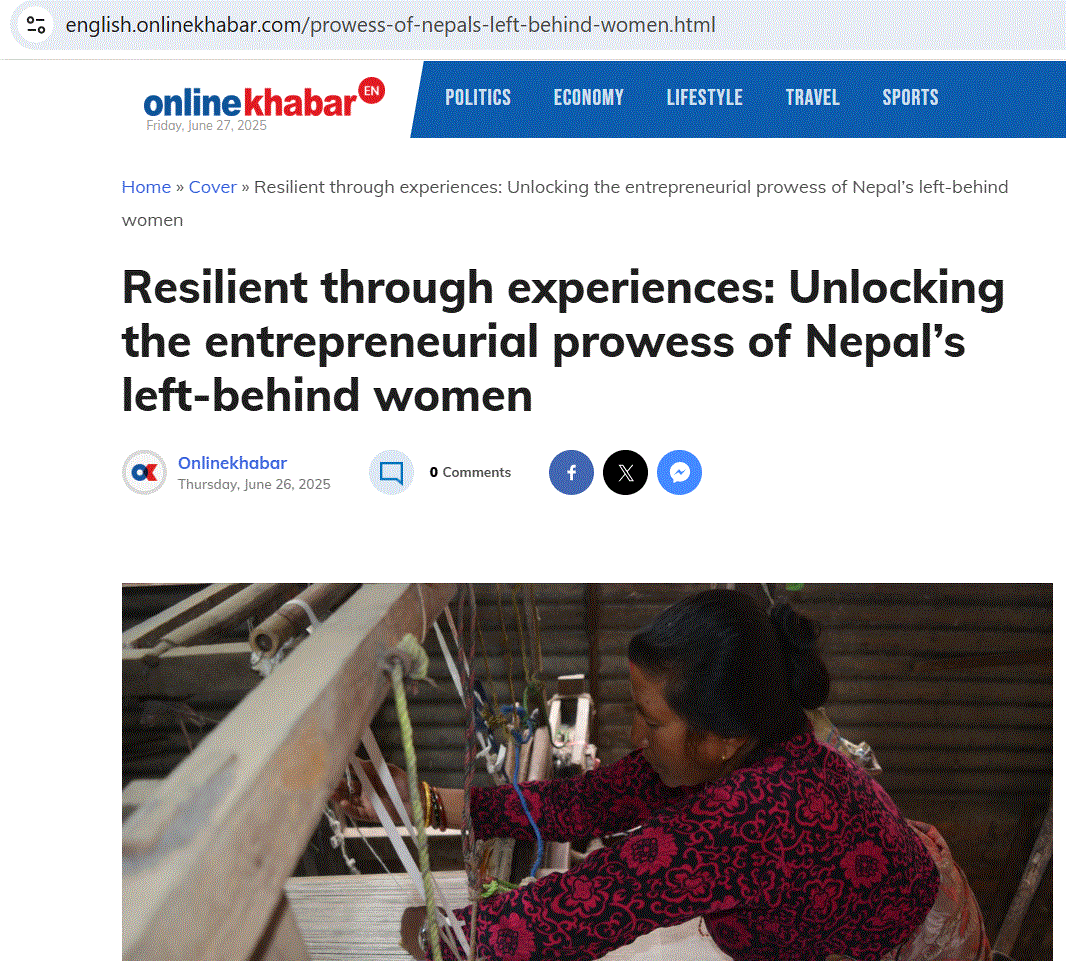
Yesterday the online newspaper Online Khabar in Nepal published an opinion piece in English written by three Bournemouth University academics working with a colleague in Kathmandu.  This interdisciplinary piece ‘Resilient through experiences: Unlocking the entrepreneurial prowess of Nepal’s left-behind women‘ brings together ideas gained from many different studies and disciplines.  The three authors from Bournemouth University are: Dr. Sukanya Ayatakshi-Endow, Prof. Edwin van Teijlingen, and Dr. Pramod Regmi, and they collaborated with Dr. Rashmee Rajkarnikar who is based at Nepal’s oldest and largest university, Tribhuvan University.  The four authors brings insights from economics, business studies, sociology, women’s studies, migration studies and health.

New paper published on disability in women & girls

Yesterday (25 June) the online journal PLoS One published ‘Life-time experience of violence among women and girls living with disability in Nepal‘ our latest study on disability in Nepal [1].  This cross-sectional study was conducted in 28 municipalities representing all seven provinces as well as all three ecological regions of Nepal. A total of 1,294 women and girls with disability aged 15–59 years participated in  2021. We trained local enumerators using the KoBo application on smartphones or tablets. Both written and oral informed consent was sought from all participants. Cross-tabulations were performed in STATA 18 to determine the distribution of the prevalence of violence. Also, bivariable and multivariable logistic regression models were fitted to establish association between the participants’ characteristics and odds of experiencing violence.

Overall, 457 (35.32%) women living with disabilities had ever experienced violence at a point in their lifetime. Psychological/emotional violence was the most prevalent violence (74.40%) followed by physical violence (31.07%) and denial of services (28.67%). Age was positively associated with the likelihood of experiencing violence. Women belonging to the Brahman/Chhetri ethnic group had reduced odds of violence [AOR = 0.56; 95%CI: 0.37–0.85] compared to Hill Dalits. Divorced or separated women showed a markedly higher likelihood of experiencing violence [AOR = 6.69; 95%CI: 2.31–19.40] compared to currently married women. Participants who had not witnessed violence against other women exhibited significantly higher odds of experiencing violence [AOR = 1.86; 95%CI: 1.20–2.89]. Women living in the Koshi province [AOR = 4.04; 95%CI: 2.54–6.42], Madhesh province [AOR = 2.16; 95%CI: 1.15–4.08] and Bagmati province [AOR = 2.21; 95%CI: 1.41–3.46] reported significantly higher odds of experiencing violence compared to those in Karnali.

The paper concludes oncludes that age, ethnicity, marital status, and provincial residence are significant predictors of violence among women and girls living with disability in Nepal. Interventions aimed at addressing violence against women living with disability in Nepal must prioritize older women and those who were previously married. Also, policy-makers may want to consider giving priority must be given to those provinces where the prevalence and risk of experiencing violence is highest.

The study was funded The United Nations Women Trust Fund,  and the paper is freely available in the Open Access journal.  We previously published on research into disability in Nepal in 2023 [2].

Prof. Edwin van Teijlingen

Centre for Midwifery & Women’s Health

Visiting Faculty, Centre for Disability Studies, Mahatma Gandhi University, Kerala, India.


References:

  1. Simkhada P, Basnet S, Sharma S, van Teijlingen E, Wasti SP, Dahal T, et al. (2025) Life-time experience of violence among women and girls living with disability in Nepal. PLoS One 20(6): e0326659. https://doi.org/10.1371/journal.pone.0326659.
  2. Simkhada, P, Shyangdan, D, van Teijlingen E, Kadel, S, Stephen, J., Gurung, T. (2013) Women’s Knowledge & Attitude towards Disability in Rural Nepal. Disability & Rehabilitation 35(7): 606-13. http://informahealthcare.com/doi/abs/10.3109/09638288.2012.702847