Yolanda Barrado-Martín from the Psychology Department and Ageing and Dementia Research Centre (ADRC) attended the 47th edition of the British Society of Gerontology in Manchester (UK) from 3rd July to 6th July 2018.
International researchers from different disciplines gathered in Manchester to learn about projects under the theme “Ageing in an Unequal World: Shaping Environments fro the 21st Century”. This was a very well attended conference (with a waiting list), with up to 17 parallel sessions. Dementia had a relevant space in this conference with different sessions highlighting the use of diverse interventions to improve the quality of life of people living with dementia and those providing support such as facilitating decision making processes, exploring environmental adaptations and supporting home-care for those willing to stay at home.
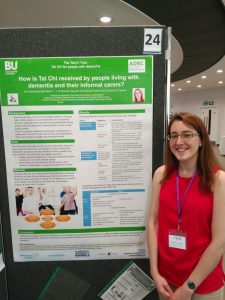
Yolanda Barrado-Martín had an oral presentation entitled: “How is Tai Chi received by people living with dementia and their informal carers?” Those attending the session showed their interest in the topic and asked questions about people living with moderate dementia’s involvement in the classes and about the Ransomised Controlled Trial Phase of the study. This was a great experience for Yolanda who presented her PhD pilot results to a friendly international audience.
The ADRC’s work was also represented by Dr Michele Board who gave a presentation on “Evaluating the impact of the Virtual Reality app ‘A Walk Through Dementia’, and Mananya Podee who discussed leisure activity, arts and social inclusion for those with dementia.
Participation in the BSG conference was a valued addition in knowledge regarding psycho-social interventions for people living with dementia and a great opportunity to network with researchers from the gerontology background. Yolanda’s attendance to this conference was possible thanks to one of the Santander Mobility Awards.
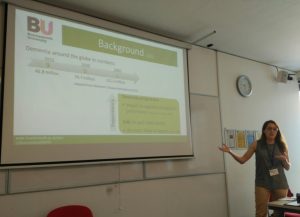

British Society of Gerontology 47th Annual Conference – Ageing in an Unequal World: Shaping Environments for the 21st Century.







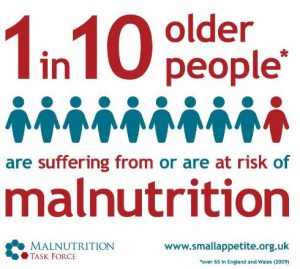
 Professor Jane Murphy from the Ageing and Dementia Research Centre (ADRC) has been invited to join the Malnutrition Task Force (MTF) board (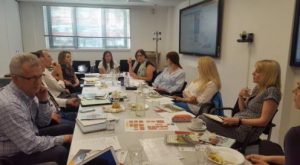

 The Centre for Qualitative Research is pleased to announce that its Deputy Director, Caroline Ellis-Hill, will be keynoting at the 41st ASSBI Annual Brain Impairment Conference in Adelaide, Australia on the 4th -5th May 2018. Ellis-Hill will speak on “Lifeworld-led rehabilitation – a new approach to support psycho-social well-being following brain injury”.
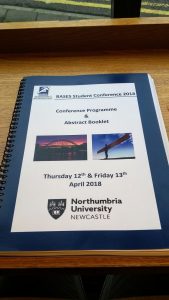


 “Phenomenology or Narrative Method? Choosing one for my study”







 International Open Access Week: open data
 Food Price Research Shortlisted for Civil Service Prize
 3C Event: Research Culture, Community & Connections – Wednesday 11 November 3-4pm
 Horizon Europe Cluster 3 (Civil Security for Society) 2026 Calls Now Open
 MSCA Doctoral Networks 2026 Call Information Webinar
 ESRC Festival of Social Science 2026: Application Deadline Extended to Thursday 25 June 2026
 Reminder: Register for the ESRC Festival of Social Science 2026 Information Session
 ECR Funding Open Call: Research Culture & Community Grant – Apply now
 ERC Advanced Grant 2025 Webinar
 Update on UKRO services
 European research project exploring use of ‘virtual twins’ to better manage metabolic associated fatty liver disease