Category / research opportunities

Article Processing Charges

Keywords: APC, Open access, REF, Repositories, Journals, Outputs.

APC and subscription-based models have their specific yet intersecting merits. Here in the UK, several aspects of publications have been repositioned during the last REF2021 census period. Lord Stern review led to several key changes, especially in terms of reporting research. Although the costs of APCs are high, HEIs have ringfenced QR funding to support outputs in quartile two and above through an internal review process. Similarly, publishers have institutional partnerships where partial or full waivers are offered. Several reputable publishers have introduced incentives to waive or partially waive APCs, for example, by contributing to the review process, participating as editors, and recommending high-quality manuscripts in terms of originality, significance, and academic depth.

APC route, for example, Creative Commons CC BY, offers many benefits to researchers, academics, and especially early career researchers in terms of flexibility of literature use as compared to traditional publication processes, such as the complexity and costs associated with permission to use or reuse infographics, including authors’ own results and images where copyright transfer has occurred. On the other hand, APCs provide an opportunity for wider availability of research to be read, used, and applied within research contexts where funding for subscription-based models is not generous or sometimes limited. Making preprint peer-reviewed and accepted author version manuscripts available on institutional repositories is a better alternative to APCs.

Traditional and legacy practices could benefit from dialogue and consideration; publishers’ subscription models could be diversified for greater inclusivity by offering variations in subscription fees based on certain metrics such as a country’s GDP or RPI. Revenues generated from both subscription and APCs should be more transparent, with figures available to public and open to stakeholders feedback. Profits should be reinvested in discounted subscription fees for HEIs, funding research through RC UK initiatives and similar programmes, and supporting early and mid-career researchers.

Another aspect which is not usually discussed is that traditionally, journals editorial teams, especially editors and chief editors, serve in their roles for prolonged periods. Although unintended, this inadvertently limits opportunities for diversity, inclusion, and equal opportunities for a diverse community of researchers worldwide. New thinking is needed to change the structure of publishers’ journal editorial teams to meet twenty-first-century needs. Some initial measures could include: (i) open calls for expressions of interest in editorial team roles, including editors and chief editors, (ii) transparent recruitment based on person specifications, and (iii) a maximum two-year tenure in the role. Subscription fees and APC revenue, combined with alternative grants from research councils and charities, could be used to incentivise engagement with the publishing process, from editorial board participation to contributing to the review process.

Zulfiqar A Khan
Professor of Design, Engineering & Computing
NanoCorr, Energy & Modelling (NCEM) Research Group Lead
Email: zkhan@bournemouth.ac.uk

Bid-generating Sandpit: Interdisciplinary Research towards Sustainable Development Goals

Illustration of a lightbulb with a group of people inside around a circular table, with computers and papers. They are clearly working together.

Register here

Calling early career researchers (including practice-led) for two days of sparking ideas, discovering new project partners, and developing interdisciplinary funding bids!

30 April – 1 May 2024

Bournemouth

Day 1 begins at 1230, Day 2 finishes at 1630, to enable travel from external universities.

The British Academy Early Career Researcher Network and Bournemouth University’s Centre for the Study of Conflict, Emotion, and Social Justice invite applicants for a two-day research collaboration, networking, and grant development event.

Participate in dynamic and interactive sessions to develop innovative research concepts addressing any of the United Nations Sustainable Development Goals (UNSDGs), leading to funding bids across institutions and disciplines. Your goal is to form an interdisciplinary project team and build a funding proposal in only two days.

This two-day sandpit will be supplemented with two online follow-up sessions (summer and autumn 2024) to share your project progress and experiences.

We welcome any South West-based early career (as you choose to define it) researcher, artist, practitioner or anyone with a general interest in sustainability and emerging interdisciplinary projects. You must be based at one of the South West Cluster Universities. You should be keen to work in a multidisciplinary team, and willing to commit to attending the full sandpit, on both days. No prior experience of research funding is required.

To secure your spot in the Sandpit, please complete and submit the following application – note that all participants must commit to attending both full days:

APPLY HERE BY 8 MARCH 2024https://forms.office.com/e/AkaeieQHKx

The event is facilitated by Dr. Catalin Brylla and Dr. Lyle Skains, with advisors to be drawn from senior Bournemouth University staff based on participant disciplines and interests.

If you have any queries, please don’t hesitate to contact us.

BA/Leverhulme Small Research Grants

The call for the next round of BA/Leverhulme Small Research Grants will be opening soon, expected 10th April.

We are welcoming your proposals for the upcoming BA/Leverhulme Small grants call.

To ensure that the pre-award team can provide all interested academics with optimal support we are inviting you to participate to  RDS British Academy Guidance session


Wed 28th Feb 2024, 10:00-12:00 at Talbot campus

  • Join us to review the guidance and then start work on your application
  • Slides will be available after the session on Brightspace.

Work on your proposals, submit your ITB as soon as you are ready and work with your allocated officer on your budget. The earlier you send in your ITB, the sooner you can progress with your budget support.

To book onto this session, please complete the Booking Form under “British Academy Small Grants Guidance session – 28/02/2024” in the drop down menu.

Please find details on the process to be followed and deadlines here.

If you have any queries, please contact Eva Papadopoulou epapadopoulou@bournemouth.ac.uk or your Funding Development Officer.

Fully-Funded PhD Studentship Competition

To support the growth of our PGR community, we are delighted to announce up to 10 fully-funded PhD studentships for candidates starting in April 2024 (Funded PhD & MRes studentships | Bournemouth University). The focus of these awards will be on research excellence as we look to REF2029.

The studentships will be awarded via a competitive process to the best candidates who identify a supervisory team and develop research projects which align to one or more of the BU research themes:

  • Helping people to live better for longer
  • Helping protect and preserve a sustainable environment
  • Preparing for and recovery from crisis
  • Challenging marginalisation, misinformation and under-representation
  • Helping creative industries and cultural heritage to thrive
  • Using our expertise to be a catalyst for growth, boosting skills and advancing the region.

With this student focussed funding approach, we aim to develop the excellence of our research culture by attracting high calibre candidates with a passion for research and a strong desire to contribute to BU’s research environment. The allocative process, which is aligned to those adopted for external UKRI fully-funded opportunities, will be overseen by the Interim Associate Pro Vice-Chancellor Research and Knowledge Exchange and administered by the Doctoral College.

Full details can be found in the Fully Funded Studentship Policy. Applicants will be asked to complete a bespoke application form (also available in word here) and attach this to their online application.

Wellcome trust ECR award

The Wellcome trust ECR award is for researchers from any discipline with up to 3 years post-doctoral experience doing research that has the potential to improve human life, health and wellbeing. This session is aimed at research leads, Early Career Researchers and mentors.

The scheme has three rounds per year and so the session is also open to those interested in applying in future rounds.

Professor Sam Goodman will be sharing his experience of being on Wellcome’s Early Career advisory group in Medical Humanities, and in reviewing applications for the ECR award.

Professor Goodman has also successfully received funding from Wellcome.

Please check eligibility for the scheme: https://wellcome.org/grant-funding/schemes/early-career-awards

Friday 22nd September 2023

at Lansdowne Campus, from 11.00 – 12:00


To book a place on this workshop, please complete the Booking Form.

For any information about the content of this session, please contact Kate Percival – Research Facilitator kpercival@bournemouth.ac.uk

Revolutionising Industries: The Significance, Impacts, and Reliability of Nanocoatings

Application

Introduction:

Nanocomposite coatings, a ground-breaking development in materials science, have emerged as a transformative force across various industries. These coatings, with their unique properties and applications, hold immense promise for enhancing performance, reducing maintenance costs, and addressing critical global challenges. In this comprehensive review, we delve into the key significance of nanocoatings in a range of industries, their substantial impacts, and their reliability [1–4]. Furthermore, we explore how Professor Zulfiqar Khan is collaborating with generative AI and predict the potential benefits of this partnership for industry and contributions to new knowledge. This narrative aims to influence UK science and technology policy, attract funding, and foster new partnerships to drive innovation and competitiveness.

Application
  1. The Multifaceted Significance of Nanocoatings:

Nanocoatings in Cavitation and Beyond:

Nanocomposite coatings have brought transformative advantages to industries grappling with issues such as cavitation, corrosion, tribology, and fluid dynamics. They provide enhanced protection and resilience in the face of harsh operational conditions, including extreme temperatures, high pressures, corrosive environments, and minimal lubrication. The significance of nanocoatings lies in their ability to extend the lifespan and reliability of vital components and systems across multiple sectors.

Nanocoatings Addressing Global Challenges:

Industries today are confronted with pressing global challenges, such as energy efficiency, sustainability, and system durability. Nanocoatings offer innovative solutions to these challenges by optimising surfaces and interfaces through surface modifications and coatings. They play a pivotal role in enhancing energy efficiency, ensuring the reliability of systems, and promoting sustainability. These benefits are invaluable in the context of UK science and technology policy, which emphasises the transition to greener technologies and sustainable practices.

  1. The Impact of Nanocoatings:

Academic and Industrial Benefits:

The development and application of nanocoatings have not only enriched academic research but have also provided tangible industrial advantages. Researchers worldwide are actively engaged in studying several types of nanocomposites to create durable and energy-efficient coatings. This collaboration between academia and industry fosters innovation, encourages knowledge exchange, and accelerates the adoption of innovative technologies. It aligns with the UK’s vision of becoming a leader in innovation and technology development.

Experimental Advancements:

Professor Khan’s work exemplifies the impact of nanocoatings on the industry. His experiments with alumina, silicon carbide, zirconia, and graphene nanocomposite coatings have displayed their robustness under different conditions, including exposure to seawater. Such empirical evidence guides industry practitioners in selecting the right coatings for their specific applications, reducing maintenance costs, and ensuring system reliability.

III. Reliability of Nanocoatings:

Advanced Modelling and Predictive Tools:

One key aspect of nanocoatings’ reliability lies in the advanced modelling and predictive tools developed by researchers like Professor Khan. His cathodic blistering model (Khan-Nazir I) [5] and coating failure model (Khan-Nazir II) [6] offer a deeper understanding of coating behaviour under stress, wear, and corrosion. These models enable precise predictions of coating performance, which is crucial for industries seeking dependable solutions.

Lubrication Modelling:

Furthermore, lubrication modelling, which incorporates wear-corrosion and mechano-wear equations, investigates the influence of microstructural properties like porosity and surface stresses on the coefficient of friction (CoF). This is vital in ensuring the reliability of systems operating under various conditions, as reduced friction leads to increased durability.

  1. Collaboration with Generative AI:

Harnessing AI for Materials Discovery:

Professor Zulfiqar Khan’s collaboration with generative AI represents an exciting frontier in materials science. Generative AI can accelerate materials discovery by simulating and predicting the behaviour of nanocomposite coatings with unmatched speed and accuracy. By leveraging AI, researchers can design coatings tailored to specific industry needs, further enhancing their reliability and performance.

  1. Predicted Benefits and Contributions:

Industry Advancements:

The partnership between Professor Khan and generative AI holds the promise of revolutionising industries. Predictive modelling and AI-driven materials discovery will enable the creation of coatings that are not only more reliable but also more cost-effective to produce. This will stimulate innovation, reduce downtime, and boost competitiveness across sectors such as aerospace, automotive, energy, and manufacturing.

Contribution to New Knowledge:

The collaboration will undoubtedly contribute to new knowledge in materials science, computational modelling, and AI-driven materials discovery. This research can inform policy decisions and attract funding for initiatives aimed at harnessing AI for materials development. As the UK government seeks to position the nation as a global innovation hub, investments in cutting-edge research of this nature will be pivotal.

  1. Influencing UK Science & Technology Policy:

Nurturing Technological Leadership:

To influence UK science and technology policy, it is imperative to underscore the role of nanocoatings and AI-driven materials discovery in nurturing technological leadership. Emphasising the potential economic and environmental benefits of these innovations can encourage policymakers to prioritise investments in research and development.

Supporting Sustainable Practices:

Aligning nanocoatings with the UK’s sustainability goals is crucial. Highlighting how these coatings enhance the sustainability and reliability of systems can resonate with policymakers keen on promoting sustainable practices and technologies.

VII. Forging Partnerships:

It is essential to articulate the transformative impact of nanocoatings and AI collaborations on industry and the potential for significant contributions to knowledge. Presenting a clear roadmap for how investments will yield tangible results can attract the attention of funding bodies interested in fostering innovation.

Industry-Academia Synergy:

Lastly, forging partnerships between academia and industry is fundamental. Collaborations that integrate academic research with industry needs can ensure that innovations like nanocoatings find practical applications and drive economic growth.

In conclusion, nanocomposite coatings represent a pivotal advancement with far-reaching significance and impacts across industries. Professor Zulfiqar Khan’s collaboration with generative AI holds immense promise for further enhancing their reliability and performance. This partnership aligns with UK science and technology policy objectives, attracting funding and fostering collaborations that will drive innovation and competitiveness, positioning the UK as a global leader in materials science and technology.

Acknowledgement: This article is written in collaboration with GAI.

References

[1]       Nazir, M.H.; Khan, Z.A.; Saeed; Bakolas, V.; Braun,W.; Bajwa, R. Experimental analysis and modelling for reciprocating wear behaviour of nanocomposite coatings. Wear 2018, 416, 89–102. [CrossRef]

[2]       Nazir, M.H.; Khan, Z.A.; Saeed, A.; Siddaiah, A.; Menezes, P.L. Synergistic wear-corrosion analysis and modelling of nano composite coatings. Tribol. Int. 2018, 121, 30–44. [CrossRef]

[3]       Abdeen, D.H.; El Hachach, M.; Koc, M.; Atieh, M.A. A Review on the Corrosion Behaviour of Nanocoatings on Metallic Substrates. Materials 2019, 12, 210. [CrossRef] [PubMed]

[4]       Nazir, M.H.; Khan, Z.A.; Saeed, A.; Bakolas, V.; Braun,W.; Bajwa, R.; Rafique, S. Analyzing and Modelling the Corrosion Behavior of Ni/Al2O3, Ni/SiC, Ni/ZrO2 and Ni/Graphene Nanocomposite Coatings. Materials 2017, 10, 1225. [CrossRef]

[5]       Nazir, M.H.; Khan, Z.A.; Saeed, A.; Stokes, K. A model for cathodic blister growth in coating degradation using mesomechanics approach. Mater. Corros. 2016, 67, 495–503. [CrossRef]

[6]       Nazir, M.H.; Khan, Z.A. A review of theoretical analysis techniques for cracking and corrosive degradation of film-substrate systems. Eng. Fail. Anal. 2017, 72, 80–113. [CrossRef]


UK’s Carbon Emissions Progress

UK’s Carbon Emissions Progress

UK's Carbon Emissions Progress

UK’s Carbon Emissions Progress [stock image]

Advancing Towards a Sustainable Future: Evaluating the UK’s Carbon Emissions Progress and Energy Portfolio

Introduction:

Professor Zulfiqar Khan has been working in Energy Capture, Conversion and Storage for more than a decade which has led to significant outcomes for UK industry in terms of technological innovations to meet UK net zero targets and UNSDGs by agreed deadline.

In addition, energy efficiency in interacting systems and complex machines have been at the heart of Professor Khan’s research at BU. Machines and interacting systems use lubrication and therefore sustainability context is key to be taken forward into design considerations. Both the above themes have provided a platform for interdisciplinary research in collaboration with major UK and International Industry and HEIs partners.

Professor Khan has been collaborating with Generative AI in terms of clean energy and future goals to reduce our dependency on non-renewable energy technologies. Although, unlike his longstanding industry collaboration, his GAI partnership is in its initial stages, Professor Khan believes that there are opportunities to drive clean energy research forward to realise UK targets and UNSDGs in collaboration with GAI.

The United Kingdom has embarked on a transformative journey towards sustainable energy solutions, marked by its commitment to reducing carbon emissions and aligning with the United Nations Sustainable Development Goals (SDGs). This article presents a comprehensive overview of the UK’s current state of progress in carbon emissions reduction, its contributions to the UNSDGs, and the intricate details of its energy portfolio. The following brief article is written in collaboration with Generative AI.

Progress in Carbon Emissions Reduction:

Carbon Emissions Reduction Targets:

The UK’s resolute commitment to achieve Net Zero by 2050.

Noteworthy reduction of carbon emissions by 51% since 1990 levels by the year 2019.

Renewable Energy Sources:

A remarkable 48% of electricity generated from renewable sources in 2020. Continuous expansion of wind and solar energy capacity.

Energy Efficiency:

Implementing energy-efficient measures in both industrial sectors and households.

Contributions to UN Sustainable Development Goals (SDGs):

Affordable and Clean Energy (SDG 7):

The UK’s renewable energy sector has generated over 100 TWh of electricity, making a significant contribution to SDG 7.

Industry, Innovation, and Infrastructure (SDG 9):

Substantial investments exceeding £2.5 billion have been directed towards innovative energy capture and storage technologies, fostering economic growth while minimizing environmental impact.

Climate Action (SDG 13):

The UK’s remarkable carbon emissions reduction of 51% surpasses the SDG 13 target to combat climate change.

Challenges and Areas for Improvement:

Transportation Sector:

Electrification and the promotion of alternative fuels remain pivotal for addressing emissions in the transportation sector.

Energy Storage:

Enhancing energy storage solutions is imperative to address the intermittent nature of renewable energy sources effectively.

Carbon Capture, Utilisation, and Storage (CCUS) Technologies:

The development and integration of CCUS technologies for heavy industries are crucial for reducing carbon emissions further and aligning with climate goals.

The UK’s Energy Portfolio (2020):

Energy

Type/Technology

Energy Output

(TWh)

Energy Consumption

(TWh)

Natural Gas 338.6 465.3
Oil 143.8 231.5
Coal 2.3 9.1
Nuclear 55.9 61.8
Renewables

(Total)

132.3 283.1
Imports 7.4 N/A (included in total)

Market Share (2020):

Natural Gas: 38.5%

Oil: 16.4%

Coal: 0.3%

Nuclear: 7.9%Renewables (Total): 18.7%Imports: 3.6%

Interpretation:

Non-renewable sources still dominate the UK’s energy portfolio, comprising approximately 63% of energy output in 2020.

Natural gas is the largest contributor to both energy output and consumption.

The transition to renewable energy sources, particularly wind and biomass, is vital for reducing the UK’s carbon footprint.

Conclusion:

The United Kingdom’s commendable progress in carbon emissions reduction, aligned with UN SDGs, signifies a dedicated commitment to a sustainable future. While substantial headway has been made, addressing challenges in transportation, energy storage, and the integration of CCUS technologies is paramount. The UK continues to lead the path towards a low-carbon future by aligning policies with UN SDGs and promoting sustainable energy solutions.

Development fund from the British Academy ECRN

We are excited to announce that theDevelopment fund from the British Academy Early Career Research Network in the South West is now open.

Development fund (rolling call): This fund provides the opportunity for ECRs to hold an event, roundtable, meeting or training activity, which promotes networking, collaboration, knowledge sharing or develops skills throughout the region, and can be extended to the wider ECR network if appropriate.

ECRs can claim a total of £3000 towards their activities which will need to be paid for by their institution and then expensed back to the BA.


Please be aware that to be eligible to apply for these you will need to sign up to the  British Academy Early Career Rersearcher Network via this link

If you have any questions, please contact:   talentandskills@gw4.ac.uk

BA Seed funding call NOW OPEN

This year’s BA ECRN seed funding and development fund call is now live.
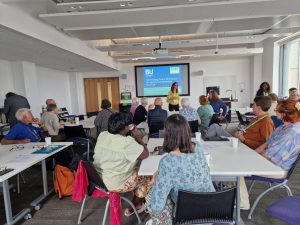

We are pleased to announce of the next round of seed funding for ECRs in the South West. The aim of this scheme will be to create and support new cross-sector research partnerships and offer the funding to support ECR career development.

These small awards (of up to £3K) will support the direct costs associated with activities that support new research, the development of new stakeholder relationships, broadening knowledge of a sector, future career options or accessing resources and facilities.

British Academy Seed Fund SW Hub bids will need a  e-ITB to be completed 4 weeks before the deadline so the relevant FDO can open a RED ID, prep a costing and send off the approval request to the Faculty, before the PI can submit.

The e-ITB can be found here: Intention to Bid Form  2023 (office.com)

This needs to be done by 30 August 2023 to meet the BA deadline of 27th September 2023.

Please be aware that to be eligible to apply for these you will need to sign up to the  British Academy Early Career Rersearcher Network via this link


If you have any questions, please contact:   talentandskills@gw4.ac.uk

Here is what is coming in June for RKEDF


The following training events are coming up in June.

Please book now!


Wednesday 7th June 2023, 13:00-15:00 Talbot Campus

Anatomy of an Impact Case Study

This workshop is aimed at researchers who would like to learn what an excellent REF impact case study looks like and how to start building your own case study from scratch.


Thursday, 8th June 2023, 11:00 – 13:00 Online

ESRC New Investigator

·     Understanding of the ESRC.

·     Knowledge of the requirements for the scheme.

·     Draft plan for developing an application.

Wednesday, 14th June 2023, 16:00-17:00 Hybrid session

ECRN – Imposter Syndrome

The session will offer a space to discuss this growing issue as well as offer advice, guidance and support on how to manage, avoid and overcome such feelings. At the end of the session attendees will have achieved greater confidence in developing their career and profile.

Wednesday, 14th June, 10:00 – 16:00

BU Research Conference 2023: Embracing Failure, Building Success

The BU Research Conference is back for 2023 and this year’s event will explore the concept of ‘failure’ in academia and building the resilience to overcome obstacles that may be in your path


21-22-23/06/2023

Writing Academy 2023

Wednesday, 21st June 2023, 10.00 – 16.00 Online

Thursday, 22nd June 2023, 08.55 – 16.45 Online

Friday, 23rd June 2023, 08.45 – 16.45 Talbot Campus

This workshop covers strategies for academic writing: writing to prompts, targeting a journal/specific criteria, types of prompt for academic writing, ‘snack writing’, goal-setting for writing, motivation, freewriting, generative writing, analysing academic writing, drafting and revising an abstract/summary, constructing a ‘contribution’ argument, using prompts in series, outlining, productive writing behaviours, wellbeing, writing groups, micro-groups and retreats.

Wednesday, 21st June, 14:00-16:00, Online

RKEDF – Real World Examples of Public Engagement

·     Useful knowledge into how successful public engagement are planned and delivered.

·     Skills in critically analysing public engagement with research projects.

·     Inspiring ideas that would translate into their own work and share with others

·     Confidence that public engagement is approachable and practical to deliver.

Friday, 23rd June, 10:00-16:30

Engaging with Parliament for Impact

It will cover multiple ‘Common Routes to Influence’, including Government consultations, Select Committees, All Party Parliamentary Groups, think tanks etc. and the best ways to approach them. You will have an opportunity for stakeholder mapping and to plan your approach.

Thursday, 29th June, 13:00-15:00, Online

The Way of the Productivity Ninja

In this practical, engaging, interactive and fun 2-hour online workshop you’ll learn how to utilize the mindset and tactics of the 9 Characteristics of the Productivity Ninja.


To book a place please complete the booking form

If you have any queries please contact RKEDF@bournemouth.ac.uk


Deadline extended: Zinc and Dunhill Medical Trust Innovation Fellowships in Healthy Ageing

Please see below for the following fellowship opportunity for researchers working in ageing that are looking to branch out into industry.

Zinc and Dunhill Medical Trust Innovation Fellowships in Healthy Ageing

The Innovation Fellowships in Healthy Ageing comprise a 6-9 month programme, starting in September 2023, which will allow UK-based researchers the opportunity to experience first-hand what it takes to build a mission-focussed start-up from scratch, and to build science-rich products and services to improve outcomes for people in later life. Researchers will also have the opportunity to engage in training, support and mentoring to help them translate their skills, explore new career opportunities, and connect with other talented researchers.

This opportunity is open to researchers at any career stage post-PhD, but we particularly welcome applications from early career researchers (you must have submitted your PhD thesis by September, 2023). The deadline for submission of applications is 12 noon 17th May. Interviews will be held in mid-May with decisions being communicated at the end of May.

For more details and to apply, see the full advert here