Category / Digital and technological futures

Student numbers in the next decade

In contrast to recent student numbers intake across the country FT has published an article stating that, undergraduate numbers will see a rise in England in the next decade. [APRIL 7 2024. Looming rise in student numbers sparks calls for skills reform in England. Peter Foster and Anna Gross. © The Financial Times Limited 2013. All Rights Reserved].

Total numbers have a direct relation to several factors including but not limited to overseas students, and both financial and planning challenges faced by international students. Various geographical regions for example South and Southeast Asia are conventionally more leaning towards traditional degrees for example engineering and medicine. Particular interest in these degrees is stemmed by primary and secondary education systems, national skill gaps and more widely societal impacts. Despite, a brief decline in the numbers of international students a pattern in terms of various disciplines varies according to available data. In order to attract and sustain international student numbers core engineering and medical/ medicine degrees will remain significant centripetal force.

FT also reported that, this year universities will make a loss on each domestic student unless there is a change in fees policy [APRIL 7 2024. Looming rise in student numbers sparks calls for skills reform in England. Peter Foster and Anna Gross. © The Financial Times Limited 2013. All Rights Reserved]. In addition, a more diverse repositioning in terms of educational provisions is needed, such as strategic priorities for engineering & technology degrees, innovation in delivery models and methods of gradually but completely decoupling from textbooks taught system to a more flexible intuitive, research informed and practice-based education in partnership with industry which is fit for solving real world impact bearing problems. In turn safeguarding graduates’ future, placing their learning experience at the heart of education-research interface to guarantee higher levels of employability and job satisfaction.

HEIs are also facing a challenge in terms of financial sustainability as reported, the sector is struggling to recruit the higher-paying foreign students it relies on to subsidise lossmaking domestic places [FT 07 April 24]. A two-pronged approach would be needed to address these challenges. Firstly, repositioning in terms of facilities and resources to introduce, apply and integrate more state-of-the-art modelling and simulation techniques for practice, practical and experimental elements of teaching in engineering and technology degrees and initiating a phased transition from dependency on conventional hardware tools e.g. expensive machines to realise releasing economies of scale. Secondly, more robust, simpler and well understood parallels and transitioning pathways between HEIs and primary to higher secondary education are needed.

FT added that, “At the same time, government spending on skills will be 23 per cent below 2009—10 levels, according to analysis by the Institute for Fiscal Studies think-tank.” [APRIL 7 2024. Looming rise in student numbers sparks calls for skills reform in England. Peter Foster and Anna Gross. © The Financial Times Limited 2013. All Rights Reserved]. Collaborating closely with industrial partners and stakeholders’ skills gaps can be strategically prioritised for medium to long term needs, and educational provisions would need reshaping to integrate with research portfolio, UNSDGs, socio-economic, environmental impacts and relevant REF Unit of Assessment (UoA).

FT reported that, “The apprenticeship levy introduced in 2017 has also failed to deliver the expected boost to training, according to London Economics.” [APRIL 7 2024. Looming rise in student numbers sparks calls for skills reform in England. Peter Foster and Anna Gross. © The Financial Times Limited 2013. All Rights Reserved]. This is an important pathway for filling the skill shortages and also bridging the gap between theory and practice. A steady rise in flexible learning engineering degree students’ numbers, have been observed. These students are industry professionals who join these degrees at L5/6 level for a BEng/MEng flexible learning program. In addition to academic benefits these professionals achieve academic benchmark qualifications for professional registrations with professional institutions. This is one of the best available models to address skill shortages with a flexible high-quality delivery and academic provisions underpinned by research.

A stronger and broader engineering sector in collaboration with industry partners and professional institutions to develop futuristic engineering degrees to contribute to economic growth and its sustainability with an upward trajectory to address real concerns that, “tackling (of) the UK’s entrenched skills shortages and low economic productivity.” [APRIL 7 2024. Looming rise in student numbers sparks calls for skills reform in England. Peter Foster and Anna Gross. © The Financial Times Limited 2013. All Rights Reserved] is important.

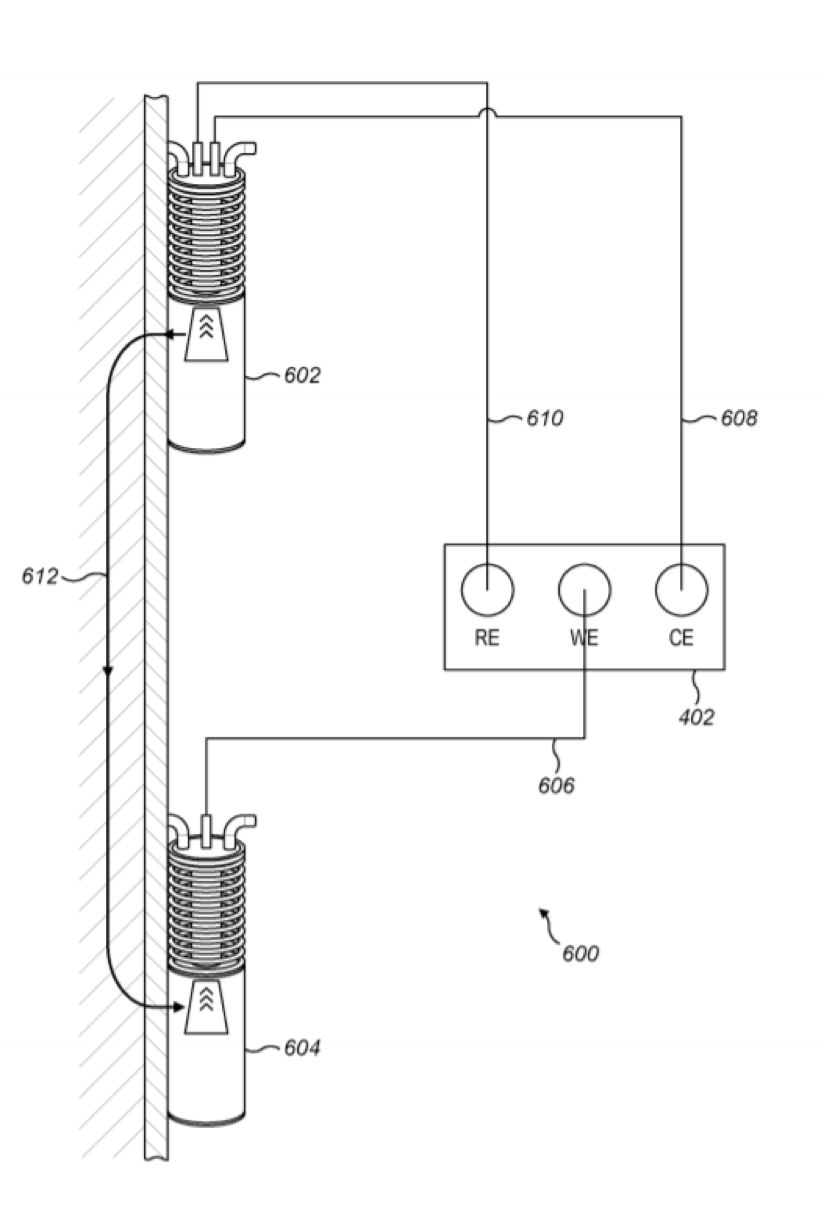
Telescopic Electrochemical Cell (TEC) for Non-Destructive Corrosion Testing of Coated Substrate. Patent number GB2018/053368

FT also mentioned in its latest article that, “Policymakers should also remove the cap on FE college places in order to “level up” education, (Lord Jo Johnson), added, providing more opportunities.” [APRIL 7 2024. Looming rise in student numbers sparks calls for skills reform in England. Peter Foster and Anna Gross. © The Financial Times Limited 2013. All Rights Reserved]. This can be looked into within the context of above-mentioned points in terms of establishing more defined parallels between HEIs and from primary to higher secondary education. A rethink to consider schools’ post code model for HEIs entry will help in levelling up.

Keywords: education, numbers, overseas students, engineering, skills, industry, professions.


Zulfiqar A Khan

Professor of Design, Engineering & Computing

NanoCorr, Energy & Modelling Research Group Lead

Email: zkhan@bournemouth.ac.uk


The Fog of Streaming Wars

In his recent article published in The Conversation, Prof. John Oliver provides a provocative thought piece that describes the current market dynamics of subscription-video-on-demand (SVOD) streaming firms and an outlook on the industry’s future direction.

He notes that the industry is currently characterized by an oversupply of service providers which has led to aggressive competitive pricing and a squeezing of profit margins. He goes on to conclude that the weaker players, those with less efficient operations or inferior offerings, are starting to struggle and an ‘industry shakeout’ is inevitable.

You can access the article at: https://theconversation.com/in-the-fog-of-the-video-streaming-wars-job-losses-and-business-closures-are-imminent-225829

Digital Marketing Colloquium 2024-Submission Deadline 15/02/2024

We are extremely excited to announce that digital marketing research group (Department of Marketing, Strategy and Innovation) is organising its first digital marketing colloquium on Tuesday 19th – Wednesday 20th March 2024 at the Bournemouth University Business School. 

This colloquium will bring together leading researchers and practitioners to discuss and visualise the future of strategic and operational marketing. Both technology advancements and marketing developments will be explored, co-creating future innovations for collaboration and solutions. The aim is to draw in forward-thinking research on crucial subjects that have an impact on consumers, businesses, and society as a whole. Participants will be encouraged to stimulate fresh perspectives and explore uncharted territories.   

This is an multi and inter-disciplinary event, scope of which covers the following indicative areas:  

  • Digital business process reengineering 
  • Digital consumption, behaviour, attitudes, and decision-making 
  • Digital ecosystems: strategies and operations 
  • Digital Twins  
  • Virtual Real Estate  
  • Enhanced social web3, virtual and hybrid interactions  
  • AI in Business and Industry 
  • Predictive analytics 
  • Machine Learning and Algorithms  
  • AI Supply chain optimisation 
  • AI based Customer Relationship Management 
  • Virtual experiences  
  • Designing immersive and illusive experience in the Metaverse and Web3 
  • Interactive and engaging user experiences  
  • Gamification and serious gaming  
  • Business models and opportunities  
  • Future of Work  
  • Education, training and adaptive learning 
  • Creativity and design in AI  
  • Blockchains and smart contracts, cryptocurrencies, NFTs  
  • Digital Identity: opportunities and challenges  
  • CyberSecurity and customer experience  
  • Wearable technology  
  • Human-robot interaction 
  • Robotics and Automation design 
  • Robot based services  
  • Chatbots and virtual assistants  
  • Autonomous vehicles and drones 
  • Environment, climate, energy optimization and sustainability  
  • Ethical, legal and social implications  
  • Health and wellbeing.  

 We welcome submissions in the form of abstracts for presentations, posters and workshop proposals. Workshop proposals are an interesting element we wish you to consider – workshops are meant to run a related to Colloquium theme interactive session on a specific topic to stimulate participants to co-create future scenarios or solutions, work interactively on an emerging topic and exchange ideas. Please see the detailed Call for Papers attached here.  Deadline for all submissions is 15th Feb 2024 and abstracts for presentations and posters as well as workshop proposals can be submitted by clicking here   

We will keep you in the loop about further developments on this colloquium and will share all the links for submission systems soon. Watch this space and save the date 😊 

Digital Marketing Colloquium 2024 Organising Committee 


MIL Eco-Lab: Media & Information Literacy for Healthy Ecosystems

logo - science, health, and data communications research group

MIL Eco-Lab: Media & Information Literacy for Healthy Ecosystems

Cluster Lead: Julian McDougall

This new research cluster, located in SHDC, will generate and support research to inform policy and practice for the role of Media and Information Literacy (MIL) in: promoting societal resilience to misinformation; improving the health of communication ecosystems and supporting better health, science and data literacies.

This new cluster will form an MIL Eco-Lab to support and grow capacity for:

  • Research-informed MIL, working with a theory of change;
  • Education and training in MIL (including for better health and science communications);
  • Designing third spaces for MIL practice;
  • Evaluating MIL for ecosystem health (moving beyond solutionism, for positive consequences and social change);
  • Intersecting with the work of the Media and Information Literacy Alliance charity in advocacy spaces (including health, science and data communications).
  • Fostering productive inter-disciplinary and international environments for doctoral research in MIL and pioneering research in the field, where significant, for health, science and data communications.

Colleagues who are interested in finding out more about this cluster and discuss how your research can contribute, with no obligation to join, are invited to share your availability here for a zoom workshop later this month. And / or if you would like to chat about this 1-1, just email me and we can set that up.

Thanks for reading,

Julian

Discovering Causal Relations and Equations from Data

Discovering equations, laws, or invariant principles underpins scientific and technical advancement. Robust model discovery has typically emerged from observing the world and, when possible, performing interventions to falsify models.

Recently, data-driven approaches like classic and deep machine learning are evolving traditional equation discovery methods. These new tools can provide unprecedented advances in computer science, neuroscience, physics, philosophy, and many applied areas.

We have just published a new study discussing concepts and methods on causal and equation discovery, outlining current challenges and promising future lines of research. The work also showcases comprehensive case studies in diverse scientific areas ranging from earth and environmental science to neuroscience.

Our tenet is that discovering fundamental laws and causal relations by observing natural phenomena is revolutionised with the coalescence of observational data and simulations, modern machine learning algorithms and domain knowledge. Exciting times are ahead with many challenges and opportunities to improve our understanding of complex systems.

This study is a collaborative work between eight universities in Europe and the United States (Valencia, Berlin, Tübingen, Jena, Stockholm, New York, and Bournemouth Universities).

Camps-Valls, G., Gerhardus, A., Ninad, U., Varando, G., Martius, G., Balaguer-Ballester, E., Vinuesa, R., Diaz, E., Zanna, L. and Runge, J., 2023. Discovering causal relations and equations from data. Physics Reports, 1044, 1-68 (Impact Factor=30).


Research by BU academic on NFTs, Blockchain and IP law cited in Parliamentary Report

A report on ‘NFTs and the Blockchain: the risks to sport and culture’ recently published by the Parliamentary Culture, Media and Sport Committee (CMSC) cites research by Bournemouth University’s (BU’s) Professor Dinusha Mendis.

The report follows the consultation that was conducted by the Department for Culture, Media and Sport (DCMS) in November 2022 and outlines how Non-Fungible Tokens (NFTs) and blockchains should be tackled in the future, particularly in relation to art and culture; professional sport and advertising.

In relation to intellectual property rights (IPRs), the report cites copyright infringement, limited recourse and redress (for consumers and creators), the scale of infringement, consumer confusion and the inflexibility of transferring IP as the main issues that needs consideration.

In responding to these issues, the report cites the research by Prof. Mendis calling for more protection for consumers and creators as a result of rising IP infringements, scams and frauds. The report also identifies the unique nature of NFTs and blockchains and cites Prof. Mendis’ research in demonstrating how current laws – such as ‘notice and takedown’ or ‘the right to be forgotten’ – which apply in other circumstances relating to piracy and counterfeiting, may not necessarily apply to online marketplaces. As such, the report recommends a code of conduct to be adopted by online platforms dealing with NFTs.

The hype surrounding NFTs was short-lived and in mid-2022, investors saw a collapse in the NFT market. However, as the report states, “cryptoassets such as NFTs continue to have advocates … [and] even if NFTs never again reach the peak they achieved over the last few years, areas of concern [in relation to regulation] remain”.

As such, based on the research presented in this report relating to intellectual property, the CMSC recommends that the “Government engages with NFT marketplaces to address the scale of infringement and enable copyright holders to enforce their rights”. In relation to sports, the report identifies the financial risks and harm which NFTs present to fans and the reputational harm it presents to clubs and recommends that “any measurement of fan engagement in sports, including in the forthcoming regulation of football, should explicitly exclude the use of fan tokens”.

Finally, in relation to advertising, and once again citing the research by Prof. Mendis, the report recommends that the Government respond to misleading and/or fraudulent advertising for NFTs.

For further information and for the full report, please see here: https://committees.parliament.uk/publications/41611/documents/205745/default/

Stories of childbirth: participants needed

Interview participants needed! Are you:

  • Female aged 18-49
  • Active social media user
  • Resident in the UK
  • Not yet had children

A HEIF (Higher Education Innovation Funding) backed project led by Dr Julia Hibbert (BUBs) is exploring how women aged 18-49 understand stories of homebirth found on social media and the potential effect this may have on future decisions linked to childbirth.

We are looking for people to take part in online interviews lasting approximately 1 hour; we will reimburse your time with a £40 Amazon voucher.  If you meet the above criteria and would be interested in taking part in an interview, please contact Dr Rachel Arnold rarnold@bournemouth.ac.uk or Anna Marsh amarsh@bournemouth.ac.uk by email for further information.

[BU research ethics ID: 44223]

*Please feel free to share this post and spread the word


International Composer Residencies for BU academic

I was recently selected for two composer residencies in Sweden, first at Elektronmusik Studion (EMS), Stockholm (June 2023), and then at Studio Alpha, Visby International Centre for Composers (VICC), Visby, Sweden (September 2023). Both studios feature immersive multichannel surround sound systems of extremely high quality, enabling me to explore in-depth the compositional possibilities of spatial audio. 

Studio 2 at EMS Stockholm

Studio Alpha at Visby International Centre for Composers

During these residencies I was able to focus on the use of ambisonic sound. Ambisonic sound is used in many areas of the creative industries, such as music and sound recording, music creation, cinema and TV sound design, and game audio. The format allows for spatial audio ‘environments’ to be created within a virtual listening space using computer software, positioning and moving individual sounds around the listening area. Most significantly, this spatial audio can then be decoded for any playback system – from binaural for earbuds, conventional stereo, and on to immersive audio systems of 64 loudspeakers or more, yet always retaining the composed spatial image.

This scalability of ambisonic sound makes it extremely flexible when presenting immersive audio work in different venues of different sizes, and with different loudspeaker layouts. At EMS, I was able to work using their 15.1 Genelec sound system, which features an array of ceiling loudspeakers, as shown in the photo.

These residencies gave me fantastic opportunities to commence composing new electroacoustic work whilst exploring the ambisonic technique in-depth, using a variety of software tools in different music studio environments.

Ambrose Seddon, Department of Creative Technology and EMERGE


A catalyst for knowledge exchange at the CBI

The Confederation of British Industry (CBI) acts as the catalyst between industry and government to drive positive change in the UK economy. As such, they were an ideal partner to host an Executive Round Table event that examined the role of ‘leadership and strategic communications as twin pillars of business resilience’.

The HEIF project was run by Prof John Oliver (FMC) with nearly 30 senior executives attending the event from sectors of the UK economy that included aerospace, defence, management consulting, strategic communications, journalism,governance and policy.

Keynote presentations were given by Professor Lucy Kung, Strategic Advisor & Senior Research Associate, Oxford University, Professor John Oliver (BU), James Gater and Tom Sharpe OBE (Special Project Partners Ltd) and Juliet Eccleston (Chair, CBI Sharing Economy Council).

Professor Oliver said “many thanks the CBI for hosting our Executive Round Table discussion, the keynote speakers and an enthusiastic group of senior executives” whilst James Gater of commented that the “eclectic group made for a brilliant and thought-provoking discussion on leadership, nurturing the right culture as well as overcoming chronic underperformance through effective communications”.

Revolutionising Industries: The Significance, Impacts, and Reliability of Nanocoatings

Application

Introduction:

Nanocomposite coatings, a ground-breaking development in materials science, have emerged as a transformative force across various industries. These coatings, with their unique properties and applications, hold immense promise for enhancing performance, reducing maintenance costs, and addressing critical global challenges. In this comprehensive review, we delve into the key significance of nanocoatings in a range of industries, their substantial impacts, and their reliability [1–4]. Furthermore, we explore how Professor Zulfiqar Khan is collaborating with generative AI and predict the potential benefits of this partnership for industry and contributions to new knowledge. This narrative aims to influence UK science and technology policy, attract funding, and foster new partnerships to drive innovation and competitiveness.

Application
  1. The Multifaceted Significance of Nanocoatings:

Nanocoatings in Cavitation and Beyond:

Nanocomposite coatings have brought transformative advantages to industries grappling with issues such as cavitation, corrosion, tribology, and fluid dynamics. They provide enhanced protection and resilience in the face of harsh operational conditions, including extreme temperatures, high pressures, corrosive environments, and minimal lubrication. The significance of nanocoatings lies in their ability to extend the lifespan and reliability of vital components and systems across multiple sectors.

Nanocoatings Addressing Global Challenges:

Industries today are confronted with pressing global challenges, such as energy efficiency, sustainability, and system durability. Nanocoatings offer innovative solutions to these challenges by optimising surfaces and interfaces through surface modifications and coatings. They play a pivotal role in enhancing energy efficiency, ensuring the reliability of systems, and promoting sustainability. These benefits are invaluable in the context of UK science and technology policy, which emphasises the transition to greener technologies and sustainable practices.

  1. The Impact of Nanocoatings:

Academic and Industrial Benefits:

The development and application of nanocoatings have not only enriched academic research but have also provided tangible industrial advantages. Researchers worldwide are actively engaged in studying several types of nanocomposites to create durable and energy-efficient coatings. This collaboration between academia and industry fosters innovation, encourages knowledge exchange, and accelerates the adoption of innovative technologies. It aligns with the UK’s vision of becoming a leader in innovation and technology development.

Experimental Advancements:

Professor Khan’s work exemplifies the impact of nanocoatings on the industry. His experiments with alumina, silicon carbide, zirconia, and graphene nanocomposite coatings have displayed their robustness under different conditions, including exposure to seawater. Such empirical evidence guides industry practitioners in selecting the right coatings for their specific applications, reducing maintenance costs, and ensuring system reliability.

III. Reliability of Nanocoatings:

Advanced Modelling and Predictive Tools:

One key aspect of nanocoatings’ reliability lies in the advanced modelling and predictive tools developed by researchers like Professor Khan. His cathodic blistering model (Khan-Nazir I) [5] and coating failure model (Khan-Nazir II) [6] offer a deeper understanding of coating behaviour under stress, wear, and corrosion. These models enable precise predictions of coating performance, which is crucial for industries seeking dependable solutions.

Lubrication Modelling:

Furthermore, lubrication modelling, which incorporates wear-corrosion and mechano-wear equations, investigates the influence of microstructural properties like porosity and surface stresses on the coefficient of friction (CoF). This is vital in ensuring the reliability of systems operating under various conditions, as reduced friction leads to increased durability.

  1. Collaboration with Generative AI:

Harnessing AI for Materials Discovery:

Professor Zulfiqar Khan’s collaboration with generative AI represents an exciting frontier in materials science. Generative AI can accelerate materials discovery by simulating and predicting the behaviour of nanocomposite coatings with unmatched speed and accuracy. By leveraging AI, researchers can design coatings tailored to specific industry needs, further enhancing their reliability and performance.

  1. Predicted Benefits and Contributions:

Industry Advancements:

The partnership between Professor Khan and generative AI holds the promise of revolutionising industries. Predictive modelling and AI-driven materials discovery will enable the creation of coatings that are not only more reliable but also more cost-effective to produce. This will stimulate innovation, reduce downtime, and boost competitiveness across sectors such as aerospace, automotive, energy, and manufacturing.

Contribution to New Knowledge:

The collaboration will undoubtedly contribute to new knowledge in materials science, computational modelling, and AI-driven materials discovery. This research can inform policy decisions and attract funding for initiatives aimed at harnessing AI for materials development. As the UK government seeks to position the nation as a global innovation hub, investments in cutting-edge research of this nature will be pivotal.

  1. Influencing UK Science & Technology Policy:

Nurturing Technological Leadership:

To influence UK science and technology policy, it is imperative to underscore the role of nanocoatings and AI-driven materials discovery in nurturing technological leadership. Emphasising the potential economic and environmental benefits of these innovations can encourage policymakers to prioritise investments in research and development.

Supporting Sustainable Practices:

Aligning nanocoatings with the UK’s sustainability goals is crucial. Highlighting how these coatings enhance the sustainability and reliability of systems can resonate with policymakers keen on promoting sustainable practices and technologies.

VII. Forging Partnerships:

It is essential to articulate the transformative impact of nanocoatings and AI collaborations on industry and the potential for significant contributions to knowledge. Presenting a clear roadmap for how investments will yield tangible results can attract the attention of funding bodies interested in fostering innovation.

Industry-Academia Synergy:

Lastly, forging partnerships between academia and industry is fundamental. Collaborations that integrate academic research with industry needs can ensure that innovations like nanocoatings find practical applications and drive economic growth.

In conclusion, nanocomposite coatings represent a pivotal advancement with far-reaching significance and impacts across industries. Professor Zulfiqar Khan’s collaboration with generative AI holds immense promise for further enhancing their reliability and performance. This partnership aligns with UK science and technology policy objectives, attracting funding and fostering collaborations that will drive innovation and competitiveness, positioning the UK as a global leader in materials science and technology.

Acknowledgement: This article is written in collaboration with GAI.

References

[1]       Nazir, M.H.; Khan, Z.A.; Saeed; Bakolas, V.; Braun,W.; Bajwa, R. Experimental analysis and modelling for reciprocating wear behaviour of nanocomposite coatings. Wear 2018, 416, 89–102. [CrossRef]

[2]       Nazir, M.H.; Khan, Z.A.; Saeed, A.; Siddaiah, A.; Menezes, P.L. Synergistic wear-corrosion analysis and modelling of nano composite coatings. Tribol. Int. 2018, 121, 30–44. [CrossRef]

[3]       Abdeen, D.H.; El Hachach, M.; Koc, M.; Atieh, M.A. A Review on the Corrosion Behaviour of Nanocoatings on Metallic Substrates. Materials 2019, 12, 210. [CrossRef] [PubMed]

[4]       Nazir, M.H.; Khan, Z.A.; Saeed, A.; Bakolas, V.; Braun,W.; Bajwa, R.; Rafique, S. Analyzing and Modelling the Corrosion Behavior of Ni/Al2O3, Ni/SiC, Ni/ZrO2 and Ni/Graphene Nanocomposite Coatings. Materials 2017, 10, 1225. [CrossRef]

[5]       Nazir, M.H.; Khan, Z.A.; Saeed, A.; Stokes, K. A model for cathodic blister growth in coating degradation using mesomechanics approach. Mater. Corros. 2016, 67, 495–503. [CrossRef]

[6]       Nazir, M.H.; Khan, Z.A. A review of theoretical analysis techniques for cracking and corrosive degradation of film-substrate systems. Eng. Fail. Anal. 2017, 72, 80–113. [CrossRef]