Category / writing

Writing policy briefs

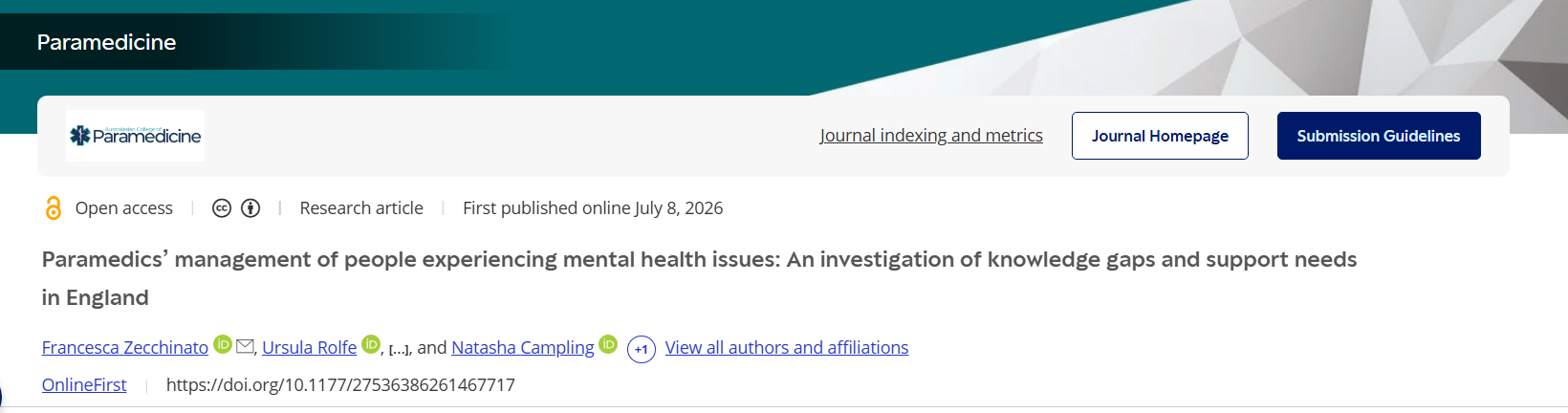
This week saw the publication of ‘Bridging Research and Policy: Practical Tips for Writing Policy Briefs‘ co-authored by Bournemouth University’s (BU) Dr. Pramod Regmi and Prof. Edwin van Teijlingen as well as former BU staff Dr. Nirmal Aryal.  An effective policy brief bridges the gap between research findings and policymaking, ensuring that evidence is presented succinctly and in a way that is accessible and usable for policymakers and relevant stakeholders. It is an important step in what is called knowledge mobilisation. However, many researchers find it hard to communicate the findings of their studies to relevant policymakers, whilst policymakers note that the evidence they need is not easily accessible and is often not presented in an accessible format. Producing policy briefs is one of the approaches which academics can use to get their research noticed by policymakers.

This practical paper outlines some of the trials and tribulations of producing policy briefs, based on real-world research. It offers several recommendations to help improve the writing and dissemination of policy briefs.  The paper is published in an Open Access journal hence freely available to anybody across the globe with internet access.


References:

  1. van Teijlingen, E., Balen, J., Regmi, P., Rushton, S., Simkhada, P., Aryal, N. (2025). Bridging Research and Policy: Practical Tips for Writing Policy Briefs. Journal of Health Promotion13(1),:89–96. https://doi.org/10.3126/jhp.v13i1.87170


Up2U: New BU academic publication

Congratulations to the interdisciplinary BU team on the publication of the paper ‘Up2U: designing and validating a new evidence-based programme for perpetrators of domestic abuse who want to change’ in Frontiers in Psychology [1].   The new paper is part of the series ‘The Dynamics of Emotion Regulation and Aggressiveness in Gender-Based Violence Contexts’, and it appeared in an Open Access journal and is therefore easily accessible.

Domestic abuse is a pervasive issue rooted in patterns of power and control, contributing to a significant number of high-harm offenses both in the UK and internationally. While programmes have been aiming to disrupt abusive cycles through the understanding and recognition of harm, there is widespread disagreement on what effective interventions should look like. This paper addresses this gap.

The authors of this paper include both psychologists and social workers, as well as a student co-author.  The lead author, Terri Cole, is a Principal Academic in Forensic Psychology.


Congratulations!

Prof. Edwin van Teijlingen


Reference:

  1. Cole, T., Oliver, L., Harvey, O., Healy, J., Sperryn, A., Barbin, A. (2025) Up2U: designing and validating a new evidence-based programme for perpetrators of domestic abuse who want to change, Frontiers in Psychology, Volume 16 – 28 Nov.2025 | https://doi.org/10.3389/fpsyg.2025.1676490

New BU midwifery paper

Congratulations to HEMS colleagues on their recently published paper in MIDIRS Midwifery Digest. This new qualitative publication focuses on the ‘Barriers to the uptake of healthy eating messages by Black African immigrant pregnant women living in the UK: midwives’ perspectives’ [1].  The paper grew out of Aniebiet Ekong’s PhD research on this topic which was supervised by Drs. Pramod Regmi, Juliet Wood, and Jaqui Hewitt-Taylor.


Reference:

  1. Ekong A, Regmi P, Wood J, Hewitt-Taylor J. Barriers to the uptake of healthy eating messages by Black African immigrant
    pregnant women living in the UK: midwives’ perspectives M
    IDIRS Midwifery Digest, 35(4):  372–383.

New PhD publication on Nepal’s migrant workers

Congratulations to BU postgraduate student Yagya Adhikari, who has just been informed by the editor of the Journal of Immigrant & Minority Health that his paper “Parental migration for work and psychosocial problems among left-behind adolescents in Nepal” [1] has been accepted for publication.  Yagya’s PhD is based in the Faculty of Health, Environment & Medical Science.  He is supervised by Dr. Pramod Regmi and Prof. Edwin van Teijlingen with support from Mr. Sudip Khanal, Lecturer in Biostatistics, at Manmohan Memorial Institute of Health Sciences (MMIHS) in Kathmandu.  This is the second paper from Yagya’s PhD the first one was published at the start of his PhD studies [2].  Both papers are published in Open Access journals and therefor will be freely available to read by anyone in the world with internet access.


References:

  1. Adhikari, Y.R., van Teijlingen, E., Regmi, P.R., Khanal, S., Parental migration for work and psychosocial problems among left-behind adolescents in Nepal, Journal of Immigrant & Minority Health (forthcoming)
  2. Adhikari, Y.R., Regmi, P.R., Devkota, B., van Teijlingen, E.R. (2022) Forgotten health and social care needs of left-behind families of Nepali migrant workers. Journal of Health Promotion, 10(1):1–4. https://doi.org/10.3126/jhp.v10i1.50976

CWLTH Research Seminar Series

The Centre for Wellbeing and Long-Term Health (CWLTH) will be hosting a series of virtual research seminars in October and November (see below).  All are welcome … please join us if you are able.  Contact CWLTH@Bournemouth.ac.uk to receive the meeting link.

The Centre is also collaborating with the Centre for Midwifery and Women’s Health (CMWH) to host ‘Writing in Health and Social Sciences’ on Monday 20th October.  During this three-hour workshop, experienced authors and editors will focus on multiple aspects of writing and publishing journal papers.  For more information contact CWLTH@Bournemouth.ac.uk.

BU paper among top 20 most cited papers

The international journal Sociological Research Online ranked a paper written by Bournemouth University academics in its top twenty most cited papers in the past three years.  The methodological paper ‘Using a range of communication tools to interview a hard-to-reach population’ has as lead author Dr. Orlanda Harvey in the Faculty of Health, Environment & Medical Science.

Reference:

  1. Harvey, O., van Teijlingen, E., Parrish, M. (2024) Using a range of communication tools to interview a hard-to-reach population, Sociological Research Online 29(1): 221–232 https://journals.sagepub.com/doi/pdf/10.1177/13607804221142212

New Centre for Midwifery & Women’s Health (CMHW) paper on Nepal

Last week the international Journal of Water, Sanitation and Hygiene for Development emailed to tell that our paper ‘Exploring handwashing knowledge and practice among lactating mothers in Kathmandu’s slum communities[1] had been accepted for publication.

It is widely known that poor access to good quality water, sanitation, and hygiene (WASH) lead to high morbidity in young children. The paper reports on a cross-sectional study conducted with 127 breastfeeding mothers in two slum settlements in Nepal’s capital.  It found that most had a good knowledge of WASH and appropriate washing of hands. However, the prevalence of illness among children whose mothers had only basic education was 26% higher than those whose mothers had completed secondary education. Family income and hand-washing practice were also significantly associated with child health (p < 0.01). Nearly three in four (73.2%) of children had experienced health issues, particularly diarrhoea, in the past half year.

The authors concluded that strengthening maternal hand-hygiene education programmes, particularly for lactating mothers, and improving WASH infrastructure are necessary, as well as promoting affordable hand-washing solutions in urban slums.

Prof. Edwin van Teijlingen


Reference:

  1. Devkota, G.P., Sharma, M.K., Sherpa, S., Khanal, T.R., Devkota, B., van Teijlingen, E. (2025) Exploring handwashing knowledge and practice among lactating mothers in Kathmandu’s slum communities, Nepal, Journal of Water, Sanitation and Hygiene for Development, 15:1-10. doi: 10.2166/washdev.2025.084

Nepal migrant workers returning from India

Nepal has been in the world news this week for the wrong reasons, with young protesters burning down the parliament, and damaging many government building in all seven provinces.  Some 30 young people died in the process and and thousands of sometimes dangerous prisoners were freed.   After the political and social upheaval in the country this past week, Nepalese migrant workers are beginning to return home from India to be with their families. Today (Friday 12th September) the BBC online reported under the heading ‘Worried migrants head home from India after Nepal turmoil‘.

The journalist interviewed both migrant workers and students from Nepal living in India.  The piece also cited several studies on Nepalese migrant workers in India, including a Bournemouth University (BU) study with the title ‘The Health of Nepali Migrants in India: A Qualitative Study of Lifestyles and Risks[1].  This publication is one of the many published papers on the health and well-being of Nepalese migrant workers conducted in BU’s Faculty of Health, Environment & Medical Sciences.  The lead author of this paper in theInternational Journal of Environmental Research and Public Health is Dr. Pramod Regmi, Principal Academic in International Health. 


References:

  1. Regmi PR, van Teijlingen E, Mahato P, Aryal N, Jadhav N, Simkhada P, Zahiruddin QS, Gaidhane A. (2019) The Health of Nepali Migrants in India: A Qualitative Study of Lifestyles and Risks. Int J Environ Res Public Health. 16(19):3655. doi: 10.3390/ijerph16193655.


New BU midwifery publication

Congratulations to Laura Stedman in the Centre for Midwifery & Women’s Health (CMWH) on the publication of a new paper in the international academic journal Midwifery.  This new paper Then they’re not there. Women’s experiences following admission of their newborn to a neonatal intensive care unit[1], has been co-authored with two fellow midwives: Associate Prof. Catherine Angell and Prof. Vanora Hundley.

The paper reports an online study into the experiences of UK women been diagnosed with Gestational diabetes mellitus (GDM) whose baby was admitted to a Neonatal Intensive Care Unit (NICU) at or shortly after birth. The qualitative analysis identified two themes: ‘experience’ and ‘understanding’; the former had five sun-themes and the latter was based on three sub-themes. A lack of understanding and knowledge was identified, with calls for enhanced education and joint decision making. Women recalled feelings of grief, isolation and stress as a result of the admission. For many, this experience was traumatic with lasting effects. For babies born at term, feelings of surprise and separation were paramount, in contrast to those born pre-term.  The authors concluded that there is need for more education and improved material to support for those facing this outcome. Future research should also focus on reducing the incidence of admission to NICU for women who have received a diagnosis of GDM.

Well done!
Prof. Edwin van Teijlingen
Reference:
  1. Stedman, L., Angell, C., Hundley, V. (2025) Then they’re not there. Women’s experiences following admission of their newborn to a neonatal intensive care unit, Midwifery [online first]

Bournemouth University psychologists publish new book

The international publisher Routledge published earlier this month a new book with the title: The Psychology of Stress [1].  The three authors of this excellent book are: Drs. Charlotte Mottram, Alison Woodward and Shanti Farrington.  The latter two academics are based in Bournemouth University’s Psychology Department.

Well done and congratulations!

Prof. Edwin van Teijlingen

Reference:

  1. Mottram, C., Woodward, A. & Farrington, S. (2025). The Psychology of Stress London: Routledge.

BU’s Dr. Iannuzzi editing special issue HEALTHCARE

Dr. Laura Iannuzzi, based in the Centre for Midwifery & Women’s Health, is acting as one of the two guest editors of a Special Issue for the international journal Healthcare.  This Special Issue called ‘Advancing Midwifery and Nursing Practice: Equity, Inclusion and Integrated Care’ currently has a call out for contributions. Details can be found by clicking here!

Healthcare is looking for authors to submit papers exploring strategic directions for midwifery and nursing in advancing inclusion, equity, and health.  This Special Issue is open to topics such as integrated care strategies and long-term care models, professional nursing roles, evidence-based interventions, and community-engaged approaches. The proposed theme aligns with Healthcare’s focus on multidisciplinary research and practical solutions that improve health outcomes across populations.

In this Special Issue, original research articles and reviews are welcome. Research areas may include (but are not limited to) the following:

  • Strategic frameworks and global policy implications for midwifery and nursing;
  • Educational innovations to promote equity and development;
  • Evidence-based clinical practices focused on underserved populations;
  • Community health initiatives and participatory care models;
  • Coordinated interprofessional models and organizational frameworks that promote inclusive and equitable care;
  • Impacts of global crises (e.g., pandemics, conflict) on midwifery and nursing practices.

The Guest Editors are Dr. Simona Fumagalli and Dr. Laura Iannuzzi

World War II: Eating tulip bulbs

Tulip bulbs can be eaten, but it is not a common source of human food. Eating tulip bulbs helped many Dutch people in the Hunger Winter, the last winter of the Second World War (1944-1945). During the German occupation the Dutch suffered from a shortage of food.  In the collection of my mother, I found a short book published in 1941 with a made-do-and-mend approach about growing your own food.  My mother died this summer at the age of 92.

The book ‘Veel groenten van weinig grond’ (in Dutch: Many vegetables from little soil) gives advice to readers on how to grown vegetables in small plots of land, gardens, etc.  This book in the first year of the occupation does not mention the use of tulips as food. Hidden in the book was a typed one-page sheet with three instruction for tulips followed by five recipes.

The main message seems to be that the preparation of the tulip bulbs as well as the taste is very much like potatoes.  For example, the recipe for tulip bulb puree includes boiling the bulbs, one packet of vanilla sugar or vanilla essence, three spoons of honey, artificial honey or syrup, mix well and add warm water.


Prof. Edwin van Teijlingen

Faculty of Health, Environment & Medical Sciences

Health promotion paper read 8,000 times

This morning ResearchGate informed us that our paper ‘Understanding health education, health promotion and public health[1] which was published in 2021 has been read 8,000 times.  This thinking piece delves into the differences between the concepts of: (a) health education; (b) health promotion; and (c) public health. This confusion does not limit itself to the individual terms, but also to how these terms relate to each other. Some use terms such as health education and health promotion interchangeably; others see them clearly as different concepts. The paper starts by outlining the authors’ understanding of these individual terms.

They suggest how the five principles of health promotion as outlined by the World Health Organization (WHO, 1984) fit into Tannahill’s (2009) model of three overlapping areas: (a) health education; (b) prevention of ill health; and (c) health protection. Such schematic overview places health education within health promotion and health promotion itself in the centre of the overarching disciplines of education and public health.  The authors hope their article helps reduce confusion among all those interested in our discipline, including students, educators, journalists, practitioners, policymakers, politicians, and researchers.


Prof. Edwin van Teijlingen

CMWH


Reference:

  1. van Teijlingen, K. R., Devkota, B., Douglas, F., Simkhada, P., & van Teijlingen, E. R. (2021). Understanding health education, health promotion and public health. Journal of Health Promotion9(01), 1–7. https://doi.org/10.3126/jhp.v9i01.40957


AI and Visual Anthropology & Sociology

Scholars worldwide are in dialogue about using Artificial Intelligence (AI) in various fields of research.  Of course, AI can make certain kinds of work more efficient, this is also the case in social science research. Although ethical use of AI is still fuzzy, the use of AI in visual anthropological and sociological research that entails the Interpretive Approach raises several questions. The editorial  team of Dhaulagiri Journal of Sociology and Anthropology, including BU’s Professor Edwin van Teijlingen, just published a research note raising three key questions: First, are researchers satisfied with the interpretation (the meaning created) by AI, i.e., the authenticity of the interpretation?; (b) Secondly, can AI reach the depth of the details of the visual object being interpreted? And thirdly, what ethical issues would AI-based research encounter if AI were highly supportive?

They agree that answering these questions is not easy. Since a detailed analysis of these components needs rigorous research work, we consider issues that will be the basis for further research in this editorial note. Hence, the purpose of this editorial note is to bring the research agenda to the forefront of researchers for further investigation rather than answering specific research questions mentioned above.


Reference:

  1. Khattri, M. B., Pandey, R., Roy, R. K., Subedi, M., van Teijlingen, E., Parker, S., & Bhandari, P. (2025). Ethical Dilemmas in Visual Anthropology and Sociology in the Era of Artificial Intelligence. Dhaulagiri Journal of Sociology and Anthropology19(1), i-v. https://doi.org/10.3126/dsaj.v19i1.80819

Academics write for newspaper in Nepal

Yesterday the online newspaper Online Khabar in Nepal published an opinion piece in English written by three Bournemouth University academics working with a colleague in Kathmandu.  This interdisciplinary piece ‘Resilient through experiences: Unlocking the entrepreneurial prowess of Nepal’s left-behind women‘ brings together ideas gained from many different studies and disciplines.  The three authors from Bournemouth University are: Dr. Sukanya Ayatakshi-Endow, Prof. Edwin van Teijlingen, and Dr. Pramod Regmi, and they collaborated with Dr. Rashmee Rajkarnikar who is based at Nepal’s oldest and largest university, Tribhuvan University.  The four authors brings insights from economics, business studies, sociology, women’s studies, migration studies and health.

New paper published on disability in women & girls

Yesterday (25 June) the online journal PLoS One published ‘Life-time experience of violence among women and girls living with disability in Nepal‘ our latest study on disability in Nepal [1].  This cross-sectional study was conducted in 28 municipalities representing all seven provinces as well as all three ecological regions of Nepal. A total of 1,294 women and girls with disability aged 15–59 years participated in  2021. We trained local enumerators using the KoBo application on smartphones or tablets. Both written and oral informed consent was sought from all participants. Cross-tabulations were performed in STATA 18 to determine the distribution of the prevalence of violence. Also, bivariable and multivariable logistic regression models were fitted to establish association between the participants’ characteristics and odds of experiencing violence.

Overall, 457 (35.32%) women living with disabilities had ever experienced violence at a point in their lifetime. Psychological/emotional violence was the most prevalent violence (74.40%) followed by physical violence (31.07%) and denial of services (28.67%). Age was positively associated with the likelihood of experiencing violence. Women belonging to the Brahman/Chhetri ethnic group had reduced odds of violence [AOR = 0.56; 95%CI: 0.37–0.85] compared to Hill Dalits. Divorced or separated women showed a markedly higher likelihood of experiencing violence [AOR = 6.69; 95%CI: 2.31–19.40] compared to currently married women. Participants who had not witnessed violence against other women exhibited significantly higher odds of experiencing violence [AOR = 1.86; 95%CI: 1.20–2.89]. Women living in the Koshi province [AOR = 4.04; 95%CI: 2.54–6.42], Madhesh province [AOR = 2.16; 95%CI: 1.15–4.08] and Bagmati province [AOR = 2.21; 95%CI: 1.41–3.46] reported significantly higher odds of experiencing violence compared to those in Karnali.

The paper concludes oncludes that age, ethnicity, marital status, and provincial residence are significant predictors of violence among women and girls living with disability in Nepal. Interventions aimed at addressing violence against women living with disability in Nepal must prioritize older women and those who were previously married. Also, policy-makers may want to consider giving priority must be given to those provinces where the prevalence and risk of experiencing violence is highest.

The study was funded The United Nations Women Trust Fund,  and the paper is freely available in the Open Access journal.  We previously published on research into disability in Nepal in 2023 [2].

Prof. Edwin van Teijlingen

Centre for Midwifery & Women’s Health

Visiting Faculty, Centre for Disability Studies, Mahatma Gandhi University, Kerala, India.


References:

  1. Simkhada P, Basnet S, Sharma S, van Teijlingen E, Wasti SP, Dahal T, et al. (2025) Life-time experience of violence among women and girls living with disability in Nepal. PLoS One 20(6): e0326659. https://doi.org/10.1371/journal.pone.0326659.
  2. Simkhada, P, Shyangdan, D, van Teijlingen E, Kadel, S, Stephen, J., Gurung, T. (2013) Women’s Knowledge & Attitude towards Disability in Rural Nepal. Disability & Rehabilitation 35(7): 606-13. http://informahealthcare.com/doi/abs/10.3109/09638288.2012.702847

Global Consortium for Public Health Research 2025

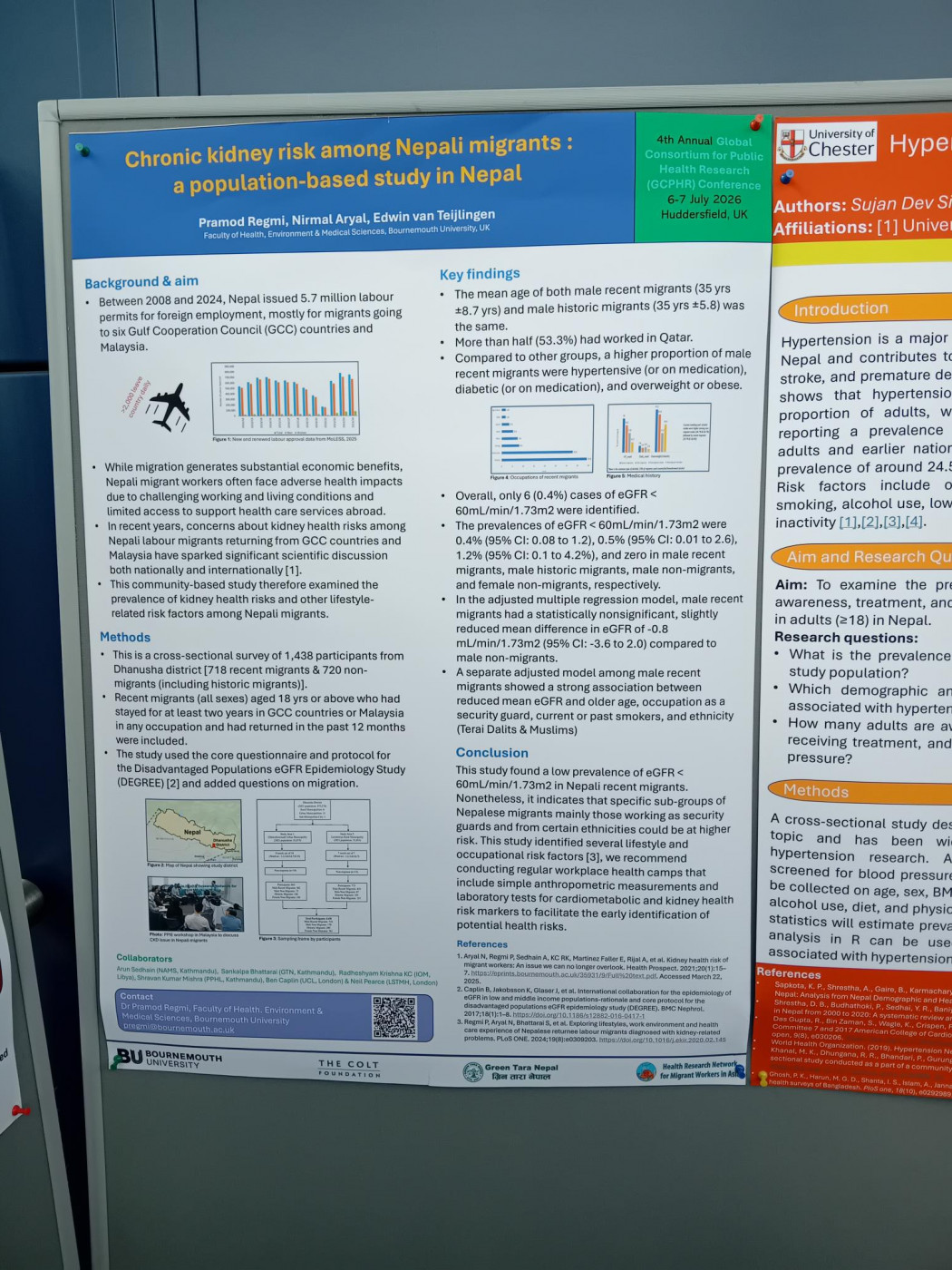
This week the 3rd Annual Meeting of the Global Consortium for Public Health (GCPHR) takes place at the University of Huddersfield on June 25th-26th.  GCPHR 2025 was attended by people involved in global health research from the UK, India, Nepal, Qatar, and Ghana.  Building on the success of the 2023 inaugural two-day meeting and the second annual event in 2024, the 2025 meeting brought together a diverse community of health researchers, practitioners, policy-makers and global health leaders. This initiative has as its main aim to facilitate the exchange of knowledge, promote innovation, and strengthen international collaboration.

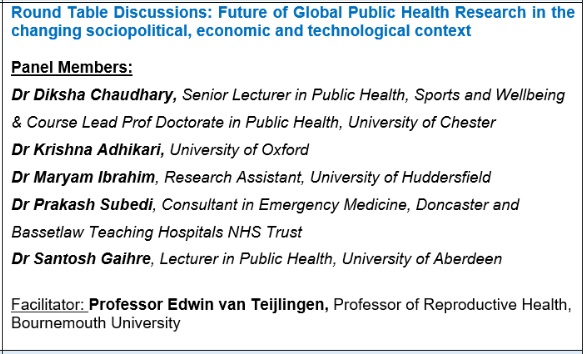
Bournemouth University academics have been involved since GCPHR’s inception, and this year Prof. Edwin van Teijlingen from the Centre for Midwifery & Women’s Health (CMWH) contributed to a panel discussion on ‘Innovating Tomorrow: National and Global Research in the Age of AI’.  He presented around the pros and cons of Interdisciplinary Research in Global Health. Together with colleagues Edwin has published several papers on interdisciplinary research [1-3] and collaborative writing of research output with a range of colleagues from different disciplines [4-5].

Prof. Padam Simkhada from the University of Huddersfield (and Visiting Faculty in BU’s Faculty of Health & Social Sciences outlined the recently awarded British Academy grant on ‘Evidence-based Policy-Making in Nepal’.  The latter project, which includes BU’s Dr. Pramod Regmi as co-investigator, also has policy-makers in Nepal as collaborators, giving it great potential to become a REF Impact Case-Study.


References:

  1. Shanker, S., Wasti, S.P., Ireland, J., Regmi, P., Simkhada, P., van Teijlingen, E. (2021) The Interdisciplinary Team Not the Interdisciplinarist: Reflections on Interdisciplinary Research, Europasian Journal of Medical Sciences 3(2): 1-5. https://doi.org/10.46405/ejms.v3i2.317
  2. van Teijlingen, E., Regmi, P., Adhikary, P., Aryal, N., Simkhada, P. (2019). Interdisciplinary Research in Public Health: Not quite straightforward. Health Prospect18(1), 4-7. https://doi.org/10.3126/hprospect.v18i1.19337
  3. Wasti, S. P., van Teijlingen, E., Simkhada, P. (2020) Public Health is truly interdisciplinary. Journal of Manmohan Memorial Institute of Health Sciences6(1):21-22.
  4. Harvey, O., van Teijlingen, A., Regmi, P.R., Ireland, J., Rijal, A., van Teijlingen, E.R. (2022) Co-authors, colleagues, and contributors: Complexities in collaboration and sharing lessons on academic writing, Health Prospect 21(1):1-3. https://www.nepjol.info/index.php/HPROSPECT/article/view/39320/31432
  5. Hundley, V., Luce, A., Simkhada, P., van Teijlingen, E. (2022) Collaborative Writing for Publication, In: Wasti, S.P., et al. (Eds.) Academic Writing and Publishing in Health & Social Sciences, Kathmandu, Nepal: Himal Books: 15-19.