I am delighted to share with you good news about the small grant that I was awarded from the Grants Academy at BU. It will help me to develop my research in the area of predictive analysis of complex networks.
The main goal of the project that will be a result of this small grant is to develop a robust and adaptive framework for Predictive Analysis of Complex Social Networks. Sound mysterious and you are probably asking so what?
Let me give you some background. For the first time in history, we have the possibility to process big social data about the interactions and activities of millions of individuals that can be represented as a social network. It represents an increasingly important resource yet is underutilised due to the scale, complexity and dynamics of these structures which makes them extremely difficult to model and analyse. As only recently the development of ICT technology has made collecting this data feasible, there is no coherent and comprehensive approach to analyse such networks and their dynamics which is crucial to advance our understanding of continuously changing people’s behaviour. It means that we need new approaches that will enable us to analyse and predict the future of social networks.
And now the next question that you are asking is probably: so why is it important?
Again, let me give you some examples that shed a little bit of light onto importance of my study:
a) Improving national security
The outcomes of this project will be applied in a collaborative research, with a visiting researcher, Prof. De Meo from the University of Messina, Italy, focused on Cosa Nostra analytics, for understanding of the organisation of Mafia syndicates. Application of my framework for Predictive Analysis of Complex Social Networks will contribute to the improvement of well-being and security of citizens. Results of this joint cross-disciplinary research will help law enforcement agencies and policy makers to more efficiently allocate resources in the fight against Mafia
b) Improving health and well-being
The results will also be applied in the cross-disciplinary collaborative research with a visiting researcher, Dr De Ruddere from the Ghent University, Belgium, to understand the social exclusion of patients with chronic pain. Application of my framework will facilitate the understanding of how the social networks of people with chronic pain evolve over time contributing to the improvement of the patients’ quality of life and social well-being.
If you would like to have a chat and hear more about my research please keep in touch: kmusialgabrys@bournemouth.ac.uk



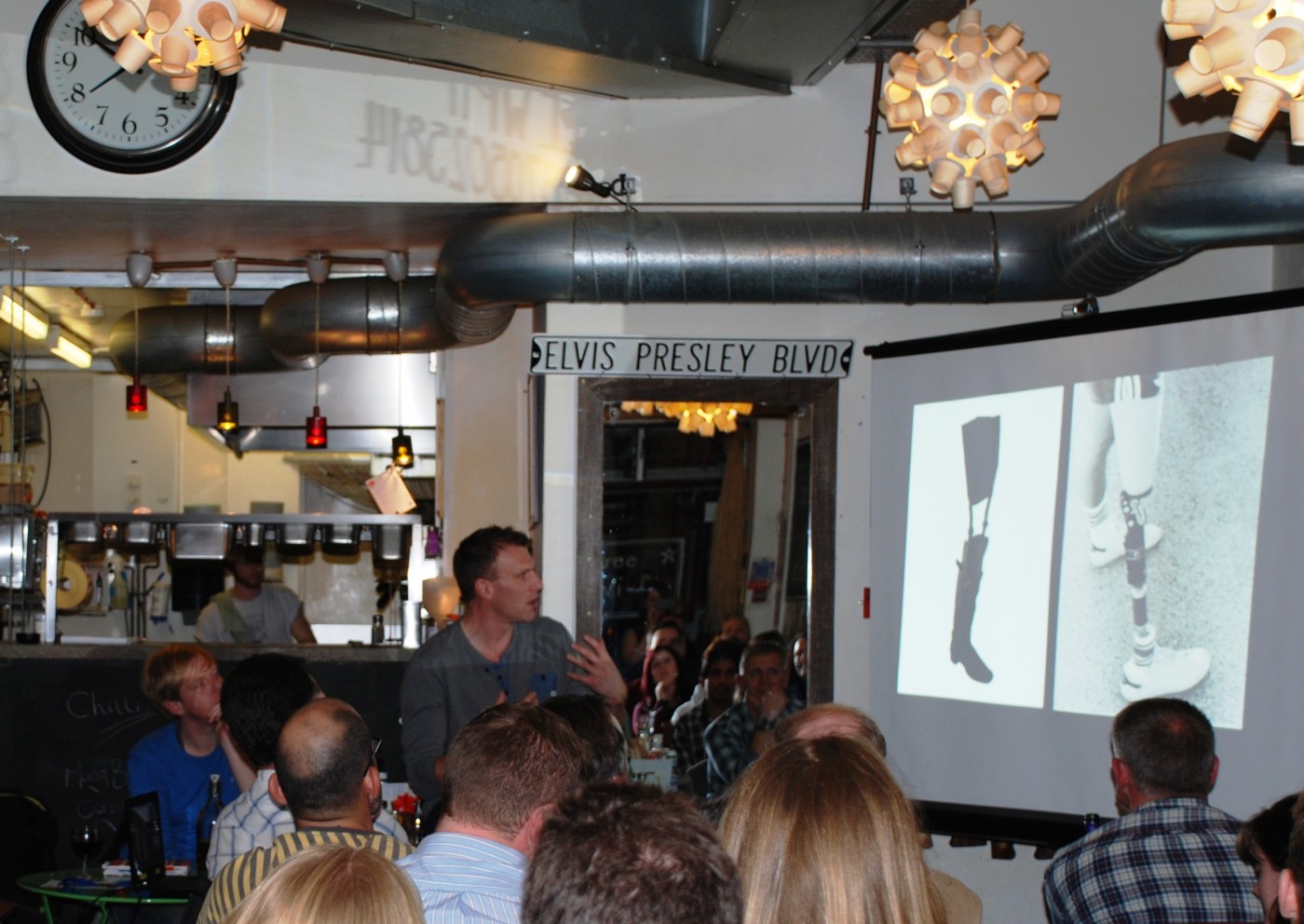
 As part of BRAD week, Dr. Andrew Derrington has been brought in to run a “Case for Support” workshop on Monday 4th of April 2016.
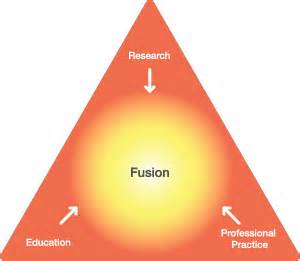 Doing a PhD may appeal to midwives and other NHS health professionals, but it often involves having to make difficult choices. Undertaking a part-time PhD means studying on top of a busy clinical position, but starting full-time study involves stepping away from practice, which may lead to a loss of clinical skills and confidence. The Centre for Midwifery, Maternal & Perinatal Health (CMMPH) at Bournemouth University has come up with a novel solution making it easier for midwives to undertake a doctorate while still maintaining their clinical skills. This approach is highlighted in the latest publication by Dr. Susan Way and colleagues, describing a process where CMMPH collaborate with NHS partners to apply for a match-funded PhD. [1] The first partnership was with Portsmouth Hospitals NHS Foundation Trust (PHT), with later partners expanded to cover the Isle of Wight and Southampton. Currently there are negotiations with Dorset Country Hospital NHS Foundation Trust and Poole Hospital NHS Foundation Trust. Non NHS organisations have also showed an interest with the Anglo European Chiropractic College (AECC) our likely next collaborator.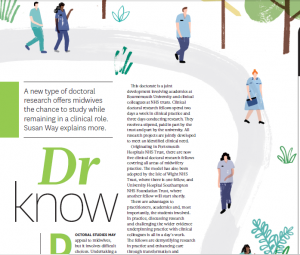
 NERC
NERC  RKEO
RKEO n Japan? In order to facilitate this, the Department for Business, Innovation and Skills and the Foreign and Commonwealth Office, through the jointly funded
  Bournemouth University’s







 REF mock exercise 2026 – nominate your research outputs on BRIAN
 ESRC Festival of Social Science 2026: Application Deadline Extended to Thursday 25 June 2026
 First publication for two CMWH PhD students
 SPROUT Returns: Designing Sustainability in Research Practice – Wednesday 20 May 12-2pm
 Reminder: Register for the ESRC Festival of Social Science 2026 Information Session
 ECR Funding Open Call: Research Culture & Community Grant – Apply now
 ECR Funding Open Call: Research Culture & Community Grant – Application Deadline Friday 12 December
 MSCA Postdoctoral Fellowships 2025 Call
 ERC Advanced Grant 2025 Webinar
 Update on UKRO services
 European research project exploring use of ‘virtual twins’ to better manage metabolic associated fatty liver disease