Whether you want to catch up on some reading without being disturbed or find somewhere to work collaboratively with research colleagues or your Faculty’s library team, the Library has lots to offer at this quiet time of the year. See our news item on the Staff Intranet for details about library services and facilities available to staff and researchers throughout the summer vacation.
Tagged / collaborative research
Latest Major Funding Opportunities
The following funding opportunities have been announced. Please follow the links for more information.
Economic and Social Research Council
The Economic and Social Research Council, under the Research Councils UK and Fonds National de la Recherche, Luxembourg, bilateral agreement, invites proposals for its Research Grants Scheme. The scheme supports collaborative research in any area of social sciences within the remit of both ESRC and FNR. The UK part of the project must be a minimum of £350,000 and no more than £1 million (at 100% fEC).
Maximum award: £1 million. Closng date: 31/12/16.
Natural Environment Research Council
The Natural Environment Research Council, in collaboration with the Engineering and Physical Sciences Research Council and the Indian Department of Science and Technology, invites applications for their Water Quality in India Scoping Workshop. The workshop will take place in Delhi on 17th and 18th November 2016 and the aims of the workshop will be: to define the scope of a potential new UK/India interdisciplinary programme focussed on research contributing to improved water quality, and through this support the economic development and welfare of India; to facilitate links between the UK and Indian research communities in the area of water quality research.
Applications from researchers working in the fields of water quality, water engineering and related disciplines are welcome. NERC and EPSRC will cover all reasonable travel and subsistence expenses for UK participants attending the workshop.
Maximum award: Not specified. Closing date: 16/09/16.
The Natural Environment Research Council, under its Discovery Science programme, invites applications for its Standard Research Grants. Discovery Science is a key component of delivering the strategy of NERC and is intended to facilitate the identification of the next generation of strategic priorities. The minimum that can be requested per complete proposal and per component is £65,000 and the maximum for complete proposal is £800,000 at 100 per cent full economic cost.
You must speak to your DDRPP and your Funding Development Officer before applying to this call. Bournemouth University can submit one application per round and operates a demand management process.
Maximum award: £640,000 (at 80% fEC). Closing date: 17/01/17.
Wellcome Trust
The Wellcome Trust invites submissions for its Wellcome Book Prize. The award is open to new works of fiction or non-fiction published by a UK based publisher or in-print between 1st January 2016 and 31 December 2016 (for the 2017 prize).
A book should have a central theme that engages with some aspect of medicine, health or illness. This can cover many genres of writing – including crime, romance, popular science, sci fi and history. The subjects these books might include birth and beginnings, illness and loss, pain, memory, and identity. The Wellcome Book Prize aims to excite public interest and encourage debate around these topics. Academic textbooks, scholarly monographs, diet books and picture-led books are not eligible, even if they are relevant to medicine or medical science.
Maximum award: £30,000. Closing date: 09/09/16 (recurring).
If you are interested in submitting to any of the above calls you must contact RKEO with adequate notice before the deadline. Please note that some funding bodies specify a time for submission as well as a date. Please confirm this with your RKEO Funding Development Officer.
You can set up your own personalised alerts on Research Professional. If you need help setting these up, just ask your School’s/Faculty’s Funding Development Officer in RKEO or view the recent blog post here. If you are thinking of applying, why not add an expression of interest on Research Professional so that BU colleagues can see your intention to bid and contact you to collaborate.
100+ Nepal health publications
At a television interview this morning in Kathmandu I was asked how many papers I had published on health and health-related issues in Nepal. I told the interviewer from BTV Business that it was around 90 to a hundred. Coming back to Green Tara Nepal office I decide to update the list of papers on Nepal to make sure I had not lied too much on TV.
Adding up the papers, editorials and, to a lesser extent, book chapters I was pleasantly surprised that there were 25 on maternity care & midwifery, 18 on sexual & reproductive health, nine on infectious diseases, five on non-communicable diseases, six on nutrition & child health, three on mental health, two on migration and a further mixture of 38 on topics such as health systems, research methods, or health & education capacity building. If I have not double counted any of the papers that a grand total of 106. Most are co-authored with BU Visiting Faculty Prof.Padam Simkhada (from Liverpool John Moores University), many with PhD students conducting projects in Nepal and, more recently with BU post-doctoral fellow Dr. Pramod Regmi.
Prof. Edwin van Teijlingen
CMMPH
Reference (by topic)
Maternal & Neonatal Health & Midwifery
- Simkhada, B, van Teijlingen E, Porter, M, Simkhada, P. (2006) Major problems and key issues in Maternal Health in Nepal (Review article), Kathmandu University Medical Journal, 4(2): 261-266. kumj.com.np/ftp/issue/14/Major-problems-and-key-issues-in-maternal-health-in-Nepal.pdf
- Dhakal, S., Chapman, G., Simkhada, P., van Teijlingen E., Stephens J., Raja, A.E. (2007) Utilisation of postnatal care among rural women in Nepal, BMC Pregnancy & Childbirth 7(19). Web: biomedcentral.com/content/pdf/1471-2393-7-19.pdf
- Simkhada, B., van Teijlingen E., Porter, M., Simkhada, P. (2008) Factors affecting the utilisation of antenatal care in developing countries: a systematic review of the literature, Journal of Advanced Nursing 61(3): 244-260.
- Teijlingen van, E., Simkhada, P., Ireland, J. (2010) Lessons learnt from undertaking maternity-care research in developing countries. Evidence-based Midwifery 8(1): 12-6.
- Simkhada, B., Porter, M., van Teijlingen, E. (2010) The role of mothers-in-law in antenatal care decision-making in Nepal: A qualitative study. BMC Pregnancy & Childbirth 10(34) biomedcentral.com/content/pdf/1471-2393-10-34.pdf
- Baral, Y.R, Lyons, K., Skinner, J, van Teijlingen, E. (2010) Determinants of skilled birth attendants for delivery in Nepal Kathmandu University Medical Journal 8(3): 325-332. http://www.kumj.com.np/issue/31/325-332.pdf
- .Acharya, D.R., Bell, J., Simkhada, P., van Teijlingen E., Regmi, P.R. (2010) Women’s autonomy in decision-making for health care: A demographic study in Nepal. Reproductive Health 9(15) reproductive-health-journal.com/content/pdf/1742-4755-7-15.pdf
- Dhakal, S., van Teijlingen, E., Simkhada, P., Dhakal, K.B., Stephens J., Chapman, G., Raja, A.E. (2011) Antenatal care among women in rural Nepal: A community-based study. Online Journal of Rural Nursing & Health Care 11 (2): 76-87. http://rnojournal.binghamton.edu/index.php/RNO/article/view/20/17
- Dhakal, S., van Teijlingen, E., Raja, A.E., Dhakal, K.B. (2011) Skilled care at birth among rural women in Nepal: practice & challenges Journal of Health, Population & Nutrition 29 (4): 371-378.
- Simkhada, P.P., van Teijlingen, E, Sharma, G., Simkhada, B., Townend, J. (2012) User costs and informal payments for care in the largest maternity hospital in Kathmandu, Nepal, Health Science Journal 6(2): 317-334. hsj.gr/volume6/issue2/6212.pdf
- Baral, Y.R, Lyons, K., Skinner, J, van Teijlingen, E.R. (2012) Maternal health services utilisation in Nepal: Progress in the new millennium? Health Science Journal 6(4): 618-633. hsj.gr/volume6/issue4/644.pdf
- Joshi, R., Sharma, S., van Teijlingen, E. (2013) Improving neonatal health in Nepal: Major challenges to achieving Millennium Development Goal 4, Health Science Journal 7(3): 247-257. http://www.hsj.gr/index.files/Page1421.htm
- Bogren, M., van Teijlingen, E., Berg. M. (2013) Where midwives are not yet recognised: A feasibility study of professional midwives in Nepal, Midwifery 29(10): 1103-1109.
- Simkhada, B., van Teijlingen, E., Simkhada, P., Porter, A.M., Wasti, S.P. (2014) Why do costs act as a barrier in maternity care for some, but not all women? A qualitative study in rural Nepal, International Journal of Social Economics 41 (8): 705-713.
- Bogren, M.U., Bajracharya, K., Berg, M., Erlandsson, K., Ireland, J., Simkhada, P., van Teijlingen, E. (2013) Nepal needs midwifery, Journal of Manmohan Memorial Institute of Health Sciences (JMMIHS) 1(2): 41-44. nepjol.info/index.php/JMMIHS/article/view/9907/8082
- Simkhada, B., Sharma, A., van Teijlingen, E., Silwal, R.C., Simkhada, P. (2015) Exploring Maternal Mortality Reduction. In: Wasti, S.P., Simkhada, P.P. & van Teijlingen, E. (Eds.) The Dynamics of Health in Nepal, Kathmandu, Nepal: Social Science Baha & Himal Books: 95-121.
- Simkhada, B., Porter, M., Teijlingen van E. (2011) My mother-in-law tells me what to do, Midwives (official magazine of the Royal College of Midwives) issue 4: 34-36.
- Teijlingen van, E., Simkhada, B., Simkhada, P. (2013) Midwifery and maternity care in Nepal: the vital link, The Practising Midwife 16 (10): 24-27.
- Milne, L., van Teijlingen, E., Hundley, V., Simkhada, P., Ireland, J. (2015) Staff perspectives of barriers to women accessing birthing services in Nepal: A qualitative study BMC Pregnancy & Childbirth 15:142 biomedcentral.com/1471-2393/15/142
- Sathian, B De A, Simkhada P, Malla K, Ghosh A, Basnet S, Roy B (2015) Time Trend of Pneumonia in under Five Children of Nepal. American Journal of Public Health Research 3 (4A), 27-30
- Mahato, P., van Teijlingen, E., Simkhada, P., Angell, C. (2016) Birthing centres in Nepal: Recent developments, obstacles and opportunities, Journal of Asian Midwives 3(1): 18-30. http://ecommons.aku.edu/cgi/viewcontent.cgi?article=1033&context=jam
- Mahato, P.K., Regmi, P.R., van Teijlingen, E., Simkhada, P., Angell, C., Sathian, B. (2015) Birthing centre infrastructure in Nepal post 2015 earthquake. Nepal Journal of Epidemiology 5(4): 518-519. http://www.nepjol.info/index.php/NJE/article/view/14260/11579
- Sharma, S., van Teijlingen, E., Hundley, V., Angell, C., Simkhada, P. (2016) Dirty and 40 days in the wilderness: Eliciting childbirth and postnatal cultural practices and beliefs in Nepal BMC Pregnancy & Childbirth 16: 147 https://bmcpregnancychildbirth.biomedcentral.com/articles/10.1186/s12884-016-0938-4
- Sharma, S., van Teijlingen, E., Belizán, J.M., Hundley, V., Simkhada, P., Sicuri, E. (2016) Measuring What Works: An impact evaluation of women’s groups on maternal health uptake in rural Nepal, PLOS One 11(5): e0155144 http://journals.plos.org/plosone/article?id=10.1371%2Fjournal.pone.0155144
- Regmi, P., van Teijlingen, E., Hundley, V., Simkhada, P., Sharma, S., Mahato, P. (2016) Sustainable Development Goals: relevance to maternal & child health in Nepal. Health Prospect 15(1):9-10. www.healthprospect.org/archives/15/1/3.pdf
Sexual & Reproductive Health
- Simkhada, P., Bhatta, P., van Teijlingen E. (2006) Importance of piloting a questionnaire on sexual health research (Letter), Wilderness & Environmental Medical Journal, 17(4): 295-296. wemjournal.org/wmsonline/?request=get-document&issn=1080-6032&volume=017&issue=04&page=0295#Ref
- Simkhada, P., Bhatta, P., van Teijlingen E., Regmi, P. (2010) Sexual health knowledge, sexual relationships and condom use among male trekking guides in Nepal. Culture, Health & Sexuality 12(1): 45-58.
- Acharya, D.R., van Teijlingen E.R., Simkhada P. (2009) Opportunities & challenges in school-based sex & sexual health education in Nepal. Kathmandu University Medical Journal 7(4): 445-453 Web: http://kumj.com.np/ftp/issue/28/445-453.pdf
- Regmi P., Simkhada, P.P., van Teijlingen E. (2010) “Boys Remain Prestigious, Girls Become Prostitutes”: Socio-Cultural Context of Relationships & Sex among Young People in Nepal, Global Journal of Health Science 2(1): 60-72. http://ccsenet.org/journal/index.php/gjhs/article/viewFile/3951/4542
- Simkhada, B., Porter, M., van Teijlingen, E. (2010) The role of mothers-in-law in antenatal care decision-making in Nepal: A qualitative study. BMC Pregnancy & Childbirth 10(34) biomedcentral.com/content/pdf/1471-2393-10-34.pdf
- Baral, Y.R, Lyons, K., Skinner, J, van Teijlingen, E. (2010) Determinants of skilled birth attendants for delivery in Nepal Kathmandu University Medical Journal 8(3): 325-332. http://www.kumj.com.np/issue/31/325-332.pdf
- Regmi, P., Simkhada, P., van Teijlingen E. (2010) Dating and Sex among Emerging Adults in Nepal. Journal of Adolescence Research 26 (6): 675-700.
- Ghimire, L., van Teijlingen E. (2009) Barriers to utilisation of sexual health services by female sex workers in Nepal, Global Journal of Health Science 1(1): 12-22 web address: http://ccsenet.org/journal/index.php/gjhs/article/viewFile/93/1062
- Regmi, P., Simkhada, P., van Teijlingen (2008) Sexual and reproductive health status among young people in Nepal: opportunities & barriers for sexual health education & service utilisation, Kathmandu University Medical Journal 6(2): 248-256. http://kumj.com.np/ftp/issue/22/248-256.pdf
- Regmi, P., van Teijlingen, E, Simkhada, P., Acharya, D. (2010) Barriers to sexual health services for young people in Nepal. Journal of Health Population & Nutrition 28: 619-627.
- Acharya, D.R., Bhattarai, R, Poobalan, A, van Teijlingen E.R., Chapman, G. (2010) Factors associated with teenage pregnancy in South Asia: a systematic review. Health Sciences Journal 4 (1): 3-14. web address: hsj.gr/volume4/issue1/402.pdf
- Ghimire, L., Smith, W.C.S., van Teijlingen, E. (2011) Utilisation of sexual health services by female sex workers in Nepal, BMC Health Services Research 11: 79 biomedcentral.com/content/pdf/1472-6963-11-79.pdf
- Ghimire, L., Smith, W.C.S., van Teijlingen, E., Dahal, R., Luitel, N.P. (2011) Reasons for non- use of condoms and self-efficacy among female sex workers: A qualitative study in Nepal, BMC Women’s Health 11: 42 biomedcentral.com/content/pdf/1472-6874-11-42.pdf
- Simkhada, P., van Teijlingen, E., Acharya, D.R., Schildbach, E., Silwa, P.R., Shrestha, J., Pandey, P.L. (2012) Sexual and reproductive health of adolescents in rural Nepal: Knowledge, attitudes and behavior. Nepal Population Journal 17(16): 3-10.
- Simkhada, P., van Teijlingen, E., Regmi, P., Bhatta, P., Ingham, R., Stone, N. (2015) Sexual health knowledge and risky sexual behaviour of Nepalese trekking guides. Journal of Manmohan Memorial Institute of Health Sciences 1(4): 35-42
- Acharya, D.R., Regmi, P., Simkhada, P. van Teijlingen, E. (2015) Modernisation and Changes in Attitudes towards Sex and Relationships in Young People. In: Wasti, S.P., Simkhada, P.P. & van Teijlingen, E. (Eds.) The Dynamics of Health in Nepal, Kathmandu, Nepal: Social Science Baha & Himal Books: 63-94.
- Simkhada, P.P., Sharma, A., van Teijlingen, E.R., Beanland, R,L. (2016) Factors influencing sexual behaviour between tourists and tourism employees: A systematic review. Nepal Journal of Epidemiology 6(1): 530-538. nepjol.info/index.php/NJE/article/view/14735/11952
- Regmi, P.R., van Teijlingen, E. (2015) Importance of Health and Social Care Research into Gender and Sexual Minority Populations in Nepal. Asia-Pacific Journal of Public Health 27(8): 806-808. http://aph.sagepub.com/content/27/8/806.full
Infectious diseases
- Wasti, S.P., Simkhada, P., van Teijlingen E. (2009) Antiretroviral treatment programmes in Nepal: Problems and barriers. Kathmandu University Medical Journal 7(3): 306-314 web address: http://kumj.com.np/ftp/issue/27/306-314.pdf
- Wasti, S.P., Randal, J., Simkhada, P.P., van Teijlingen, E. (2011) In what way do Nepalese cultural factors affect adherence to antiretroviral treatment in Nepal? Health Science Journal 5(1): 37-47.
- Wasti, S.P., van Teijlingen E., Simkhada, P., Randall, J., Baxter, S., Kirkpatrick, P., Vijay Singh Gc. (2012) Factors influencing adherence to antiretroviral treatment in Asian developing countries: a systematic review, Tropical Medicine & International Health 17(1): 71-81. http://onlinelibrary.wiley.com/doi/10.1111/j.1365-3156.2011.02888.x/pdf
- Wasti, S.P., Simkhada, P., Randall, J., van Teijlingen, E., Freeman, J. (2012) Factors influencing adherence to antiretroviral treatment in Nepal: a mixed-methods study. PLoS ONE 7(5): e35547. doi:10.1371/journal.pone.0035547. plosone.org/article/fetchArticle;jsessionid=9F031521BFD51A9FA385083CE75F8072?articleURI=info%3Adoi%2F10.1371%2Fjournal.pone.0035547
- Wasti, S.P., Simkhada, P., van Teijlingen, E. (2012) Ethical and Practical Challenges in Conducting Fieldwork on a Sensitive Topic (HIV) in Nepal, In: Loubere, N., Morgan, R., Kruckenberg, L., De Beukelaer, C. & Hernandez Montes De Oca, P. (eds.) RiDNET Practical Fieldwork Notes, Leeds: Researchers in Development Network (RiDNet), University of Leeds,Vol.1: 9.
- Wasti, S.P., Simkhada, P., Randall, J., van Teijlingen, E., Freeman, J. (2012) Barriers to & facilitators of antiretroviral therapy adherence in Nepal: a qualitative study. Journal of Health, Population & Nutrition 30(4): 410-419. jhpn.net/index.php/jhpn/article/view/1492/893
- Devkota, S., Simkhada, P., van Teijlingen, E., Rai, L.D. (2012) Media use for Health Promotion: Communicating Childhood Immunisation Messages to Parents. Journal of Health Promotion 4(1): 1-9.
- Wasti, S.P., Simkhada, P.P. & van Teijlingen, E. (Eds.) (2015) Socio-Cultural Aspects of HIV/AIDS. In: The Dynamics of Health in Nepal, Kathmandu, Nepal: Social Science Baha & Himal Books: 47-62.
- Wasti, S.P., Simkhada, P.P, Randall, J., van Teijlingen E. (2009) Issues & Challenges of HIV/AIDS Prevention & Treatment Programme in Nepal, Global Journal of Health Science 1(2): 62-72. http://ccsenet.org/journal/index.php/gjhs/article/viewFile/2460/3474
Non-Communicable Diseases
- Adhikary, P., Simkhada, P.P., van Teijlingen E., Raja, A.E. (2008) Health and Lifestyle of Nepalese Migrants in the UK BMC International Health and Human Rights 8(6). Web address: biomedcentral.com/1472-698X/8/6.
- Gyawali, B., Keeling, J., van Teijlingen, E., Dhakal. L., Aro, A.R. (2015) Cervical Cancer Screening: Ethical Consideration, Medicolegal & Bioethics 5: 1-6
- Gyawali, B., Neupane, D., Sharma, R., Mishra, S.R., van Teijlingen, E., Kallestrup, P. (2015) Prevalence of type 2 diabetes in Nepal: Systematic review & meta-analysis from 2000 to 2014 Global Health Action 8: 29088 globalhealthaction.net/index.php/gha/article/view/29088/pdf_189
- Sathian, B. , De, A. ,van Teijlingen, E., Simkhada, P. , Banerjee, I. , Roy, B. , Supram, H. , Devkota, S. , E, R. (2015). Time Trend of the Suicide Incidence in India: a Statistical Modelling. American Journal of Public Health Research, 3(5A), 80-87. http://pubs.sciepub.com/ajphr/3/5A/17/index.html
- Regmi, P.R., Kurmi, O., Aryal, N., Pant, P.P., Banstola, A., Alloh, F., van Teijlingen, E., (2016) Diabetes prevention and management in South Asia: A call for action. International Journal of Food, Nutrition & Public Health (IJFNPH) 8(2): 107-116. http://www.wasd.org.uk/download/diabetes-prevention-and-management-in-south-asia-a-call-for-action/
Nutrition & Child Development
- Singh, S., Rajendra Kumar, B., Simkhada, P., van Teijlingen E. (2007) Health status & health needs of the orphan children in Kathmandu, Nepal, Journal of Nepal Health Research Council 5(2): 39-48.
- Singh, S., van Teijlingen E.R., Simkhada, P. (2007) Health status and health needs of the orphan children in Kathmandu, Nepal: The findings of a pilot study, Stupa: Journal of Health Sciences 3 (1&2): 44-54.
- Devkota, S., Simkhada, P., van Teijlingen, E., Rai, L.D. (2013) Childhood Immunisation in Nepal: Parents’ knowledge, attitudes and behaviour & implications for Health Policy. Health Science Journal 7(4):370-383.hsj.gr/volume7/issue4/743.pdf
- Acharya, J., van Teijlingen, E., Murphy, J., Hind, M. (2015) Study of nutritional problems in preschool aged children in Kaski District in Nepal, Journal of Multidisciplinary Research in Healthcare 1(2): 97-118. http://dspace.chitkara.edu.in/jspui/bitstream/1/560/1/12007_JMRH_Acharya.pdf
- Subedi, Y.P., Simkhada, P., van Teijlingen, E. (2016) Where is Nepal in the Demographic Transition within the wider context of the Nutrition Transition? Open Journal of Social Sciences 4: 155-166. http://file.scirp.org/pdf/JSS_2016052310320947.pdf
- Simkhada, P., Sathian, B., Adhikari, S., van Teijlingen, E., Roy, B. (2015) Is early diagnose for Vitamin A deficiency better than the current supplementation programme of Nepal? Journal of Biomedical Sciences 2(4):28-30. http://www.nepjol.info/index.php/JBS/index
Mental Health
- Simkhada, P., van Teijlingen E., Winter, R.C., Fanning, C., Dhungel, A., Marahatta S.B. (2015) Why are so many Nepali women killing themselves? A review of key issues Journal of Manmohan Memorial Institute of Health Sciences 4(1): 43-49.
- Simkhada, P.P., van Teijlingen, E., Marahatta, S.B. (2015) Mental health services in Nepal: Is it too late? Journal of Manmohan Memorial Institute of Health Sciences 1(4): 1-2.
- van Teijlingen, E., Simkhada, P., Devkota, B., Fanning, P., Ireland, J., Simkhada, B., Sherchan, L., Silwal, R.C., Pradhan, S., Maharjan, S.K., Maharjan, R.K. (2015) Mental health issues in pregnant women in Nepal. Nepal Journal of Epidemiology 5(3): 499-501. http://www.nepjol.info/index.php/NJE/article/view/13607/11007
Migration / Occupational Health
- Adhikary, P., Keen, S., van Teijlingen, E. (2011) Health Issues among Nepalese migrant workers in the Middle East. Health Science Journal 5: 169-175. hsj.gr/volume5/issue3/532.pdf
- Sapkota, T., Simkhada, P., van Teijlingen, E. (2014) Nepalese health workers’ migration to the United Kingdom: A qualitative study. Health Science Journal 8(1): 57-74.
Other (including: health systems, research methods, capacity building)
- Simkhada, P, Shyangdan, D, van Teijlingen E, Kadel, S, Stephen, J., Gurung, T. (2013) Women’s Knowledge & Attitude towards Disability in Rural Nepal. Disability & Rehabilitation 35(7): 606-613. http://informahealthcare.com/doi/abs/10.3109/09638288.2012.702847
- van Teijlingen, E.R., Simkhada, B, Ireland J, Simkhada P, Bruce J. (2012) Evidence-based health care in Nepal: The importance of systematic reviews, Nepal Journal of Epidemiology 1(4): 114-118.
- Kirkpatrick, P., van Teijlingen E. (2009) Lost in Translation: Reflecting on a Model to Reduce Translation and Interpretation Bias, The Open Nursing Journal, 3(8): 25-32 web address: bentham.org/open/tonursj/openaccess2.htm
- van Teijlingen, E., Simkhada, P., Stephen, J., Simkhada, B., Woodes Rogers, S., Sharma, S. (2012) Making the best use of all resources: developing a health promotion intervention in rural Nepal. Health Renaissance 10(3): 229-235. healthrenaissance.org.np/uploads/7141_24852_1_PB.pdf
- Simkhada, P., van Teijlingen, E., Pokharel, T., Devkota, B., Pathak, R.S. (2013) Research Methods Coverage in Medical & Health Science Curricula in Nepal, Nepal Journal Epidemiology 3(3): 253-258. nepjol.info/index.php/NJE/article/view/9185
- van Teijlingen E.R., Simkhada, P.P. (2012) Ethical approval in developing countries is not optional, Journal of Medical Ethics 38: 428-430.
- Devkota, B., van Teijlingen, E. (2012) “Why did they join?” Exploring the motivation of rebel health workers in Nepal Journal of Conflictology 3(1): 18-29. http://journals.uoc.edu/index.php/journal-of-conflictology/article/viewFile/vol3iss1-joc/vol3iss1-joc
- Simkhada, P., van Teijlingen, E., Devkota, B., Pathak, R.S., Sathian, B. (2014) Accessing research literature: A mixed-method study of academics in Higher Education Institutions in Nepal, Nepal Journal of Epidemiology 4(4): 405-14. nepjol.info/index.php/NJE/article/view/11375
- van Teijlingen, E, Simkhada, P., Wasti, P.P. (2015) Nepal is Changing: Modernisation and Diversity in Healthcare. In: Wasti, S.P., Simkhada, P.P. & van Teijlingen, E. (Eds.) The Dynamics of Health in Nepal, Kathmandu, Nepal: Social Science Baha & Himal Books: 1-15.
- Devkota, B., van Teijlingen, E. (2015) Exploring Rebel Health Services during the Maoist People’s War. In: Wasti, S.P., Simkhada, P.P. & van Teijlingen, E. (Eds.) The Dynamics of Health in Nepal, Kathmandu, Nepal: Social Science Baha & Himal Books: 122-130.
- Devkota, S., Maharjan, H.M., van Teijlingen, E. (2015) Media and Health. In: Wasti, S.P., Simkhada, P.P. & van Teijlingen, E. (Eds.) The Dynamics of Health in Nepal, Kathmandu, Nepal: Social Science Baha & Himal Books: 169-184.
- Simkhada, P., van Teijlingen, E., Wasti, S.P. (2015) Final thoughts. In: Wasti, S.P., Simkhada, P.P. & van Teijlingen, E. (Eds.) The Dynamics of Health in Nepal, Kathmandu, Nepal: Social Science Baha & Himal Books: 222-228.
- Devkota, B., van Teijlingen E. (2007) Basic health as peace dividend in post-conflict Nepal, Journal of HEPASS, 3(1): 21-23.
- Simkhada, P., van Teijlingen, E. (2010) Higher education in Nepal: Several challenges ahead. Diaspora, 3 (1): 44-47.
- Simkhada, P., Baral, Y.R., van Teijlingen E. (2010) Health & Medical Research: A Bibliometric Review, Asia-Pacific Journal of Public Health 22(4): 492-500 web address http://aph.sagepub.com/content/22/4/492.full.pdf+html
- Devkota, B., van Teijlingen E. (2010) Demystifying the Maoist Barefoot Doctors of Nepal, Medicine, Conflict & Survival 26(2): 108-123.
- Devkota, B., van Teijlingen, E. (2010) Understanding effects of armed conflict on health outcomes: the case of Nepal. Conflict & Health 4 (20) http://www.conflictandhealth.com/content/4/1/20
- van Teijlingen E., Simkhada, B., Porter, M., Simkhada, P., Pitchforth, E., Bhatta, P. (2011) Qualitative research methods and its place in health research in Nepal, Kathmandu University Medical Journal 9(4): 301-305.
- van Teijlingen, E., Simkhada, P., Stephen, J. (2013) Doing focus groups in the health field: Some lessons from Nepal, Health Prospect 12(1): 15-17. http://www.nepjol.info/index.php/HPROSPECT/article/view/8722/7111
- Neupane, D., van Teijlingen, E., Khanal, V., Mishra, S.R., Kallestrup, P. (2013) Involving Nepali academics in health research Health Prospect 12 (2): 21-23. http://www.nepjol.info/index.php/HPROSPECT/article/view/9868/8056
- van Teijlingen, E., Ireland, J., Hundley, V., Simkhada, P., Sathian, B. (2014) Finding the right title for your article: Advice for academic authors, Nepal Journal of Epidemiology 4(1): 344-347.
- Devkota, B., van Teijlingen E. (2009) Politicians in Apron: Case study of Rebel Health Services in Nepal, Asia-Pacific Journal of Public Health 21(4): 377-384.
- Simkhada, P., van Teijlingen E., Kadel, S., Stephens, J., Sharma, S., Sharma, M. (2009) Reliability of National Data Sets: Evidence from a Detailed Small Area Study in Rural Kathmandu Valley, Nepal. Asian Journal of Epidemiology 2(2): 44-48.
- Bhatta, P., Simkhada, P., van Teijlingen E., Maybin, S. (2009) A questionnaire study of VSO volunteers: Health risk & problems encountered. Journal of Travel Medicine 16(5): 332-337.
- P., Teijlingen van, E. (2012) Role of Individual Academics & International Universities in Health Research in Nepal (Guest Editorial), Nepal Journal of Epidemiology 2(2): 179-181. http://www.nepjol.info/index.php/NJE/article/view/6572/5364
- van Teijlingen, E., Benoit, C., Bourgeault, I., DeVries, R., Sandall, J., Wrede, S. (2015) Learning from health care in other countries: the prospect of comparative research, Health Prospect 14(1): 8-12. nepjol.info/index.php/HPROSPECT/article/view/13036/10525
- Ireland, J., van Teijlingen, E., Kemp, J. (2015) Twinning in Nepal: the Royal College of Midwives UK and the Midwifery Society of Nepal working in partnership, Journal of Asian Midwives 2 (1): 26-33. http://ecommons.aku.edu/jam/vol2/iss1/5/
- Sharma, S., Joshi, P., van Teijlingen, E. (2015) ‘Nepenglish’ or ‘Nepali English’: A new version of English? Asian Journal of Humanities & Social Sciences 4(2): 188-193. ajssh.leena-luna.co.jp/AJSSHPDFs/Vol.4%282%29/AJSSH2015%284.2-21%29.pdf
- Simkhada, P., van Teijlingen, E., Wasti, S.P., Sathian, B. (2014) Mixed-methods approaches in health research in Nepal (editorial) Nepal Journal of Epidemiology 4(5): 415-416.
- Sharma, A, Tuladhar, G., Dhungel, A., Padmadharini, van Teijlingen, E., Simkhada, P. (2015) Health Promotion: A review of policies and practices in Nepal, Public Health Perpective 5(2): http://phpnepal.org/index.php?listId=941#.VO4Qvn9tXkd
- Simkhada, P., Lee, A., van Teijlingen, E., Karki, P., Neupane, C.H. (2015) Need and importance of health protection training in Nepal, Nepal Journal of Epidemiology (editorial) 5(1): 441-43. nepjol.info/index.php/NJE/article/view/12373/10032
- Pant, P.R., van Teijlingen, E., Simkhada, P. (2015) Importance of public health in low- and middle- income countries. In: Vaidya, K., ed. (2015) Public Health for the Curious: Why Study Public Health? Canberra: The Curious Academic Publishing. ISBN 9781925128581
- Simkhada, P., van Teijlingen, E., Pant, P.R., Sathian, B., Tuladhar, G. (2015) Public Health, Prevention & Health Promotion in Post-Earthquake Nepal, Nepal Journal of Epidemiology 5(2): 462-464. nepjol.info/index.php/NJE/article/view/12826
- Simkhada, P., Regmi, P.R., Pant, P.R., van Teijlingen, E., Sathian, B. (2015) Stipulating citizens’ fundamental right to healthcare: Inference from the Constitution of Federal Republic of Nepal 2015. Nepal Journal of Epidemiology 5(4); 516-517. http://www.nepjol.info/index.php/NJE/article/view/14257/11576
- Regmi, P.R., Aryal, N., Pant, P.R., van Teijlingen, E., Simkhada, P., Devkota, B. (2015) Priority public health interventions and research agendas in post-earthquake Nepal. South East Asia Journal of Public Health 5(2): 7-12. http://www.banglajol.info/index.php/SEAJPH/article/view/28307/18835
- Sahay, G., Devkota, B., van Teijlingen, E.R. (2016) Rebel Health Services in South Asia: Comparing Maoist-led Conflicts in India & Nepal, Sociological Bulletin 65(1):19-39.
- Regmi, P.R., Aryal, N., van Teijlingen, E. (2016) Childbirth in the exam centres in Nepal: An overlooked Public Health issue!, Health Prospect 15(1): 20-21. http://www.nepjol.info/index.php/HPROSPECT/article/view/14745/11954
- van Teijlingen, E., Sathian, B., & Simkhada, P. (2016). Zika & Nepal: a far greater risk for its population than to individuals. Medical Science 4(2): 312-313. http://www.pubmedhouse.com/journals/ms/articles/1064/PMHID1064.pdf
THET maternal mental health training in Kathmandu
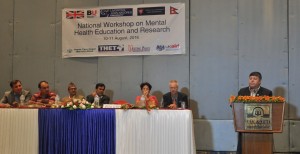
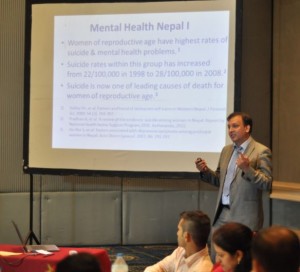
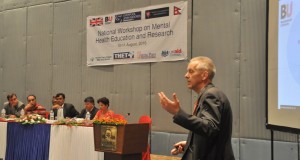
Today we completed the second day of training of health teachers, lecturers in nursng, public health and the like in Kathmandu. We called it the National Workshop on Mental Health Education & Research and this two-day workshop was held in a hotel in Kathmandu. It was organised by Tribhuvan University in collaboration with Bournemouth University and Liverpool John Moores University (LJMU). Mental health is high on the global agenda and want to raise the issue more in Nepal. The three universities are working together on an education intervention training Auxiliary Nurse Midwives in Nawalparasi on mental health issues and mental health promotion. The project is funded under the Health Partnership Scheme (HPS) from DfID and managed by THET (Tropical Health & Education Trust).
Key speakers on the first day of the workshop included: the VC of Tribhuvan University, Dr Gangalal Tuladhar MP and former Education Minister of Nepal, Dr Khem Karki (head of the Nepal Health Research Council), Dr Chandra Kala Sharma, Prof Shyam Krishna Maharjan and Prof Krishna Acharya.
This workshop is part of this capacity building process and the audience of largely university and college lecturers will take some of the learning back with them to improve the education of health workers in Nepal.
The second day of the workshop concentrateed on research methods for community-based projects such as this our THET funded one in the mental health field. Prof. Edwin van Teijlingen reminded the audience that it is important that novel mental health interventions like ours are properly evaluated, and that the people doing the evaluations have the appropriate rese
arch skills. The next group of UK volunteers are due to travel to Nepal in September.
Prof. Edwin van Teijlingen
CMMPH
A great opportunity from the collaboration of Bournemouth University and Nuffield Foundation
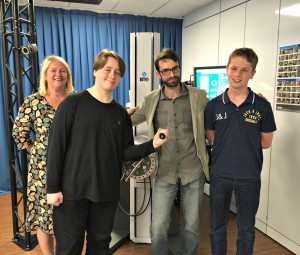
The Faculty of Health & Social Sciences (FHSS) has been hosting four Nuffield Foundation-funded college students this summer as part of Nuffield’s Research Placement programme. Two of the students (Jamie Singleton and Freddie Corrie-Deane) are working under the guidance of FHSS PhD student Francesco Ferraro, who is supervised by Professors Alison McConnell, Tom Wainwright and Dr James Gavin.
Jamie and Freddie joined us on the 25th of July and they are already familiar with many research aspects, such as: writing a review, dealing with ethical issues, using complex devices and tackling statistical issues.
Francesco has found the experience of working with the students rewarding from many perspectives: “I do trust their questioning and their will to learn and understand more, as it will help the project adding new questions. Conducting research is not simply a duty to search for results; producing research involves the ability to share it, by allowing others to join, bringing their own curiosity and surprise”.
A quote from Richard Feynman sums up the project so far “I would rather have questions that can’t be answered than answers that can’t be questioned.”
Here are a few thoughts from those involved in Freddie and Jamie’s Nuffield placements:
“Joining a research study, I knew I was in for a hefty chunk of reading, and with a pessimistic outlook I thought it would all be dry and bland, and that it would be the source of countless days of boredom. Thankfully I was wrong, and while I did have to spend an obligatory day or two reading background information, studies and manuals; the rest of this placement has been involved with the workings of brand-new machinery in the Orthopaedic Research Institute and going out into the local community to talk with people, both of which have been challenging and engaging in all of the right ways to make this experience an enjoyable one.
Our engagement in the community started very early into the placement, on the second day in fact, when we tagged along with Francesco (Our PhD Student overseer/mentor) to an area of sheltered housing to help him give a talk on his study, it was some really good hands on experience (it didn’t hurt that we were offered a biscuit or two). Following this line of talking to people, Jamie and I have spent the last couple of days walking around the gardens by the seaside talking to people and filling out surveys.
We have also spent a day or two engrossed in the outstanding labs in the Orthopaedic Research Institute, equipped with an amazing range of equipment from a pair of surgery VR simulators that bring in experts and surgeons from all over Europe, to the intricate and ever useful Primus Machine which has more potential and customisable positions than there are hours in the day and so understandably has just as many uses.”
- Freddie
“During the past two weeks at Bournemouth University, we have had lots of hands on experience and witnessed the fun sides of research and also, the not-quite side. The latter, quite funnily enough, involved vast amounts of background reading and studying of protocols. The more enjoyable hands on experience however, consisted of being introduced to and working in the Orthopaedic Research Institute Labs testing out protocols. Much to our disappointment… we had to use numerous fun and expensive pieces of equipment, it was at this point we knew this was the right place to be.
Amongst playing around with expensive machinery such as the PrimusRS and the Virtual Reality machines, we got to do some real work. This work was tough yet enriching and consisted of explaining what the research was about and why it is essential to a sheltered community, and of course when asked, accepting the offer for tea and biscuits. Visiting the shelter did give me an insight into the recruitment process for research projects, and I was quite surprised of how laid back it was.
Next, this time for real we did have work to do such as reading protocols, resources, and informative documents needed to produce our review which was not the most exciting experience however, it was made up for by the interesting walks we went on, through the Lower Gardens, in order to gather vital information that we needed for our project analysis of the PASE questionnaire.”
- Jamie
“I was really excited to visit our Nuffield students who are working with Francesco Ferraro at Bournemouth University. I was particularly keen to see how they have been integrated into the team working on a real life application. I was surprised by the highly technical, world class, equipment available to the team. I was also surprised to see how health care is being ‘gamefied’ with the balance app and the ‘Grail’. Thank you for having us.”
- Rachel Delourme (STEM Advisor & Sustainability Co-ordinator at Cornwall Council) and Shayan Bahadori (from Nuffield Foundation).
“Freddie and Jamie have been a huge asset to Francesco’s work over the past couple of weeks. They have worked together as a team to solve problems and test solutions, and I can see how all three of them have benefitted from the experience. I’d recommend hosting Nuffield placement students to anyone; they’ve been a pleasure to have around and they’ve both made valuable contributions to our work.”
- Alison McConnell
Latest Major Funding Opportunities
The following funding opportunities have been announced. Please follow the links for more information.
Engineering and Physical Sciences Research Council
The NSPCC and ESRC are working together to commission research that contributes to their joint interests in mental health and the NSPCC’s new research programme: Helping Children Get Back on Track. The aim of this research programme is to increase the evidence base about what kinds of therapeutic or social intervention work for which children with experience of abuse and when; how to identify children whose mental health is vulnerable; and how to identify the things that make others more resilient.
It is expected that this research will result in one or more of the following outcomes: A better understanding of how to identify the children whose mental health is vulnerable because of abuse, including those with ‘latent vulnerability’; that is, those children who are susceptible to poor outcomes including mental ill health but are not overtly symptomatic, or who need help in order to get their development back on track after experience of abuse, including to prevent the onset of mental health problems either in childhood or later; A better understanding of when support should be offered to children in order that poor outcomes including poor mental health can be prevented; A better understanding of what sort of help is effective in preventing poor outcomes for children with experience of abuse including poor mental health; A better understanding of how to identify the factors that make some children more resilient and adaptive and others more vulnerable to the mental health consequences of maltreatment.
Maximum award: Not specified. Closing date: 07/10/2016.
The Engineering and Physical Sciences Research Council and the Government Communications Headquarters (GCHQ) invite applications for their scheme to recognise Academic Centres of Excellence in Cyber Security Research. The scheme makes collaboration and knowledge sharing between the best of the UK academic sector, business and government easier. It encourages exploitation of current leading-edge research and the identification of the future work needed to ensure the UK is well prepared to meet coming cyber security challenges and threats. The relevant research areas include: cryptography, key management and security protocols; information risk; information assurance science; hardware engineering; total network defence; strategic technologies and products; side channel and fault analysis; engineering processes and assurance; building trusted and trustworthy systems; operational technology security; Internet of Things.
This call applies both to universities currently recognised who wish to extend their recognition for a further 5 years, and to universities not previously recognised. An institution whose submission is successful in this call will be able to hold the title of ‘Academic Centre of Excellence in Cyber Security Research’ for a period of 5 years, subject to complying with appropriate terms and conditions of membership of the scheme. They will also be supported by an EPSRC research grant to support activiteis associated with the recognition.
Maximum award: £60,000. Closing date: 4pm, 12/12/16.
National Centre for the Replacement, Refinement and Reduction of Animals in Research
The National Centre for the Replacement, Refinement and Reduction of Animals in Research, in collaboration with Arthritis Research UK, the Engineering and Physical Sciences Research Council and Innovate UK, invites applications for its CRACK IT challenges. This aims to fund collaborations between industry sponsors, academics and the NC3Rs to develop innovative, integrated approaches to better predict the GHS classification category for acute oral, skin and eye irritation in the development of agrochemical formulations without using animals or generating new in vitro data. The challenge also requires a disruptive business model whereby access and storage of industry data can be managed to provide predictive testing strategies for complex mixtures.
Maximum award: £1 million. Closing date: 09/11/17.
Wellcome Trust
The Wellcome Trust invites applications for its Collaborative Awards in Humanities and Social Science. Collaborative Awards promote the development of new ideas and bring disciplines together to speed the pace of discovery. Teams will have a track record of working together to tackle research questions that can only be approached collaboratively. Teams can come from the same discipline or from a combination of disciplines. They can be from the same university department or a number of organisations (anywhere in the world). Applications that combine humanities and social science research with biomedical science research and/or product development and applied research are particularly encouraged.
Maximum award: £1.5 million. Closing date (preliminary applications): 16/01/17.
The Wellcome Trust invites applications for its Investigator Awards in Humanities and Social Sciences. These awards support researchers in established posts at all career stages working on important questions of relevance to health. The level of funding provided for an Investigator Award is flexible and can be anything from under £300,000 to around £1 million. Awards can last for up to five years.
Maximum award: £1 million. Closing date (preliminary applications): 16/01/17.
The Wellcome Trust invites applications for its University Awards in Humanities and Social Science. A University Award provides support for up to five years at lecturer, senior-lecturer or reader level. After this, we expect you to take up a permanent position at the academic organisation. Up to five years’ support is available, providing full salary for three years, 50 per cent in the fourth year and 25 per cent in the fifth year. Awards also support research expenses, materials and consumables, animals, equipment, and travel and subsistence costs. During its first three years, the award allows you to focus on research rather than teaching and administration.
Maximum award: Not specified. Closing date: 18/01/17.
The Wellcome Trust invites applications for its Humanities and Social Science Doctoral Studentships. This scheme enables researchers to undertake humanities or social science doctoral degrees in any area of health. Studentships are available for up to three years and cover the student’s stipend, approved tuition fees, as well as travel to meetings and conferences of up to £1,500, equipment and research expenses worth up to £1,500.
Maximum award: Not specified. Closing date: 22/03/17.
If you are interested in submitting to any of the above calls you must contact RKEO with adequate notice before the deadline. Please note that some funding bodies specify a time for submission as well as a date. Please confirm this with your RKEO Funding Development Officer.
You can set up your own personalised alerts on Research Professional. If you need help setting these up, just ask your School’s/Faculty’s Funding Development Officer in RKEO or view the recent blog post here. If you are thinking of applying, why not add an expression of interest on Research Professional so that BU colleagues can see your intention to bid and contact you to collaborate.
Health Promotion intervention planning in rural Nepal
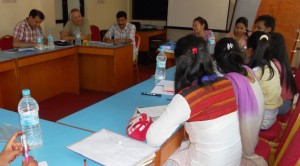
Today and yesterday Green Tara Nepal (GTN) staff spent discussing and planning their health promotion intervention in the district of Dhading. The sessions included feedback by the GTN on progress to-date as well as a discussion of their perceptions of the various relevant health needs in the community. BU has been working with GTN for over seven years. [1] Yesterday BU professor Edwin van Teijlingen gave an interactive workshop on communication skills. This morning BU’s Visiting Professor Padam Simkhada from Liverpool John Moores University (LJMU) outlined key health promotion concepts and theories to the fieldworkers.
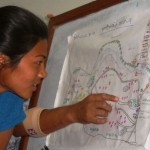
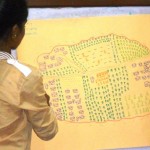
This particular post-disaster health promotion project grew out of years of research-based interventions run by GTN and the needs seen in areas affected by last years’ serious earthquakes in Nepal. The project has received support from various funding agencies, including Green Tara Trust, a London-based Buddhist charity. The training is being held in Dhadingbesi, about four hours drive away from the capital Kathmandu. The various photos with this blog show the results of a social mapping exercise. These included some beautifully hand-drawn maps of the individual wards in the area, indicating where the health post is situated, but more importantly the house of currently pregnant women.
Several GTN project have been, or ar currently, evaluated by FHSS Ph.D. students. The GTN project in Pharping has been evaluated by Sheetal Sharma, who has published several papers from this research.[2-4] The GTN project in Nawalparasi is currently being studied by Preeti Mahato, who has also already published from her thesis research despite being less than halfway through. [5] Prof. Padam Simkhada is external supervisor for both these BU Ph.D students.
Prof. Edwin van Teijlingen
CMMPH
References:
- van Teijlingen, E., Simkhada, P, Stephen J, Simkhada B, Woodes Rogers S, Sharma S. (2012) Making the best use of all resources: developing a health promotion intervention in rural Nepal. Health Renaissance 10(3): 229-235. healthrenaissance.org.np/uploads/7141_24852_1_PB.pdf
- Sharma, S., van Teijlingen, E., Hundley, V., Angell, C., Simkhada, P. (2016) Dirty and 40 days in the wilderness: Eliciting childbirth and postnatal cultural practices and beliefs in Nepal BMC Pregnancy & Childbirth 16: 147 https://bmcpregnancychildbirth.biomedcentral.com/articles/10.1186/s12884-016-0938-4
- Sharma, S., van Teijlingen, E., Belizán, J.M., Hundley, V., Simkhada, P., Sicuri, E. (2016) Measuring What Works: An impact evaluation of women’s groups on maternal health uptake in rural Nepal, PLOS One 11(5): e0155144 http://journals.plos.org/plosone/article?id=10.1371%2Fjournal.pone.0155144
- Regmi, P., van Teijlingen, E., Hundley, V., Simkhada, P., Sharma, S., Mahato, P. (2016) Sustainable Development Goals: relevance to maternal & child health in Nepal. Health Prospect 15(1):9-10. healthprospect.org/archives/15/1/3.pdf
- Mahato, P., van Teijlingen, E., Simkhada, P., Angell, C. (2016) Birthing centres in Nepal: Recent developments, obstacles and opportunities, Journal of Asian Midwives 3(1): 18-30. http://ecommons.aku.edu/cgi/viewcontent.cgi?article=1033&context=jam
- Mahato, P.K., Regmi, P.R., van Teijlingen, E., Simkhada, P., Angell, C., Sathian, B. (2015) Birthing centre infrastructure in Nepal post 2015 earthquake. Nepal Journal of Epidemiology 5(4): 518-519. http://www.nepjol.info/index.php/NJE/article/view/14260/11579
Widening Participation: a practice of hope
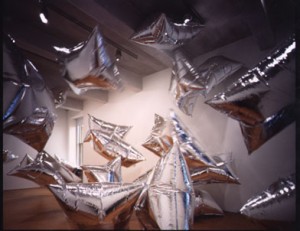
Silver Clouds, Billy Kruger and Andy Warhol 1966
Our Fair Access Researchers have written a blog-post exploring the necessity of hope and solidarity for widening participation – particularly when any glimpse of a silver cloud seems very out of reach.
Drawing on the work of José Esteban Muñoz, our researchers see hope as a troubling but very necessary thing for those working to transform higher education:
“Practicing educated hope, participating in a mode of revolutionary consciousness, is not simply conforming to one group’s doxa at the expense of another’s…It is not about announcing the way things ought to be, but, instead, imagining what things could be. It is thinking beyond the narrative of what stands for the world today by seeing it as not enough” (from Duggan and Muñoz, 2009: 278).
One of the cornerstones of the Fair Access Research project is that it is through working and learning together that just such a hope can be practiced.
Developing the thinking that underpinned an article that suggested how research can be used to better enable and embed an institutional culture that works for social justice, Maggie and Alex are now researching how the ideas, rhetoric and policies of widening participation are being learnt in different organisations. To contribute to this research and share your learning, please do complete our survey for the sector to help understand this more. They will be going up to Liverpool over the coming weeks to do some fieldwork with colleagues in different organisations.
For more information about the Fair Access Research project please email the Principal InvestigatorsDr Vanessa Heaslip and Dr Clive Hunt.
Elderly people, are they physically active? A questionnaire in the Bournemouth area.
Freddie and Jamie are two college students visiting BU thanks to the collaboration with the Nuffield Project.
Their aim will be to produce an epidemiological study in the Bournemouth area using the The Physical Activity Scale for the Elderly (PASE).
This is their abstract:
The Physical Activity Scale for the Elderly (PASE) questionnaire is a common means of assessing the self-reported physical activity in the elderly over a 7 day period, as it is quite simple to administer, it can be carried out in a short period of time, via interview or self-administration (such as a survey) over a large group of subjects. Due to the ease of use, it is often core founding piece of research that occurs in the vast majority of epidemiological studies that revolve around the age group of approximately 65 years and above. One of the key benefits of the scale/questionnaire is how it gives clear and concise numerical results for an individual’s results based on very few basic calculations and how the activities it refers to are on different levels. These can consist of occupational, household and leisure activities however, all have to be within the previous seven days. It also consists of light, moderate and high-intensity activities as well as strength training (Casartelli, Nicola C. 2015).
Originally, when the PASE test came about, the method for assessing its reliability was by using a test-retest system. This is where two of the same type of test are carried out, one at the start of the testing and one after a given period of time, usually between one week and seven months. The second test however, has to be carried out within a time frame long enough so that people cannot recall answers from the previous assessment, but short enough so that the amount of physical activity they do, doesn’t change substantially. In one experiment carried out, the test retest coefficient (Pearson’s) reliability was approximately 1 for both a 3-day interval, and for a 3-week interval. Thus showing the results are easily scored using reliable methods and equipment.
The PASE is a well-established and trialled questionnaire that has been used hundreds of times as an index to understand the amount of physical activity that occurs within a community (Logan et al. 2013). It is also a very small test which takes 5-15 minutes to complete (or even less) for 12 questions.
The questionnaire was also carried out in an investigation in Japan (Hagiwara, A 2008), this had a large sample of 325 elderly subjects (aged 65+). In this investigation, validity was calculated using Spearman’s Rank Correlation Coefficient PASE scores and an accelerometer. Other correlations involving grip strength, body fat percentage, and reliability in this case was tested by the test-retest method. The average in this case was 114.9 which is correlated to energy usage and other factors. The consistencies between the first questionnaire PASE scores and the second were high, in this case this version of the PASE was accepted as valid and reliable due to the correlations and consistencies acting as supporting evidence.
The PASE questionnaire is not only used for the study of healthy elderly adults, it is also utilised for other reasons such as; Does It Predict Physical Health? , Patients After Total Hip Arthroplasty (Casartelli, Nicola C.2015) and for measures in lung cancer (Granger, C. L 2015) as well as many more, showing that this test is a very well respected and used method for scoring different categories of people.
Some reports of the PASE questionnaire say that a larger sample size is needed to gather precise validity and reliability estimates (Casartelli, Nicola C. 2015) however, most resources looked at have a suitable sample size, and some suggesting/ stating that a large group of subjects are needed Amongst the PASE questionnaire, there are two other reliable self-report questionnaires such as CHAMPS and YPAS, however resources suggest the PASE is the simplest and easiest to carry out and interpret.
If you would like to help them please complete the questionnaire HERE
Their project is part of a fall prevention research. More information can be find clicking HERE
Fieldwork preparation in Nepal
If you have a number of research projects running in the same location it pays to combine some of the preparation. Thus as part of five different studies and one PhD project, I’m currently in Kathmandu. The projects are (1) the THET-funded intervention in Nawalparasi; (2) the CEL-funded qualitative research led by Dr. Catherine Angell on CPD (Continuous Professional Development); (3) the FHSS-funded project on transgender which is led by Dr. Pramod Regmi; (4) the FHSS-funded project with Pourakhi which supports Nepali women returning home after having been abroad as migrant workers; and (5) the Green Tara Trust funded project on improving maternal health care in Dhading and Nawalparasi, and the FHSS PhD project is that of Mrs. Preeti Mahato. Two of the project and the PhD topcic are closely related as all three cover maternity care in one for or another in Nawalparasi. The planning meetings we are having in Nepal involve planning training sessions and workshops, resource allocation and research preparation.
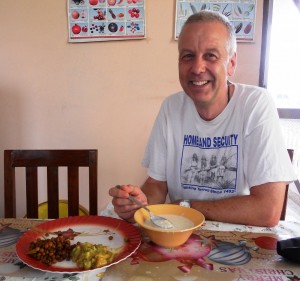
Fortunately, it is not all work. Today I enjoyed Kheer (Achar and Chana) for lunch in the Green Tara flat in Kathmandu a lovely rice pudding with slightly sour green vegetables and chick peas (see photo). The actual meal is traditionally health tomorrow but as this is the weekend the staff brought it one day forward so that I could join in too.
Finally, I like to thank colleagues who gave me mobile phones and a camera. One of the mobile phones is already in use by one of the Nepali charity workers in Kathmandu. I bought a new battery and memory card for camera in the UK and it is working fine, the photo with this blog has been taken with the donated camera!
Prof. Edwin van Teijlingen (writing from Nepal).
Centre for Midwifery, Maternal & Perinatal Health Research
New paper Dr. Pramod Regmi
Dr. Pramod Regmi in FHSS published his latest paper today in the South East Asia Journal of Public Health. The paper ‘Priority public health interventions and research agendas in post-earthquake Nepal’ is co-authored with researchers based in New Zealand, Nepal and the UK [1]. The authors reminds the readers that natural disasters cause huge damage to infrastructure, economies as well as population health. Nepal’s 2015 earthquake has multiple effects on population health and health services delivery. Many public health facilities, mostly health posts or sub-healthposts, were damaged or completely destroyed. Priority health services such as immunisation and antenatal care were also seriously affected.
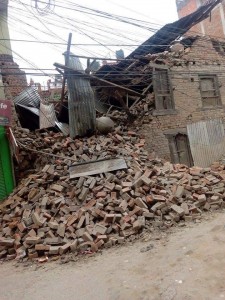
The earthquake has prompted the need for a disaster-related population-health-research agenda as well as renewed disaster strategy in post-earthquake Nepal. Meanwhile, it also unveiled the gap in knowledge and practice regarding earthquake resilience in Nepal. The paper arues that there is an opportunity for school-based and community-based interventions in both disaster preparedness and resilience. Nepal can build on experiences from other countries as well as from its own. We have discussed possible impacts of the Nepal earthquake on population health and health system infrastructures. We have also suggested possible public health interventions bestowing active awareness among the population and a research agenda in this regard. We strongly urge for the translation of the National Health Policy (2014) into action, as it prioritizes the need of an earthquake resistant infrastructure as well as the implementation of a disaster response plan.
Reference:
Regmi, PR, Aryal, N., Pant, PR, van Teijlingen, E., Simkhada, P., Devkota, B. (2015) Priority public health interventions and research agendas in post-earthquake Nepal South East Asia Journal of Public Health 5(2): 7-12 (http://www.banglajol.info/index.php/SEAJPH/article/view/28307/18835 )
Research Data Management and you!
Research Data Management is a hot topic, especially when applying for grants. We all have our own strategies for managing our data as a product of research. Sometimes data management is in the form of a box or filing cabinet in a locked office, an external hard drive, purchased cloud storage or a hard drive. Whilst this approach is comfortable and familiar, it’s unlikely to comply with funder requirements neither currently nor in the future.
The Library has a created a guide that will help with navigating the diverse requirements of grant funding councils, writing data management plans and all its intricacies. The guide, ‘Research Data Management’ is available here .
We welcome your feedback about this resource, please contact rdm@bournemouth.ac.uk.
There is also a very informative youtube video Data Sharing and Management posted by NYU Health Sciences Library.
Visible Students/Invisible Needs: a workshop
Members of the Fair Access Research project would like to invite you all to a workshop exploring issues of widening participation on Monday 11th July.
During the workshop we will engage in debates and participate in group activities as we work together to make visible the invisible needs of all of our students.
There will be a poster exhibition showcasing the variety of widening participation activities happening across the university.
The workshop is open to staff across all faculties and for professional service staff interested in this area. We want to collectively work to make the university and higher education a more equitable, more socially just place for our students, our selves and our society.
Monday 11th July 2016
10:00 -14:00
EBC 202 and 203
Lunch will be provided.
Here is our invitation. To book a place email awardrop@bournemouth.ac.uk
New CMMPH paper by PhD student Sheetal Sharma
Today saw the publication in BMC Pregnancy & Childbirth of the paper ‘Dirty and 40 days in the wilderness: Eliciting childbirth and postnatal cultural practices and beliefs in Nepal’ with as lead author FHSS PhD student Sheetal Sharma [1]. This paper argues that pregnancy and childbirth are very much socio-cultural events that carry varying meanings across different societies and cultures. These are often translated into social expectations of what a particular society expects women to do (or not to do) during pregnancy, birth and/or the postnatal period. The study explored beliefs around childbirth in Nepal, a low-income country with a largely Hindu population. The paper then sets these findings in the context of the wider global literature around issues such as periods where women are viewed as polluted (or dirty even) after childbirth.
Sheetal is doing ve
ry well with her PhD publications as a few weeks ago her major quantitative findings paper was published in PLOS One [2]. Both papers are published in Open Access journals and therefore easily available to researchers, health promotors, health care providers and health policy-makers in low-income countries. Sheetal evaluated a research project funded by the London-based charity Green Tara Trust. Her PhD is supervised by Dr. Catherine Angell, Prof. Vanora Hundley and Prof. Edwin van Teijlingen all nbased in CMMPH with external supervision from BU Visiting Faculty Prof. Padam Simkhada (liverpool John Moores University).
References:
- Sharma, S., van Teijlingen, E., Hundley, V., Angell, C., Simkhada, P. (2016) Dirty and 40 days in the wilderness: Eliciting childbirth and postnatal cultural practices and beliefs in Nepal BMC Pregnancy & Childbirth 16: 147 https://bmcpregnancychildbirth.biomedcentral.com/articles/10.1186/s12884-016-0938-4
- Sharma, S., van Teijlingen, E., Belizán, J.M., Hundley, V., Simkhada, P., Sicuri, E. (2016) Measuring What Works: An impact evaluation of women’s groups on maternal health uptake in rural Nepal, PLOS One 11(5): e0155144 http://journals.plos.org/plosone/article?id=10.1371%2Fjournal.pone.0155144
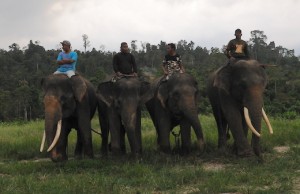
BU’s LEAP staff & SERT placement students featured in local Indonesian news regarding human elephant conflict in Northern Sumatra
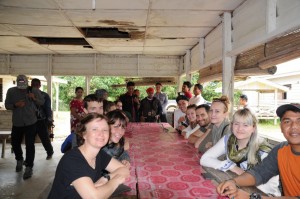
In June, Dr Amanda Korstjens, 10 UG and 1 PGT student together with MRes student Emma Hankinson and PhD student Chris Marsh from the Life and Environmental Sciences and the Archaeology, Anthropology and Forensic Sciences Departments took part in a field trip to Indonesia run by Dr. Amanda Korstjens to investigate human wildlife conflict and ecotourism in Indonesia. The placements fall within the SERT scheme and the research forms part of LEAP: Landscape Ecology and Primatology http://go-leap.wix.com/home.
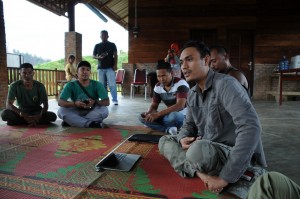
One of our activities involved a visit to Langsa. In Langsa, in the Aceh province of northern Sumatra, the group met up with Rudi Putra of HAkA and FKL (Forest, Nature, Enviroment of Aceh & Leuser Conservation Forum) and winner of the 2014 Goldman Environmental Prize http://www.goldmanprize.org/recipient/rudi-putra to discuss the problems faced in preserving the Leuser ecosystem and wildlife in Indonesia.
The group of staff and students first visited the CRU Conservation response unit in Serbajadi Aceh Timur where they met with Tezar Pahlevie, the regional manager of HAkA and FKL, Dedek Makam, the CRU coordinator of the region, and Ilham Fonna, Wildlife Protection Team supervisor for FKL to learn about the problems the wild elephants are facing, including human wildlife conflict, poaching and deforestation. The group were able to meet the captive elephants that are used in protecting and patrolling against poaching and other illegal activities in the area and to chase away marauding wild elephants from plantations.
Staff and students then visited a local palm-oil plantation with Tezar Pahlevie to investigate the undergoing human elephant conflict and regular destruction of palm oil plantations in the area. Whilst travelling to the plantation, local journalists, Said Moulana SH from TVRI and Luth Pi from Net TV joined the university group and began filming the events of the day for local Indonesian news https://www.youtube.com/watch?v=5WoaPLDs43g and news articles were also published regarding the events of the day http://pelita8.com/mahasiswa-inggris-kunjungi-kawasan-yang-di-rusak-gajahliar-di-aceh-timur (more can be found below). Once at the plantation, the group explored the impacts that wild elephants are having on surrounding local businesses and communities, including an interview with the plantation manager, Usman Hanapiah and visits to the areas most badly affected by the wild elephants. All of the students were involved in the interview and explored the impacts, attempted resolves and the potential future solutions regarding the human elephant conflict, and the overall future of the plantation and the wild elephants.

Many students received funds for the trip from the Departmental International Travel Grant, Global Horizons, or the Project & Placement fund of the Alumni. The Life and Environmental Sciences Department International Travel Grant funded Dr Korstjens’s expenses and those for co-leader Emma Hankinson (MRes student) and Chris Marsh (PhD student), who are currently conducting their field research in Indonesia. The work forms part of LEAP’s elephant project: http://go-leap.wix.com/home#!elephants/c578 which is funded by the International Elephant Foundation M. Phil Kahl fellowship (2016) and Rufford Small Grants (2016) and People’s Trust for Endangered Species (PTES, 2016)
Written by Nicola Collins who is supporting LEAP as a BU-funded Undergraduate Research Assistant Placement student.
For more information visit:
LEAP: Landscape ecology and Primatology: http://go-leap.wix.com/home
HAkAR: http://www.haka.or.id
FKL: https://www.facebook.com/Forum-Konservasi-Leuser-FKL-219705561560977/
More Indonesian news articles published regarding the palm oil plantation visit:
http://www.kanalaceh.com/2016/06/19/mahasiswa-inggris-teliti-konflikgajah-manusia-di-aceh-timur/
http://www.acehtraffic.com/2016/01/aceh-timur-miliki-cru-serbajadi.html
Fair Access Research publication: Troubling ideas
Bournemouth University is undertaking a large collaborative research study exploring issues of access to higher education. We are pleased to announce that members of the Fair Access Research project from BU and the University of Liverpool have had an article published in the influential Journal of Widening Participation and Lifelong Learning.
We explored how universities and colleges use research as part of their plans to widen participation and open up higher education to people from disadvantaged backgrounds. They found that while national policy is leading to more institutions mentioning research as part of their Access Agreements; it tends to be in the context of justifying spending rather than leading to significant behaviour change.
The most recent strategic guidance from the Office for Fair Access emphasised the importance of building a community of practice across institutions, with practitioners and academics working and learning together to understand effective practice and the impact of interventions.
It is hoped that when the 2017-18 access agreements are published over the coming months we see a sector engaging much more with research in order to transform thinking, practice and the sector as a whole.
For more information of this paper email Alex Wardrop (awardrop@bournemouth.ac.uk). For more information about the Fair Access Research project email Vanessa Heaslip (vheaslip@bournemouth.ac.uk) and Clive Hunt (chunt@bournemouth.ac.uk)
Visible Students/Invisible Needs: Fair Access Event

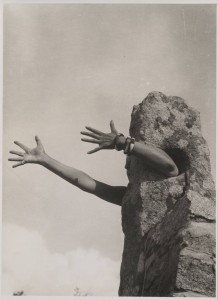
I Extend My Arms 1931 or 1932 by Claude Cahun
Monday 11th July
10:00-14:00
EBC 202 and 203
We are living through a time of great change and discontent the sector and the country. Finding spaces for hope, solace and respect seem even more important then they usually do.
Members of the Fair Access Research project are trying to make just such a space on Monday 11th July.
We are extending our arms to you to invite you all to an event where we share with you our research and find ways work and learn together at a time when partnership is so vital.
During the workshop we will engage in debates and participate in group activities as we work together to make visible the invisible needs of all of our students.
There will be a poster exhibition showcasing the variety of widening participation activities happening across the university.
The workshop is open to staff across all faculties and for professional service staff interested in this area. We want to collectively work to make the university and higher education a more equitable, more socially just place for our students, our selves and our society.
Lunch will be provided.
Here is our invitation. To book a place email awardrop@bournemouth.ac.uk
A great day enjoying Life by the River
Yesterday the Life by the River Team welcomed over 130 guests to their Festival of Learning Event at the Kingfisher Barn next to the River Stour near Throop. The event was development by Holly Crossen-White and Angela Turner-Wilson from the Public Health Cluster in partnership with Tom Clarke from the RSPB and staff from Bournemouth Borough Council Parks. The aim of the event was to encourage the public to consider the health and wellbeing benefits that can be gained by spending time enjoying the natural environment. Of those who completed an evaluation form 63 % of visitors had never been to this stretch of the River Stour before and all said they planned to return. The Team received lots of positive feedback about the event with visitors saying ‘there was a brilliant atmosphere’ , ‘really relaxing’ and ‘lots of fun for everyone’.


3C Online Social: Thursday 26 March 1–2pm – Research Culture, Community & Can you Guess Who?
Four BU students at national midwifery conference
INRC book roundtable/presentation by Drs Jonathan Cole and Catherine Talbot, Wednesday 22/04/2026, 13:00h, P426
BU M.Res. student’s evidence to UK Parliamentary Women & Equalities Committee
ECR Funding Open Call: Research Culture & Community Grant – Apply now

ECR Funding Open Call: Research Culture & Community Grant – Application Deadline Friday 12 December

MSCA Postdoctoral Fellowships 2025 Call

ERC Advanced Grant 2025 Webinar
Update on UKRO services
European research project exploring use of ‘virtual twins’ to better manage metabolic associated fatty liver disease