- Koirala, B., Rushton, S., Adhikary, P., Balen, J., et al. (2024) COVID-19 as a challenge to Nepal’s newly federalised health system: capacities, responsibilities, and mindsets, Asia Pacific Journal of Public Health (online first) https://doi.org/10.1177/1010539524125012.
- Sapkota, S., Rushton, S., van Teijlingen, E., et al. (2024) Participatory policy analysis in health policy and systems research: reflections from a study in Nepal. Health Research & Policy Systems, 22 (No.7) https://doi.org/10.1186/s12961-023-01092-5 .
- Wasti, S.P., van Teijlingen, E., Simkhada, P., et al. (2023) Selection of Study Sites and Participants for Research into Nepal’s Federal Health System, WHO South-East Asia Journal of Public Health 12(2):116-119.
- Sapkota, S., Dhakal, A., Rushton S., et al. (2023) The impact of decentralisation on health systems: a systematic review of reviews. BMJ Global Health 8:e013317. doi:10.1136/bmjgh-2023-013317.
- Wasti, S.P., van Teijlingen, E., Rushton, S., et al. (2023) Overcoming the Challenges Facing Nepal’s Health System During Federalisation: An Analysis of Health System Building Blocks, Health Research Policy & Systems 21(117) https://doi.org/10.1186/s12961-023-01033-2
- Sapkota, S., Panday, S., Wasti, S.P., et al. (2022) Health System Strengthening: The Role of Public Health in Federal Nepal, Journal of the Nepal Public Health Association 7(1):36-42.
- Adhikary, P., Balen, J., Gautam, S., et al. (2020) The COVID-19 pandemic in Nepal: Emerging evidence on the effectiveness of action by, and cooperation between, different levels of government in a federal system, Journal of Karnali Academy of Health Sciences 3 (3): 1-11.
- Rushton, S., Pandey, S., van Teijlingen, E., et al. (2021) An Investigation into the Impact of Decentralization on the Health System of Nepal. Journal of Manmohan Memorial Institute of Health Sciences, 7(1): 3–14. https://doi.org/10.3126/jmmihs.v7i1.43146
Tagged / Nepal
New editorial Journal of Asian Midwives
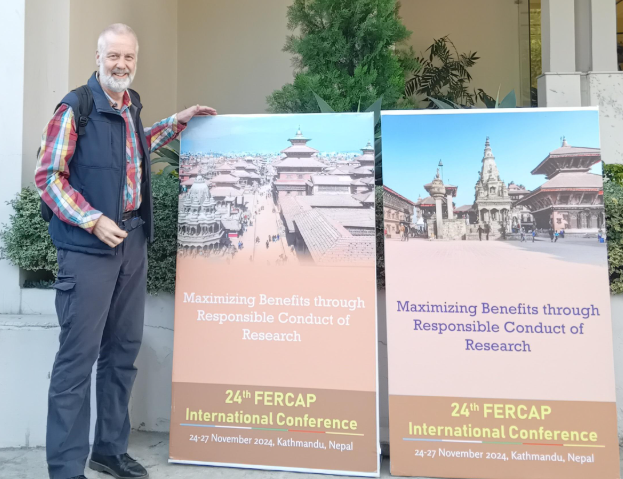
This weekend a new issue of the Journal of Asian Midwives appeared online [1]. Its latest editorial focuses in part on research ethics. The editors highlight the new World Health Organization (WHO) guidance for best practices in clinical trials [2]. The new WHO guidance was picked up at the 24th FERCAP International Conference “Maximizing Benefits through Responsible Conduct of Research” held in November 2024 in Nepal. FERCAP is the Forum for Ethical Review Committees in the Asian and Western Pacific Region.
FERCAP reminded us that research as a social activity should improve health and quality of life for both targeted and general populations. One notable message from this recent conference was the need for shorter and more comprehensible consent forms to make them user-friendly without sacrificing clarity. The other interesting development is that of so-called “decentralized clinical trials”. Decentralized or point-of-care trials can increase the diversity of clinical trial enrollment by increasing its accessibility, for example where elements of the trial are delivered at home and/or data are collected electronically by trial participants instead of researchers. These are exciting new developments in thinking about research ethics.
The Journal of Asian Midwives is Gold Open Access and hence freely available online.
Prof. Edwin van Teijlingen
Centre for Midwifery & Women’s Health
References:
- van Teijlingen, E., Musaddique, A., Jan, R. (2024) Editorial – Dec 2024. Journal of Asian Midwives, 11(2):1–2.
- World Health Organization (2024). Guidance for best practices for clinical trials. World Health Organization. https://www.who.int/publications/i/item/9789240097711 (accessed Jan. 2025)
Last publication of 2024
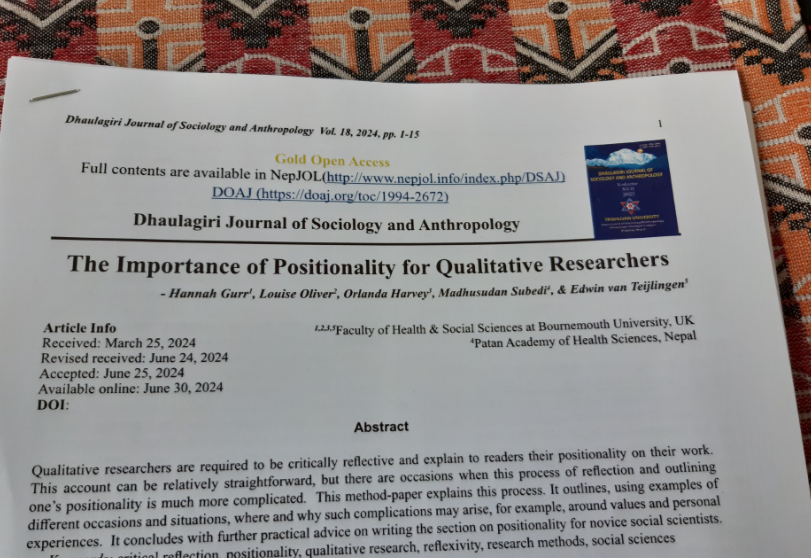
The Nepal-based Dhaulagiri Journal of Sociology and Anthropology published its latest issue today, the last day of 2024, with an editorial on the hot topic of ‘The Use of Artificial Intelligence (AI) in Academic Writing and Publishing Papers’ [1].
In this editorial, the authors made it very clear that the complete text in Box 1 is generated by AI. Which is appropriate considering the focus of this editorial is on questions raised by the potential use of academic writing. The authors argue that AI should be used with consideration to avoid misuse. Any use of AI should be done transparently, ethically, and professionally, and the authors should take full responsibility for the accuracy of the information.
Prof. Edwin an Teijlingen
Centre for Midwifery & Women’s Health
Reference:
-
van Teijlingen, E., Subedi, M., Parker, S., Khattri, M.B. (2024) The Use of Artificial Intelligence (AI) in Academic Writing and Publishing Papers Dhaulagiri Journal of Sociology & Anthropology, 18(2): 1-4. https://www.nepjol.info/index.php/DSAJ/article/view/73358
Study of federalisation in Nepal leading to policy brief
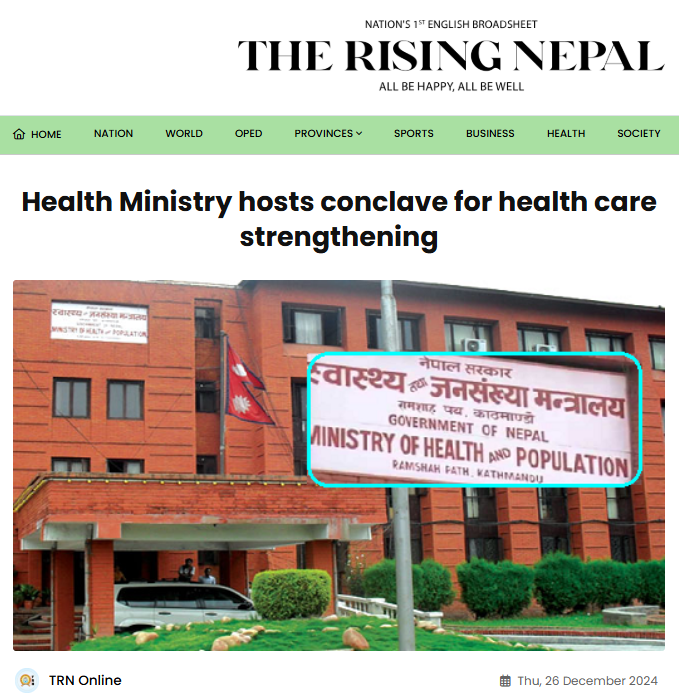
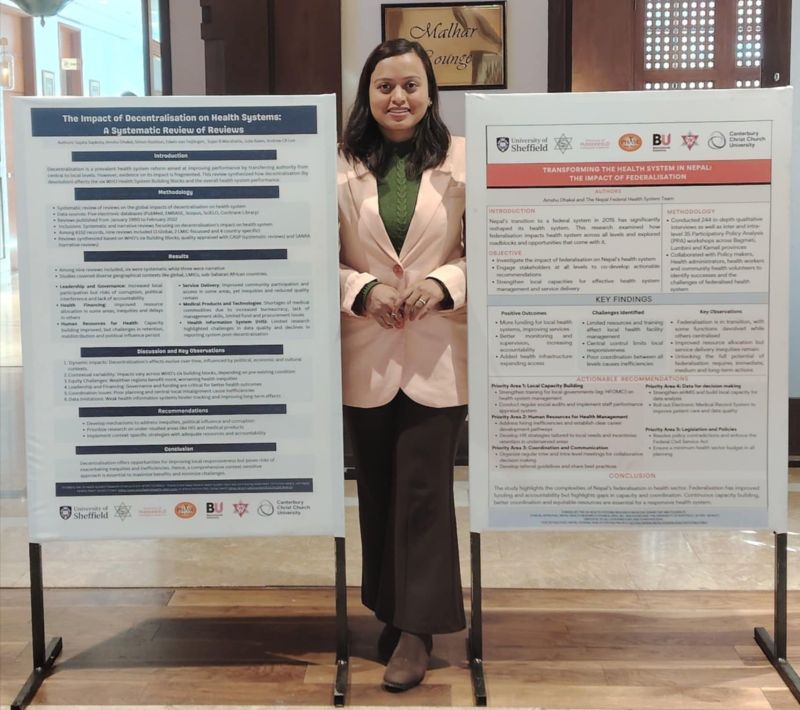
On Boxing Day and the following day (Dec. 27th) a member of our research team, Amshu Dhakal based at Manmohan Memorial Institute of Health Sciences (MMIHSS), presented findings from our Nepal Federal Health System Project in Kathmandu. The event, Nepal Health Conclave 2024, was organised by the Ministry of Health and Population and supported by WHO (World Health Organization) Nepal and UNFPA. The event aimed to help strengthen Nepal’s health services. This year’s conclave, themed “Bridging the Gap Between Global Expertise and National Needs”, brought together Nepalese diaspora health professionals and national stakeholders to foster collaboration and innovation in health systems.
Amshu presented two posters at the event: (1) The Impact of Decentralisation on Health Systems: A Systematic Review of Reviews which systematically reviewed how decentralisation affects health systems globally, highlighting key opportunities and challenges across WHO’s six building blocks; and (2) Transforming the Health System in Nepal: The Impact of Federalisation, which examined how the transition to a federal system reshaped Nepal’s health system, identifying gaps, opportunities, and actionable recommendations for improvement.
Our research team produced policy briefs in collaboration with government officials/stakeholders from all three levels of government. The policy briefs can be accessed at the website of our Nepal Federal Health System Project. This study was funded by the UK Health Systems Research Initiative [Grant ref. MR/T023554/1] to study the consequences for the health system of Nepal’s move from a centralised political system to a more federal government structure in 2015. This joint project was led by the University of Sheffield in collaboration with Bournemouth University, the University of Huddersfield, Canterbury Christ Church University and two institutions in Nepal, namely MMIHS and PHASE Nepal.
In late 2022 further funding was awarded by the Medical Research Foundation to Prof. Julie Balen, from Canterbury Christ Church University, to disseminate the findings of our UK Health Systems Research Initiative-funded research in Nepal. In terms of academic dissemination, we have published eight papers from this interdisciplinary project [1-8].
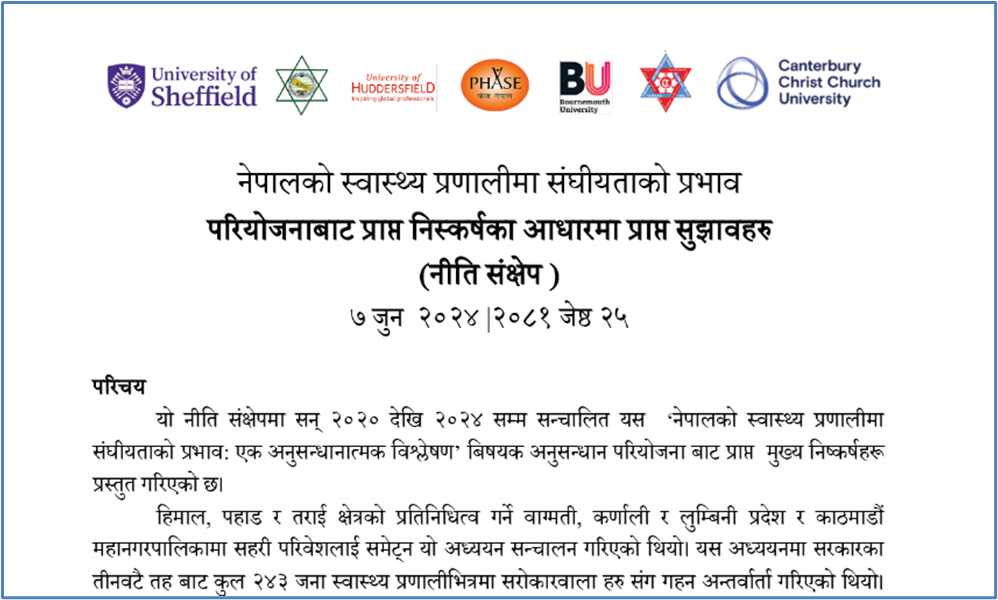
For and from this project, our team produced a comprehensive English-language policy brief as well as a Nepali-language version for politicians and policy-makers and civil servants in Nepal.
Prof. Edwin van Teijlingen
Centre for Midwifery & Women’s Health
References:
- Koirala, B., Rushton, S., Adhikary, P., Balen, J., et al. (2024) COVID-19 as a challenge to Nepal’s newly federalised health system: capacities, responsibilities, and mindsets, Asia Pacific Journal of Public Health (online first) https://doi.org/10.1177/1010539524125012.
- Sapkota, S., Rushton, S., van Teijlingen, E., et al. (2024) Participatory policy analysis in health policy and systems research: reflections from a study in Nepal. Health Research & Policy Systems, 22 (No.7) https://doi.org/10.1186/s12961-023-01092-5 .
- Wasti, S.P., van Teijlingen, E., Simkhada, P., et al. (2023) Selection of Study Sites and Participants for Research into Nepal’s Federal Health System, WHO South-East Asia Journal of Public Health 12(2):116-119.
- Sapkota, S., Dhakal, A., Rushton S., et al. (2023) The impact of decentralisation on health systems: a systematic review of reviews. BMJ Global Health 8:e013317. doi:10.1136/bmjgh-2023-013317.
- Wasti, S.P., van Teijlingen, E., Rushton, S., et al. (2023) Overcoming the Challenges Facing Nepal’s Health System During Federalisation: An Analysis of Health System Building Blocks, Health Research Policy & Systems 21(117) https://doi.org/10.1186/s12961-023-01033-2
- Sapkota, S., Panday, S., Wasti, S.P., et al. (2022) Health System Strengthening: The Role of Public Health in Federal Nepal, Journal of the Nepal Public Health Association 7(1):36-42.
- Adhikary, P., Balen, J., Gautam, S., et al. (2020) The COVID-19 pandemic in Nepal: Emerging evidence on the effectiveness of action by, and cooperation between, different levels of government in a federal system, Journal of Karnali Academy of Health Sciences 3 (3): 1-11.
- Rushton, S., Pandey, S., van Teijlingen, E., et al. (2021) An Investigation into the Impact of Decentralization on the Health System of Nepal. Journal of Manmohan Memorial Institute of Health Sciences, 7(1): 3–14. https://doi.org/10.3126/jmmihs.v7i1.43146
Two new BU midwifery publications
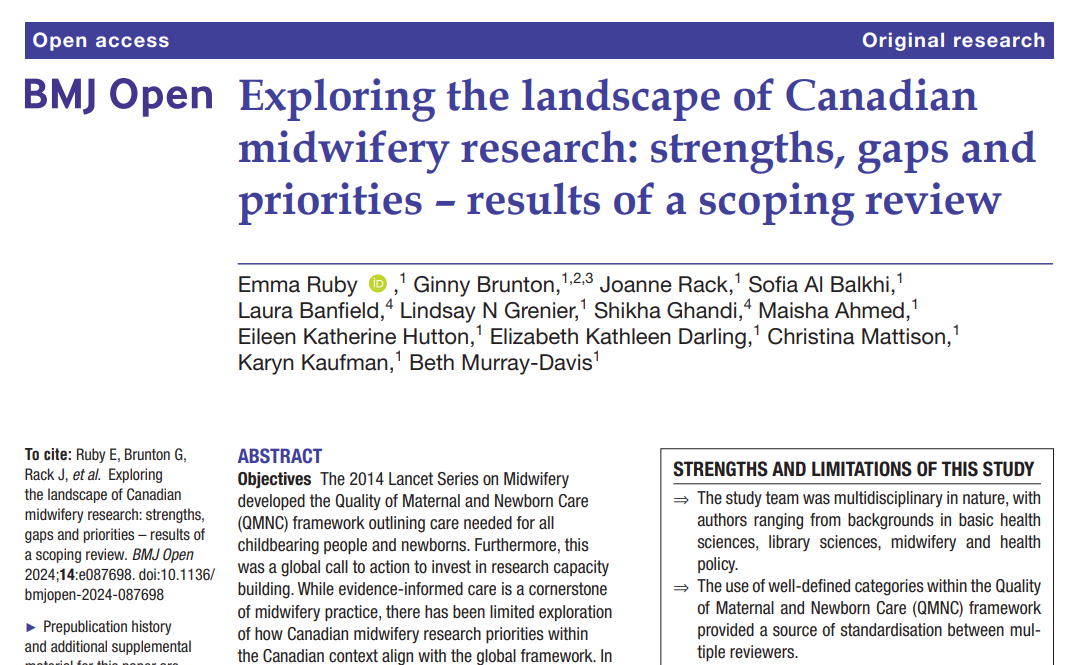
This past week, as part of her work with McMaster University in Canada, Bournemouth University’s (BU) Centre for Midwifery & Women’s Health (CMWH) postgraduate PhD student Joanne Rack published a paper in BMJ Open. This Open Access paper explores the strengths and weaknesses of midwifery research in Canada [1]. Joanne is currently doing a Clinical Doctorate in the specialising in personalised care for women of advanced maternal age. This PhD study is matched-funded by University Hospitals Dorset NHS Foundation Trust and Bournemouth University [BU].
Her PhD is supervised and supported by Professors Vanora Hundley and Edwin van Teijlingen in CMWH, Prof. Ann Luce, deputy dean in BU’s Department of Communication & Journalism as well as Dr. Latha Vinayakarao in Poole Maternity Hospital.
The second midwifery paper ‘Importance of Expanding Midwifery-led Units and Midwifery Care in Reducing Maternal Deaths in Nepal‘, which is also Open Access, has a different international focus, this time on Nepal [2]. The paper is co-authored by Dr. Preeti Mahato and Prof. Edwin van Teijlingen. Dr. Preeti Mahato, formerly in BU’s Faculty of Health & Social Sciences, is currently based at Royal Holloway, University of London.
References:
- Ruby, E., Brunton, G., Rack, J., et al. (2024). Exploring the landscape of Canadian midwifery research: strengths, gaps and priorities – results of a scoping review. BMJ Open 14:e087698. doi:10.1136/bmjopen-2024-087698
- Mahato, P., van Teijlingen, E. (2024). Importance of Expanding Midwifery-led Units and Midwifery Care in Reducing Maternal Deaths in Nepal. Europasian Journal of Medical Sciences 6(1). https://doi.org/10.46405/ejms.v6i1.537
New publications Dr. Pramod Regmi
Dr. Pramod Regmi in the Centre for Wellbeing & Long-Term Health published two new academic papers just before Christmas on health and migration. The first one was called ‘Health and Wellbeing Among Nepali Migrants: A Scoping Review’ [1], and the second one has the title ‘Returning Home to Nepal after Modern Slavery: Opportunities for Health Promotion’ [2]. Both papers are Open Access and, hence, freely available online!
References:
- Mahato, P., Bhusal, S., Regmi, P., van Teijlingen, E. (2024). Health and Wellbeing Among Nepali Migrants: A Scoping Review. Journal of Health Promotion, 12(1): 79–90. https://doi.org/10.3126/jhp.v12i1.72699
- Paudyal, A.R., Harvey, O., van Teijlingen, E., Regmi, P. R., Sharma, C. (2024). Returning Home to Nepal after Modern Slavery: Opportunities for Health Promotion. Journal of Health Promotion, 12(1): 125–132. https://doi.org/10.3126/jhp.v12i1.72713
Creative Health Nepal
Wednesday saw the opening of the exhibition ‘Creative Health Nepal’ in Kathmandu. Creative Health Nepal reflects our interdisciplinary public health work, for the website click here! Our work on alcohol in Nepal’s society, which resulted in the paper ‘Participatory asset mapping and photovoice interviews to scope cultural and community resources to reduce alcohol harm in Chitwan, Nepal’ was represented in the exhibition.
Prof. Edwin van Teijlingen
Reference:
Dhital R, Yoeli H, Adhikari A, et al. Participatory asset mapping and photovoice interviews to scope cultural and community resources to reduce alcohol harm in Chitwan, Nepal. Perspectives in Public Health. 2024;144(5):312-323. doi:10.1177/17579139231180744
FHSS academics teaching in Nepal
As part of our long-standing Memorandum of Agreement between Bournemouth University and Manmohan Memorial Institute of Health Sciences (MMIHS) in Nepal, Dr. Pramod Regmi taught a postgraduate class in Kathmandu last week. Pramod, who is Principal Academic in International Health in the Centre for Wellbeing and Long-term Health (CWLTH) in the Faculty of Health & Social Sciences,
addressed M.Sc. students about the finer aspects of research methods. Tomorrow (Sunday 24th November) I have been invited to speak to the same MMIHS postgraduate students about research theories and paradigms.
The process of internationalising higher education institutions through collaborative partnerships like this one between BU and MMIHS, brings benefits to both institutions’ staff and students. This collaboration has led to many BU staff and students visiting Nepal, and many MMIHS staff and student visiting Bournemouth. The collaboration has also led to several successful grant applications and nearly twenty academic publications [1-17].
Prof. Edwin van Teijlingen
References (BU + MMIHS authors in bold):
- Simkhada, P., van Teijlingen E., Winter, RC., Fanning, C., Dhungel, A., Marahatta SB. (2015) Why are so many Nepali women killing themselves? Review of key issues Journal of Manmohan Memorial Institute of Health Sciences 1(4): 43-49. nepjol.info/index.php/JMMIHS/article/view/12001
- Simkhada, P.P., van Teijlingen, E., Marahatta, S.B. (2015) Mental health services in Nepal: Is it too late? Journal of Manmohan Memorial Institute of Health Sciences 1(4): 1-2.
- Simkhada, B, Mackay, S, Khatri, R., Sharma, C.K., Pokhrel, T, Marahatta, S, Angell, C, van Teijlingen, E., Simkhada, P (2016) Continual Professional Development (CPD): Improving Quality of Nursing Care in Nepal, Health Prospect 15 (3):1-3 nepjol.info/index.php/HPROSPECT/article/view/16326/13255
- van Teijlingen, E., Marahatta, S.B., Simkhada, P., McIver, M., Sharma, J.P. (2017) Developing an international higher education partnerships between high & low-income countries: two case studies, Journal of Manmohan Memorial Institute of Health Sciences, 3(1): 94-100.
- Simkhada, P., van Teijlingen, E., Simkhada, B., Regmi, P., Aryal, N., Marahatta, S.B. (2018) Experts warn Nepal Government not to reduce local Public Health spending, Journal of Manmohan Memorial Institute of Health Sciences, 4(1): 1-3.
- Regmi, P., van Teijlingen, E., Neupane, S., Marahatta, S. (2019) Hormone use among Nepali transgender women: a qualitative study, BMJ Open 9: e030464. doi:10.1136/bmjopen-2019-030464.
- Sathian, B., Asim, M., Mekkodathil, A., van Teijlingen, E., Subramanya, S.H., Simkhada, P., Marahatta, S.B., Shrestha, U.M. (2020) Impact of COVID-19 on community health: A systematic review of a population of 82 million, Journal of Advanced Internal Medicine 9(1): 4-11. https://www.nepjol.info/index.php/JAIM/article/view/29159
- Adhikary, P., Balen, J., Gautam, S., Ghimire, S., Karki, J., Lee, A.C.K., Marahatta, S.B., Panday, S., Pohl, G., Rushton, S., Sapkota, S., Simkhada, P.P., Subedi, M., van Teijlingen, E. for the Nepal Federal Health System team (2020) The COVID-19 pandemic in Nepal: Emerging evidence on the effectiveness of action by, and cooperation between, different levels of government in a federal system, Journal of Karnali Academy of Health Sciences 3 (3): 1-11.
- Khatri, R., van Teijlingen, E., Marahatta, S., Simkhada, P., Mackay, S., Simkhada, B. (2021) Exploring the Challenges and Opportunities for Continuing Professional Development of Nurses: A Qualitative Study with Senior Nurse Leaders in Nepal. Journal of Manmohan Memorial Institute of Health Sciences, 7(1); 15–29. https://doi.org/10.3126/jmmihs.v7i1.43147
- Sapkota, S., Panday, S., Wasti, S.P., Lee, A., Balen, J., van Teijlingen, E., Rushton, S., Subedi, M., Gautam, S., Karki., J., Adhikary, P., Marahatta, S., Simkhada, P., for the Nepal Federal Health System Team (2022) Health System Strengthening: The Role of Public Health in Federal Nepal, Journal of the Nepal Public Health Association 7(1):36-42. https://nepha.org.np/wp-content/uploads/2022/10/5.-Manuscript_Health-System-Strengthening.pdf
- van Teijlingen, E., Thapa, D., Marahatta, S.B., Sapkota, J.L., Regmi, P. Sathian, B. (2022) Editors and Reviewers: Roles and Responsibilities, In: Wasti, S.P., et al. (Eds.) Academic Writing and Publishing in Health & Social Sciences, Kathmandu, Nepal: Himal Books: 32-37.
- Mahato P., Adhikari B., Marahatta S.B., Bhusal S., Kunwar K., Yadav R.K., Baral, S., Adhikari, A., van Teijlingen, E. (2023) Perceptions around COVID-19 and vaccine hesitancy: A qualitative study in Kaski district, Western Nepal. PLOS Global Public Health 3(2): e0000564. https://doi.org/10.1371/journal.pgph.0000564
- Wasti, S.P., van Teijlingen, E., Simkhada, P., Rushton, S., Balen, J., Subedi, M., Karki, J., Adhikary, P., Sapkota, S., Gautam, S., Marahatta, S., Panday, S., Bajracharya, B., Vaidya, A. for the Nepal Federal Health System Team (2023) Selection of Study Sites and Participants for Research into Nepal’s Federal Health System, WHO South-East Asia Journal of Public Health (accepted).
- Sapkota, S., Dhakal, A., Rushton, S., van Teijlingen, E., Marahatta, S.B., Balen, J., Lee, A. for the Nepal Federal Health System Team (2023) The impacts of decentralisation on health systems: a systematic review of reviews, BMJ Global Health 8(12) https://gh.bmj.com/content/8/12/e013317
- Marahatta, S., Regmi, P., Knight, A., Kuncova, J., Asbridge, E., Khanal, D., van Teijlingen, E. (2023). Staff-Student Exchange between MMIHS and Bournemouth University (UK). Journal of Manmohan Memorial Institute of Health Sciences, 8(1): 1–5. https://doi.org/10.3126/jmmihs.v8i1.57265
- Sapkota, S., Rushton, S., van Teijlingen, E., Subedi, M., Balen, J., Gautam, S., Adhikary, P., Simkhada, P., Wasti,SP., Karki, JK., Panday, S., Karki, A., Rijal, B., Joshi, S., Basnet, S., Marahatta, SB. (2024) Participatory policy analysis in health policy and systems research: reflections from a study in Nepal. Health Research & Policy Systems, 22(7) https://doi.org/10.1186/s12961-023-01092-5 .
- Clark CJ, Marahatta SB, Hundley VA (2024) The prevalence of pain catastrophising in nulliparous women in Nepal; the importance for childbirth. PLoS ONE 19(8): e0308129. https://doi.org/10.1371/journal.pone.0308129
Congratulations to Shafkat Hossain on his first PhD paper
This week the editor of the International Journal of Social Sciences and Management emailed that the paper ‘Drowning Prevention should be a Public Health Issue in Nepal‘ [1] had been published. This is the first paper for our Ph.D. student Md. Shafkat Hossain. Shafkat co-authored this paper drowning prevention experts in Nepal, Dr. Bhagabati Sedain and Dr. Puspa Rai Pant and Prof. Aminur Rahman based at CIPRB (the Centre for Injury Prevention and Research, Bangladesh).
Shafkat’s thesis is part of the interdisciplinary Sonamoni project on drowning prevention in toddlers under the age of two in Bangladesh.
This newly published paper takes lessons learnt from Bangladesh and offers them as ideas to be considered in Nepal. Nepal is prone to a range of natural disasters; earthquakes being the most widely recognised one. However, many people are at risk of drowning as the serious flooding in the autumn of 2024 showed, but this is not recognised as a serious public health risk in Nepal. Drowning relates to people’s everyday activities such as crossing rivers, bathing and swimming and should be treated as a social and public health problem.
The Sonamoni project is being coordinated by Bournemouth University in collaboration with the University of the West of England, Bristol, the University of Southampton, the Royal National Lifeboat Institution (RNLI), CIPRB in Bangladesh and Design Without Borders in Uganda. It funded by the National Institute for Health and Care Research (NIHR) through its Research and Innovation for Global Health Transformation programme. For more information, visit the NIHR website.
As we are reaching the end of Open Access Week is worth highlighting that this paper is fully Open Access, and hence freely available in both Nepal and Bangladesh!
Prof. Edwin van Teijlingen
Centre for Midwifery & Women’s Health
Reference:
- Hossain, M. S., Pant, P. R., van Teijlingen, E., Sedain, B., & Rahman, A. (2024). Drowning Prevention should be a Public Health Issue in Nepal. International Journal of Social Sciences and Management, 11(4): 83–87.
International Open Access Week: Open Access – facilitating global development
In our final blog post to mark International Open Access Week, Professor Edwin van Teijlingen, Chair of BU’s REF Outputs Sub-Committee, writes about the role of open access research in supporting the REF and facilitating global development…
The REF (Research Excellence Framework) is the periodical (every seven years or so) assessment of the quality of research in the UK at universities and research institutes.
Every university prepares a submission comprising its best publications, evidence of impact in wider society, and a description of its research environment. The next REF – 2029 – will be in just over four years’ time.
The relevance of open access to the REF is that it is a requirement that academics at UK universities and research institutes make their publications in papers open access. This means making publications available to any reader without them having to pay a fee.
The underlying argument is that publicly funded research, be it funded by charities or by the government, should be freely available for all to read, i.e. for the greater good!
One important side effect of the REF’s push for open access is that people who would otherwise not have access can see and use the research.
The three main groups in my view are those not based at universities with subscriptions to loads of scientific journals:
(1) practitioners, in our field health and social care staff who are not working in universities;
(2) members of the public interested in their own conditions and relevant care;
(3) those involved in patient pressure groups and charities; and
(4) students and academics in low-income countries, such as Nepal and Bangladesh.
These groups are now getting access to up-to-date research findings that otherwise would be hidden behind a paywall.
The latter is of key importance, as Bournemouth University colleagues work in many low-income countries.
For me personally, I have been teaching sessions in Nepal on research methods for nearly two decades and I have noticed the enormous improvement in access to up-to-date research publications amongst students during this period, since some many more international publications are now freely available in Nepal.
It is gratifying to know that Bournemouth University academics, together with colleagues all over the world, are contributing to global development through open access publishing.
Prof. Edwin van Teijlingen
Chair of Bournemouth University REF Outputs Sub-Committee
| Visiting Faculty, Centre for Disability Studies, Mahatma Gandhi University, Kerala, India |
| Honorary Professor, School of Health Sciences, University of Nottingham, UK. |
| Visiting Professor, Nobel College, affiliated with Pokhara University, Nepal. |
| Visiting Professor. Manmohan Memorial Inst Health Sci affiliated with Tribhuvan University, Nepal |
Late 2023 paper reaches 400 reads!
Yesterday ResearchGate informed us that our paper ‘The impact of decentralisation on health systems: a systematic review of reviews‘ [1] had reached 400 reads. This paper, published in BMJ Global Health, is one of six papers published from our interdisciplinary research project ‘The impact of federalisation on Nepal’s health system: a longitudinal analysis’, the other five include a methods paper and a public health paper [2-6].
This study was funded by the UK Health Systems Research Initiative [Grant ref. MR/T023554/1]. In this larger Nepal Federal Health System Project we study the consequences for the health system of Nepal’s move from a centralised political system to a more federal government structure in 2015. This joint project was led by the University of Sheffield in collaboration with Bournemouth University, the University of Huddersfield, Canter Bury Christ Church University and two institutions in Nepal, namely MMIHS (Manmohan Memorial Institute of Health Sciences) and PHASE Nepal.
Appropriately on Open Access Week, all six papers are Open Access, i.e. freely available to everyone with internet access in Nepal (and elsewhere in the world).
References:
- Sapkota, S., Dhakal, A., Rushton S., van Teijlingen, E.R. et al. (2023) The impact of decentralisation on health systems: a systematic review of reviews. BMJ Global Health 8:e013317. doi:10.1136/bmjgh-2023-013317.
- Sapkota, S., Rushton, S., van Teijlingen, E., Subedi, M., Balen, J., Gautam, S., Adhikary, P., Simkhada, P., Wasti, S.P., Karki, J.K., Panday, S., Karki, A., Rijal, B., Joshi, S., Basnet, S., Marahatta, S.B. (2024) Participatory policy analysis in health policy and systems research: reflections from a study in Nepal. Health Research & Policy Systems, 22 (No.7) https://doi.org/10.1186/s12961-023-01092-5 .
- Wasti, S.P., van Teijlingen, E., Rushton, S., et al. (2023) Overcoming the Challenges Facing Nepal’s Health System During Federalisation: An Analysis of Health System Building Blocks, Health Research Policy & Systems 21(117) https://doi.org/10.1186/s12961-023-01033-2
- Sapkota, S., Panday, S., Wasti, S.P., et al. (2022) Health System Strengthening: The Role of Public Health in Federal Nepal, Journal of the Nepal Public Health Association 7(1):36-42.
- Adhikary, P., Balen, J., Gautam, S., et al. (2020) The COVID-19 pandemic in Nepal: Emerging evidence on the effectiveness of action by, and cooperation between, different levels of government in a federal system, Journal of Karnali Academy of Health Sciences 3 (3): 1-11.
- Rushton, S., Pandey, S., van Teijlingen, E., et al. (2021) An Investigation into the Impact of Decentralization on the Health System of Nepal. Journal of Manmohan Memorial Institute of Health Sciences, 7(1): 3–14. https://doi.org/10.3126/jmmihs.v7i1.43146
Evaluating complex interventions
There are several different methods or approaches to help researchers when evaluating of complex public health interventions or programmes. Our recent paper ‘Most Significant Change Approach: A Guide to Assess the Programmatic Effects’ [1] describes the Most Significant Change (MSC) participatory technique to monitor and evaluate programmatic effects. The MSC is a form of monitoring because it occurs throughout the programme’s lifecycle and provides information to manage it. Unfortunately, MSC as a participatory evaluation technique using qualitative methods is not widely used nor known. 
We hope to convince relevant funders and evaluators of the value of the MSC technique and application. Our paper offers step-by-step guidelines on how to use the MSC technique when evaluating a large-scale intervention covering perspectives of different beneficiaries within a limited period. The MSC process involves purposively selecting the beneficiaries, collecting the Most Significant (MS) stories, which are then systematically analysed by designated stakeholders and or implemented partners, selected through internal vetting, and external process by involving beneficiaries and stakeholders.
The central question focuses on changes in the form of stories such as ‘Who did what?’; ‘When did the change occur?’; and ‘What was the process?’ Additionally, it seeks feedback to explain why particular a story was selected as MS and how the selection process was organised. The MSC technique further attempts to verify the validity, significant, relevant, sustainability of the change, and impact on marginalized or Gender Equality and Social Inclusion (GESI) groups brought by the programme. Furthermore, the technique seeks verification of the MS story by triangulating comprehensive notes and recordings.
Prof. Edwin van Teijlingen
Centre for Midwifery & Women’s Health
Reference:
- Sharma, M. K., Khanal, S. P., & van Teijlingen, E. (2024). Most Significant Change Approach: A Guide to Assess the Programmatic Effects. International Journal of Qualitative Methods, 23. https://doi.org/10.1177/16094069241272143
Dementia in Nepal: new publication
Congratulations to Dr. Shanti Farrington, Principal Academic in Psychology, on the publication of her latest paper ‘The impact of cultural practice and policy on dementia care in Nepal‘ [1]. This paper in the international journal BMC Geriatrics reminds us that our wider culture plays a vital role in both dementia care and policy. This study explored the cultural practice and policy influence around caring for People Living with Dementia (PLWD) in Nepal. It comprised four in-depth interviews and four focus group discussions with 29 participants, including family members, health care professionals, and other stakeholders. Data were analysed using thematic analysis.
This qualitative research resulted in four major themes (each with several sub-themes): 1. Cultural practice in dementia care; 2. Impact of policy on the dementia care; 3. Service provision; and 4. Education and training. The authors conclude that is a need for community-based awareness raising on dementia and its care, to sensitize all relevant stakeholders to meet the needs of PLWD. In addition, capacity building of health workforce is needed to enhance their knowledge of and skills around dementia care.
The lead author is Dr. Bibha Simkhada, formerly in BU’s Department of Nursing Sciences, and currently based in the School of Human and Health Sciences at the University of Huddersfield. Further co-authors are Pallavi Simkhada, PhD student at the University of Edinburgh, Sanju Thapa Magar, based at Aging Nepal and Prof. Edwin van Teijlingen, in BU’s Centre for Midwifery & Women’s Health.
Reference:
- Simkhada, B., Magar, S.T., Simkhada, P., Farrington, S., van Teijlingen, E. (2024) The impact of cultural practice and policy on dementia care in Nepal, BMC Geriatrics24, 842 (2024). https://doi.org/10.1186/s12877-024-05438-8
Reaching 10,000 reads!
Last Sunday ResearchGate informed us that the paper ‘Health facility preparedness of maternal and neonatal health services: a survey in Jumla, Nepal‘ [1] published in the international journal BMC Health Services Research had been read 10,000 times. In this paper, which is in an Open Access journal, Pasang reports on a cross-sectional study conducted in 2019 covering all 31 state health facilities in a district of Nepal to assess the availability of maternal and neonatal health services including appropriate workforce and access to essential medicines.
Tests of association between demographic factors and the probability of a facility experiencing a shortage of essential medicine within the last 3 months were also conducted as exploratory procedures. Overall health facilities reported better availability of staff than of drugs. The authors concluded that health facilities in Nepals should be supported to meet required minimal standards such as availability of essential medicines and the provision of emergency ambulance transport for women and newborns. This paper was part of Dr. Pasang Tamang’s Ph.D. project at the University of Huddersfield, which resulted in four other related publications [2-5]. Pasang is currently working as a Lecturer in Public Health in the School of Human Sciences at the University of Greenwich.
Prof. Edwin van Teijlingen
References:
- Tamang, P., Simkhada, P., Bissell, P., van Teijlingen, E., Khatri, R., Stephenson, J. (2021) Health facility preparedness of maternal and neonatal health services: A survey in Jumla, Nepal, BMC Health Service Research, 21:1023. https://rdcu.be/cyD01
- Tamang, P., Mahato, P., Simkhada P., Bissell, P., van Teijlingen, E. (2021) Pregnancy, Childbirth, Breastfeeding and Coronavirus Disease: What is known so far? Journal of Midwifery Association of Nepal (JMAN) 2(1): 96-101.
- Tamang, P., Simkhada, B, Simkhada, P., van Teijlingen, E. (2023) Quality of care in maternal and neonatal health in Jumla, rural Nepal: Women’s perspective. Fields: Journal of Huddersfield student research, 1(1). https://doi.org/10.5920/fields.1271
- Mahato, P., Tamang, P., Simkhada, B., Wasti, S. P., Devkota, B., Simkhada, P., van Teijlingen, E.R. (2022) Reflections on health promotion fieldwork in Nepal: Trials and tribulations. Journal of Health Promotion 10(1): 5–12. https://doi.org/10.3126/jhp.v10i1.50978
- Tamang, P., Mahato, P., Shahi, P., Simkhada, P., van Teijlingen, E., Amgain, K. (2020) COVID-19 Quarantine: A Key Part of Prevention in Nepal. Journal of Karnali Academy of Health Sciences 3(1):1-14.
GLOW poster presentation by CMWH’s Dr. Rebecca Neal
Dr. Rebecca Neal in the Centre for Midwifery & Women’s Health (CMWH) who has a poster accepted for presentation at the prestigious GLOW conference later this month. This poster ‘Heat resilience and midwives: Bridging the gap for women’s health in a changing global climate. The 2024 GLOW conference, supported by the Medical Research Council, will focus on the effects of the ongoing global crises of climate change, infectious diseases, mental health, and conflict and migration on women’s and newborn health.
Insights from the Nepal Family Cohort Study (NeFCoS). NeFCoS is a multidisciplinary, longitudinal family cohort study designed to be one of its kind, informative research conducted in various geographical areas of Nepal. NeFCoS, led by Dr. Om Kurmi at the University of Coventry is part large-scale epidemiological study supported by BU and several other universities in the UK and elsewhere.
Paper with a difference
Last night ResearchGate informed us that our paper ‘Understanding health education, health promotion and public health‘ had reached 6,000 reads [1]. This reflective paper in an Open Access journal tries to bring a little more clarity in the confusion around the difference between the concepts of health education, health promotion and public health. We argue that such confusion does not limit itself to the individual terms but also to how these terms relate to each other. Some authors and public health practitioners use terms such as health education and health promotion interchangeably; others see them clearly as different concepts.
In this theoretical overview paper, we have first of all outlined our understanding of these individual terms. We suggest how the five principles of health promotion as outlined by the World Health Organization (WHO) fit into Andrew Tannahill’s model from 2009 [2] of three overlapping areas: (a) health education; (b) prevention of ill health; and (c) health protection. Our schematic overview places health education within health promotion and health promotion itself in the center of the overarching disciplines of education and public health. We hope our representation helps reduce confusion among all those interested in our discipline, including students, educators, journalists, practitioners, policymakers, politicians, and researchers.
The paper is co-authored by a primary school teacher based in Dorset, and four professors who have a combined experience in the wider public health field of over a century.
Prof. Edwin van Teijlingen
Centre for Midwifery & Women’s Health
References:
- van Teijlingen, K., Devkota, B., Douglas, F., Simkhada, P., van Teijlingen, E. (2021) Understanding health education, health promotion and public health, Journal of Health Promotion 9(1):1-7.
- Tannahill, A. (2009). Health promotion: The Tannahill model revisited. Public Health, 123(5),396-399. doi: https://doi.org/10.1016/j.puhe.2008.05.021
Meeting about collaborative research in Nepal
The University of Huddersfield recently hosted the 2nd annual meeting for the Global Consortium for Public Health Research (GCPHR), with the theme ‘Research Priority in Nepal’. A lovely write-up of the even just appeared online (click here to read this). Among its invited international delegates were Dr. Pramod Regmi (Centre for Wellbeing & Long-Term Health) and Prof. Edwin van Teijlingen (Centre for Midwifery & Women’s Health). GCPHR is led by Prof Padam Simkhada, Professor of Global Health and Associate Dean (International) of the School of Human & Health Sciences at the University of Huddersfield as well as Visiting Professor in the Faculty of Health & Social Sciences at Bournemouth University. This interdisciplinary event was funded by funded by the University of Huddersfield’s PVC International’s International collaborative fund (ICF).
After the event BU’s Dr. Pramod Regmi reminded us that: “It is important to meet up in person, especially for larger international and interdisciplinary research projects. There is only so much you can do online in meeting.” There is a great advantage of online meetings by Zoom, Teams or Google Meet, especially when working with countries like Nepal. Not least of course in reducing our global carbon footprint. Of course, such meeting help academics to build and maintain research contacts across the globe, but it is not the same as sitting in the same room with someone and share ideas over coffee.
BU PhD graduate paper cited 40 times
The paper ‘Health and well-being of Nepalese migrant workers abroad’ [1], which was part of the PhD work of Dr. Pratik Adhikary has been cited forty times. This is one of the many recent Bournemouth University papers focusing on the health and well-being of migrant workers from Nepal. The purpose of this paper was to assess the health and mental well-being of Nepalese construction and factory workers employed in Malaysia, Qatar and Saudi Arabia. We used a structured questionnaire administered, in and around Nepal’s international airport. In total 403 migrants who had worked for over six months in their host countries. Logistic regression was used to investigate factors associated with self-reported health status and mental health symptoms.
Pratik’s PhD was supervised by Dr. Zoe Sheppard, Dr. Steve Keen and Prof. Edwin van Teijlingen. This research has been financially supported by a PhD studentship at Bournemouth University and funding from the Open Society Foundation (OSF). BU supported Pratik to travel to Nepal, and the OSF provided subsistence funds. Pratik has written several further papers based on his PhD study [2-5].
References:
- Adhikary P, Sheppard, Z., Keen S., van Teijlingen E. (2018) Health and well-being of Nepalese migrant workers abroad, International Journal of Migration, Health and Social Care 14(1): 96-105. https://doi.org/10.1108/IJMHSC-12-2015-0052
- Adhikary, P., Sheppard, Z., Keen, S., van Teijlingen, E. (2017) Risky work: Accidents among Nepalese migrant workers in Malaysia, Qatar and Saudi, Health Prospect 16(2): 3-10.
- Adhikary P, van Teijlingen E., Keen S. (2019) Workplace accidents among Nepali male workers in the Middle East and Malaysia: A qualitative study, Journal of Immigrant & Minority Health 21(5): 1115–1122. https://link.springer.com/article/10.1007/s10903-018-0801-y
- Adhikary P, van Teijlingen E. (2019) Support networks in the Middle East & Malaysia: A qualitative study of Nepali returnee migrants’ experiences’ – International Journal of Occupational Safety and Health 9(2): 31-35.
- Adhikary P, Keen S and van Teijlingen E (2011). Health Issues among Nepalese migrant workers in the Middle East. Health Science Journal.5(3):169-i75 DOI: 2-s2.0-79960420128.
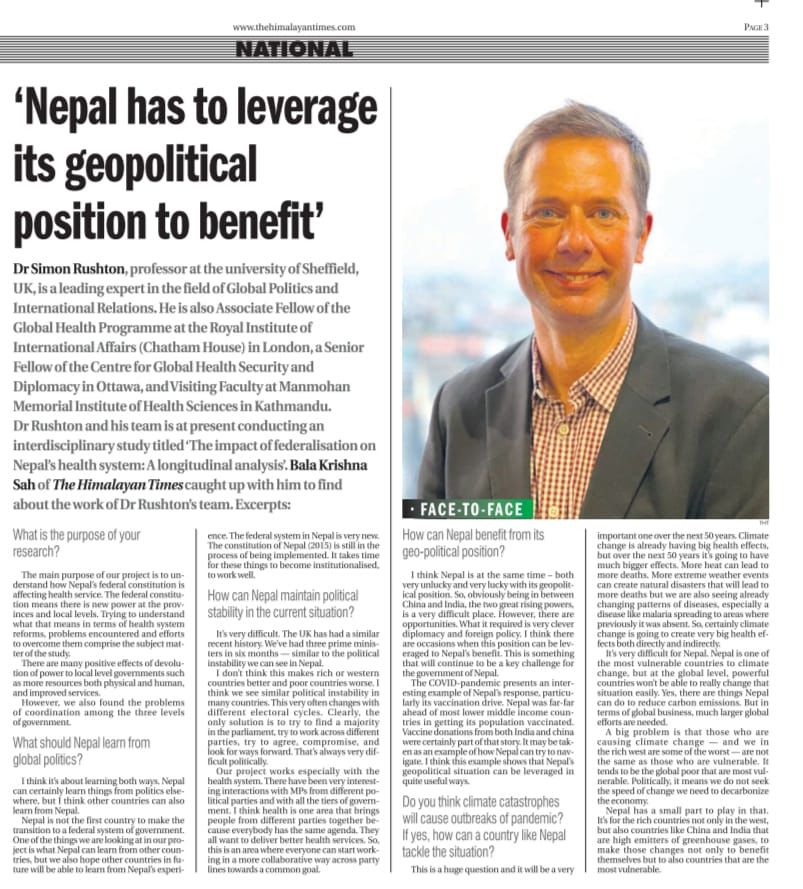
Last month we reported on this Bournemouth University Research Blog (click here!) that Ms. Amshu Dhakal, presented findings from our Nepal Federal Health System Project in Nepal. Amshu’s presentation at the Nepal Health Conclave 2024, organised by the Ministry of Health and Population and supported by WHO (World Health Organization) Nepal and UNFPA, resulted in an online article in Nepal. This article in Nepali in Swasthya Khabar Patrika features lessons learnt and evidence from our research project “The Impact of Federalisation on the Health System of Nepal.”

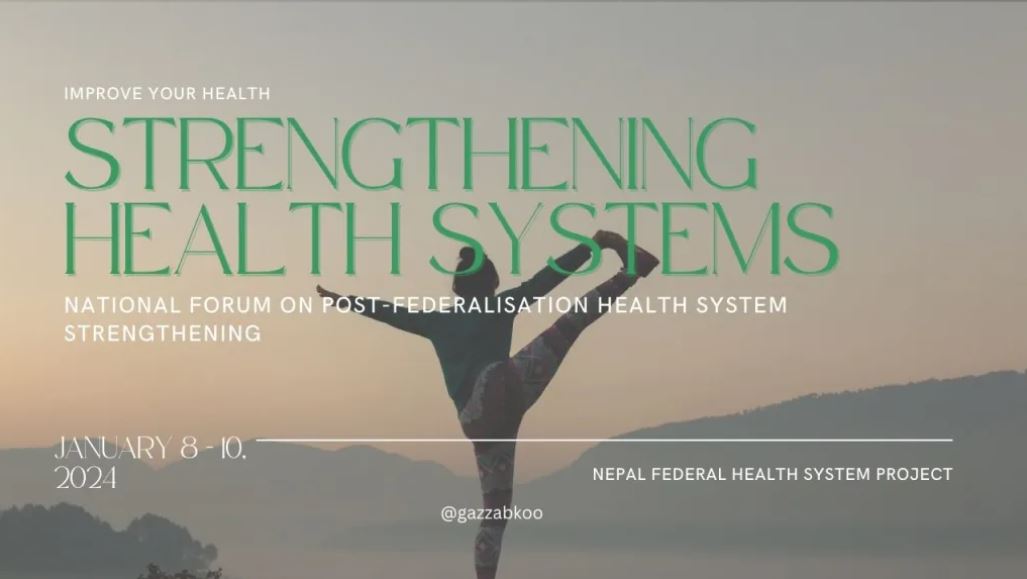
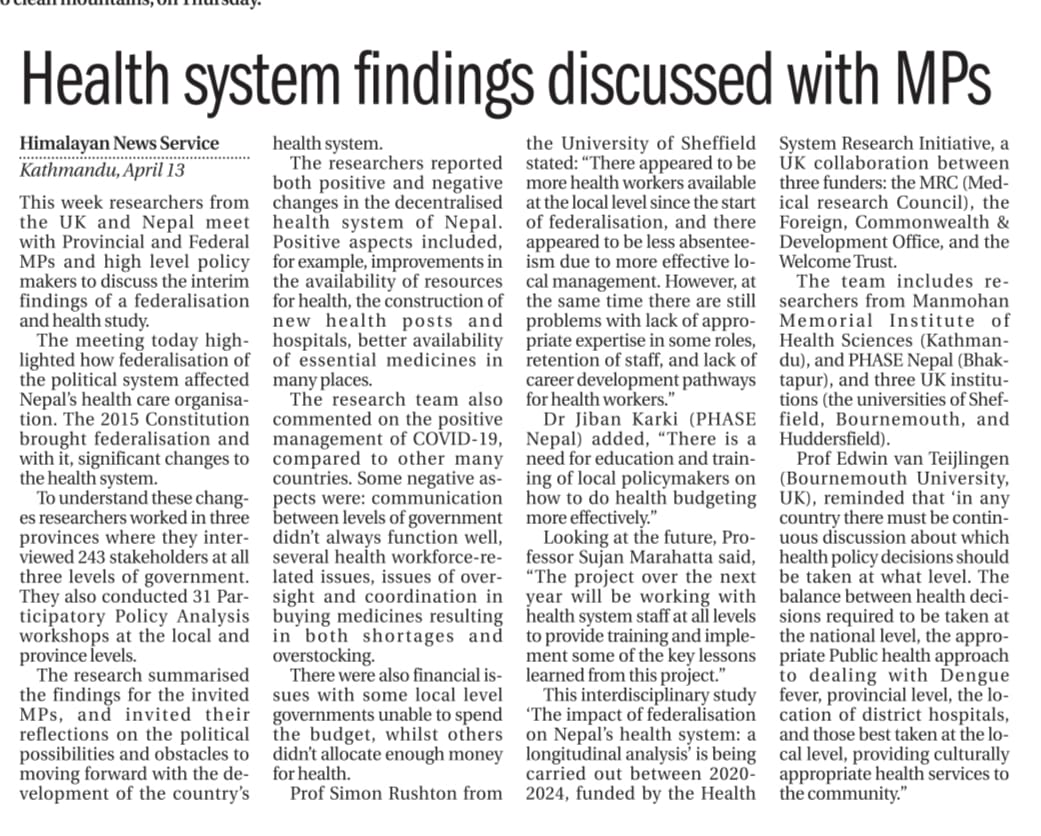
This is one of several news articles from this project which have appeared in both English and Nepali in national media in Nepal.
Our interdisciplinary research project ‘


3C Online Social: Thursday 26 March 1–2pm – Research Culture, Community & Can you Guess Who?
Four BU students at national midwifery conference
INRC book roundtable/presentation by Drs Jonathan Cole and Catherine Talbot, Wednesday 22/04/2026, 13:00h, P426
BU M.Res. student’s evidence to UK Parliamentary Women & Equalities Committee
ECR Funding Open Call: Research Culture & Community Grant – Apply now

ECR Funding Open Call: Research Culture & Community Grant – Application Deadline Friday 12 December
MSCA Postdoctoral Fellowships 2025 Call
ERC Advanced Grant 2025 Webinar
Update on UKRO services
European research project exploring use of ‘virtual twins’ to better manage metabolic associated fatty liver disease